
Translated material
Party of Lenin -Stalin
The Communist Party at its congress recognized Khrushchev’s report on the “personality cult” and repression. The deflection is counted
18+. This material (information) was produced, distributed and (or) sent by foreign agent Vishnevsky Boris Lazarevich or concerns the activities of the foreign agent Vishnevsky Boris Lazarevich.
*And how they threw off Comrade Khrushchev ...
They did not forgive everyone to one.
And they gave the preference to unforgivable,
So Stalin turned out to be nothing.*
*Did not return to the mausoleum - and then thanks
But scolding it is not worth it anymore:
What can I say about excesses,
If the camps began to be built again?*
** Natella Boltyanskaya,
"Brief course of the history of the party" **
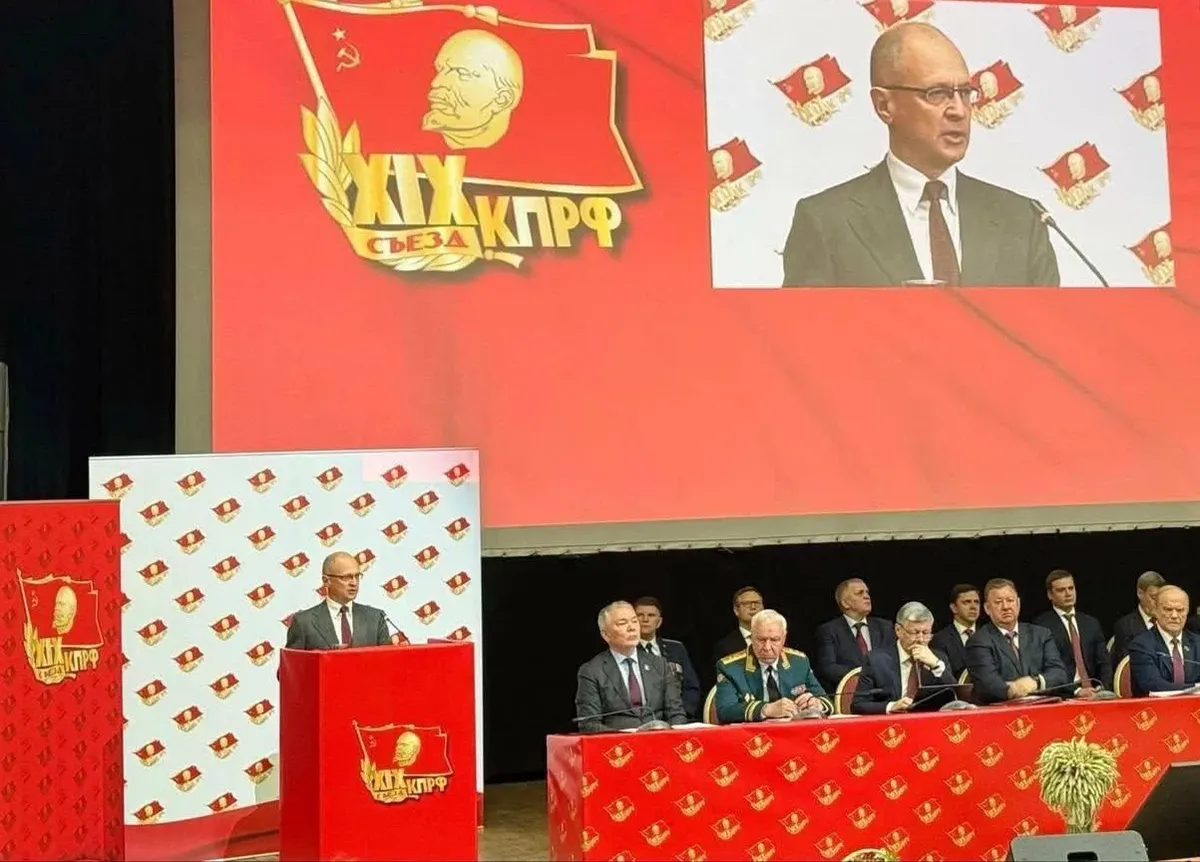
The Nineteenth Congress of the Communist Party announced the “erroneous and politically biased” report by Nikita Khrushchev “On the cult of personality and its consequences”, made on February 25, 1956 at a closed meeting of the twentieth Congress of the CPSU. Since he “contains fed facts and false accusations against I.V. Stalin, distorts the truth about his state and party activities. ”
In this way, the Communist Party is going to “restore the fullness of historical justice in relation to the outstanding figure of domestic world history”, recognizing, as they said at the congress, “the failure of many accusations against the leader,” and, first of all, contained in the report of Khrushchev.
The Communist Party also demands to erect monuments, open museums and return the former name to Stalingrad.
Then they would have immediately been renamed - to the "Party of Lenin -Stalin" ...
All this would be ridiculous if it were not outrageous. Because we are talking about insulting the memory of millions of victims of the Stalinist repressions, only a part of which was said in the report of Khrushchev. And about the abuse of the very “historical truth”, which the Zyuganovites (consciously do not call them the Communists) are even more zealous than United Russians.
However, what am I talking about?
“True - that now for the good of the king, everything else is a lie and a crime,” as the Strugatsky brothers wrote ...
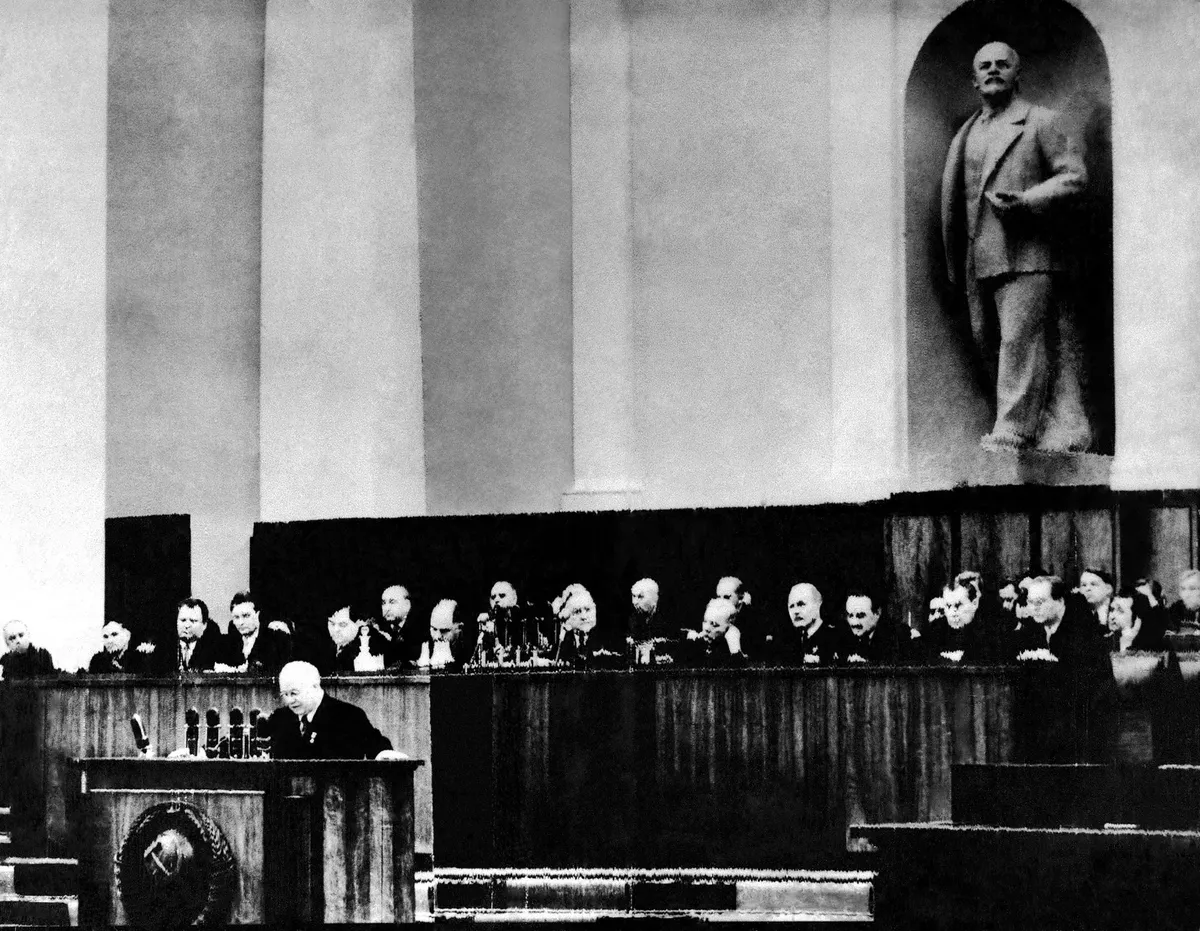
... The report of the first secretary of the Central Committee of the CPSU Nikita Khrushchev at the twentieth congress is more than forty pages of the text.
Khrushchev begins a report with a statement about the inadmissibility of the exaltation of one personality, turning it into some superman who has supernatural qualities: “This person seems to know everything, sees everything, thinks for everyone, can do everything; He is infallible in his actions . "
Such a thing about Stalin, he says, has been cultivated with us for many years. And "due to the fact that they still imagine how huge damage was caused by the concentration of the immense, unlimited power in the hands of one person, the Central Committee of the party considers it necessary to report the materials on this issue."
The first secretary recalls how "the classics of Marxism-Leninism condemned all manifestation of the personality cult" and how Lenin "timely noticed in Stalin exactly those negative qualities that later led to serious consequences." And he quotes the famous “letter to the congress”, which received wide publicity, which was distributed to delegates, only after the twentieth congress, Lenin’s letter written in December 1922:
"Comrade. Stalin, having become the Secretary General, concentrated immense power in his hands, and I'm not sure whether he will always be able to use this authority carefully ... Stalin is too rude, and this drawback, which is quite tolerant in the environment and in the communication between us, the Communists, becomes intolerant of the secretary of the Secretary General. Therefore, I suggest comrades to think over the way of moving Stalin from this place and to appoint another person to this place, who in all other respects differs from comrade. Stalin is only one advantage, it is more tolerant, more loyal, more polite and more attentive to comrades, less moodiness, etc. ”.
Then Stalin was left in the position - but, says Khrushchev, “those negative features of Stalin, which under Lenin appeared only in the embryo form, developed in recent years in serious abuse of power by Stalin, which caused the innumerable damage of our party.”
And gives Stalin a destructive characteristic - looking (like much in the report) frighteningly topical:
“Stalin showed complete intolerance of collectivity in leadership and work, allowed gross violence against everything that not only contradicted him, but what seemed to him, with his moodiness and despotism, contrary to his attitudes. He acted not by conviction, clarification, painstaking work with people, but by imposing his attitudes, by the requirement of unconditional submission to his opinion. Anyone who resisted this or tried to prove his point of view, his case, he was doomed to exclude from the leading team with subsequent moral and physical destruction. ”
According to him, Stalin introduced the concept of “the enemy of the people”-and this term “immediately freed from the need for any evidence of the ideological non-legal of a person or people with whom you are in a polemic, he gave the opportunity to do something in some ways with Stalin who was only suspicious of hostile intentions, who was simply slandered, to the most cruel repressions, with all kinds of violation of all kinds of violations. norms of revolutionary legality. This concept of “the enemy of the people”, in essence, has already removed, excluded the possibility of any ideological struggle or expressing their opinion on certain issues of even practical significance ”( replace the“ enemy of the people ”with“ foreign agent ”,“ extremist ”or“ unwanted ”-the coincidence will be, which is called, to the extent of mixing.- B. V. ).
Lenin, Khrushchev says, was irreconcilable to the ideological opponents of Marxism, but demanded the most attentive party approach to people who had deviations from the party line, "advised to patiently educate such people, without resorting to extreme measures."
Stalin “switched from the standpoint of ideological struggle to the path of administrative suppression, on the path of mass repressions, on the path of terror, acted more and more persistently through punitive authorities”,
“Instead of evidence of his political correctness and mobilization of the masses, he often walked along the line of repression and physical destruction of not only real enemies, but also people who did not commit crimes against the party and Soviet power.” At the same time, "the arbitrariness of one person encouraged and allowed the arbitrariness of other persons."
According to Khrushchev, the Central Committee of the CPSU created a special commission under the head of Peter Pospelov, who instructed to carefully understand the question of how mass repressions were possible against most members of the members and candidates of the Central Committee of the Party, elected XVII Congress of the CPSU (B.) In 1934.
The commission, he says, found out that “many party, Soviet, economic workers, who declared“ enemies ”in 1937-1938, were actually never with enemies, spies, pests, that they essentially remained honest communists, but were slandered, and sometimes, unable to withstand the brutal torture, they spoke on themselves (near Diktovka (near Diktovka. Falsifier investigators) all kinds of heavy and incredible accusations. ”
As a result, out of 139 members and candidates members of the Central Party Committee elected at the XVII Party Congress, it was arrested and shot (mainly in 1937-1938) - 98 people, that is, 70%. Although 80% of the participants of the XVII Congress entered the party during the years of the revolutionary underground and the civil war, the main mass of the congress delegates was the workers, and it was completely unthinkable for the congress of such a composition to elect the Central Committee in which the majority would be enemies of the party. ”
Such a fate, however, says Khrushchev, suffered not only members of the Central Committee, but also the majority of delegates of the XVII Congress of the party:
Of the 1966 delegates of the congress with a decisive and advisory voice, there were significantly more than half - 1108 people on charges of counter -revolutionary crimes.
Why did mass repressions against the asset more and more intensified after the XVII Party Congress? - asks Khrushchev. Because “Stalin by this time exalted so much over the party and the people that he was no longer considered either the Central Committee or the party,” “he believed that he could now perform all the things, and he needed the rest as statists, he kept all the others in such a position that they had to only listen and praise him . ”
After the murder of Kirov, Khrushchev says, mass repressions and gross violations of socialist legality began on the initiative of Stalin (without a decision of the Politburo - this was framed by a survey only two days later): it was prescribed to “conduct the cases of the accused of preparing or committing terrorist acts with an accelerated manner” and “to enforce the sentence of punishment immediately upon the execution of judicial sentences”.
At the same time, it is noted that “in many falsified investigative cases the accused was attributed to“ preparation ”of terrorist acts, and this deprived the accused of any opportunity to verify their cases even when they refused their“ confessions ”in court and convincingly refuted the charges against them” ...
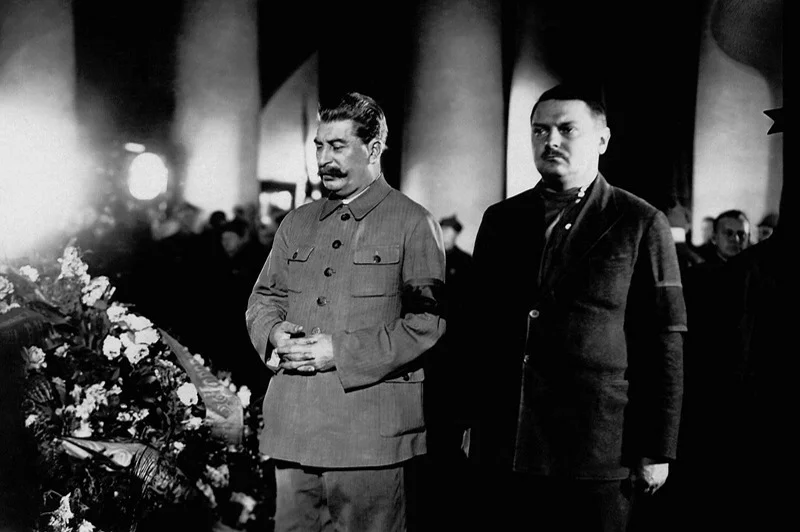
The report quotes Stalin and Zhdanov to members of the Politburo of September 25, 1936: “We consider it absolutely necessary and urgent to the appointment of Comrade Yezhov to the post of people's commissar” ( NKVD.-B.V. ), since “Berry was not at the height of his task in exposing the Trotsky- Zinovievsky bloc, the NKVD was late in this matter in this case in this matter in this matter. year ". This Stalinist installation, says Khrushchev, "directly pushed the NKVD workers to mass arrests and executions."
“After all exploiting classes in our country were already eliminated and there were no serious grounds for the massive use of exceptional measures for mass terror,” says Khrushchev, “Stalin oriented the party, oriented the NKVD for mass terror.”
This terror, as it is stated in the report, turned out to be “actually directed against the honest personnel of the party and the Soviet state, which brought false, slanderous, meaningless accusations”, “using Stalin’s attitude that the closer to socialism, the more enemies will be burden, and the more enemies will be the provocateurs who have made up the state security agencies, as well as the state of state security, as well as the case Careerists began to cover mass terror in the name of the party. The number of arrested on charges of counter -revolutionary crimes increased in 1937 compared to 1936 by more than ten times. ”
Now, Khrushchev says, when cases are investigated in relation to some of these imaginary “spies” and “pests”, it is established that these cases are falsified:
"The recognition of many arrested people accused of enemy activities were obtained by cruel, inhuman tortures."
He reports to the congress several such stories - in particular, with Robert Ahehe ( the organizer of the Great Terror in Western Siberia, like many others who got into the millstone of the punitive machine that was created and served. - B.V. ), who “underwear under torture, the protocols of interrogations pre -compiled by investigators, which were built in anti -Soviet activities against him and a number of prominent party party and Soviet workers. "
And also - with Yan Ruzutak, the deputy chairman of the Council of People's Commissars and the head of the Central Control Commission, a member of the party since 1905, who had been traveling for 10 years in the tsarist hard labor. The trial of the court session prescribes a statement by Rudzutak:
“His only request to the court is to bring to the attention of the Central Committee of the All -Union Communist Party of Bolsheviks (b) that the NKVD organs have an not uprooted abscess, which artificially creates things, forcing innocent people to find themselves guilty. That the verification of the circumstances of the prosecution is absent and is not given any opportunity to prove their non -involvement in those crimes that are put forward by one or another indications of different persons. ”
Stalin did not want to talk to him, he was convicted within 20 minutes and shot. “A check made in 1955,” says Khrushchev, “established that the case on charges of Rudzutak was falsified, and he was convicted on the basis of slanderous materials. Ruztat is posthumously rehabilitated. ”
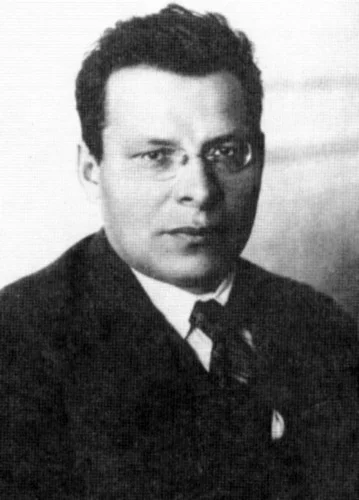
Khrushchev tells how “artificially, various“ anti-Soviet centers ”and“ blocs ”were created by provocative methods, as“ according to the materials of the investigative cases of that time, it turns out that in almost all parts, regions and republics there were supposedly extensed “right-rustic spy-terrorist organizations, sabotage organizations and centers” and, as a rule, these “organizations” And for some reason the “centers” were headed by the first secretaries. ” As in the NKVD, lists of those whose affairs were subject to consideration at the military board were compiled and the penalty was determined in advance. These lists were sent by Ezhov personally to Stalin to authorize the proposed punishment measures. In 1937-1938, 383 such lists were sent to Stalin for many thousands of party, Soviet, Komsomol, military and economic workers and his sanction was received.
“We have now figured out and rehabilitated kosior, Ruzutak, Postostyshev, Kosarev and others. On what basis were they arrested and convicted? The study of materials showed that there were no grounds for this. They arrested them, like many others, without the sanction of the prosecutor. Yes, in those conditions no sanction did not need what else the sanction could be when Stalin allowed everything. He was the main prosecutor in these matters. Stalin gave not only permission, but also instructions on arrests on his own initiative, ”the report says.
“Stalin's painful suspicion led him to the cereal distrust, including the outstanding leaders of the party, whom he knew for many years. Everywhere and everywhere he saw “enemies”, “bicentrals”, “spies” -
Khrushchev says. - Having unlimited power, he allowed cruel arbitrariness. When Stalin said that it was necessary to arrest, it was necessary to accept on faith that this was already an “enemy of the people”. And the gang of Beria, who was ruled in the state security organs, went out of the skin to prove the guilt of the arrested persons, the correctness of the materials they fabricated ”( and this is extremely relevant today, when again“ the bodies are not mistaken. ” - B.V. ).
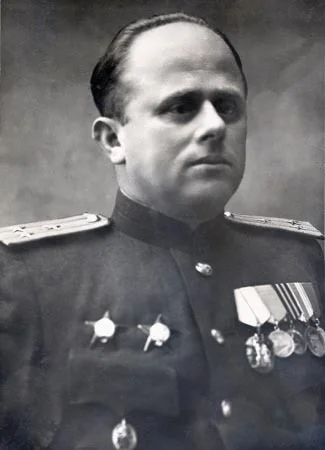
Khrushchev gives an example of the investigator Boris Rhodes, a colonel of state security, who interrogated and tortured many senior guidelines of the party, who at a meeting of the Presidium of the Central Committee, where he was called, said: “I was told that Kosira and Chubar are enemies of the people, so I, as an investigator, had to remove the recognition from them that they were enemies” (in 1956, ”(in 1956 Rhodes was shot).
... A separate topic in Khrushchev’s report is the role of Stalin in the Great Patriotic War.
He says that “if you take many of our novels, films and historical“ research ”, then they are completely implausively depicting the question of the role of Stalin in the Patriotic War.”
That “before the war in our press and in all educational work, a boastful tone prevailed: if the enemy attacks the sacred Soviet land, then we will respond to the enemy’s blow by a triple blow, we will wage war on the enemy’s territory and win it with little blood. However, these declarative statements were far from reinforced by practical things to ensure the actual inaccessibility of our borders. ”
That Stalin ignored the warnings about the attack of Germany in 1941, who received also from Churchill: "There were instructions from Stalin not to trust this kind of information in order not to provoke the beginning of hostilities."
That on the proposals of General Kirponos - made shortly before the attack of the Nazi armies on the Soviet Union - to create a reliable defense, from Moscow they reported that the Germans should not give a reason to open military operations against us.
That “when the fascist troops had already invaded Soviet land and began military operations, an order was followed from Moscow - not to answer the shots, because Stalin, contrary to obvious facts, believed that this was not a war, but a provocation of individual undisciplined units of the German army, and that if we answer the Germans, this would serve as a reason for the start of the war.”
That everything was ignored: the warnings of individual military leaders, and the testimonies of the defectors, and even the obvious actions of the enemy. "What is the insight of the head of the party and the country at such a crucial moment in history?" - asks Khrushchev. And he says that “this led to the fact that in the very first hours and days the enemy exterminated a huge amount of aviation, artillery, other military equipment in our border regions, destroyed a large number of our military personnel, disorganized command and control, and we were not able to block his path deep into the country.”
That “during 1937-1941, as a result of Stalin’s suspicion, the numerous personnel of army commanders and political workers were exterminated on slanderous accusations. Over the years, several layers of team personnel were repressed, starting literally from the company and the battalion to the highest army centers. ” При этом «на протяжении нескольких лет командиров всех степеней и даже солдат в партийных и комсомольских ячейках приучали к тому, чтобы «разоблачать» своих старших командиров как замаскировавшихся врагов».
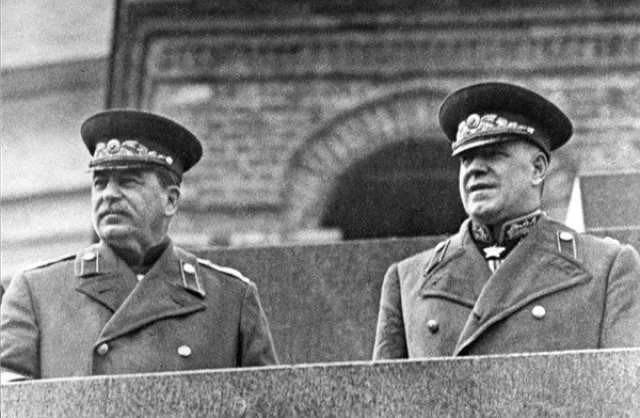
Что «Сталин был очень далек от понимания той реальной обстановки, которая складывалась на фронтах, и это естественно, так как за всю Отечественную войну он не был ни на одном участке фронта, ни в одном из освобожденных городов, если не считать молниеносного выезда на Можайское шоссе при стабильном состоянии фронта». Но «непосредственно вмешивался в ход операций и отдавал приказы, которые нередко не учитывали реальной обстановки на данном участке фронта и которые не могли не вести к колоссальным потерям человеческих жизней».
Пример — Харьковская операция 1942 года, завершившаяся тяжелейшими последствиями. Когда же, говорит Хрущев, уже после войны, Сталину об этом напомнили, «надо было видеть, как он рассердился»: как это так признать, что он, Сталин, был тогда не прав! Ведь он «гений», а гений не может быть неправым.
Все, кто угодно, могут ошибаться, а Сталин считал, что он никогда не ошибается, что он всегда прав. И он никому и никогда не признавался ни в одной большой или малой своей ошибке.
А еще после войны Сталин, по словам Хрущева, «начал громить многих из тех полководцев, которые внесли свой немалый вклад в дело победы над врагом, так как Сталин исключал всякую возможность, чтобы заслуги, одержанные на фронтах, были приписаны кому бы то ни было, кроме него самого»…
Хрущев говорит о массовых депортациях различных народов и о сфальсифицированном «ленинградском деле».
О том, что после войны у Сталина «до невероятных размеров увеличилась мания преследования», и «невероятной подозрительностью Сталина ловко пользовался гнусный провокатор, подлый враг Берия, который истребил тысячи коммунистов, честных советских людей».
О «деле врачей-вредителей», где Сталин «сам вызывал следователя, инструктировал его, указывал методы следствия, а методы были единственные — бить и бить».
О том, как были испорчены отношения с Югославией, — и рассказывает, как Сталин заявлял: «Вот шевельну мизинцем, и не будет Тито. Он слетит», но «дорого нам обошлось это «шевеление мизинцем».
Такое заявление, говорит Хрущев, «отражало манию величия Сталина, ведь он так и действовал: шевельну мизинцем — и нет Косиора, шевельну еще раз мизинцем — и нет уже Постышева, Чубаря, шевельну опять мизинцем — и исчезают Вознесенский, Кузнецов и многие другие», но с Тито так не получилось: «Сколько ни шевелил Сталин не только мизинцем, но и всем, чем мог, Тито не слетел». Потому что «за Тито стояло государство, стоял народ, прошедший суровую школу борьбы за свою свободу и независимость, народ, который оказывал поддержку своим руководителям».
В заключение Хрущев говорит: «Некоторые товарищи могут задать вопрос: куда же смотрели члены Политбюро ЦК, почему они своевременно не выступили против культа личности и делают это лишь в последнее время?» И честно отвечает: «попытки выступить против необоснованных подозрений и обвинений приводили к тому, что протестовавший подвергался репрессиям»…
…Сегодня, после оттепели и перестройки, после телепередач и статей в «Огоньке», «Московских новостях», «Известиях» и «Новом мире», после исследований правозащитников и выступлений политиков, мы знаем куда больше, чем сказал тогда Никита Хрущев в своем докладе.
Но тогда это произвело на страну (информация о докладе и его содержании быстро распространилась — хотя первоначально она предназначалась только для партийных организаций) ошеломляющее впечатление.
По сути, было признано, что многие действия государства были преступными, а те, кого оно преследовало, — невиновными. Что культ личности одного человека принес стране неисчислимые бедствия. И что часть официальной истории страны, закрепленной в книгах, фильмах и учебниках, — ложь.
Что важно: с этим докладом выступал тот, кто был вернейшим сталинцем, кто сам участвовал в политических репрессиях, кто считался при сталинском дворе скоморохом, клоуном и шутом — но нашел в себе силы сказать то, что было необходимо.
И один только этот шаг на весах Истории более значим, чем все зло, которое он свершил и к которому был причастен.
Знаменитый скульптор Эрнст Неизвестный — один из тех, на кого Хрущев в грубой форме «наехал» на выставке авангардистов в 1962 году, — когда Хрущева сняли, позвонил его помощнику и сказал:
«Прошу передать Никите Сергеевичу, что я его действительно глубоко уважаю за то, что он разоблачил «культ личности» и выпустил сотни тысяч людей из тюрем и лагерей. А наши эстетические разногласия перед лицом этого подвига я считаю несущественными»…
Через семь лет именно Неизвестный создаст памятник Хрущеву на Новодевичьем — по просьбе его семьи.
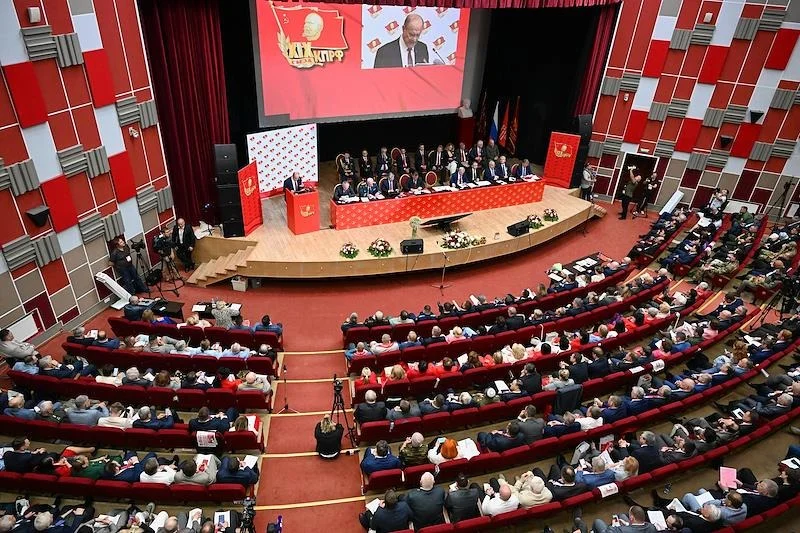
…Не уверен, что многие нынешние делегаты съезда КПРФ вообще читали тот доклад, который единодушно осудили.
Тех же, кто читал, можно спросить: где в нем «подтасованные факты и лживые обвинения» — если с тех пор опубликовано множество материалов, подтверждающих (и усиливающих) все то, что сказано в докладе?
Правда, до сих пор (я рассказывал об этом в «Новой») закрыта часть архивов — причем по воле именно тех, кто не устает призывать к защите «исторической правды» и возмущается «фальсификациями истории».
И правоохранительные органы в последнее время усердствуют по части отмены реабилитации тех, кто стал жертвой сталинских репрессий, и преследования тех, кто сохраняет память об этих репрессиях.
И памятники Сталину продолжают устанавливать — одновременно (и безнаказанно) уродуя мемориалы жертвам репрессий.
Так что КПРФ со своей резолюцией, что называется, в тренде, демонстрируя верховое чутье и лояльность: Никиту, «отдавшего Крым», нынче принято осуждать, а Иосифа — хвалить.
Недаром на съезд — огласить приветствие президента Владимира Путина — приезжал первый зам главы АП Сергей Кириенко.