
Translated material
We stayed behind the scenes
How Russian documentary cinema is arranged in Yerevan

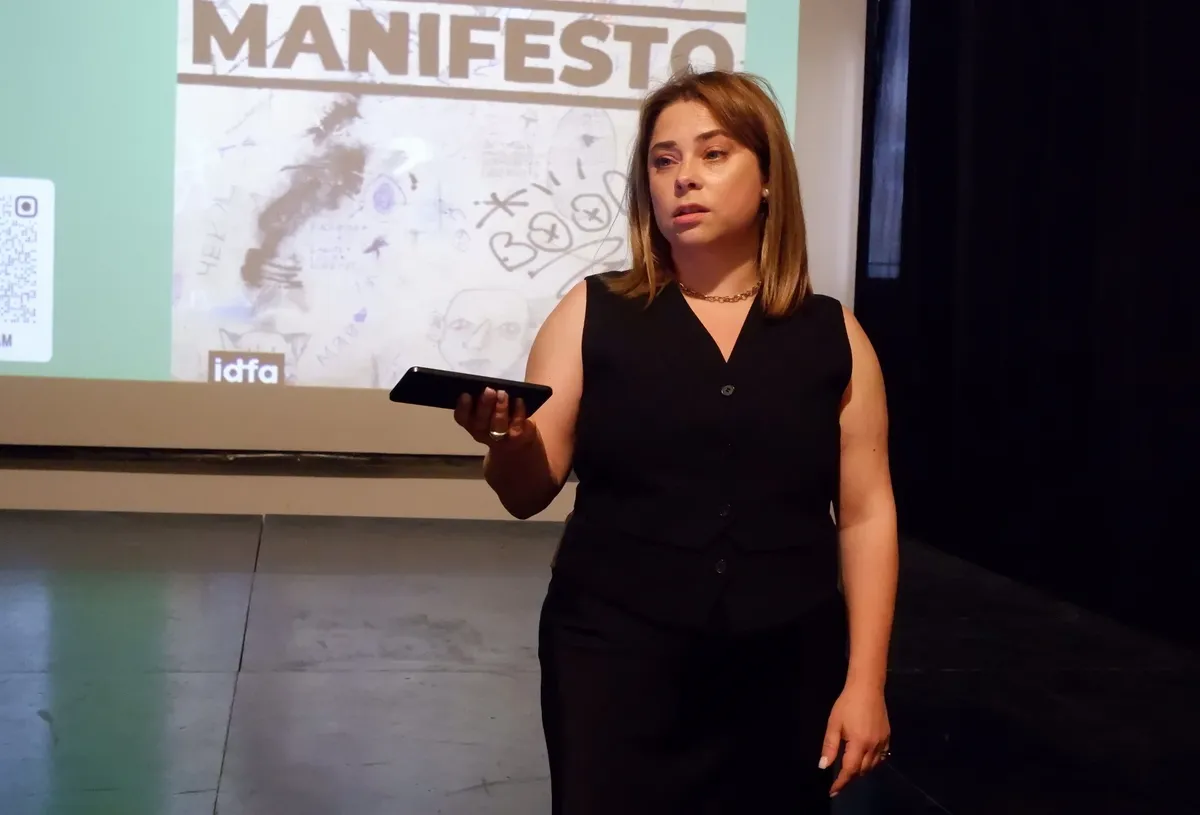
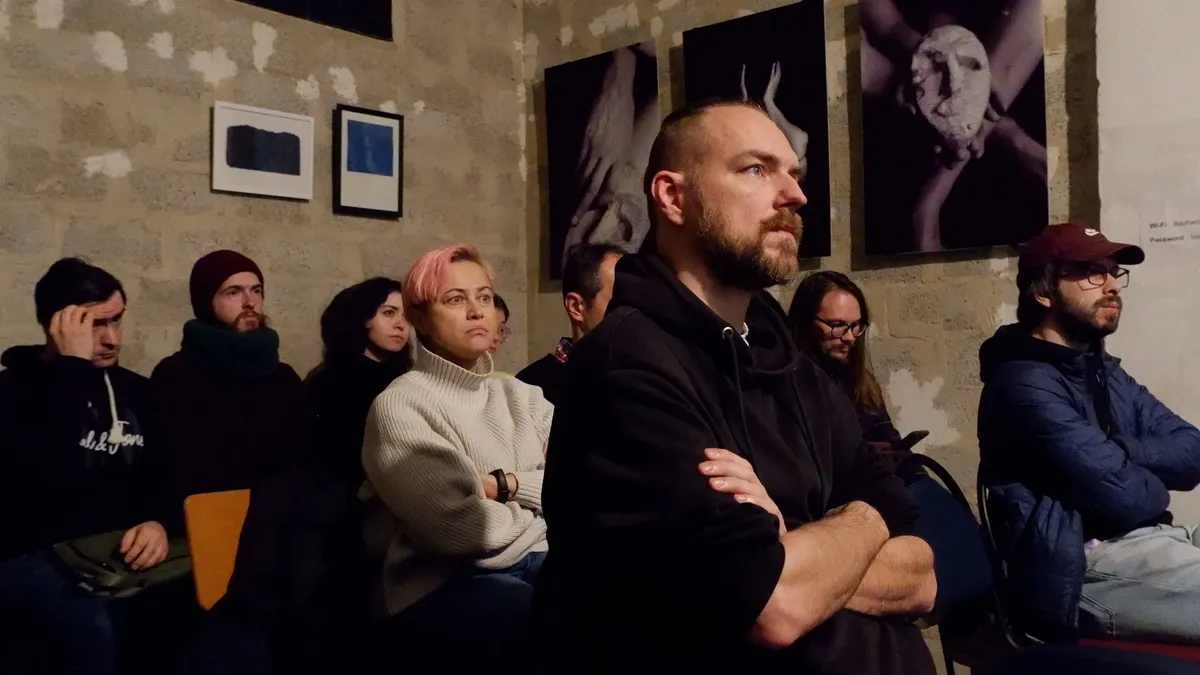
At the show in Common Ground. The frame from the movie “You cannot Live” Oleg Yakovlev. Photo: Andrey Novashov
(18+) This material (information) was produced, distributed and (or) sent by foreign agent Novashov Andrei Valerievich or applies to the activities of foreign agent Novashov Andrei Valerievich.
The St. Petersburg film journalist Valery Tsyganova, who opened in Yerevan in March last year, a club of independent documentary cinema Freedoc, jokes that she did this for selfish reasons: she loved to watch and discuss copyright films in Russia - in Armenia she preserved this habit. At the same time, Tsyganova clarifies that she wants to not only watch a good movie, but also show. In this film club, they watch a festival documentary, shot by Russian directors - and already received recognition and debutants. And a full meter, and short films. Cinema, which can conditionally be called traditional, and experiments - do -the aimation, a video line.
"I/we Vova"
-Film cinema cannot be shot in the moment-some distance is needed. And non -game can be shot here and now, relatively speaking, to the phone. If a person does this talented, it can be a useful experience. Documentary cinema is trying to comprehend what happened. Watching a fiction movie with a glass of wine is a stupid leisure, and they come to our cinema club to feel the pulse of time and communicate on video communications with people who went to different countries. Sometimes it turns out to arrange a discussion with directors live, ”says Valeria.
She would not want the spectators to watch only a movie about the reserves in Freedoc. But after February 2022, many directors emigrated. For many, this topic has become the main one. They tell their own stories and stories of their friends and acquaintances forced to leave Russia.
At one of the past shows, full -length films were watched and discussed, shot by graduates of the directorial workshop of Dokvatir, who was supervised in Tbilisi by Marina Razbuzhkina, Irina Buzina and Olga Zavolnova. The first-“Double-Sided” Dasha Mareeva-is dedicated to an ordinary relayer, a very young guy Vova. The camera monitors his daily life, in which there seems to be nothing tragic or at least remarkable. Vova in Russia was not persecuted for anti -war views (in any case, there is no indication in the film), he does not live on the street, does not starve. But at the same time, all plans for study and careers that he built in Russia collapsed. The main character looks lost. He has yet to be rebuilt, and he does not yet understand how. One of the most memorable episodes: Vova is trying to close the wall with a carpet that looks emergency.
- He has ordinary relayed problems. Little money. We must look for work. Life is unsettled. In the frame of Tbilisi, uninhabited apartments. He is lonely. Here is such a life ...
This film was very vividly watched, because it is about all of us. The director says that during the filming they even had a slogan “I/we Vova,” says Valeria Tsyganova.
The second film of that show - “The Raven defeats the Wind” of Dima Veprev. Cinema about the Georgian period of the life of the anti -war priest Alexei Uminsky. Forced emigration is the burden that he carries very worthy. In exile, his words became stronger. Against the background of Georgian landscapes, the figure of Uminsky looks majestic. At the same time, he does not portray the martyr, does not lose self -irony, is not afraid to admit that he does not understand everything. One of the episodes of the film is about the live broadcast in YouTube. Uminsky turns to the flock that remained in Russia. A forced method of communication.
He is an inexperienced streamer, does not know how to cope with technical problems, and this makes the figure of a clergyman who did not compete in front of the Russian authorities even more human.
About humanity and that life after February 24 did not end, the film "We are looking for you everywhere." The director of the film Sergey Karpov drove to Yerevan on New Year's Eve and came to Freedoc for discussion. He began as a documentary photographer. In Russia, he headed the department of special projects of “such cases”, made an interactive series about the problems of HIV-positive teenagers, shot the film “Life of a Human Lavra Branch”. The last interview ”about the oncologist, who had to fight his own incurable ailment.
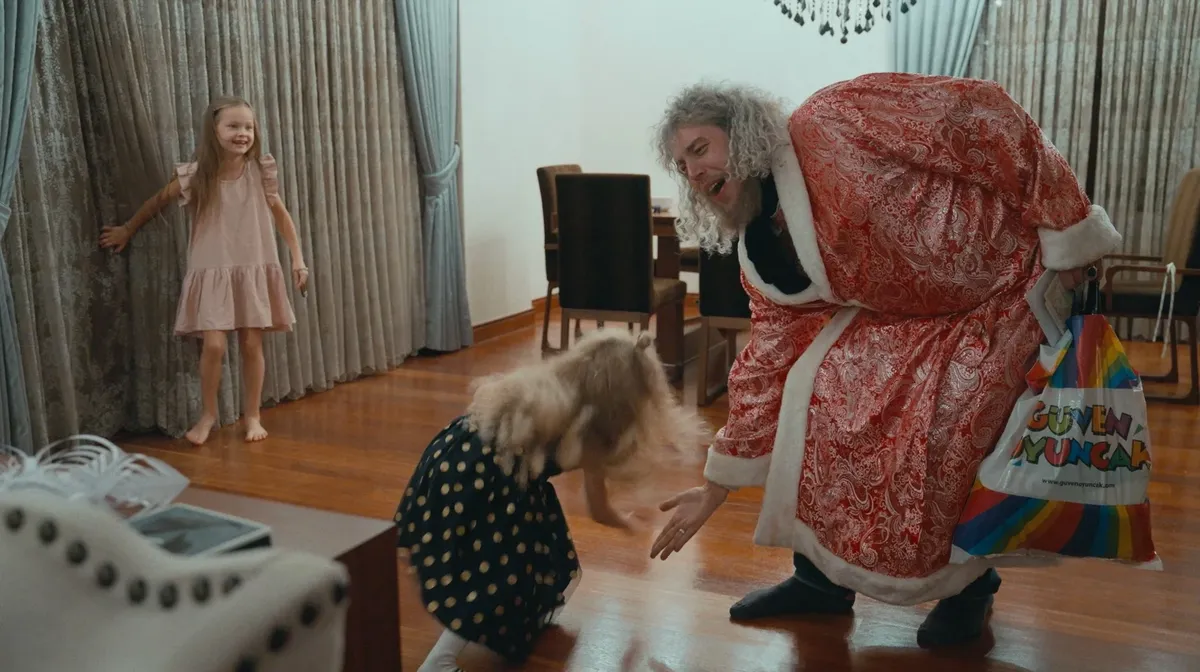
The main character of the film Doc “We are looking for you everywhere” is a relocant who travels to different countries, so that in a suit of Santa Claus to give gifts to the children of those who were forced to leave. His own children remained in Russia. He can congratulate them on the holiday only by the zoom.
Nostalgia and gap
Two films about retains were also in the program of the latter at the time of writing this text of the show. That evening we watched short films - the graduation works of the International School of Author's Documentary School of Un/Filmed. This school, or rather, an online course on creating documentaries in Russian, opened in 2021. There, too, are taught by those who came to film documentary thanks to Marina Razbuzhkina.
“I am a student of the students of Razbuzhkina,” says Sahamin Trofimov, director of the film “Songs of Duolan”.
Like the hero of his film, Sahamin from Yakutia. For him, this short film is a directorial debut, but it has been connected with Yakut cinema for seven years. In the 2010s, film critics started talking about playing Yakut cinema as a separate phenomenon. Sakhamin Trofimov says that modern Yakut film documentary is less famous, but equally interesting. For example, the Documentary film "Hannibal", shot by Ivan Krivornitsyn about the life of Yakut rock musicians.
- The last year before emigration I lived in St. Petersburg, continuing to cooperate with some Yakut directors. We wanted to go on cooperation with Europe, to the Asian market. They gathered, without waiting for the approval of the federal Ministry of Culture, to make their film festival in Yakutia. Work in these directions stopped after February 2022, ”Trofimov explains.
He clarifies that now it is more difficult to take place in a feature cinema that requires serious financial costs. Documentary cinema can be made with minimal money.
- A man with a camera goes to shoot what surrounds him. He can see heroes among loved ones, make a movie about his daily life. It is clear that not everyone can speak through a movie about the reality in which we all exist, this must be studied. But from the technical side it became more accessible. The School of Marina Razbuzhkina was largely due to technical progress. The director can shoot himself. Video cameras have become more mobile. This was used by director Alexander Rastorguev, who, for example, distributed cameras to his heroes and then mounted a film from what they shot, says Sakhamin.
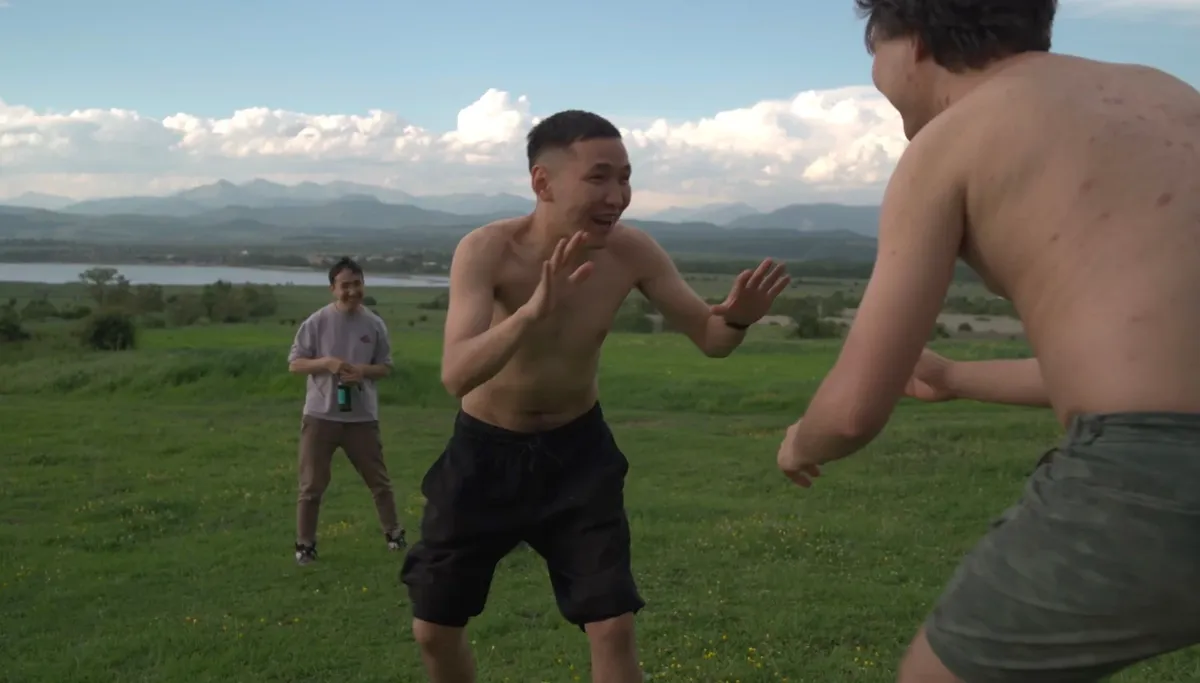
“Duolan’s songs” - sketches from the life of Yakut, who was rejecting in Georgia, who is trying to maintain national identity. He is very open, positive and as if he carries Yakutia in himself.
One could say that the film is about the longing for the homeland, but Duolan and longing are incompatible concepts. In any case, this hero turned out on the screen.
In the car or just on a walk, Duolan includes Yakut pop groups, singing in his native language, and sings herself. You can guess about the cause of emigration perhaps by scraps of phrases during calls with parents. On the Yakut national holiday outside the city, where his friends-Yakuts gather, he brings a five-liter bottle of Kumys. He managed to make this drink himself in Georgia. On a bottle where there was originally drinking water, a label on Georgian. The Georgian vessel with the Yakut filling turned out.
In the city, Duolan treats the Turks with this kumys, who have a similar national drink, but emigrants from different diasporas do not really understand each other. Duolan is not a political activist, but in one of the episodes he breaks through, and he ardently says that Moscow is operating the region, and in the future Yakutia should become independent.
The shows in the Freedoc film club necessarily end with discussions with directors. Sakhamin was asked about this politically painted episode.
“This is a very sharp statement,” Sahamin agreed. - I doubted whether to leave him. In the end, I left and do not regret. In this matter, my views coincide with the hero of the film. I grew up in a Yakut family.
It is very important for me to say that Yakutia is a raw material colony of Moscow. The Russian government does not need people, it needs minerals. I do not want to live in a world where they are silent about it, and I will talk about it in my films.
The “monument” of Maxim Avdeev, who is now living in Germany, is a film investigation of himself and the conflict that occurred between him and his father. Maxim already knew what his film would be about when he came to the Un/Filmed film school. There, Avdeev was taught how to remove.
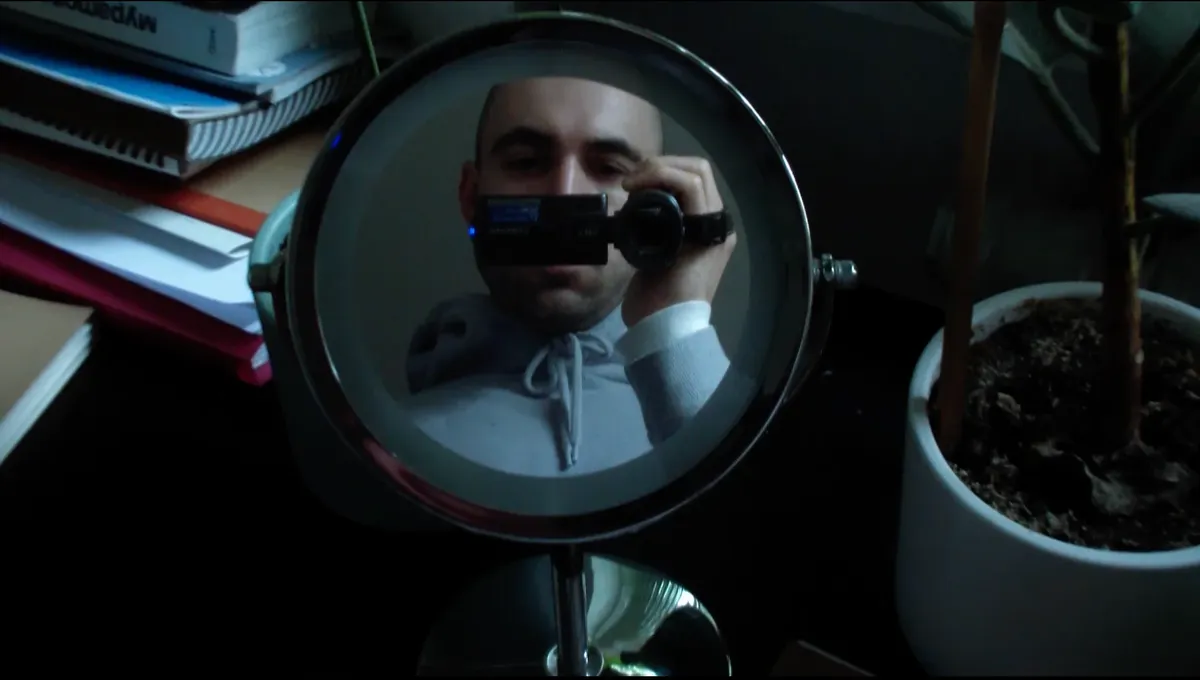
As in the Sahamin film, a family archive video shot in the 90s is used in the short film. Maxim's father, who holds him, very small, in his arms, is fooling around in front of the camera. At some point, climbs a stone and depicts a sculpture, a monument. These archival shots alternate on the screen with the face of today's maxim. He is very similar to his father in his youth, only the head of the director outlines. This is perceived as a symbol of rupture, renunciation, grief. The audience will learn about the essence of the conflict from a telephone conversation between a son and a father. Maxim Pacifist, father supports his. The gap is aggravated by the homosexuality of Maxim. Father says: “I am a man of broad views,” but admits that I would like to see my son not at all. He complains that he gave him too much freedom. The name "Monument" refers to the word "memory".
Past family relationships remained only in memories. Father and son do not swear, but they talk like people who were once very close, and now hopelessly distant from each other.
- The generational gap was very rigidly designated after February 24th. The gap, which, perhaps, would not have happened, - says Avdeev.
Maxim is an unfinished lawyer who decided to become an actor. He studied at the evening acting school at the Institute of Cinema and Television in St. Petersburg, where he entered the scenes of small independent theaters. And he continues to play in relocation.
- I did not abandon acting. I like to be on stage, and in front of the camera, and behind the camera. And write, shoot, mount. I'm not going to throw anything from this, ”Maxim explains. - Unfortunately, neither directing nor acting, like most of my peers, do not bring income, especially in exile. I have a million other earnings that keep afloat.
The director of the “Monument” says that he is not very close to the documentary movie, where the director is being stumbled, and the audience with the help of his camera observes only the life of the heroes.
“I was drawn and continues to pull to something hybrid,” emphasizes Maxim, in the next documentary of which animation will be used.
"Cinema is scurvy"
In addition to the "rejocker" cinema at the Freedoc film club evenings, films that I would call "the Preforal" are shown. They were removed the day before, but in them, perhaps, in addition to the will of the directors, there is a premonition of the upcoming disaster.
“Yes, there was such a foreboding in the films,” agrees Valery Tsyganova. - Just a few weeks before February, I graduated from a small grant project about Russian author’s cinema, which I called the Cinema about us. I went to significant film festivals, tried to watch as much as possible. For several years, documentary cinema was yelling that something bad will happen. There were films about how for remote Russian cities, where no one tried to, so that people had where to go to the cinema, the “patriotic” campaign travens around. Endless assembly and disassembly of machine guns by unarmeers. The last Artdokfest, which was supposed to take place in Russia and which was disrupted on the opening day, was to be called “after the plague” because he passed after Covid. I wrote about this a short report “After the plague. *****, ”recalls Valeria.
Perhaps the most important "prefebertic" film shown in the Yerevan Freedoc film club is "Where are we going?" Ruslan Fedotova. The film, published in 2021, was shot in the Moscow metro. Scenes from the life of passengers who descended into the subway on holidays - New Year, May 9 and the day of the paratrooper. On the screen, the most ordinary episodes and dialogs look like an absurd comedy.
There is almost no violence and aggression in the frame, but in many scenes a barely noticeable militaristic raid. Well -being and lack of being imaginary. Something is brewing. Today it is clear where they went.
In the same row, “Chermet” by Nikolai Viktorov. The protagonist Ilya lives in a dying city behind the polar circle. Collects and passes scrap metal. He is not a shrub, leads a brigade and works on a grand scale. By local standards - almost an elite, but Ilya still looks like a freak and a marginal, like his unfortunate subordinates. He wants, but, apparently, he cannot leave for Moscow. He recalls how his father beat him in childhood. Stalin praises and broadcasts other nonsense that reminded the performances of television propagandists the day before and immediately after February. Looking from today, we can say that this is a film about the social base of the upcoming disaster.
Relatively recently, a film was shown in the film club, the authors of which did not shoot a frame. “Manifesto” - as it is called - is almost entirely mounted from the videos that were shot and posted on social networks. It all starts with the realties about how reluctance to school in the morning. There are several fragments about educational anxieties in schools, and then about the real ones - in the border regions of Russia. Several episodes about how their peers and teachers are mocking the schoolchildren. The most dramatic fragments are the shooting of operatives: a joke in schools.
According to the logic of the film, it becomes a consequence of the normalization of psychological violence and planting of militaristic sentiments.
Everything ends with documentary shootings of the tragic story, which several years ago became the basis for the feature film of Alexander Hunt “Interseason”. Teenagers - a guy and a girl - barricaded in the house and began to shoot at the police cars. When the assault began, schoolchildren committed suicide. The last minutes of their lives they recorded on a video camera. Perhaps their arguments that they do not accept the world of adults are the same manifesto that gave the name to the documentary. The announcement of the Manifesto says: “The winner of the main global IDFA in Amsterdam, the owner of the Artdocfest-2023 Grand Prix. A film impossible to show in modern Russia, and Angie Vincito is a pseudonym, behind which is hiding the anonymous author documenting it. ”
One of the evenings, Yerevan Freedoc devoted documentary animation. The fact that it was not removed and that you can’t remove it now can be drawn. The point, however, is not only this. Docamation is also an artistic statement. What is happening on the screen is more than a story in pictures. The program of pre -casms collected by Valery Tsyganova was called "an uncomfortable past. Personal look. " Films - about Stalinist repressions and recent Chechen wars.
Another experimental screening of Freedoc film club combined the video, shot by SUP participants - “a self -organized translocal team of artists who arose to create a single space for collective practices, solidarity and adoption of each other” (they give this definition themselves).
Soup’s collective video survey was in the Venice Biennale-2024 program. It was shown in the pavilion of Uzbekistan, because from this country the curator of the project. The performance documents and rethinks the daily practices of women. Participant Anastasia Karkotskaya, who now lives in Yerevan, in his part of the performance hangs linen on the street, prepares breakfast, cooks coffee and cares for the dog. As stated in the information provided by the participants,
With the help of these everyday practices, "thirteen young artists studied their agency, and through a special visual language they talked about feelings and emotions - love, anxiety, anger, solidarity and care."
In Russia, Anastasia managed to become a master of the history of the European University of St. Petersburg and graduate from the school of modern photography of doctox. In Yerevan, he works as a multimedia reporter. She made photographs about Artsakh living in Armenia labor migrants from India and about the Tatevsky monastery.
The Freedoc shows program, in addition, are the individual video essays of the team. Anastasia’s video line is called I Was Born to Make You Happy. This is a line from the song of Britney Spears. The statement that in Russia a person constantly owes something to the state.
“When you are born in Russia, it is believed that your civic duty is to please everyone,” Anastasia comments.
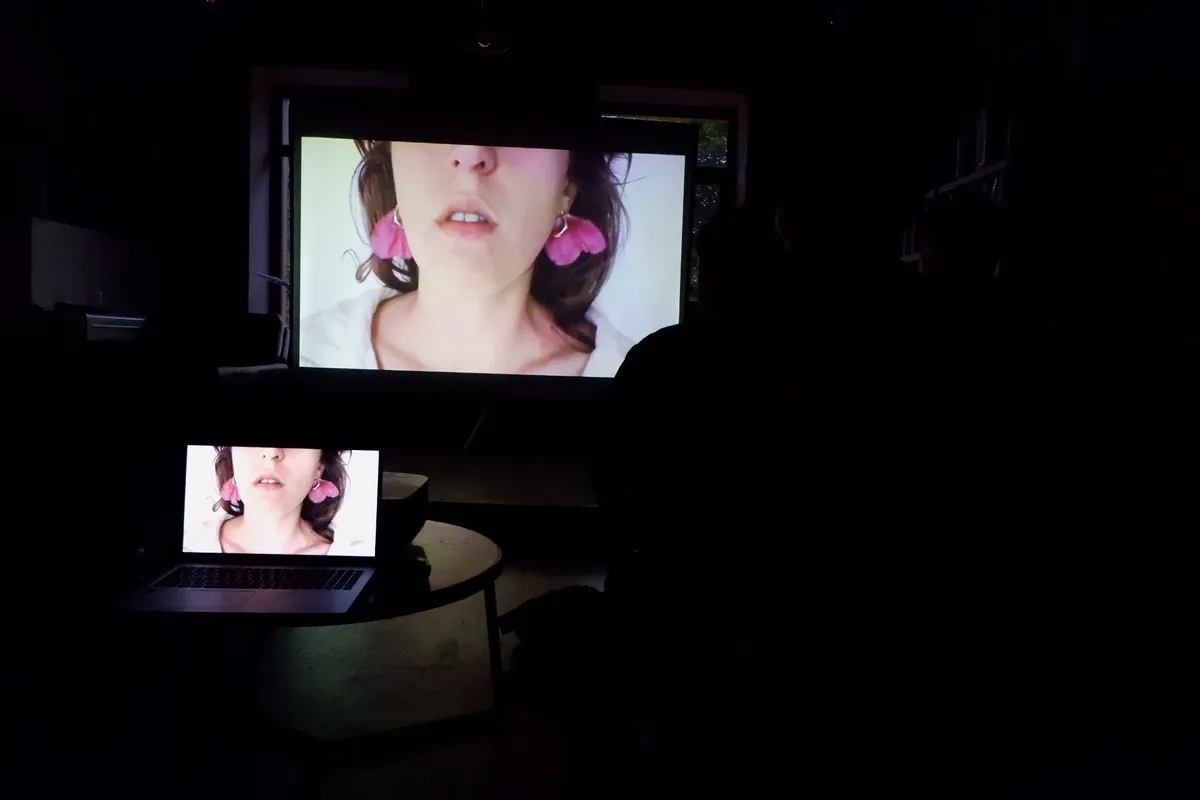
In the frame, she herself makes earrings from mallow and try on them in front of the mirror. После показа Анастасия рассказала «Новой», что такие сережки ее научила делать бабушка.
Это совсем неочевидный видеоряд к звучащему за кадром тексту Анастасии, начитанному мужским голосом. Спонтанный рассказ о жизни ее семьи в городе Нижнекамске. Сначала цитируется открытка из роддома, в которой новорожденную сначала называют «дорогим малышом», а потом «гражданином». Голос за кадром пересказывает сон про то, что всех граждан России заставляют пройти тест, и не сдавших репрессируют. Еще героине снится, что она не может вырваться из Москвы в Ереван.
Голос читает про деда Анастасии, который пережил Холокост и воевал в партизанском отряде. Он родился в Польше, его против воли записали белорусом, а во время последней переписи, когда деду было 95 лет, — в русские.
«Русский 95-летний человек с польской манерой склонять глаголы умер в Нижнекамске».
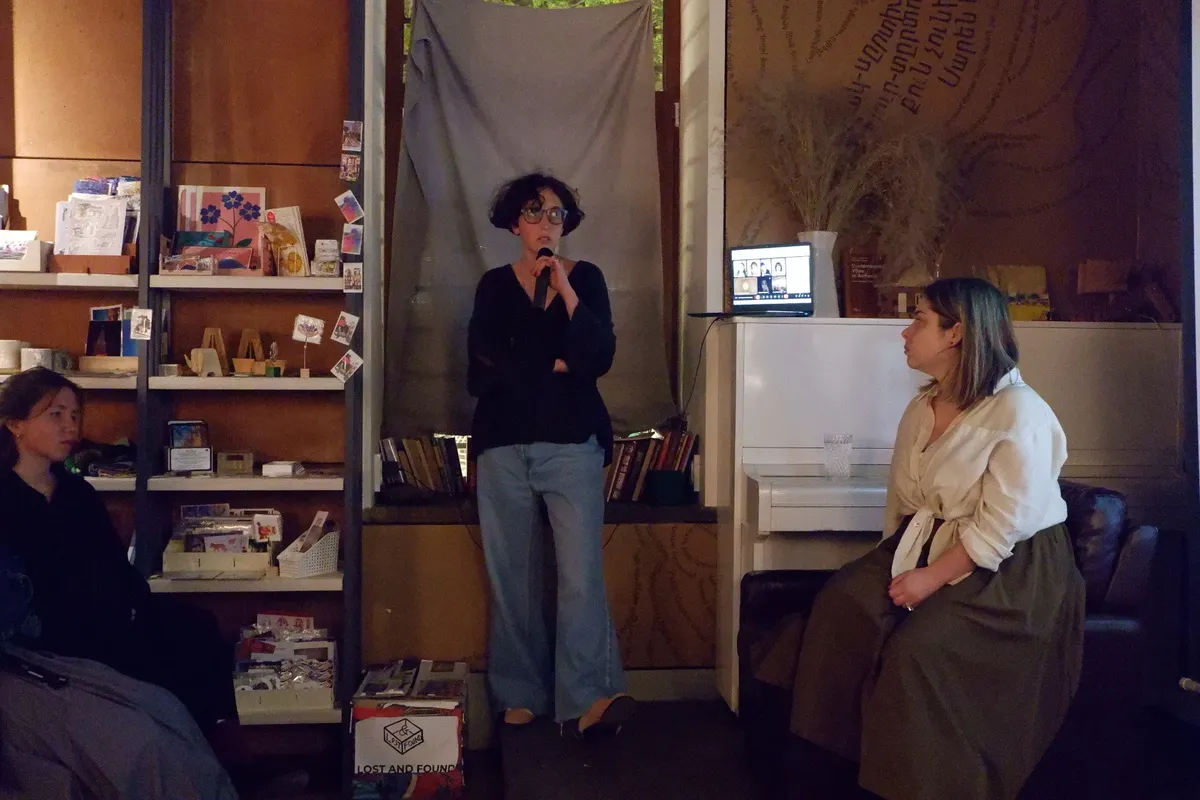
Последний на сегодняшний день показ киноклуба Freedoc состоялся в зале магазина интеллектуальной литературы Common Ground. Валерия Цыганова объясняет, что в Ереване много разрозненных комьюнити, каждое из которых предпочитают определенные площадки. Друг с другом эти сообщества мало пересекаются. Показ в новом пространстве — способ рассказать о киноклубе другой аудитории. Зал, где регулярно проходят встречи киноклуба, находится в культурном центре Open Platform. Это дом № 1 по улице Каджазнуни.
Андрей Новашов*