
Translated material
That's it ...
FSB vigilance: the librarian was spent for the books of the writer-antifacist, whose name is the undesirable fund

Photo: Alexey Dushutin / "New Gazeta"
18+. This material (information) was produced, distributed and (or) sent by foreign agent Vishnevsky Boris Lazarevich or concerns the activities of the foreign agent Vishnevsky Boris Lazarevich.
*The plane rolls around the sky,
Solzhenitsyn is sitting in the e.
About it, hell in tomato,
Bell, meeting, says*
(Ditty of the mid-70s of the twentieth century.)
Svetlana Ushnitskaya-Director of the Scientific Library of the North-Eastern Federal University named after M.K. Ammosov, - the Yakut City Court fined for the author’s books found in the library, whose name was named “Unwanted Organization”.
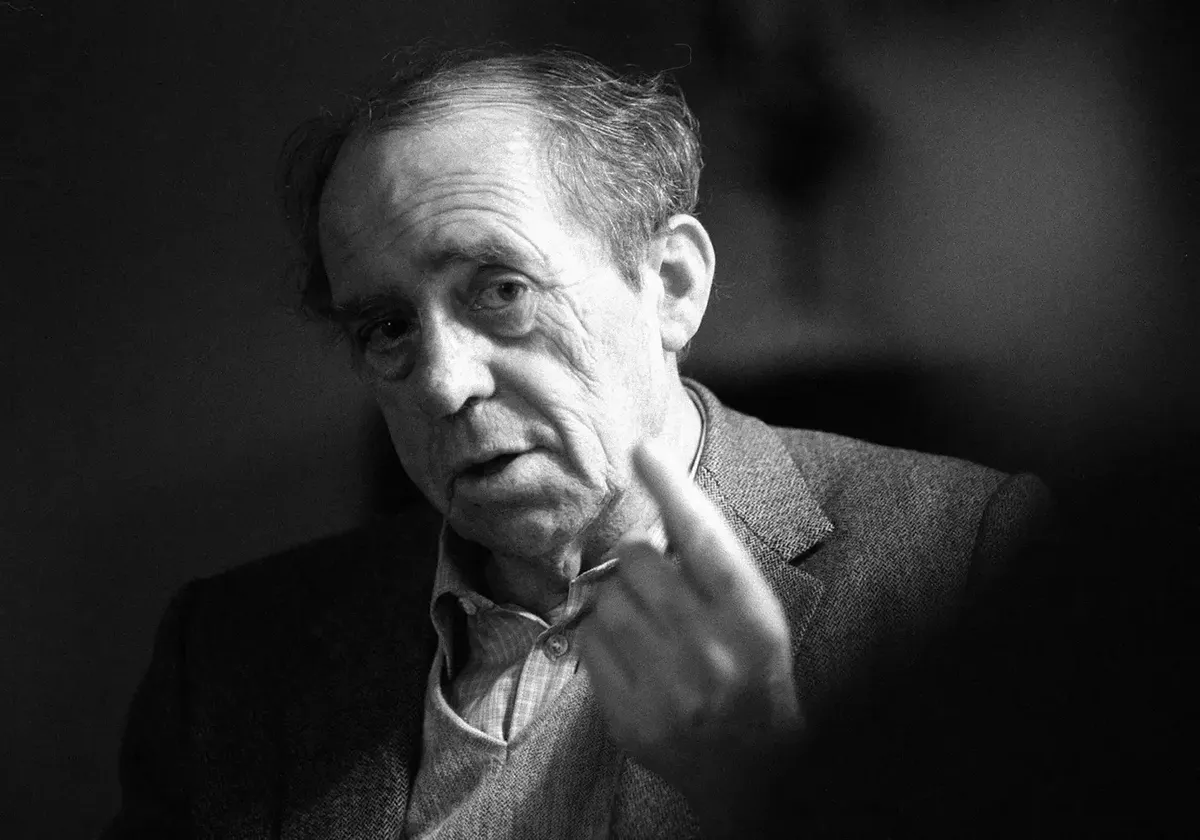
The name of the organization and the name of the author of the books in the court decision are hidden. But, judging by the “List of undesirable organizations” posted on the Ministry of Justice’s website, most likely, this refers to the Nobel Prize laureate, the famous German Antifascist Henry Belle.
The fund named him in 2022 was declared an unwanted organization in Russia. True, the fund was created in 1996, and Belle died in 1985.
... The decision of the court in administrative case No. 5-2145/2023, posted in the public domain, states that the deputy prosecutor of the city of Yakutsk was issued to initiate an administrative case under Article 20.33 of the Code of Administrative Offenses (participation in the activities of an unwanted organization) on the fact of the presence of books in the library of an unreasonable author.

The director of the library did not plead guilty, explaining that they “monitor such literature”, but “considered that this literature has nothing to do with the organization’s activities that use the name of the author in its name.” But she informed the court that "henceforth it would be more attentive to the indicated issue and will put books in a separate bookstore to restrict the admission of an unlimited circle of persons to them."
The court decision states that the Yakutsk prosecutor’s office received information from the Republican FSB Directorate on the identification of these books in the library “During the employees of the UFSB of the operational-search event“ Inspection of premises, buildings, structures, areas of the area and vehicles ”.
It was found that the books are freely available - that the director did not deny: according to her explanations, any person who has a readership, including one -time one, has the right to take any of the books stored in the bookstore in order to study the library in the walls. It is reasonable to ask: why else do you need a library, if not for this? This is a scientific library, not special security ...
Meanwhile, it is indicated that the director “the reason for the presence of these books in free access was explained by a large volume of the bookstore, which must be analyzed, the lack of fixed function of tracking unwanted literature in employees' job descriptions.” But now “all the seized literature by the employees of the Federal Security Service of Russia is written off, and the record about it is deleted from the electronic catalog, i.e. The consequences of the offense are eliminated. "
The court, “evaluating the evidence collected in the case for admissibility, reliability and sufficiency,” comes to the conclusion that Ushnitskaya “improperly executed organizational, administrative and administrative functions, did not provide control of compliance with imperative requirements on the ban on the distribution of books, the author of which is supported by an undesirable organization.”
Ushnitskaya’s fault notes, the court notes, that it “did not organize control over the content of literature intended for use in order to identify sources of the organization undesirable in the Russian Federation, and excluding the possibility of familiarizing the uncertain circle of persons with them, contributing to its distribution in the territory of the Russian Federation, thereby Ushnitskaya contributed to the spread of the ideology of the organization’s undesirable in the Russian Federation.”
According to the court, all this made it possible to distribute books by the author, “whose ideas are distributed by an organization undesirable in the territory of the Russian Federation,” meanwhile, by law, “recognition of an unwanted activity of a foreign or international non -governmental organization entails, including the ban on the distribution of information materials issued by a foreign or international non -governmental organization and (or) it distributed, as well as the production or storage of such materials for distribution purposes. "
Finally, the court states, "regardless of the fact that the author, the author of which is ..., were not published directly in the organization unwanted in the Russian Federation, this organization is named ... and therefore spreads its ideas."
And therefore, the court concludes, “the provenness in the act of the person of imputed administrative offenses shall be in administrative responsibility does not cause doubts.” Moreover, “this violation creates a significant threat to the interests protected by law” ...
“Well, this is impossible even with us! How to develop this? " - writes a familiar lawyer to whom I sent a court decision.
I answer: now it’s not possible, but “developing” is really difficult.
Reading this court decision, I always wanted to pinch myself and ask: where is the law and logic? Starting with the “operational-search events” (ORM), which the FSB's vigilant employees held in a peaceful library (where, if, if not among books, it is easy and pleasant to look for and find a threat to state security?).
The Federal Law “On Operational Investigation Activities” establishes that the ORM is carried out to identify and suppress crimes, and their results (in Article 11 of the Law this is clearly indicated) can be used only for criminal cases, and not for administrative offenses. True, this norm, as lawyers say, has long been ignored - and this is an independent problem ...
Now about the essence: “undesirable organization” is a political invention of recent years, which allows out of court (by the decision of the Prosecutor General of the Russian Federation or his deputies) to declare such a foreign organization, “posing a threat to the basics of the constitutional system of the Russian Federation, the defense capabilities of the country or the security of the state”.
Firstly, if the organization bears someone's name, then it does not necessarily spread its ideas. But even if it spreads, which of these ideas carry the above threats?
The court uses in the decision the expression “undesirable literature”, but in the right of such a term does not exist. The legislation contains “extremist materials” recognized by such a court decision, the distribution of which is prohibited. No “undesirable materials” in the legislation are mentioned. It is not mentioned and the need to “track” them, protecting the access to them of citizens. And even more so, it is not mentioned the right of “organs” these books “remove” and “write off”.
Immediately I recall “Woe from Wit”, where Famusov says: “If you stop evilly: to pick up all the books and burn it,” and then there will definitely not be legal problems, and the library is quite enough in the library.
And the “naked king”, of course: “When the fashion came to burn books in the squares. In the first three days, all really dangerous books burned. And the fashion has not passed. Then the rest of the books began to burn. Now there are no books at all. Fighting straw ... "
The court does not indicate which components of the “ideology of an unwanted organization” are contained in the work of an unworthy author. As it does not indicate, which specifically so that the organization that was not called by him threatens the basics of the constitutional system, defense capabilities and security.
But if (this hypothesis is the most probable - judging by the list of “undesirable organizations”, in the names of which the name of only one famous writer is found) we are really talking about Henry Bella, then there is complete absurdity.
The law prohibits the distribution of materials of an unwanted organization, but what does Bella have to do with it? Who died in 1985, 11 years before the creation of an “unwanted” fund has nothing to do with it, and his works, which are in the library, as the court recognizes, were not published, and therefore, can not be attributed to the “materials of an unwanted organization”?
As for the fact that the fund “spreads the ideas” of Bella, it is appropriate to ask: how and what written by Henry Bella can threaten “the basics of the constitutional system, defense or safety” of the state, which during his lifetime did not exist six years after his death?
What are the ideas of Bellya - for many years published by large circulations and a very popular writer in the USSR - pose a threat to Russia?
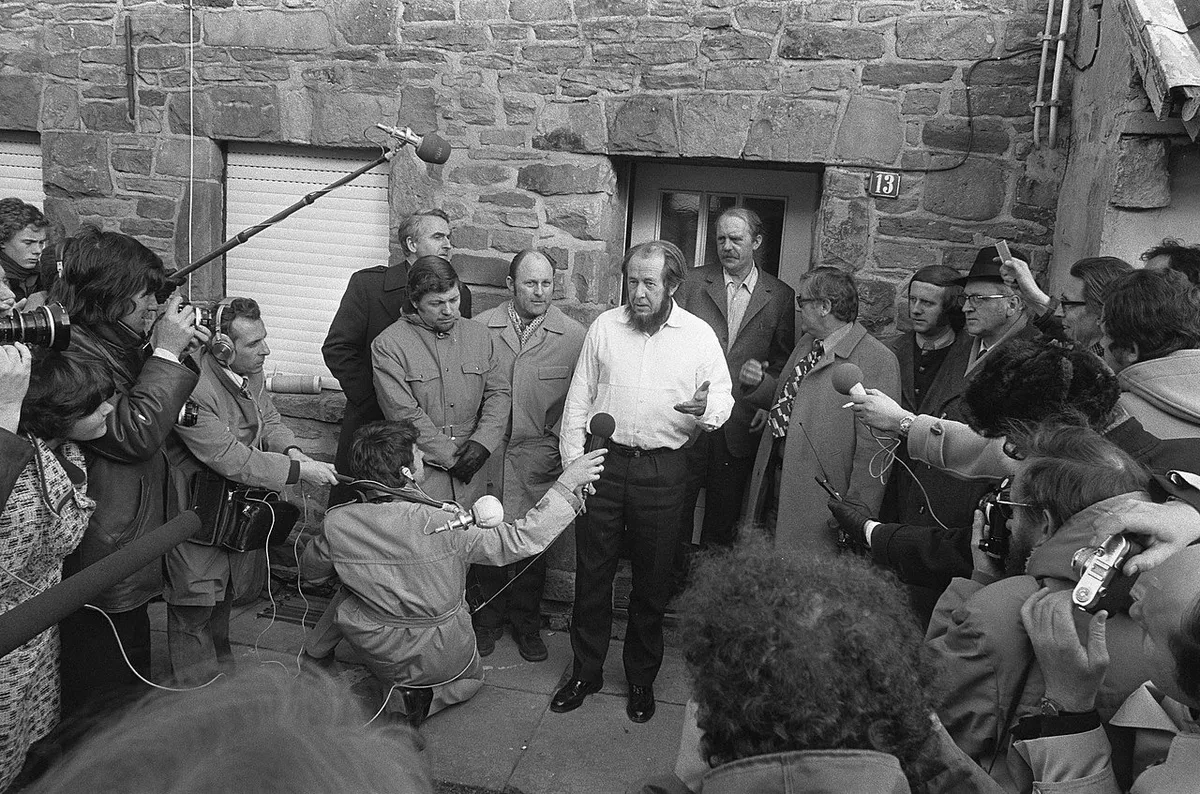
Anti -fascist and anti -war? Rejection of revenge and revival of Nazi ideas in post -war Germany? Conviction of the concordat between the Vatican and the Nazis in 1933? Support for Alexander Solzhenitsyn (it was with Belle that he lived for the first time after expulsion from the USSR in 1974)?
Who, when and on what legal basis he issued an “imperative order” about the prohibition of his books, of which the director of the scientific library is accused of the non -fulfillment?
And, by the way, what to do if any unwanted organization begins to “spread ideas” of Pushkin or Chekhov, Tolstoy or the mentioned Solzhenitsyn? Their books will also be attributed to “undesirable literature”, will they prohibit and seize?
There is no answer to these questions in the decision of the Yakut court - but, apparently, there are so few faith in the Yakutia in justice that there is no information in the case card even about attempts to appeal this decision by the fined Ushnitskaya ...
One of the human rights activists is ironic (sad, of course):
“Looking at this court order, I begin to worry about geographical maps, globes, geography textbooks and geography teachers. Are the Gudzon River and Gudzon Gulf on maps and globes?
Are there mentioning them in geography textbooks? Indeed, the “undesirable” organizations included the “Gudzon Institute”. And it’s scary to think about Europe - in the list of 11 organizations with the word “European” or “European” in the name. And for the LDPR it’s somehow fearful: in the list of undesirable almost two dozen organizations with the word “democracy” and its derivatives in the name and several organizations, the names of which are mentioned by liberalism. And there is even a phrase: “liberal-democratic” ...
But what to go far: in the same list of undesirable - the American Foundation of Andrei Sakharov.
They would not have begun - according to the logic of the Yakut court - the books of Andrei Dmitrievich to be recognized as “unwanted literature”, to prohibit their distribution and fine for their presence in libraries with subsequent “removal” and destruction.
However, the books of Henry Belle are currently sold freely in bookstores.