
Translated material
New Caledonia: "The state is me?!"
What is the trick of the agreement, which at first glance gives the New Caledonia a “chance” for independence from France

Photo: Sebastien Bozon / AFP / East News
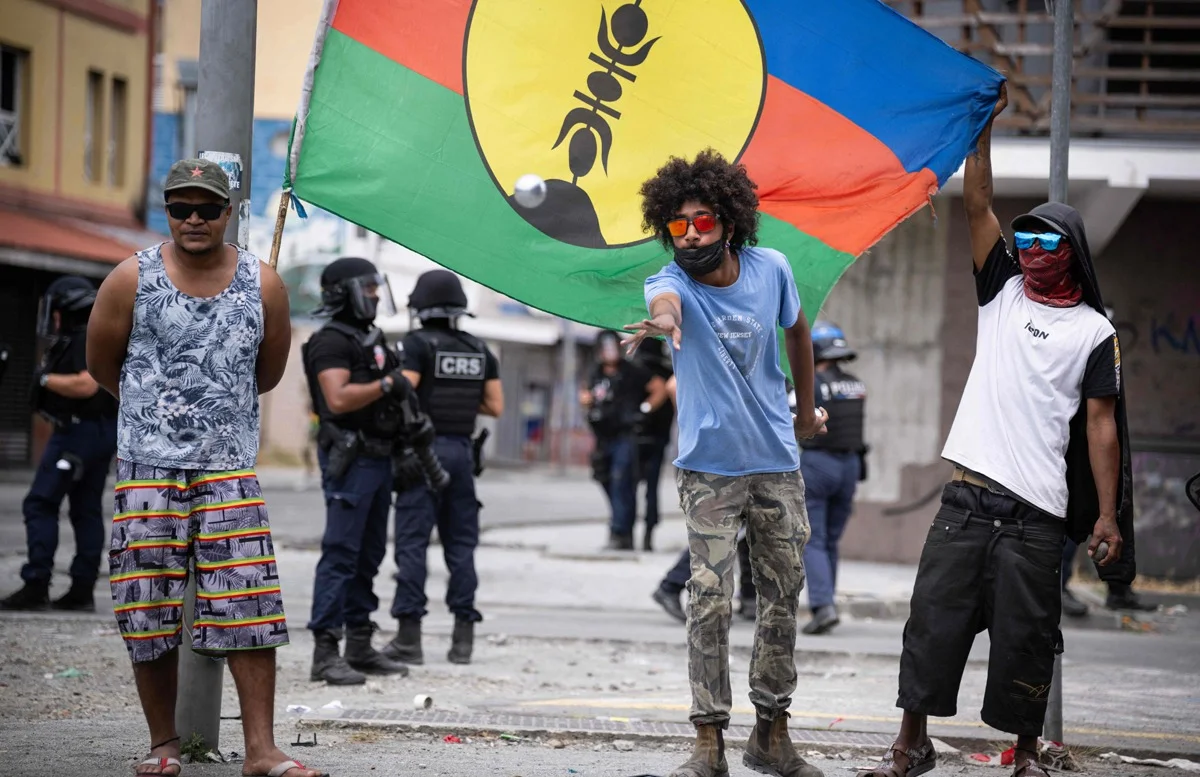
The 270,000th new Caledonia is an archipelago in the southern part of the Pacific Ocean-one of the twelve overall territories of France. And the most troubled. A little over a year ago there were riots here, leading to the death of 14 people. In the morning last Saturday, after a sleepless night of negotiations (which was preceded by a multi -day “marathon”), 18 people from various political camps of the archipelago - from the irreconcilable “loyalists” (i.e., who want as closely as a close connection with the metropolis) to the Induticists, who are ready, if we must “die” (conditionally speaking) for the independence of the New Caledonia - signed with the central authorities historical "The draft agreement." The document implies, among other things, the creation of the “state of New Caledonia” within the framework of the French Republic. At the same time, in theory, you can go beyond ...
"Peace Treaty" against the backdrop of the fire "separatism"
Before familiarizing yourself with the historical document, we consider the context in which its adoption was a hot demand of time.
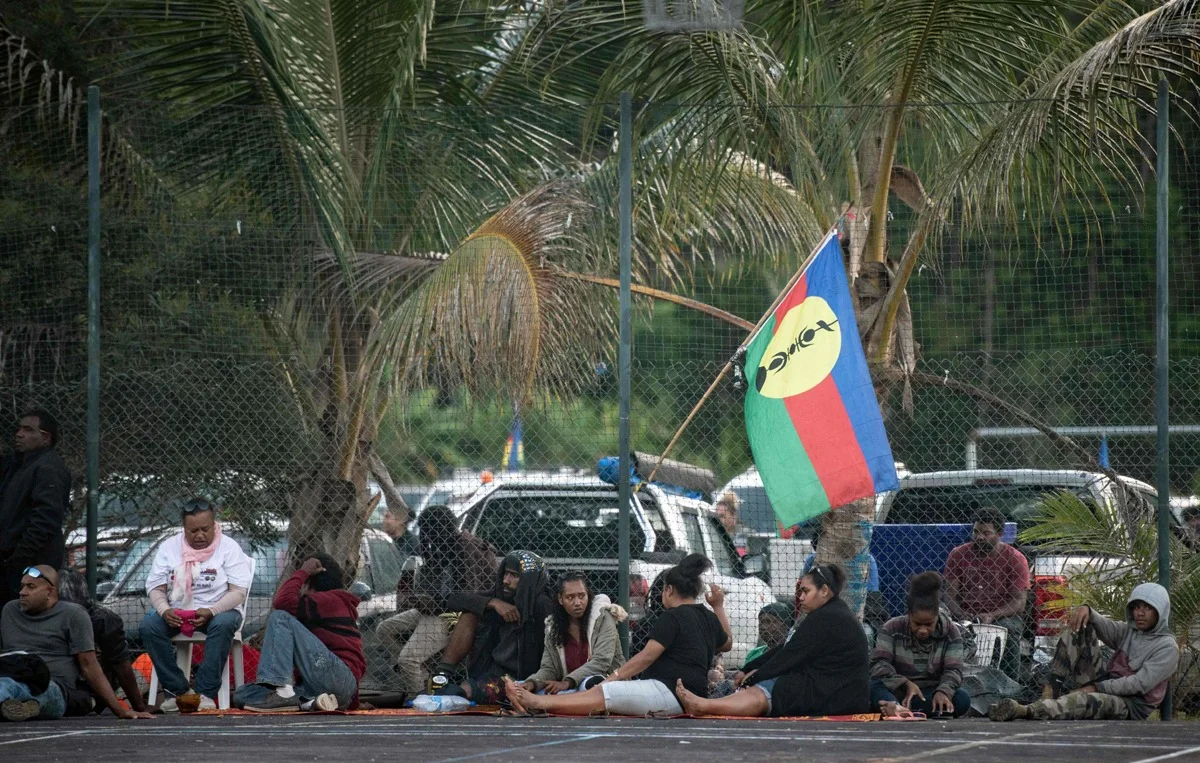
The riots in New Caledonia ( for brevity will be called the NK ) in May 2024 became a reaction to the reform proposed in Paris - an increase in the electoral list before provincial elections*. This reform was supposed to include about 25,000 new voters in the electoral building - those who were born or continuously live on the archipelago for at least 10 years - and would have increased the electorate of loyalists even more. So the groups of independence supporters, especially the Kanakian (kanaki - the indigenous residents, which make up the majority - 41% compared to “representatives of other ethnic groups”), took this as a threat to their political influence and an attempt to “diminish the autochthonous population”.
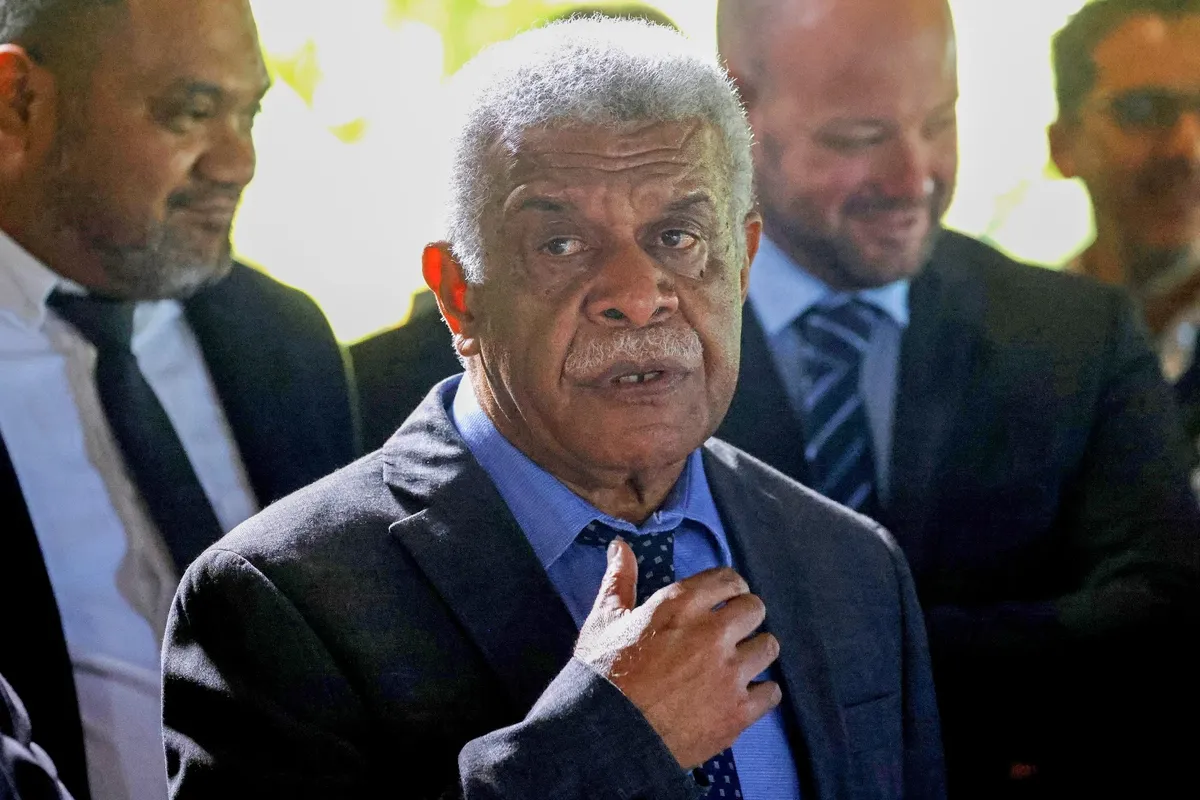
In addition to a political impulse, as demographers, sociologists, anthropologists and ethnologists, “deep socio-economic and ethnocultural disagreements”, led to a flash of violence. For example, among the Kanak youth, a high level of unemployment - and many accuse of this, including an increase in the migration of Europeans and Polynesians in the Tax Code.
Add here a huge dependence on the volatile prices in the Nickel market (this is 90% of the export of the Tax Code and a quarter of jobs). Add here that jobs are concentrated in the capital of Nomea and mining, while rural and island areas suffer from the outflow of the population and lack of infrastructure. Add a very large gap between the living conditions of the Kanak population (often poor and rural) and the population of European origin (s), which lives in cities and is better integrated into the economy. ” Although the economy is one -sided, weak and significantly depends on subsidies from Paris. Finally, keep in mind that most of the goods are imported - from France and Australia - and this does not contribute to low prices, making the cost of life in the NC one of the highest in the region, and earnings are not at all. Therefore, paying for most goods 30-50% more expensive, local residents also receive an average of much less than the French in the metropolis.
In the spring of 2024, the archipelago survived several weeks of riots, which, among other things, brought damage in the amount of two billion euros - a huge amount on the Caledonian scale.
The protests, which began as demonstrations against the reform, grew into fierce clashes: arson of buildings, blockade of roads, shooting ...

The archipelago, French since 1853, has been experiencing similar outbreaks more than once. In the 80s there was a whole series of violent clashes with the death of people-both kanakov with the police and the military, as well as the kaldoshi with kars. In May 1988, on the island of Uvea, the Kanak separatists seized 27 gendarmes and officials hostage (and killed 4 gendarmes), demanding the independence of the new Caledonia. Two weeks later, the French special forces conducted a power storming of the cave, as a result of which 19 canacle activists and six more French military were killed. A few weeks later, Paris made concessions: the Matignon-Udino Agreement was signed, according to which the region receives new rights and powers, the people of the Kanakov are recognized and in which the “desire of the inhabitants of the New Caledonia is noted to turn the page of violence and contempt to write together the pages of the world.” Ten years later, they signed the Numey agreement ***, in the preamble of which it was said: “The time has come to recognize the shadows of the colonial period, even if it was not devoid of light” and which further expanded the rights of the NK. In addition, it postponed three referenda on self -determination for 20 years.
They, as prescribed in the contract, took place in 2018, 2020 and 2021. To the question "Do you want the new Caledonia to find complete sovereignty and become independent?" The voters answered
"No" (56.67%) in 2018,
"No" (53.26%) in 2020,
"No" (96.5%) in 2021.
At the same time, the results of the last explicit will not be taken into account: when the French government refused the Independers in their demand to defer voting due to the consequences of the Covid-19 epidemic in the Kanak communities, they called for a referendum boycott. As a result, the sections came mainly by loyalists.
Negotiations that were on the verge of a breakdown, and ended with a "historical compromise"
... On July 12, 2025, in Buzhal, Paris, supporters and opponents of independence signed a “draft agreement” with the French government on the future institutional structure of New Caledonia. At the same time, when Emmanuel Macron opened negotiations on July 2 in the Champs Elysees, he, to universal surprise, for the first time (at this level) nominated the idea of New Caledonia as an “associated state” with France.
This concept was quickly discarded in favor of more open expressions: “unique status” or “New Caledonia state”. Purpose: to overcome the binary alternative between independence and preservation of the status quo in the form of broad autonomy within the republic.
Six Caledonian delegations (18 delegates) participated in discussions with representatives of the government and president at Hilton Hotel in Buzhal. It was the final part of many -month consultations and approvals.
The main negotiator from the French state was the Minister of the Overseas territories (aka ex-prime minister of the time of the President of Hollande) Manuel Valt.
The negotiations, they say, were difficult, at one of the moments, “the minister had to hit the table with his fist,” said the source of Le Monde, and by about the tenth day the majority had “nerves to the limit” and the feeling of the upcoming failure.
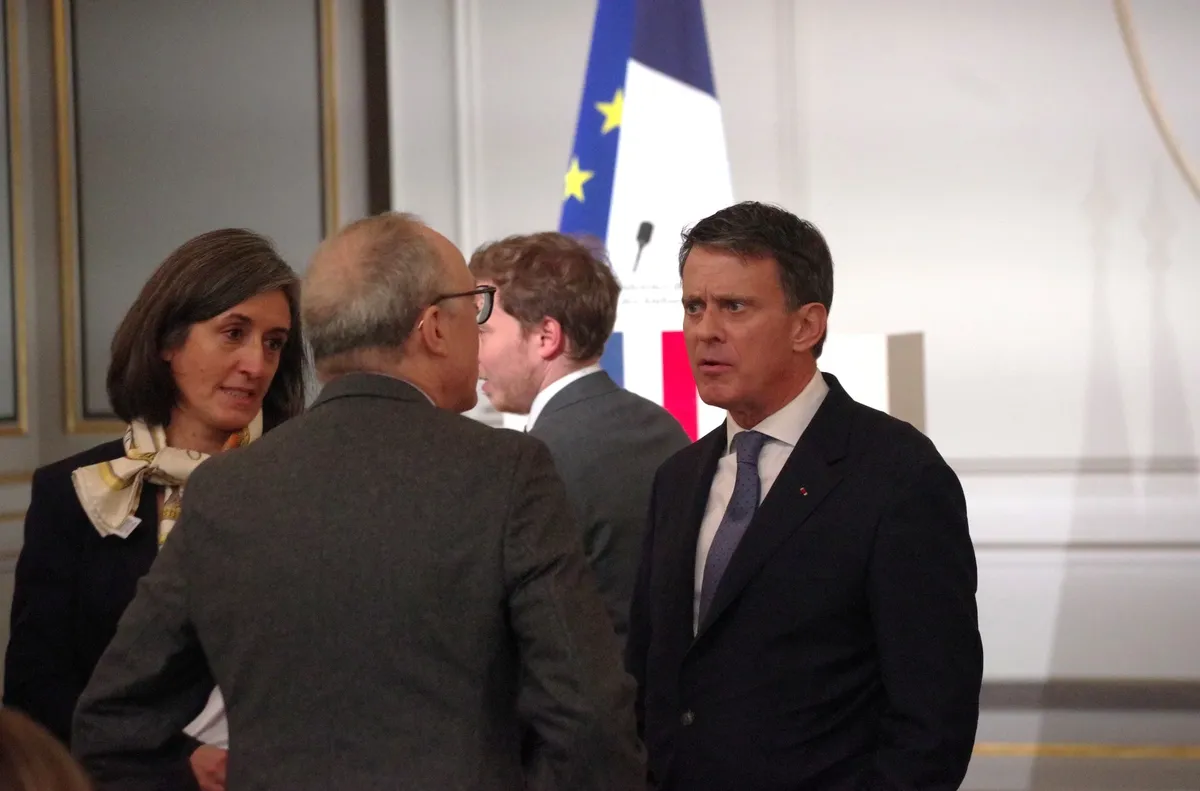
“... either we sign for 24 hours, or leave with nothing,” the negotiation participant admitted on Friday during the day. As a result, they sat all night-“at 4.00 there was still a pitch dead end”, “by 6 morning lights at the end of the tunnel became visible” and soon signed ... two days before the national festival of France.
But as a gift for the holiday, this was perceived, of course, not all.
For example, “French turbopatriots” (nationalists with tiny ratings such as “pro-Russian” Rupors of the quiet sound of Filippo and Dupont-Enyan) announced “state treason”. The most irreconcilable “separatists” from Nomea (more on that below) turned out to be dissatisfied.
What they signed
A document called “Betting on Trust” (Le Pari de La Confiance) is designed to fix “a political decision based on a sustainable institutional organization that allows the new Caledonia to return to stability and open new prospects.”
Key provisions:
The distribution of authority: the French state retains key sovereign regions, but the new Caledonia gradually strengthens its capabilities in them.
International relations: New Caledonia will conduct its diplomatic actions “in accordance with international obligations and fundamental interests of France”, while the state undertake to support its international mission.
Defense: the state retains competencies, but provides “informing and consultations with the Caledonian authorities”, and also guarantees territorial integrity and protection of the population.
Safety and public order: the “Higher Caledonian Security Council” is being created, the provinces are given the authority to create their own police ...
Justice: the French state controls justice, criminal policy, penitentiary system ...
Currency: remains with France, with the preservation of the Pacific Frank, tied to the euro, and the new Caledonia is participating in the Office through the observation council of the institute of emissions.
Learning: the state supports the training of Caledon personnel, expands educational programs and promotes the integration of the Caledonians into public services.
The transfer of sovereign powers: the Congress of New Caledonia (Parliament) can adopt a resolution with a qualified majority of 36 members (with a common new composition of 56, i.e. 2 more than it was still) to demand the transfer of sovereign powers in areas such as “defense, currency, safety and public order, justice and control over legitimacy”. It is important that "no transfer of sovereign powers can be carried out without the approval of the Caledonians." Those. Without a referendum.
Electoral building:
Persons registered in special lists or living in New Caledonia for at least 15 years are allowed to participate in the elections of 2026. For subsequent elections - only persons of Caledonic nationality.
Caledonic nationality:
The “Caledonian nationality” is being created, which gives dual citizenship - French and Caledon. While maintaining the European. But! "The abandonment of French citizenship will entail a rejection of Caledonian citizenship."
Basic Law:
In the period from 2026 (after the provincial elections scheduled for May), the “Basic Law of the New Caledonia” can be adopted, which will consolidate its “ability to self -organize”. This law may provide for a change in the “identification symbols of the country (flag, anthem, motto)”, include the “charter of Caledonian values”, reflecting the cultural and social diversity of the territory, as well as the reform of institutional architecture - for example, a change in the name of Congress, the redistribution of powers between bodies and clarifying the status of communes. The adoption or revision of the law will require the qualified majority of the three fifth congress.
Economy:
The agreement provides for a “package of economic and financial revival” with special attention to the strategic plan for the nickel industry. The state guarantees the resumption of nickel processing in the north, a year after the KNS plant was closed, where about 1,300 people worked.
Social policy:
Ambitious measures are promised in healthcare, education, social support, with a priority for young people - "to guarantee each young person effective access to education, employment and culture."
What else to do
But in order for all this to be at least partially carried out, it is planned: in the fall to adopt a law on the transfer of provincial elections in the Tax Code for June 2026 and vote for the draft law on changing section XIII of the Constitution of France (“transitional provisions regarding New Caledonia”). To do this, the two chambers of the French parliament must gather for Congress in Versailles.
In the current composition of the parliament, the conditions for the adoption of the agreement can be fulfilled: the Socialist Party and the right -wing “Republicans” approved it ... And even Marin Le Pen, criticizing the “ambiguity of the text”, notes that he “eliminates the risk of the worst in the short term”, and only threatens to offer “improvements” ... about the same position of the extreme melanchon. Another question is that the parliament at any moment can be dissolved, and this may affect the result and terms of adoption ...
If everything goes according to plan, then in February 2026 it is planned to submit a draft agreement on the approval of the Caledonians (referendum), and then hold the municipal and provincial elections in the spring and summer of 2026 ...
Finally, before all this, it is necessary that in the newest Caledonia, the fighters for independence do not raise a scandal (along with the large crowds of the people) with a demand to withdraw the newly signed “trust rate” ...
Because, firstly, if the agreement is accepted, it reformates political forces in the local congress: the southern province (rich and loyalist) will receive 37 seats (+5), and the islands of Luyti and the Northern Province (less inhabited and mainly Independence) will lose 2 and 1 mandates, respectively. This will strengthen the positions of loyalists, who will now be easier to block the transfer of sovereign powers.
Reactions of loyalists and irreconcilable supporters of independence
Those who participated in the negotiations insist: each side took a step towards another. Independers (we are talking only about those who participated in the negotiations) went to a serious step, agreeing to the transition from the requirement of complete independence to the idea of “divided sovereignty”. To convince the authorities, they emphasized that, against the backdrop of the growth of China, New Caledonia is interested in the military defense of France. The promise of the massive support of the Nickel industry of the NK, which is promised to include in the EU strategy to ensure raw material independence, played a significant role.
The President of the Southern Province and the leader of the loyalists Sonya Bucks said:
“This compromise will not fully satisfy anyone. But I am fully convinced that he allows us to remove Caledonia from a spiral of violence <...>.
Caledonian nationality does not make new Caledonia an independent state. ”
However, not all loyalists are satisfied. The vice-president of the Southern Province Philip Blaz believes that his political movement “crossed the red line”: “For me personally, this is a fundamental gap with what I fought for forty years-to remain a Frenchman.”
Among the supporters of independence, the reaction is even more ambiguous. For the Brenda of Vanabo-Ipze, one of the leaders of the coordination cell of field operations (CCAT), who was in prison in France and the comment of France-Presse, "this document is signed without us, it does not concern us."
“We are in shock,” said Marcel Toyon, a member of the Caledon Union party. “We repeated many times that they should not sign anything.” According to him, the Kanak Socialist Front of National Liberation (Flnks) did not give any authority to the negotiators to sign anything. And they signed!
Christian Ten, who spent a year in France for the alleged role in the May riots of 2024, was not invited to negotiations, AFP notes. And he also says: "We are waiting for an explanation!"
Marseille Toyon generally hinted at possible “problems”: “We are already calling for peace to avoid returning people to the road.” Considering that the archipelago is still faced with economic and social stress, the coming days will be decisive to explain the essence of the agreement and “victims” to which the Indianists went, observers note.
The politician Joel Kasarera, the creator and head of the Loyal Movement of the Movement “Construure Autrement” to Paris, “fears” “New May 13” - the date of the beginning of the riots of 2024, “if frustrations are not eliminated”. And the youth, who was in the center of last year’s “uprising”, remains, according to him, “forgotten or barely mentioned” in a new agreement.
As notes the publication Médiapart,
Some of the supporters of independence generally believes that the “individual state” within the framework of France does not bring closer to sovereignty, but rather is a “distracting maneuver”.
“Honestly, the neocolonialists got well: the state of the New Caledonia ... But within the framework of the French Constitution, and the Caledonian nationality, where the Kanakov culture is just one of the components,” the left -wing “unhust movement for independence” complains, founded after the first referendum on self -determination in 2018.
Reactions of the authorities
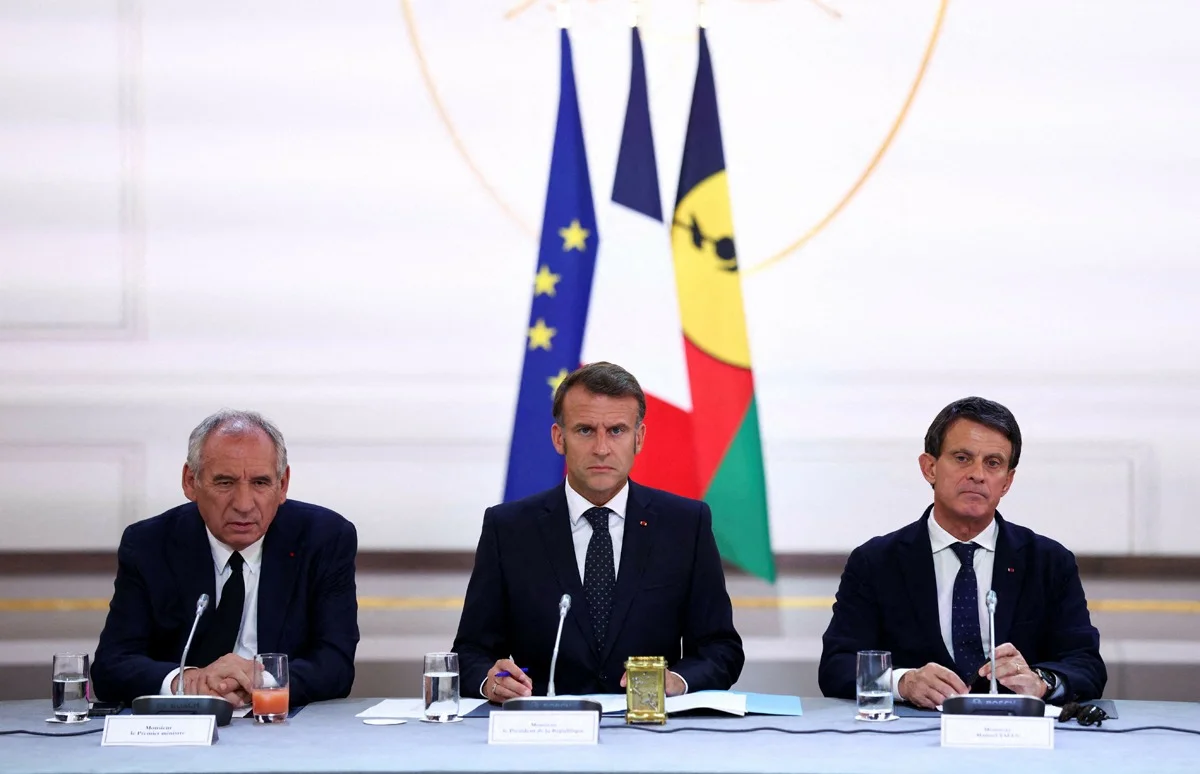
President Macron wrote on the social network X : “After more than ten days of discussion, the elected representatives of the New Caledonia and representatives of the state reached a historical agreement. The state of New Caledonia in the republic is a bet on trust. I thank the state minister, the Minister for the overseas territories of Manuel Valsa and the participants in the negotiations, whom I will accept in the Champs Elysees ... Now the time has come for respect, stability and unification of goodwill in order to build a common future. "
Accepting the signatures in the Eliseisky that day, Macron said that "after two agreements and three referendums, New Caledonia, due to the fact that you signed, opened a new page of his future in a calm connection with France."
Мануэль Вальс, подчеркнул «разумный компромисс», который сохраняет связь между Парижем и каледонской столицей Нумеа, но с «большим суверенитетом для Каледонии».
«Ничего еще не выиграно», — предупредил, однако, министр, призвав «убедить» жителей архипелага.
Реакции СМИ
Реакция прессы на соглашение в Буживале была в основном сдержанно позитивной или очень позитивной, с акцентом на уникальность достигнутого компромисса и его историческое значение.
В редакционной статье Le Monde под названием «…Урок ответственности» подчеркивается, что «и индепендистам, и противникам независимости, решившимся на риск ради создания «Государства Новой Каледонии», предстоит еще убедить свою базу — но это усилие оправдано». Газета напоминает, что еще год назад, после трагических беспорядков 13 мая 2024 года, которые унесли 14 жизней, такой поворот событий казался невозможным. Тем не менее, соглашение между ранее враждующими сторонами стало возможным благодаря «десяти напряженным дням переговоров под эгидой министра по делам заморских территорий Мануэля Вальса».
По мнению Le Monde, если соглашение будет реализовано, то Новая Каледония превратится в «государство в составе Французской Республики, обладающее рядом атрибутов суверенитета», в этом — уникальная институциональная конструкция, отражающая всю сложность каледонского вопроса. Однако газета предостерегает от чрезмерного оптимизма:
«в каждом лагере радикалы будут склонны видеть стакан наполовину пустым», а значит, компромисс, как и прежде, может быть сорван с любой из сторон. Особенно учитывая то, что три референдума о самоопределении, проведенные с 2018 по 2021 год, не привели к успокоению страстей, лишь усугубив политическое противостояние.
Газета призывает каледонских политиков держать себя в руках: «Катастрофическая экономическая и социальная ситуация, в которой сегодня находится архипелаг, требует ответственности. Столкнувшись с внутренними разногласиями, неспособностью удовлетворить ожидания населения и находясь под давлением со стороны экономических кругов, каледонский политический класс, утративший доверие, должен выйти из тупика. И соглашение в Буживале предоставляет такую возможность».
Обозреватель правой Le Figaro Гийом Табар пишет: « Верить, что соглашение в Буживале разрешает кризис в Новой Каледонии и снимает все опасения относительно будущего французского влияния в Тихом океане, было бы иллюзией. Но сам принцип соглашения — это успех. Тем более что до самого конца провал казался близким. Этот риск повлиял на решение сторонников независимости и лоялистов поставить свои подписи под одним и тем же текстом. Ведь, если соглашение не является гарантией для будущего, то уход с констатацией провала был бы верным сценарием катастрофы, как для гражданского мира, так и для экономики, роковым для архипелага».
Он обращает внимание на компромиссный характер документа, который «предполагает взаимные уступки, воспринимаемые частью общественности как предательство». По его мнению, соглашение напоминает «независимость во взаимозависимости», термин, введенный Эдгаром Фором в отношении Марокко в 1950-х годах. Табар задает «ключевой вопрос»: «Как делегации будут встречены по возвращении?», и предупреждает, что соглашение может вызвать цепную реакцию требований большей автономии со стороны других заморских территорий.
О той же опасности «эффекта заражения других Заморских территорий» говорит и крайне правая госпожа Ле Пен. При этом эксперт, бывший генеральный секретарь Конституционного совета Франции Жан-Эрик Шётль, в интервью той же Figaro говорит: «Я не очень верю в «эффект заражения». Прежде всего, потому, что у Новой Каледонии особая, болезненная история, отличающаяся от других территорий, которые могли бы потребовать большей автономии. <…> Это соглашение направлено на ограничение конфликта, имеющего культурный и этнический характер. В этом его главное достоинство, особенно учитывая, что до 12 июля все казалось безнадежным. Остается только надеяться, что оно не будет саботировано радикальными сторонниками независимости».