
Translated material
Humpbacked horseback
Valery Gergiev is going to perform in Europe for the first time since the beginning of the war. His concert in Italy is a gift to propaganda and the success of the soft power of Russia
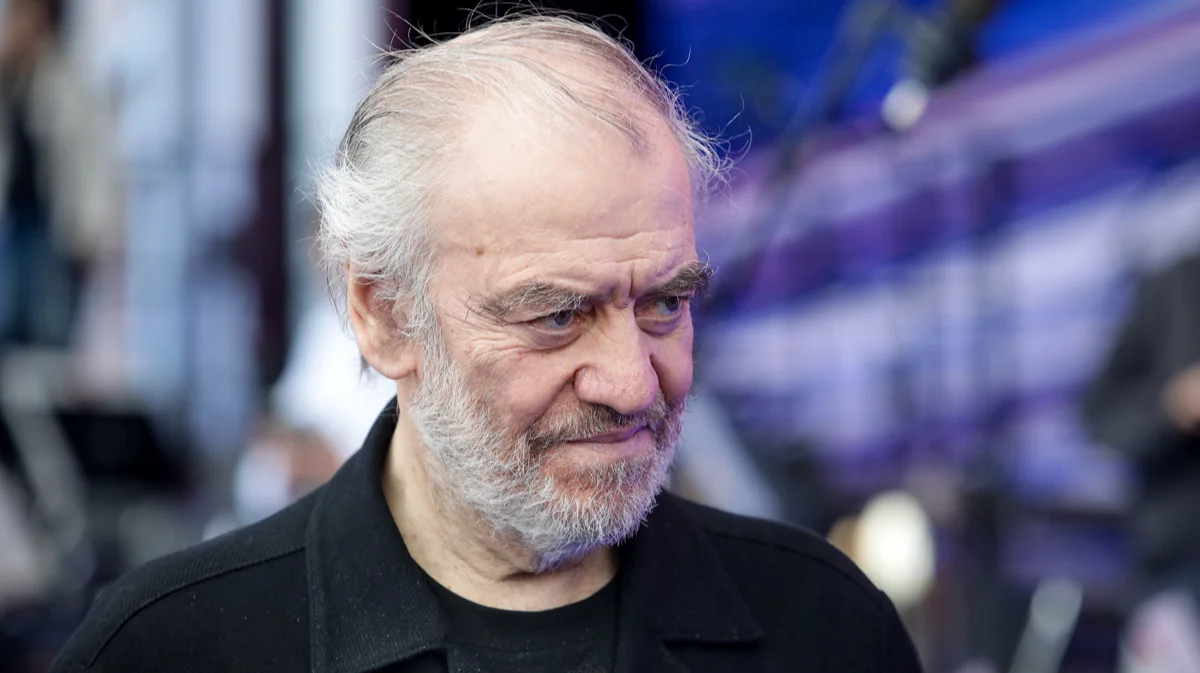
Valery Gergiev. Photo: Arthur Novosiltsev / AGN "Moscow"
On July 27, in the Italian city of Kasert, on the site of the Royal Palace, an important cultural and political event is planned. Valery Gergiev - the head of the Bolshoi and Mariinsky Theaters, “Friend of Vladimir Putin,” returns to Europe and will conduct the Philharmonic Orchestra of the city of Salern, with the participation of the soloists of the Mariinsky Theater. In the program of the work of Verdi and Tchaikovsky, tickets - from 10 to 15 euros.
Not only organizations of activists and the FBK, but also the vice-chairman of the European Parliament, addressed the performance of the European Parliament. The response of the organizers of the Un'estate da Re and the leaders of the campaign (the region where the casket is located): “Culture and art is the space of dialogue between people and the possibility of developing solidarity. We enter the presence of Jews and Palestinians, Russians and Ukrainians and do not block the culture with a political agenda ... A few months ago, in the Naples Cathedral, there was a joint event of artists from Israel, Palestine, Russia and Ukraine. ” The mention of Israel is not accidental: the festival is also criticized for the participation of the Israeli conductor. How fair is this argument and what is the significance of Gergiev’s participation in the material of Anastasia Snegova.
After February 2022, European and American cultural institutions turned out to be between two lights. On the one hand, there are many years of personal and business relations with Russian cultural figures: directors, conductors, artists, artists, soloists and so on. On the other hand, the obvious impossibility of conducting Art Business As Usual.
Unlike the cultural institutions of Russia and the post -Soviet space, Western cultural institutions are managed by their own management. This seems obvious, but for the analysis of the Western context it is important to remember: in Europe there is no “manual control” by ministries and departments, a single cultural order, common “dunes” or circulating “black and white lists”. Officials can influence (or try to influence) to solving institutions, but formally, their power rarely reaches for the appointment of leadership and budgeting.
Thus, although in the early days, weeks and months of invasion of Ukraine the Western institutions reached a consensus, he did not hold on the prescribed “Rules”, but on the similarity of the ideas of cultural managers about the beautiful.
We described in detail the evolution of these ideas during the war years. In short, in 2022, the condition for maintaining work in the West was a public condemnation of military operations (albeit in a general humanistic tone, without indicating the culprits).
Valery Gergiev worked all his life in the West. He led the Munich, London, Rotterdam orchestras, was the main invited conductor of the New York Metropolitan Opera, was a regular guest of the iconic festivals of the world and gathered full halls of fans around the planet.
Despite the support of the annexation of Crimea in 2014, performances in Tskhinval in 2008 and Syrian Palmyra in 2016 and participation in the election campaign of Vladimir Putin in 2012 and 2018 as a proxy, the Western institutions continued to cooperate with him. Activists periodically protested against this: for example, in 2013 they demanded to speak out against the Law on LGBT under the slogan: "Your silence kills Russian gays."
But neither in the case of Gergiev, nor in cases with other Russian performers for Europe and the United States, there were no problems.
In 2022, after the start of Russia's full -scale invasion of Ukraine, the situation changed. The institutions were not opposed to working with Gergiev, as before, but they demanded that he designate their political position against the war. Gergiev proudly refused, preferring good relations with the Russian elites of the Western career.
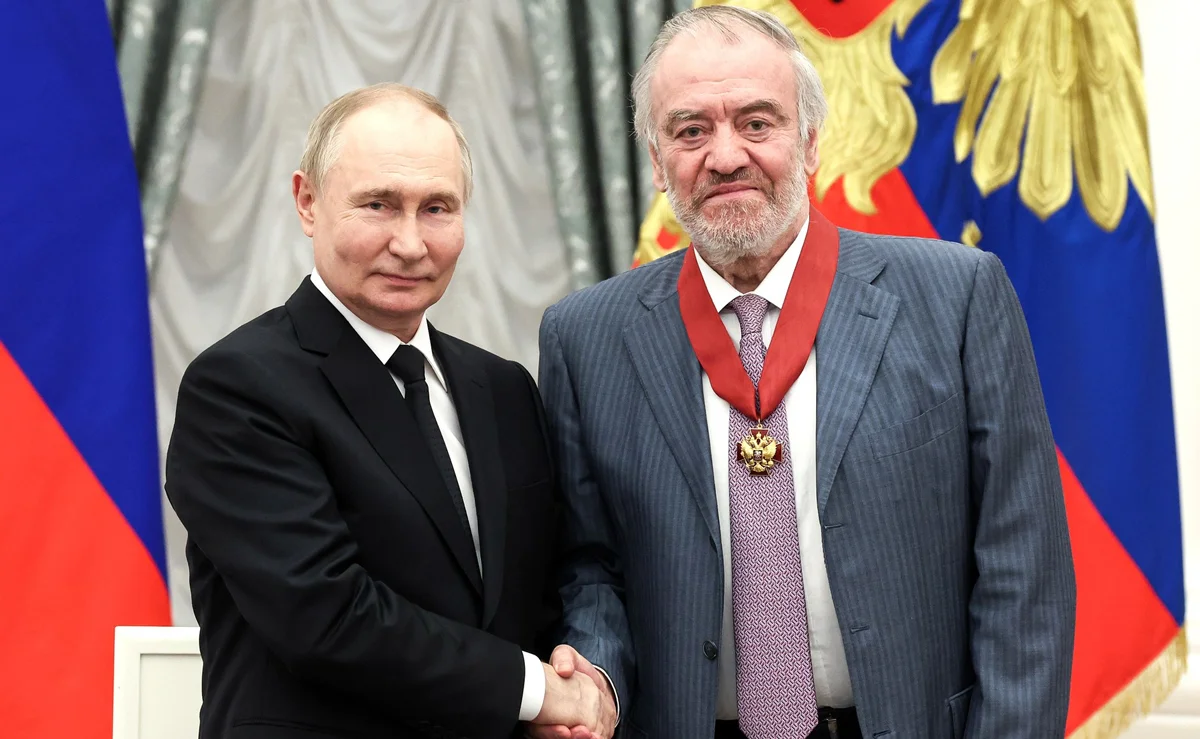
Already in March 2022, Gergiev received an offer to head the Bolshoi Theater, and personally from Vladimir Putin. The idea of uniting a large one with the Mariinsky Theater and thereby revive something like the “Directorate of Imperial Theaters” has long persecuted Gergiev. Exile from the West paradoxically gave him the opportunity to fulfill this dream: the Kremlin perceived the silence of Gergiev about the war as evidence of loyalty, and a year later, Gergiev realized Putin’s proposal .
And then the strange thing happened. In 2024, Gergiev, for all nomenclature customs, would suppose to enter the list of Putin's proxies in the next election: insiders reported that he would be there. But in the final list he was not.
Of course, this was not evidence of illness. Against the backdrop of outstanding stories about how Gergiev leaves the premiere show at the Bolshoi Theater in order to carry out the songs of Maria Zakharova’s poems at VTB Arena, present a certificate for a million rubles to the family of the deceased in the war and returning to a large afternoon (!) The anthrax, it would sound ridiculous. Its fund continues to receive state contracts for hundreds of millions of rubles, he himself travels with tour to China , Oman and Bahrain , his business is flourishing.
The fact that it is for business and what corruption schemes are used in it, there was a detailed investigation of the FBK. In this investigation, you can also find many evidence of Gergiev’s connections just with Italy: he was even a tax resident of this country, while having the citizenship of the Netherlands.
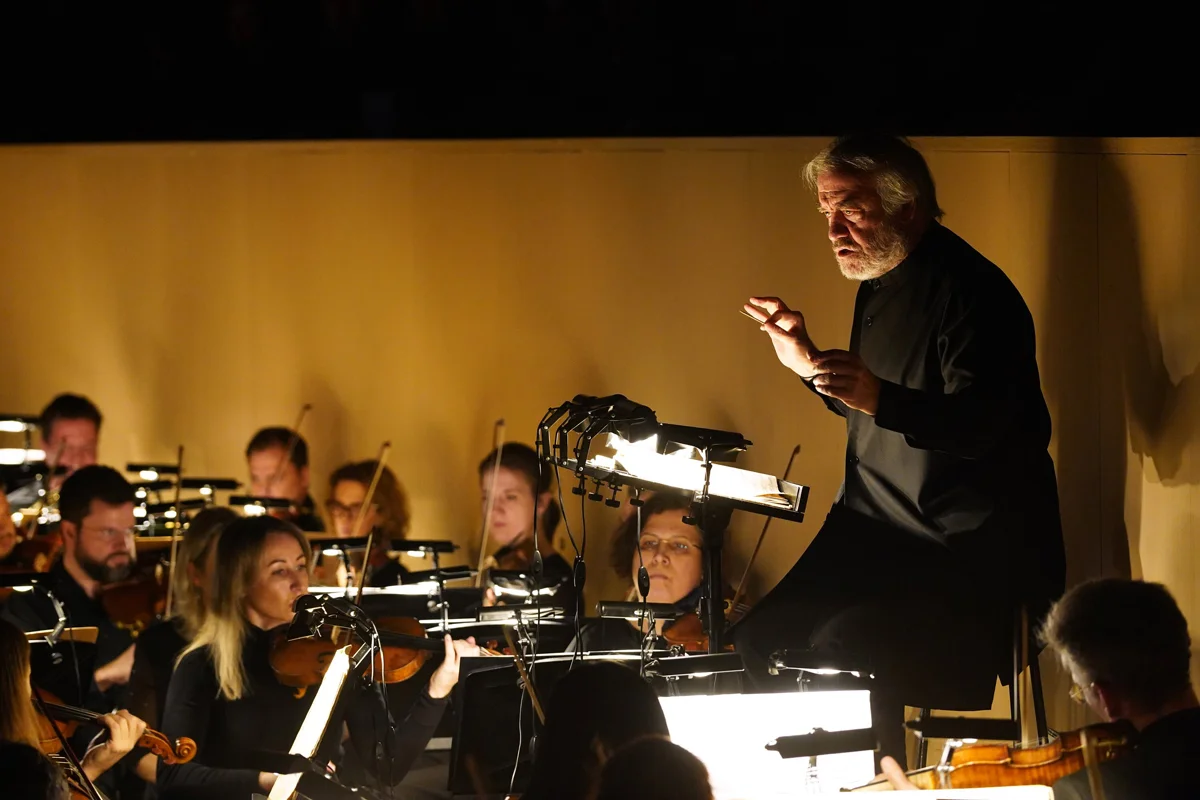
Gergiev’s silence led to the fact that the sanctions were never introduced against him, with the exception of Canada, which made him on the list just a month ago. The non -participation of Gergiev and the groups entrusted to him in military propaganda (yes, his theaters, like everyone else in Russia, participate in charitable programs, but he did not come to the occupied territories) provided him with the lack of claims from Europe.
Such "silence" in modern Russia is not allowed to everyone. In this case, it speaks not of Gergiev’s front, but that the Kremlin considers it as an asset of the “soft power” of Russia for the future - and therefore consciously holds it away from toxic activities.
The chance of using this "soft power" appeared just with the advent of Donald Trump and the resumption of negotiations in Istanbul. In the spring it seemed that in the war, if not the world, then at least a truce could be reached - and many of the European cultural managers were then happy that they would soon be able to resume cooperation. Especially with those who are known and remembered in Europe. Especially with those who remained “relatively clean” according to formal criteria.
Already in March there was news about the fact that Gergiev could make a concert in Spain - today in the Ibercamera agency in Barcelona there is no, but there is Theodore Krentzis, who is also silent about the war and working in Russia. The construction of the hall for 80 billion rubles from the suction VTB does not prevent him from conducting the premiere in the Paris Loca of Garnier.
In the argument of the European side, the paradox is highlighted.
On the one hand, Gergiev is “silent” about the war, which means that he can act in Europe. On the other hand, “art is higher than politics”: does this mean that if he spoke in support of aggression, he would still be happy to see there?
Some European cultural managers understand this. For example, last summer we had an interview with the leaders of large German theaters. Many of them continued to cooperate with the Russians, despite the lack of public condemnation of the war from the latter. Director of the opera in Dresden formulated his position so:
“[The letter in support of the annexation of Crimea in 2014 was] for many signing artists, not about political views, but about survival. This must be understood. <...> I cannot ask [the conductor who signed him] and other musicians about political views, this contradicts the principles of democracy and freedom of choice. Of course, we will not work, for example, with [Valery] Gergiev, but this is not only a musician, but also a manifesting propagandist. These concepts need to be separated. ”
Gergiev’s performance at the music festival - we will be honest, far from the first category - it is important not by itself, but as a sign that fatigue from hostilities and analyzing “domestic -Russian nuances” led part of the European cultural establishment to an attempt to return in 2021. Then the dictatorship in Russia was not on the agenda, and today many external observers consider it as something separate from the war.
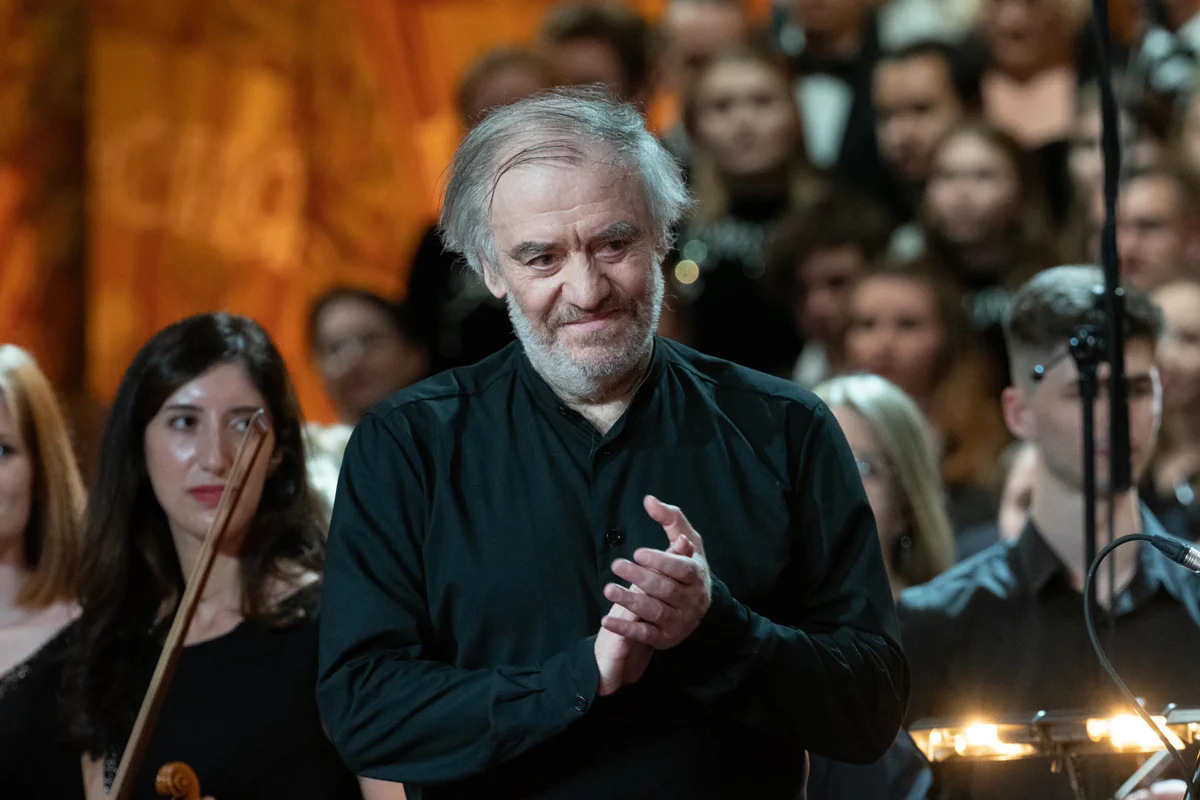
Attempts to distinguish between those who really share the values of humanism have given way to a dashing slogan: "Culture outside politics." Although “culture” here will be more correct to replace with “money and connections”.
The attempt of this shift so far occurs by the efforts of a number of specific cultural managers (in this case, Italians from the campaign). But Gergiev’s performance, if it takes place, will become a significant gift of internal Russian propaganda and lay the way to the desired future. After all, if “Italy is possible”, then why is it impossible for other countries?
Return to the “world without Russophobia”, understood as “everything will be as before, but let's forget about Ukraine and dictatorship,” the Kremlin’s clear strategy implemented on the diplomatic, economic and cultural fronts.