
Translated material
Lefortovo courtyard is open to everyone
Why did the FSB return the KGB pre -trial detention center? Nothing will change, but someone is pleasant

Photo: Evgeny Epapanchintsev / TASS
18+. This material (information) was produced, distributed and (or) sent by foreign agent Vishnevsky Boris Lazarevich or concerns the activities of the foreign agent Vishnevsky Boris Lazarevich.
In third reading, amendments to federal legislation were adopted, returning the FSB from January 1, 2026 the right to have their own investigative insulators.
On the one hand, lawyers and human rights activists say that the concentration of the investigation and the content of the accused in the same hands may worsen the situation of the under investigation.
But on the other hand, they also note that the law only legalizes the long -established situation.
... In an explanatory note to the draft law, which was brought by a group of deputies under the leadership of Vasily Piskarev, it is said that it was developed "in order to increase the efficiency of the organization of the FSB bodies."
In connection with the entry into the European Council in 1996, the Russian Federation took the obligation to transfer the management of all penitentiary institutions and supervision of punishment to the competence of the Ministry of Justice.
After that, the investigative insulators of the FSB in accordance with the presidential decree of July 12, 2005 No. 796 “On additional guarantees of ensuring the protection of rights, freedoms and legitimate interests of persons suspected and accused of committing crimes” were transferred to the penal system.
However, in 2022, the note says, "the Russian Federation terminated membership in the Council of Europe and is currently not related to it any obligations." Meanwhile, “with the beginning of a special military operation, the number of suspects and accused of state treason, cooperation on a confidential basis with a foreign state, an international or foreign organization and espionage, the vast majority of which are contained in investigative insulators” significantly increased.
Vasily Piskarev in his telegram channel reports that “after the coup in Ukraine, and especially after the beginning of it, the intelligence and subversive activities of foreign special services and the terrorist and extremist communities against Russia were more intensified, and that“ from 2015 to 2024, the number of excited affairs about stateisms, spying, spying, spying, spying, spying terrorism and extremism, the number of suspects and accused in such cases contained in custody has grown four times, ”and“ the adoption of the law is an adequate state reaction to existing threats in the field of security ”.
Another explanatory note says that “the number of suspects and accused of committing crimes of terrorist and extremist orientation contained in custody remains stably high,” and that “in the conditions of a special military operation, increased interest from representatives of foreign states and organizations is manifested, which requires additional measures to protect state secrets”.
In general, “around the enemies”, and therefore - it is proposed to transfer the FSB of Russia by the investigative insulators of central subordination of the Federal Penitentiary Service of Russia, as well as to endow the security authorities to a number of powers: to deliver and escort the suspects and accused of committing crimes, convicted of investigative actions, trial and the protection of these persons (including the right to use weapons while trying to escape).
Investigative insulators will be included in the structure of security agencies and are legal entities, and employees of the investigative insulators of the security agencies will be military personnel of security agencies.
According to Piskarev, this “will increase the effectiveness of the investigation of criminal cases and guaranteed to protect the under investigation spies and terrorists from unauthorized communication with other types of crimes, and in addition, will help to stop attempts by foreign intelligence and terrorist organizations to establish a connection with their agents, to prevent the conduct of the investigation and involve them in further subcatigated activities” ...
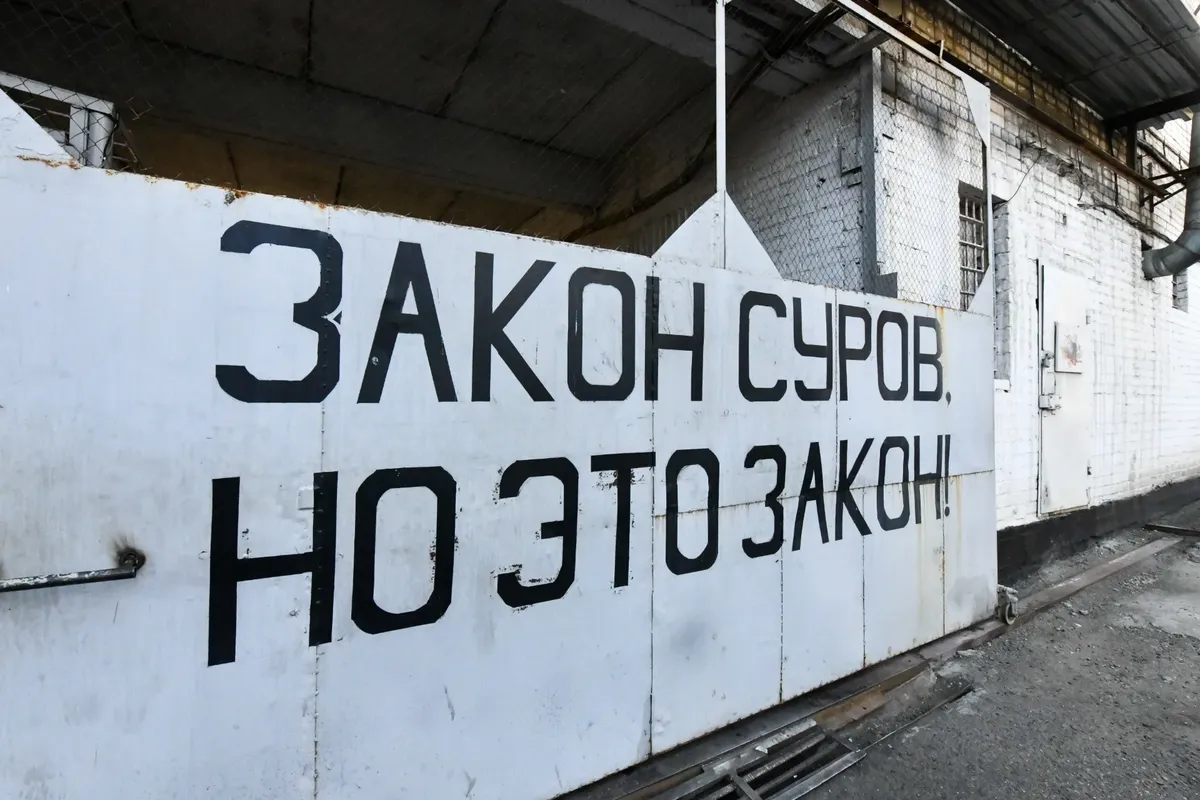
In fact, the situation that was back in Soviet times and which had to be abandoned - European norms demanded not to prevent the consequences of the investigation and content. The meaning of these norms is understandable: the “bodies” are interested in bringing the criminal cases they have initiated to the conviction, and if during the investigation those who are elected “measure of restraint” in the form of detention in the pre -trial detention center will be in the full power of the same department, the conditions of their detention can become (and often became) a method of pressure to obtain the necessary indications.
Now, when the FSB receives the right to create his pre -trial detention center, human rights activists are afraid that these orders will return. What
In such pre -trial detention centers, it will be extremely difficult to control the compliance with the law that investigators and jailers in one person will create arbitrariness, limit the communication of those arrested with lawyers and relatives and hide information about their position.
These fears are rezon-but even after 1996 (and especially in recent years), the FSB held “attached employees” in the investigative insulators, where there were suspects in crimes, criminal cases on which “security authorities” are initiated. And if it was necessary to “act” on those in jail, it was unlikely that for the FSB it was a big problem to agree with the FSIN, where they also do not suffer from excessive liberalism and humanism, especially in relation to those who are suspected of “terrorist”, “spy” or “extremist” articles ...
In addition, the FSB retained and retains informal control over some pre-trial detention centers, including Lefortovo in Moscow, and for SIZO-3 on Shpalelenaya Street in St. Petersburg, located next to the "Big House" on Litein, where the FSB department in the city and the region is located.
And, for example, in the St. Petersburg pre -trial detention center, which is formally under the jurisdiction of the Federal Antimonopoly Service, a lawyer who, by law, can easily refuse to visit the client, saying that the investigator needs permission. Which sometimes you have to wait for 2-3 weeks.
There were decisions of the courts that the disadvantage of lawyers is illegal - but nothing has changed. And there were cases when by the time the investigator and the prisoner were received by the time of the permission of the investigator, he refused the lawyer ...
In general, from the adoption of the mentioned changes in the law, in essence, little will change - given that any regime can be created within the framework of the FSIN system.
Then what caused the return of the FSB right to have “your” pre -trial detention centers?
Perhaps the desire to restore the Soviet KGB system, somewhat “disassembled” in the early 90s. First, the FSB returned the investigative functions (previously available to the KGB), then the border service, now they want to return the pre -trial detention center (previously divided between the Ministry of Internal Affairs and the KGB). Only intelligence (SVR) and state security (FSO) - and Puzzle are collected ...
As for the position of those who are contained in jail, it will fundamentally change not when the FSB once again take the right to investigative insulators.
It will change when they stop sending to these insulators simply because "organs that are not mistaken wanted."
When the courts cease to “stamp” the requirements of prosecutors to extend the “preventive measure”, brushing off the arguments of the protection and considerations of humanity and justice (which, by the way, belong to the principles of the criminal law).
When an unreasonable accusation will not be corresponded in the sentence, but to deviate by the court.
In other words, when there is a legal state and justice in the country.