
Translated material
The examination did not go through
The court ordered the European University to pay a fine - for the initiation of hatred of the social group "Experts"

Photo: Alexander Demyanchuk / TASS
On July 17, by the decision of the Smolninsky District Court of St. Petersburg, the European University (EUSPB) was found guilty under Art. 20.3.1 Administrative Code of the Russian Federation (“excitement of hatred and enmity, as well as humiliation of human dignity”) and was fined 250 thousand rubles.
The reason was the report posted on the university’s website “How and by whom the forensic examination is going on: experts in the context of interagency interactions”. The report was published based on the results of a three -year study performed by EU in 2019–2021, and for almost four years it was available to the general public.
The European University in St. Petersburg, a non-governmental institution of post-dye education, was founded in 1994 at the initiative of the mayor Anatoly Sobchak. EUSPB is steadily included in the ten or twenty -best universities in the country in subject ratings of scientific productivity of universities of the expert rating agency. Until 2022, the university was represented in the international subject ratings of QS (1368 universities from 158 countries) in sociology (among the 300 best), arts and the humanities (451–500).
Quickly, quietly, silently
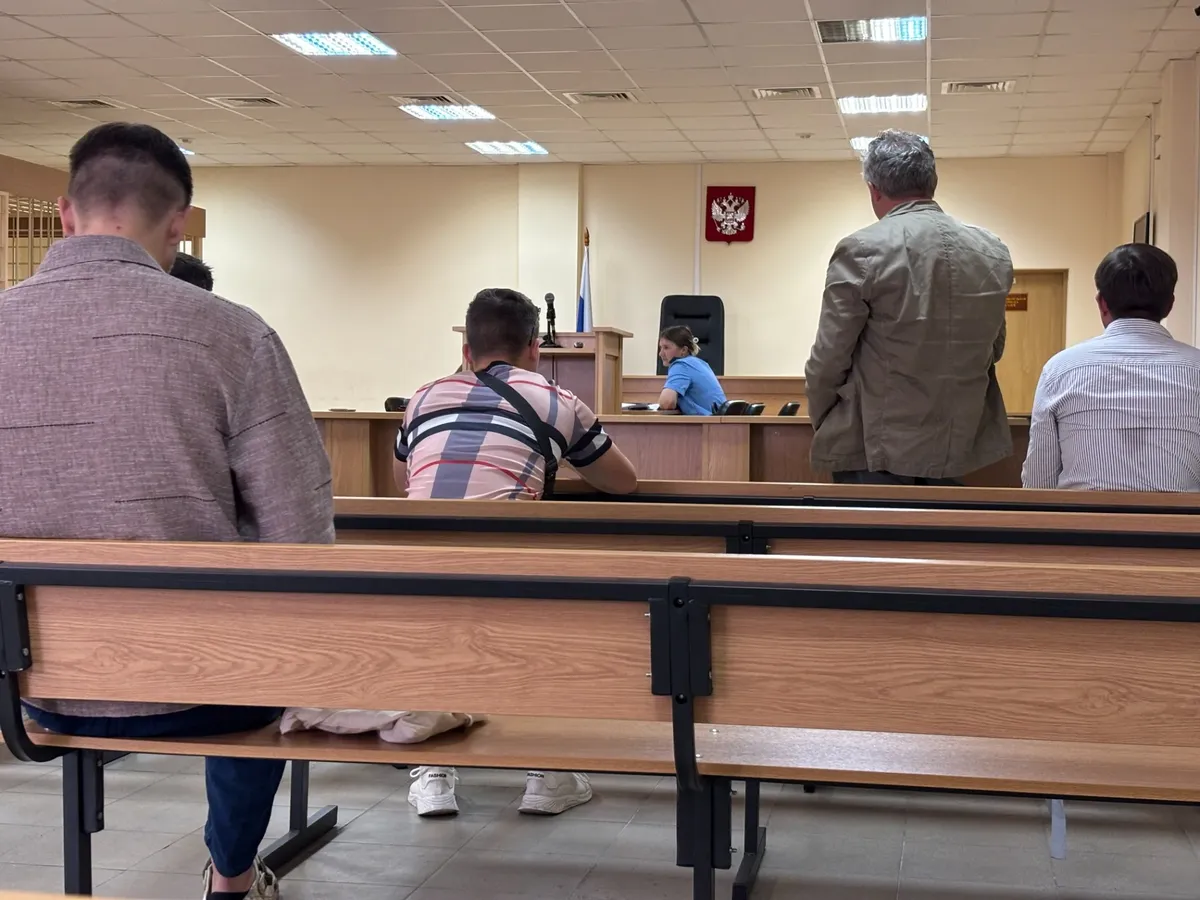
The court session in the case of the European University, held in the building on the 3rd Sovetskaya Street, resembled either a particularly secret operation or a meeting of lovers of silence.
Places for listeners and the press were located at the very end of the spacious hall, the table for prosecutors and protection was very close to the judge's table. Therefore, the communication of representatives of the university and the prosecutor’s office (their names remained unknown to those present) with Judge Ekaterina Mezentseva looked like gatherings in an intimate circle: the university representative and the prosecutor, looking towards the judge, spoke almost in a whisper, and only the quiet questions of Mrs. Mezentseva sometimes reached the audience.
From the speech of the university representative at the beginning of the hearing, it was possible to hear only the words that the specialists of the St. Petersburg State University, to whom the prosecutor turned to, did not warn about responsibility for giving false testimonies. And that these same specialists did not conduct a forensic examination, but simply issued a certain “judgment”. On this basis, the representative of the EU requested the termination of the case. None of the listeners and journalists heard objections to the representative of the prosecutor's office.

Judge Ekaterina Mezentseva left the hall for several minutes, and returning, announced the decision almost with a tongue twister and so quietly that the journalists later wondered - what is the amount of the fine? And only after the publication of the decision on the page of the United press service of the courts did it become completely clear: the judge demanded that the European University pay a fine of 250 thousand rubles.
... Since 2008, various kinds of claims, inspections and court claims regarding the European University in St. Petersburg from various supervisory authorities and local activists were a very popular occupation. In 2008, the Dzerzhinsky District Court of St. Petersburg, based on the results of checking the fire inspection, made a decision to suspend the university educational activities for 90 days. Although the official reason for the closing of the university was violations of fire safety rules, none of the university employees then doubted that there was a policy of the real reason: since 2007, at first, the State Duma deputies from United Russia, then the Prosecutor General’s Office were interested in the training program for the elections that the EU carried out at the expense of the European Union. In early 2008, the program was folded, but the university was still "punished by firefighters."
The next wave of persecution “rolled” in 2016, when Vitaly Milonov, a deputy of the St. Petersburg Zaks, complained to the prosecutor's office at the University of European because of the lack of a first-aid post. A series of unscheduled inspections began, including from Rosobrnadzor, and the university was again forced to suspend educational activities. After many well -known scientists spoke in defense of the EU, and Vladimir Putin instructed Olga Golodets to figure out the current situation, the Moscow Arbitration Court suspended the order of Rosobrnadzor, and classes resumed at the university.

But in 2017, Smolny went on the attack on EU: the then Committee of Property Relations terminated the lease agreement with the university (the university rented a Kushelev-Bisborodko mansion on Gagarinskaya Street). Having lost the premises and having lost the license, the university was forced to suspend training. Then the Council on Science under the Ministry of Education and Science made up the university: he called for finding a way out of the situation and said that "the European University in St. Petersburg is a leading educational and research center of the country in several fields-in particular, in political science, sociology and economics." In the second half of 2017, Eu acquired a modest building on Shpalelena Street and resumed work by the end of the year.
In mid -May 2023, the St. Petersburg prosecutor's office came to the European University. She was interested in the contents of scientific papers and programs, the prosecutors requested the personal files of undergraduates, graduate students and the topics of dissertation to verify. The reason for the verification was allegedly the "complaint of a certain citizen." University employees publicly stated that “the main subject of the audit is the execution of education legislation”, but unofficial sources claimed that the prosecutor’s office was checking the European University “for Extremism”.
At the end of 2023, it became known that two protocols on the participation in the activities of an “unwanted organization” were drawn up on the EU, for each protocol, the fine amounted to 35 thousand rubles. The reason was several books found by the prosecutor’s office in the university library - about the ancient Chinese philosophers, about the cultural differences of nations and globalization. They were published with the support of the Open Society Institute* and the Kennan Institute*.
Almost a year and a half passed, and at the end of June 2025, the prosecutor's office of the Central District of St. Petersburg accused EU of exciting hatred under Art. 282 of the Criminal Code.
He said, and you will answer
After the judge Ekaterina Mezentseva sentenced the conviction, an official commentary of the university appeared on the website of the European University. It states that the same analytical report in which the prosecutor’s office saw “signs of humiliation of the dignity of persons on the grounds of belonging to the social group“ Russian judicial experts ”is the result of a three-year empiric-sociological study of legal professions, performed in 2019–2021.
The researchers then conducted 24 expert interviews: 14 of them were taken from forensic experts and forensic experts, and 10 from investigators, lawyers, judges. All results in 2021 were included in the collection of works of the All-Russian Scientific and Practical Conference “Vekhi History of the Russian Center of Forensic Medical Expertise. To the 90th anniversary of education ”organized by the Federal State Budgetary Institution“ Russian Center for Forensic Medical Expertise ”.
As reported in the official comment, “the study was carried out in strict accordance with the principles of scientific ethics and respect for the individual,” which is confirmed by specialized examinations and linguistic conclusion of the specialist of the Institute of the Russian Language named after V.V. Vinogradova RAS.
But official examinations of their own colleagues from the Bureau of Forensic Medical Expertise and the Center for Sociological and Legal Studies of the Sociological Institute of the Russian Academy of Sciences, who investigated the report of the EU researchers and recognized it compliance with all the norms of the law, the prosecutor's office of the Central District of St. Petersburg seemed little, and even before the initiation of the case, she applied for the examination at the St. Petersburg State University. Based on the "judgments" expressed by the employees of this institution, the prosecutor's office drew up a lawsuit against EU.
But, as the authors of the official commentary on the EU website emphasize, SPbU employees actually attributed other people's words to scientists: those expressions that, according to the prosecutor's office, “humiliate the dignity of the social group of experts”, are pronounced by experts themselves interviewed by researchers. That is, this is a direct speech of those who gave interviews, and not the conclusions of the researchers of the EU. Almost scientists of the European University were convicted of words that they did not say, for the words said by others. This is the same as if lawyers were judged by the fact that their customers violate the law, or a psychiatrist, they judged that his patients were in a state of clouding of reason.
Why does the prosecutor’s office impose such severe requirements and punishes scientists conducting research to this report? Unfortunately, without the true text of this report, it is extremely difficult to draw some conclusions (the text was deleted from the EU website at the request of the prosecutor's office and closed for public access). But, as it became known to the correspondent of the “new” from an anonymous source, the study of scientists EU was concentrated on two groups of experts: forensic doctors and forensic experts from forensic and forensic centers of the Ministry of Internal Affairs and the Ministry of Justice. It discusses the differences in professional socialization and career advancement of these groups, as well as "routine aspects of the production of examinations in specific institutional conditions." Thus, the study overcomes the normative image of an expert who alone produces “truth” for investigation and court. From the report it becomes obvious that “in reality, any examination is a collective product that includes both managers of expert institutions and auxiliary personnel and counterparties: investigators and judges as customers of examination”.
Probably, someone saw in such words a distant hint of the influence of customers of the examination on the results of experts. Unfortunately, this is now impossible to find out, and the European University does not give any additional comments, except for the university already published on the website. Employees of the apparatus of the rector of the university only confirmed that the university intends to appeal to the decision of the Smolninsky District Court.