
Translated material
A decisive jerk up
The most serious increase in communal tariffs has occurred over the past 15 years. And there is no power that could prevent this

Photo: Andrey Lukovsky / Kommersant
In conditions of existing reality, it is worth going on vacation in July only having civilian courage and immunity to outgoing transformations. After all, it was in July, having returned after rest to your native penalties, that you will find that as before will no longer be. We’ll have to forget about the previous water prices, heat, electricity ... Even your garbage will not be exported for the amounts that are relevant back in June, insatiable re -operators will not. By the way, in Moscow the tariff has grown most of all for this service. But in the whole country, cold water rose by 14.8%, hot water - by 13.7%, heating - by 13.8%, electricity - by 13%. This, I emphasize, is of average indicators. They can seriously differ from region to region. Finally, inflation, according to Rosstat, jumped to 0.79%from July 1 to July 7. And this is a weekly maximum since the spring of 2022. The abnormality of what is happening is also indicated by the fact that the Prosecutor General’s Office began to check the validity of raising tariffs and the legality of the actions of the authorities in the ground. Indeed, the final value of the tariff depends on the latter.
There is no limit to the limit
Against the background of communal perturbations and inflation ups, some products (in particular, bread), medicines and gasoline have risen in price. Potato fell in price. But it is unlikely that this fact is able to reconcile with numbers in receipts. And they grew by an average of almost 12%. And this noticeably exceeds the pace of previous years.
Obviously, the basic parameters will keep far from all regions. Local authorities have the right to establish their own rates of raising tariffs, focusing on local realities. This is if according to the mind. And it happens, out of greed that can be called by economic expediency or other convincing sounding term.
“So, in the Orenburg region, for the period 2020–2024, the maximum growth of the heat supply tariff was 176.28%,” Sergey Krekov, the leader of the All -Russian movement Yauraravoda, gives an example. - An interesting fact: there is a published technique, guided by which set tariffs for thermal energy. However, it is not possible to understand on the basis of which methodology they are indexed due to its absence. There are only limit indices established by the government. You cannot exceed them. But you can, if you really need it. So, for example, in Kemerovo and Novokuznetsk for two years in a row, communal tariffs were raised by 15% in excess of the limits established by the government. ”
I will add: after the changes made in May to the government decree No. 400 (applies to changes in the size of the fee for housing and communal services), the regions are allowed to significantly adjust the size of the increase in the presence of an approved investment program for the communal sphere. And they do this, raising the tariff to 15, 18, 20 and even 40%.
To understand the order of real numbers, let's look at the updated communal receipt. True, Yuri Andreevich has such receipts for an apartment of 54 square meters. Nine meters. In Samara, where the 86-year-old labor veteran lives, communal costs on paper are preferred to diversify. Payment for each service comes on a separate leaf - just have time to pay. No compensation and benefits take off the eternal question: “where” prices are rising?
- How do you understand all these receipts? - I ask the pensioner.
- I still come to the SMS, but there is only the total amount, but for which exactly, I do not understand. I have two compensation - like a veteran and over the overhaul. These are constant numbers, I know them. The rest change every month - now more, then less. In June, they paid normally.
- Does your budget July increase will hit a lot?
- I have a fee by more than a thousand rubles.
- Now how much do you pay?
- Six thousand, and there will be seven and a half - I calculated on the percentage that they promised to increase. And whether the pension will be raised is unknown. For gas equipment, prices (for maintenance) were bent such! Then they reviewed. And from this year, for no reason, they suddenly suddenly raised from 160 rubles to 185. And they constantly write in the receipts: “duty”. Why did this company create? They serve once a year, and receipts are sent monthly.
Pensioners react painfully to the slightest increase. It is difficult for them to understand why the prices rose suddenly.
And not only to our interlocutor it is not clear why the technique is called a “maintenance of gas equipment” a single visit, and the fee for it is taken on a regular basis. But the division of the communal payment into separate receipts, according to our other interlocutor, has a logical explanation: “I’ll not say the total amount of the communal apartment on the move, we have been paying everything for different receipts for three years. Apparently, in order to be not so noticeable, promotions are not so noticeable. ”
But we will nevertheless denote them by comparing the indicators for January and July at separate services.
Six months ago, cold water cost 44 rubles per cubic meter in the Samara region, now 7 rubles more. Samara people paid 2437 rubles for 1 Gcal for thermal energy, and they will pay 2856 rubles. The gas stove in the house with central heating and hot water supply cost 128 rubles per person, in July the fee grew by 11 rubles. These small numbers are able to break through a tangible gap in the budget.
According to the certification (sounds like reassuring) the regional committee of price and tariff regulation, Samara is in fifth place in the Volga Federal District for the Change Index. From this commentary, apparently, it follows that we are dealing with a slight indexation option. But it was in the Volga Federal District that the most serious tariff growth on the country was recorded - almost 20%.
“Tariffs for utilities in the Samara region increased to 17.2%,” says the municipal deputy Dmitry Aseev. - Residents began to joke: it's time to take a loan to pay for utilities. If, along with the increase in tariffs, the quality of the housing and communal services improved, this would restrain the discontent of citizens. However, the resources themselves report that in recent years there has been a stable increase in accidents and failures. ”
To the clarifying question whether the next increase in the amount of communal debt will increase, Aseev answers unequivocally: of course.
Record collection, prohibitive debts
If in 2023 the debt of Russians for housing and communal services amounted to almost 900 billion rubles, then by the end of 2024 he reached one and a half trillion. “Debt growth for 2020–2024. amounted to 275 billion rubles, or 44%, Krekov continues. - At the same time, according to our data, the tariffs for housing and communal services grew over the same period by an average of 34%. Conclusion: debts are growing at a long pace than tariffs are indexed. ”
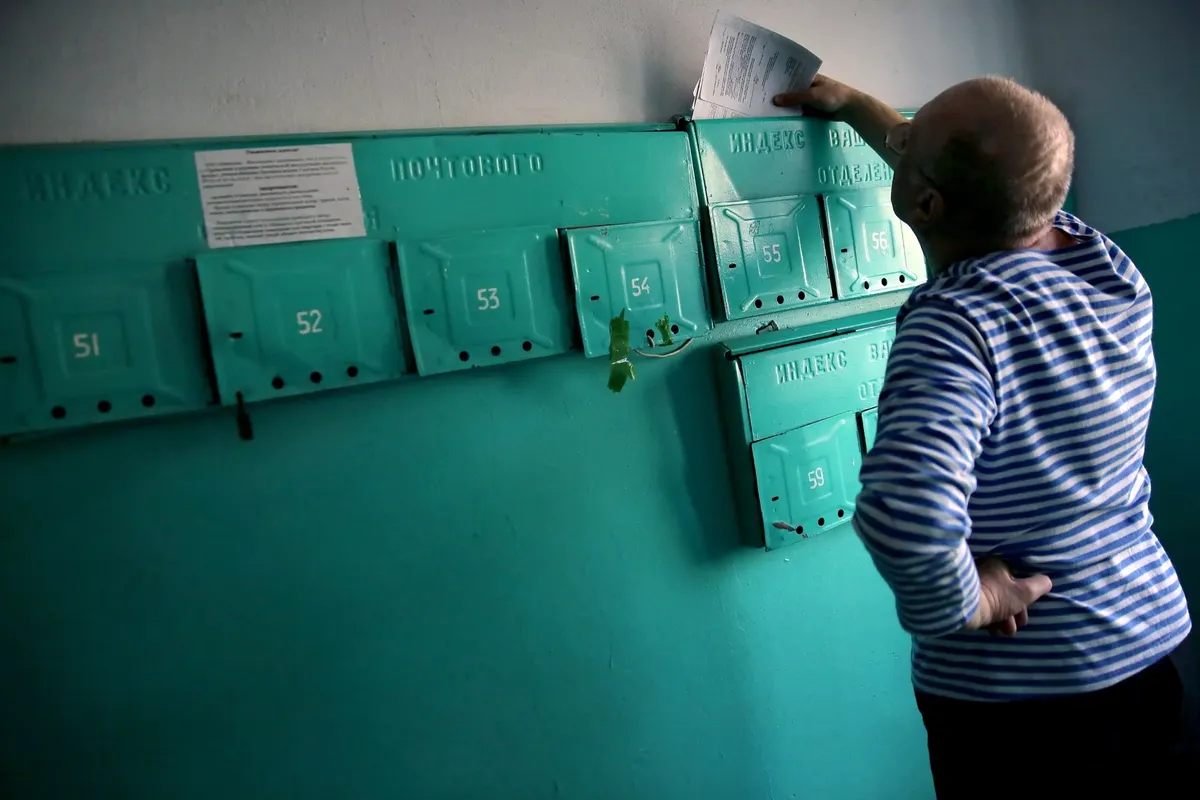
The State Duma recognizes: real debt can be even higher. And the exact number of communal debtors in the same Samara region is unlikely to call anyone. Statistics, according to Dmitry Aseev, are simply absent. And those rare numbers that can be found in public space vary. But, having analyzed the complaints of residents about the problems of housing and communal services (there are a huge number of them), you can find out interesting patterns and details: “In 2/3 of the answers from management companies,” the deputy explains, “I see such lines: unfortunately, perform these work (for example, current roof repairs) this year is not possible due to low collectivity of payment for the maintenance of the house. In parallel, I see the growth of lawsuits in the court to retain a fee for a communal apartment. Judges (unofficially) say: we are littered with these cases. Immediately an interesting feature: often the representatives of state authorities themselves are malicious non -payers in housing and communal services. For example, in the Samara region there is a village. Roshchinsky. In it in almost all MKD there are property (apartments) of the Ministry of Defense. And residents of the houses regularly encounter houses management problems precisely because of the debts for utility bills or to the overhaul fund by the Ministry of Defense. A similar situation with the courts themselves. ”
I must say, the whole debt story is a series of continuous inconsistencies. On the one hand, debt is a long -term and already chronic state of the communal sphere. On the other hand, the population pays for 95% of the displayed receipts in housing and communal services, according to the Rosstat. At the same time, 37% of citizens have debts for utilities. In some regions, the debtors include almost half of the owners of apartments and tenants.
Nevertheless, at the end of last year, the Minister of Construction and Housing and Public Utilities Fayzullin said that it was possible to improve the situation with communal debts over the past two years. Yes, how! The collection of payments on average in the country is almost 101%, and in certain regions it reaches 110% (taking into account the recovery of old debts). It would also be understood how, with such indicators, a debt with 12 zeros was formed. Not otherwise, the old irrevocable debts spoil the picture, and the appearance of new ones stimulates indexation. In fact, tariffs are increasing, the number of debtors increases-communal-geometric progression. Or a vicious circle. No matter how you call it, these two processes are connected firmly.
“To say that between the indexation of tariffs and the growth of debt on the communal apartment there is a direct connection is not just possible, but necessary,” Sergey Krekov is sure. - Since it is the growth of debt that is the main reason for the growth of communal tariffs. The FAS Russia stated that the need for indexation is due to the following reasons: “The emergence of cash gaps in the conditions of the need to execute production programs, compliance with the necessary level of reliability and quality of services provided, as well as the implementation of investment programs will inevitably require the involvement of resource -supplying organizations (ROS) of borrowed funds. A decrease in the level of planned indexation and tariffs can aggravate the position of such organizations.
- Simply put, if you take less from citizens, the life of the North Ossetia will become worse? And why should an ordinary payer have a head about the undertaken income of a certain organization that distributes resources equally belonging to everyone? Or about the specific Gazprom with its reduced market?
- The biggest problem is not that non -payments form a cash gap and this leads to the need to index tariffs. The problem is that the growth rate of debt and indexation increases by exponent, since we need to compensate for falling income, growth in costs and expenses for the modernization of communal infrastructure.
- Is there a way out of this closed circle? Say, write off part of the debts?
- Writing off the problem will not solve. Firstly, they are already written off after three years in case of dislike. Secondly, when calculating some utility tariffs, non-payments are part of the cost of the resources produced. They are included in the tariff and should be covered with those who pay. The state needs to intervene in the process, namely, to redeem the debts of the population and engage in their restructuring. There is no other option in the circumstances. The debt of the population and the growth of housing and communal services tariffs are already a political issue, not an industry.
Online recovery and modernization as a myth
But officials adhere to a different strategy. And the ways of solving the debt problem are found without particularly deepening into its root cause. Instead of a radical reform of the entire system in the country, an experiment of a dubious sense is launched. Debts in housing and communal services are going to recover online. Without even delving into the essence of the mechanism, it is easy to understand who the beneficiary is here. Officials consider a new idea almost a panacea. Still: the created mechanism is almost ideal for an accelerated and maximum simplified return of debts. And allows you to arrest the bank bank accounts of the debtor. There is only one minus: it is not about people. The consumer cannot challenge, for example, unreasonable amounts included in the receipt. There are no talk of claims in the case of poor -quality (but requiring payment) services at all.
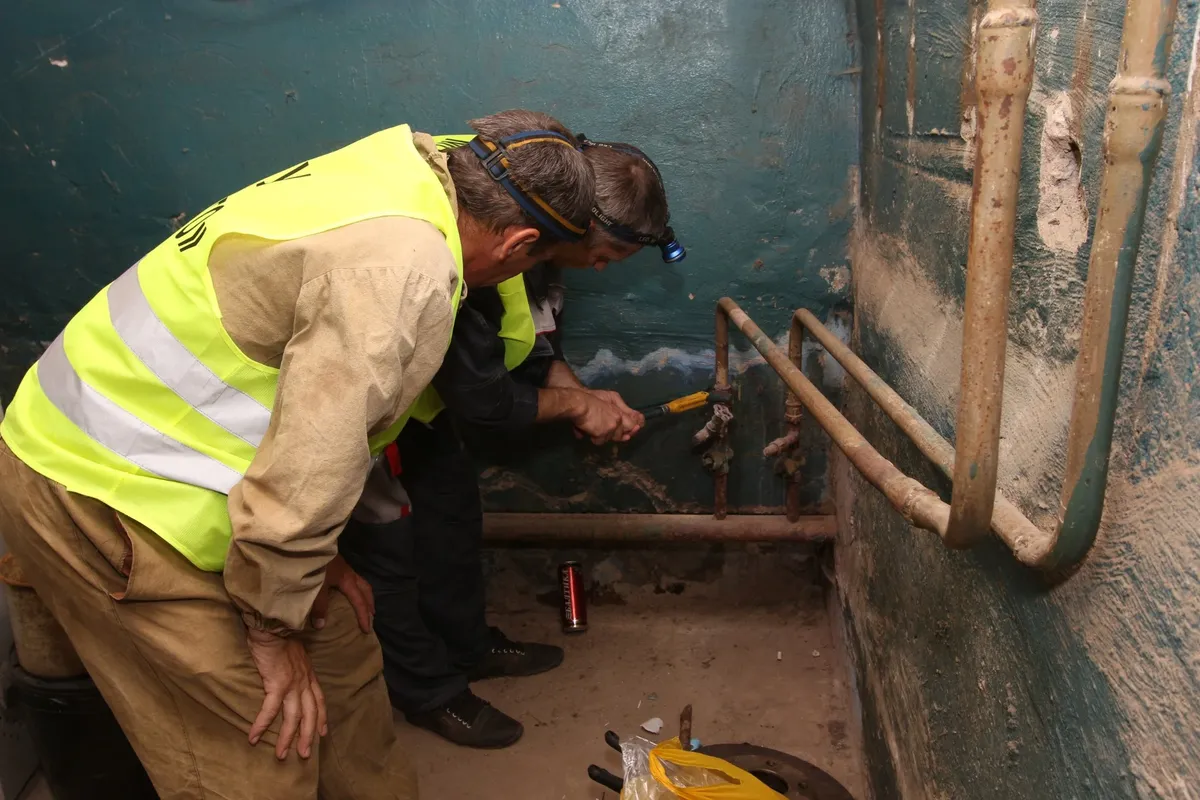
Another innovation will allow managing companies to recover a debt by payments not exceeding 500 thousand rubles through a notary. He creates a writ of execution, and debt and penalties are written off from the account of the non -payer. The authorities also took care of the payment discipline: it is now to pay utility services until the 15th day of each month. The corresponding law has been adopted, from March next year the norm will work. But bewilderment will remain: a clear date of calculation is really so important that it requires legislative regulation? There are no more important problems?
Citizens, if anything, can tell. “Why is it so obviously we wear out in the house, and the overhaul was purely cosmetic, should we pay more and more every year?” - A resident of the capital Victoria asks a question. An economist by profession, she was desperate, as he herself says, to understand the pricing in the communal sphere. “In the June receipt we have a figure of 18,910 rubles (apartment area 100 sq. M, 4 people are registered)! Note: even before promotion. Of course, we still do not give half of the total income for the rent. But these meanings themselves - they are behind the wise line!
The state of common property is endless complaints in house chat. The elevator has already developed its term for three years. Garbage rubble ... Without even looking out the window, I will tell you exactly that they are there. The problem with the sewer is simply unsolvable. They are afraid to touch her. So why am I crying more and more? What is getting better in my living conditions? "
I'm afraid this question has nothing to do with the economy. In such a situation, you just need to forget about the prices of adequate services. This is not about public utilities. Moreover, it lives in permanent “failure” mode: the indexation of tariffs does not have time to increase the cost of equipment. Updating communal infrastructure can not be depressed for its wear. The officials themselves recognize this. And as the reasons for the growth of tariffs, they call any other than the true ones. For example:
The numbers in our payments strive up, because utility equipment is in a monstrous way. Another indexation is traditionally accompanied by an explanation that the increase is necessary for modernization. We believe and pay.
The wear of communal networks, meanwhile, approached 40-60% - this is in general. And in some regions it has already reached 80%. And understanding comes: indexation is not about modernization. The purpose of the indexation is not to update the system, but to give it, as experts say, to reach the next increase. And then until the next. Utility payments cannot not grow - this must be accepted for granted.
I’m not sure that the essence of the process and the formation of numbers are fully understood even by its ideologists. But there is a firm confidence that the basic communal growth index has long existed in isolation from reality. And most importantly - from people's income. Say, in the Irkutsk region, real salaries over the past year increased by an average of 4.2%. Tariff growth is three times more. The salary of an average Russian is unlikely to index for the better twice a year. Whereas the tariff strives up steadily and everywhere. And this year has reached the maximum value over the past 10 years. In 77 constituent entities of the Russian Federation (that is, almost everywhere), the basic growth index turned out to be above last year.
Sergei Krekov tried to explain why debts were originally laid in the tariff: “Firstly, we summarize the costs of the production of communal resources and divide between consumers so that it is covered. As a result, the larger the population is in some territory, the lower the tariff, due to the lower share of the constant costs per unit of the delivered resource. A dysport is formed in tariffs by regions and inside them, all other things being equal.
Secondly, when setting tariffs, the solvency of the population is not taken into account as a factor. Our research prove this. Thus, we program the debt without taking into account the ability of citizens to pay. The combinations of the first and second factors are an explosive mixture that leads to the fact that high tariffs are set in the territory where few people live, and they provoke non -payments.
The way out of this situation could be the establishment of an economically reasonable tariff based on direct costs for the production of a unit of energy. But this will break the entire system in which housing and communal services tariffs are a quasinalog of a population living in a controlled territory. ”
Whose Wishlist we pay for?
Returning to the audit promoted by the Prosecutor General’s office, it is worth noting separately that the agency intends to pay attention to the unreasonable expenses of public utilities included in the housing and communal services tariffs. The official website of the GP says: "The prosecutor's office will take measures to protect the rights of citizens." Measures will require serious, since the costs that have no justifications are huge. Their true scale, most likely, will remain behind the scenes. The costs of RSOs, no matter what kind - for repairing networks or organizing corporate walks - will be covered by ordinary payers. No imagination is enough to imagine how many various “expenses” are laid in the tariff simply because they must be closed.
Sometimes it seems that the tariff is rubber, and the patience of citizens is limitless. В 21,6 млрд рублей вылились необоснованные начисления только за два года (по другим сведениям, результаты 129 контрольных проверок выявили за тот же срок 43,5 млрд сомнительных расходов). В любом случае после исполнения предписаний ФАС эти суммы из тарифов ЖКХ исключат.
Проверки обоснованности тарифов на электроэнергию и теплоснабжение проводились в целом ряде регионов — от Бурятии до Ярославской области. Нарушения зафиксированы по всем разделам ЖКУ. Тарифные регуляторы инспектировались в Центральном, Северо-Западном, Приволжском и Уральском федеральных округах. По итогам проверок в сфере теплоснабжения тарифы были снижены в Архангельской области на 34%, в Ингушетии — на 23%, в Дагестане — на 19%. По обращению с ТКО в Камчатском крае — на 29%, на Чукотке — на 25%. На водоснабжение и водоотвод в Ленинградской области на 16%. И это лишь некоторые корректировки. Смотришь на эти проценты и тихо ужасаешься.
«С сожалением приходится констатировать, что масштаб необоснованных расходов ограничен лишь жадностью коррумпированных чиновников, задействованных в процессе утверждения тарифов ЖКХ, — считает Креков. — Показательно, что на днях вопрос обоснованности повышения тарифов взял под личный контроль Генпрокурор России. Из этого — простой вывод: ФАС не справляется с возложенной на нее функцией контроля, и прокуратура проконтролирует того, кто контролирует тарифы. С учетом того, что мы имеем дело с масштабной коррупцией, которой поражена вся структура и ветви власти, особой веры в решение проблемы необоснованного роста тарифов ЖКХ нет.
Отдельно хочу отметить еще один факт:
коррупция не только позволяет произвольно устанавливать тарифы, но и все связанные с ней расходы включить в размер индексации, которую оплатят граждане России».
Эксперт напомнил интервью бывшего главы ФАС Артемьева, которое тот дал одному из федеральных телеканалов еще в 2019-м. Главную мысль стоит привести дословно, она актуальна и шесть лет спустя: «Граждане по большинству коммунальных позиций давно переплачивают больше 100% себестоимости. И все эти разговоры, что мы какие-то там убогие, недоплачиваем этим коммунальным монстрам, это все чушь собачья. Мы давно им переплачиваем. Они на это дело содержат различного рода рестораны, дома отдыха для себя, охотничьи заимки».
На официальном сайте Генпрокуратуры новость о проверке правомерности роста тарифов завершается обещанием: прокуроры примут исчерпывающий комплекс мер реагирования, нацеленный на восстановление прав граждан.
А когда наступит 1 января 2026 года, случится очередная индексация. Она неизбежна, как снег или дождь. Обострение кризиса в системе ЖКХ, которое нам предрекают при каждом повышении коммуналки, оно уже здесь — наступило. А печальный итог тарифного регулирования Сергей Креков видит в том, «что производители и поставщики коммунальных ресурсов не имеют мотивов работать над эффективностью производства, снижать потери на сетях, вкладывать средства в модернизацию. Безумные тарифы согласует коррумпированный чиновник. Главное — договориться, а потребитель оплатит любые хотелки. Те же, кто не может платить, создают долги, которые не только угрожают развитию сферы ЖКХ и экономики в целом, но и создают угрозы для стабильного развития государства и общества.
Необходим фундаментальный пересмотр самой модели, по которой работает отрасль поставки коммунальных ресурсов, и ее тарифное регулирование. По-другому проблемы не решить».