
Translated material
Who remained on the pipe
After the weeks of blackmail, Slovakia nevertheless agreed on the next package of sanctions against the Russian Federation. But I received in return a concession to Repowereu - the EU large -scale plan to abandon energy from Russia
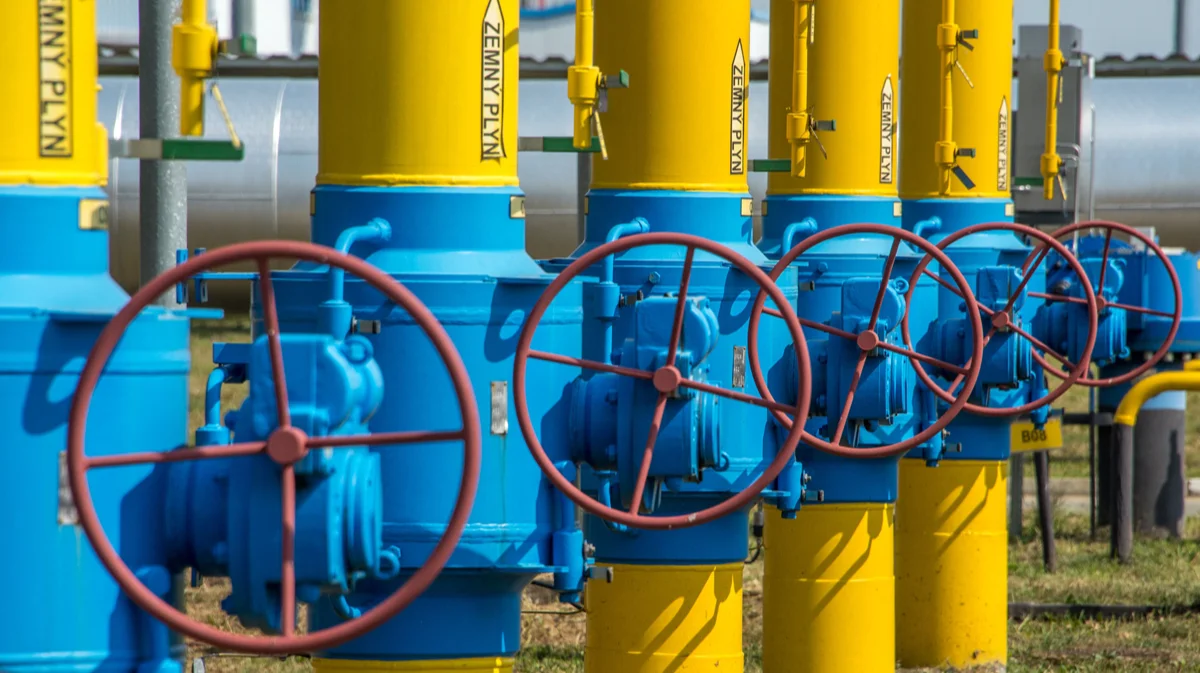
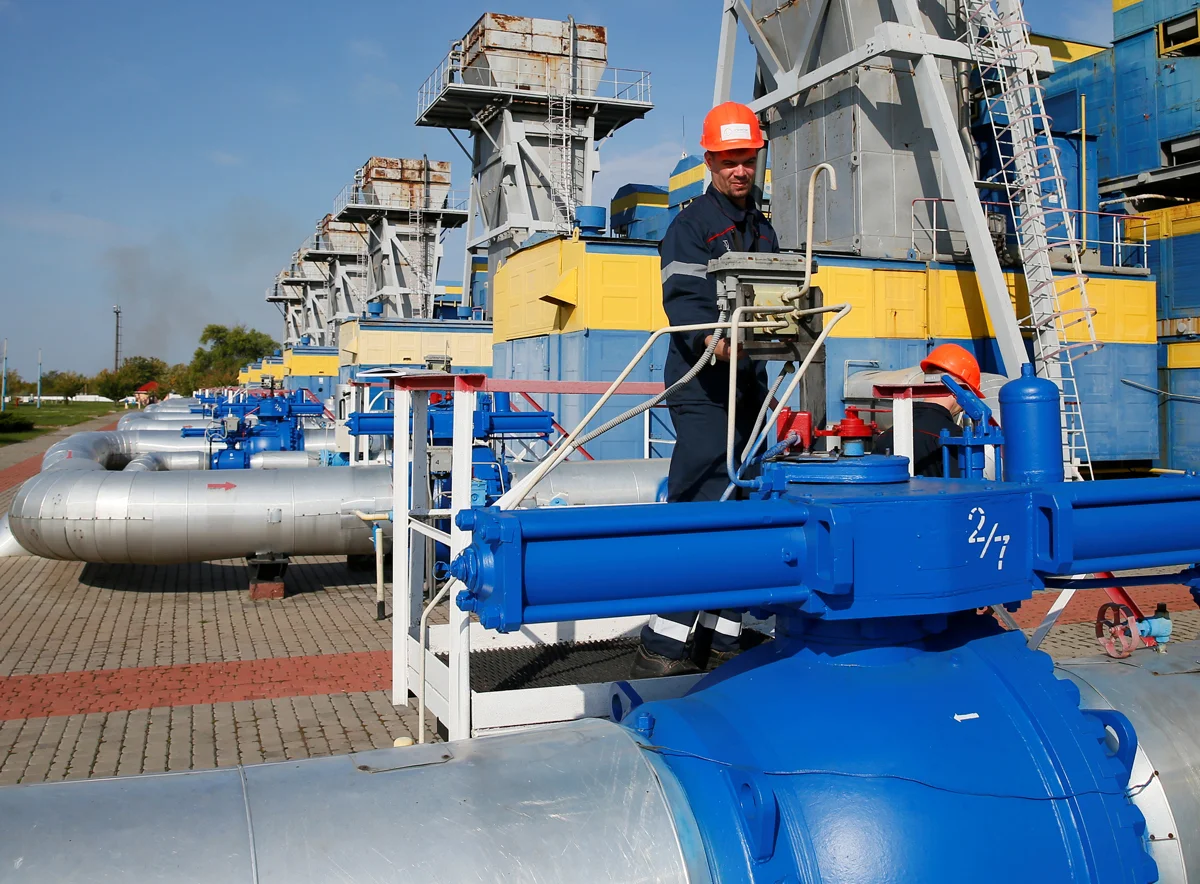
The gas compressor station on the border of Slovakia and Ukraine in the Velka-Kapushany, September 2, 2014. Photo: David W Cerny / Reuters / Scanpix / Leta
None of the 17 previous packages of EU sanctions against the Russian Federation was accepted with the same difficulty as the 18th. It was agreed on for more than two months due to blackmail from Slovakia. Moreover, this was not directly related to the contents of the package of measures: the Slovak Prime Minister Robert Fitzo thus bargained the exclusion of the EU from a poetal abandonment of Russian energy-primarily gas from a large-scale expulsion plan for his country.
In Slovakia, they argue that the implementation of the roadmap presented in May of this year to the Repowereu plan is serious risks for European energy safety. Fit demanded permission to buy Russian gas until the end of the contract with Gazprom, that is, until 2034. But in the end, by July 18, he was satisfied with the much more modest trading results. As follows from the studied "New-Europe" data, despite all adopted in 2022–2024. Measures, the EU still paid Russia for energy resources a larger amount than the amount of assistance to Ukraine. Put this to the end and the REPOWEREU roadmap is called on, on which Brussels so actively insists. What steps are provided for in this document and what Bratislava finally bargained for herself, the observer of European and international politics Nikolai Pershin understood.
Painful dependence
The danger of energy dependence on Russia in the EU began to think after the annexation of Crimea in 2014. But in practice, little changed: in 2021, Russia provided Europe about 50% of coal imports, 45% .) Gas imports and 27% of oil imports. But the real awareness of the consequences of this dependence came only in 2022. According to the head of the European Commission, Ursula von der Layen, it was a full -scale war in Ukraine that "revealed the risks of blackmail, economic coercion and price shocks."
Among the specific examples - the intentional reduction of Moscow’s supply of gas supply to Europe in the summer of 2022, when European countries filled their storage facilities and put up to customers from “unfriendly” states of more and more new conditions ( for example , on payment by ruble through Gazprombank), and counter -sanctions against gas companies of the EU. And now, Ursula von der Layen is sure, "the time has come for Europe to completely break energy ties with such an unreliable supplier."
Back in March of 2022, the EU leaders proclaimed a policy to "get rid of dependence on Russian gas, oil and coal as soon as possible." But it was a political, little to a binding declaration. As a result, some states (for example, Poland, Finland and the Baltic countries) immediately went in this direction. Others did not protest, but de facto did nothing. So, in the winter of 2023–2024, Austria had Russian origin to 98% of imported gas.
And some leaders-first of all, retaining good relations with the Kremlin, the Prime Ministers of Hungary and Slovakia Viktor Orban and Robert Fito-directly expressed discontent. In Budapest and Bratislava, the European Commission was accused of being guided exclusively by ideological considerations, for the sake of which she is ready to even provoke an increase in gas prices for European consumers.
The consequence of the unity of unity among 27 EU countries was that energy supplies still bring significant income to Moscow. Asthe publication was calculated by Euroactive , from the beginning of a full -scale invasion of June 2025, Russia received 103.92 billion euros from supplies to the EU and oil products, and coal was brought from gas supplies from gas. That is, in total we are talking about more than 200 billion euros. For comparison: since 2022, the EU had assisted Ukraine for about 165 billion euros.
In June 2025, the five largest importers of Russian fuel from the EU paid a total of 1.2 billion euros for it.
The largest share fell on Hungary, which purchased Russian oil and gas in the amount of 356 million euros. In second place is Belgium, importing LNG (300 million euros). On the third - France, which also purchased LNG (232 million euros). The leaders also have Slovakia (178 million euros) and the Netherlands (99 million euros).
In connection with this, in a conversation with the Novo-Europe, the analyst of the Danish Research Institute Europa, the expert on energy markets Alfred Arnborg expressed the opinion that "each euro paid for Russian gas should be compensated in the defense budgets of Ukraine and the EU countries, otherwise the whole region will gradually weaken." According to him, it is precisely "with the costs of war that it is necessary to compare any possible costs of restructuring the European energy system."
There is a plan
Given that when making political and sanctions decisions, any of the 27 EU members can use the right veto, the possibilities for a complete abandonment of Russian energy resources in Brussels were searched for a long time. That is why the Repowereu plan adopted in 2022 did not contain tough obligations on the deadlines and other important details.
But in the end, the way out was found. On May 6, 2025, a roadmap with specific steps for the implementation of REPOWEREU was presented , and on June 17, a detailed document of the European Commission on this topic was published.
The key difference between the roadmap and the previous approaches is that it is based on the provisions of the EU function, which relate to energy (article 194 (2)) and trade (Article 207) of politics.
That is, this is not about political sanctions, but about trade decisions. And for this change is not consensus, but only the qualified majority of the votes of the EU countries.
In addition to the five specific measures aimed at the abandonment of Russian energy products, the EU countries have committed to prepare and submit the European Commission national plans to get rid of Russian dependence, as well as to accelerate the energy transition as a whole - the rejection of fossil fuel types in favor of renewable energy sources.
Brussels took on additional obligations to tighten sanctions against the shadow fleet of the Russian Federation. In addition, strict requirements for tracking the origin and routes of gas entering the EU market are introduced. Thus, it is planned to prevent the “hidden” import of Russian gas - for example, under the guise of Azerbaijani.
There is no unity
Even before the final measures within the framework of the REPOWEREU roadmap, part of the EU countries did a lot to get rid of energy dependence on the Russian Federation. In the case of oil and coal, this transformation occurred especially successfully. By 2024, the EU almost completely excluded Russian coal from its energy basket, and also reduced to 3% (from 27% at the beginning of 2022) a share of Russian oil imports. She continues to enter Hungary and Slovakia on the southern branch of the Druzhba pipeline in accordance with the exception of sanctions prescribed specifically for these two countries.
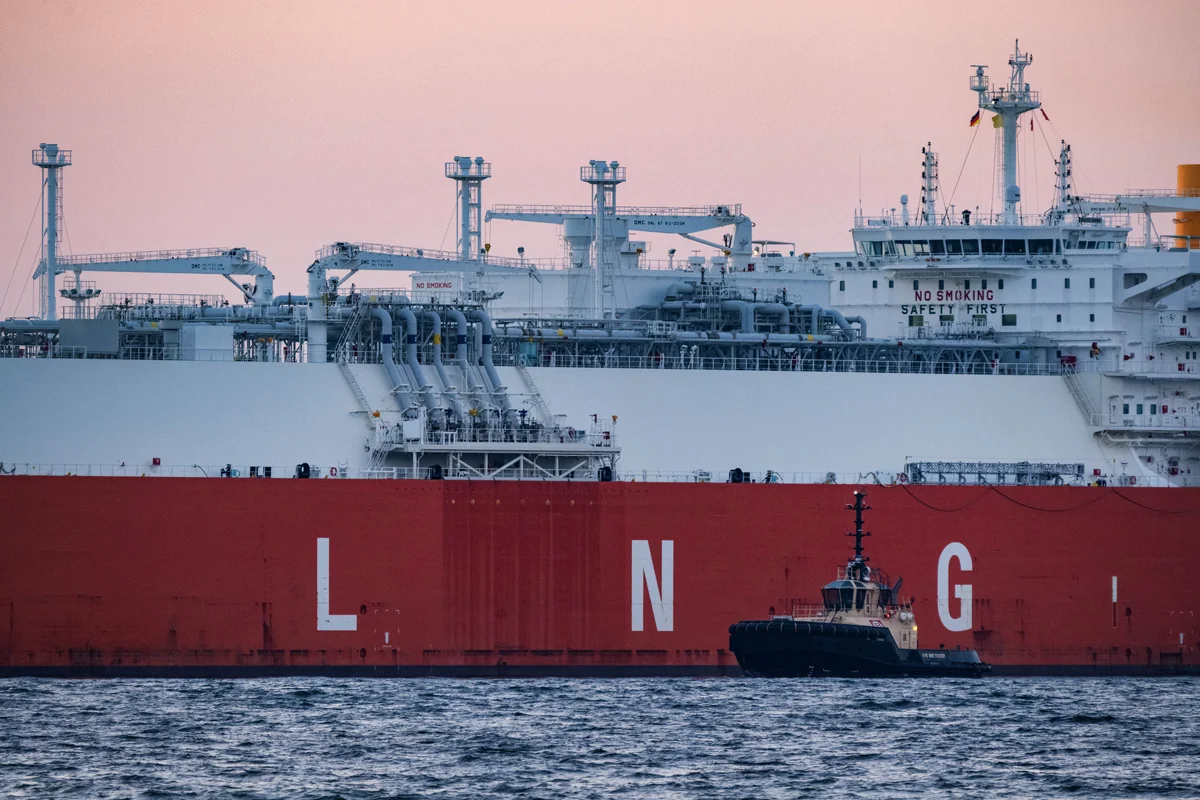
As for gas, by 2023 the indicator decreased from 45%to 15%, but in 2024 it grew up again-almost 19%. This happened by increasing the import of Russian LNG, still popular in countries such as Belgium, France, the Netherlands and Spain. In 2024, according to various sources, the EU countries were delivered from 15.5 million to 17.8 million tons of Russian LNG, while before the beginning of a full -scale war, Russia supplied about 14 million tons to Europe. In many ways, it was precisely this that prompted the European Commission to develop more decisive steps, including REPOWEREU roadmap.
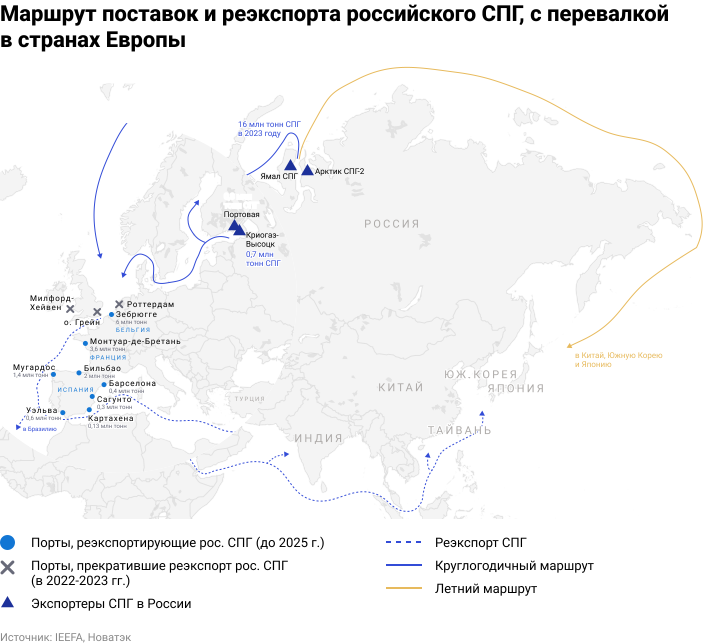
However, European countries reacted differently to Repowereu. France, the Netherlands and other consumers of LNG, like Spain and Belgium, have nothing against the abandonment of Russian fuel. In particular, due to low dependence on Russian gas pipeline and well-developed infrastructure for purchasing liquefied gas.
Steve Pai , the deputy head of the Institute of Energy of the University College of London (UCL), sees this logic. “In the next couple of years, the growth of global capacities for the production of LNG has been expected, which will cover the needs of the European market and compensate for the decline in deliveries from Russia,” he explains in a conversation with Novo-Europe. And he adds: - The increase in gas prices in Europe in connection with the abandonment of Russian fuel is unlikely. ”
Alfred Arnborg, who is sure that the implementation of the plan in several stages will allow “avoiding market shocks”, agree with this: the impact on prices will be almost imperceptibly against the backdrop of the general volatility of the global energy markets. EU member countries, the Danish expert believes, gave enough time to conclude new contracts and finish infrastructure projects. For example, prepare for operation the Romanian Neptun Deep deposit in the Black Sea (the start of gas production is scheduled for 2027), as well as build gas pipelines and terminals for exporting LNG. The risks, according to Arnborg, will reduce “EU taken measures to diversify the supply routes, as well as the active electrification of industry and the housing sector”.
Meanwhile, Hungary and Slovakia are not very optimistic and the rejection of Russian gas is considered a painful process for themselves. Budapest continues to actively import gas from Russia in Turkish Stream: in 2025, the country plans to get 8–8.5 billion cubic meters of gas and counts on similar volumes in 2026. In 2024, Slovakia purchased 3.2 billion cubic meters of gas from Gazprom (out of 5.5 billion total consumption).
The senior researcher at the Carnegie Berlin Center for the Study of Russia and Eurasia, Sergei Vakulenko, draws attention to the fact that LNG is more expensive than pipeline gas, so the inhabitants of Hungary and Slovakia will indeed feel it on themselves:
“Now these countries receive gas from Russia under contracts with an attractive price formula, and it will have to be in spot or newly concluded LNG contracts. And the price will be completely different. Plus, it will be necessary to pay for transportation from LNG terminals. ”
According to Sergei Vakulenko, "the energy of both countries depends little on gas, nuclear power plants are operating there, but gas is used in the communal sector, so from this point of view prices will be noticeable." The interlocutor of Novo-Europe said that "we are talking about additional hundreds of euros per year from each citizen."
According to other analysts , alternative supply options will cost Hungary and Slovakia 13-15% more expensive than purchases of Russian pipeline gas.
In addition, these countries fear claims from Gazprom. Slovak SPP, for example, said that it could receive a lawsuit from a Russian supplier for $ 16 billion, and additional costs for alternative gas and transportation services can be up to 500 million euros per year.
Bratislava goes to blackmail
In this regard, it is not surprising that Bratislava resorted to blackmail and for a long time detained the adoption of the 18th package of sanctions against the Russian Federation, which was planned to be approved at the end of June (sanctions, unlike trade decisions, are made and extended by all EU countries unanimously). Among other things, new measures imply a ban on imports into the European Union of oil products based on Russian oil, a decrease in the ceiling of prices for Russian raw oil, restrictions against the Rosneft plant in India, the expansion of black lists of individuals and legal entities, as well as a ban on the use of infrastructure of the North Stream - 1 and Northern Stream 2 gas pipelines.
The Prime Minister of Slovakia Robert Fitzo directly said that the sanctions in the framework of the 18th package will not be adopted until the moment of “solving fundamental issues”. That is, he admitted that we are talking about a lever of pressure on Brussels. Fitz claimed that he wanted to reach an agreement on the 18th package of sanctions by July 15-a date for which a meeting of the heads of the Mids was planned in Brussels. However, on this issue, the meeting ended to no avail.
As it became known to Reuters, the European Commission promised Bratislava, firstly, to develop a solution that would reduce its costs for cross-border tariffs for gas and oil. And secondly, in the case of possible trials that Russia can initiate. In addition, the European Commission drew the attention of the Slovak authorities to a certain “emergency mechanism”, which can be involved in the case of a sharp increase in gas prices due to a supply shortage. But Robert Fitzo at first did not convince all these assurances. The main requirement of the head of the Government of Slovakia is the permission to fulfill the contract with the Russian Gazprom until its planned expiration in 2034.
However, the 18th package was nevertheless agreed by July 18. Robert Fitzo explained in a video message about removing his veto that Bratislava received certain guarantees from the European Commission that in the event of a ban on the supply of Russian gas to the EU, Slovakia will be provided with this energy raw materials.
However, if with regard to new sanctions, Fitzo has the opportunity to exert pressure, then he will not be able to block the adoption of the REPOWEREU roadmap-just because of the decision to conduct it as an element of trade policy.
True, lawyers from the International company Mayer Brown notes that in the future the disgruntles will be able to file lawsuits to the EU court and try to challenge the legal basis of such a decision, since "the proposed ban on the import of Russian natural gas is based on the reasons that are usually based on the EU sanctions."
In addition, lawyers are added, the European Commission “can be interpreted as a violation of international public law, including the standard of fair and equal handling of foreign investments,” which means that you can start a proceedings on its compliance with the contract for the energy chart and other investment protection agreements. So the possibilities for further blackmail - albeit theoretical - will still have Slovakia.
Change of suppliers
The European Commission is adamant : there are no alternatives to the complete disposal of Russian fuel, because we are not talking about sanctions directly tied to war in Ukraine, but about the exit from dependence on the country, which "used energy as weapons and tools for blackmail." So the ban, according to Brussels, will remain in force and in the case of the completion of hostilities in Ukraine.
In addition, Sergei Vakulenko notes, all this fits into the course of "an early rejection of burned fuel in general." The European Commission, according to the expert, is sure that "high prices are useful, as it will push to refuse to quickly refuse the burned fuel in favor of low -carbon decisions." That is, in favor of technology, approaches and measures that can significantly reduce emissions of carbon dioxide and other greenhouse gases, renewable, atomic and hydrogen energy, electric transport and so on.
However, this is a long process, but for now, the place of the Russian Federation as one of the main importers of fossil fuel in the EU is gradually occupied by alternative suppliers - primarily the United States. In 2021, the United States exported 22.3 billion cubic meters of LNG to Europe, and in 2023 -already 62 billion.
True, in 2024 this indicator fell-up to 51 billion, but this happened in a number of reasons beyond the dependent of the United States: on a high level of gas reserves in storage to a decrease in domestic demand in the EU countries. According to the results of 2025, experts expect a new increase in supplies.
However, in this regard, new fears arise. If in 2021 the United States accounted for 28% of LNG imports to Europe, now it is already more than 50% . And, probably, this indicator will only grow. Sergei Vakulenko drew attention to the fact that some European politicians and businessmen are already alarming: such a situation "can increase the power of the US exposure to Europe, which is especially unpleasant, given the quite self-egoistic and mercantilist policy."
Alfred Arnborg also warns the fact that “the complete transition from Russian gas to the American gas to the American gas,“ this may affect the competitiveness of the European industry and slow down the achievement of the goals in decarbonization. ” However, the expert believes that, firstly, "taking into account the exhaustion of the resources of the North Sea, LNG from the United States is the least risky geopolitical option-compared to Russia, Qatar and other oil and gas states." And secondly, “the purchase of an additional volume of energy resources from the United States can also help the EU to achieve the concessions from the administration” within the framework of the tariff war.
Goodbye, but forever?
Между тем, нельзя говорить и о том, что даже после реализации дорожной карты RePowerEU возвращение российского газа на европейские рынки полностью исключено. По словам Сергея Вакуленко, в то время как одни страны ЕС «занимают бескомпромиссную позицию в отношении связей с Россией», другие «настроены более спокойно и прагматично, считая, что не стоит распространять логику военного времени на период мира, который обязательно наступит, и тогда не будет смысла отказываться от более дешевого источника поставок».
Об этом уже говорят, например, власти Австрии: госсекретарь Министерства энергетики Элизабет Цехетнер уверена , что после достижения справедливого и прочного мира в Украине план полного отказа от российских энергоносителей нужно будет пересмотреть. К этому же призывают и некоторые европейские оппозиционные партии, вроде «Альтернативы для Германии».
Возвращение российского газа на европейский рынок может происходить по двум сценариям. Первый, и основной — использование неповрежденной трубы «Северного потока — 2» или восстановление поврежденной взрывами инфраструктуры. При этом сам «Северный поток — 2» может перестать быть российским. Во всяком случае, интерес к покупке проекта проявляет американский инвестор Стивен Линч.
Если ему удастся добиться желаемого, то российский газ мог бы идти в Европу по де-юре «американскому» трубопроводу, и это было бы компромиссом с самыми жестко настроенными членами ЕС.
Но, по мнению Альфреда Арнборга, «если такая сделка и состоится, это, скорее, будет уступка Вашингтону со стороны ЕС, чем реализация его собственных интересов». Большинство европейских лидеров, уверен он, «отчетливо осознают опасность избыточной зависимости от российского газа, и контроль над трубопроводом со стороны американской компании вряд ли изменит это восприятие».
Маловероятным такой сценарий считает и Стив Пай, который указывает на «возможное сопротивление со стороны ЕС и нежелание Германии принимать российский газ — даже если он будет находиться под формальным контролем США».
Второй сценарий — восстановление транзита газа через Украину, прекращенного 1 января 2025 года. Как писала «Новая-Европа», ранее маршрут был выгоден и Москве, и Киеву, и европейским потребителям. Россия сохраняла стабильный рынок сбыта, в результате чего «Газпром» получал 4,5 – 6 млрд долларов в год. Украина могла распоряжаться транзитными доходами (остатки транзитной выручки, которых страна лишилась с 1 января, составляли, по разным подсчетам, от 400 до 800 млн долларов в год). Страны ЕС получали относительно дешевое топливо. При этом Словакия еще и зарабатывала на транзите: она принимала газ с территории Украины и, забирая себе небольшой объем, прокачивала его дальше соседям. Однако с политической точки зрения было довольно странно, что Украина продолжает поддерживать подобные торгово-экономические отношения с напавшей на нее страной, что и стало ключевой причиной остановки транзита.
Альфред Арнборг уверен: «Если в ходе возможных переговоров Украина посчитает частичное возобновление транзита выгодным, ЕС может скорректировать запрет, сохранив допустимый объем импорта на уровне 2024 года». При этом «значительное расширение этого объема» совсем уж маловероятно: «Европейские лидеры сочтут этот риск слишком высоким».
Стив Пай в отношении возможности возобновления поставок газа из России в целом настроен более скептически. По его мнению, «в среднесрочной перспективе такой пересмотр политики маловероятен: ЕС будет стремиться избежать повторной зависимости от России, учитывая опыт энергетического кризиса и резкие ценовые колебания». А в долгосрочной перспективе, продолжает эксперт, «тенденция к структурному сокращению доли газа в энергетике делает восстановление прежнего уровня российских поставок еще менее вероятным».
Таким образом, как бы ни развивались события в дальнейшем, ясно одно: вследствие полномасштабной войны в Украине период доминирования российского газа на европейском рынке безвозвратно ушел в прошлое.