
Translated material
"They took everyone by the throat"
The protests against the reform of municipal self -government in the Altai Mountains looked closely in Old Square. It is decided to crush
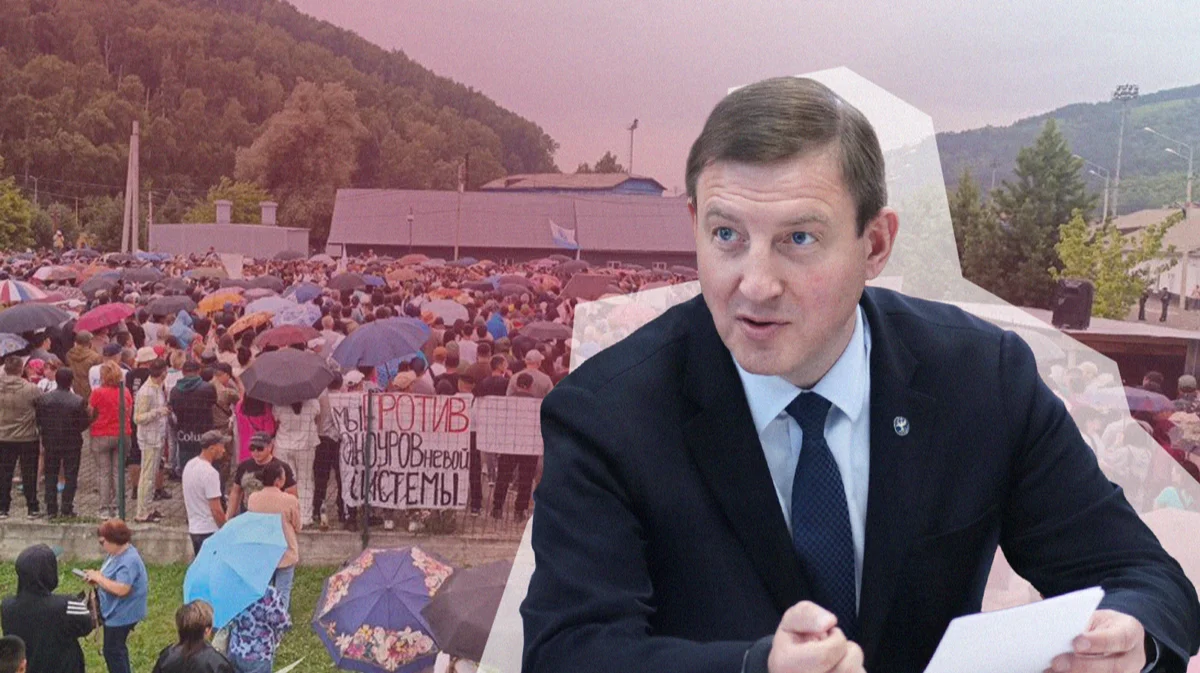
On July 20, in Gorno-Altaysk, another rally was supposed to take place against the reform of local self-government (MSU), almost two thousand participants were expected on it. The stated goal of the action: "Give an assessment of the actions of the executive and legislative power of the Altai Republic on changes in the existing Altai Republic of local self -government systems." The present is to show the head of the region that the Altai are not ready to silently give in to the remnants of their autonomy.
As a result, the rally was never agreed: in the whole region there was no place for protesters. This should have already been the second mass performance - the first action against the reform took place in the republic exactly a month ago, on June 21, and gathered several thousand participants. Then, what was happening in the Altai Mountains began to be carefully observed from the Kremlin. The New Gazeta Europe found out how the protest in Altai was suppressed and what social activists now intend to do.
"Goodbye to be easy"
The reform of local self -government in May was initiated by the head of the region Andrei Turchak, who arrived here a year ago from Moscow. The essence of the reform is that the councils of almost a hundred rural settlements will be liquidated, and ten regions of the republic are transformed into the district. The heads of these districts will become completely dependent on the leadership of the region. Thus, Turchak proposed moving from the existing two -level self -government system to a single -level, more primitive.
“A frequent question in a conversation about the transition to a single -level system - will it turn out that the power in the villages will disappear? No. The power in the villages will become a link in the administration of the municipality - its territorial department. With unified powers that will create a “one window” for residents' appeals and resolve issues ”,
- confusedly explained Turchak.
However, the residents of the republic who spoke with the New Gazeta Europe are confident that the reform and previously adopted amendments to the Constitution of the Altai Republic will destroy the remnants of local self -government, and later the autonomy of the region. In addition, the elimination of rural councils and administrations, which now dispose of municipal lands, will allow to the future in the future to transfer plots to visitors to businessmen.
“Previously, the issuance of any land was allowed by the heads of rural settlements. The rural settlements had their own lands, which they disposed of. And now the decision will make someone alone. Accordingly, having planted his man, it will be possible to safely dispose of the land as certain people should, ” one of the critics of the reform told Novaya Gazeta Europe.
Government plans to switch to a single -level self -government system caused the stormy reaction of the Altai. Protests began in the region. First, single pickets, photo-flash mobs, and then direct action shares. On June 12, several dozen protesters blocked the federal highway on the Chica -Taman pass, which is two hundred kilometers from the capital. The authorities reacted tough to the blocking of the road: Turchak condemned the dissatisfied, calling them “vandals”. The police immediately came to the violators. At least four people were arrested or received a fine.
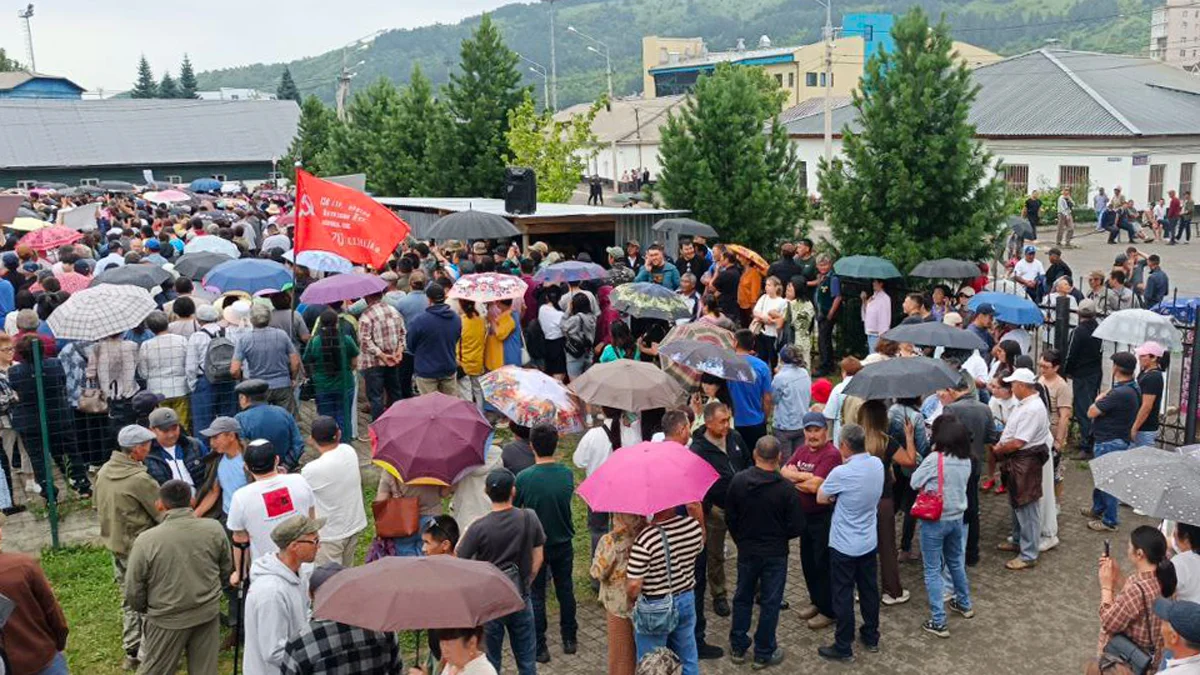
Some municipal deputies, including deputies of the Ust-Kansky district council, also opposed the reform of local self-government. They stated that in nine out of eleven regions of the republic, residents sharply opposed a single -level self -government system. Finally, on June 21, a four -thousand -thousand -haired rally was held in the capital of the region, organized by the chairman of the Kurultay of the Altai People Vasily Kudirmekov. The participants in the action wanted to force the deputies of the State Assembly to “think” before voting for the reform of Turchak. This was the last chance to somehow influence what was happening, because the vote was supposed to take place in just a few days.
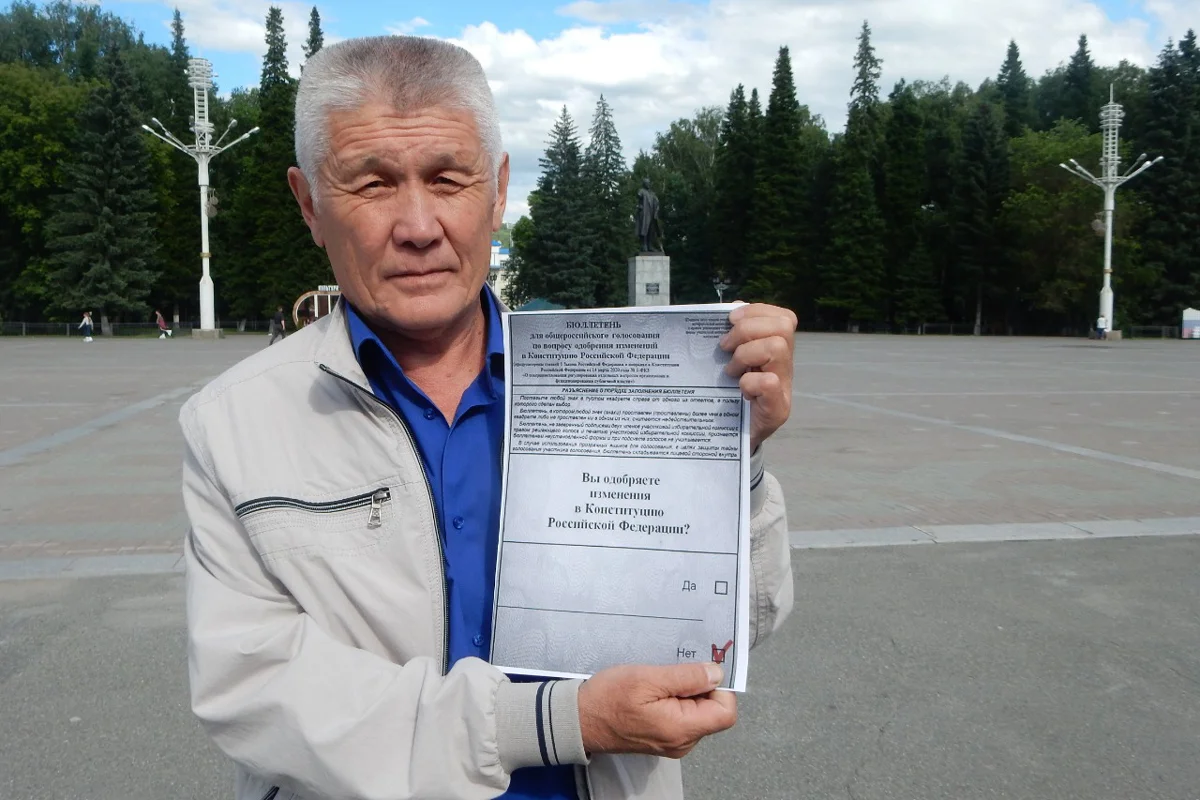
It did not help. On June 24, the parliament of the republic, by 90% of the deputies of United Russia, eliminated rural settlements and their advice. The reform was supported by 25 deputies, 11 opposed, three more abstained.
Probably, under the pressure of protesters, the lawmakers still went to some compromises: for example, they allowed citizens to directly choose the heads of districts, and the deputies of these districts were to coordinate the appointment of heads of territorial departments. But such half measures of opponents did not suit the reform.
Several deputies of the Republican State Assembly publicly opposed the reform of Turchak.
So Alexander Gruzdev from Fair Russia said that after the reform, officials in the villages "will not be responding to the population, but to the authorities." And Dmitry Sofronov from the LDPR complained that the bill "is" good ", but" people are definitely against, and they need to listen to them. " Several “United Russia” also opposed, who referred to the opinion of their colleagues from district and rural Soviets.
Turchak’s arguments were not impressed: “It’s easy to be good, but you try to be really kind,” he said, assuring his colleagues that everything was done only for the well-being of Altai. Only one could stop the reform at this stage - the personal responsibility of deputies for decisions made; But hopes did not materialize. Who and how voted that day remained a secret that social activists still demand to reveal so far.
A rally in the garden
Despite the decision of the parliament, the Altai did not give up. After the rally, a coordination council was created. In early July, activists applied for another protest. Meanwhile, the information began to penetrate the information that the authorities consider the “prohibitive-slic scenario by the most likely option for neutralizing the protest movement”. As the Nezigar telegram channel told a source close to the regional administration, the rally planned on July 20 bothers officials in regional and federal structures, so they are unlikely to agree on.
“It was decided to press the protest and transfer it to the illegal field, while point work with activists is underway. <...> Now, through the AP and the party, clear signals are given about the inadmissibility of large -scale protest activity in the republic ”,
- said the source.
According to the interlocutor of the "non -sentence", Turchak tried to act softly, but now his attempts to "be kind" were not appreciated and considered "inexperience". “Now the Kremlin believes that more stringent measures are needed,” writes Telegram channel. On the other hand, politician Maxim Shevchenko, who is well acquainted with the region, voiced the opinion that in response to suppression of protest, Altai can react not only to pickets:
“That which is now an Altai protest is still a completely polite form, but it can result in something much more serious and spontaneous, there were precedents,” Shevchenko said one of his subscribers.
As a result, the rally did not agree on the opponents of the reform of Turchak, referring to the fact that there is no suitable site for this. Local chats discussed a variety of options for a rally. The chairman of the Kurultay of the Altai People Vasily Kudirmekov even invited some owner to hold a rally in a private territory:
“If this is your plot in the Ogudai district, let's hold a rally on 07/20/25 per 1000 people. People are eager to come to the rally. We were refused to agree on the place of the rally. All people in the republic know this. We will pay the rental of your garden, 60 thousand rubles. ”
How the negotiations of Kudirmekov and the owner of that garden ended is unknown. The social activist himself said on social networks that he was experiencing serious difficulties not only with the organization of the rally, but also with the conduct of Kurultay - the traditional folk gathering. “The city does not give the hall anywhere. No drama, no dining rooms, no technical school, no dk, no restaurants. ” According to Kudirmekov, every site that social activists are trying to rent, receives threats:
“Now the district administration of Ivanov (the owner of the recreation center. - Approx. Ed.) Openly said that if you spend Kurultai at your camp site, we will not extend land and lose your camp site. [Previously] Ivanov L.V. proposed his house and plot ",
- says Kudirmekov.
The authorities block other initiatives. On July 11, activist Aruna Arna said that the Altai Supreme Court, following the administration, did not allow the group of activists to hold a picket against the MSU reform, citing “emergency works” in Gorno-Altaysk. Optimism of protesters decreased, interlocutors close to the organizers of the protests are less and less like to discuss what is happening: “There will be no rally, they don’t publish voting by law, they took all the activists by the throat,” one of them complained in a conversation with our correspondent.
"He must leave"
In the context of an actual ban on public events, activists hope to prove their case in court. On July 4, opponents of the reform appealed to the Supreme Court with a request to cancel the decision of the parliament. They ask for the heads of rural settlements, to which Turchak promised posts in the new vertical of power, not to rush to put his powers ahead of schedule and wait for the court decision. The lawsuit has already been accepted into production, the preliminary meeting will be held on August 1.
Miracle in court is not worth waiting, many are sure, so different ideas for further resistance are heard: some believe that they need to work more actively on social networks and create horizontal ties on Earth, while others offer to collect signatures and conduct a referendum. In the end, even if it is not allowed to hold it, it will hit Turbchak a lot. “If in this way we declare its disagreement with the policy of Turchak, then the center will certainly decide on him,” one of the participants in the protest chat shares its considerations.
Residents of Altai are unambiguously against reform, but their attitude to the Turchak himself is different. As the tourist industry, who wished to remain anonymous, told Novaya Gazeta Europe, all the current reckless steps of the leader sent from Moscow are due to the fact that "the new government has not yet fully felt the soil in the region." According to our interlocutor, Altai is a completely different world with which you need to work carefully:
“I would not want Andrei Anatolyevich to be removed. I would rather like him to see that we have many initiative people who are ready to fight for their lands, culture and life. Perhaps if he goes with the local population for a compromise and will work with him together, then Altai will become a golden edge!
After all, the head of the republic was also not immediately accepted. He was Russian, but at the end of his reign, he tried to speak speeches in Altai on national holidays, ” she says.
Our other interlocutor, who also asked for anonymity, said that the reform of Turchak is completely unsuitable for Altai, and Turchak himself acts in the interests of a big business:
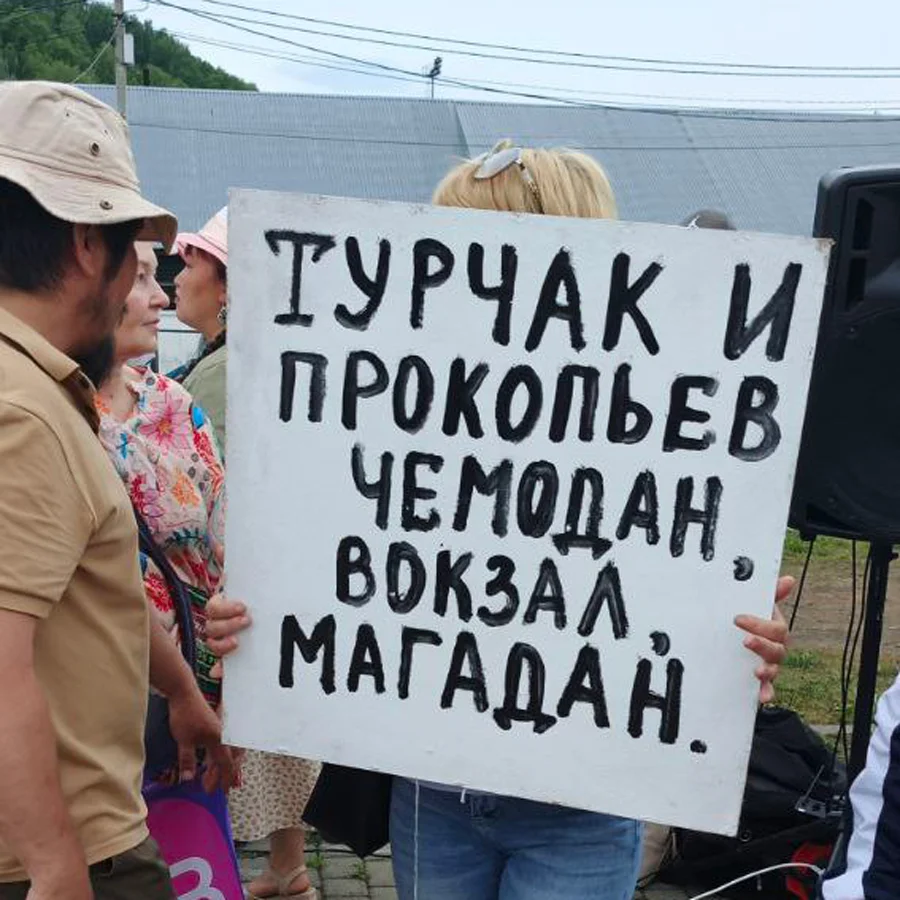
“I read about a single -level system. It is good in tightly populated regions. But in our country, the majority of the population live in the village. Previously, there was an emphasis on the development of agriculture, and now, apparently, the emphasis goes to tourism. Moreover, this is purely my opinion - they will not let him develop the local population. Andrei Anatolyevich is of someone's interests. Anyone, but not the people of the Republic of Altai. I think he must leave. But whether we can achieve his resignation is a difficult question. ”