
Translated material
The fate of the oprichnina
Mass repressions and the split of the Kremlin elites, the factor of his own and the transit of power. Essay Vladimir Pastukhov*

Illustration: Peter Sarukhanov / "New Gazeta"
18+. This material (information) was produced, distributed and (or) sent by foreign agent Pastukhov Vladimir Borisovich or concerns the activities of foreign agent Pastukhov Vladimir Borisovich.
In order to understand that in the Russian air smelled with a thunderstorm, there is no need to conduct deep sociological studies. The regime serves the remnants of Gorbachev’s freedoms and already in the very near future, if nothing unforeseen happens, Russia will finally and irrevocably become Soviet again, that is, it will reach the level of political and personal non -freedom, which was characteristic of the late USSR, and even surpass it (the spoiler is not so).
Where does the hysteria come from?
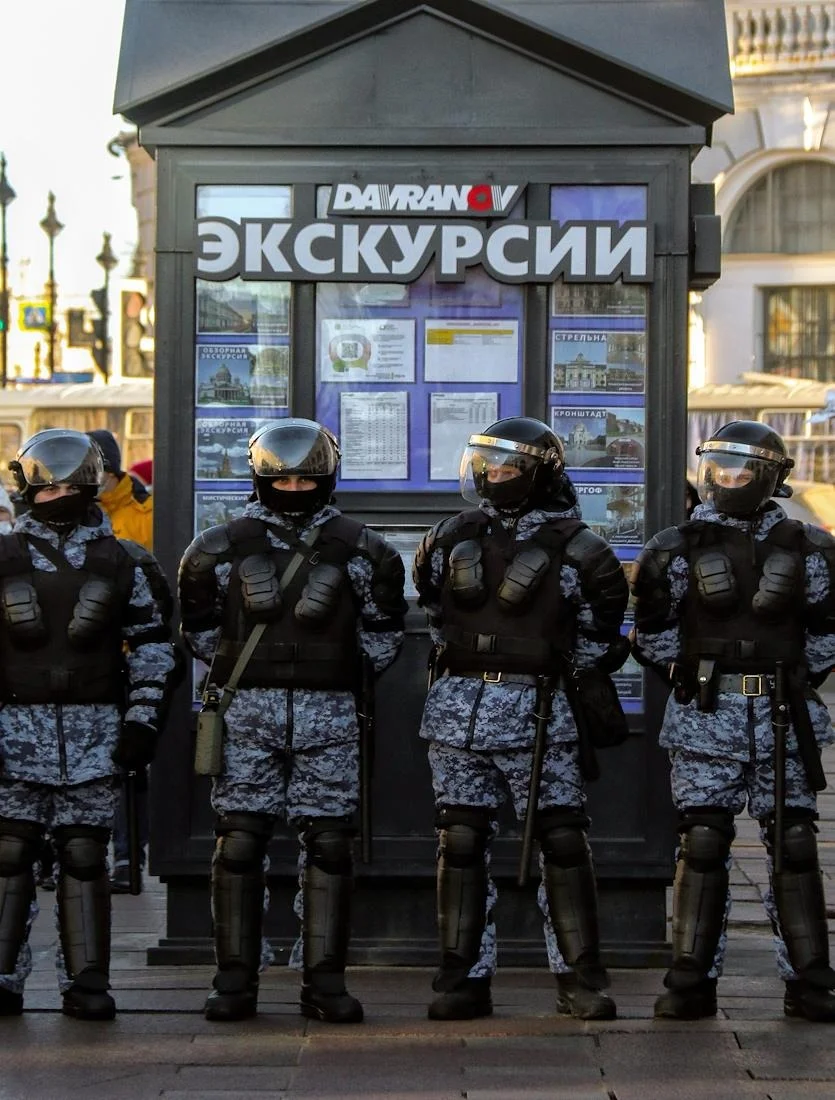
All recent decisions in the field of protective policies show that the repressions actually went to the people. And the point is not so much in numbers as in the mechanisms of their application. They adapt to the need to quickly and cheaply (the latter is of great importance) to remove from the public circulation of any person, albeit only by accidental power by the arm.
For example, right now, the Kremlin actually adds to the arsenal of repressions another “folk” article - about responsibility for the search for information from extremist organizations. It does not cause any doubt that the matter will not be limited to extremists, they will be followed by all unwanted persons and organizations, not to mention “foreign agents”.
If the initiative is put into practice, everything will be reduced to an analogue of the infamous article on anti -Soviet agitation and propaganda with its absent formal frames.
As you know, so far the most mass and democratic remained responsibility for the storage of drugs. It is clear that the liberal heresy is an opium for the people, but not just as literally, in fact.
In parallel, apparently, to make it easier to monitor, the country's transition to a monitor, which is fully controlled by the authorities and is a onhite version of Chinese WeChat, is being prepared. It is clear that in this initiative a gigantic corruption-commercial component, and yet it is not the main one. The main thing is still the establishment of total control over society.
Looking at the next round of repressive hysteria, provoked by power, I ask myself once again in recent years: “Why? Does someone attack them? Or are they scorching in all directions out of fear, reacting to any incomprehensible sound? " But then the question arises: what is the authorities afraid if everything is so good? In theory, we should be afraid. But the further we are, the less scary, everything is as in the old “black” Soviet joke: how to shoot again?
Fear matters
This is not surprising, since this is a normal vector of evolution of any totalitarian regime, and there was no reason to believe that Putin’s Russia could avoid this extreme. It becomes more interesting for me to participate in the discussions in which the opinion is expressed that this regime, unlike the communist, is kept not at fear, but on some other fundamentally new mechanisms for controlling society, the nature of which is almost a mystical character, which is not amenable to rational explanation.
As arguments, data are given that show not the highest figures of convicts today according to the so -called “political articles”. In the most pessimistic scenario there are several thousand of them (from the strength between the three and five thousand). Even “foreign agents”, that is, not yet convicted, but affected in rights, there are a little more than a thousand positions, including both individuals and legal entities.
By the way, the fact that the fate of these several thousand people today is in hearing is a striking way the result of the fact that both freedom of speech and the expression of opinion in Russia, albeit due to technological progress, were at the very last moment at a much higher level than in Soviet times. So the authorities really have something else to compete.
But returning to the main topic, I note that if you compare today's repressions with the Stalin, especially over the years of great terror, when only in a couple of years and only “on the forehead”, that is, it was according to political articles that about one and a half million people and several hundred thousand were shot, then, of course, what is happening today, a health -improving pioneering against a strict colony. regime. Actually, this comparison makes us conclude that the matter is not in fear, but in something else.
But you can compare not only with 1937, but, for example, from 1973, and the result will be stunning to others.
The number of the Criminal Code repressed by all types of “political” articles, including hidden repressions (such as punitive psychiatry and expulsion), at sunset of the Soviet era, that is, in the 70-80s of the last century, were approximately the same several thousand people. Although, according to some parameters, and in particular - in terms of diversity and sophistication of mechanisms, today's times can give a head of the Soviet “prison of peoples”.
Contrary to widespread opinion, in order to maintain the atmosphere of total fear and submission in society, mass repressions are not only not needed, but also harmful (provoke oncoming “resistance of the material”). The current regime, to a significant extent, is kept precisely on fear, to underestimate the value of which would be wrong. Removing a factor of fear will find a completely unexpected picture of moods in society. It is not always a person who is perplex, but definitely not similar to the one that is drawn by propaganda and even “objective” hundreds of polls.
The transition to larger repressions, the preparation for which we are clearly observing now, indicates, rather, of the growing dysfunctionality of the system than about its progression. After all
1937 is needed only at the entrance and at the exit to totalitarianism. The rest of the time, the totalitarian system is able to maintain itself in an inertial mode.
And for that matter, the fact that over four decades of post-communist history in Russia there was no surge of repression, even close to the level of great terror, only says that no real gap in the notorious 90s, between the 1917 and 2025, did not occur, that Russia continues to live in a paradigm set by Leninsky and Stalinsky. terror. Their potential is still effective and the system needs only small doses of “supportive therapy” of violence.
Repression and transit problem
Why makes power worse? It is difficult to believe, but with perseverance worthy of better use, they draw Russia in a revolutionary situation. There is no, of course, formally everything that they do since 2013 and even more so since 2020, is aimed at preventing it and ensuring a trouble-free transfer of power and assets to the next generation of the oprichnip. But the result may be the opposite.
The reason is in hostilities. They became the most powerful instrument of mobilization in the hands of the oprichnina and were supposed to ensure the continuity of power “100%” (Doctrine of Surkov). But they dragged on, and there was an overdose.
Anyone who drinks a whole package of tranquilizers at a time, always risks not to wake up. So the regime runs the risk of falling asleep, reduced by a deep militaristic dream.
Once Lenin wrote that the revolution in order to be successful, at least a small but daily victory is needed. In principle, the same thing he could write about counter -revolution. Power sits on the needle of victory. If it breaks, the regime is not approve. If you wanted to know what Koshchei’s needle looks like, then here she is in front of you. If the fighting could last infinitely long, bringing every day one after another small victories, then there would be no problems.
But any resource is final. If everything lasts too long, there is a risk that from the stabilizing factor, the fighting will turn into destabilizing (total mobilization and military capitalism-usually not quite what the Open-bearing people like). That is, the Kremlin still needs to achieve victory within the framework of some reasonable time period. This is important to understand by building a model for the development of the situation - Putin is limited in time. He needs a tangible victory not at all, but in the foreseeable prospect.
The factor of limited time changes, if not everything, then a lot. While Putin is in power, the “movement” without a victorious end is not so dangerous for the regime. We will leave aside extreme scenarios with total mobilization against the backdrop of a catastrophic exhaustion of resources or with a direct access to a nuclear continuation of the conflict, which are possible, but less likely than long routine flowering of the armed conflict and Russia with it.
In the Red Zone there is only one scenario: if Putin leaves the position without having won and without completing the conflict. That is, if armed actions crawl to the "post -Putin transit" and become a headache not Putin himself, but his successors. In this case, the situation will develop, in my opinion, non -linearly, including with the prospect of entering the revolutionary situation.
We underestimate the factor of Putin as a stabilizer of the regime.
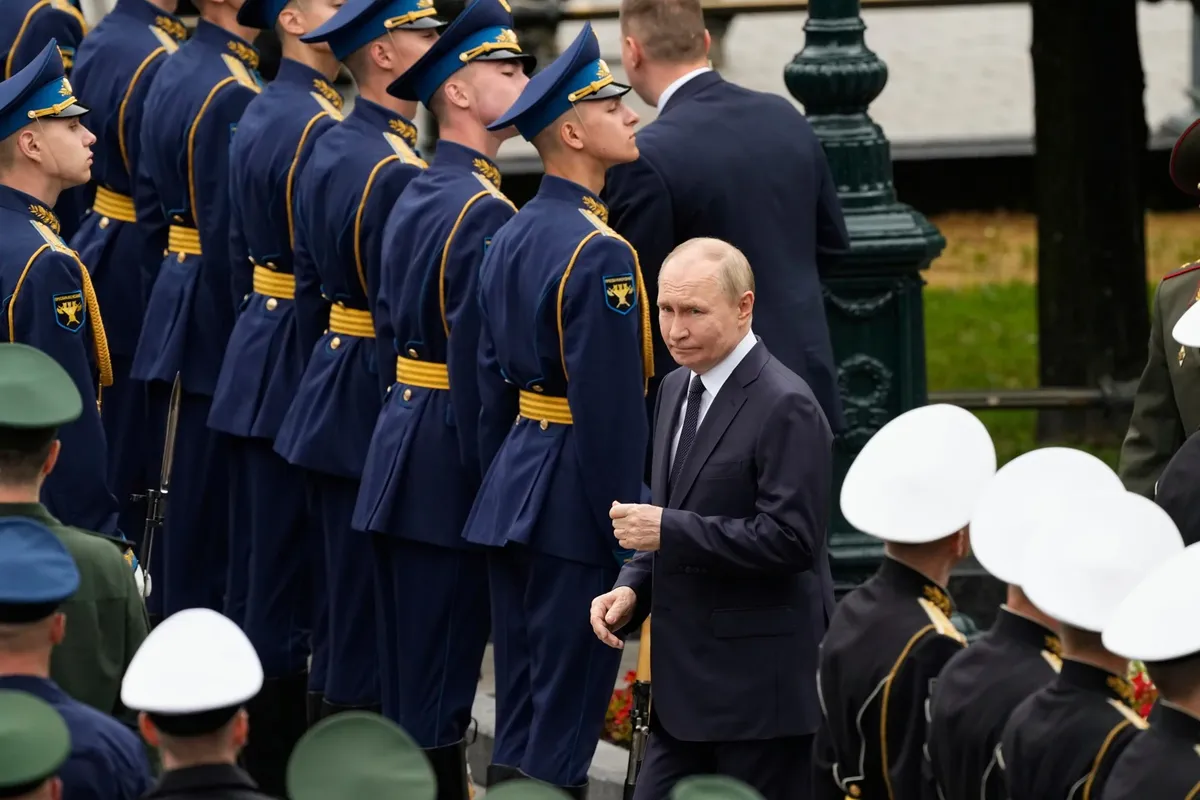
It would probably have been possible to make up for his loss in the world, when there is enough “Foundation of Peaceful Time” (we recall the “transitions” from the leader to the leader in the post -war USSR, albeit not unrelated, but generally successful). However, in the conditions of ongoing hostilities, this seems to me unrealistic. Most likely, in this case, the situation will “fall” into the pattern of the First Crimean War, and the circle of history, which Vladimir Medinsky loves to talk about so much about in vain.
The heir to Putin will “not pull” the armed conflict, as her heir Nicholas I did not pull (Alexander II was forced to conclude a shameful world for Russia with the anti -Russian coalition of European powers, supporting Turkey in that war, exactly a year after the death of its inspirer). And then everything will be as usual: Russia for some time hangs between deep reforms and the revolution, before choosing between the fire and we hollow.
Successors in the "red zone"
Continuing the theme of risk factors for the regime, I cannot but notice that historically Putin is personally the most protected element of the system, which does not threaten little.
Of course, I do not consider the “extreme” options, namely those in which Russia reaches “to the extreme” - that is, either to the military defeat or to the nuclear phase of the war. Then, of course, anything can happen. But in the regime of sluggish political war, Putin is perfectly preserved.
I can’t say the same about his successors. Formaline may not be enough for them. Whoever enters the vacant place, he will be in the zone of very high political turbulence. It will be provided with two oncoming political stream.
Firstly, the pressure from the outside will increase sharply, because much of the fact that representatives of the pro-Ukrainian alliance did not dare to do under Putin, they will make immediately after his departure (everyone understands what “moment” is, there are no fools).
Secondly, the mobilization resource of the successor, whoever they may be, will at first be smaller than that of Putin, since he will have to adapt the system for himself for some time.
At the intersection of these two flows, twisting will occur, lifting political toxins closer to the surface, hitherto pressed to the ground. And these will not be liberals, not Westerners and not opponents.
The main problem for Putin’s successors will be a conflict with supporters of the continuation of an armed confrontation at any cost - in the absence of the opportunity to continue to pay even at the old price.
If, for example, Putin frankly does not want to carry out mobilization, then for his successor this will become an almost insoluble task.
In these conditions, in Russia, the first prerequisite for the revolutionary situation may develop: the upper reaches will have the opportunity to live in the old way, despite the fact that the lower classes will demand changes (mainly a quick victory over all enemies). Then two diametrically opposite paths will open before the successor: either to begin the phased conversion of the military conflict, going to a neat rapprochement with the West (for which the former Putin elite will need to support part of the liberal opposition ready to talk with it), or to go to the lead of radical supporters of military operations and try to realize all the sweetest dreams of Dugins, Malofeevites, Malofeevites, Malofeevites, Malofeevites, Malofeevites, Malofeevites Strelkovtsev and other obsessed, which will practically inevitably lead to open civil conflict, primarily in areas of compact residence of ethnic and confessional minorities.
All this is precisely the direct way out in the revolutionary situation, which the “new Bolsheviks” (if you want - “true Bolsheviks” are patiently waiting in order to distinguish them from those heirs of the first Bolsheviks who dug up in power).
Thus, summing up all these thoughts, I come to two disappointing conclusions.
Firstly, if you discard random factors that can sharply accelerate the historical process and generally take it aside, then the first easily calculated critical moment for Putin’s elites will be Putin's departure from power with an unfinished one. In such a situation, they retain the smallest chances of survival.
Secondly, the exit from this critical strip is seen either in motion in the direction of more or less soft bureaucratic authoritarianism, where the repainted Putin with the liberals of the hameleons, or towards a very strict revolutionary dictatorship with all the accounts of all with everyone, still rule. It is almost impossible to predict where Russia will take Russia today.
Internal combustion engine
The only thing that can be predicted today with sufficient accuracy is that the regime will move in the designated side with the inexorable predetermination of fate. This is due to the fact that the trajectory of his movement is determined not so much by subjective factors that are very changeable, but by a fundamental objective internal contradiction (the “main contradiction of the regime”), which has opened thanks to his.
An essential fact, as lawyers say, characterizing the current socio-political situation in Russia, is a contradiction forming at a deep level in relations between Putin and the opoptic world created by him.
The fact is that in order to maintain his power, Putin is enough not to lose the armed conflict. But in order for the oprichnina to be able to maintain her power after Putin’s departure, she needs much more: either Putin won (more precisely, achieve a result that can be sold on the domestic political market as a victory), or so that he ends his (more precisely, achieve a result that can be sold in the same domestic political market as a termination of hostilities).
This is due to the fact that
For the oprichnina, whose representatives intend to collectively convey to the next generation the power and assets concentrated in their hands, the most vulnerable state is the entrance to the transit of power in the conditions of ongoing hostilities.
I am not ready to say that such transit is in principle impossible. But its own greatly reduces the likelihood of its successful outcome.
This essential, that is, does not depend on the current political conjuncture, and the conflict between the autocrat and its clientele arising from the very nature of the modern Russian authorities remains latent as long as the chances of the victorious (in the above sense) are the completion of hostilities. Victory is a solution to the problem for both Putin himself and his oprichnina, while the continuation of hostilities without victory and without defeat is only a method of individual, that is, personally presidential salvation.
But if the armed conflict will be delayed without the clear prospects of its completion in one way or another during Putin’s rule, the conflict between Putin’s personal choice (in favor of the evergreen military operation) and the collective choice of his elites (in favor of the completion of military operations before the transit of power) will be aggravated. Accordingly, invisible pressure on Putin towards greater flexibility in finding compromises with the West will also increase. This can have a number of direct and distant consequences.
One of the immediate consequences will be an increasing split inside the oprichniper. A group will stand out of it, in which, under any layout after Putin and without Putin, there is no future, and which is therefore there is nothing left but to live today, cling to him and try to make sure that the night never ends. These “VII of our time” will desperately fight “werewolves” who want to stop hostilities for the sake of future collective salvation.
A more distant consequence is that in the conditions of the split of the oprichnina, Putin will inevitably have to make a choice between the fraction of the militarists and the fraction of the truce. What will win? Индивидуальный расчет автократа, которому не очень интересно то, как будут вписываться в новый поворот истории его преемники, или соборный эгоизм системы, готовой рискнуть текущим покоем своего демиурга ради перспектив коллективного спасения?
Проблема в том, что если индивидуальный эгоизм превозможет коллективный, то у Путина не останется другого выхода, как перенацелить на следующем этапе репрессии на «ближний и средний круг», выискивая и уничтожая как реальных, так и мнимых сторонников перемирия, посмевших задуматься о собственном спасении раньше, чем «батько» влез в пекло. Не исключено, что все широко разрекламированные меры по «чебурнизации» информационного поля — это сигнал не столько далеким и малопонятным «иноагентам», сколько резидентам Садового и даже Бульварного кольца.
Режим в состоянии стратегической неопределенности
При оценке возможных ходов со стороны Кремля большинство наблюдателей обычно исходят из того, что Кремль (что бы этот термин сегодня ни значил) знает, чего он хочет, и главное — угадать (вычислить) его скрытые от посторонних глаз планы. В свете вышеизложенного я позволю себе в этом усомниться. Сложность ситуации в том и состоит, что Путин и его окружение зависли в положении стратегической неопределенности по всем существенным политическим вопросам, включая вопрос о войне и мире как ключевой (хотя они сами себе в этом никогда не признаются). Путину, может быть, и не очень интересна судьба его окружения в будущем, но он не может не считаться с их мнением в настоящем. Риск получить на четвертом году военного конфликта консолидированную фронду существует всегда. Хрущеву не помогло то, что он унаследовал почти идеальную машину репрессий (не чета нынешней, продажной, между прочим).
Поэтому, как ни противно это звучит для Кремля, но вариант, при котором Россия и Запад пытаются разойтись бортами, все равно не сбрасывается со стола. А раз так, то надо готовиться к самым неожиданным вариантам развития ситуации, к ударам как слева, так и справа. А еще есть риск того, что перемены будут восприняты как сигнал к оттепели, что уж совсем не по сезону.
Парадокс нашего времени в том, что репрессии, вызванные к жизни военными действиями, сегодня усиливаются по экспоненте именно потому, что власть живет ожиданием вынужденного мира.