
Translated material
"There is no need for curses"
Archbishops failed with the coup. And the head of Armenia declared a crusade against them

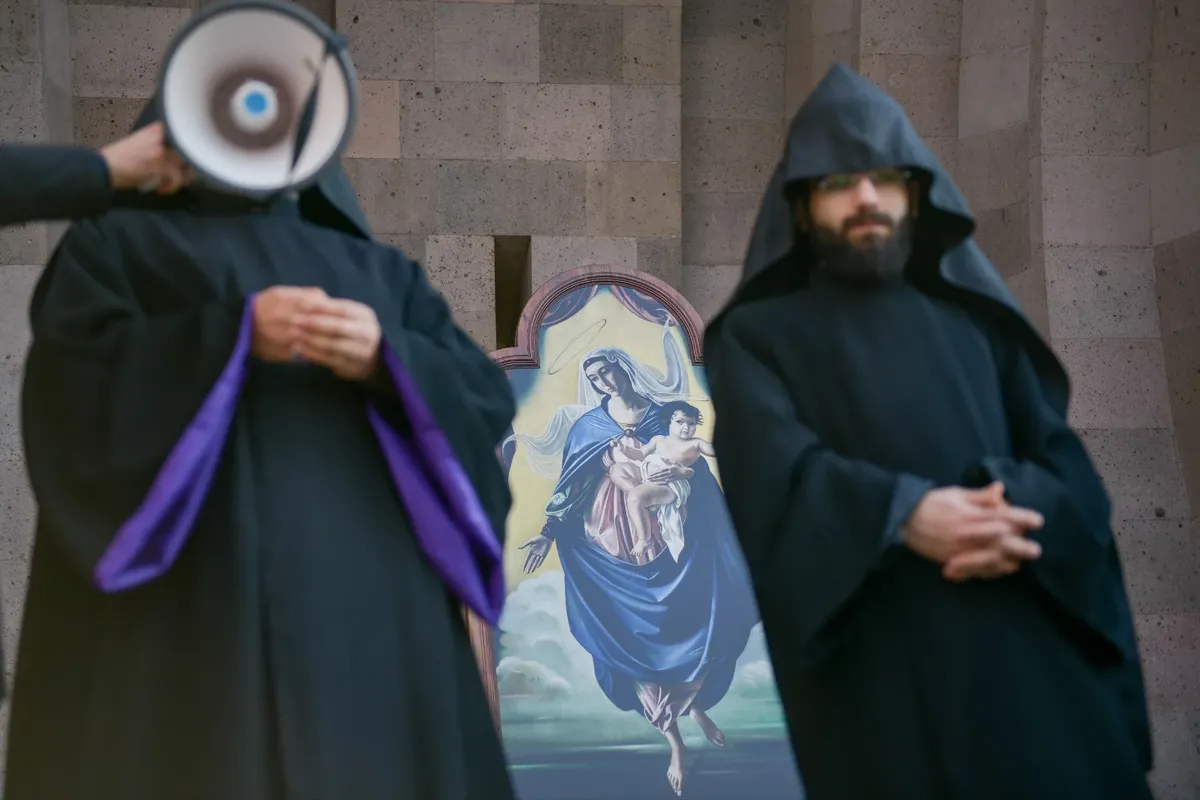
The Catholicos of all Armenians Garein II sets fire to a fire near the Echmiadzinsky Cathedral on the day of the celebration of Trindez. Photo: Alexander Patrin / TASS
According to the Prime Minister of Armenia, the role of church leadership in Armenian politics has become threatening. For the first time in post -Soviet history, the head of the democratic government is fighting with church leadership under church slogans.
"I can curse them"
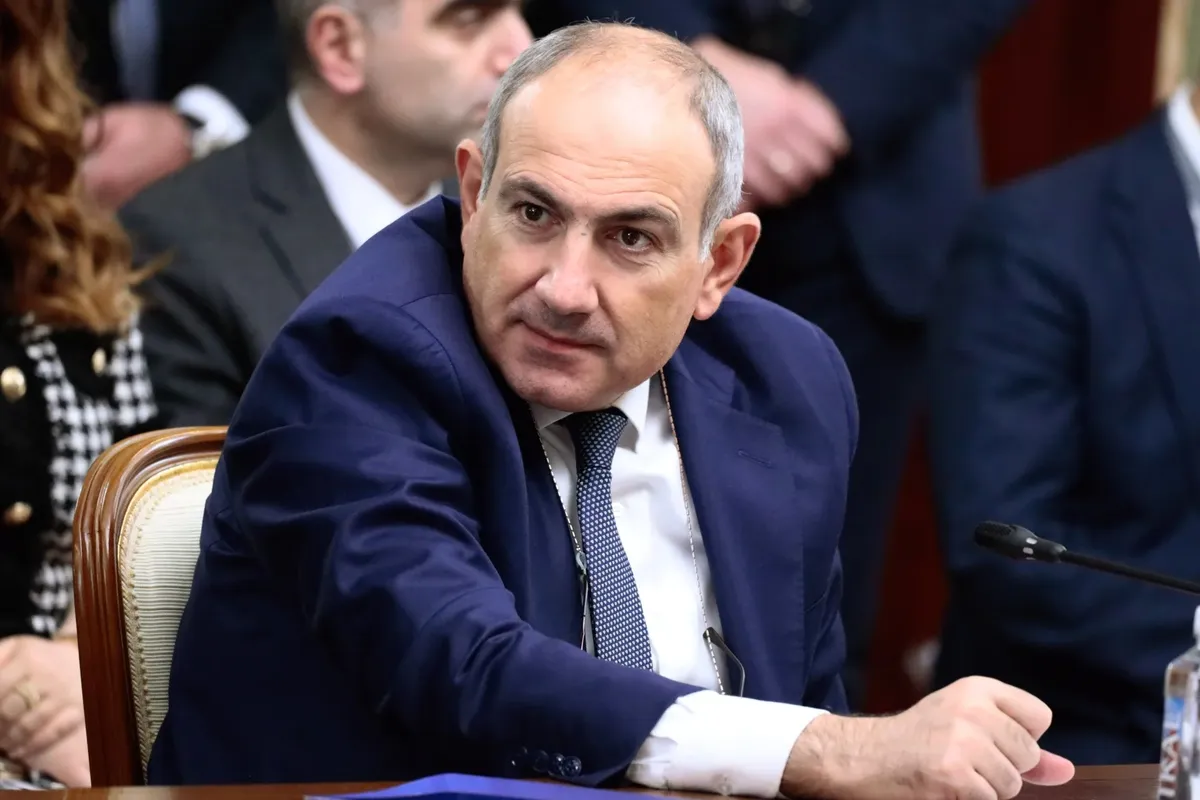
Personally, the Prime Minister of Armenia promised to lead the “Movement for the Liberation of the Church” at a press conference in Yerevan on July 16. And on July 20, he also promised to specifically expel the head of the Armenian Apostolic Church (AAC) of the Catholicos Garegin II (Pashinyan calls him exclusively a worldly name - Kortich Nersisyan) from a residence in St. Echmiadzin.
The campaign of Nikola Pashinyan to change the leadership of the AAC, which, in his opinion, is too actively interfering with the country's political life on the opposition side, has not slowed down for a couple of months. Given the confessional monolithic of the Armenian society (about 92% of citizens claims to belong to the AAC), the authorities feel the real threat emanating from the opposition church. But, unlike other conflicts of this type in the post -Soviet space (for example, the confrontations of the Office of Zelensky and the UOC), the Pashinyans and its like -minded people do not come from anticleric or at least secular positions, but as zealots of the “purity of the church”.
Pashinyan criticizes the head of the AAC of Catholicos Garegin II not for politics, but for violating the vow of celibacy, the “chulanization” of temples, which are defiled by “inappropriate use”, and for the shadow business. While the AAC hierarchs try themselves as politicians and opposition leaders (more on that below), the prime minister acts as a prophet: “I can curse them, but I will not do it. I only said that I would lead the movement of the liberation of the church from them. There is no need for curses. ” Earlier, on July 8, Pashinyan stated that “the house of Jesus Christ is an antichrist and a dog -eater,” urging the AAC from the “antichrist, anti -state group”.
Shortly before that, law enforcement officers stormed the residence of the head of the AAC in St. Echmiadzin, after which the archbishops Mikael Ajapakhyan and Bagrat Bagrats suspected of preparing the coupling were detained. Also, in June, the richest citizen of Armenia (has Russian citizenship) Samvel Karapetyan, who threatened to “intervene in its own way” in defense of the Catholicos, and the other two sponsors of the AAC, the Armenian large businessmen Gagik Tsarukoyan and Samvel Aleksanyan, were detained. The names of the archbishops (as ideological leaders) and businessmen (as sponsors) appear in the “state -owned plan”, allegedly received from the special services by the publication of Civic.am, and also published in the blogs of Pashinyan.
According to the “plan”, the coup was planned on July 23, in addition to the listed persons and their supporters, the former presidents Robert Kocharyan and Serge Sargsyan supposedly were supposed to participate in it
And the billionaire Karapetyan was going to take the position of the shadow pro -Russian leader, reminiscent of his position of his colleague Bidzina Ivanishvili in the current political system of Georgia. Presumably, for this purpose, Samvel Karapetyan, who owns a successful group of Tashir companies and occupies 44th place in the list of Russian billionaires according to Forbes, was relocated from Moscow to Yerevan.
Rebel archbishops
If the Armenian authorities have good reasons to talk about the prepared coup, then this partly explains the unprecedented wave of arrests of opposition representatives who swept through the country this summer. For the Armenian church, the most resonant were the arrests of the head of the Shirak diocese with the center in Gyumri Archbishop Michael Ajapakhyan (June 29) and the former head of the Tavush diocese, who openly claimed the prime minister of Archbishop Bagrat Bagrat Bagrata (June 26). According to lawyers, they are contained in the same cell in the Yerevan-Kentron pre-trial detention center, owned by the SNB of Armenia.
Unlike Blastanyan, who had arranged many thousands of processions and rallies last year with attempts to storm the government building, Archbishop Adzhapakhyan is more like a cabinet theorist. For some time, he represented the AAC in the World Council of Churches, supported the dialogue with the Russian Orthodox Church and with the Russian military, whose main base in Transcaucasia is located just in the diocesan center of the Shirak diocese of Gyumri.
The assault on Echmiadzin on June 27, whose purpose was the arrest of Ajapakhyan, remains perhaps the most epic episode of Pashinyan’s confrontation with the AAC leadership. The archbishop then defended not only hundreds of clergy and laity, but also Garen II personally, who heroically came out to meet the special forces.
Although during the assault it was not possible to seize the archbishop, in the evening of the same day he personally appeared in the UK and surrendered to the authorities. That same night, the court arrested him for two months.
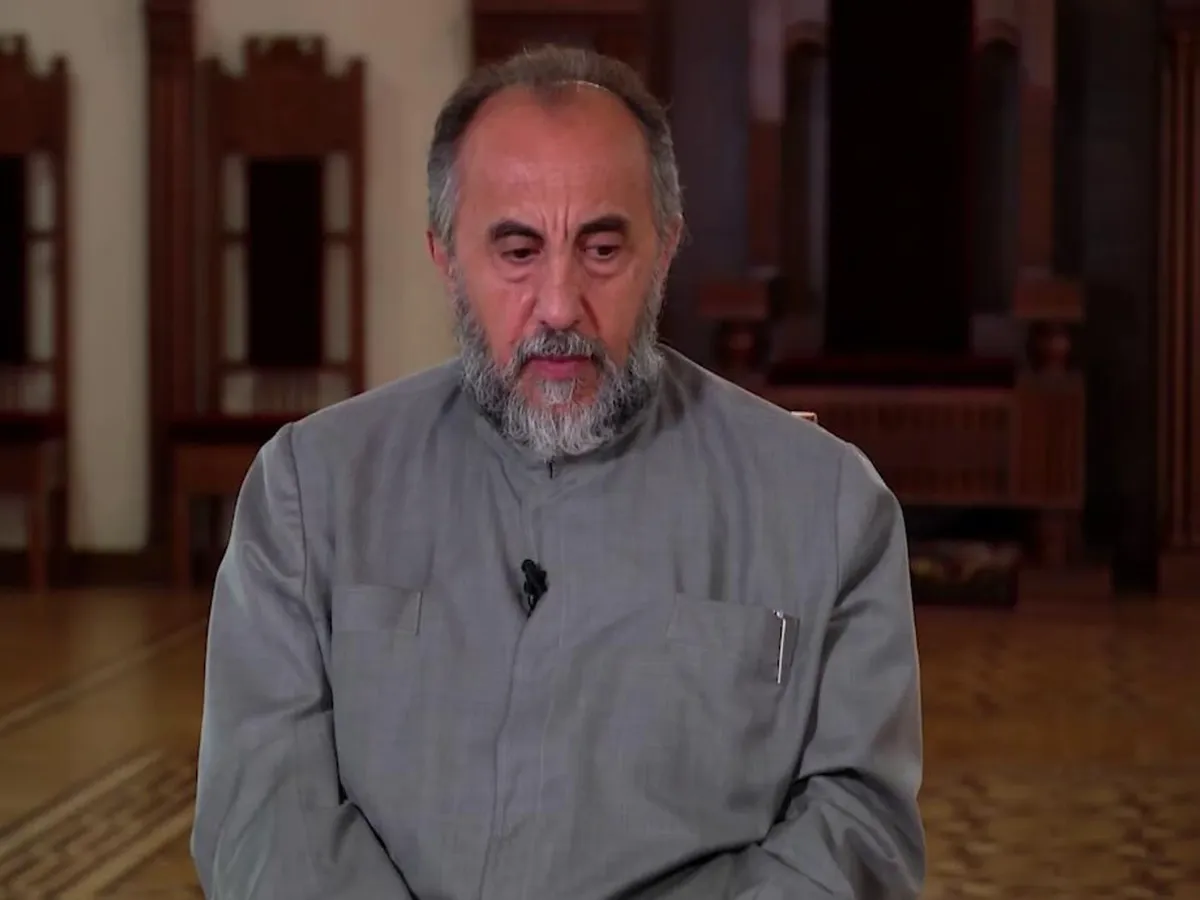
Shortly before the arrest, Mikael Ajapakhyan stated in an interview that the loss of Artsakh (Nagorno -Karabakh) was a more tragic event than the 1915 Armenians genocide, because, in his opinion, the Armenian state became the accomplice. A few years ago, he directly called for a military coup, complaining that "we did not have an army, there was no generals who would go to this necessary step." However, then the prosecutor's office did not find a crime in these words. And now - found.
Bagrat of the Blastanyan, although he has formally preserves the rank of archbishop, has been banned in service for more than a year and has not been holding church posts. He himself asked Catholicos about the resignation in May last year, when he was absolutely sure of his victory over Pashinyan and that he himself would lead the revolutionary office. The rejection of church ministry for the sake of politics of the Blastans called his "victim to the altar of the Fatherland."
Then his movement with the several town name “Tavush in the name of the Motherland” (Tavush is the region on the border with Georgia and Azerbaijan, where work on the border demarcation is actively underway) failed and was renamed the “sacred struggle”.
According to the SK of Armenia, during June 15 activists of this movement, headed by Blastanyan, who, according to investigators, were preparing large -scale sabotage on the eve of the coup. In the framework of the Blastanyan case, more than 90 searches were carried out, during which weapons, ammunition, equipment, communications, UAVs, etc. were seized. It is hardly legitimate to talk about massive taps, especially since the image of a militant street rostrum, which actually called for the renewal of the war of Artsas, entrenched in the Blastanyan last year.
"Real Armenia" against the "Karabakh clan"
The factor of Artsakh (Nagorno -Karabakh) became the symbolic core of the current confrontation in Armenia. If the Pashinyan, the ruling party “Civil Treaty” and their supporters promote the concept of “real Armenia” - within international recognized boundaries and without conflicts with neighbors, then the opposition and leadership of the AAC play on the feelings of refugees from Karabach, using the resources of the “Karabakh clan”, which controlled Armenia up to the “velvet revolution” of 2018.
As early as the fall of 2020 - against the backdrop of the loss of Armenian control over a significant part of the Artsakh - Garen II demanded the resignation of Pashinyan, threatening with "shocks, possible clashes and tragic turns." At the same time, the head of the AAC demanded the release of ex-president Robert Kocharian, who was accused of violence against peaceful demonstrators (including Pashinyan) after the 2008 presidential election.
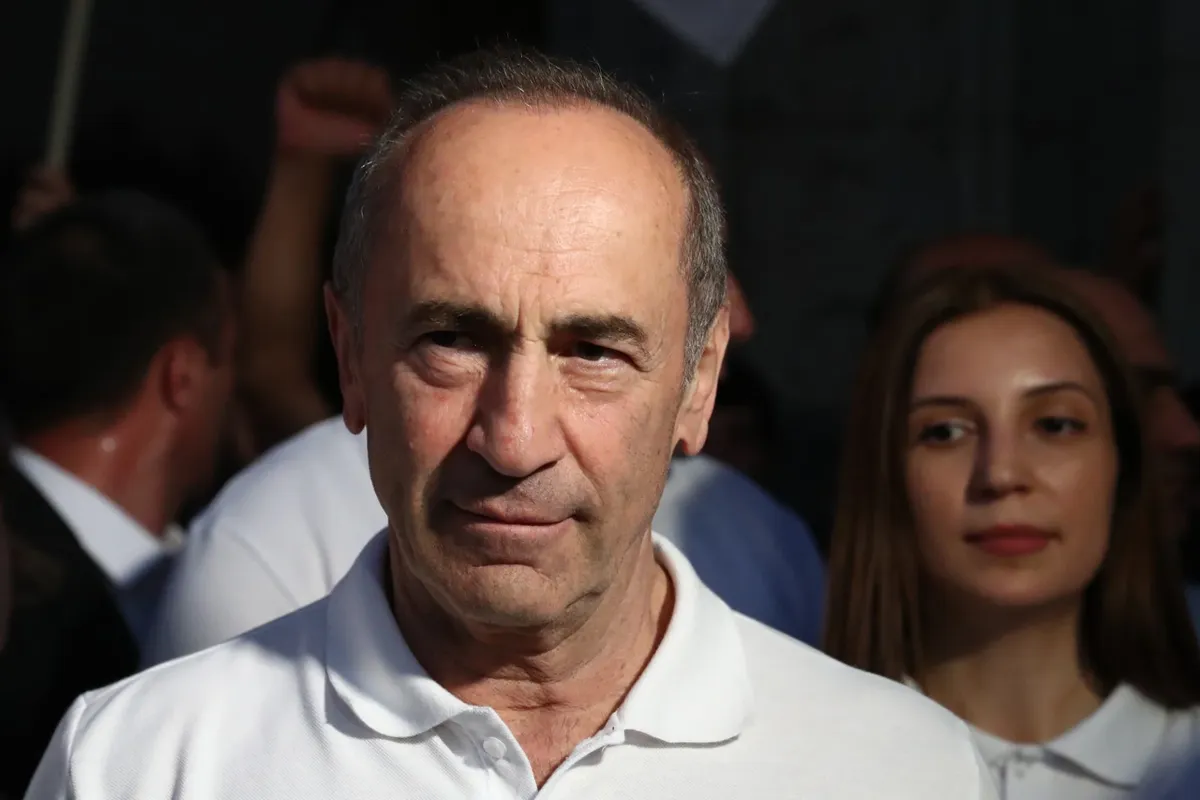
Kocharyan, born in Stepanakert in 1954, was the head of Armenia in 1998-2008, and his successor Serge Sargsyan, born in the same year, in 2008-2018. During the years of their reign, there is a heyday of political corruption in Armenia, the growth of total (including military) dependence on the Russian Federation and the transition to the hands of the “Karabakh clan”, that is, countrymen of presidents, control over the key authorities.
Kocharyan and Sargsyan began their political career in Nagorno -Karabakh: first in the regional committee of the Komsomol, and then as the leaders of an unrecognized state
(Kocharyan was the president of the Nagorno-Karabakh Republic in 1994-1997, and Sargsyan acted as its Minister of Defense in 1992–93, when active military operations against Azerbaijan were underway). Both ex-presidents are on the international wanted list, initiated by Azerbaijan, and Kocharian also periodically fell into the Armenian pre-trial detention center after Pashinyan’s power, but in the end was released on bail to more than $ 4 million, which was introduced above Karapetyan and the Russian AFK Sistema Evgeny Yevtushenkov.
It is clear that the choice of such political allies puts Garegin II and his supporters in the leadership of the AAC in a position that is very unfriendly in relation to the current Armenian government. According to the vice-speaker of the Armenian parliament Alena Simonyan, constant intervention in politics and pressure on the court makes the inevitable replacement of the Catholicos of all Armenians.
The current leadership of the AAC is the rudiment of the “Karabakh era”, when the image of the “Holy Land of Artsakh” almost relied in the basis of the post -Soviet Armenian statehood. An element of that era was the “special role of Russia”, which, however, herself retreated from her peacekeeping mission in Karabakh in 2023, during the war.
The post -Karabakh Armenia Pashinyan builds his relationship with the world on another basis, the symbol of which is European integration. “Yes, Armenia wants to become a member of the EU,” Pashinyan emphasizes. On April 4 of this year, Armenian President Vaagn Khachaturian signed the law adopted by the Parliament on the beginning of European integration. The Kremlin in response claims the incompatibility of this path with Armenia’s membership to the EAEU and the CSTO, but, of course, is in no hurry to close the base in Gyumri, hoping to take revenge in the parliamentary elections of 2026 (recall that Armenia is a parliamentary republic).
In this context, the radicalization of the confrontation between power with the AAC as a “main national symbol” can be beneficial to the Kremlin, but it seems that it overestimates the level of pro -Russian sentiments in Armenia and the degree of trust in the people of the church leadership. The Armenian society has already matured enough to share faith and corrupt officials in the cassoons “from the past”.