
Translated material
Not played
The performance of Valery Gergiev in Italy was eventually canceled. How did it turn out that he was invited, and why now they are not waiting?
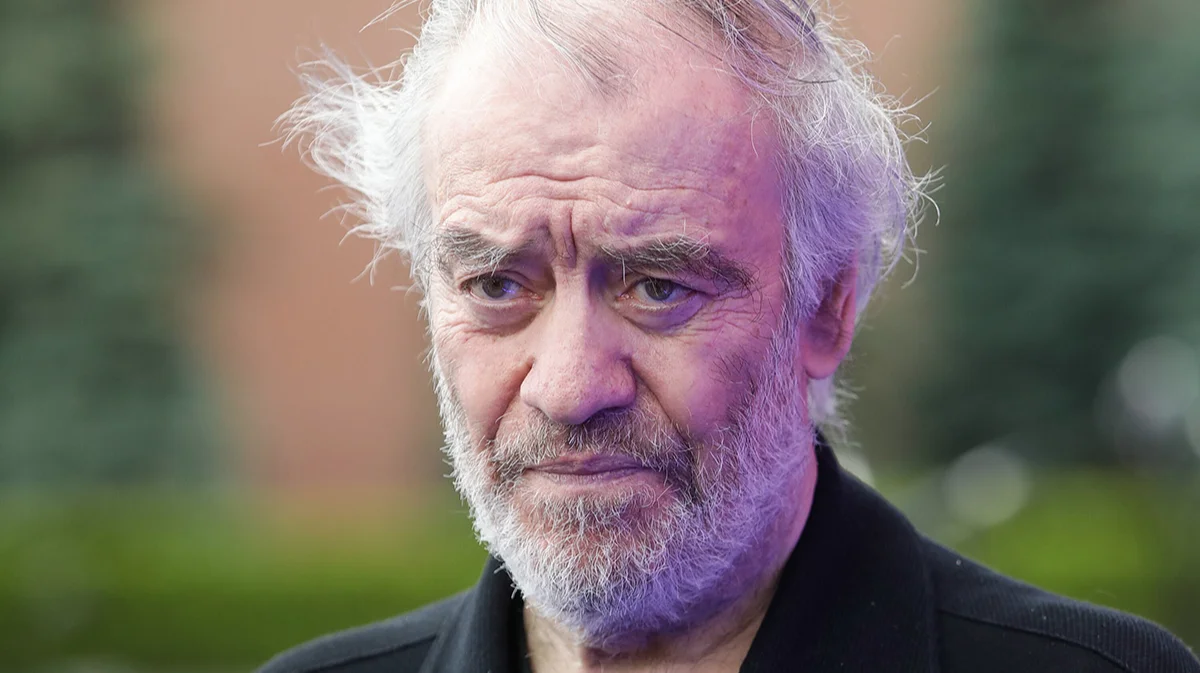
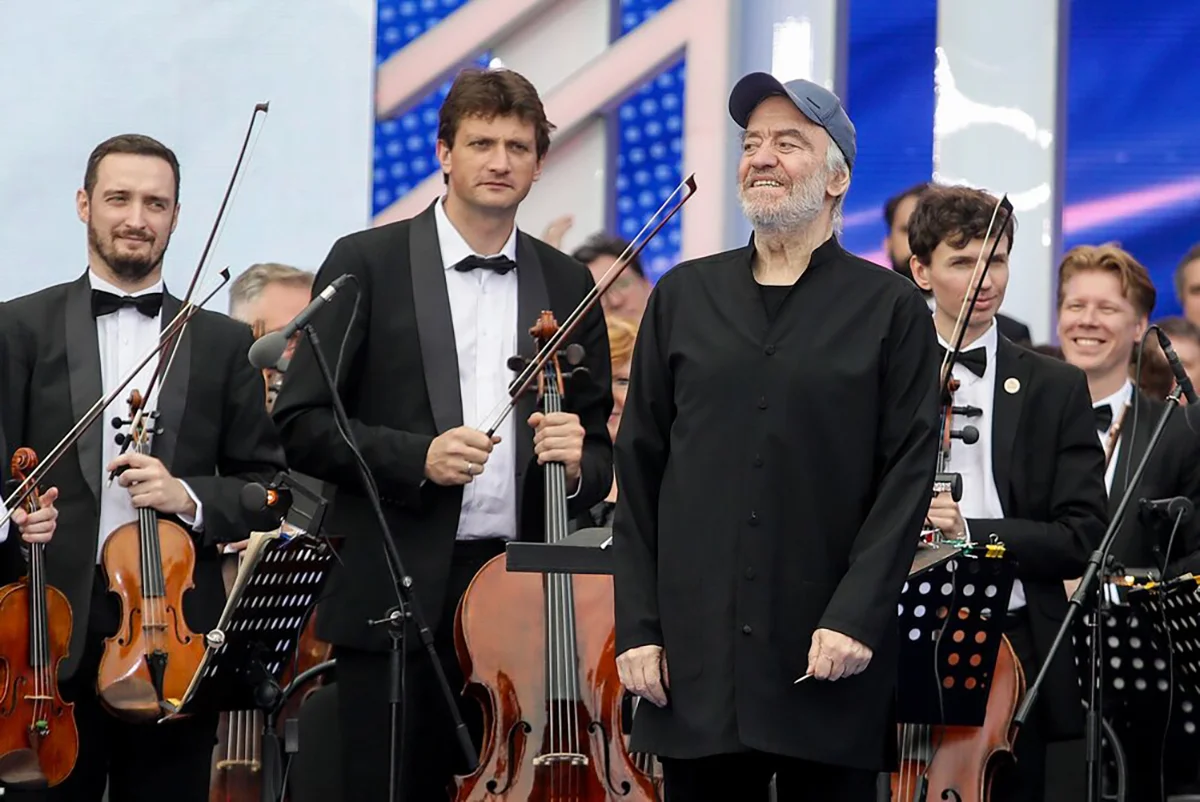
Valery Gergiev, June 12, 2025. Photo: Arthur Novosiltsev / Agency "Moscow"
The first from the beginning of the full -scale war of Russia with Ukraine Valery Gergiev’s performance in the EU is postponed indefinitely. His invitation to the festival in Italy became the subject of violent discussions both in the country itself and beyond - and in the end was withdrawn.
One camp was headed by the Governor of the campaign, Populist Politun Vincenzo de Luke, who has been criticizing NATO and the EU official policy for many years, including sanctions against the Russian Federation. The scandal around Gergiev’s concert began to disagree with the Italian government under the leadership of George Melony - and, possibly, earn additional popularity among voters. The second group was made up of Italian politicians, Euroduts, as well as Ukrainian and Russian activists, confident: the head of the Great and Mariinsky Theaters - an important element of Russian propaganda, which should no longer perform in the EU. As a result, the latter turned out to be stronger. Moreover, after that they achieved the cancellation of the performance in Bologna of the pianist Alexander Romanovsky, a native of Ukraine with Italian citizenship, who adheres to pro -Russian views on the war and visited the territories of Donbass controlled by Russia.
"Space of dialogue"
On July 27, Valery Gergiev was supposed to conduct the Philharmonic Orchestra of the city of Salerno at the Un'estate da Re (“Summer of the King” festival) . It was organized by the Directorate of the Royal Palace in Kaser and the administration of the region of the campaign. The program included the works of Tchaikovsky, Verdi and Ravel.
The organizers of the festival and local authorities explained the invitation of the conductor, known for the support of Vladimir Putin and the annexation of Crimea, as well as silence about the Russian invasion of Ukraine, the fact that "art and culture are the space of dialogue and human solidarity."
Gergieva, from their point of view, should be perceived exclusively as an artist, and his return to Europe was to emphasize the openness of the campaign for everyone - Russians and Ukrainians or, say, Palestinians and Israelis (the festival was also criticized for the participation of the Israeli conductor).
“The government [Gergieva] did not invite him. This was done by the head of the region of the campaign, ”the Italian Foreign Minister Antonio Tayani disowned , referring to Vincenzo de Luca.
And he was not going to deny: for him, the invitation of the famous Russian was a completely thoughtful step. In the rhetoric of de Luki, theses have long been repeated that “Russia is part of Europe”, and attempts to “isolate Russian culture” are a dangerous and short -sighted policy. The invitation of Gergiev allowed the policy in fact to demonstrate its special position, which differs from the position of official Rome. And at the same time, to increase the status of a music festival is one way or another, but Gergiev remains a world -famous conductor.
Given this, it was difficult to retreat from his position to the governor. The abolition of the concert would mean surrender before pressure, including from the political opponents of de Luke within his native left -centric democratic party. And such, given the long and contradictory career of politics, he has a lot.
Sheriff of Campanistan
Vincenzo de Luca is a 76-year-old veteran of Italian politics. In 1993-2001 and 2006-2015, he was the mayor of Salerno, after which he headed the entire region of the campaign - and for ten years he has been leading him. He became famous as a tough administrator, receiving for this the nickname "Sheriff from Salerno." Moreover, the influential magazine L'Espresso said : de Luke’s management “more and more resembles the one that is typical of the countries of the former USSR.” Journalists called the campaign "Campanistan" and noted:
At the level of the region, de Luke already had six mandates - "as much as President of Belarus Alexander Lukashenko." The Italian politician has already won the mayor’s elections four times and twice became the governor.
Over the years, de Luca has repeatedly become the object of criticism of some and adorations of others - first of all, those who like shocking politicians. So, in 2016, a lot of noise made a statement by the governor that the head of the parliamentary committee to counteract the mafia for his criticism de Luke worthy of death. Recall that the campaign is a region where the positions of the criminal network of Kamorra were always extremely strong, and it is not accepted to joke about this, to put it mildly.
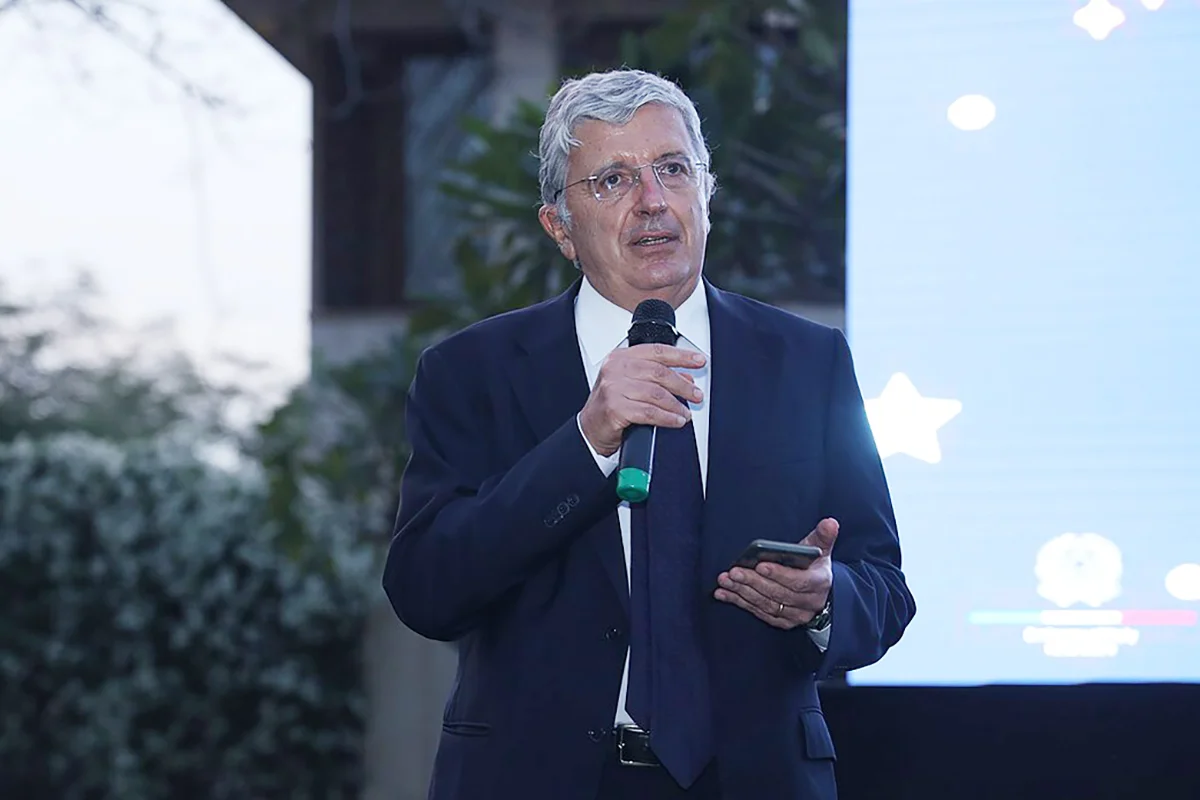
And during the years of the Covid-19 pandemic, the governor de Luca became a recognizable nationwide politician-in particular, thanks to promises to send “policemen with flamethrower” to those who arrange a party prohibited due to quarantine. Political ratings then sharply went up - like the number of subscribers on its pages in social networks. At the same time, de Luke's populism attracted a wide audience: not only supporters of the Left Democratic Party, but also the legal entities, as well as lawless people from the “Movement of five Stars”.
By the way, it is close to the right -wing poplists of Vincenzo de Luke in the approaches to foreign policy. He does not support the provision of military assistance to Kyiv, calls for negotiations with Russia, criticizes sanctions, considering them harmful to the Italian economy.
“Putin is guilty [at the beginning of the war]. But the West is not innocent, because the one who invades the country is unconditionally guilty, but the one who did not even move his finger so that this does not happen is not innocent. Those who advanced NATO to the borders of Russia are not innocent. Those who armed the countries of the former Soviet bloc.
He explained his position.
And this is a clear contrast with the position of the Italian government, headed by George Melony: she does not see NATO’s guilt in what is happening and actively supports Kyiv to support “as much as it takes”.
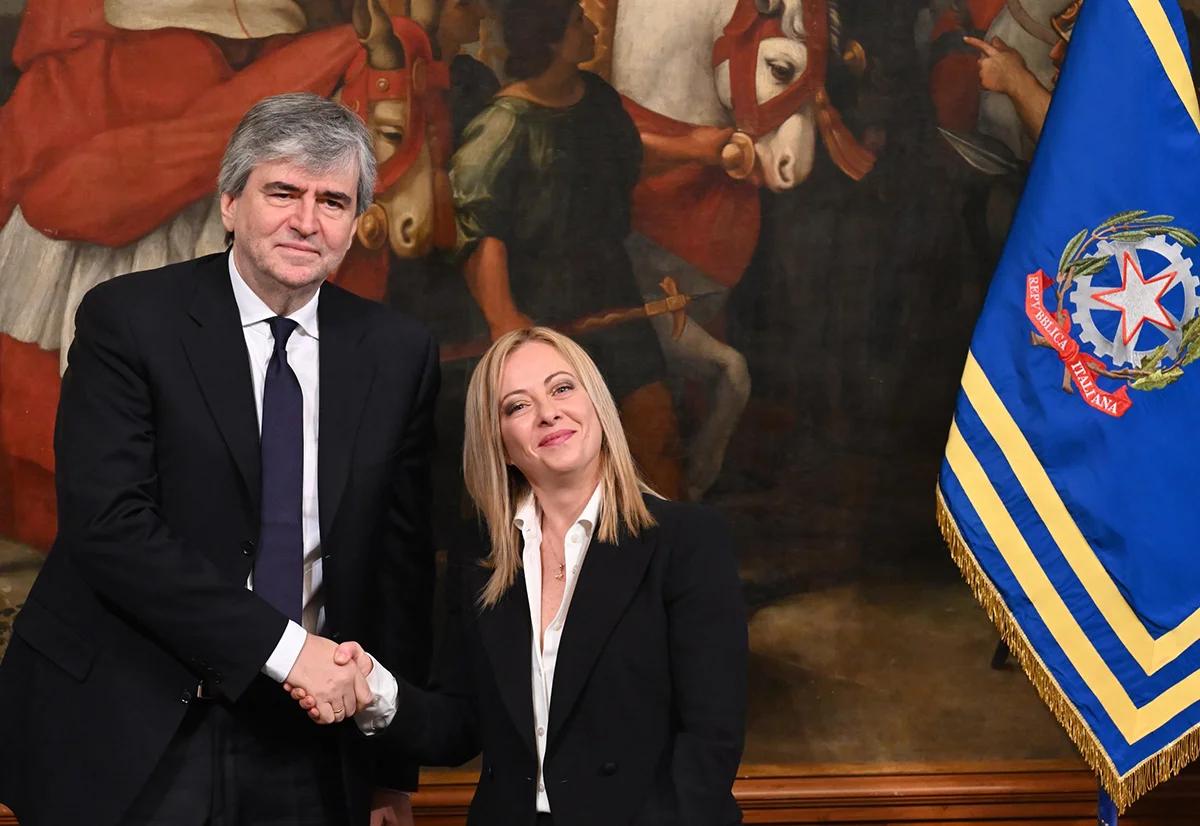
There are a lot of contradictions between de Luke and Melony. Thus, the governor of the campaign opposed the idea of “differentiated autonomy” - a legislative initiative that allows a number of regions (primarily in the north of the country) to receive additional administrative, legislative and financial powers. De Luka even organized protests and once started so much that he called Meloni a swearing word, which can be translated as a bitch or a bitch. A few months later, the head of government came to the campaign and greeted de Luka with the following words: “I am the same melony bitch. How are you?"
Together with de Luke
Governor de Luca is not alone in his attitude to Russia and the Putin's environment. According to the Italian publication Linkiesta, “Gergiev’s concert, apparently, was desirable for many - more than different people” in Italy. Thus, the sources of the publication at the Ministry of Culture said on the terms of anonymity that Jennaro Sanjuliano put forward the first idea of inviting the Russian conductor, who, until September 2024, held the post of head of this department. “It is he,” the publication notes, “dreamed of fastening the“ peace with the Kremlin ”by the performance of Maestro, close to Putin.”
Then, according to Linkiesta, this initiative was intercepted by Dzhanmarko Mazzi - the deputy head of the Ministry of Culture, the representative of the Right Party of the “brothers of Italy” (its leader is none other than George Melony). The point here may be that Dzhanmarko Mazzi, as the same publication claims, is friends with Alessandro Ariosi, Italian Impresario Gergieva.
Some Italian right -wing people supported the initiative publicly.
“He [Gergiev] invited one left figure to conduct the orchestra. He acted correctly, having fulfilled his task, regardless of citizenship [invited]. If he [Gergiev] is at least good at least, I would even invite him to perform in the European Parliament, "
- said Roberto Vannacci from the right League, entering the ruling coalition with the "brothers Italy".
And the influential Italian deputy Alfredo Antoniocsi (“the brothers of Italy”) called Gergiev a “great artist”, accusing the authorities of “cultural genocide”. “If it were subject to Pina Picecyno, she would forbid to appear in Italy and Fedor Dostoevsky, if he were alive,” he said, choosing as a goal for the attack of the vice-chairman of the European Parliament.
Propaganda - no
Pina Picarde, representing the Democratic Party of Italy (the same to which the governor de Luke belongs), was indeed one of the most high -profile voices for the abolition of the concert. She called Gergiev’s participation in the festival an insult to European values and threatened to investigate whether the local authorities used such a concert from the EU funds.
The struggle against the Russian propaganda Pin is not for the first time. So, in March of this year, she achieved the cancellation of the planned interview with TV presenter Vladimir Solovyov on the air of RAI 3. But the case with Gergiev became much more loud. In this matter, there was also a personal aspect for her: the politician is from the province of Karet, where Gergiev was invited.
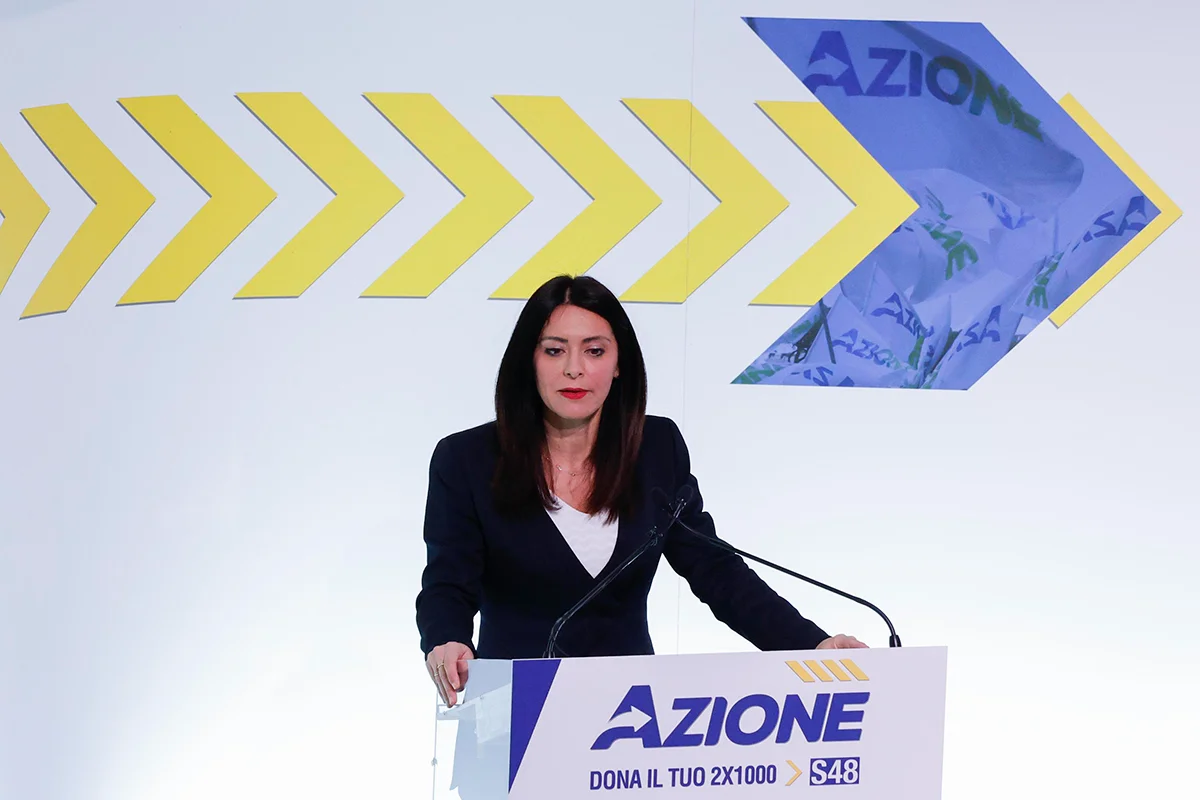
Picerno acted by no means alone. Thousands of people signed a petition on the Change.org platform demanding to cancel the concert. In addition, the Association of the Italy Memorial association organized a similar petition. For a few days, more than 700 famous cultural figures, human rights activists, historians and politicians signed the document. Among them, for example, Oleg Orlov, Svetlana Gannushkina and Irina Shcherbakova from the Memorial (Nobel Peace Prize of 2022), Alexander Matviychuk (director of the Civil Freedom Center in Kyiv, Nobel Laureate 2022), writers Gerth Müller, Jonathan Littlel and Mikhail Shishkin, choreographer Alexei Ratman. They emphasized: Gergiev is not just a conductor, but an active supporter of the annexation of Crimea and an important link in the Kremlin propaganda system.
One of the messages was addressed to the head of the European Commission Ursule von der Lyaine and Vincenzo de Luke demanding not only to cancel the concert, but also to investigate the fact of the possible use of state funds to his organization. The second letter was addressed to the Italian parliament: he was offered to create a special commission to combat Russian propaganda.
The team of Alexei Navalny actively opposed the concert. And the organization Radical Europe began to buy tickets in the front rows of the hall in order to disrupt the concert. Demonstrations were planned at the entrance to the Royal Palace of Caserta.
Thus, in just a few days, the pressure became systemic and multi -level: from the protests in the field to official letters to Brussels. In this situation, even the Italian Ministry of Culture, who first tried to dissociate himself from the scandal, began to look for ways out. The Minister of Culture Alessandro Julie noted that "art is free and not subject to censorship," but "propaganda, even if it is made talented, is something else." Therefore, the concert of Putin’s friend in Italy, according to the minister, could send a “wrong signal to society”.
One will not be limited
According to the famous Italian journalist, the ex-main editor of the newspaper La Repubblica (1996–2016), and now the Columnist of this publication Ezio Mauro , the argument of the governor de Luke “fair in essence: the space and art are the space of beauty, grace and harmony”, but one cannot ignore “the fact that often-and it is in Europe, which gave rise to outstanding outstanding Artistic masterpieces - art was used as an instrument of propaganda, which perverted its essence and purpose. ” According to the interlocutor of Novy-Europe, in the case of Gergiev, the focus was “not art, but military propaganda that spreads the narrative of the Kremlin”.
Ezio Mauro drew attention to the fact that De Luke to the last “tried to protect the decision to invite Gergiev, but every day it became more erroneous”,
“The case has grown up the local and regional scale, becoming national and international - the affected by art, freedom of expression and responsibility.”
As a result, on July 21 - less than a week before the scheduled date - the Royal Palace of Caserta issued an official message about the cancellation of the concert.
Such a decision is explainable: the Royal Palace of the Caserta is a museum of national significance. He has scientific, financial, accounting and administrative autonomy, but is valid within the framework of national legislation and regulations. The director is led by the director appointed through the competition by the Ministry of Culture. Thus, going against the position of the Ministry of Culture was problematic. And the governor de Luke did not have any authority to interfere with the Directorate of the Palace.
Probably, the organizers of the festival took into account the threat of mass protests, and the probability of diplomatic difficulties (for example, the tough reaction of Kyiv), and the prospect of financial inspections by Brussels.
“Thanks to the glory acquired by his talent, the artist bears a special civil liability when he goes beyond his creative activity,” Ezio Mauro notes in connection with the Gergieva affair. “Both local and national institutions who choose the participants in their events should feel the same responsibility.” According to him, the awareness of this led to the intervention of the Minister of Culture in what is happening. “In the current situation, the concert acquired an inappropriate meaning, distorting an artistic message,” summed up the interlocutor of Novo-Europe.
Gergiev and his team did not objectively comment on the situation on July 21. But Russian diplomats did not stay away from what was happening. The Ambassador of the Russian Federation to Italy Alexei Paramonov concluded that in the republic “with the full connivance of the authorities, there are few, but quite active and loud destructive forces that do everything to ... quarrel Russians and Italians”. As for relations not between the peoples, but between the states, they, as follows from the recent interview with the ambassador, have been spoiled for a long time: “The data of Italian exports to Russia tend to zero”, but “the George's Government continues to pretend that he is not interested in dialogue and relations with Russia.”
In turn, the team of Alexei Navalny, and Pina Picarde , and Alessandro Julie pleased the abolition of the concert. At the same time, the latter, as befits the Minister of Culture, again acted diplomatically: supported the decision, although he expressed respect for the “exceptional artistic level” at which this concert could take place.
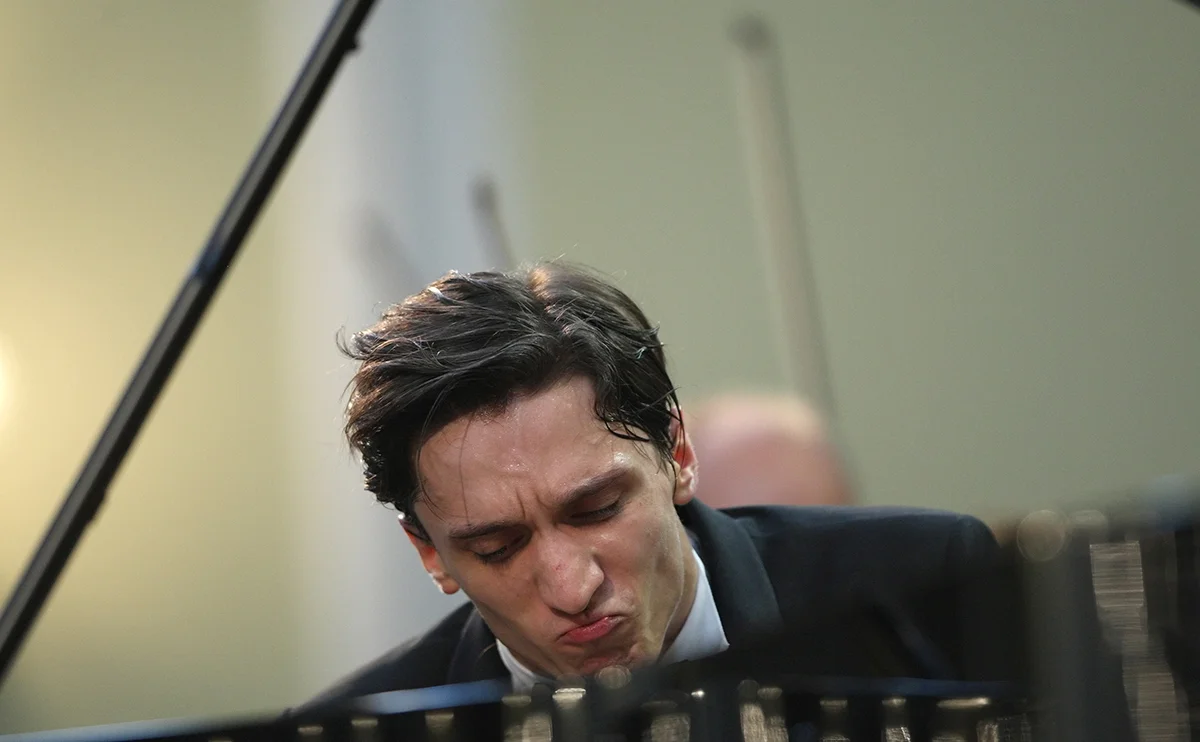
Soon in Bologna, a concert of pianist Alexander Romanovsky, appointed on August 5, was canceled .
“Bologna is a city with very strong democratic and anti -fascist traditions: we cannot support Putin fascism, allowing one of its propagandists to touch our earth without desecrating our glorious flag”,
-The representatives of the Bologna branch of the Liberal Democratic Party noted earlier in connection with the planned concert. And they explained: Romanovsky "played on the ruins of the theater in Mariupol, a city destroyed by Russian invaders, a symbol of ferocity of Putinists."
The pianist himself, a native of Ukraine with Italian citizenship, who does not hide pro -Russian views - after his trip to Donbass in 2022, certified the newspaper The Times that the performance in Mariupol was "a sign of supporting the suffering residents of Eastern Ukraine" and his contribution to the reconciliation of the parties.
The other famous representative of the Russian classical scene is an opera singer (and Putin’s confidant in the 2012 election) Anna Netrebko-the wave of cancellation has not yet overwhelmed. By the end of the year, she has planned performances in Italy, Spain, Germany, Slovenia and Great Britain. The fundamental difference from cases with Gergiev and Romanovsky is that Netrebko openly condemned the war in Ukraine. True, in its case, without dedicated protest shares, it will not do .
Ezio Mauro summarizes: Gergiev was not criticized for the fact that he is Russian and, together with the whole people, he should allegedly be responsible for the actions of his government. He, according to the formulation of the interlocutor of the New Evrop, was criticized "for a conscious choice to become an instrument of propaganda in the conditions of the ongoing hybrid war." As a confirmation of this thesis, Mauro cited the fact that when Gergiev was removed from his performance in La Scala in 2022, he was replaced by Timur Zangiev - “a young conductor, also a Russian”.