
Translated material
Screams of graves
In July 1995, there was a completely crime against humanity - a massacre in Srebrenitsa. We recall the main films about this tragedy
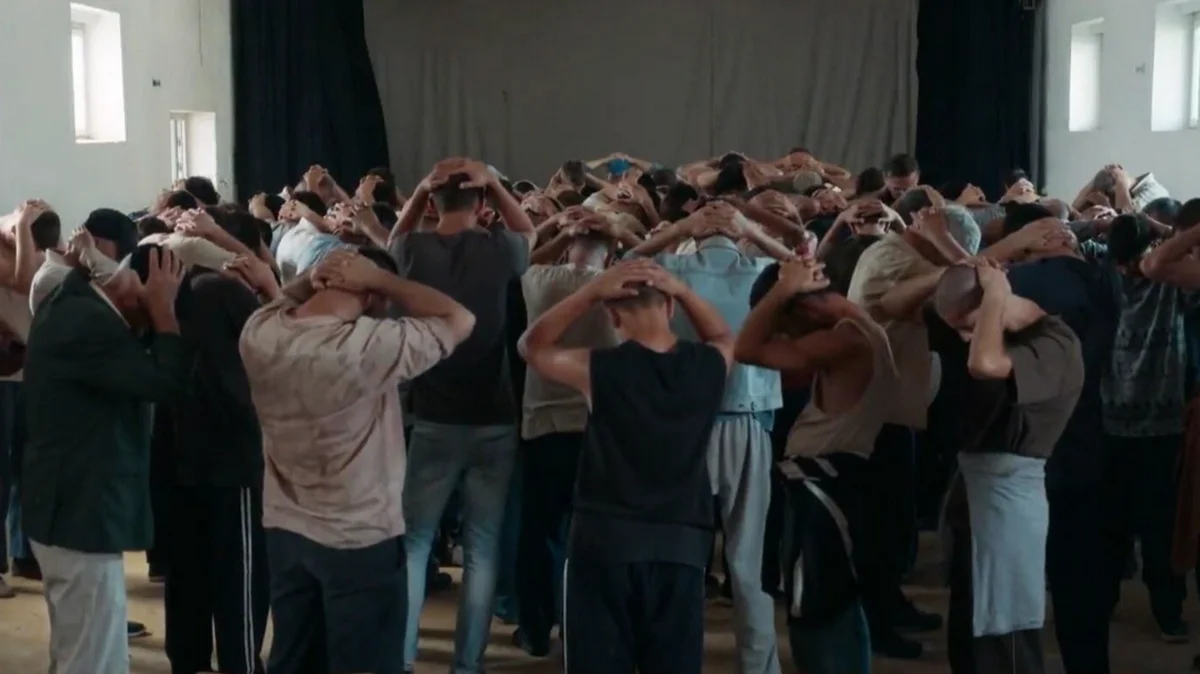
Frame from the film "Where are you going, Aida?" Photo: IMDB
These days, the world recalls a crime - a massacre in Srebrenitsa exactly 30 years ago: the first legally recognized genocide in Europe since the Second World War.
The massacre in Srebrenitsa was the genocidal murder of Bosnian muslims-muzhins and boys in the city of Srebrenitsa and its environs in July 1995. It was committed by units of the Bosniysko-Serg Army of the Republic of Serbian (HPS) under the command of Ratko Mladic, although the Serbian militarized formations of Scorpions also participated in it. The list of missing or killed contains 8372 names. In November 1995, Mladich and President of the Republic of Serbian Radovan Karadzhich were accused by the International Tribunal for the former Yugoslavia (MTBU) of direct responsibility for war crimes committed against the Muslim population of Srebrenitsa. Karadzhich was found guilty in 2016 in the genocide in Srebrenitsa and other crimes and sentenced to life imprisonment. A year later, MTBU found Mladic guilty of 10 points of charges of war crimes, crimes against humanity and genocide and sentenced him to a lifelong conclusion. The tragic events in Srebrenitsa were reflected in the cinema. We talk about the most noticeable fiction and documentary films.
How it was
The Republic of Bosnia and Herzegovin was inhabited mainly by Muslim Bossians, Orthodox Serbs and Catholics-Khorvati. The republic proclaimed independence in 1992, which met resistance from political representatives of the Serbs. In the struggle for territorial control, the non -terrible population from the regions under the control of Serbia was subjected to ethnic cleaning.
Srebrenitsa and its surrounding region Central Sickle were of strategic importance for the leadership of the Bosnian Serbs. It was something like a bridge connecting the scattered parts of the alleged Serbian state. In 1993, the UN announced the besieged enclave Srebrenitsa with a “safe zone” under its protection. By mid -1995, the humanitarian situation in the city was catastrophic.
On July 6, 1995, the army of Bosnian Serbs began a full -scale offensive. The UN observation posts fell. 6,000 soldiers defending the enclave were pushed. On July 10, Colonel Tom Carremants, who headed the Battalion of the Dutch peacekeepers, turned to NATO with a request for urgent air support to protect the cut. NATO bombers tried to attack artillery positions and HPS tanks, but because of the poor visibility of NATO, it was forced to stop the operation outside the city, and further airlines were canceled after the threats of the HPA to bomb the UN complex in Potocari, to kill the Dutch and French military hostages, at that time captured by the Serbs, and attack the surrounding areas, where it was up to 300,000,0000,00,00,00,00,00,,ations, 3,00,00,00,00,,ine,,,,,epepificyy hours civilian refugees. On the evening of July 11, the commander of the HPS Ratko Mladich, accompanied by his officers, was already walking along an empty cut.
Peacekeepers handed over about 5,000 Muslims, hiding at the Dutch base, in exchange for the liberation of 14 Dutch military. In the morning of July 12, Serbian troops began to gather men and boys from among refugees in Potocari and keep them in some places, and when refugees began to land on buses, which were controlled by the Bosnians, Serbian soldiers separated male recruiting age, who tried to climb into buses. Teenagers were also taken for 14 years. All prisoners were executed and buried in nameless graves. Mass executions continued until July 22.
"Where are you going, Aida?" (Quo vadis, aida?), Dir. Yasmila Zhbanich, 2020
Truly trans -European project: companies from the twelve countries took part in the production of the feature film.
The film, taken based on the book of Hassan Nukhanovich “Under the UN flag”, begins with the fact that the former high school teacher Aida Selmanagich (this image, in fact, is Alter-Ego Nukhanovich) works as a translator between Colonel Tom Carremance and the mayor of the Crystine. The mayor, breaking into a scream, is imposed by the Carremants about the plans of the battalion in case NATO aircraft do not help against the advancing troops of the Republic of Serbian; The colonel convinces him that the planes will fly. In Aida’s apartment, her husband Nihad and the sons of Hamdia and Sedzhi are watching the news that the WRC entered the Srebrenitsa, despite the fact that the city was declared a safe zone. Selmanagichi leave their apartment and go to the UN base in Potocari, already surrounded by thousands of civilians.
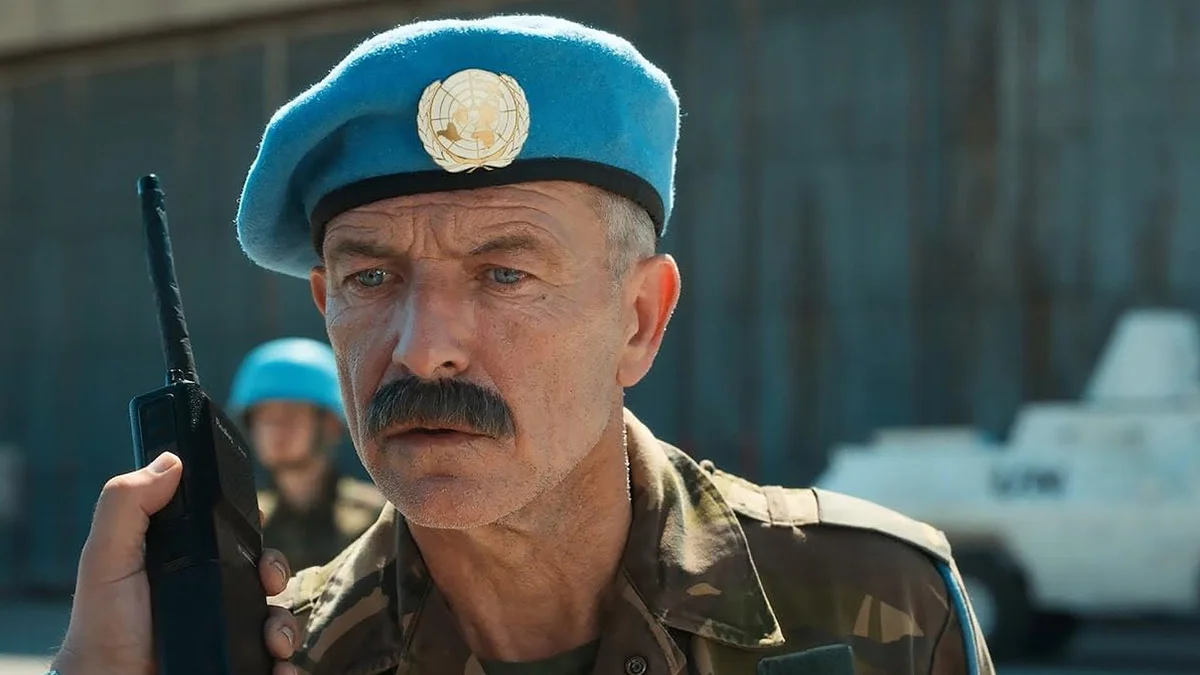
The film reflects all the main stages of the disaster: Mladic’s walk along the streets of Srebrenitsa, negotiations, the false promises of Mladic to allow civilians to leave the enclave, the invasion of the HPC to the base, the separation of men from women and children, the complicity of the Dutch in this, the futile attempts of Aida to save their family, the execution of prisoners in the house of culture in Pilitsa.
The work of the Serbian actress is Yasna Dzhurichich in the role of Aida other than an outstanding one, you can’t call an outstanding; I also want to note the scenario skill of Yasmila Zhbanich - in the final of Aida sees among the audience in the hall of the school performance and criminals, and victims of mass murder.
"Where are you going, Aida?" He was nominated for Oscar and BAFTA Award as the best foreign film, and also received a European film award in the categories “Best Film”, “Best Direct” and “Best Actress”.
"Scream from the grave" (a cromf the grave), dir. Leslie Woodhead, Great Britain, 1999
A scream from the grave is where this documentary begins. The Muslim boss in had a Ramo, which the Serbian military actually put a pistol to his head, screams to his son, hiding in the mountains: "Nermin, go down, do not be afraid of the Serbs." Nobody saw neither nermin nor Ramo anymore.
Leslie Woodhead does a tremendous work, asking a variety of witnesses and surviving victims of the tragedy: from Muslim, Salikha Osmanovich, who for the first time in four years returning to the Srebrenitsa, to the grave of his son, to the official of the UN, recognizing that the organization did not have the slightest opportunity to prevent the disaster. Woodhead looks into the past of the city: it turns out that in the 1970s the silver was a quiet and pleasant place, a popular spa resort. A meticulous reconstruction of all circumstances, coupled using shocking movie archives, makes a strong impression.
The film received a special jury prize at IDFA - the International Documentary Film Festival in Amsterdam, and was also nominated for the Emmy Award in the category of news and documentary films.
"Enclave" (De Enclave), dir. Villem Van de Sande Bahuisen, Netherlands, 2002
The three -part mini -scurry about the fall of the silver and the inability of the Government of the Netherlands to protect the city. Each series describes the massacre from one of three different points of view and shows how this event continues to influence the characters.
Episode 1. As a young Bosnian, Ibro Khadzhich worked as a translator for the Dutch peacekeeping forces of the UN during the fall of Srebrenitsa. Since then, he built a new life for himself and is now married to Sandra, the Dutch military who expects a child from him.
Working as a translator in the international tribunal in the former Yugoslavia, Ibro is faced with the former Bosniy-Serbian officer Darko Bokan, whom Ibro considers the person who killed his family during the fall of Srebrenitsa. Ibro is returning the past, and he begins to investigate the role of Bokan in the murder of his family.
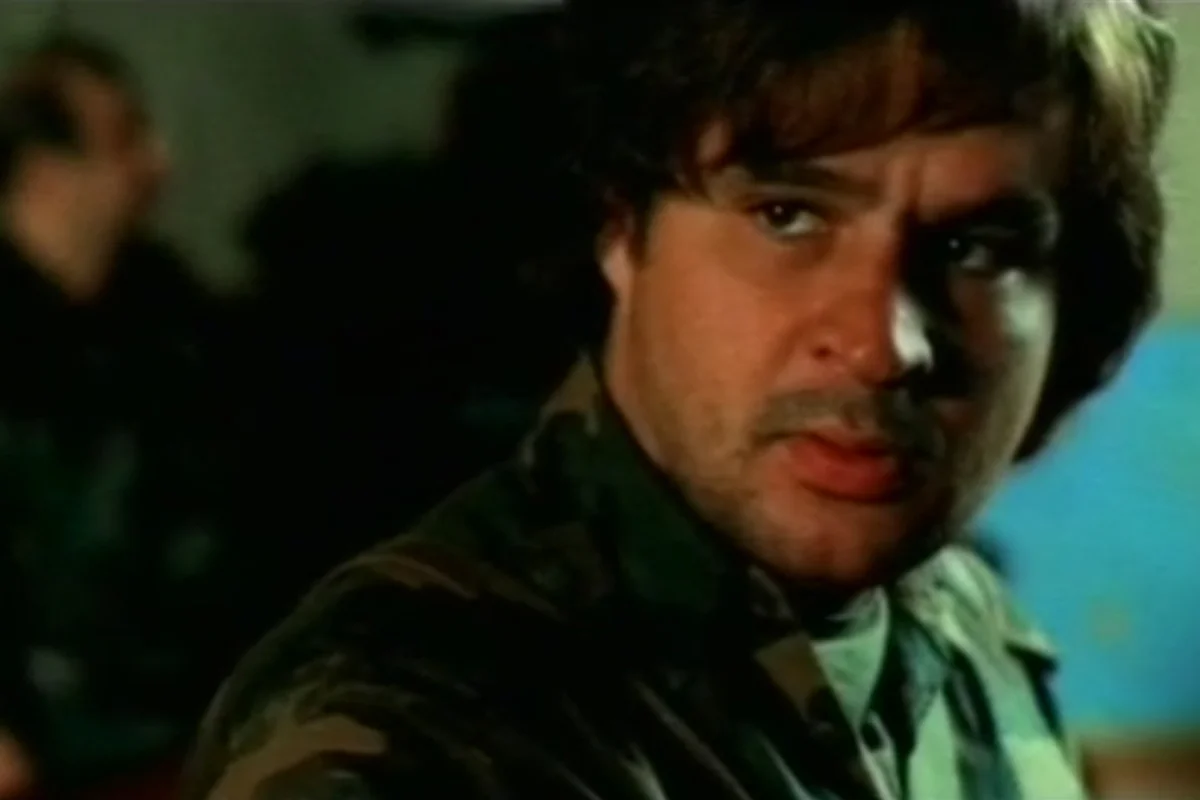
Episode 2. When Ibro finds out that the bokan will be justified due to a lack of evidence, he has his own plan. He takes Bokan hostage and makes him admit what he did in the past while the whole world watched these events on TV. Then he makes it clear that he wants the former Minister of Defense George Terhoff, whom he considers responsible for the death of his family, has changed places with Bokan. Terhoff arrives with the police and arrests IBRO.
Episode 3. George Terkhof goes to Srebrenitsa with his wife and daughter. He faces the consequences of decisions that he made during the war. The sudden disappearance of his daughter makes him start the search. Passing along the silver, he recalls the traumatic clock spent in the bunker, where he was expected to make decisions about life and death. Now he is experiencing the same desperate uncertainty that Ibro must have encountered. In the end, he brutally encounters his past.
"Death in Sarajevo" (SMRT U SARAJEVU), dir. Danis Tanovich, Bosnia and Herzegovina, France, 2016
Srebrenitsa is one of several stories in the drama of the Oscar Laureate Danis Tanovich “Death in Sarajevo”. Along with the war in Ukraine.
The action takes place in a fashionable Sarajevsky hotel, on the eve of events on the occasion of the century from the day of the beginning of the First World War. Tanovich shows the life of the hotel at several levels. On the roof, the journalist asks guests about the causes and consequences of that war. Hotel workers are preparing for a strike due to a delay in salaries. One of the managers, the daughter of the leader of the strike, is at risk of dismissal. The director who has driven his own enterprise in debt, for the sake of suppressing protest, resorts to the services of bandits. The French minister in his issue rehearses a speech for evening events. Speech is actually a text from the Hotel “Europe”-plays of the French publicist Bernard-Henri Levy. The situation gradually gets out of control, the heroes betray each other, shots are heard again in Sarajevo, but not the Crown Prince and not even the minister are dying, but ... Gavrilo the principle is the young namesake of the famous terrorist. The sarcasm of the authors is distinct: the circle of history closes, and the eternal war in the Balkans ends with a bitter joke, but still ends.
Despite some straightforwardness, Tanovich managed to combine painful motives that still excite Europe. On Berlinal, the film received the Grand Prix of the jury and the prize of the FIPSOS.
“Peacekeepers. First mission ”, dir. Miroslav Gai, Valentina Okhlopkova, Ukraine, 2022
The documentary talks about how it was possible to prevent a massacre similar to Srebrenitskaya in the city of the Bypa.
The lad, located a little south of the Srebrenitsa, became one of the Muslim enclaves in East Bosnia, surrounded by Serbian forces. In 1993, the UN security zone was created in the Enclave, for the protection of which the light -armed peacekeepers of the Armed Forces of Ukraine were responsible - as of 1995, only 79 military personnel.
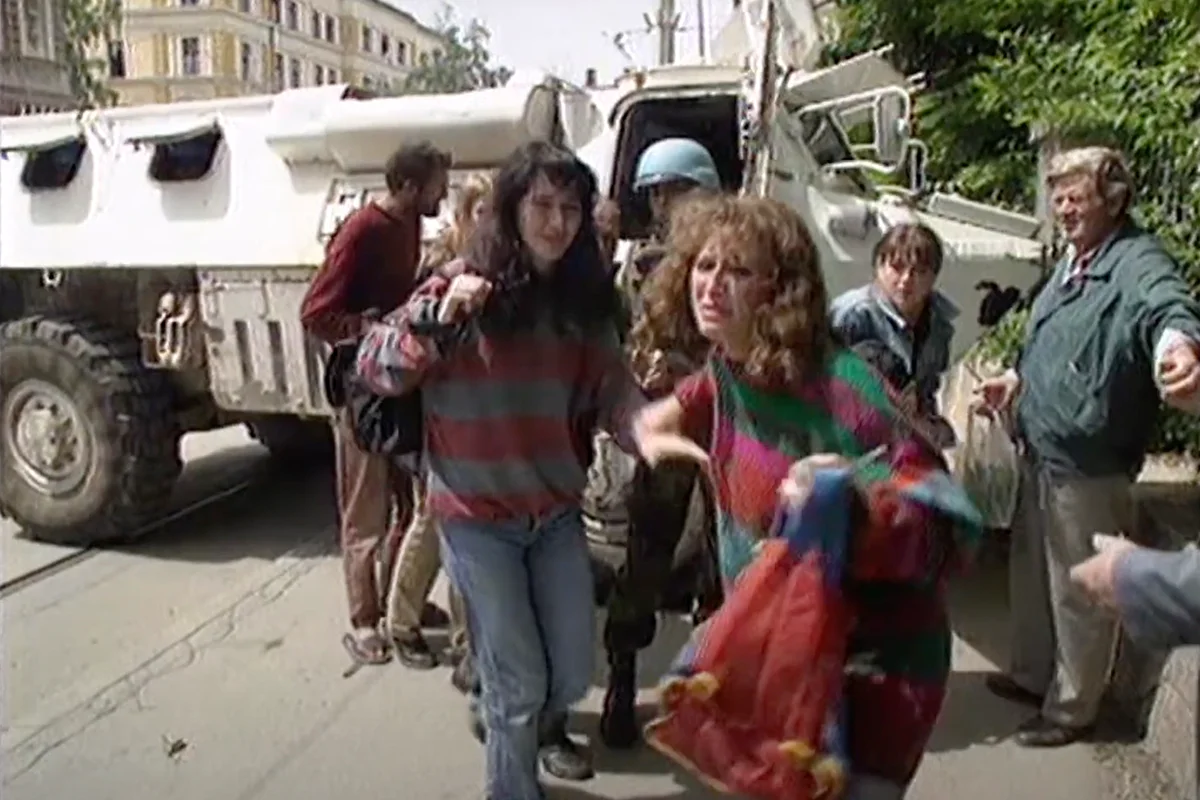
Actually, Gai and Okhlopkov 27 years after the events find mission officers and pass with them the places where the Unprofor battalion stood to tell about the miracle that Ukrainians managed. When Mladich’s thugs entered the city, the Ukrainians managed to evacuate more than 9,000 civilians, among them there are many refugees from the same silver. The role was also played by the fact that the peacekeepers were in a more welcoming relationship with the locals, both Muslims and the Serbs, did not have a sociocultural barrier with them, like the same Dutch. The proximity of languages, the similarity of mentality, (post) Soviet life experience worked. The most exciting scenes of the film are meetings of Ukrainian veterans with those whom they saved.
In fact, the mission in Bosnia has become the first war of Ukraine from independence.