
Translated material
Smells to the bones
The annual film festival "Golden Apricot", held in Armenia, focused on the study of Western Asia. Overview of the main tapes

The opening of the film festival "Golden Apricot". Photo: social networks
On July 13, the Golden Apricot Film Festival launched - the key cinema event of Armenia. Founded in 2004 as a platform for films created by Armenian authors from around the world, the festival every year was increasingly forming its cinematic face. The show program was constantly expanding, and over time, the Golden Apricot finally determined its focus - now at the festival they represent the main paintings of West Asia, from Lebanon to Iran.
- When we began to change the direction of the festival and focused on regional cinema, the task was to “highlight” such films and topics, to draw attention to them. Now the situation has changed dramatically: West Asia itself has become an epicenter of the most important political events, ”explains the artistic director and director of the festival Karen Avetisyan. - At the same time, we are true to ourselves and continue to work with the region. This is reflected in the guest of this year. Among them is the cult figure of Amir Najeti, one of the shooters of the post -revolutionary breakthrough of Iranian cinema. He is an honorary guest of the festival. A special guest was Jahar Panahi with the opening film “Simple Accident” - a story that reflects the leitmotif of our program this year: the relationship of man and system, victims and executioner.
More than 90 films - from rare game tapes from Palestine to documentary tapes from Iraq - were shown at the festival this year. We have chosen five works for you, each of which not only represents a unique artistic statement, but also serves as an important political comment that helps to better understand the multilayer life of the whole large region.
- Amir Narodi. "Runner" (The Runner). Iran, 1984, 94 min
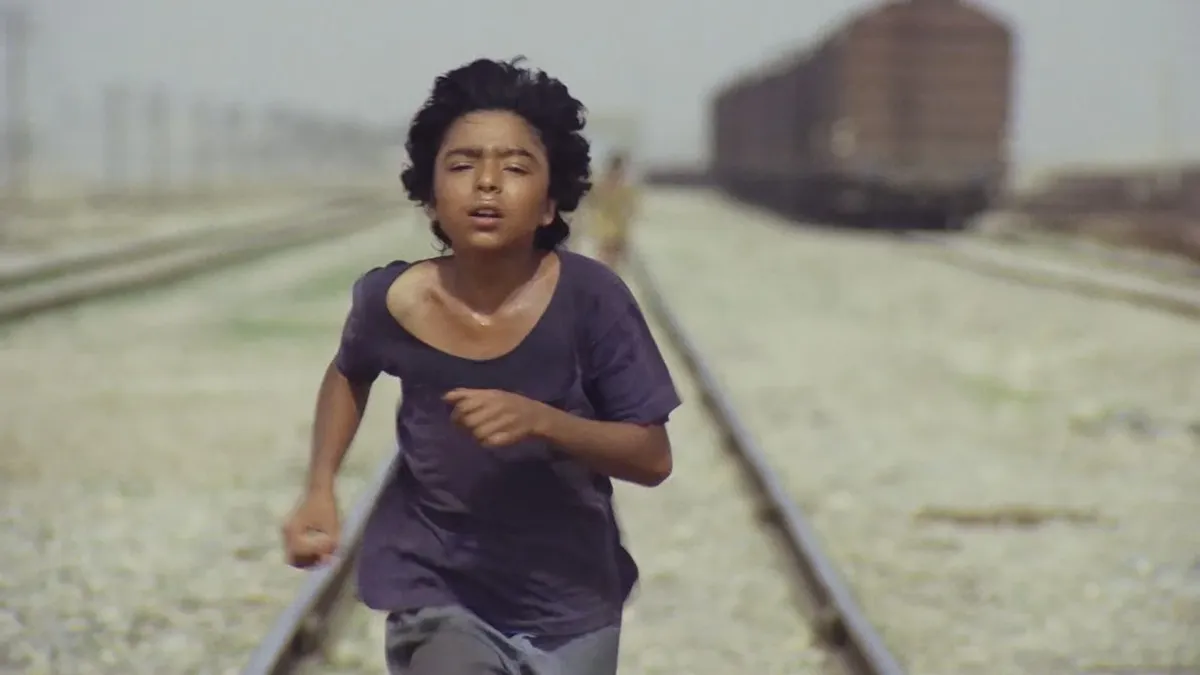
Poetic ribbons of Nadei, whose films rarely have a clear storyline, are often compared with the works of Michelangelo Antonioni and Wittorio de Siki. It is difficult to disagree with this: the heroes of his key films of the 1980s are disadvantaged and replaced by the side of life by representatives of the lower layers of society-as in the best examples of Italian neorealism. The influence that the Narodi had on the formation of the directors of his and subsequent generations was repeatedly noted by the researchers of the cinema around the world. His directorial style can be characterized as “allegorical” criticism, in which the whole depth of the social tragedy that occurs in the country experiencing the resolution period is hidden behind the poetic images.
In the 1980s, the image of the child became especially popular in Iranian cinema. Childhood turned out to be one of the few where religious censorship allowed relief. This took advantage of Narodi, making the hero of his film “Begun” (1984) a homeless boy named Amiro. At first glance, this is the story of growing up a young man, surrounded by the same as him, boys living on the streets of the port zone of the Primorsky city of Bandar Abbas. They spend half the day in the struggle for survival, inventing all new ways of earning. One day, Amiro catches bottles that foreign tourists throw into the water, and gives them to the collector of glass containers. In another, it cleans shoes in coastal cafes or sells water to a worker at a shipyard. But daily routine is limited not only by the need to survive. The microsocium created by children is full of what it is impossible to imagine childhood: carelessness. After all, growing up is not only overcoming deprivation, but also the ability to rejoice, build connections and dream. Amiro is forced to grow up accelerated, work under the scorching sun and fight for a place under the sun on cruel streets, but it still inspires curiosity. The boy buys magazines, looks at photographs of airplanes, runs, flashing his hands, as if he was about to take off-trying to break away from the ground and from the circumstances in which he was.
There is only one problem - he does not know how to read. It is here that an educational, almost parable line appears in the film: Amiro goes to school and stubbornly demands that he be accepted for letters to the courses. Without a language, he can neither work, nor become part of society, nor understand what is written about the planes that exciting him.
“Running” is not just a social drama, but a cinematic reflection on the birth of a new society.
Like young Amiro, this society is just beginning to grow up - it takes the first, uncertain steps after long years of tyranny of the Shah regime. This is a nation, shouting its first words, as if competing with the roar of waves, crashing against the shore.
- Said Nuri. “Tehran, an unfinished story” (Tehran, An Unfinished History). Iran, 2025

Is cinema able to truly convey the chronology of historical events? These questions are asked by the director and film out of Said Nuri. Having left Iran and defending the doctoral dissertation on the theory of cinema in France, Nuri combines not only the goodness of the European Sinefile, but also the point of view of the Iranian author in exile. In the center of his work is the history of the Motherland, which he analyzes through archival cinema materials: from documentary chronicle to prohibited, almost completely destroyed entertainment films of the pre -revolutionary period. His painstaking method requires a tremendous amount of time and attention to details. For understanding: in the preparation of one of his previous tapes - “women through the eyes of men” - Nuri analyzed more than 10,000 hours of footage.
To create Tehran. In progress ”, Said Nuri watched 800 films from the national archive of Iran and, choosing 150 of them, created a film collage, revealing before us a complex and multilayer portrait of the Iranian capital.
We go on a trip along the streets of an old city, which has survived over the last century several large -scale geopolitical upheavals. The film begins with the shots of the migration wave, which Tehran began to take at the beginning of the 20th century. People running from poverty flocked to the capital in search of hope - in a city, which was rapidly developing thanks to the first oil money. Mixing the documentary chronicle and scenes from feature films, Nuri shows not just a dumb archive - he revives him, gives him rhythm and character. The frame is the humor of the inhabitants of the slum, the tragedy of moral fall, the outbreak of hope and, of course, everyday kindness. The director covers the history of Tehran up to the Islamic Revolution of 1979, using cinema as an instrument of reconstruction, but also as a way to feel the spirit of time.
Cinema is often accused of mystification, heroization or exploitation of historical reality. However, Said Nuri manages with the help of cinematographic matter itself - literally a movie as an object - to destroy myths with which the history of Iran has overgrown. One of these main myths is the black and white perception of the premises of the Islamic revolution. Although the very fact of turning the country into aocratic dictatorship can hardly be called otherwise than a tragedy, a society that existed before the revolution was also far from ideal. Corruption, sharp social stratification and, most importantly, a deeply rooted feeling of injustice - all this is visualized through the cinema as a form of collective reflection. Films of the pre -revolutionary period become here not just illustrations, but witnesses of the past. We hear in the remarks of their characters a foreboding of the upcoming explosion, we hear the very request from which the revolution was born. The fact that the first outbreak of rebellion in 1979 began with arson of the cinema also acquires a special symbolic power.
- Tato Koteteshvili, Holy Electricity. Georgia, 2024
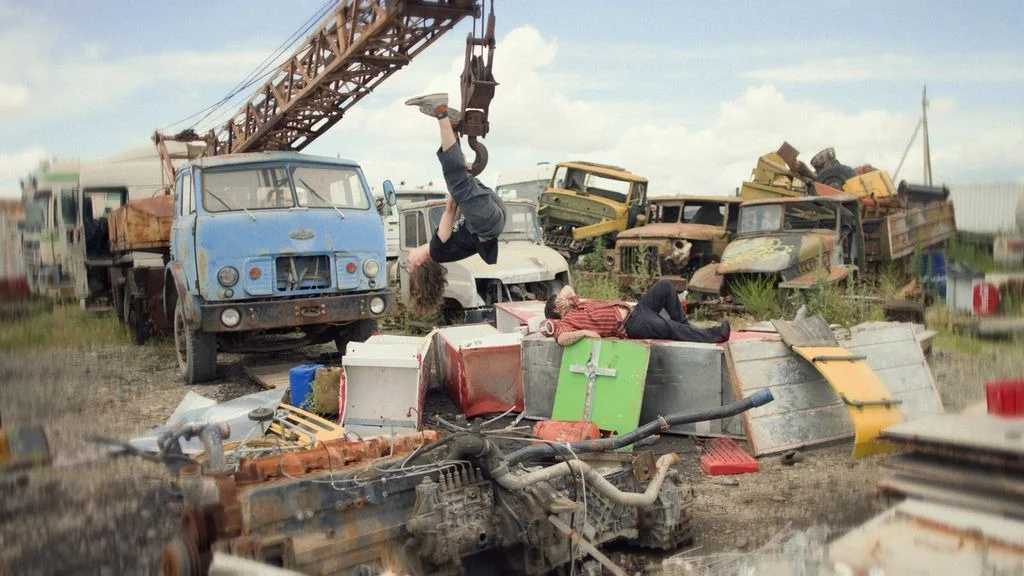
Gong and Bart are cousins from Tbilisi. A young guy and an adult man, they are connected not only by blood ties, but also by a common trouble -free view of life. Gong, like the youngest in this pair, listens to Bart; Together, they spend days on end in search of random part -time jobs, traveling around the city by car and philosophizing about the surrounding world. A garbage training ground becomes a fateful place for our heroes - it is there that they find a kind of treasure: a dozen metal crosses. Without wasting time, they show ingenuity and turn the find into know-how-neon crosses shining like a disco-char. Clutching a bright symbol of the Divine, Gong and Bart to the chest, now in the role of salesmen, they go to the apartments of the sleeping areas of Tbilisi. Together with them, we find ourselves in the houses of eccentric characters, each of which buys a pink, green or blue cross for himself. Having caught good luck by the tail, the cousins do not forget to enjoy life - they continue to conduct their conversations, dance, have dinner and fall into the kaleidoscope of bizarre and funny situations.
Modern Georgian cinema is largely the same age as the Georgian revolution. It was after Mikhail Saakashvili and the reforms that began in the country came to power that a new wave of copyright cinema began. Bright documentary tapes and films, supported by European funds and the Georgian state, made their way to the sky of European film festivals from year to year. Sometimes this caused fierce public discussions-as, for example, in the case of LGBT*-drama “and then we danced” Levan Akin. There were also cases of direct attacks by the authorities-as the director of the documentary film “The Taming of the Garden” Salome Jasha, the study of the germinating personal corruption of the oligarch Ivanishvili, who de facto seized power in the country. Unfortunately,
The wind of political changes radically changed the Georgian society of recent years, and this, of course, will affect both freedom and the artistic courage for which Georgian cinema is appreciated.
The film "Holy Electricity" is one of the last projects conceived and implemented on a fracture of the country's political transformation. This is largely reflected in the work of the debutant Tato Kotetishvili. For an unprepared viewer, the story of Bart and Gong may seem simply a touching chronicle of the life of marginals that live on the sidelines of Tbilisi reality. However, if you look at the film in the context of the time in which it is created, even in these at first glance disparate, almost anecdotal scenes, the tragic understanding of the identity crisis that the country is experiencing. Two heroes travel around the city, complete bright characters, but most of them are closed within their own apartments. The country's space seemed to contract to the dimensions of narrow streets, Soviet panels, stagnant kitchens, where endless conversations about the past continue. It is no accident that the film itself begins with a funeral - this melancholy charge rests to the last frames. What remains to do residents of the city, stuck in the limb of uncertainty? Hope. Even if this hope is materialized in the form of a neon disco cross.
- Kristina Harutyunyan, "after sleep". Armenia --USA, 2025

Like many Armenian authors from the diaspora, Christina Harutyunyan, who lives in the USA, chose the Republic of Armenia with the theme of her films. This is not surprising, because the preservation of connections with the historical homeland and cultural roots are the most important part of the identity of the world Armenism. The first work of Christina - a short film “Mir” - was successful not only at major international film festivals: in particular, it was shown as part of a prestigious filmmaker in Rotterdam. This film also became the winner of the Golden apricot in 2021. Her debut full meter “after sleep” became a member of the “Forum” program of the Berlin Film Festival - amazing luck for the film on the Armenian theme.
At the beginning of the plot, rural residents take a wandering digger for the Azerbaijani defector. Without thinking long, they kill a man who, as it turns out, is the father of the main character - Claudet. Her mother decides to hide the tragic death of her husband and asks the atom - a young soldier close to their family - to take his daughter as far as possible while they are engaged in funerals. Claudet sings in the local Armenian choir. Dressed in a traditional costume, it looks like a picture from an anthropological museum in Yerevan. The atom is a soldier, and this can be seen in his direct posture and a harsh, stoic look. Together they hit the road along the roads of Armenia. Their unexpected proximity, divided by a tight cabin of an old car, gradually develops into sympathy. The third, and possibly the main character of the film is the camera. She literally digs into the texture of military Armenia: here are the young men in the form stand at the “Smirno” rack, here in the frame an endlessly long musical number at a local wedding. Sometimes the camera seems to forget about the main characters - and we, following her, are already wandering around the destroyed house or sitting in the cemetery, observing the rite of sacrifice. Meanwhile, the atom continues to plunge deeper into the pool of their painful love - despite the war, loss and plain fatalism, which is permeated by Armenia in the eyes of the director.
Magical realism is a frequent reception of authors working at the junction of documentary and feature cinema. The absence of a clear narrative and unambiguous answers helps to avoid the moralizing or exposing manner. The same technique is used by Christina Harutyunyan in "after sleep."
The film does not strive for a social commentary, but immerses the viewer in the rhythm of the dream.
But even here, artifacts of reality appear through the author’s naps - whether it be a corrupt police officer who extorted a bribe at the atom, or the driver’s phrase familiar to many in Armenia: “Do not fasten - do you trust me?” One of the main problems of a movie shot at a distance is physical, like the authors from the diaspora, or creative, when the director himself chooses a distance from his heroes is the danger of silence. Leaving the social and documentary to the poetic, Arutyunyan, unfortunately, is too moved away from their heroes - it is difficult to discern living people behind this distance, and not just images from sleep, which is difficult to remember the next morning.
Lilith Movsisyan, “Fight” (Fight). Armenia, 2024
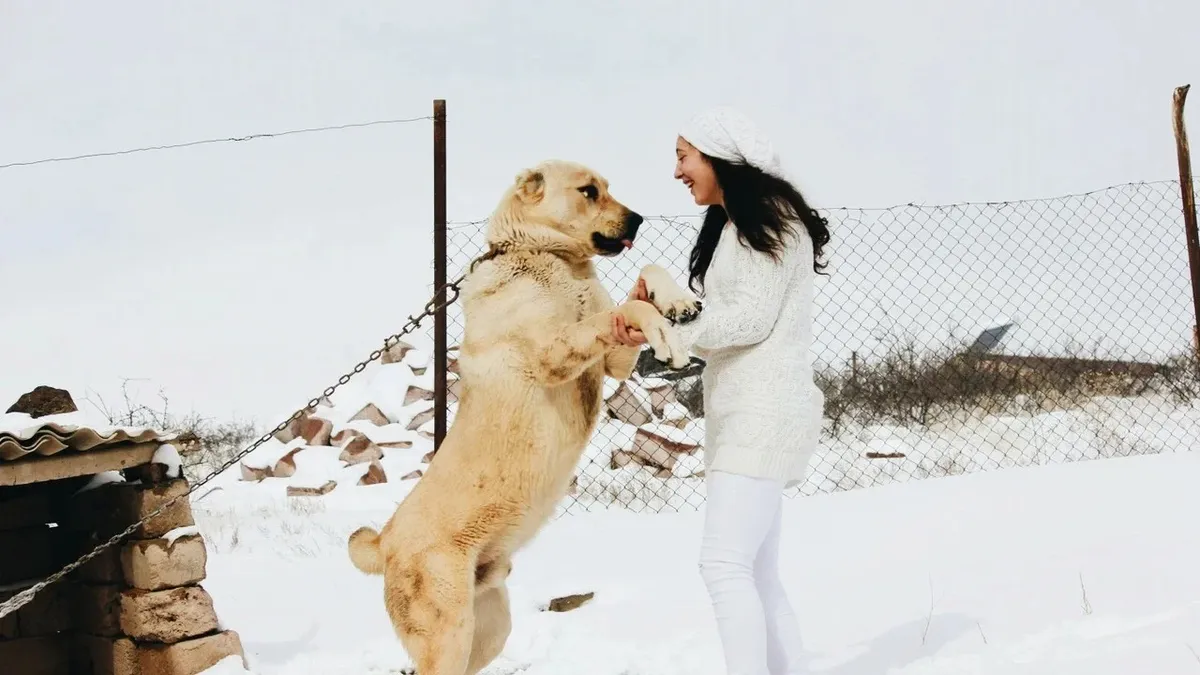
16-year-old Karina lives with her parents and grandmother in a village near Yerevan. Her family is breeding Caucasian shepherds. Previously, these powerful dogs were used to protect sheep or human dwellings, but now the strongest of them become participants in dog fighting. Puppies that Karina are growing are also preparing for such a fate. Karina helps to take birth, cares for newborn and treats wounds crippled in battles. Her father regularly takes dogs to tournaments, where they enter into brutal contractions, tearing the flesh of rivals to the approving cries of the audience - the owners and fans of this cruel “sport”. Karina completely trusts her father. He teaches her how to handle dogs properly, how to feed them, train, treat them. In their conversations, she often admits to him that she dreams of becoming a veterinarian. This is her real calling - to work with animals, but not as with warriors, but as with living beings. However, no one in the family supports her dream - even a father who connected his life with dogs. In his opinion, the profession of a veterinarian is unworthy of a girl. It would be better if she continued to engage in dancing and did not think about the "male business." Once in a quiet, but decisive conflict with her family, Karina begins to record herself on camera. In these records, she frankly talks about her feelings - about the pain for animals, about her dream, about the freedom, which she is so desperately looking for.
Modern Armenian documentary cinema is increasingly acquiring a female person - it is enough to recall the names of such directors as Tamara Stepanyan (“My Armenian Ghosts”), Inna Sahakyan (“Sunrise of Aurora”), or producer Angela Frynyan (“Tonantarum”). No one has yet conducted a deep study why it happened, but perhaps this is due to a difficult situation in the field of rights and freedoms of women in Armenia. A country officially considered one of the safest in the world, in fact hides statistics on domestic violence. And the ossified patriarchal foundations are still widespread, especially in rural areas, where the abductions of brides were more recently practiced.
Lilith Movsisyan did not remove the feminist manifesto in the literal sense of the word. There are no political slogans, street protests or activist statements in her film. This is a chamber story in which young Karina wages her personal struggle - against the closest, against the foundations of her own family.
She tries to defend not only the right to freedom, but also the right to security and compassion for those whom she considers to be her wards - for dogs grown for the sake of battles. The director does not mask the household poverty of the family behind spectacular images, does not go away from hard scenes, does not hide them with installation. On the contrary, each time, pushing us with cruelty, she gives us the opposed face of young Karina, who speaks with the camera. В этих монологах слышится ее личный призыв, наполненный надеждой на поколение, которое будет менее жестоким, более открытым и способным любить мир вокруг — во всем его многообразии и хрупкости.
Владимир Кочарян