
Translated material
Black wigws of the nineties
At the Streams, the “Journey in the Sun and Back” by Roman Mikhailov comes out: the next series about “dashing”. But the banality of the topic is redeemed by the style of the author
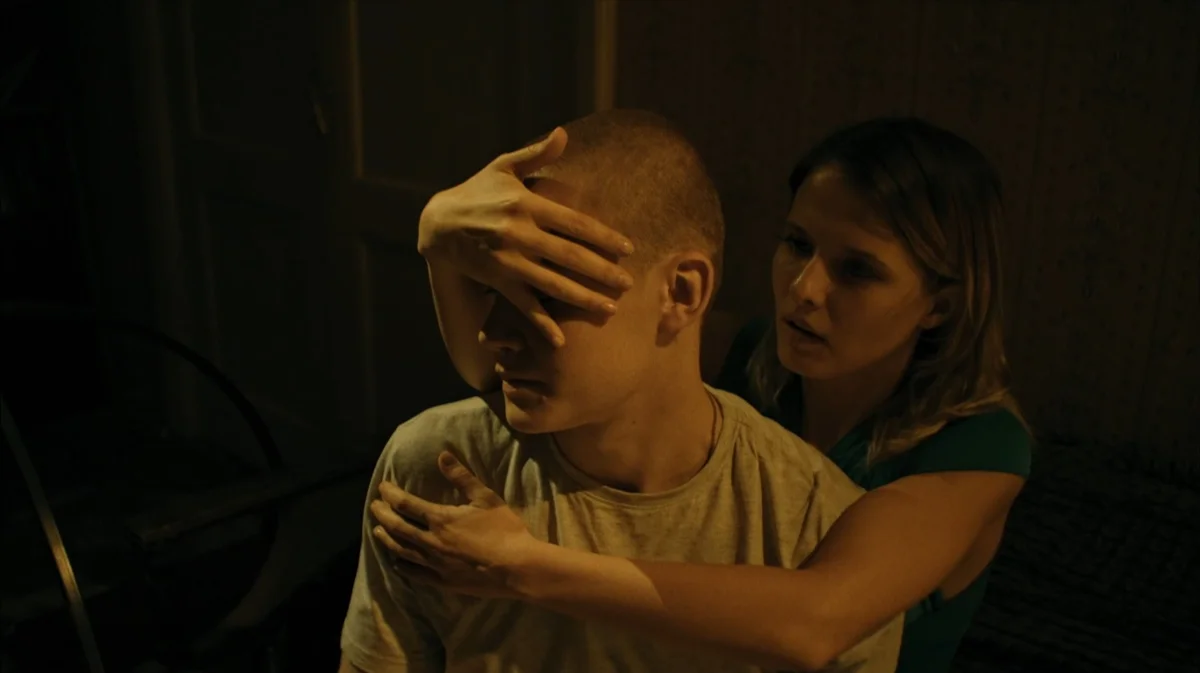
Photo: K24 Films
The end of the 80s, the Russian hinterland. Nine-year-old Ruslan travels with his parents to sanatoriums, where his father-spell bred vacationers for money. At sunset, perestroika of the father is planted, and the family is on the verge of poverty. The nineties are coming. The country is immersed in a crisis: those who have lost all the hard workers go out the window, and the bandits, on the contrary, quickly rise. While the single mother is working on pennies that matured Ruslan, not wanting to be part of the rotten system, adjoins the criminal group.
In recent years, the plots “About those who survived in the 90s” flooded Russian streams. The directors run away not only into the past, but also in the most far from Moscow regions. The “dashing” Yuri Bykov talked about the Khabarovsk organized crime group, while the events of the recent “outsource” unfolded in Kamchatka.
The series “Traveling to the Sun and Back” seems to fit perfectly into the escapated trend. But if other authors who shoot about the Yeltsin era usually gravitate to the realistic image of the nineties, then here reality is completely denied.
The screen becomes a portal in another world, which has a very indirect attitude to the "dashing decade".
This is the style of director Roman Mikhailov, who turns even criminal stories into a fairy tale. For intellectual youth in Russia, he became an idol: special scenes collect full house throughout the country, and public-tooks with the director, as a rule, last longer than the films themselves.
Before going to the cinema, he built a scientific career in mathematics. In parallel, the scientist published psychedelic stories on the Web and worked at the Morph experimental theater, combining the functions of a playwright, director and actor. In 2020, Andrei Molchy put on his “Fairy Tale of the Last Angel” a performance awarded the “Golden Mask”. So Mikhailov gained access to the main scenes of Russia - there were production in the BDT and Ramt (about his unusual career path and types of creativity in specialized media can be read by many profiles - unusual for the filmmaster of background in combination with the feces of the author is located).
Cinema was the logical next step.
Mikhailov's debut “Fairy Tale for the Old”, created by him for his savings, saw the light in the gloomy 2022 - and since then his new works have been appearing every ... several months! Around the original author, an “art group” was quickly formed, which starred for free. New films are created for revenue from the previous ones and the money received from investors (there is no state support yet).
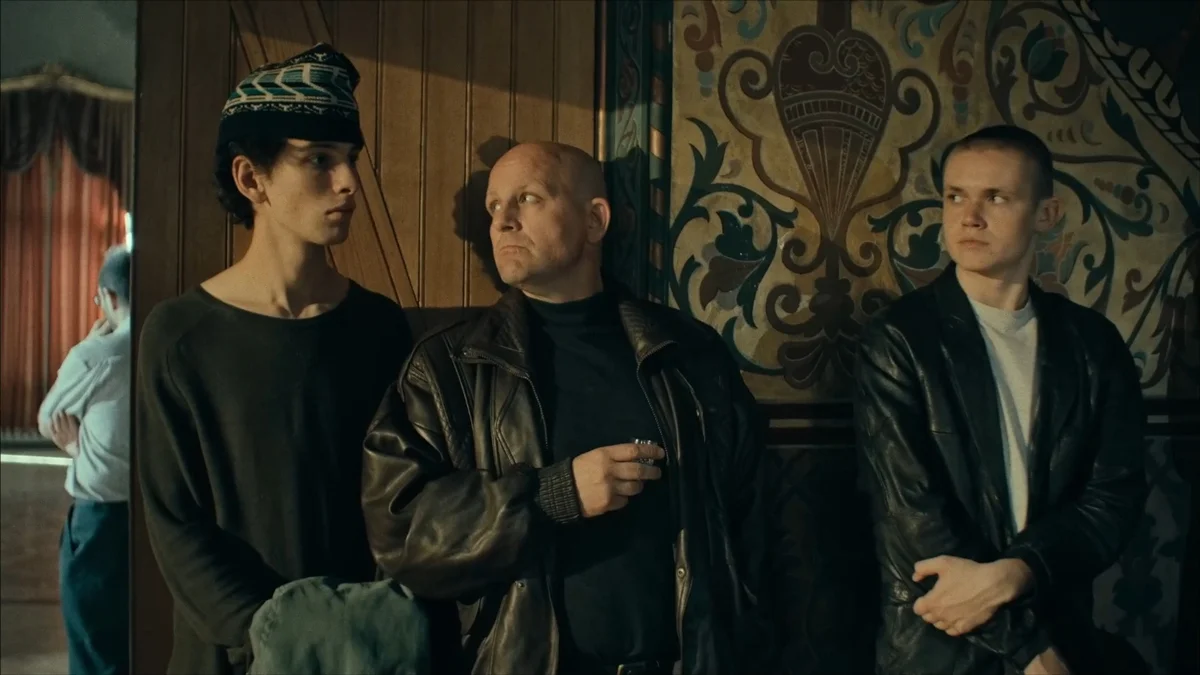
The dreaming atmosphere, migrated from literature and theater, appeared in the first paintings. Events occur in one multi -senior - Russian Black Wigwam, where even recognizable things are felt differently. The gloomy bandits in the leather jackets conduct philosophical conversations about being, esotericism, art - like hipsters gathered at Nekrasov on Friday evening. Brittle -headed gopniks, smoking grass in the dead Khrushchev, argue about Heidegger. At rural disco 30 years ago, Dodonov’s guitar noise, appropriate for modern St. Petersburg clubs, sounds. A corrupt cop, designed to fight “extremism”, instead starts a telephone romance with a woman heading a sect. Everywhere horses, dwarfs, doppelganggers are like Lynch (about the similarity of the work of the American surrealist and Russian mathematics are already quite seriously given public lectures).
Thematic harmlessness and visual style, totaling over the content, allow Mikhailov to avoid serious problems: independent films receive prizes, are highly valued by critics and stably go on rental. Having issued seven full -length films in three years, he took up the series.
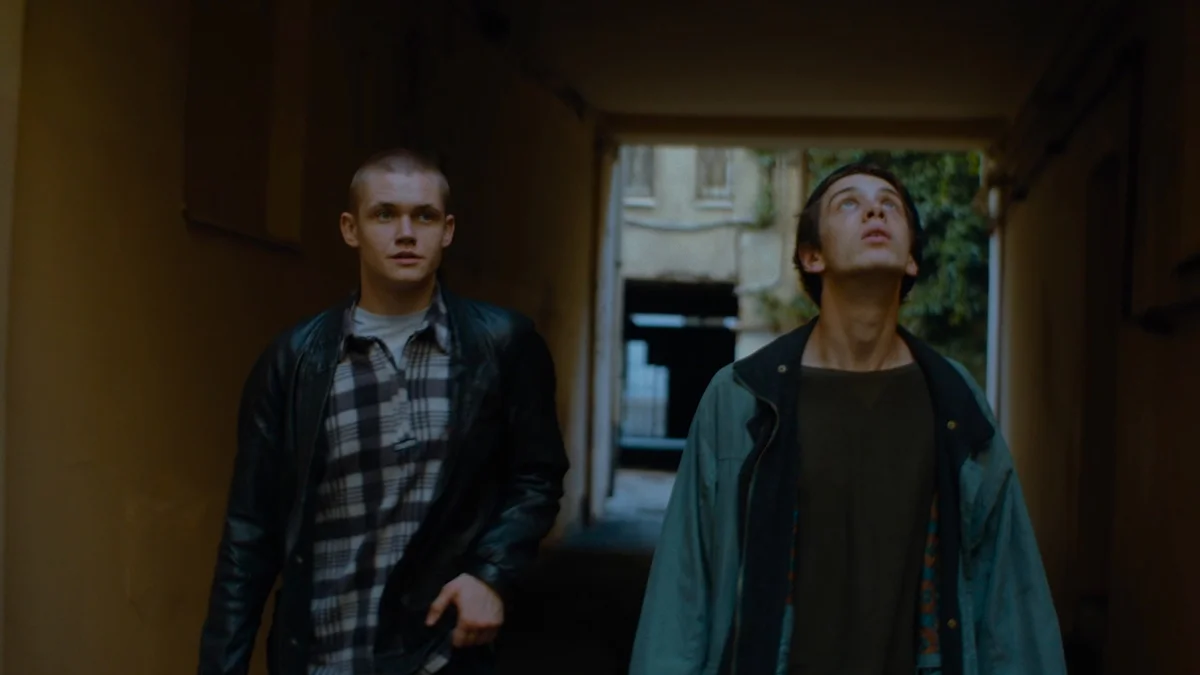
“Travel ...” is a collection from the “best hits” of the director: there is everything for which he was loved, but in a concentrated form. Predictive secondaryness is generally a favorite reception of Mikhailov. In his universe, the same characters, like somnambuli, are wandering from film to film, falling into plus or minus similar troubles. Heroes are always obsessed with boxing and poker - this is a hobby, and a way of earnings, and religion. In the Balaban locations that exist outside of time, the stars of the underground are being materialized: rappers glory to the CPSU and pale, Oleg Garkusha from Auktsyon and writer Mikhail Elizarov, artist Alexander Gart and Frick Pakhu. In the “Travel ...”, familiar faces are also enough-with their dumb and, in general, a meaningless presence, they twist surrealism to the maximum.
In the fairy -tale worlds of Mikhailov, nevertheless, topical motifs are seeping. So, the “Vacation in October” consisted entirely of the staging of Soviet cinemalassica of the 70s. In the "Travel ..." Mikhailov copies the newfangled series about the nineties - and turns the format inside out. Crime aesthetics is only a background for a magical love story that refers to his “snow, sister and wolverine”: as a child, the hero fell in love with the bride - the beautiful offelia bathing naked in the lake. Years later, already adults, he again met her in gangster Petersburg. An unlikely reunion was destined for the grandfather’s book, from the pages of which the heroes of the series, as it turns out later, fell out. She is sustained, of course, in the genre of fairy tale.
For Mikhailov, genre cliches and techniques are a formalist exercise and the game “for their own”. He cannot pass the nineties to the generation, but the situations that are relevant then and today, in the “Travel” are and are easily read.
The elders accuse the Americans who "divorced the country." Young people have only two prospects: "either in prison or for war." Behind the wall - a shell -shocked neighbor, yesterday's bandits - in the corridors of power.
The current also resembles the blurry of everything in a row: from sex, drugs and rock and roll to the National Bolsheviks on TV. Mikhailov did not miss the possibility of sagging: in one of the scenes of the speech of Leo Zulkarnaev, lasting fifteen seconds, the “lock” is completely.
The escapated arthouse cinematic, which arose and gained sudden popularity against the backdrop of war, is a portrait of the era in itself. Such a collective dream that the authors and fans are ready to review again and again. “Travel ...” has not yet managed to end, and the team is already preparing a new film - “The Song of the Ginnes”.