
Translated material
Rabble of the opposition
They are inherited from century to century. And changes in the country occur without those who compress them tightly

The uprising of the Decembrists on Senate Square on December 14, 1825. Kolman's drawing
Looking at the current situation in the Russian opposition, any involuntarily will ask the question: is it really impossible to do without quarrels, abuse and mutual accusations? Having approximately the same goals, the oppositions continue to scold and abandon compromises to please their own principles. It is very difficult to look at this and not sigh from fatigue. And, unfortunately, two hundred years ago it was possible to hear exactly the same sighs.
Neither the Decembrists, nor the great reforms of the liberals and democrats, neither the White, nor the Soviet dissidents could do without quarrels, swearing and mutual accusations. It was always difficult to find a common language to domestic dissenters. But why so? Are people whose goals are practically identical, so difficult to agree? It turns out that it is difficult enough.
Revolutionaries-males
Over the past two centuries, the first to organize against autocracy were the Decembrists. This organization, however, was quite doubtful. After several officers of the rebellious Semenovsky regiment were sent from the capital in 1820 and sent to serve in Ukraine, which existed the Secret Society of the Union of Blagificness was forced to disintegrated.
The forces of the Decembrists were divided in two: a northern society was organized in St. Petersburg, and in Chernigov - South. Both groups with unprecedented zeal began to rebuild the destroyed secret society, but, of course, in their own way.
At the beginning of the 19th century, anyone could be among the participants of almost any secret society. This fact did not bypass and the disintegrated “union of prosperity”. The divided Decembrists were able to take into account previous mistakes and began to recruit to the newly -minted organizations of “selected” liberals and freethinkers. It would seem that such filtering could contribute to the rally of the team, but the disagreements within societies began at the stage of adopting a software document.
So, Nikita Muravyov, who proposed his “constitution”, became the compiler of the program document at the northerners. The constitutional monarchical features were inherent in this document: it was supposed to make a federation from the Russian Empire and leave something like feudalism in the country. Many members of the organization did not accept the creation of Muravyov, so they did not officially approve the document. By the way, Ryleev, the head of the Northern Society, subsequently generally began to adhere to the republican views, moving away from the framework established by him.
Dramatically, another situation was observed in the south. Here, the program almost immediately became the “Russian truth” Pestel with a pronounced republican orientation. The southerners were radical: they were going to kill the royal family, unite all the nations into one and completely change the system of state power. Pestel wanted to establish the supreme rule and become its leader, whose position in the "Russian Pravda" was called briefly and clearly - "dictator".
After the adoption and failure of the programs, both groups began to prepare for the uprising. In 1824, a pleasant surprise occurred: Pestel came to Petersburg to convince several radical members of the northern society to adopt his constitution as a common one. The northerners agreed. Hope appeared. Really shifts in this dead business?
Naturally, everything was not so rosy. Those members of the Northern Society who agreed to the proposal of Pestel did this in the strictest secret from the rest. Some agreements were reached, for example, the date and time of the performance, but there were no directly noticeable progress.
If you look the truth in the eye and (first of all) to read the content of documents, you can be at a bewilderment of similarities. Both projects suggested the abolition of serfdom and classes, the separation of powers, the transfer of the capital to Nizhny Novgorod, the introduction of a republican form of government (it is worth saying that Muravyov Russia would have turned into a republic if the emperor refused to adopt the Constitution).
Yes, the Decembrists uprising did not fail because of the ambitions of Pestel and Ryleyev, who at the end of the uprising, who wanted to lead the country, not because of their imaginary fundamental, but the discord between societies, their disunity, which resulted in the recklessness of the leaders, certainly contributed. But there were attempts!
Old and new
On the eve of the deployment of the great reforms in the Russian opposition, there were several “castes”: one of them was represented by Herzen, who passed abroad, publishing the newspaper “Bell”, the other - the magazine “Contemporary”, at the helm of which Dobrolyubov and Chernyshevsky stood.
The conflict between them did not begin immediately. Both “castes” consisted of educated and progressive people. Herzen advocated the liberation of the peasants, the abolition of censorship and the abolition of bodily punishment - the journalists of the "Contemporary" adhered to the same views.
Herzen also actively welcomed the new king and imposed great hopes for him-this was not understood by the journalists of the “contemporary”: Dobrolyubov and Chernyshevsky considered themselves revolutionary democrats, that is, more radical representatives of the opposition, and reacted to everything that seemed to them not sufficiently tough in relation to power, with contempt. That is how they began to relate to Herzen, who previously seemed to them a brother in arms.
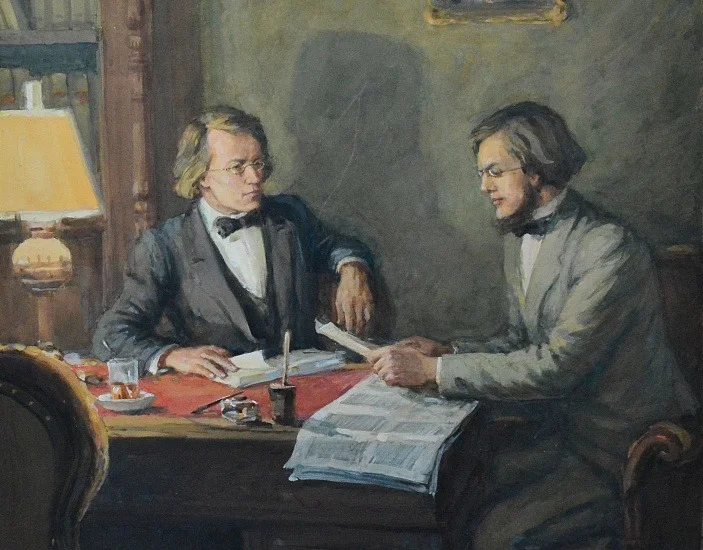
Their enmity reached the apogei in 1859, when a “contemporary” spoke with sharp attacks against the liberal “empty-back”. Dobrolyubov and Chernyshevsky considered the liberals to be overly moderate, incapable of active actions. This deeply insulted Herzen, who decided to answer the lunges of colleagues in the workshop. He published the article “Very Dangerous !!!”, where he condemned mockery and wrote that, criticizing the liberals, you can take the side of the government.
Such a sharp answer from such, as it seemed moderate in Herzen's views, became a real shock for a “contemporary”. Nekrasov, the publisher of the magazine, was amazed at Herzen's article, was going to go to London to call a publicist to a duel. Dobrolyubov did not know Herzen and did not dare to talk to him, so Chernyshevsky volunteered to go. He solved issues with Herzen, but this episode almost completely destroyed the relations of the opposition.
But, unfortunately, this was not the last time Herzen was forced to defend his moderate position. He was written by anonymous letters with reproaches. One of them, in which the sender called on Rus' to the ax, Herzen replied: “We are not lovers of uprisings and revolution for the sake of revolution, and we think - and this thought pleased us - that Russia could take its first steps to freedom and justice without violence and rifle shots.” It is worth noting that Herzen considered it impossible and immoral to call "to the axes" from London.
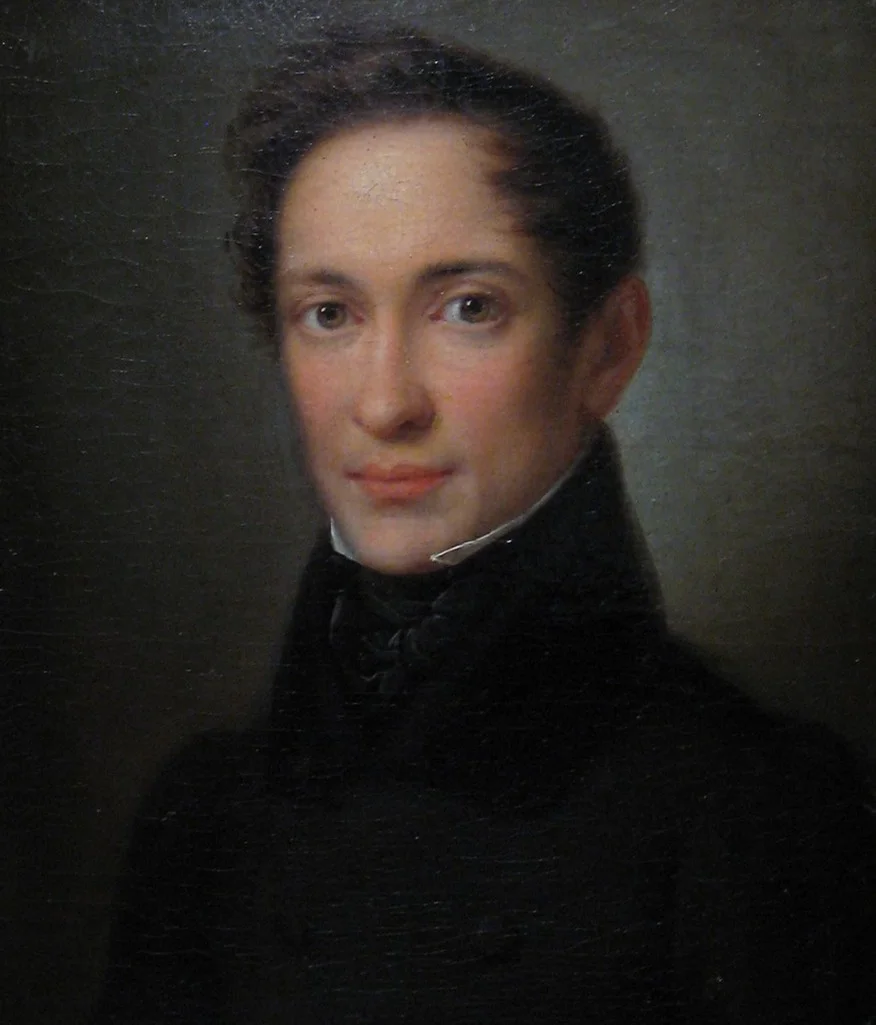
The largest crisis occurred during the years of the reaction of 1862–1863. The persecution policy gave rise to a new wave of political emigrants - they were mainly young people who fled from the country. By 1863, a whole Russian colony gathered in Switzerland.
Herzen, literally cut off from Russia since 1847, wanted to learn about the true position of his native country from the people who had just left. At first, the young emigration found a common language with the publicist, but after the self -growing of the “land and will” in Russia and the defeat of the Polish uprising of 1863–1864. Everything began to pour in: the leaders of the “young emigration” wanted to create a revolutionary center abroad and turn the newspaper “Bell” into a general emigrant body. Of course, Herzen was against. Since then, attempts to get closer to both sides have completely stopped.
At the time of the decline in the democratic movement, the “bell” could no longer continue the previous existence. Herzen’s position on topical issues also played a role: he supported the Polish uprising of 1863 and welcomed the manifesto on the abolition of serfdom with might and main. After these statements, he ceased to be relevant for the new generation of the opposition.
Popular terrorists
“People’s will” can be called the word “opposition” with a very, very big stretch, but it cannot be mentioned. Despite the relative liberality of the political program, the “popular will” had one significant difference from all other opposition organizations. The people were terrorists.
In principle, the people of the people were not going to unite with anyone. Their ideology, by definition, sectarian, ideology of underground and conspiracy. What are the allies here? By the way, it was their radicality and methods of political struggle that served as the reason for the split of the initial revolutionary organization - “land and will”.
There were two camps inside this secret society: some insisted on continuing agitation in the village, others - on the transition to a more serious political struggle. As you probably already understood, the latter then formed the "popular will."
The Executive Committee of the new party included the most decisive ones: Barannikov, Zhelyabov, Kvyatkovsky, Mikhailov, Morozov and others. By the beginning of 1881, the "people's will" totaled about 500 people.
All the “practical” activities of the organization from the first days of its founding were reduced to a single goal-to kill the king. The people's veins believed that without this nuance it would not be possible to arrange a new life, so they instantly began to fulfill the task.
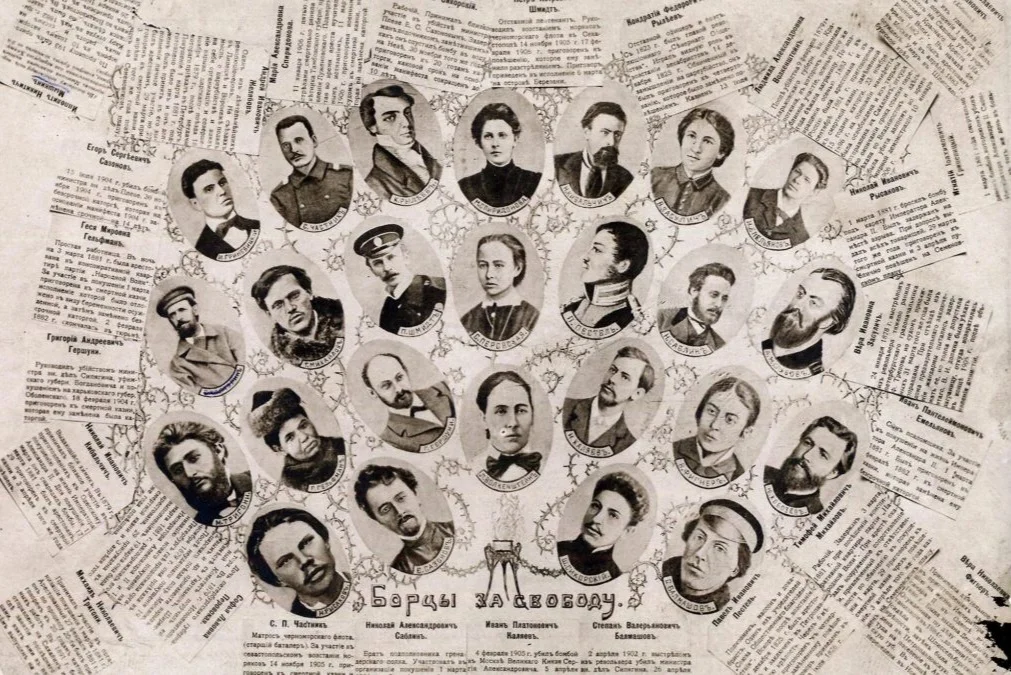
They performed it quite mediocre, but zeal was at the level: for November 1879 alone, three attempts were made by the tsarist train undermined. The first failed due to changing the route. The second is due to the technical malfunction of the mines. The third was still a success, but only a luggage car was injured.
The most successful attempt, if this can be said in this case, was undertaken in February 1880 S.N. Khalturin. The terrorist a year before the attempt was able to get into the Winter Palace as a carpenter. He prepared an explosion, but on the appointed day the king was not in the palace. The 11 guards who were part-time heroes of the Russo-Turkish war of 1877–1878 died.
But the underground workers did not give up. In 1879, the conspiracy the top of the "people's will" began to prepare a new attempt - the last.
Two years - and the plan of regicide is ready. But it also passed imperfectly. The first terrorist, Rysakov, was able to injure only the Cossacks of the convoy with a bomb and destroy the rear wall of the carriage, but the emperor himself was not injured. While everyone was dealing with Rysakov, Grinevitsky was not seen by the guard, he was able to throw the bomb right under the feet of Alexander II.
Most of the members of the organization were arrested and exiled to hard labor. Some Narodnoyes even survived to an amnesty in 1905.
Next, we will omit the well-known history of numerous schisms in the camp of Social-Democria, which were walking under the slogan (which is more lively than all the living) V.I. Ulyanova: "Before unite, and in order to unite, we must first decisively and definitely striking." Which has been done for decades, turning under Stalin the mass destruction of those who have enjoyed this principle with pleasure.
White Guard
The white movement is unique by nature. For obvious reasons, it originated at the end of October 1917 and became a real enemy of the Bolsheviks who came to power, entering an open armed confrontation with them.
The embryo of the counter -revolution appeared when the Provisional Government, who tried to deal with the confusion around the Constituent Assembly, encountered the October uprising and soon fell. Petrograd was taken, and after the capture of Moscow, it became clear to each officer that the Bolshevik coup was a serious threat.
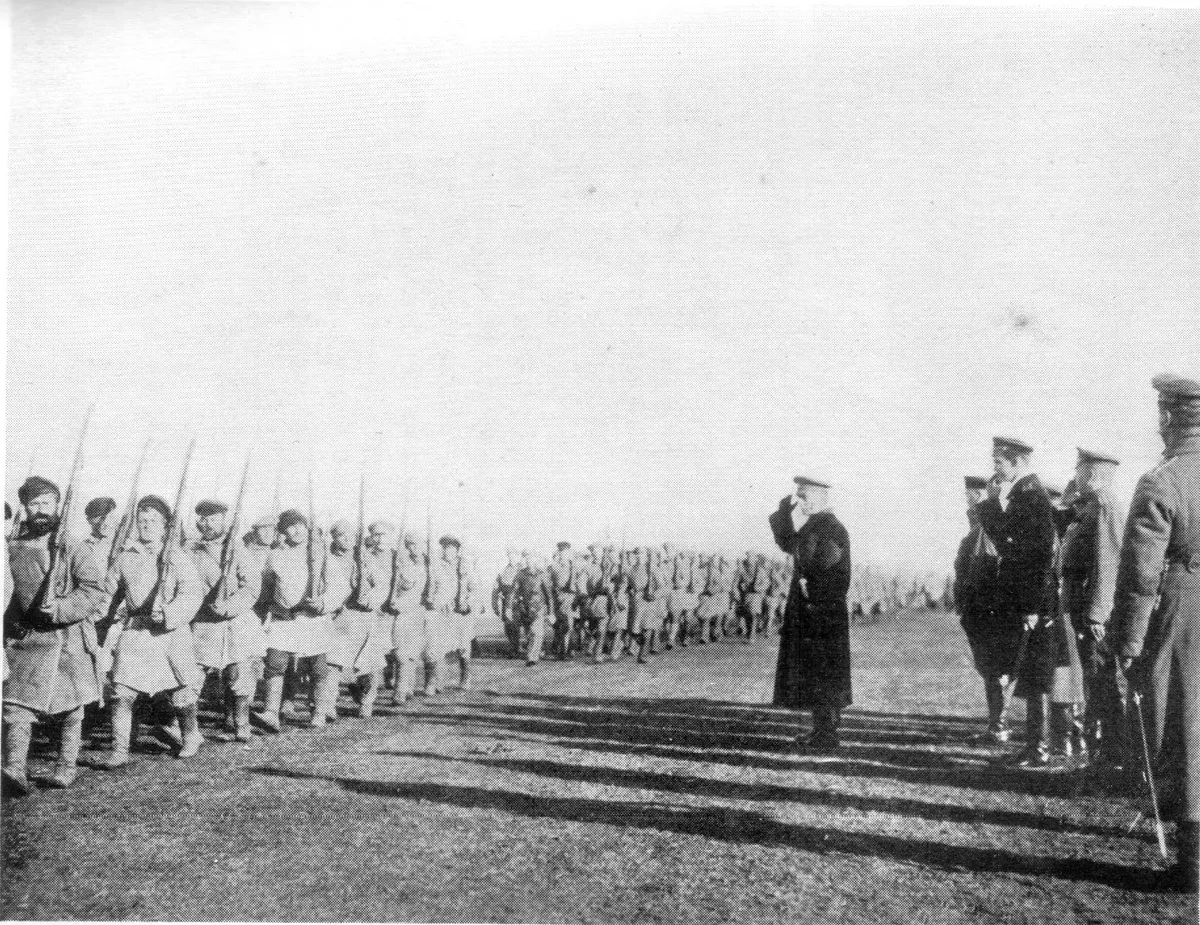
But until the fall of 1918, the white movement did not actually had the leader. In this, it was significantly different from its opponents following Lenin and Trotsky. Party discipline, the authority of the leaders of the Bolsheviks fastened the Reds, and the existing leaders of the white movement conflict with each other. Without a common leader, the whites could not fully unite. The army scattered throughout the country did not represent a single military force. They lacked internal unity and leader. Then Kolchak ascended the stage. He removed the ineffective directory and, together with like -minded people, was able to take control of Omsk.
The former commander in chief of the Black Sea Fleet, a real leader, Kolchak quickly gained confidence in the anti -Bolshevik camp. He proclaimed himself the supreme ruler of Russia, received the approval of many generals. All this was very important to do for one simple reason: in the country, covered by a civil war, it is necessary first of all to enlist the confidence of the army. Kolchak did it. He became a leader to whom many generals were ready to obey almost implicitly.
While Kolchak took control of Siberia, in the south of Russia a "national dictatorship" led by General Denikin was established. At first, two leaders were even able to agree: in addition to the desire to overthrow the Bolsheviks, Denikin and Kolchak dreamed of a dream of establishing a constitutional monarchy. It would seem that he is a chance. There are no barriers on the way. Now the White troops will unite and ...
But the rebuff did not happen. More precisely, he was, but very fragmented. In March, Kolchak began an offensive in three directions at once, trying to take Moscow, Ufa and unite with the army of Denikin at the same time. As you know, the general’s plan failed, and the Reds were able to get to the capital of Kolchak - Omsk.
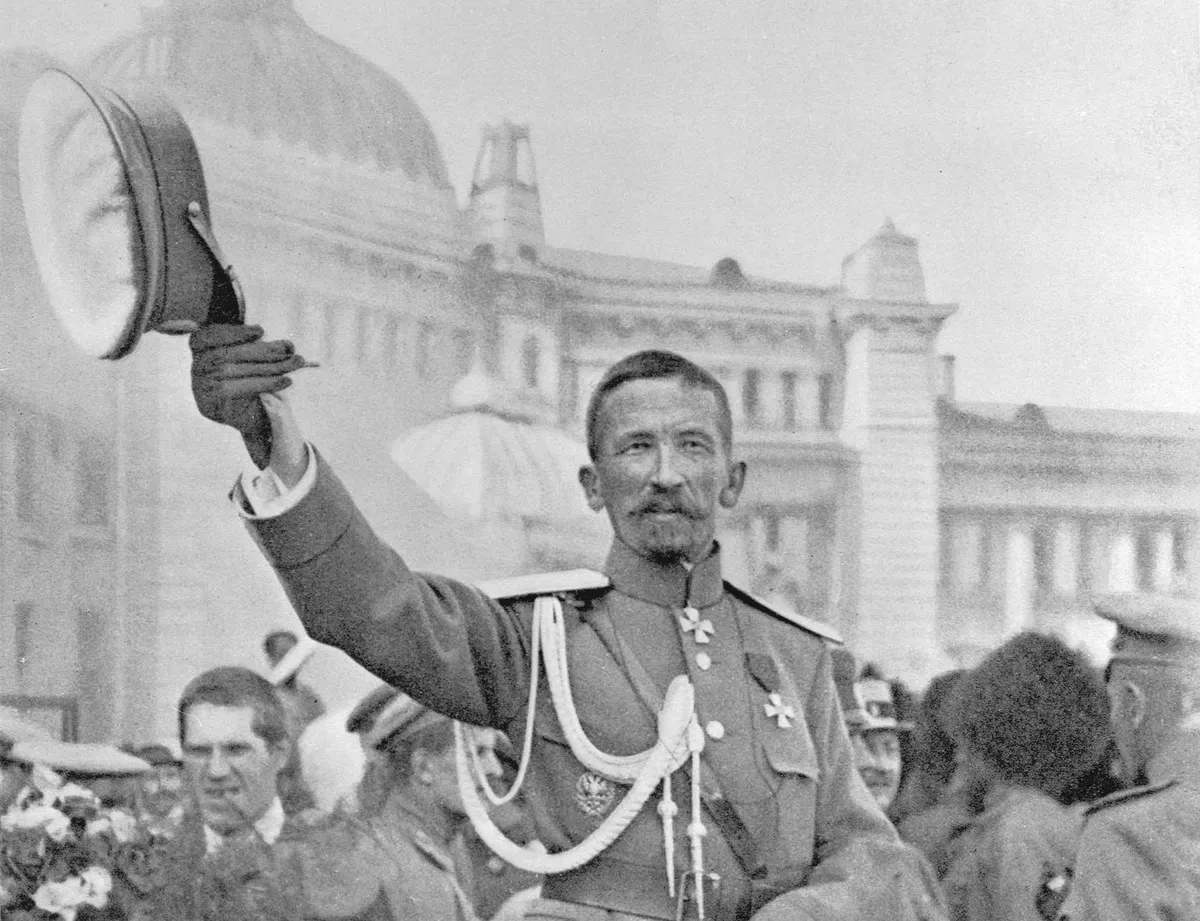
Kolchak's recklessness was not the only reason for the defeat of the whites. Denikin was in no hurry to join the armies of the Supreme Ruler of Russia, although he knew about his intentions. Another general, Vetrenko, during the Operation “White Sword” did not cut the railway to Moscow, because he wanted to first break into Petrograd. This mistake allowed red to transfer the troops closer to the city.
After the defeat in the civil war, the surviving generals fled from the country, forming a "white" emigration. But she did not have the same thing that had no white movement during the years of the Civil War - a single platform. Theoretically convinced monarchists and convinced socialists, the military personnel and intellectuals-earthlings could unite on the basis of hostility towards Bolshevism, but they were so “turning” from each other (and the fall of the Soviet regime continued to seem possible that this turned out to be impossible.
Those who stayed met face to face with the Bolsheviks. And here it is worth noting that it would be wrong to blame all the opposition’s opposition’s opposition's opposition's opposition.
Absolutely every leader of the Bolsheviks was a fundamental opponent of democracy. They differed only in shades on the issue of permissible methods.
The methods, respectively, were punitive; Where the hostility of the enemy of Soviet power was not self-evident, open processes were carried out with a frank ideological component-for example, the process over the Socialist Revolutionaries in the summer of 1922.
As for the decomposition of emigration, different methods were used here; In particular, the support of “shiftness”, the movement that advocated cooperation with the Soviet government, and its newspapers “on the eve”, propaganda of the achievements of Soviet power through the local Communist Parties through the Comintern, agents, abduction, murders ...
Two stars
In the early seventies in the USSR, the growth of participants in the dissident movement was observed. It was observed mainly either by the dissidents themselves or the KGB officers. But even in such a narrow environment there were real stars: of course, they were the scientist and the humanist Sakharov and the former ZEK and writer Solzhenitsyn.
The naked struggle with the Soviet government was recognized as dissidents with an unshakable goal, but, as always, oppositionists could not converge in funds. In principle, they had little in common, and it was very noticeable.
The first time the dissidents met in 1968. Even then, the difference in their worldviews became noticeable. Sakharov at that time had already managed to become famous thanks to his famous “thoughts”, the main message of which was the need for the consolidation of all countries for the common good of mankind. Solzhenitsyn did not like this idea at all. He believed that Russia has a special way, so it would not work to get closer to the West in any case. After that, the dissidents met several more times, but they never agreed.
Another voltage between them arose when Sakharov and Bonner sent a letter to the Central Committee with a request for political amnesty and the abolition of the death penalty. They organized the collection of signatures, but because of the clouds thumbling over the dissident movement, few agreed to leave their signature.
Solzhenitsyn was no exception. Here he played a role not even fear, but the character of the writer. If Sakharov was an open person, ready to help anyone who asks for help, then Solzhenitsyn adhered to several important rules: he never approached the phone, never talked with strangers and never signed collective letters.
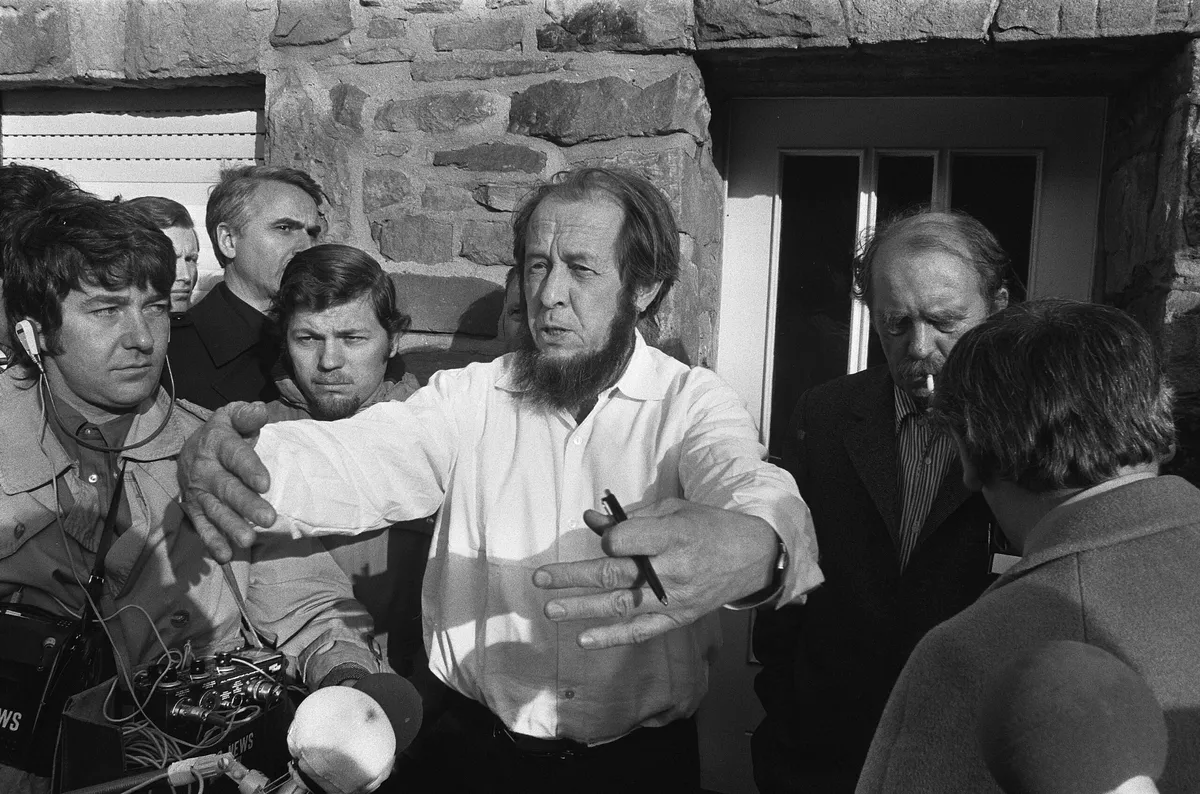
Fate, however, quite often brought them. В 1969 году Солженицын переехал в поселок Жуковка. В ста метрах находилась академическая дача Сахарова. Несмотря на продолжающиеся соседские споры, диссиденты впоследствии ненадолго сблизились. Но не благодаря желанию идти на компромисс, а из-за травли ЦК. Получивший Нобелевскую премию Солженицын подвергался почти тем же по степени гонениям, что и Сахаров, заявивший журналистам, что авторитарный Советский Союз не должен получить военного преимущества за время разрядки.
Это недолгое интеллектуальное перемирие даже вылилось в нечто положительное. Солженицын отправил на Запад статью «Мир и насилие», в которой впервые выдвинул Сахарова на Нобелевскую премию мира. Гнет травли объединил их. Но тяжелый характер Солженицына вновь дал о себе знать. Писатель критиковал активную борьбу Сахарова за право детей Елены Боннэр уехать из страны, что, конечно, не могло не повлиять на личные отношения.
Один из самых заметных конфликтов случился между диссидентами незадолго до высылки Солженицына. Он опубликовал «Письмо вождям Советского Союза», где завуалированно критиковал идеи сахаровских «Размышлений…». Началась не первая и не последняя полемика русских западников и славянофилов. Окончательно отношения испортились в 1975 году. Солженицын опубликовал книгу «Бодался теленок с дубом», где прослеживалась мысль о влиянии Елены Боннэр на мужа. Сахаров всегда отрицал подобный взгляд на его семейную жизнь. После выхода книги он смертельно обиделся на писателя и больше с ним не общался.
***
Словом, испытания, с которыми столкнулись сегодняшние российские оппозиционеры, не новы. Не новы и предрассудки и разобщенность в их кругах: искреннее желание перемен, как и прежде, соседствует с их неспособностью договориться. История продолжает задавать одни и те же вопросы, каждый раз ожидая услышать новые, верные ответы. Но их-то пока и не слышно.
Борис Борщ