
Translated material
The Central Bank reduced the key rate for the second time in a row. What will happen to prices now? Will the dollar increase? And will banks avoid the crisis?
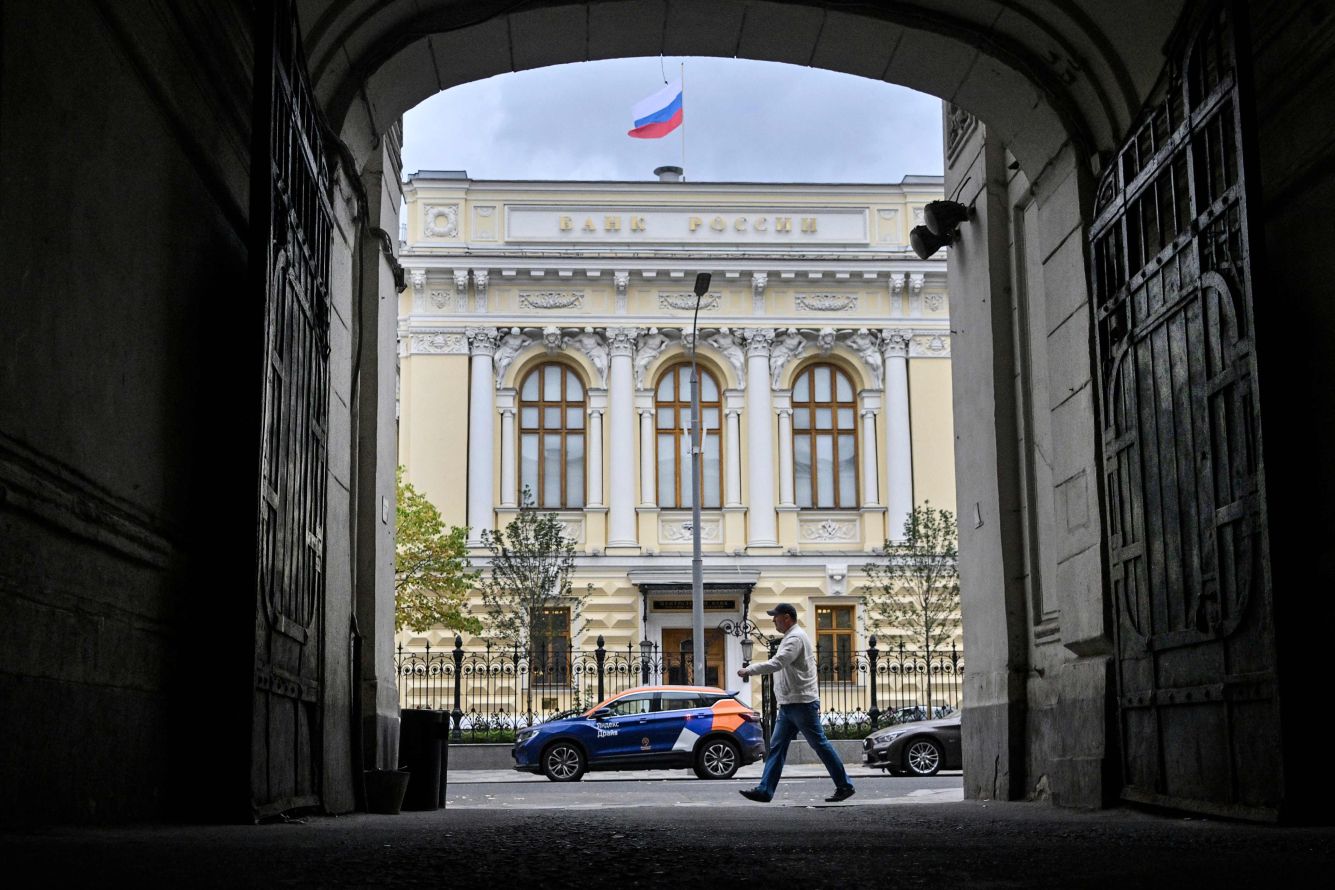
A cautious Russian Central Bank saw a slowdown in inflation and inhibition of demand in the military economy, which allowed him to go to a more decisive - and long -awaited for state -owned companies and business - a decrease in the key rate. But, in all likelihood, it will remain two -digit for a long time, and the rates on loans and mortgages are high. The fight against inflation remains the priority of the regulator, and there is too much uncertainty ahead, in which the emerging decline in price growth may turn around. One of the riddles is the dynamics of an unpredictable (and still too strong) Russian ruble.
The Bank of Russia, against the backdrop of universal expectations on Friday, July 25, reduced the key rate by two percentage points at once - from 20 to 18%. The regulator did not rule out that it could lower it even lower at the next meetings.
Based on the updated forecast of the average key rate, by the end of the year the Central Bank leaves a wide range of actions for itself-from maintaining a rate of 18% to a decrease to 14% already in 2025.
Key news from the July forecast of the Central Bank: its inflation rating at the end of the year improved to 6–7% against April 7–8%.
Why did the Bank of Russia decide to reduce the rate?
The main task of the Russian Central Bank, led by Elvira Nabiullina, after February 24, 2022, was to keep inflation, which-being shocked by the invasion of Ukraine and sanctions-in annual terms flew to 18% in April 2022. On the very first day of the Nabiullin war, as the interlocutors of Medusa said , she told subordinates that now it is necessary to "save everyone" and "make people lose as little as possible." By managing the rate and introducing currency restrictions, the Central Bank achieved price slowing up to 7.4% by the end of 2023 (and also prevented bankruptcy of the banking system). But in the conditions of an ongoing military extension of budget expenditures and overheating of the economy, inflation began to accelerate again , reaching 9.5% by the end of 2024.
Despite all the criticism and pressure, the Bank of Russia again went to increase the key rate -in October 2024, it lifted it to a new record and, in fact, prohibited for lending to a level of 21% and held it until June 2025. As a result, the economy began to cool , and inflation - to decline: the actual and forecast slowing down prices and business activity allowed the regulator to finally loosen the high rate and reduce it. “Everything orthodox is almost according to the formula, that is, to explain [the decision of the Central Bank to reduce the rate] there are enough factors in the Taylor rule ,” the economist of the Russian analytical center notes. Just adherence to mathematical models and scientific evidence in many respects allowed the Central Bank to keep the Russian financial system from the collapse in the spring of 2022.
In the second quarter of 2025, the price of seasonality with seasonality was slowed to 4.8% in terms of an average of 8.2% in the first quarter. A week before the meeting at the rate, weekly inflation indicators became negative. An annual inflation on July 21 was 9.2%. But the index risks are still prevailing over disinflation, the regulator in its press release indicates . “The price dynamics remains heterogeneous,” and “a steady tendency to reduce inflation expectations has not yet been formed,” the Bank of Russia emphasizes.
The forecast for the economic growth regulator for 2025 remained unchanged - 1-2%. This is serious braking after acceleration to 4% growth in 2023–2024 (the Russian economy did not gain such a pace for all the previous decade, except for the pre-war 2021). According to the Ministry of Economic Development, in May 2025, Russian GDP grew by 1.2% in annual terms after 1.9% in April. According to the results of five months of 2025, GDP growth was 1.5%. For comparison: in January-May 2024, when the Central Bank held several meetings in a row in a row of 16%, GDP showed five percent growth. The deviation of the economy from the trajectory of balanced growth continues to contract, the Central Bank stated in a press release.
At the same time, the Bank of Russia sees risks to accelerate inflation: reducing oil prices and strengthening sanctions can return the increase in prices through the weakening of the ruble. “You can believe in the stability of the current ruble course or not to believe. If you do not believe, it is better not to rush with a further decrease in [bet], ”says the interlocutor of Medusa from the Russian analytical center.
So. And what will happen next with the ruble?
The ruble remains excessively strong.
The state of imports, export, oil prices and purchases of currency by the Ministry of Finance (regular and deferred) cannot provide such strong values, Raiffeisenbank analysts believe . The fundamentally balanced level of the course is now 100 rubles per dollar, says Dmitry Belousov, chief macroanalyst of the government Think Tank of the Central Department Store . Such a course (100 rubles per dollar), by the way, would have been quite arranged by the government.
Inflation in 2025 successfully slowed down in many ways thanks to a strong rate: because of it imported was cheaper. The ruble now is the main currency of calculations for both Russian imports and for export, it follows from the data of the Central Bank. In May, the share of the ruble in imported payments amounted to 54.7% (there is no data for June yet), and in export - exceeded 52%. The positions of the dollar and the euro both in export and imports decreased to 15% against 84.6% in export and 67.6% in imports in 2021.
The weakening of the national currency will provoke the acceleration of inflation, which is so difficult to decrease. “If the ruble weakens up to 90 per dollar, then you can plus 1–1.5 percentage point [to annual inflation] catch calmly,” the economist evaluates in a conversation with Medusa. Analysts surveyed by the Central Bank in July await the dollar for 2025 87.3 rubles per dollar, which implies an average rate in July - December 87.6 rubles.
How did banks react to the rate of bets?
They did not doubt the mitigation of the Central Bank’s policy and began to reduce (“Sber”, VTB and T-Bank) their rates on individual deposits, without even waiting for the meeting of the board of directors of the regulator. After the declaration of the Central Bank, Sberbank announced the frontal decrease in market rates, consumer loans and deposits.
Banks are nervous due to the growth of non-payments at a high rate: from the beginning of 2022 to May 2025, the debt of the corporate sector to the banks has almost doubled , and over the past 12 months increased by 17.5%, to 70.4 trillion rubles.
At the end of June, Bloomberg, citing sources in the banking sector, warned about the risk of a systemic banking crisis. “Banks distributed cheap loans to support the Kremlin’s military efforts, and now they are difficult to repay these debts,” the agency formulated. According to him, the leaders of some of the largest Russian banks are discussing the opportunity to apply for state support if the situation with “bad” loans continues to deteriorate in 2026. At the same time, almost half (48) from the TOP-100 Russian banks worsened financial results in the first half of the year by the year.
Is there a threat of a banking crisis?
The situation in the Russian banking sector is expected to deteriorate due to a combination of a high rate and braking of the economy, but so far it is too early to talk about the systemic crisis. Risk analysis can be studied in the detailed analysis of The Bell on this topic.
“Sber”, VTB and Alfa-Bank, which control the lion's share of the market, show stable reports, and the TsMAKP does not see signs of the onset of any of the criteria of the banking crisis, including an indicator such as “bad” loans of 10% of the general banking portfolio.
The Bank of Russia, in turn, does not see the need to pre-capitalize large banks due to a canopy of bad debts, Elvira Nabiullina said at a press conference after a meeting of the board of directors on July 25. Even if some banks are hypothetically faced with problems, they can reduce the growth rate of the loan portfolio or completely sell it. For the first half of 2025, the profit of the banking sector amounted to 1.7 trillion rubles. “This allows banks to maintain the sufficiency of capital, increase capital. The real situation with problem loans is better than sometimes trying to imagine it, ” said Nabiullina. In the Bloomberg report on the possible circulation of the largest banks for contracting, she saw the intentionally “injection of the situation”.
Julia Starostina