
Translated material
"There is no such system, perhaps, in any country"
The official human rights activist of Russia believes that we are all protected "to a great extent"

Valery Fadeev. Photo: Irina Buzhor / Kommersant
18+. This material (information) was produced, distributed and (or) sent by foreign agent Vishnevsky Boris Lazarevich or concerns the activities of the foreign agent Vishnevsky Boris Lazarevich.
It would seem that the revelations of Valery Fadeev, the head of the Council for Human Rights under the President, should have long been surprising, but each time he manages to take a new lowland.
And from an interview in the once glorified, and now very specific media, we learn from him that human rights in Russia are now protected “to a huge extent” and that “such a complex system of protection of rights is not perhaps in any country” (all this was said immediately after the adoption of the package of new repressive laws).
Immediately, of course, I recall the Soviet joke “And we know who this person is”, but Fadeev is not joking.
However, if our journalist is Solovyov, the writer is Prokhanov, the diplomat is Nebena, the historian is Medinsky, the philosopher is Dugin, and the director is the Bogomolov, then the human rights activist is certainly Fadeev.
... Political rights and freedoms are interested in Russian citizens, Fadeev believes, but for some reason gives an example of monetization of benefits when “tens of thousands of people went out onto the streets, pensioners overlapped roads” because “people were offended-for them, even if they did not use them, more important than money”, and this was not even a financial problem. ”
But the pension reform, in his opinion, was "very competently, and no one went out into the streets, but the rating of the institutions of the authorities decreased: it hurt people."
Wherever you throw it - everywhere with a finger to the sky: during the “monetization” of 2005, pensioners overlapped roads because they took the benefits from them, relatively speaking, to the ruble (including the right to travel, free medicines and trips to the sanatorium), and “compensation” was provided for a penny - completely not adequate costs of the selected benefits. And people perfectly understood this, going out into the streets and demanding justice. Although the problem, of course, was also political: only the authorities that do not respect citizens and at the same time independent of them (the mechanism of “irremovability” had already taken shape by that time), could act in this way.
If we talk about the pension reform of 2018, then all the “literacy” of its implementation was that
The word “reform” covered a banal increase in the retirement age, which forced each about a million rubles of a future pension from a pocket.
At the same time, 80% of citizens - for all surveys - were against raising the retirement age, but the authorities came in spite of them.
And people went to the streets - although not in the same amount as during “monetization”, but the times were already different, and punished for “inconsistent actions” is much more serious. Nevertheless, in St. Petersburg, then several rallies took place against the “reform”, and massive enough. It is unlikely that Mr. Fadeev does not know (by the way, at that time he served as the secretary of the Public Chamber and had to know about what was happening).
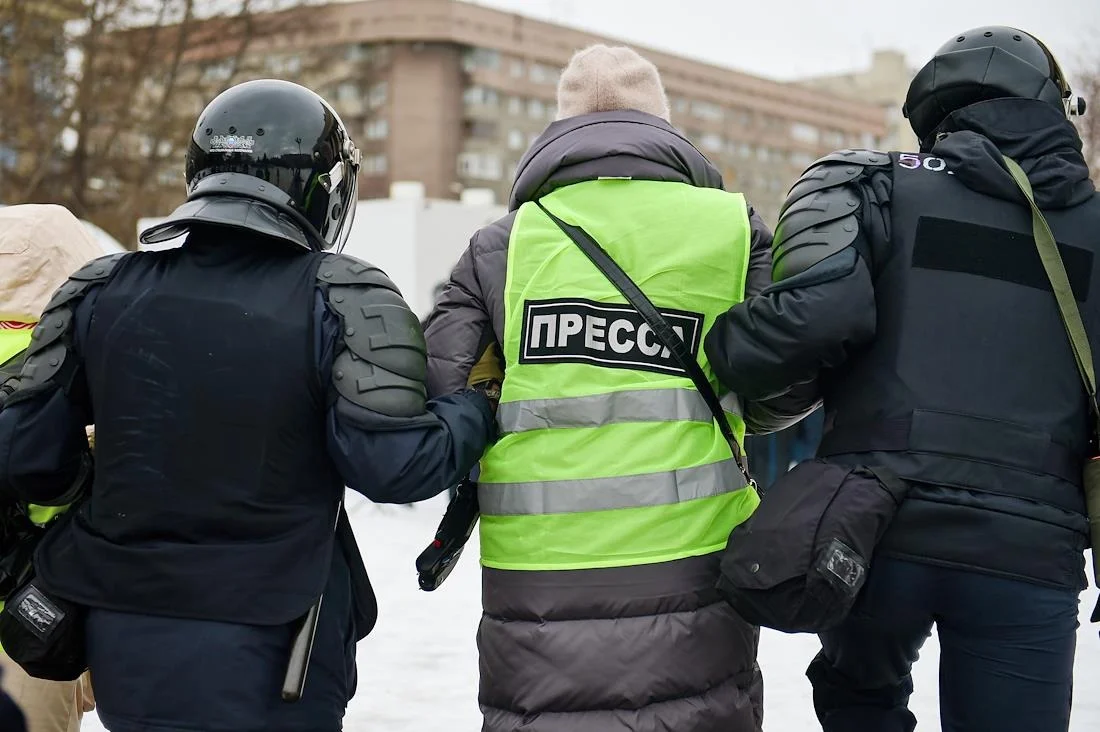
Regarding the statement of how the political rights are perfectly protected in Russia, Fadeev is asked: even political? And the cynical answer follows: “If the political atmosphere suits citizens, then everything is in order, there is no problem.”
According to this logic, in the Soviet Union, political rights were also greatly protected: citizens were quite "arranged by the political atmosphere." And in other totalitarian states, too.
One could also recall the Soviet joke that in the USSR human rights (a concept, hated by power up to perestroika) have never been violated, because a person had no right ...
Speaking about the punishment for the search for “extremist content”, the head of the HRC reports in surprise that “he climbed to the Internet to find out what it is” ( if he really did not know before, being in his position, this is an indicator of professionalism. - B.V. ) and found out that the list that is maintained by the Ministry of Justice, almost six thousand materials. And that this, "possibly somehow related to security," but Fadeev is sure that "this does not concern the vast majority of people."
And to the question, if this was done so that “we were more careful, to think: do we go there, or are we reading?”, Fadeev replies: “We had to be careful before,” because “Big Brother” watches our every step on the Internet, independently extremist materials or not, what we bought, in which movie, and which movie watched. ”
Of course, one could admire his civil courage, but it turns out that by “Big Brother” he doesn’t mean what Orwell wrote about: we are talking about “Music aggregators”, Internet services and other “serious platforms” that “follow our every step”.
Those who we usually mean (special services), according to Fadeev’s assurances, act “according to the law on operational-search activity”, and “in order to start following us, you need a court decision or, in extreme cases, the prosecutor's office,” because “the secret of private life is one of the cornerstones of society”.
Reading this, it seems that the head of the HRC and I live in different countries.
Firstly (the head of the HRC would be nice to know the laws), the prosecutor’s office has nothing to do with it.
Secondly, many opposition politicians monitored and monitor without any court decisions: the bodies leading operational-search activities (and a whole “bouquet” is spelled out in the legislation, including even FSOs), they can be monitored simply on their own initiative.
And thirdly, they need only some “events” sanction: a wiretapping of conversations or “removing information from communication channels”. At the same time, practice shows that the court authorities authorize it in 100% of cases. What is the “secret of private life” here ...
In the 90s, Fadeev believes, “the state was very weak”, and “all rights were violated”, “a small part of Russian society thought that it had a lot of right, although there was not even the right to life,” but “the state began to return to the zero, and the people took it with great enthusiasm.”
He complains that “part of the intelligentsia accepted the arrest of Khodorkovsky* as an attack, although it was the struggle of the new state with the oligarchic system,” and although the state “intensified and suppressed some parts of Russian society”, but “the other part, large, was pleased with this.”
About the “struggle of the state with the oligarchic system” is very funny, especially when you remember Timchenko and Deripaska, Kovalchuk and Rotenbergs, who are still fine.
From where the state human rights activist took that the “return of the state with great enthusiasm” took to the zero people is unknown: there is no evidence.
Well, the rights of citizens are violated not because the state is supposedly “weak”: compare what restrictions on the rights of citizens and what violations of these rights were in the nineties and in the tenths, not to mention the twenties, with the current “strong state”.
But all this Mr. Fadeeva does not bother at all.
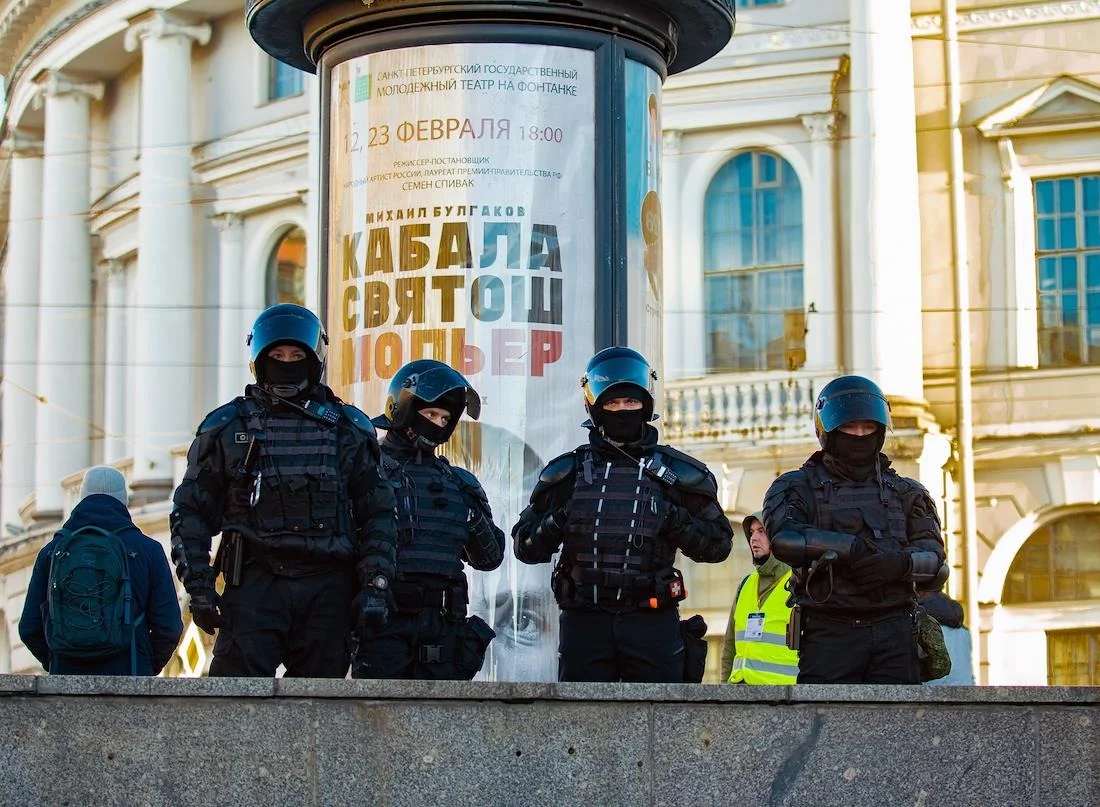
When they tell him that now, like under Stalin, “for words you can get a deadline,” he confidently replies: “For 3.5 years there is a difficult war with the West, and we must give myself a report”, “I’m not afraid to say as the chairman of the Council of Human Rights - there may be restrictions on such a situation.”
And he adds: “But I cannot raise a critical voice against Russian institutions of power and law enforcement agencies, because restrictions, given the complexity of the situation, are minimal.” Like, “How many foreign agents do we have? Under a thousand. Criminal cases have been instituted, mainly against those who went abroad. ”
Well, yes, of course, we remember how Fadeev called the deprivation of “foreign agents” “minimal sanitary measures” without any trial of two dozen human constitutional rights,
Looking at this violation with widely closed eyes. If these are “minimal” restrictions, I don’t even want to think what “average” then, not to mention the “maximum” ...
When he is asked about those “whose word pronounced is recognized by extremism,” the presidential adviser replies: “It undermines the spirit of the people during the Western’s difficult war against Russia”, “We are the main enemy of the West today.” Nevertheless, to preserve human rights, according to Valery Alexandrovich, “and there is a council that I head, and there is also an Commissioner for Human Rights, Commissioner for Child Rights, Public Supervisory Commissions that work with prisoners, and so on. No one canceled them. This is the key that everything will be in order. ”
Human rights activists as Andrei Sakharov and Sergey Kovalev, Mikhail Molotnitov and Viktor Sheinis, Arseny Roginsky and Lyudmila Alekseeva, have survived to this day, they would be horrified by such statements: the task of human rights is precisely to raise their critical voice against the “institutions of power and law enforcement agencies” if they violate the rights of citizens. And they (like other real human rights activists) were never afraid to do this. And in life they would not say that some restrictions on the rights of citizens are “minimal” and there is nothing terrible in them, and a critical word should be prohibited, because it “undermines the spirit of the people”.
For a reactionary and guardian, in turn, such reasoning is quite organic. So it’s strange why, with such a way of thoughts, Valery Fadeev holds such a position. It is necessary either to change it, or the position somehow rename it ...