
Translated material
Idol of the scapegoat
Sacred mechanics: as the state becomes God. Reflections on the topic of Andrei Cordochkin's article on the fight against Satanism*

Photo: Peter Kovalev / TASS
Last week, we published a column of Archpriest Andrei Cordochkin about the struggle against Satanism, which was suddenly launched by the Russian state, which recognized the Supreme Court of the Russian Federation as an extremist and prohibited movement in the country. Those who enter it, whether they will now plant for the celebration of Halloween, have not traditionally explained citizens (so it was already with the ban on LGBT*). The polemic column of Andrei's father responded to the response of sociologist Alexei Semenov-Truay-about how an attempt to give immortality destroys this very state.
The text of Archpriest Andrei Kordochkin about the fight against Satanism is a rare case when the theologian offers an accurate sociological diagnosis of social processes. His observations of turning the state into an object of worship and expansion interpretation of extremism reveal the deep mechanisms of legitimization of power through the creation of sacred symbols and the demonization of opponents.
Expanding concepts and their fate
The phenomenon of the gradual expansion of basic legal concepts until the complete loss of their initial meaning has long -standing roots. In the late Roman Empire, the charges of “insulting Majestas” (Laesa Majestas) gradually spread from real treason to any actions that could be interpreted as disrespect for the emperor. By the end of the III century, this definition was already unsuccessful jokes of court and insufficiently enthusiastic reviews about the princess.
Cordochkin observes the same process: “The word“ extremism ”today resembles either primitive paganism, or a children's game: a person is the one you called it, and then the person himself disappears, and one name remains.” When the translation of the Bible, made by Jehovah's Witnesses*, or the activities of observers in the elections, the concept itself loses its connection with the original meaning and turns into an instrument of administrative arbitrariness.
In social thermodynamics, such an expansion of repressive categories means a sharp increase in social pressure while compressing the volume of legal activity. The system is forced to constantly look for new objects for the use of expanding prohibitions, which creates the effect of social uncertainty - no one can be sure that his activity will not be retrained tomorrow.
When power becomes a deity
The process of turning political power into an object of religious worship is reproduced in different eras with amazing constancy. Emperor Diocletian introduced the ceremonial of worshiping his person, borrowed from Persian traditions. Subjects had to fall in front of the ruler and kiss the edge of his clothes. This practice symbolically turned the emperor from the first among equals into a divine figure standing above the human community.
Modern forms of sacralization of power, which are described by Cordochkin, use a different symbolism, but follow the same logic. When Alexander Prokhanov declares: “Let all our Russian people ... know that the homeland in which we live is immortal. And let them revel in this sensation, knowing that if the homeland is immortal, then they are also immortal, ”before us the direct attribution of divine attributes to the state.

Vladimir Putin, picking up this rhetoric, develops the topic “Immortality of the Russian people and Russia”, connecting him with the “victories of our country”. Here, the state is directly declared a source of eternal life - a classic form of political theology. Citizens are invited not only to maintain power, but to “revel” involvement in it as a source of transcendental meaning.
The formula of total absorption
Archpriest Alexander Shmeman reveals the mechanism of complete dissolution of the personality in the state: “We are talking for you, from you and you, because we are you ... Underwhelming to us, you are just fulfilling your desire. For do not forget, we - this is you. "
This formula exposes the key paradox of totalitarian consciousness: the system declares coercion - freedom, and submission - by self -realization. In thermodynamic terms, this is an attempt to create a condition in which the social temperature (activity of citizens) remains zero, but at the same time the pressure (control) is maximum, and the volume (space of freedom) strives for zero.
Such attempts in the past have always turned out to be unstable.
The Roman Empire of the Dominat, built on the sacralization of imperial power and total control, lasted longer than the principle, but ultimately collapsed under the weight of its own contradictions.
Maintaining a sacred image of power required increasing resources, and space for a social initiative was compressed to critical sizes.
The fight against idols generates idols
Cordochkin exposes the central paradox of what is happening: “Once we are against Satanism - obvious, crystallized evil, then we are an obvious, crystallized good.” The system that declares itself a defender from idolatry turns into an idol.
This mechanism is studied in detail by anthropologists in archaic societies. Sacrifice as a way to clear the community of filth inevitably sacrifices those who make the ritual. Gradually, the priests begin to be perceived as owners of a special connection with the divine, which gives them power over the rest of the community.

The modern struggle with abstract threats works according to the same scheme. Declaring themselves defenders from Satanism, representatives of the authorities assign themselves the role of mediators between good and evil. This automatically puts them in the position of moral superiority over the rest of the society and justifies any repressive measures as spiritually necessary.
Extremism of love
The quote from Martin Luther King is especially important that “all three were crucified for the same crime - an extremism crime”: “Two were extremists in immorality and, thus, fell below their environment. Another,
Jesus Christ, was an extremist for love, truth and kindness and thereby exalted over his environment. ”
This quote reveals the fundamental problem of any repressive system: it inevitably declares extremism precisely those qualities that form the basis of human dignity. When the system begins to fight the independence of thought, compassion for weak and a desire for justice, it discovers its anti -human nature.
In social thermodynamics, this means a critical increase in the internal pressure of the system. An attempt to suppress the basic human needs for freedom of conscience and moral choice creates a tremendous tension, which sooner or later will find a way out in uncontrolled forms.
Archaic cohesion mechanism
The French anthropologist Rene Girard described the mechanism of the scapegoat as the basis of the archaic social order. The community is raised around the expulsion or destruction of the one whom it declares the source of all troubles. This process temporarily removes internal contradictions, but requires a constant search for new victims.
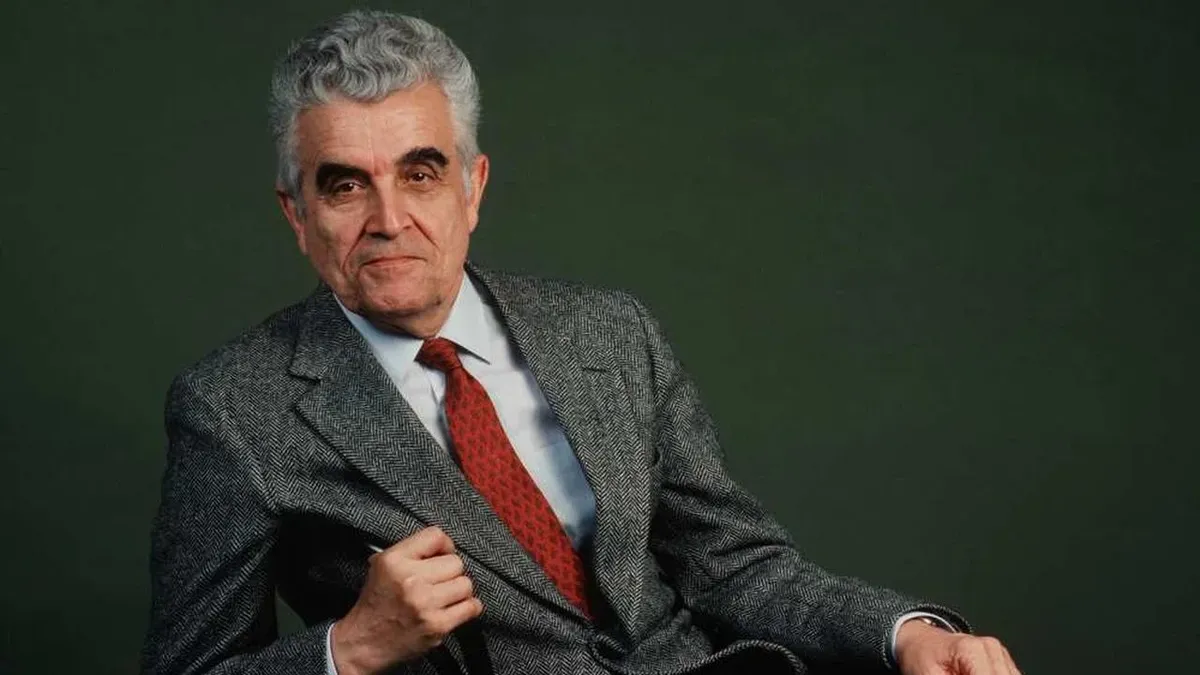
The modern struggle against extremism largely reproduces this archaic scheme.
Society is invited to rally around the denial of abstract evil, which allows not to solve specific problems.
A system based on negative legitimation is thermodynamically unstable. She is forced to constantly increase the social temperature through the search for new enemies, which leads to the escalation of repression and narrowing of the space of legal activity. Ultimately, any manifestation of independence can fall under the definition of extremism.
Management degrades to symbols
The choice of archaic methods of legitimation is a deeper problem - degradation of managerial technologies. When the system is not able to solve the real problems of citizens, it is forced to switch public attention to a symbolic struggle against abstract threats.
In late Byzantium,
When the empire lost territory and economic power, the main attention of the elites focused on theological disputes about the icons and the nature of Christ. Real problems - military weakness, financial crisis, corruption - retreated to the background before issues of orthodoxy.
So far, citizens need high -quality medicine, education and fair justice, the system is concentrated on the fight against Satanism and incorrect translations of the Bible. This is not a random choice of priorities, but a natural consequence of managerial inability to solve complex problems.
The path of sacralization
Systems based on the sacralization of power and the demonization of alternatives are evolved towards increasing rigidity. An increase in social pressure in compression of the volume of freedoms inevitably leads to a decrease in social temperature - society becomes passive and apathetic.
But this condition is extremely unstable. The Roman Empire, Byzantium, and the absolutist monarchies of Europe - all these systems built in total control and sacralization of power, either exploded as a result of social upheaval, or slowly degraded to the complete inability to solve the basic management problems. The process of sacralization of power has already gone far enough.
When representatives of the system seriously say that the state gives immortality, and citizens should “revel” with this, we have the classic signs of the political theology of the archaic type.
The question remains open: whether the system can realize the danger of such a path in time and find ways to reduce social pressure, or the process will go so far that the phase transition will become inevitable. The experience of the past suggests: the deeper the system plunges into the archaic logic of the sacralization of power, the more difficult it is to find a way out to rational forms of management.
Alexey Semenov-Truay, sociologist