
Translated material
"Russian and Ukrainian hackers have one school - very good"
Who and why "dropped" Aeroflot

The information board at Pulkovo Airport after the failure of the Aeroflot Airline Information Systems. Photo: Maria Baranovskaya /TASS
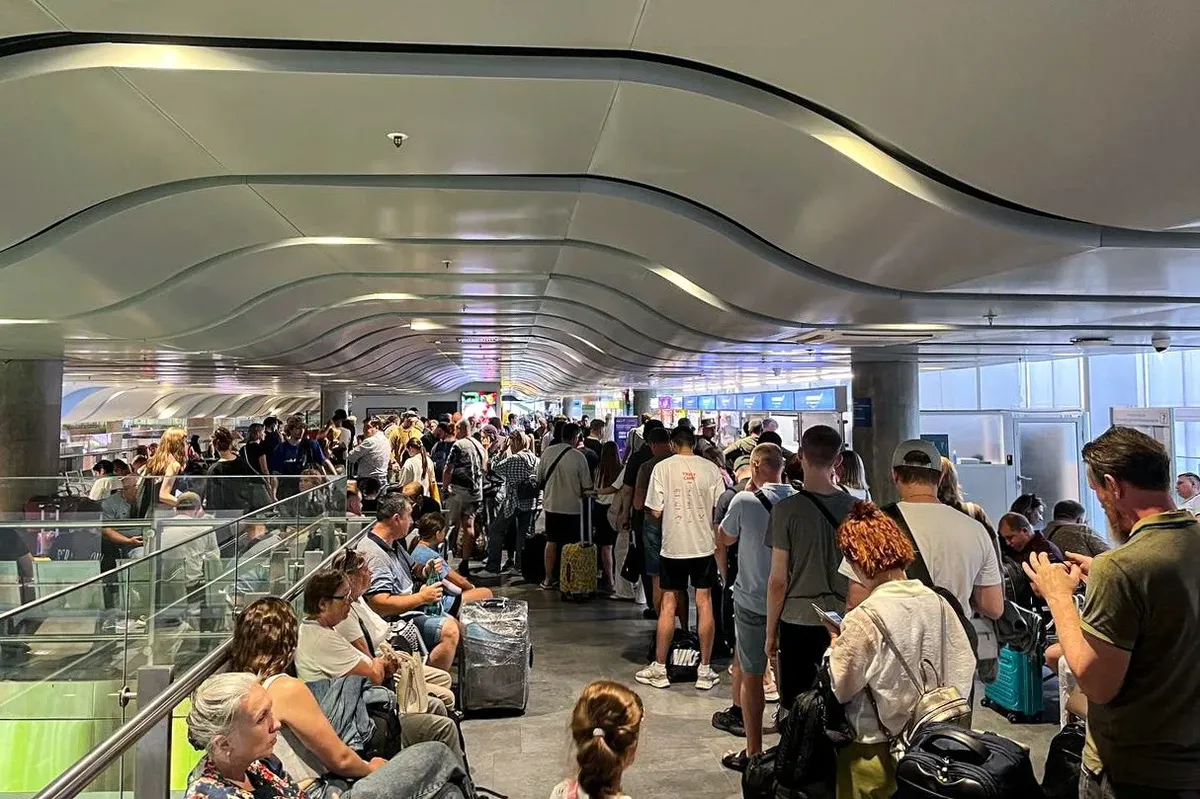
On July 28, at 7.43, the Aeroflot press service announced the failure of the airline information systems and warned “about the forced adjustment of the flight schedule, in particular, by postponing and canceling flights”. Passengers were advised to "monitor the information on the online score on the site, the airport information scorecles and the announcements of the high-profile." But they assured that Aeroflot IT specialists are working on minimizing the “risks of implementing production plan for flights and restoring the staffing of services”.
By 10 a.m., 42 flights from Moscow and to the capital were canceled. Thousands of passengers with tickets for flights to Astrakhan, Grozny, Yekaterinburg, Yerevan, Kazan, Kaliningrad, Krasnoyarsk, Makhachkala, Mineral Waters, Murmansk, Omsk, Orenburg, Orsk, Perm, Samara, Sochi, Stavropol, Tyumen, Ufa, Chelyabinsk and Chelyabinsk and Chelyabinsk and Perm. Sant-Petersburg
By 11 o’clock, information appeared about the abolition of another seven flights. From Moscow and to Moscow from Elista, Kaliningrad, Astana, Krasnoyarsk and Sochi.
Passengers who managed to register for flights began to return luggage. Aeroflot informed that a refund for the purchased tickets will be made at the place of purchase.
By noon, the Ministry of Transport calculated that
Due to the abolition of flights in Moscow and St. Petersburg, 75,000 passengers were injured.
The hacker groups of Cyberpartisans and Silent Crow, who declared the alleged destruction of the internal IT infrastructure of Aeroflot, took responsibility for the Kibeataku for Aeroflot information systems.
Hackers claim that they seemed to be able to unload the full array of databases of the history of flights, compromise all critical corporate systems, obtain control over personal computers of employees, including top management, copy data from the server servers, including audio recording of telephone conversations and intercepted communications, to extract data from surveillance and control systems.
The newly “computer security experts surveyed by the“ new ”are not surprised that the hackers managed to hack the national air carrier system.
The IT businessman Sergei Mendelev is more surprising that the airline was "put" only now:
-So it always happens when, instead of normal, high-class IT security specialists, they are collected in the blat and huge salaries of amateurs. Well, where to get professionals if the best shots left the country? Or here is another component of the crash of Aeroflot computer systems.
Our and Ukrainian IT specialists have one school. And this is a very good school. Until recently, a huge amount of software was written precisely by Ukrainians. Because it was two to three times cheaper, and they really did their job well.
***
There is another component of the reasons for the current collapse of the Aeroflot information systems, which our experts did not dare to talk about aloud. Over the past few years, the country has been defendants in criminal cases and fell into prison cells a huge number of IT businessmen. The most famous and scandalous criminal case is the case of the founder and co-owner of the international company in the field of information security of Group-Ib Ilya Sachkov, who was sentenced to 14 years in the colony for the Stateizer and now he is in IK-17 in Krasnoyarsk.
For more than three years, Pavel Vrublevsky has been in the prison cell.
Examples of Sachkov and Vrublevsky encouraged many talented IT businessmen and programmers to leave Russia.
It turns out that the attack on Aeroflot information systems is not the first attack. And, unfortunately, probably not the last.