
Translated material
Without a piece of paper
A new trend: Political Zyats and activists are deprived of only Russian citizenship. The scheme was worked out on criminals and naturalized migrants-fingers
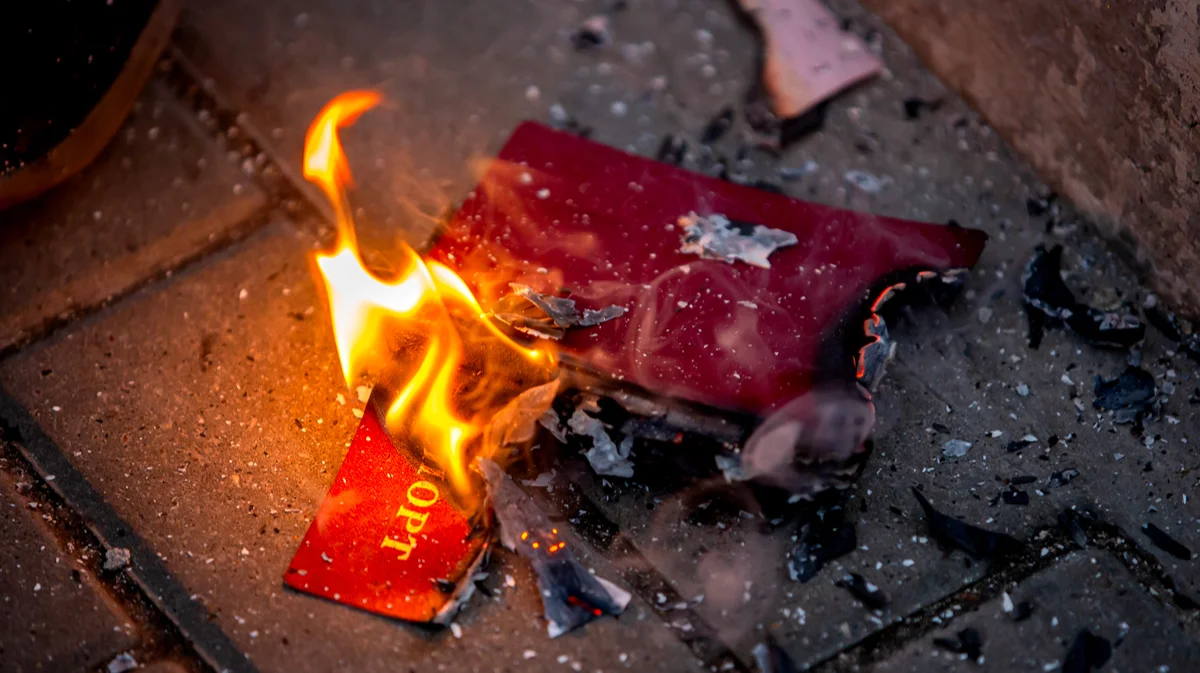
A burning Russian passport for protests at the Embassy of the Russian Federation in Chisinau, Moldova, February 16, 2024. Photo: dumitru doru / epa
Kaliningrad nationalist Vyacheslav Popov, convicted of preparing the attack, is deprived of Russian citizenship. Also, without a Russian passport, activist Dmitry Kisiev, head of the headquarters Boris Nadezhdin, “for the threat of national security” risks. The deprivation of citizenship of the Russian Federation, when it is the only one, is a new tool for pressure on polyactivists, lawyers say. So the state squeezes citizens into a special category of stateless persons - Apatrides.
The bridegroom from Vladimir Central
Vyacheslav Popov, convicted of preparing the attack, was serving a sentence in the Vladimir Central, when this July received a notification from the Kaliningrad Ministry of Internal Affairs. He was informed: his citizenship of Russia was terminated. The police referred to the Federal Law “On Citizenship”, in particular to Article 22, which implies the deprivation of citizenship for the commission of a crime.
The notification (dated to the January of this year, is at the disposal of the editorial office) indicated that Popov’s passport will be declared invalid, and Popov himself will be removed from registration at the place of residence. The solution can be challenged within three months.
- So far we do not know any details. We are trying to get a decision where the reasons for the deprivation of his citizenship will be indicated in order to appeal this decision, ”Anastasia Nechaeva bride Popova told Novaya Gazeta Europe.
According to her, for 47-year-old Popov, the Russian passport is the only one. He never had other citizenship.
- He was in prison two years ago for 45 years, and he changed his passport for a new one there. That is, everything was fine. And suddenly they decided to deprive him of citizenship. Now he has no right. He will leave the prison with a certificate and only a ticket to the house will be able to buy. And then you won’t get a job, you will not register anywhere. This violates all its basic rights, ”Nechaev notes.
The last time she saw the groom three years ago at the hearing. After that, they communicate only by correspondence. Vyacheslav says practically nothing about the conditions of detention in prison, once made it clear in a letter what is punished for disclosing this information.
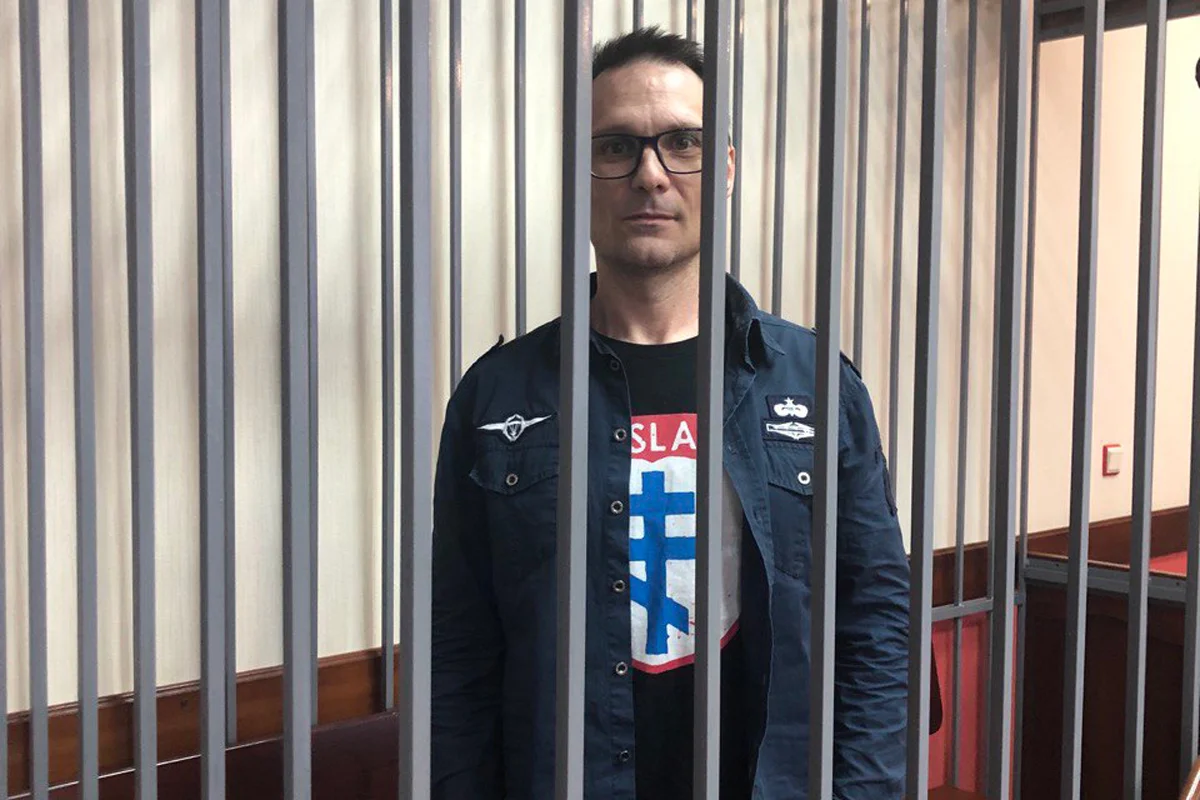
Previously, Vyacheslav Popov lived with his mother in Kaliningrad and worked as a finisor. He was detained on the eve of May 9, allegedly for preparing a terrorist attack in one of the military units of the city. According to the FSB press service then, Popov was in the proximistic organization “Right Sector” and, after the attack, planned to go to fight in Ukraine. The state media reconstructed the video of Popov’s detention and his recognition in cooperation with the Right Sector.
However, the mother of Vyacheslav Valentina is sure that the case was fabricated, and the explosives were tossed. Popova said that on May 6, FSB officers with sappers and a service dog broke into their apartment, literally breaking the door. Valentina was put out of the apartment for 20 minutes. And when they were allowed to enter, the allegedly discovered elements of the explosive device and the symbols of the "Right Sector" were shown. Popova claimed that before in her apartment there were no these things.
Until 2015, Popov was a member of the regional organization BARS (Baltic Vanguard of Russian Resistance). This is the Kaliningrad movement of the monarchists, adherents of the Russian Orthodox Church abroad. Bars' members called themselves Russian nationalists, held peaceful actions and marches in support of political prisoners, opposed corruption, and also to return Keningrad the name Kenigsberg.
In 2020, four BARS members were convicted of extremism for terms of three to eight years. And Popov, as a former member of Bars, went through a witness in the case.
As his bride says, Vyacheslav was clearly under the control of the FSB, therefore, she believes, they hung a case of preparing a terrorist attack on him. When Popov was arrested, she was able to get permission from the investigator to marry her fiancé.
“I was hoping that in court it would be an argument that Popov was not going to conduct any terrorist attack and leave, since he had a stable relationship and plans for the future,” says Anastasia.
But the plan did not work, and the court appointed Popov nine and a half years in prison. Anastasia, on the other hand, had to leave the country due to threats to the police. In Kaliningrad, Nekhaev was engaged in human rights activities, defended the protests in 2021–2022 and she herself repeatedly ended up in the IVS for participating in shares. After the rally on February 24, against the war in Ukraine, she was arrested for 25 days. As a human rights activist Nekhaev received a humanitarian visa in Germany and now lives in Hamburg.
- It is dangerous to return to Kaliningrad. I had already received threats before. And Vyacheslav told me that during the search they showed him a photograph of my dog at my house. That is, they came to me, somehow penetrated the apartment without me, nightmare my dog there. It was shown to him as a threat that I could not back. He then wrote to me: sit in his Europe, do not return, ”recalls Anastasia.
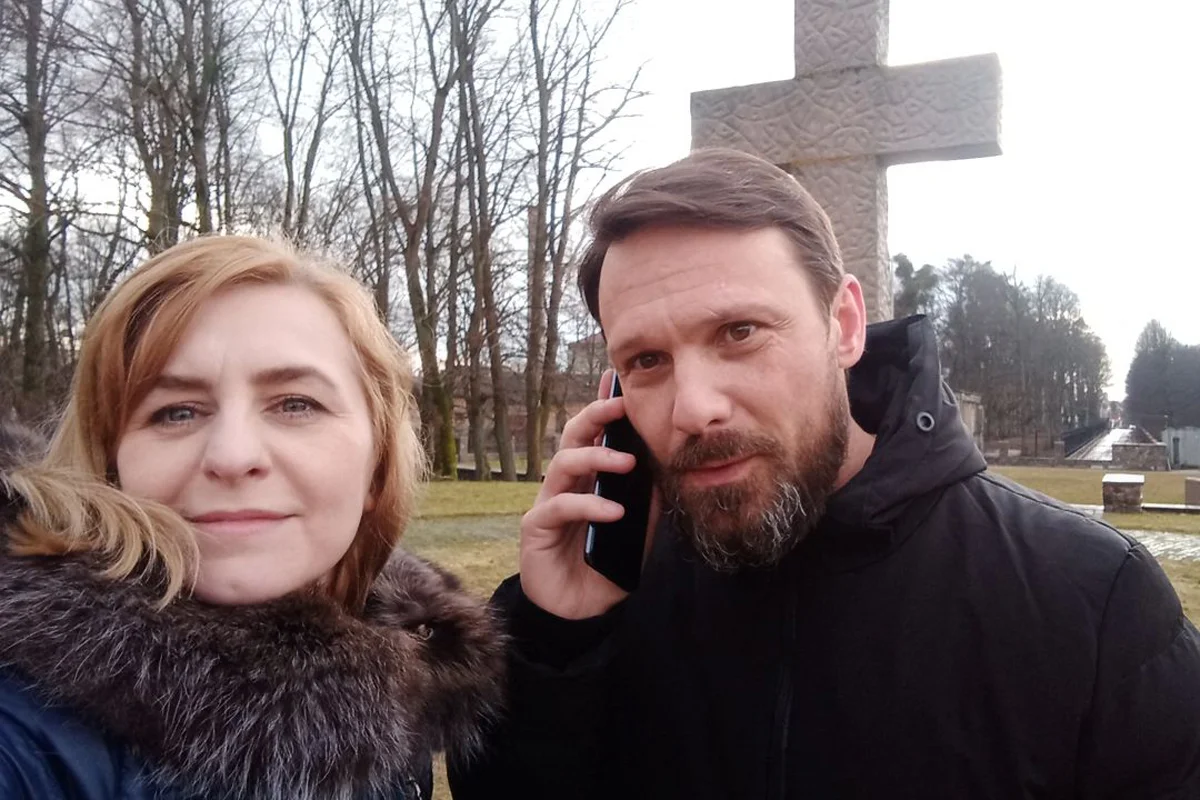
There is no person - no problem
The Russian Constitution forbids just to deprive the Russian citizen of a passport. It is written in black and white: "A citizen of the Russian Federation cannot be deprived of his citizenship or the right to change it." But in the case of Vyacheslav Popov, the situation is different. As it turns out, his citizenship is considered acquired, because he was born in the Belarusian SSR, had a Soviet passport, and after the collapse of the Soviet Union received the Russian one.
- Now we have a law on citizenship of 2023, and before that there was a law of 1992, and even earlier - the Law of the RSFSR of 1991. And there it was written that those who had at the time of the collapse of the Union were registered in Russia, they were considered citizens of Russia by birth. And those who did not have such registration could obtain Russian citizenship in the transition period, but this citizenship was considered acquired, ”says lawyer Valery Vetoshkina, who collaborates with the OVD-Info.
According to her, the deprivation of citizenship of the Russian Federation is a tool for pressure and intimidation.
- For political prisoners with acquired citizenship, this is especially dangerous: citizenships can be deprived, even if a person has been living in Russia for a long time. And this can be used as a secondary repression tool after a prison or even instead of it, ”the lawyer notes.
Thus, the state squeezes its citizens into a special category - Apatrides. This is the name of people who do not have citizenship of a single country.
- And this is a big problem. In general, countries around the world have agreed among themselves that they will strive to reduce the number of apatrides. And here we see the opposite tendency, ”says Vetoshkina.
- The state simply gets rid of those whom it considers disloyal. There is no person - there is no problem. And this is a violation of the International Convention , which prohibits a person with apatrid. And we ignore this requirement, do not understand whether a person has another citizenship. If earlier this happened to immigrants from Central Asia, who were condemned for Hizb Ut-Tahrir and other terrorist affairs, then after the start of a full-scale war this began to happen with Ukrainians, including the occupied territories. But not only. There were cases with those who moved to Russia and received citizenship, ”says Sergey Davidis, the project manager of the Politzer Politzer Memorial Center.
According to him, today human rights activists are aware of dozens of cases when people were deprived of acquired citizenship, primarily convicted of terrorist articles. Citizenship are deprived of automatically, the scheme has already been worked out.
- In fact, any person with acquired citizenship, who was not registered in Russia at the time of the collapse of the USSR, is under blow. And if the state for some reason considers it unlimited, which we see constantly, for example, the case with the leader of the Azerbaijani diaspora in Yekaterinburg, who was expelled overnight,-with such people it can easily be solved by depriving citizenship and expulsion of them from Russia, Davidis notes.
The notifications that people receive are usually indicated that citizenship is terminated. So it is written in the notification of Popov. However, this contradicts Article 6 of the Constitution of Russia, notes the famous Russian human rights activist, whose name we cannot be called for security reasons:
- Violation of the Constitution is an attempt on the constitutional system of Russia. They came up with the term “termination of citizenship” and insist that this is not a deprivation. But the termination of the state is deprivation.
We are trying to sue, so far without a positive result. According to the Constitution, "the rights and obligations of a citizen do not depend on the form of acquisition of citizenship." It states that a citizen cannot be deprived of citizenship regardless of how he acquired it. Therefore, they came up with this game of words.
The threat of national security
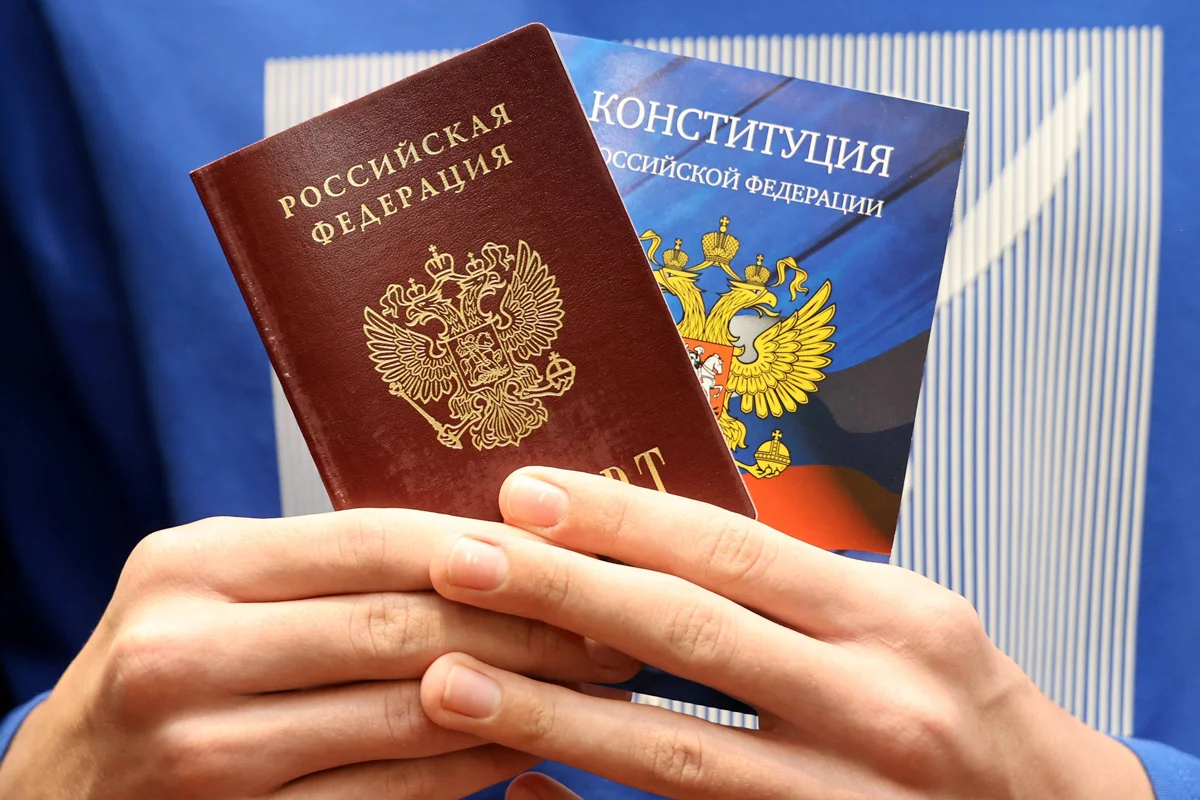
In the sixth article of the Constitution there is a reservation: citizenship (which a citizen seems to be impossible to deprive) is acquired and terminated in accordance with federal law. So back in 2017, a law was adopted on the deprivation of acquired citizenship of the Russian Federation convicts for terrorism and extremism. Then it remains almost unnoticed.
At the end of 2021, Vladimir Putin introduced amendments to the State Duma to the law “On Citizenship”. According to amendments, it became easier to obtain Russian citizenship. First of all, this concerned the former inhabitants of the USSR and their children, Russians abroad and people whose relatives once lived in modern Russia. In total more than 20 categories. The decisions on these issues were supposed to make the Ministry of Internal Affairs and the Ministry of Internal Affairs, and Putin himself could, in an exceptionally manner, to accept the veterans of the Second World War, persons who have special merits to Russia and valuable specialists. But the same amendments were offered to deprive the acquired citizenship for some serious crimes against the state and crimes related to drug trafficking.
After the start of the war, the bill was finalized , more and more repressive measures began to appear in it: they offered to deprive citizenship for receiving and giving a bribe (Articles 290 and 291 of the Criminal Code of the Russian Federation), robbery (161 of the Criminal Code of the Russian Federation), extortion (163 of the Criminal Code of the Russian Federation) and even hooliganism (213 of the Criminal Code of the Russian Federation). In the fall of 2022, an abuse of the flag (329 of the Criminal Code of the Russian Federation), the “discredit” of the army, “fakes” about the army (280.3 and 207.3 of the Criminal Code of the Russian Federation), and the implementation of the “unwanted” organization (284.1 of the Criminal Code of the Russian Federation), and desertion (338 of the Criminal Code of the Russian Federation) and other “actions that create a threat of national security” were added to an extensive list. It was emphasized that the fact of such actions will establish the FSB.
Finally, in the spring of 2023, the law, together with all innovations, was adopted by parliament and signed by Putin. In the fall of the same year, he entered into force.
The first precedents appeared only a few months later: in December 2023, in Moscow, on suspicion of drug trafficking, two natives of an unnamed country were detained , who also had passports of the Russian Federation. During the detention, they found 20 jackets of Mephedron, which takes place as “a large scale” (part 2 of article 228 of the Criminal Code of the Russian Federation). According to the security forces, both were convicted and first deprived of the citizenship, which they received earlier "in the manner prescribed by law."
July 17, 2025, the State Duma adopted a law that expands the list of articles even more for which the acquired citizenship of the Russian Federation is possible: there were 64 such crimes before, and soon there will be 81. Among them - murder, all kinds of depraved actions with minors (only eight articles, including the production of pornography), group rape, organization of illegal migration, as well as “any other crime, if it is“ any other committed by extremist motive or in order to justify terrorism or sabotage activity. ” So in one row “sexual intercourse with a child who has reached the age of 12”, and a post on social networks are put.
The idea was supported in the Ministry of Internal Affairs, the FSB and the Ministry of Justice, the State Duma vice speaker Irina Yarovaya said . She emphasized that the decisions will be made "regardless of the statute of limitations, regardless of the time for the sentence." Recently, the security forces actively use this option: in 2024, 1757 people were deprived of citizenship.
The first political
On July 8, 2025, the deprivation of citizenship for the threat of national security was announced by political strategist Dmitry Kisiev. In 2024, in the presidential election, he headed the headquarters of Boris Nadezhdin and is now cooperating with the New People party.
“On a warm and sunny Tomsk day, when I went to training, police officers approached me, detained“ on orientation ”. Delivered to the department. An employee in Balaklava enters. Provides a conclusion. I am deprived of Russian citizenship on the basis that I negatively affect the political and social stability of society. I create a threat to national security, ”Kisiev wrote .
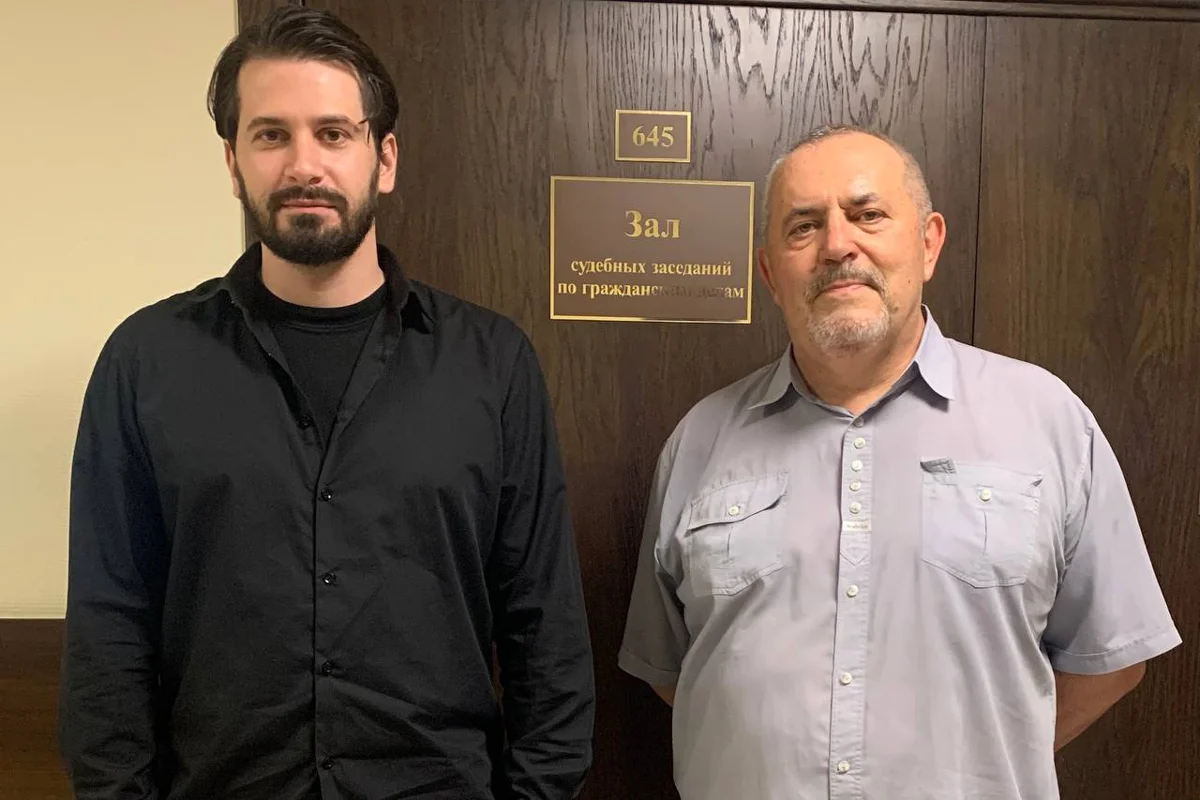
Kisiev - a native of Dzhankoy and received Russian citizenship in 2014, after the annexation of Crimea.
“No matter how anyone treats the Crimean referendum of 2014, there is an indisputable fact: Russia has joined this territory for itself. But now the people who lived there can simply be excluded, because their citizenship is not by birth right, but acquired, as in my case. This is the division of people into two categories of citizens: those who received a passport by birth right, and those who purchased it. The second is always under threat. I got into the second category, and now they can deport me from the country where I have a family, friends and real estate. Someone may say: “So he needs, he does not agree with the policy of the state.” But today you agree, and tomorrow you can be in my place. No one is safe, ”Kisiev wrote.
According to him, in this way, the authorities want to deprive him of the opportunity to engage in politics and squeeze out of the country. A notification of deprivation of citizenship came right now, when a political strategist plans to participate in the election campaign in the State Duma.
Boris Nadezhdin supported Kisiev and called the deprivation of his passport with a dangerous precedent. Now, in his opinion , “anyone who has received Russia's citizenship in recognition, like Dmitry, can be deprived of citizenship.
And the majority of such people in Russia: everyone who lived in Russia at the time of the collapse of the USSR received Russian citizenship in the order of recognition. ”
Similar stories occurred earlier: in the fall of 2023, an unnamed resident of Kamchatka, a native of Ukraine, was convicted of “calls for extremism” and deprived of Russian citizenship. According to investigators, he "committed a crime", because he "did not agree with the foreign and domestic policy of Russia."
Well, the first Russian who remained without a passport for the distribution of fakes about the Russian army, in March last year was a native of Moldova Alexander Somryakov.
Second -grade citizens
Ecocactivist Arshak Makichyan, his father and two brothers were deprived of Russian citizenship in 2022. Makichyan's parents moved from Armenia to Russia in 1995. In 2002, the father of Arshak received citizenship of the Russian Federation: he was given a passport as a former citizen of the USSR living in Russia. In 2004, on the basis of his statement, his children received citizenship of the Russian Federation.
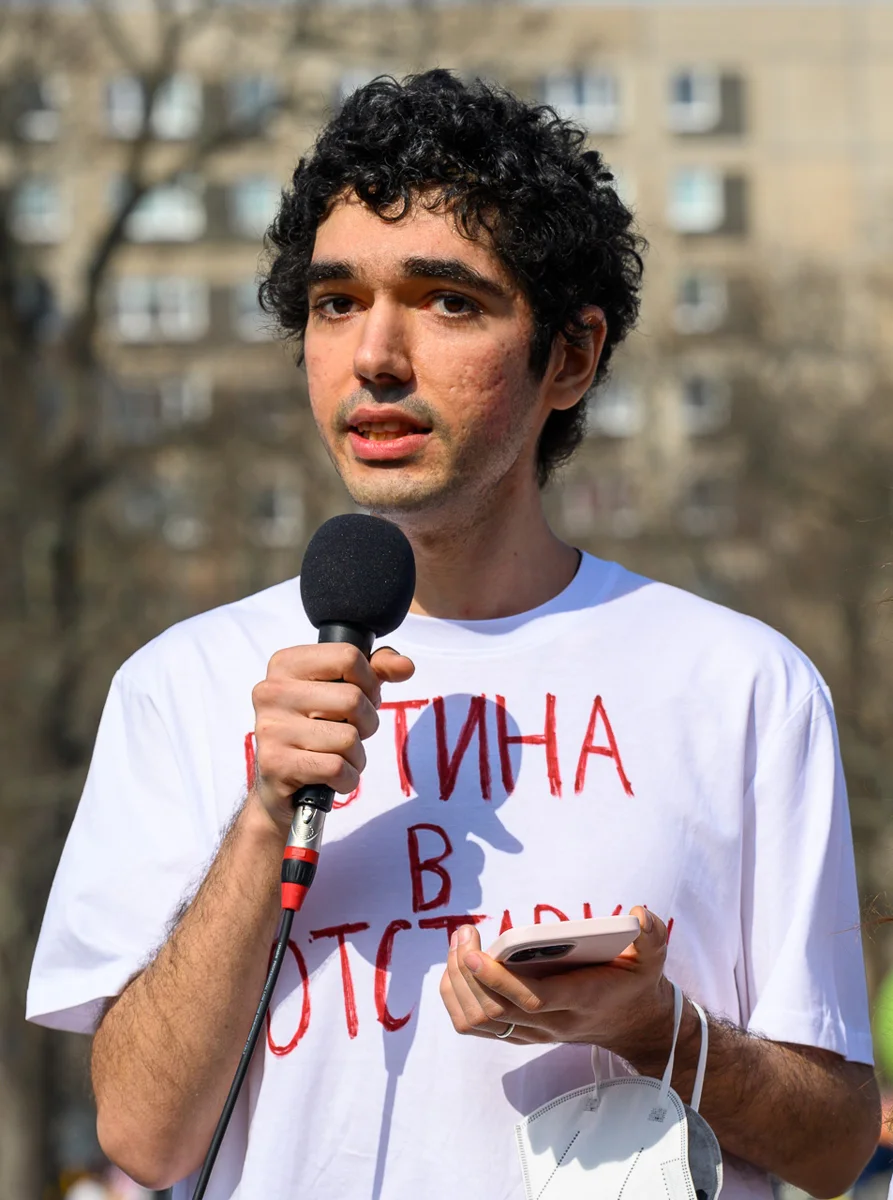
And in 2021, the Ministry of Internal Affairs consulted that the passport of Arshak's father was issued in violation of the internal routine. At the same time, the Ministry of Internal Affairs could not provide the court, because they were lost. But the court sided with the Ministry of Internal Affairs, ignoring the fact that over the years of life in Russia, the state has repeatedly double -checked the status of the Makichyan family and gave them a total of more than ten passports.
In 2022, Russian citizenship of all Makichyan family members was canceled. At that time, none of them had other citizenship.
As Arshak told Novaya Gazeta Europe, he himself was in Germany at that time, also outside Russia there was one of his two brothers. The father and younger brother of Arshak remained in Moscow.
- My younger brother was born in Moscow, my father at that time lived there for 27 years. For the family, it was a big shock, it was a very difficult situation. It was blackmail and pressure through the family. They had nothing to do with my activism and my political activity, I tried not to discuss this topic with them at all. We began to sue, and while the courts were going, the father managed to obtain Armenia citizenship, and the younger brother did not have citizenship. We lost the courts of the first and second instance, and our father and brother were given three days to leave. They also banned the entrance to Russia for 50 years. The father then drove through the Armenian passport to Armenia, and the Ephesus Beshniki himself brought his younger brother to the airport and said that he left Russia until midnight, ”recalls Arshak.
Любопытен тот факт, что, хотя брат Аршака родился в России, его гражданство всё равно посчитали приобретенным. Сам активист считает, что его дело было политически мотивированным.
— В 2022 году я собирался баллотироваться на выборы в Госдуму, у меня были договоренности с «Яблоком», но меня не выдвинули. Как мне потом сказал председатель партии, они там с кем-то поговорили, и им пригрозили, что если они меня выдвинут, то меня лишат гражданства. Потом, когда я уже был в Германии, я активно высказывался против войны. И тогда началось это дело. Подобные дела делят людей на граждан первого и второго сорта, это расизм на государственном уровне. Сейчас таких дел много, и процессуально лишить человека гражданства довольно просто, — рассказывает Макичян.
В 2024 году он получил гражданство Армении. Про российское гражданство он пока не вспоминает.
— Я не могу вернуться в нынешнюю Россию, там меня арестуют. Там сейчас такая ситуация, что в любой момент могут прийти к каждому человеку, если ты гражданин второго сорта. Мы, представители других национальностей, не можем чувствовать себя полноценными гражданами. Если по национальному признаку начинают проводить репрессии, ты можешь не заниматься активизмом, но тебя всё равно поймают и просто депортируют. И, конечно, ты не имеешь права участвовать в политике. Есть такое общественное мнение: если ты не русский, ты должен сидеть молчать или уезжать к себе на родину, — говорит активист.
По его словам, спецдокладчица ООН Мэри Лоулор отправляла запрос в правительство России по преследованию семьи Макичян, но ей не ответили.
Как избавляться от «псевдограждан»
В августе 2024 года власти приняли очередные поправки, на этот раз решили взяться за уклонистов. Согласно закону «О воинской обязанности», мужчины обязаны явиться в военкомат в течение двух недель после получения гражданства. По мнению законотворцев, неисполнение этих требований автоматически означает уклонение от службы и неисполнение Конституции. Не желающих служить в армии «новых россиян» стали активно искать и лишать паспортов.
Одним из таких стал врач-реаниматолог Мирзомухаммад Каримов из Красноярска. Как пишет «Новое время», в 2023 году отдел кадров больницы потребовал от Каримова встать на воинский учет, он получил повестку, но не пришел, сославшись на то, что не успел подготовить часть анализов. Пройти медкомиссию Каримов так и не смог: утверждает, что сначала заболел его ребенок, а потом и он сам. По достижении 27 лет мужчина вполне ожидаемо решил, что больше не обязан отчитываться перед военкоматом. Однако против Каримова завели уголовное дело по статье об уклонении от службы (328 УК РФ), признали виновным, оштрафовали на 60 тысяч рублей, лишили гражданства и пообещали выдворить из России.
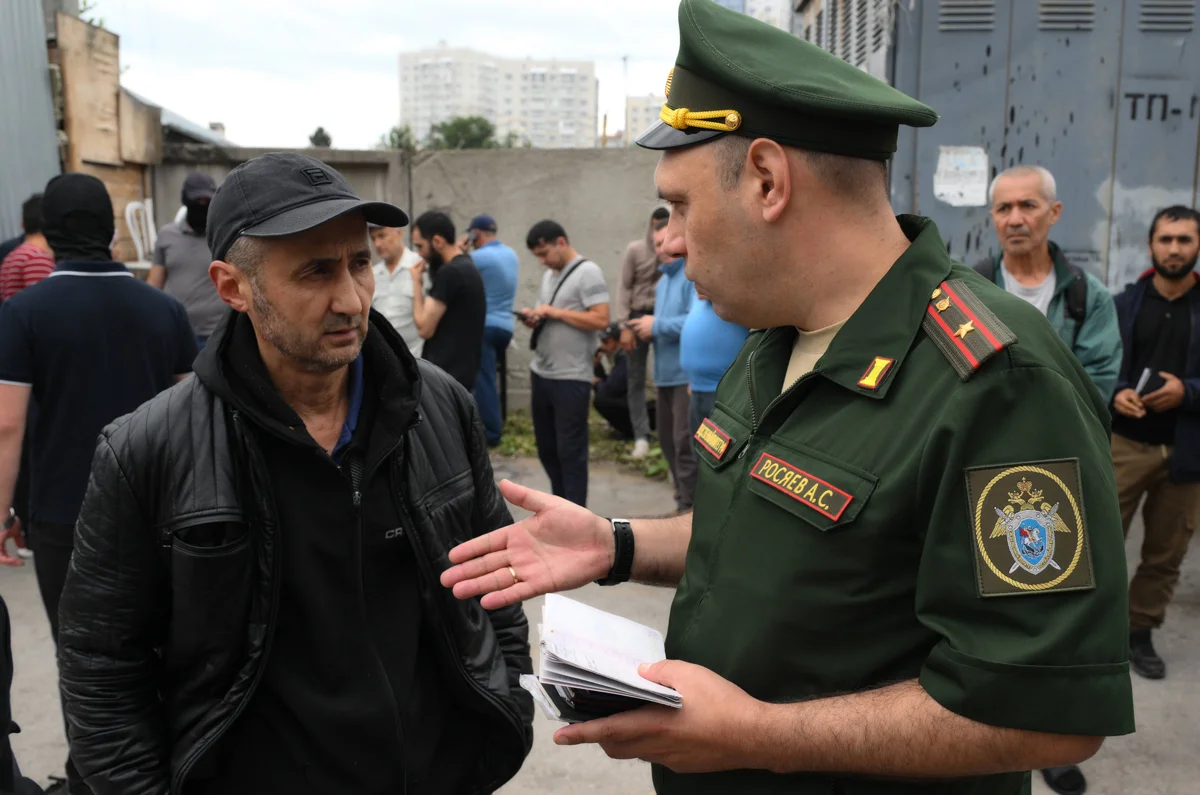
Сам красноярец при этом заявил журналистам, что никуда уезжать не собирается: «То, что у меня забрали паспорт, это не означает, что меня выдворяют и что я не могу снова зайти и на территории России быть. У меня второй паспорт есть. У меня двойное гражданство. Я сейчас живу по этому паспорту».
Начиная с 2022 года все подобные инициативы активно поддерживал спикер Госдумы Вячеслав Володин. Во время принятия очередных поправок он заявил, что от «псевдограждан», которые не хотят защищать новую родину, нужно избавляться: «Мы приняли норму закона, что тот, кто получает гражданство, должен вначале встать на воинский учет, принести присягу. И сразу стало ясно, что не все хотят Россию защищать. <...> Норма, которую депутаты предложили, сейчас позволяет от таких псевдограждан избавляться, и нам надо дальше продолжать эту работу».
Как сообщили «Важные истории», к лету 2025 года таких «псевдограждан» набралось как минимум две сотни. Всего 214 человек лишили гражданства из-за неисполнения обязательства по постановке на учет в военкомате.
Лидирует Москва: более семидесяти таких случаев. «Вероятно, это связано с масштабом силовых рейдов против мигрантов в городе», — считают журналисты.
Ни уехать, ни остаться
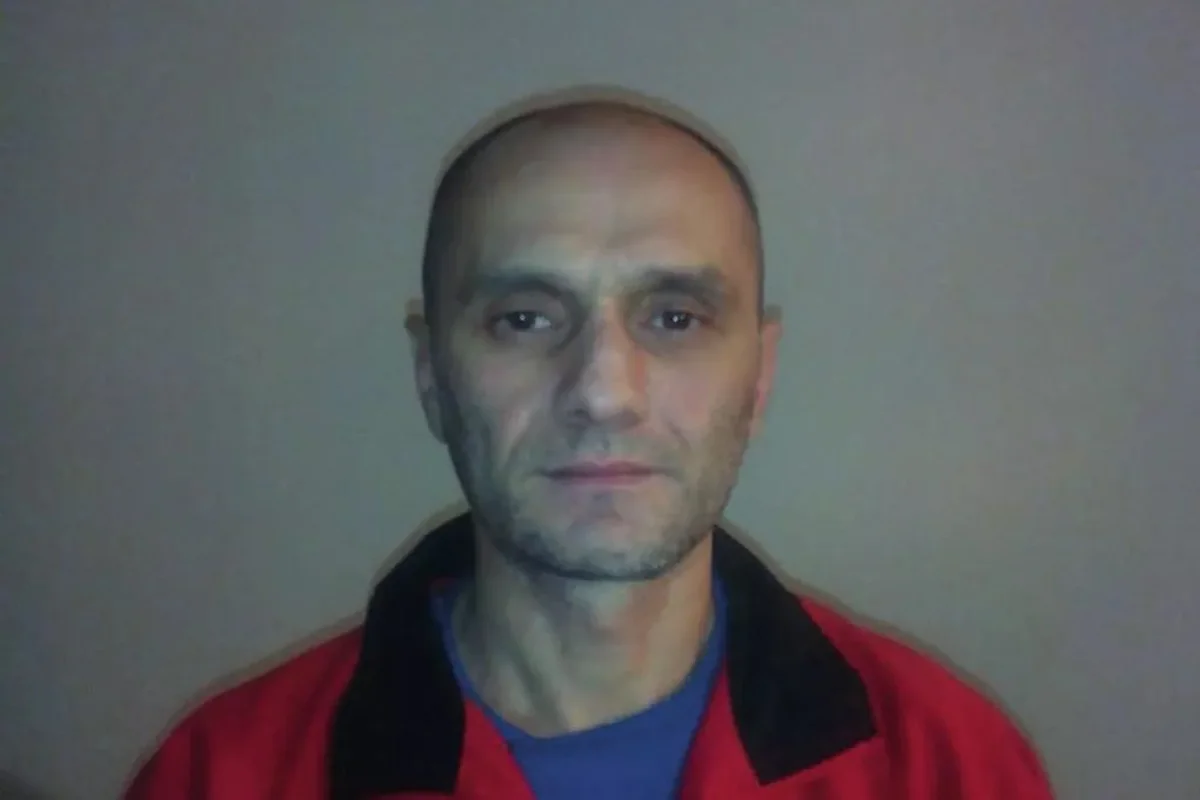
Жизнь апатрида непроста. Без паспорта в России сложно устроиться на работу, нельзя получить бесплатную медицинскую помощь, образование, недоступны регистрация брака, аренда жилья, получение водительских прав, регистрация новорожденных. Люди без гражданства часто оказываются в Центрах временного содержания иностранных граждан, это фактически особые тюрьмы, где можно провести до двух лет. В таком центре несколько лет провел , в частности, апатрид Ноэ Мсхиладзе.
Уроженец Грузии был неоднократно судим в Петербурге за совершение преступлений. В 2014 году российские власти приняли решение о его депортации, однако грузинская сторона отказалась принимать его, так как у Мсхиладзе нет гражданства Грузии. В 2017 году он обратился в Конституционный суд, оспаривая свое нахождение в Центре временного содержания иностранцев, и суд подтвердил , что длительное содержание под стражей апатридов противоречит Конституции РФ.
И с августа 2021 года власти России стали выдавать лицам без гражданства временные удостоверения личности сроком на десять лет. Такое удостоверение дает право проживать в России, но не предоставляет тех прав, которые есть у граждан, например, участвовать в выборах, занимать госдолжности, отмечают юристы «Первого отдела».
— С 2002 года мы твердили о необходимости давать временное удостоверение лицам без гражданства. В 2017-м по делу Ноэ Мсхиладзе этого потребовал Конституционный суд. И только в 2021 году разработали форму. Теперь такой документ появился. Его дают на десять лет. За это время надо получить вид на жительство или гражданство. Дело идет со скрипом, но всё же это большое достижение, — говорит российский правозащитник, имя которого мы не можем назвать по соображениям безопасности.
Тем же осужденным, у кого есть второе гражданство, в течение короткого срока после освобождения из мест лишения свободы придется покинуть страну. Хотя для выходцев из Средней Азии, осужденных за принадлежность к мусульманским организациям, возвращение домой будет опасным, потому что, скорей всего, они преследуются и у себя на родине, говорит Сергей Давидис.
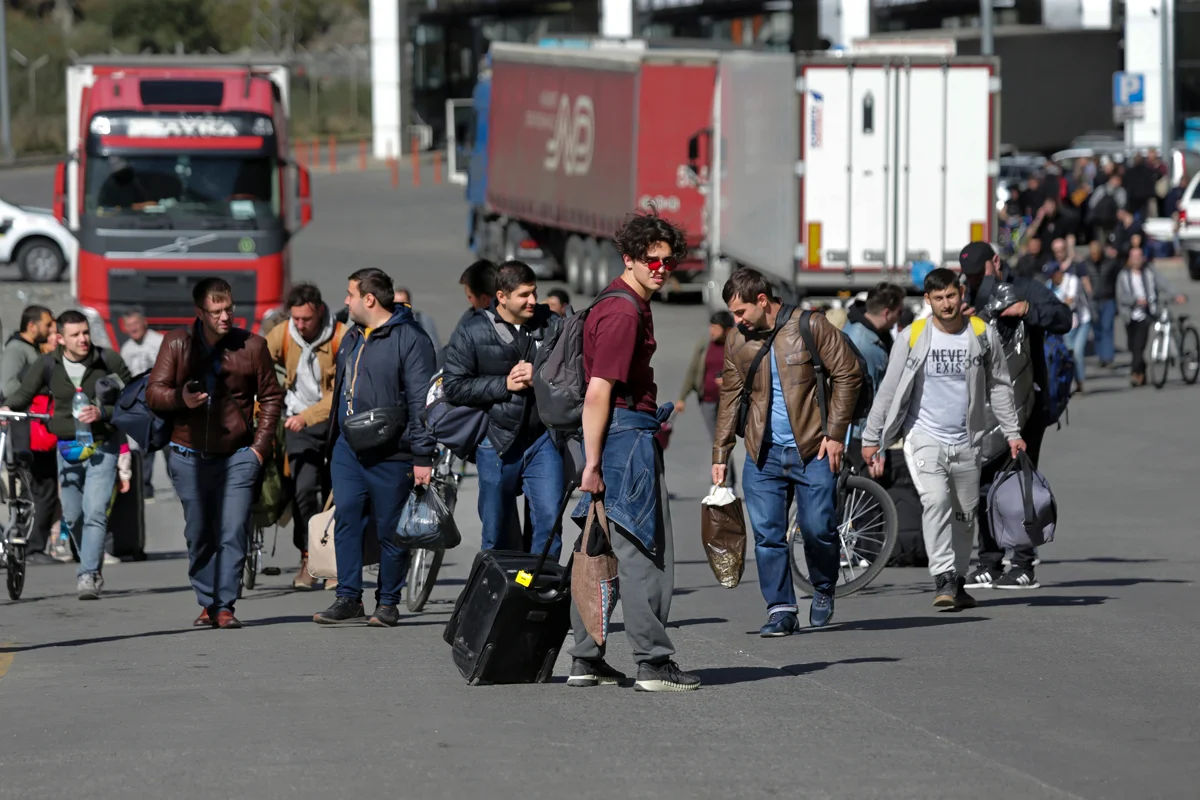
Но и уехать из России не всегда просто. И пример тому — ситуация с украинцами, которые сейчас находятся на границе с Грузией. Среди них есть как бывшие заключенные, отбывшие наказание в России, так и депортированные с оккупированных территорий за отказ получать российский паспорт или сотрудничать с местной властью. На погранпереходе Верхний Ларс находятся около 90 человек, без воды и нормальных условий содержания. Однако Грузия отказывается принимать их, «так как они совершили преступления». Но из 90 застрявших на границе около 20% — это люди, которые не имеют никаких судимостей. Ранее впустить их отказалась Молдова.
Следующие — нелояльные граждане по рождению
По словам Давидиса, можно прогнозировать, что случаев лишения россиян гражданства будет только больше. И он не исключает, что в будущем власти России придумают схему, как лишать и гражданства, приобретенного по рождению.
— Тренды, к сожалению, в плохую сторону. Я думаю, у них есть очень большое желание лишить гражданства тех людей, против которых они заочно возбуждают уголовные дела, — находящихся за границей граждан РФ с гражданством по рождению. Конституция это прямо запрещает. Но им очень этого хочется. Не хочется им подсказывать, но, например, следующим этапом они могут любого человека старше 32 лет лишать гражданства, потому что он родился не в России, а в СССР. В отношении же тех, кто родился в России, пока непонятно, какую юридическую уловку могут придумать. Но я думаю, что тут есть еще время. Очевидно, что желание у них такое есть: всех людей, которые не лояльны, они пытаются уязвить всеми возможными способами, — отмечает правозащитник.
Мысль о том, чтобы лишать документов «коренных» россиян, неоднократно посещала отечественных законотворцев. Так, в апреле 2022 года Володин, главный критик «уехавших негодяев», предложил отбирать паспорта у тех, кто «не поддерживает СВО» и делает критические заявления «за печеньки Госдепа». В пример он привел бывшую сотрудницу «Первого канала» Марину Овсянникову, которая публично выступила против войны. «К сожалению, для таких “граждан РФ” нет процедуры лишения гражданства и запрета на въезд в нашу страну. Но, наверно, это было бы правильно», — пожаловался председатель Госдумы.
Вслед за Володиным одиозный депутат Султан Хамзаев призвал лишать гражданства тех, кто получил паспорта в других странах и «дискредитировал» российскую армию, но не понес наказания: «Нам необходимо разработать процедуру отзыва гражданства для тех критиканов, кто получили гражданства иных государств», — заявил Хамзаев.
Летом 2023 года группа крымских сенаторов уже предложила это всерьез, но идею завернул комитет Госдумы по государственному строительству. Как рассказал «Новой газете Европа» эксперт в области миграционного законодательства, в будущем лишить гражданства могут любого, а сейчас для этого «готовят почву»:
— Технически все нововведения касаются людей, приобретших гражданство, включая русских по национальности.
То есть национальность не важна, важен тот факт, что после развала СССР и создания РФ люди были гражданами другого государства, а потом уже получили гражданство РФ.
Дело в том, что государственные органы понимают гражданство как договор, считает эксперт:
— И хотя шестая статья Конституции говорит о том, что гражданства не могут лишить, всё наше законодательство понимает его не как неотъемлемое право, а как договорные отношения государства с гражданином, которые могут быть аннулированы государством в одностороннем порядке. По крайней мере именно так Конституционный суд трактует шестую статью. По этой причине все новые основания (а их за время войны уже стало несколько десятков) могут быть применены ко всем без исключения гражданам РФ, — говорит эксперт.
При участии Павла Кузнецова