
Translated material
Ordinary good
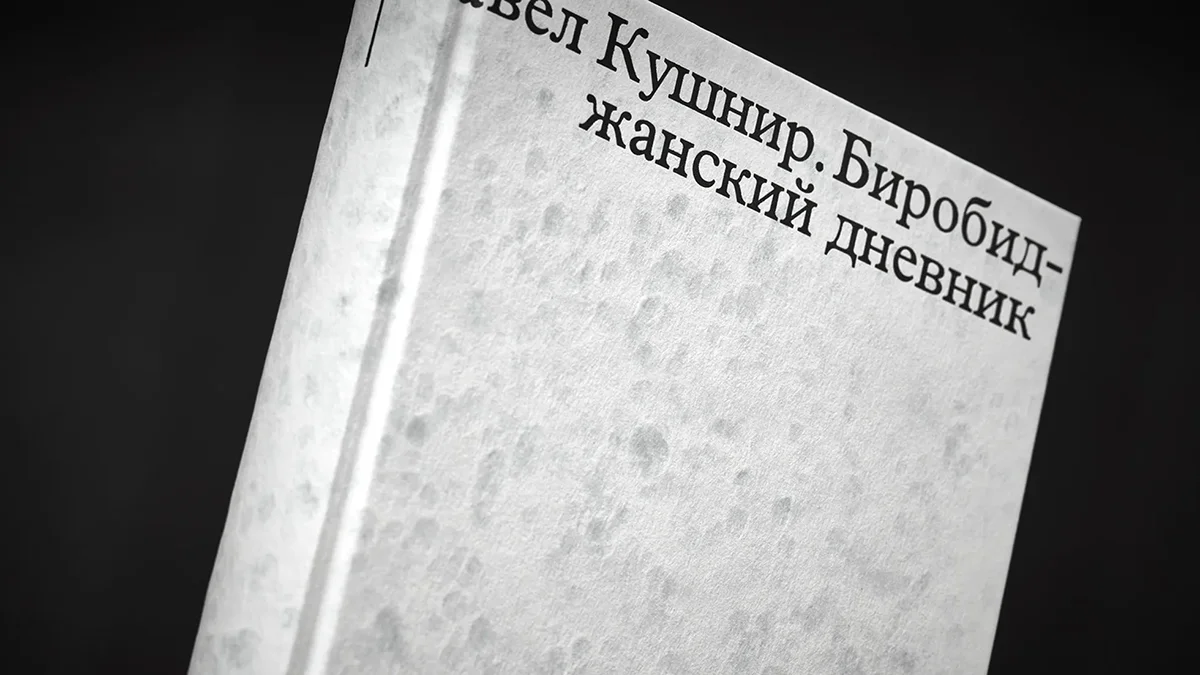
A year after the death of Pavel Kushnir, his Birobidzhan Diary came out. This is a bitter book about the experience of living hopelessness during the war
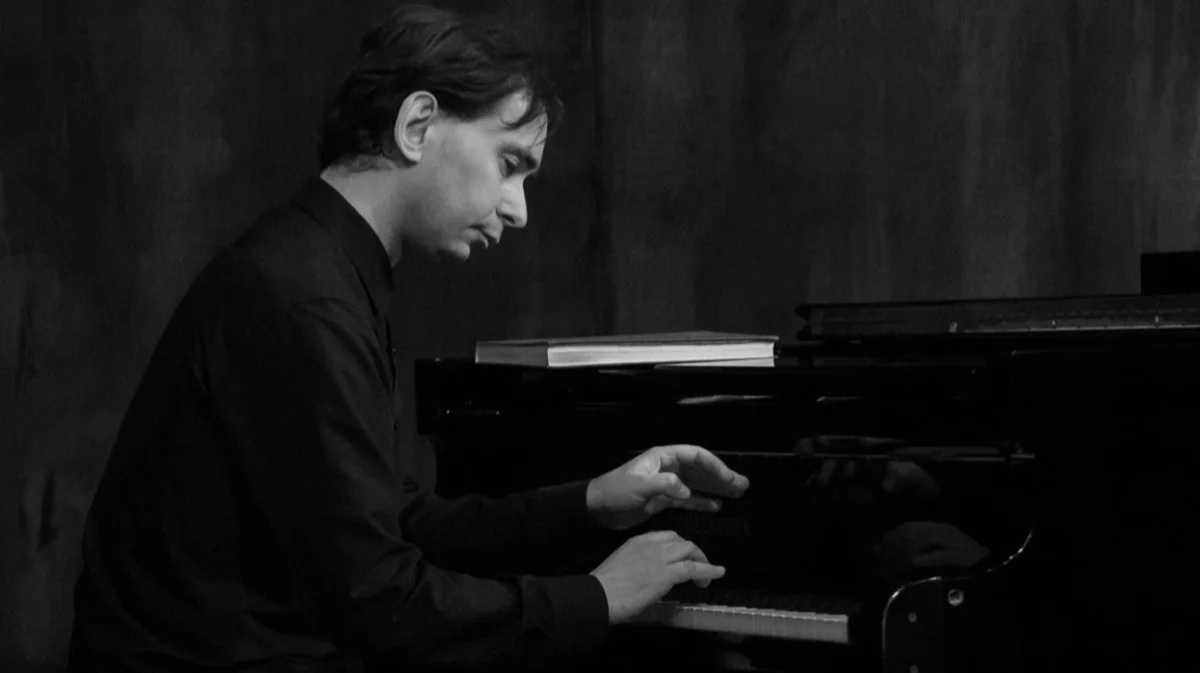
Photo: Pavel Kushnir's memory community in VKontakte
On July 27, 2024, 39-year-old Pavel Kushnir, pianist, composer and writer died in the Birobidzhan pre-trial detention center. He was placed in jail for the anti-war videos, which he posted in his own Utube Canal “Ino-Agent Mulder”. Five people were signed on him. After his death, they learned about Paise Kushnir throughout the world: today he is dedicated to concerts, articles, performances, books. In July 2025, director and producer Roma Liberov, together with entrepreneur Eduard Panteleev, established a Kushnir charitable scholarship in London, and his book Birobidzhansky Diary was published in Medusa (you can read about the history of the publication here). Semen Vladimirov says about this book and how the text began to oppose the war.
“Alaska is Russia, and Russia is death,” Kushnir writes under the impression of a film about an American tourist who died in Alaska. He writes this in December 2022, in Birobidzhan there are more than minus twenty, the “partial” mobilization has been going on for three months, and the musician seems that his efforts to combat state propaganda have failed. The leaflets thrown into the mailboxes and the posters glued to the benches do not cause a tangible wave of solidarity. His fiery speeches on the YouTube Canal “Ino-Agent Mulder” watch no more than ten people (later the videos will be the reason to institute criminal proceedings against the musician under the article on public calls for the implementation of terrorist activities-part 2 of Article 205.2 of the Criminal Code). But despite his despair, he is not going to give up: in one of the videos he recalls “1984” and how the most terrible sin of the main characters was to betray a friend of a friend, and hence themselves. You cannot betray an idea: it is everything that you have.
Writing about a person who became known as a writer only after death is a little strange. In the end, Kushnira was more known as a musician: a graduate of the Moscow Conservatory, worked in the Philharmonics of Kursk and Kurgan, and was also a concertmaster at the Tambov State Musical and Pedagogical Institute. In 2023, he became the soloist of the Birobidzhan Regional Philharmonic. His program “Mazurki on Wednesdays” was listened to on the regional radio. That is, Kushnir had a successful career, by the standards of a career in modern Russian classical music. But there was also the reverse side - what was disgusting to him: the passivity of his colleagues in the Philharmonic, reconciliation with the reality where the country is waging a war, and the city where it works supposedly beats records for mobilization. He describes all this in his diary. Kushnir, paraphrasing Whitman, is huge, he contains many: a talented pianist, an artist, and a wonderful writer. Only literature does he need for a specific goal: not for self -realization, but for expressing protest and despair.
“In the Bryansk region, the detonation of the railway track
*Olya Shkkrygunova sent short hello,
In response, I posted a whole story about
their actions in the genre of visual agitation*
*did not post but wrote in e -mail, I
I don't think anything already*
*In response, Olya writes to me in German,
that everyone dies alone:
"Jeder stirbt für sich allein"*
If this is the case, then people usually kill together. ”
The culture is promoted by the duccues, and the anti -fascist evening in the library is conducted by the fascist (supporter of the war and Putin) - the diaries of Kushnir are full of such a sad irony.
It is clear that the Birobidzhan Diary is a difficult text. Observations of nature, for example, the beauty of the lunar eclipse, are interspersed here with complaints of loneliness and attempts to work out a trauma to relationships with parents (“the first executioner was the one who had parents,” “fascism begins with the family”). Kushnir, like any political prisoner, was not a saint, but this makes the text alive. For all the filling of literary allusions - from ancient authors to Baudelaire and the poet Vasily Borodin, who died in 2021, does not create an impression of Kushnir as a high -column of an essayist. He even seems to be some kind of ... ordinary. He curses, does not hesitate to write about binge, dreams of a lover who remained in the past and looks at local girls. Yes, he can alone play all the fugues of Rachmaninov in one concert and brilliantly sorting out the strokes of Chopin, but he still considers Kurt Cobain and Yanka Diaghilev, like a teenager-uniform. Yes, the list of its main films is respectful, there are a lot of arthausal cinema and classics of cinema, but many of these films have long become the mainstream: “Assa”, “Seven Samurai”, “Capturing the Waves”, “Mektub, My Love”, Tarkovsky’s films.
This all does not reduce the feat of Kushnir, but, on the contrary, makes it even more important in the context of the Russian opposition from the war: even an ordinary person can find the strength to oppose the Putin’s “Svo” and dictatorship, simply scattering leaflets or recording videos on YouTube. What failed Kushnir is his negligence.
But, given the suicidal thoughts and now and then the flickering idea of self -immolation, it can be assumed that it was more important to sound for Kushnir as louder than security reasons.
The literature, which became a refuge for him, was clearly not enough (the grand novel by Kushnir “Noel”, dedicated to the left -winged terrorist Ulrika Minhof and written by a dozen different languages, has not yet been published).
The texts of Kushnir also make an interesting method of slices. He was invented by the Romanian science writer Tristan Tzara and was popularized by the famous Beitnik William Burrose, known from the novel Naked Breakfast. The bottom line is that the author cuts quotes from other texts and mixes them with each other, inserting them into his own manuscript. Thus, a new meaning is born from the mixing of the finished.
For example, in the novel “Russian Cutting”, Kushnir mixed the texts of fourteen Soviet novels about the war. The result was a picture of a meaningless massacre. For Kushnir, the “string” method seemed an ideal way to write about reality in the era of social networks. Say, there is so much information, it is so fragmentary and contradictory that the best way to interact with it is to mix and watch what will happen. However, reading the chapter in the “Russian cutting” about a family who hurries out of the city against the backdrop of the news about the war, it is difficult to resist the idea that the texts of Kushnir best reflect the realities of the current Russian-Ukrainian war, where the facts are difficult to distinguish from fakes, and cultural ties are destroyed, like dozens of Ukrainian cities.
Perhaps the main thing in the Birobidzhan Diary is a sense of inconsistency.
The text itself does not seem to withstand what is happening in it. The tongue is thickened from cultural allusions, then scatters in scraps of thoughts.
The protest is declared, but not decorated. The literature works, but does not save. Music goes into the shadow. It is as if he is always looking for a suitable key - to himself, to reality, to the reader - and does not find it.
Susan Sontag wrote that the intellectual is a fugitive from experience. Kushnir did not run. His diary is not a confession or a manifesto, but a form to stay inside what is happening, when all the usual means of self -preservation - humor, distance, and aesthetic pose - no longer help. He was verbose, vulnerable, stuffy in places. But this is what makes the text alive. Because behind all quotes, slices, reminiscences, the main thing is visible: he did not want to leave in silence. And he left a book in which - with all its irregularities - an experience that is not laid out on the shelves, but lived to the end, sounds.