
Translated material
"City of lost children"
As in Yerevan, the Artsak literary club arose - a space where Russian -speaking authors work with memory, pain and present. Interviews of the participants of "Artsaka" among themselves

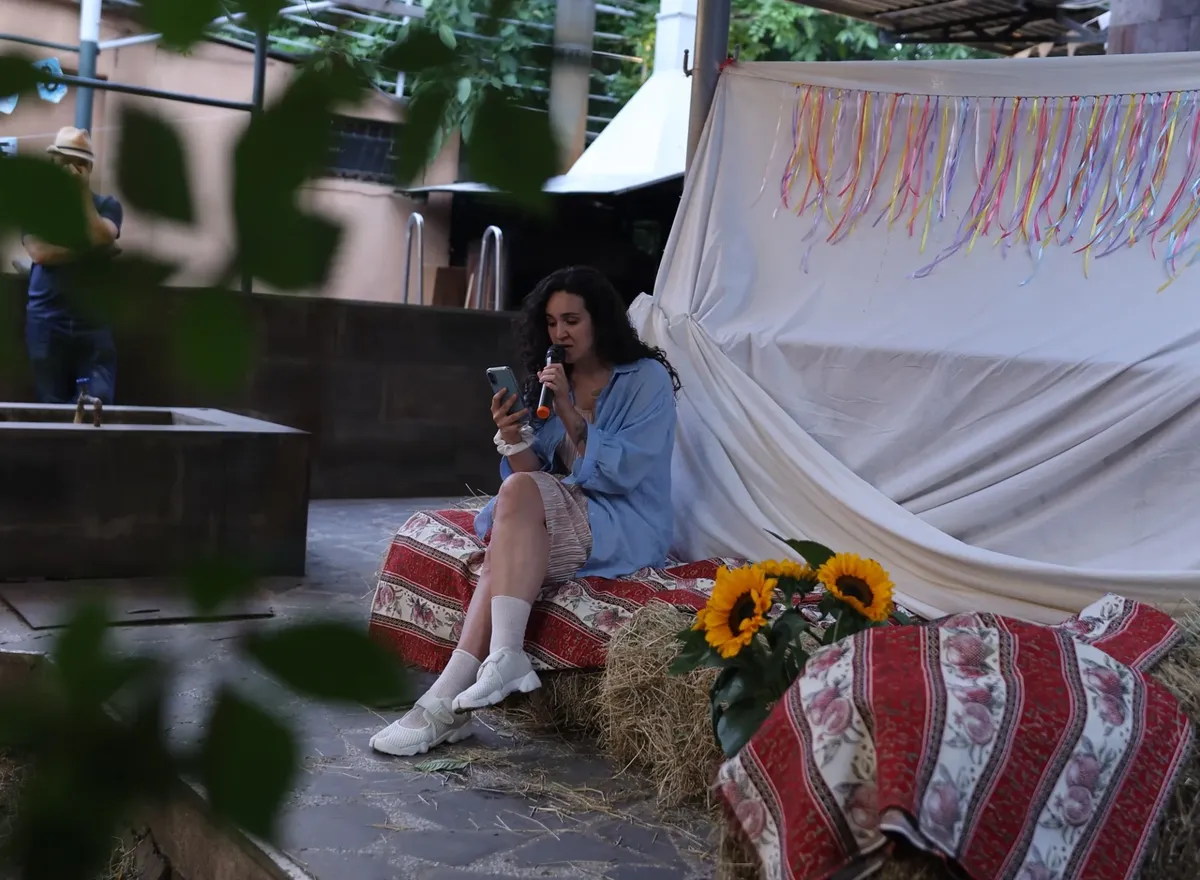
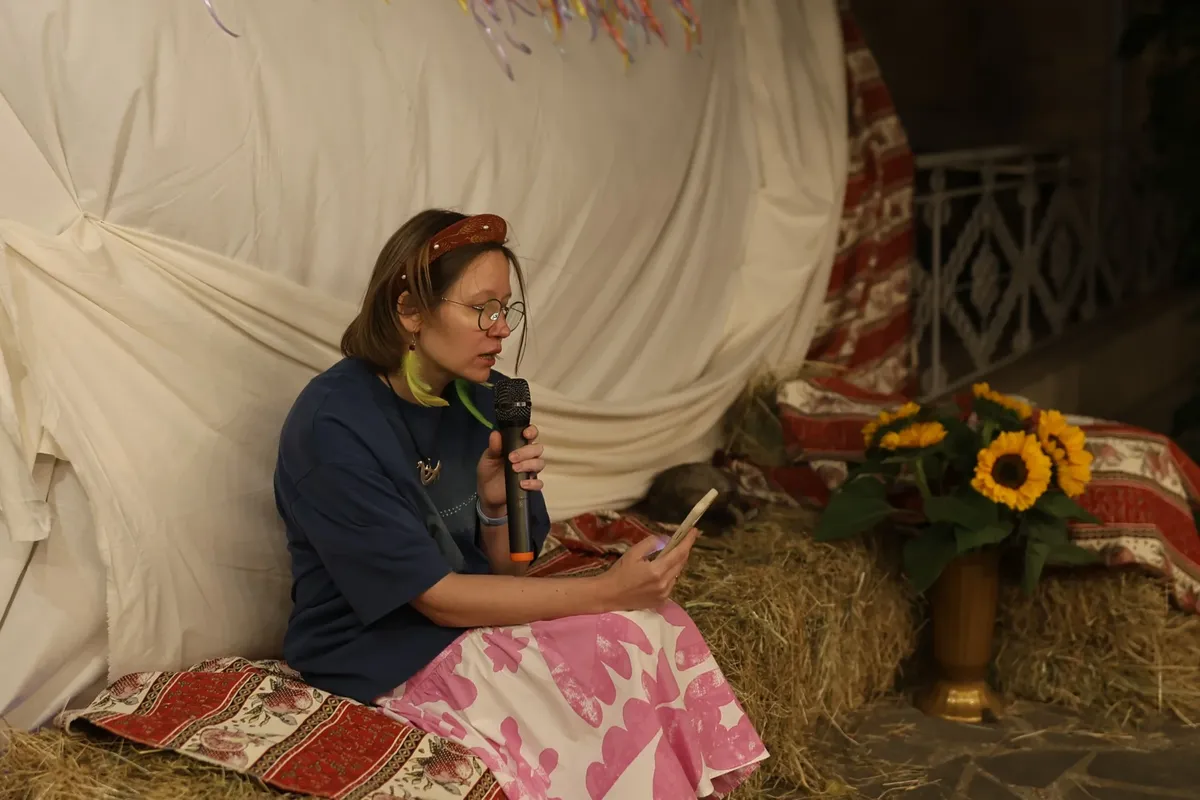
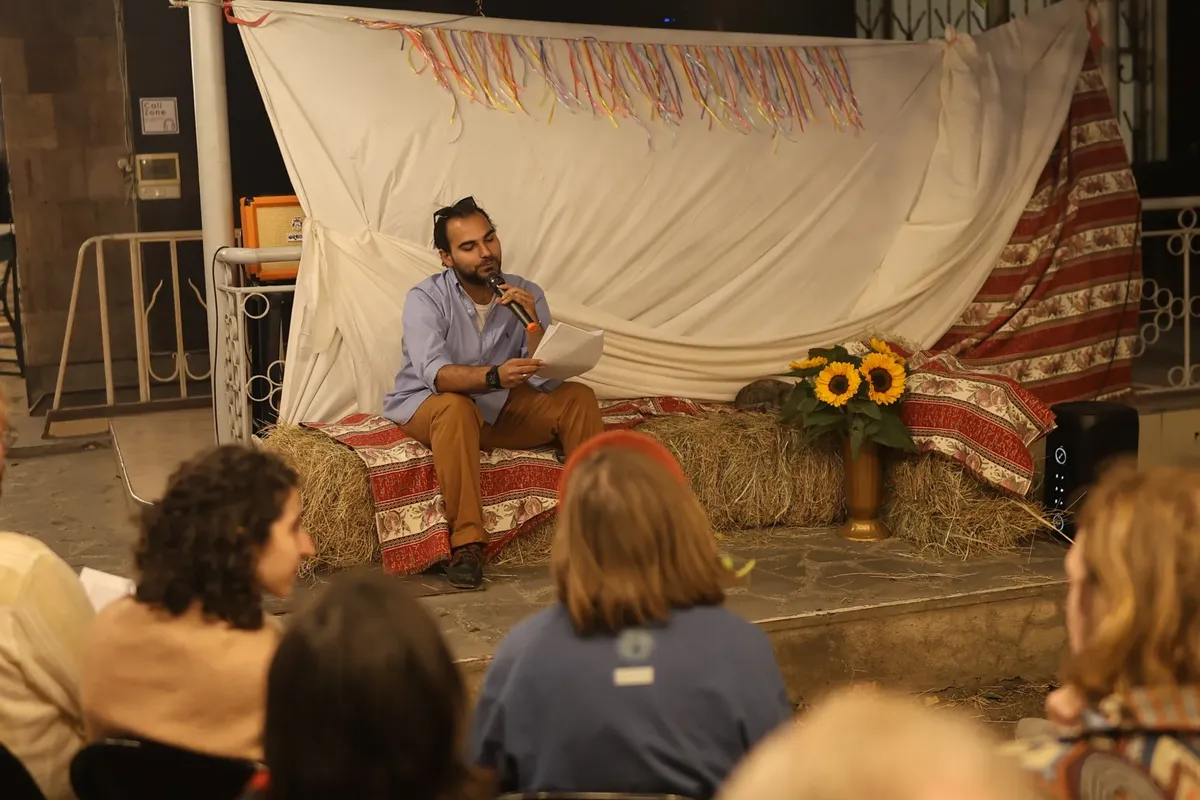
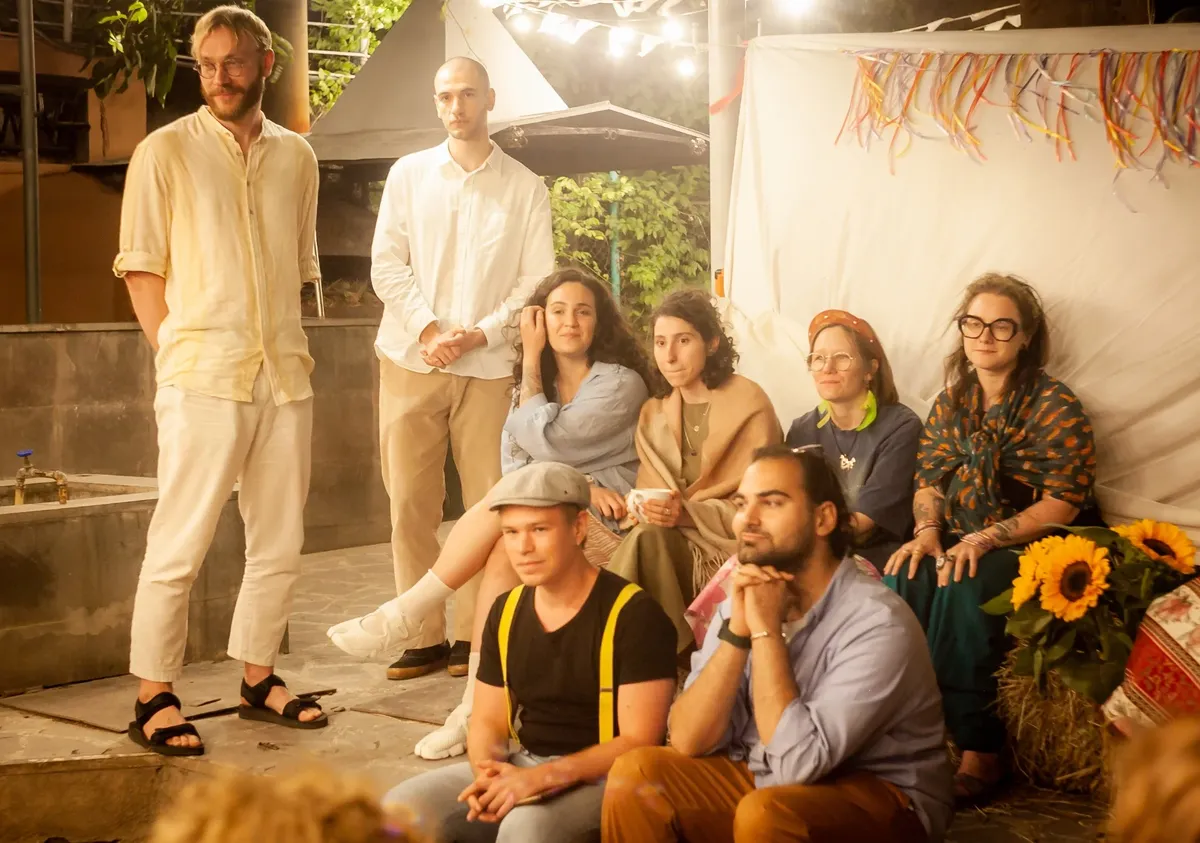
Spectators on the first reading of young writers of the Artsak club in Letters & Numbers. Photo: Armen Interluman
Writing club "կ | Artsak ”(Arm.“ Prose ”) is an association of young authors living in Yerevan. The club was organized by writers from Russia Sasha Bazhenova-Sorokina and Olya Aristova, Alisa Osipyan was the third organizer. During these months, the composition of the participants has changed, someone left, someone came. Among the club members are both published and novice authors. During this time, the club spent several public readers and became part of the literary life of the city.
Alice - one of the organizers of the club, Vigen - joined the club after the first public reading. We - Alice and Vigen - decided to talk about how the community was created, how our letter is changing and why exactly Yerevan became the place where it became possible.
- Alice, do you remember the concert of Zemfira* in July?
- Yes. I remembered the line: "Do not be stupid, I did not declare war." And Zemfira said: "How did it happen that I have never been here." And I thought that I could not imagine that someday she would come here. Not at the age of 12, when she walked with the best friend on the Molokan kindergarten and sang “blues”, not when at 16, flying away from Yerevan to Moscow “forever”, turned on the “plane”.
- And what has changed since then?
- Many things. The city has changed a lot in recent years. I did not think that Elena Kostyleva would read poetry in Mamajan, and in the Common Ground I would meet Mikhail Aizenberg. I didn’t think that Leah Akhedzhakova would come here, and most importantly - that two full halls would gather for the performance according to the book of Olga Tokarchuk. In 2010, I did not know either “Moscow time” or feminist poetry. And it seemed that nobody also knew about it.
- And now every Sunday you go to the writer's club.
- Can you believe it? And I rejoice at the very fact of the presence of such people in my city, from which you can collect a whole writer's club. Recently I read that the members of the Gumilyovsky “workshop” were also gathering - they read poetry to each other, discussed in a circle.
- But we are not the Gumilev "workshop". And not even futurists.
- Yes, I least would like to compare myself with a particular grouping of the past. It seems to me that the “Artsak” appeared, including so that we, young writers in emigration, cease to focus on the past. Or maybe they even got rid of resentification and seductive comparisons with Ivan Bunin.
- Why was Artsak created at all?
-When I asked Sasha Bazhenova-Sorokina, one of the club creators, she said: I wanted a literary community, but not closed on myself. This is also seductive-to do something without a sign and for your own, but often slides into "you yes, yes you and you."
We do not want to create a closed emigrant circle and strengthen insulation. Therefore, it is important for us to establish contacts with the Armenian literary community.
- And do not forget that we do not live in a vacuum.
- Exactly. Not in vacuum, not in the city of N, but in Yerevan. Now the club consists of emigrants from Russia and Yerevan. Someone speaks Armenian, but does not write, someone only studies. Every time I rejoice when one of us makes an order in a cafe in Armenian-we will reach a bilingual letter. It may not be easy, we are all different, but we need each other.
- Tell me how our meetings are taking place.
- The original idea of the club is this: I wrote a new text - I carried it to my colleagues, heard feedback and received help with the editing. This inspires and spurges, because you are not writing into the void.
- And what do we mainly write about?
- We are not united by a single genre or literary direction, although it should be noted that the time in which we find ourselves requires our own - and each of us gravitates to work with autobiographical experience. We are not just gathering and supporting each other, but looking for a language to describe the current reality. And I see that most of us are not afraid to let her into himself. I am even surprised how bold and painful topics rise in our texts. I am surprised and proud.
- I remember that one of the collections had three texts: one about female masturbation, the other was thoughts on the topic of the word of God, and there, it seems, your text about the occupation of Artsakh, and even in the genre of magical realism. Agree, the scope is impressive.
- And it is also impressive that the one who writes about the Word of God listens carefully and then gives sensible and valid feedback on the text about female masturbation, and vice versa. As if this is what you need to strive for - an open and equal dialogue on a variety of topics.
From the story of Alice Osipyan "Furning Measures":
“Sister, like coals in a flood, rustles and sparkles, and I hug her. And she says: the house has never burned, the house would never be able to burn. And I say: I never burned the house, the house has returned to us. And she says: the house is always returning. Or maybe I speak for her. Or maybe she speaks for me. "
- Vigen, how did you get into the club?
- He came to the February reading on Valentine's Day. I wanted to listen to friends, I thought to leave after your performance, but stayed all evening. I could not formulate the impression - now I can: it got into me to the last comma. Everyone was different in style, but everyone scrupulously approached the choice of words. It was especially struck by me that you ended with poetry.
- And you immediately asked.
- Without thinking twice. Not to say that I was accepted with outstretched hands - I received the same criticism as all. Several old texts were smashed to fluff. One was called "baroque lace woven from nothing" - so elegantly they did not carry me.
“But it helped?”
- More. I began to write easier, clearer, fresh. And most importantly, the story began to be traced. I realized that the editing is even more important than writing. I managed to write a text on 13 pages by June, to quarrel with everyone and reduce to three and a half.
- How do you see our work?
- We write quite a lot, and the creative process does not stop. On the June read, when we answered the audience questions, I noticed how one of us opened a note on the phone and began to compose a poem about the cherries - it grew in the yard, and periodically the berries fell into the auditorium.
- So, texts are born so simple?
- Yes, sometimes you just freeze. I wrote a very personal text immediately after a quarrel with a loved one - and especially in the process I remembered especially well -aimed phrases. One of us lives like in a sitcom-it’s just right to take popcorn before listening to stories from the life of this person.
- Now admit who you are hinting at ( laughs ).
From the story of Vigen Ananyan "Feels Like Home":
“Passport control passes somehow ... colorless. For some reason, I was lying that going on vacation-the excessive paranoia at some point ceases to be unnecessary. Nevertheless, this procedure for me is Rubicon. I leave one homeland behind and return to another. ”
- Alice, why exactly in Yerevan everyone gathered? What is the peculiarity of the city?
- Is he “mysteriously loved”? (laughs). In fact, it seems to me that in Yerevan everything is pierced by love, no matter how naively it sounds. Maybe this is because I was born here ... My friend once told me that Yerevan in the last three years has become the city of lost children. We all were at a loss and went towards each other. What do you think?
- Here, completely different thoughts come to mind than in Moscow. Here you read other signs, here in a different way you breathe and see. There is some special, not Moscow Russian language. Here history is not literature, but a form of presence in life.
- Does this affect how people communicate and work?
- I think yes. It is easier to listen and accept someone else's opinion. Maybe older saleswomen at the intersections who sometimes ask: "Are you all good at all?" This city was created in order to be created in it in community format.
- Here we are already preparing for reading for the day of the city.
- Well then tell me about our plans.
- Napoleonic plans! And to be honest, we do everything as much as our ability. This is another feature of Yerevan, it is very difficult to work here. But we do not give up. From the nearest one - we want to make a third public reading dedicated to our city.
“Indeed, to ours, like a force, where" Yerevan is us. " It turns out that you returned to the songs of Zemfira in the Molokan kindergarten again, and the circle closed.
- Rather, a spiral. We returned to our city, but already with a different view of the world surrounded by other people. And now we ourselves create what was missing in our youth. And I will be madly glad if young Armenian writers come to us, and we could share knowledge and experience with each other. So yes, our doors are open.
From the essay of Alexandra Bazhenova-Sorokina "Summer Songs":
“The light changes to the most golden. As in the theater, we are standing, although I'm going and going. On a wooden platform, Chekhovsky, we stand, I, the Soyuz Printing Kiosk, a pornographic red-brown disk, dad. Armenian language, dying reef. We hold on to hands, as if before a jump over the fire. Or in. But I hope that at least today - through. "
Alice Osipyan, Vigen Ananyan