
Translated material
"A couple of photos defeated the whole Israel"
How to resist lies and stop the humanitarian crisis in gas? The opinion of the Israeli political analyst Dmitry Dubov

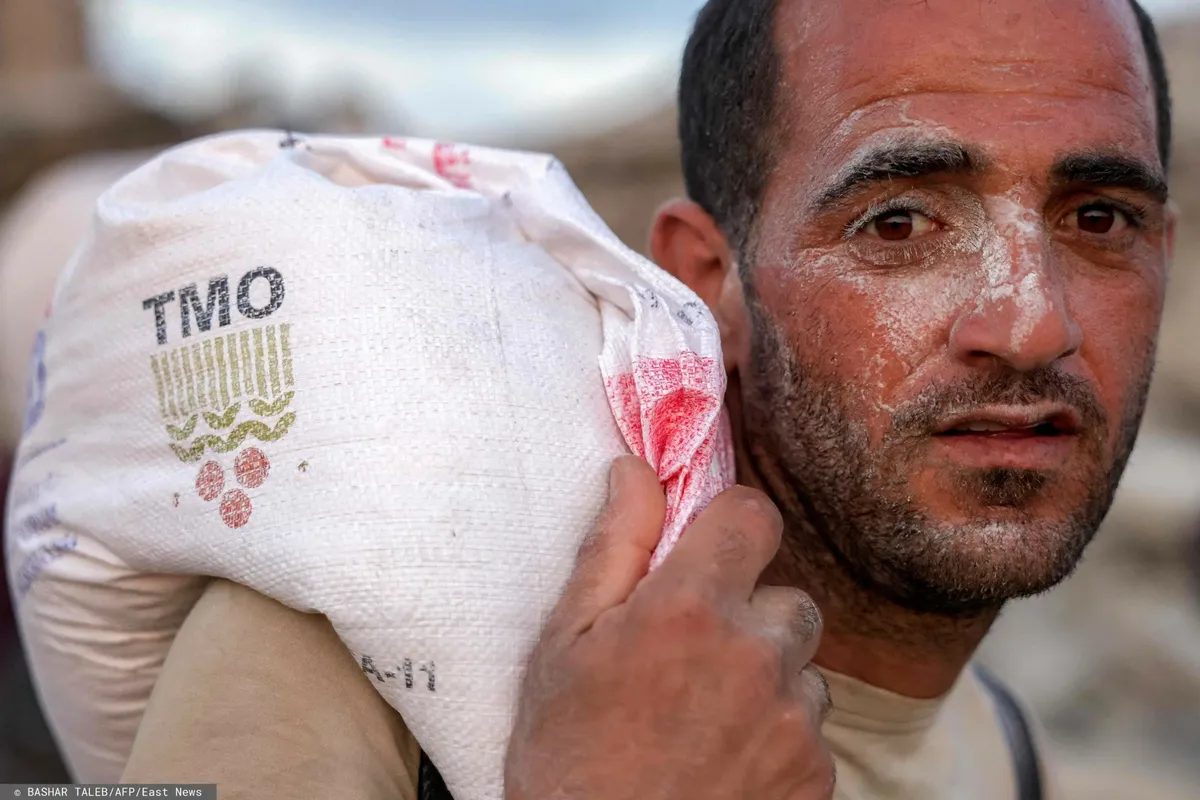
Residents of Gaza carry bags with gummanitarian aid. Photo: Bashar Taleb / AFP / East News
18+. This material (information) was produced, distributed and (or) sent by foreign agent Borukhovich (Tumakova) Irina Grigoryevna or concerns the activities of foreign agent Borukhovich (Tumakova) Irina Grigoryevna.
Until recently, humanitarian aid in the gas sector fell using mechanisms created by the United Nations. The cargo was delivered to gas, and then they were distributed by local authorities, in fact - Hamas. In May of this year, Israel and the United States developed a joint plan, according to which the Gaza Humanitarian Foundation (GHF), registered in Geneva and collaborated with private logistics and security companies, took this function. In June, the sector opened the distribution points for help already under the auspices of this fund. The meaning of the innovation was, in particular, to exclude Hamas from a chain, because food from his figures did not always reach people. It was assumed that this, among other things, would reduce the dependence of the inhabitants of Gaza on Hamas militants.
Even before the fund earned, the world press appeared that it would only get worse. The UN, which was deprived of a monopoly on the distribution of food, spoke that the children were about to die in gas, and even the number of dying was called exactly: 14 thousand people.
When the fund earned, the problems really began: people choked in the distribution centers, there were not enough products, although they were imported with excess. A month and a half later, at the end of July, evidence of the disaster that erupted in gas appeared in the world press. Two photographs with Palestinian children, whom hunger brought to complete exhaustion, caused a particularly strong fragment of readers of all publications that published evidence of the atrocities of the “Israeli military”. And their leading world media published - The New York Times, NBC News, Sky News, Daily Mail, The Guardian, BBC and others. The official Russian press did not stand aside and predicted: on US President Donald Trump, these “terrible paintings” made the impression that he was about to turn away from Israel.
It soon became clear that it was a lie. In one picture, really a boy living in gas, but his condition is explained by the disease - children's cerebral paralysis, while the boy’s brother who has fallen into the frame has a completely normal physique. Another photo was taken in Italy, on it - a child suffering from cystic fibrosis, Israel helped to take him out of the gase for treatment. But this does not mean that there is no problem: the humanitarian situation in the gas sector is very difficult, and most importantly, it seems hopeless.
What are the causes of the crisis, how much it will be allowed, why did not justify the mechanisms developed by the Humanitarian Fund? Where, finally, the UN, why did she stop working in gas? The Israeli journalist and political analyst Dmitry Dubov answers these and other issues of the “new”.

- Exactly two months ago, we said that the Gaza humanitarian fund should solve the problem with providing residents of the sector with food and medicines, and at the same time reduce the dependence of civilians on Hamas. Now we are apparently new problems, up to the point that the protection of the distribution centers had to open fire on the crowds of unfortunate people. What really happens?
- This method of distribution of assistance in the gas sector could really become an effective method of pressure on Hamas. If these assistance centers worked as expected. But they were not so effective, they are not enough. The centers themselves work where there are no hostilities, this is agreed with Israel. And there are simply few of them.
Today, the IDF controls about 75% of the gas sector, the fighting continues. You may have noticed that the number of victims from the Israeli defense army has also increased recently. This is a classic situation when potential terrorists remain in the field, so it was in Iraq and Afghanistan. To clean up the territory from them, the local population is evacuated to the humanitarian zone, in the southwest of the sector this al-Mavashi. If people are about 25% of the sector, then you can imagine a picture. There are several such centers for the distribution of food, and each crowd attacks, literally blows. Perhaps if the population of the Gaza were distributed in a larger territory, we would not see such paintings.
There were several incidents when both American guards of centers and even Israeli soldiers opened fire because they were threatened by danger. I saw such shots from Gaza, the crowd was fifty meters from our soldiers who received the order not to shoot. Thank God, then everything is fine.
These centers really turned out to be ineffective. And this is a vicious circle, because about the UN mechanisms cannot be said that they functioned effectively. When distributing the humanitarian aid of the UN there was no such crush, there were no such paintings, but there were other problems: the militants of Humami robbed convoys, the products simply did not reach the distribution points. That is, it was precisely the distribution as such that there was almost no, most of the help went first Hamas, then settled in some gray and black markets.
At the same time, scandals around that help does not reach the addressees arose only after the appearance of the distribution centers. Now this has reached the peak not least because the campaign called “Hunger in Gaza” is largely heated by Hamas himself, who sees this advantage in negotiations with Israel.
- Let the campaign warm up Hamas, let the fakes appear with his light hand. But you also admit that there is not enough food in gas, that there is such a problem?
- Of course, there is.
- Why could it be possible to make more these points of distribution?
- This is a difficult topic, and here I in no way remove responsibility from the Israeli government. Perhaps there were ways to increase the number of such centers. Probably, it was possible to consider other ways to distribute humanitarian assistance. But let's not forget that the creation of these centers was also politicized in a certain way. There is pressure on the prime minister, not so long ago his right-wing coalition partners Itamar Ben-Gvir and Bitsalel Smorych said that there should not be any humanitarian aid in the gas sector: why, they say, should we feed our enemies? We hear such statements even now.
As soon as this new wave of pressure on Israel from the world community has risen,
Firstly, immediately the mechanism for the distribution of assistance through the UN returned somehow.
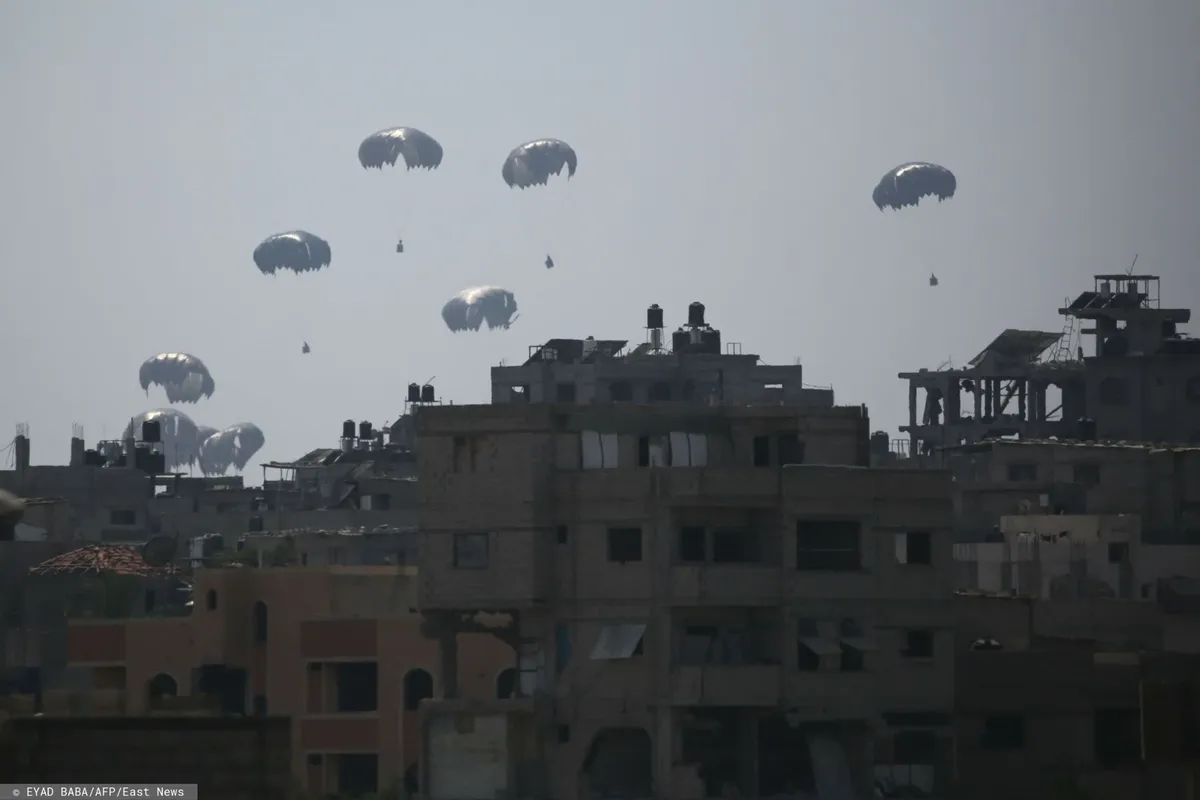
Secondly, Israel allowed the Air Force of foreign states, mainly Jordan, to land humanitarian aid from the air.
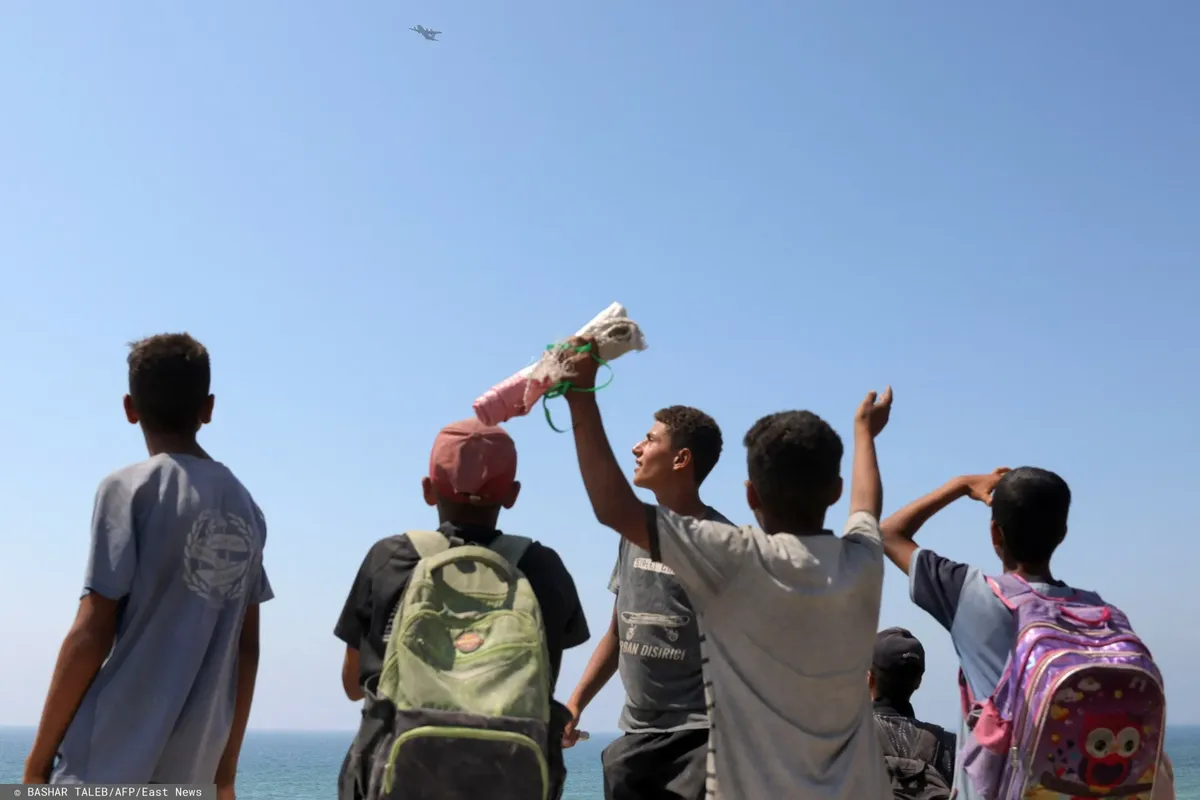
- And Israel itself, as I understand it, also dumps help from the air.
- That's right, Israel itself began to do it. But it is very important to say: there have never been cases from Israel so that the UN cargo was not intentionally missed. If you and I came to the Kerem Shalom checkpoint at that time, through which cargoes from the Israeli side enter the gas, we would see how up to 800 trucks accumulated there in one day. They all had to be checked for the presence of smuggling. More than once or twice it happened that, along with products and medicines, anything turned out there - from mobile phones to weapons. To mask this under humpology is a crime itself, Israel cannot allow this. And the drivers who agreed to carry assistance in gas did not always return home alive.
That is, the UN before, before the arrangement of distribution centers, could not cope with the distribution. Applications that assistance in gas does not reach people, that people are malnourished did not arise today. Why? A lot of what was supposed to be on the territory of the gas sector was not there, the UN structure did not always accept this help, although there were no intentional obstacles from Israel. That is, there was no Holodomor. There was concrete ineffectiveness of the UN in the conditions of war, and therefore this whole story appeared with humanitarian centers. It turns out that she did not help, but actually aggravated the situation.
- What happened to the UN mechanisms when these distribution centers appeared? Where did they go?
-At some stage, the UN simply left this game and refused to cooperate with the Humanitarian Fund when he began to work. That is, the UN did not participate in this.
- Why did the UN stop participating in this? Why could not use both mechanisms?
- This is a question for the UN. But when these distribution centers began to work, the first UN reaction was to declare that she did not consider this initiative legitimate, because only the UN can engage in such distribution.
- Well, would you do next?
- I repeat, this is a question for the UN. I'm not sure that we understand why its representatives stopped doing this. On the one hand, today they are already doing this again. On the other hand, they could not, apparently, ignore the attempt to create a certain alternative structure, which was supposed to not only give out help, but also deprive Hamas access to this help. Their reaction to the creation of distribution centers was extremely negative. And what is the gas sector and control of the sector in the form in which it is somehow still preserved? This is Hamas anyway. That is, the UN officers, in one way or another, have to contact Hamas, with those who still stayed in the field, on all issues related to the allocation of assistance to bypassing the humanitarian fund.
-Between Hamas and the structures of the UN, as it became obvious after October 7, there is some special relationship. Is the UN negative reaction related to the emergence of alternative methods of distribution of food?
- We can build any versions on this topic. It is clear that the UN Agency for Refugees in Gaza Strip is completely and completely Hamas people. With the exception of individual employees of the agency who did not live in gas. In general, before the start of the war, any administrative management in the sector - it has always been a hamas. These are not only militants. Hamas - it can be a teacher at school and an employee of the refugee agency, these are people in municipalities, up to the janitors. Everything was tied to Hamas, but first of all, what is associated with mechanisms for the distribution of assistance.
Before the start of the war, the system somehow worked. We can talk about how much it was corrupt, how many means went to the terrorists, how much help reached people, but the system somehow worked. When these centers appeared, UN employees said that they had no one to contact. Probably so you can explain their logic.
- How did the weapon and other smuggling get into trucks with the help of the UN?
-Still, there are complex schemes, the UN is an umbrella organization that distributes funds to humanitarian aid. The help itself is collected in the field, say, in Egypt, in other countries, and someone is engaged in putting it in trucks. Well, there will always be someone who will try among numerous boxes with food and medicines to put something else that is not related to humanitarian load. There were such cases, so the goods are always checked.
- I understand that there are few distribution points. Is it enough to eat enough? Was its number somehow calculated depending on the needs of people in gas?
- Here I can confidently say that there was no lack of products and everything else that falls under the definition of humanitarian assistance. But we have repeatedly seen how the crowd robs columns with cargo. What does "crowd" mean? This is either Hamas militants, or representatives of the clans to which the sector is divided.
Here you need to understand the internal device in the sector. He is all divided between the clans - Hamuls. Each Hamula is a very large family, plus or minus a thousand people who come to each other to some extent by relatives. They themselves choose which group to attribute themselves to Hamas, to the Islamic Jihad* or to someone else. Very often this clanity mechanism is manifested precisely in relations with a particular group. So when the crowd robs a column with humposure, it is either Hamas people, or representatives of such Hamul.
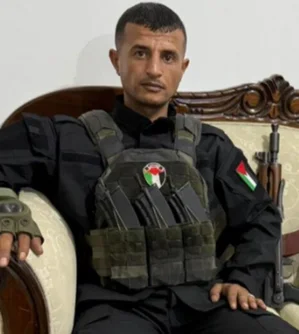
- In the news, the name of Abu Shabab, the leader of one of these clans, whom, although he is an drug dealer, as if Israel, because Abu Shabab against Hamas, appeared.
- Yes, Abu Shabab challenged Hamas, he already decided that Hamas was almost finished, so he will now be in the south, in Rafihaya, a representative of the Palestinian autonomy. He acts, let's say, not without the knowledge of Israel, the principle of “the enemy of my enemy” works here. But he was really accused of plundering humanitarian columns.
The chaos with the distribution of humanitarian aid in Gaza has always been. And from the very beginning we saw that the goods did not reach people.
But now more the population is focused on a smaller territory, and hence the pictures how people attack distribution centers. The general feeling of chaos has intensified today.
- There are such numbers: in two months, the Gaza humanitarian fund distributed 80 million daily food diets among local residents at the rate of 1900 calories per day for each. Even if we proceed from the fact that two million people are still in the sector, this is not hunger. But in itself the fact that people have to choke on the distribution centers shows that there is not enough food. How is this if the numbers are true?
- Speaking of the amount of help, then it is sufficient. A lot is spent on the needs of Hamas militants. Much goes to areas where there were no fighting, there people do not really worry about what will be eaten tomorrow for lunch. Much is leaving local elites.
Of course, there is a humanitarian crisis in gas, I do not want to downplay this at all. But now on this general wave the world has also been led to “beautiful” photos, not understanding what is really happening. Once again: the situation in the gas is complex, even catastrophic. Israel does everything possible to ensure the delivery of goods to the sector, but then Hamas simply robs his people.
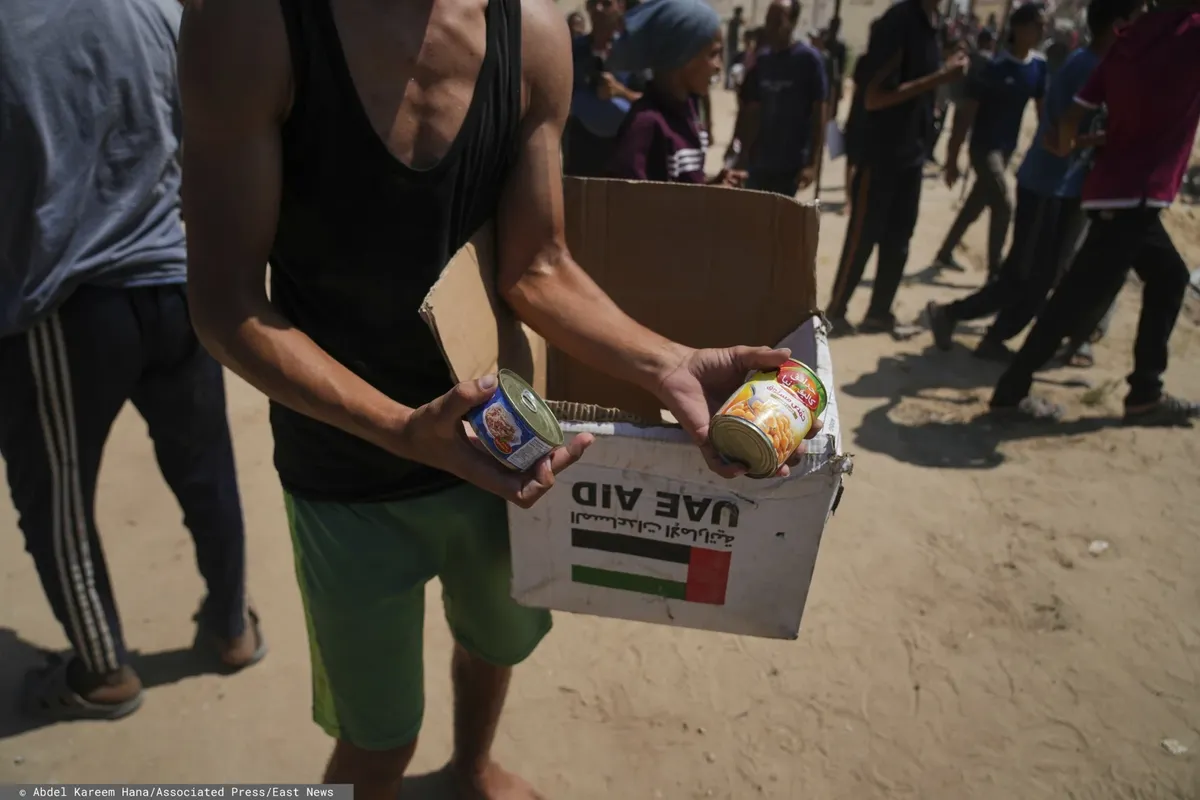
-So, after all: in the gas is it hunger, directly hungry children, or just lacking food? These, you see, are different things.
- Probably, there are several hundred people in the gas sector, including children who are malnourished. It was always so. And we understand that help is distributed unevenly. There are probably people living somewhere remotely in tents, and help comes to them last. But talking about this as mass hunger, when all the inhabitants of the Gaza are starving, is a manipulation. Since there are no effective mechanisms for the distribution of assistance, we cannot confidently talk about how little this help is. But the Israeli army says that there is no starvation in gas.
- You understand that the Israeli army in this case is an interested party, so not everyone is ready to believe it.
- Understand. But if you just think logically, then it’s hard for me to imagine that Israel is deliberately lying around the world.
- The world considers that, judging by the press.
- This is already a question why the world thinks so. Maybe it’s easier for the world to blame Israel in everything, and not understand the situation?
-The last round of scandal around the hunger in gas began due to two photos with exhausted children. Then it turned out that one photo - from Italy, a boy with cystic fibrosis Israel helped to take out for treatment. The second photo is really from a gase, but the child suffers from cerebral palsy. This is not the first and not the second case when the frank lies of Hamas are revealed. Why does the world still believe in this?
- This is a classic example of how Fake wins. Here just a couple of photos defeated the whole Israel. And look what they do, for example, in New York Times. There they publish a photo of a child “dying of hunger” in their main account on the network of X with tens of millions of subscribers, and this explodes the whole world. And when it turns out that this is a fake, a refutation is given in the account, where they have 89 thousand subscribers. Moreover, in this text, they add that, they say, still problems progress against the background of malnutrition.
Of course, against the backdrop of a malnutrition of health problems, people progress, and this happens not only in the gas sector. Yes, there is a problem of malnutrition in the gas. You ask me, should I end the war? Necessary. Do I need to finish it for the reason that there is hunger in gas? This must also be taken into account. But to end the war only because they began to inflate this problem in the world ... And what, I want to ask, with our hostages?
“I wanted to ask you about it.” I am also very sorry for the peaceful inhabitants of Gaza, but why will Hamas, who started this war on October 7, 2023, will not return the hostages to Israel to stop the war?
- Israel ended up in a situation where he begins to make excuses, and these excuses seem to confirm the “right” of the rest of the world. When it turns out that the accusations against Israel are built on fakes, they tell us: still end the war. And I even agree with this: we must end the war, which began with the bloody attack of Hamas on Israel. And it is necessary to start it with the return of our hostages.
The humanitarian crisis in Gaza has always been. More precisely, he has been continuing there since 2007, when Hamas came to power. Then the missile shelling of Israel began, attempts at terrorist attacks, after which Israel stood on the border. If you compare the pictures of the 2006 gases and now, then these are two different worlds. При этом всегда там были люди, которые ели и пили в свое удовольствие, и были те, которые недоедали. Конечно, сейчас стало больше тех, кто недоедает, и это вызывает ужас и сострадание у любого нормального человека.
— Как получилось, что фокус сместился настолько, что говорят только о голодающих жителях Газы, но не о заложниках? Если ХАМАС так заботится о населении, если он публикует фото умирающих от голода детей, почему бы ему для начала не отпустить заложников?
— ХАМАС не заботится о населении и говорит об этом напрямую. В людях он видит шахидов, он видит в них инструмент для продолжения борьбы. Об этом говорил Халил аль-Хайя, последний выживший представитель руководства ХАМАС, который сегодня живет не в Газе, а в Дохе.
Мне кажется, все это кампания, которую ХАМАС провел гениально. И сегодня хамасовцам вообще некуда торопиться.
За ХАМАС сегодня на Израиль давит весь мир, заставляя идти на уступки.
Если во время первого перемирия заложники были освобождены только в обмен на гуманитарную помощь, то сегодня помощь идет без каких-либо уступок со стороны ХАМАС. Продуктов и раньше не то чтобы отчаянно не хватало, но теперь, когда пошла эта кампания, объемы помощи еще и увеличились.
Еще раз: гуманитарная ситуация в Газе тяжелейшая, и эту проблему необходимо решать. Конечно, вид голодающих людей вызывает огромное сострадание. И жизнь в таких условиях — это, наверное, ад. И все, что мы видим, вызывает дрожь. Но в некоторой степени это еще и манипуляция, на которую мир по своим причинам очень охотно ведется.
— Я хочу уточнить: представители ХАМАС открытым текстом говорили, что им самим плевать на население Газы, пускай голодает?
— ХАМАС неоднократно об этом говорил. Когда его лидеров спрашивали, в курсе ли они, что происходит с мирными жителями, пока боевики в своих тоннелях сражаются с сионистами, лидеры открытым текстом говорили: обязанность обеспечить мирных жителей продуктами лежит на ООН. ХАМАС никогда не скрывал, что его цель — не забота о жителях сектора Газа, а продолжение борьбы с Израилем.
Еще до того, как появились снимки с истощенными детьми, пресс-служба Армии обороны Израиля публиковала кадры с хамасовцами, которые у себя под землей отлично питаются. У них там хумус, питы, фрукты, все у них хорошо, они улыбаются и позируют с тарелками, полными яств.
И это так показательно, так цинично… Но мир почему-то предпочел эти фотографии не заметить. Так что сомнений никаких: ХАМАС не заботится о собственных гражданах.
— Но от этого ведь ситуация только страшнее. Это означает, что никакое давление на Израиль со стороны мирового сообщества не изменит ситуацию в Газе, потому что нет прямой связи между действиями Израиля и положением людей в Газе? Люди все равно зависят только от ХАМАС?
- That's right. Власть ХАМАС — это власть страха. Обратите внимание на то, что делают сегодня лидеры многих государств мира.
— Признают или обещают вот-вот признать государство Палестина.
— Причем они объясняют, почему это делают. Это абсолютно декларативное действие, потому что непонятно, в каких границах государство, с какой столицей и так далее. Но они говорят, что делают это, чтобы, во-первых, закончить войну в секторе Газа, во-вторых — чтобы решить ближневосточный конфликт. И то, и другое нереально.
— Получается, что они, наоборот, как бы поощряют ХАМАС: вы все правильно сделали 7 октября, вот вам награда, не зря убивали, насиловали и мучили заложников.
— Ровно это я и хотел сказать. Это действительно награда террористам. Теперь они могут предъявить это жителям Газы: смотрите, чего мы добились, а значит, все было не зря. На самом деле первый враг для ХАМАС — это даже не Израиль, а глава Палестинской автономии Абу Мазен, который уже бог знает сколько времени не проводил выборы, потому что боится, что победит ХАМАС. Теперь у ХАМАС есть еще и такой козырь: мы добились, а вот Палестинская автономия ни на что повлиять не может.
Получается очень циничная ситуация. Мир устал от этой войны, мир хотел бы как-то уже это закончить. Не в последнюю очередь потому, что во многих странах поднялись антиизраильские настроения со стороны мусульманской диаспоры и агрессивных ультралевых, это усиливает давление на правительства, и президент Франции или премьер-министр Великобритании этого давления уже не выдерживают. Решению конфликта это не помогает вообще никак.
С другой стороны, Израиль тоже мог бы действовать умнее. Например, не позволять нашим министрам говорить, что мы, мол, всю Газу в порошок сотрем. Наверное, если бы не это, нам было бы проще предотвратить дипломатическое цунами, которое на нас обрушилось.
— Вы сказали, что это похоже на сильную кампанию ХАМАС. И действительно выглядит все так, будто они гении пиара. Почему Израиль так пассивен, почему опровержения всякого вранья появляются через сутки, если не через недели после самого вранья? Или — как те снимки с едящими боевиками — появляются так, что их никто не замечает?
— ХАМАС действительно в этом отлично разбирается, и он не раз это доказывал. Но важно еще и то, что хамасовцы абсолютно циничны. Помните, был такой советский фильм «Противостояние»? И в нем персонаж по фамилии Кротов. Мне Яхья Синуар напоминал этого Кротова: даже в самом гибельном положении он находил возможность подставить кого-то другого, чтобы самому спастись. ХАМАС до последнего будет находить возможность выжить и ставить при этом еще какие-то заведомо неприемлемые условия, чтобы в итоге все сложилось в его пользу.
Три недели назад мы были уверены, что сделка с ХАМАС вот-вот состоится, что ХАМАС раздавлен. Сегодня мы видим, что ХАМАС по-прежнему все так же раздавлен, но сделки нет.
— Почему нет сделки?
— Потому что ХАМАС невыгодно идти на какие бы то ни было уступки. Западный мир и так давит на Израиль. Гуманитарная помощь идет нарастающими потоками. Это хорошо лично для хамасовцев, но главное, что им есть что предъявить местному населению как свои завоевания.
В Израиль приехал Стив Уиткофф, спецпосланник Трампа, чтобы попытаться в последний раз перезапустить переговорный процесс. И если сейчас не произойдет какого-то сдвига, то я просто не понимаю, какие у нас есть рычаги давления на ХАМАС, чтобы заставить его пойти на переговоры. ХАМАС сегодня оказался в ситуации, на которую три недели назад он даже рассчитывать не мог, у него все неплохо.
— Получается, как бы ни развернулась ситуация, ХАМАС всегда выигрывает? У него люди голодают, а он все равно выигрывает, потому что может сказать: «Мы постарались — и вы теперь получаете больше еды».
— Мы с ХАМАС воюем разные войны. У нас разные представления о победе. Точнее, у Израиля вообще нет определения победы, мы не понимаем, как она будет выглядеть. Вот как? Согнать на какую-то площадь последние 10 тысяч боевиков, пусть сдадут оружие, сядут в лодки под конвоем и куда-то уплывут? Это было бы эффектно, но такая картинка существует только в воображении. Концепции победы у нас нет. Мы не знаем, какой она должна быть.
— А у них, наоборот, что ни случится — все победа?
— Да, у них наоборот. Пока идет война — они победители. Пока израильские ВВС сбрасывают им гуманитарную помощь, они победители. Для них сам факт, что они все еще живы, что с ними воюет Израиль, что у них израильские заложники — все это победа.
— Я даже не спрашиваю, как разрешить эту ситуацию. Но заложников можно как-то вытащить?
— Конечно, можно. Если Израиль сегодня объявит, что заканчивает эту войну и не планирует через 60 дней вернуться к боевым действиям, то вопрос с заложниками разрешится.
— Их вернут?
— Многое вам покажется нелогичным, но это Ближний Восток, тут логика работает немножко по-другому. При всем том, что я вам только что сказал, ХАМАС все-таки заинтересован в окончании войны. Воевать бесконечно он тоже не может. Ну как… После Второй мировой войны отдельные японские военные сдавались спустя годы, и ХАМАС в таком режиме может воевать с Израилем долго. На уровне партизанской слеш террористической войны. Но они хотели бы восстановить себя как структуру.
Если Израиль скажет, что готов к полному прекращению огня без возобновления боевых действий, ХАМАС на это пойдет. Дальше будет много напряженных переговоров по формуле прекращения огня, но это главное и принципиальное требование ХАМАС. Если Израиль его выполнит, заложников можно будет освободить.
Что дальше — это уже вопрос пятнадцатый. Конечно, мы должны сделать все, чтобы не повторить даже предпосылок к ситуации, которая привела к 7 октября. Но это уже дело завтрашнего дня. Сегодня мы, конечно, можем спасти заложников.
— Давайте уточним: все, что требуется сейчас от Израиля, — это объявить, что он заканчивает войну и ни через 60 дней, ни через 120 не возобновит ее? И заложников вернет?
- That's right.
— Почему тогда Израиль не сделает это ради заложников? What is the problem?
— Это вопрос к Биньямину Нетаньяху. Он отказывается это делать уже довольно давно. Продолжает настаивать, что война не завершится, пока ХАМАС не будет полностью уничтожен. Сам же при этом отказывается давать какие-то четкие критерии того, что значит уничтожение ХАМАС.
В израильской прессе не раз появлялись предположения:
пока идет война, Нетаньяху будто бы чувствует себя уверенно, а завершение войны приведет к расколу его коалиции.
И если мы идем на досрочные выборы, то Нетаньяху должен создать ситуацию, в которой ему идти на выборы выгодно. Его задача — тянуть время. Сейчас лето 2025 года…
— а выборы у вас в 2026-м…
— Осенью 2026-го. Учитывая, что предвыборная кампания начинается раньше, можно сказать, что мы уже вошли в предвыборный год. В такой ситуации Нетаньяху, даже если он принципиально решил идти на сделку, ищет правильную «точку выхода», чтобы лучше монетизировать политическую ситуацию, чтобы добиться выхода из войны и возвращения заложников максимально выгодным для себя способом.
Сейчас констелляция событий для Нетаньяху достаточно выгодная, потому что закончилась летняя сессия кнессета и три месяца коалиции ничто не угрожает. Может быть, через три месяца мы будем находиться в другой реальности. Идти на досрочные выборы по собственному решению или по инициативе соперников — это для Нетаньяху очень разные вещи, а он не хочет оказаться в слабой позиции. Если станет очевидно, что он должен сделать это сам, то это произойдет в ноябре-декабре этого года.
— Подождите, а заложники? Они же каждый лишний месяц, каждый лишний день…
— А заложники все это время будут оставаться в плену. Даже план Уиткоффа предполагает освобождение 10 живых человек после 60 дней перемирия, еще 10 должны остаться в плену. Они смогут выйти только на втором и третьем этапах, если до этих этапов дойдет. А как до них дойдет, если Израиль возобновит боевые действия? Особый цинизм этой ситуации в том, что даже существующий план не предполагает освобождения всех живых заложников. Только половины из них.
— В чем позиция тех самых оппонентов Нетаньяху, из-за которых он так боится распада коалиции? Они считают, что заложников не надо освобождать? Пусть в плену погибают?
— Это политики правого толка, и у них такой нарратив, что это не заложники, а военнопленные, они не так важны, с этой проблемой надо разбираться по окончании войны. Это выборы, они уже заискивают перед своим электоратом. Это абсолютно холодный политический расчет. Каждый день, пока заложники остаются в плену, их используют как разменную монету в этой игре, и вот это самое плохое.