
Translated material
Signs of the rights and value of the state
The Constitutional Court refused to consider the complaint of political prisoners Gorinov about the acceptability of the article of the Criminal Code about Fakes
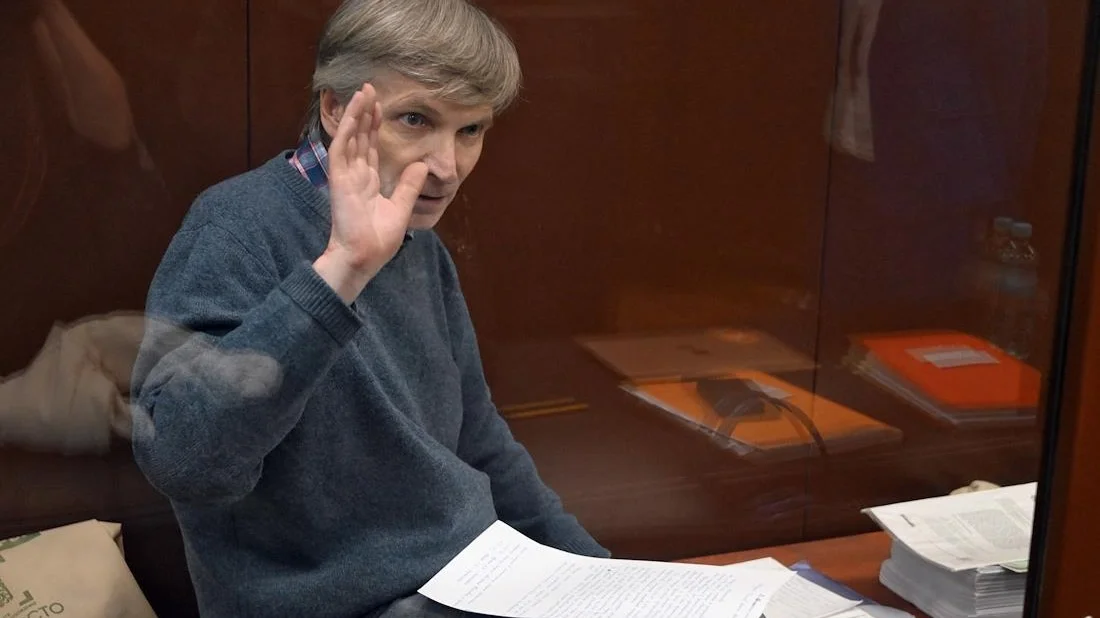
A meeting in the case of the municipal deputy Alexei Gorinov in the Meshchansky District Court. Photo: Anatoly Zhdanov / Kommersant
18+. This material (information) was produced, distributed and (or) sent by foreign agent Vishnevsky Boris Lazarevich or concerns the activities of the foreign agent Vishnevsky Boris Lazarevich.
The Constitutional Court refused to accept the complaint of Alexei Gorinov, the former municipal deputy from Moscow, the first in the country, who in July 2022 was sentenced to seven years of imprisonment under an article on fakes about the army.
The logic of the “refusal” determination largely repeats the definition adopted two years ago on the refusal to verify the article of the Code of Administrative Offenses of the Russian Federation on the punishment for “discrediting the Armed Forces”. The state - “constitutional value”, indicate the presence of shortcomings when conducting its own, but it is impossible to doubt its correctness.
The complaint of Gorinov, who is now serving a sentence, indicated that the article 207.3 of the Criminal Code of the Russian Federation does not pursue any of the constitutionally significant goals that could justify the restrictions of freedom of speech and opinions, is not necessary and introduces disproportionate restrictions on constitutional rights and freedoms.
That its law enforcement is aimed at suppressing dissent in Russia and the application of repressions against those who disagree with the position of the authorities.
And that constitutional guarantees of freedom of expression, guarantees of local self -government and guarantees of his activities as a deputy to freedom of statements in the framework of his powers are violated.
Recall that
Gorinov was convicted of speaking at a meeting of the municipal council of the Krasnoselsky district, although the legislation does not allow the deputy to hold the deputy liable for his deputy activity.
But it was his deputy status that was declared a “qualifying sign of a crime characterizing the use of an official position” ...
The Constitutional Court refused to consider these arguments on the merits - but he nevertheless gave a certain assessment (as is often in “refusal” definitions). True, he gave it within the framework of the same logic as when considering May 30, 2023 of the constitutionality of Article 20.3.3. Administrative Code of the Russian Federation on "discrediting the army."
Why does the CS “not finds grounds for accepting this complaint for consideration”?
Here, the court repeats the position set forth in the mentioned definition of 05/30/23: the Constitution of the Russian Federation “does not imply and does not allow that it is guaranteed by it and freedom of man and citizen to be used to deny the constitutional system of the Russian Federation.”
Meanwhile, in the opinion of the KS, "a state formed by the multinational people of the Russian Federation ... as a guarantor and a means of ensuring the exercise and protection of the rights and freedoms of man and citizen, is a constitutional value." If “a citizen, exercising his rights and freedoms (including freedom of thought and word, freedom of creativity, the right to have and disseminate beliefs and act consistently with them), at the same time violates the rights and freedoms of other persons and is such a violation of a socially dangerous and illegitimate nature, then the perpetrator can be brought to public law liability,” and “does not only have the form of expression of his beliefs, but also ways of disseminating information, as well as its content.”
And therefore, according to the court, “the federal legislator is entitled to establish legal liability in order to prevent and suppress actions that encroach on the law and order, public order and security and other values protected by the Constitution of the Russian Federation, even if such actions have signs of the exercise of these constitutional rights”.
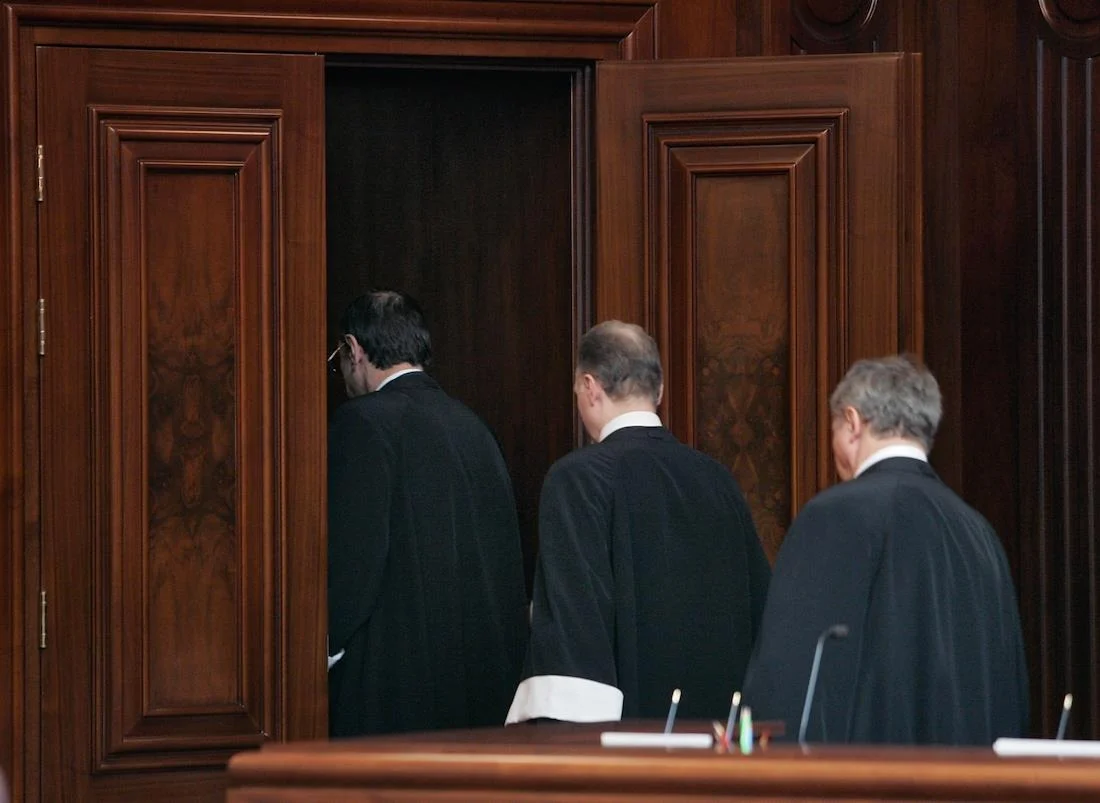
As for the fact that Gorinov acted as a deputy, the KS notes, of course, “a principle that is universally recognized in the legal state, according to which the deputy is not responsible for the actions to exercise the mandate, including after the term of office,” and he cannot be brought to criminal or administrative responsibility for the “expressed opinion expressed, and other actions determined by the status of the deputy”. But immediately stipulates: “By virtue of the general legal principle of inadmissibility of abuse of law, inviolability cannot serve as the basis for exemption from liability for public insults, slander and other offenses that are incompatible with the status of a deputy, provided for by federal law.”
According to the court, the parliamentary immunity does not allow exemption from liability for the offense, including criminal, if such an offense was committed not in connection with the implementation of parliamentary activities proper. The act provided for in Article 207.3 is “public distribution under the guise of reliable messages of deliberately false information” about the use of the Armed Forces of the Russian Federation, the Constitutional Court considers “related to slander, by which Article 128-1 of the Criminal Code of the Russian Federation refers to the spread of knowingly false information that defeats the honor and dignity of another person or dividing its reputation”.
At the same time, the KS indicates, “use for public distribution - under the guise of reliable facts - knowingly false information, opportunities that are determined by the authority of the deputy, not only attracts increased attention to this information, but also creates additional conditions for perception as reliable, and also involves more confidence in citizens to relevant messages,” and therefore “intensified criminal liability” is provided.
This logic, and especially - in relation to the Gorinov case, is represented by at least controversial - with all the appropriate law -abiding citizen respect for the constitutional court and his decisions.
- Firstly (I already noted this, analyzing the definition of the Constitutional Court of May 30, 2023),
The state, according to the Constitution, is not a value, but an institution, the responsibility of which is the recognition, observance and protection of the rights and freedoms of man and citizen. Man, in turn, as well as his rights and freedoms, according to Article 2 of the Constitution, is the highest value.
These rights and freedoms (according to Article 18) are directly valid, determine the meaning, content and application of laws, the activities of the legislative and executive branch and local self -government and are ensured by justice.
Where is the place to declare the state “constitutional value”?
- Secondly, in what exactly Alexei Gorinov “violated the rights and freedoms of other persons” and which ones?
Find the text of Gorinov’s speech on the Internet at a meeting of the municipal council is not difficult.
Except what he calls his word that the president, his spokeswoman, Duma deputies and state propagandists say with impunity, but for which many others attract for “discrediting”, he would not say anything that would not sound in public space and would not be offered by opposition politicians, political and civilian activists.
Where is the violation of the rights of other persons? Question mark.
What exactly is this speech “encroaches on the law and order, public order and security”? Question mark.
How exactly does he use his rights and freedoms “to deny the constitutional system” and what exactly does he deny from his foundations? Question mark.
There is not a word about this in the definition of the Constitutional Court.
* Thirdly, the offense incriminated by Gorinov was committed precisely that in connection with the implementation of parliamentary activities: he did not perform at a rally and not on television or radio, but at a meeting of the municipal council, during the discussion of a “combined calendar plan on leisure, socio-educational, physical education and sports work with the population in the population of the population in the population of the population Residence in the Krasnoselsky district for the II quarter of 2022 ”, when the competition of children's drawings was discussed. And he explained why he would not vote for this plan.
- Fourth, it is unclear where, in his speech at a meeting of the municipal council “knowingly false information about the use of the Armed Forces of the Russian Federation”?
Both words are fundamentally important here: “obviously” and “false”.
That is, disseminating information, the citizen knew for sure that it was false. And this circumstance must be proved in court - the accusing side.
However, no information about this is given: neither what kind of information widespread by Gorinov is false (and how its falsity is proved), nor about why it is false “obviously”.
The Constitutional Court notes that the legislation “does not question the opportunity to express their own opinion on the activities of the Armed Forces of the Russian Federation, including indicating the presence of shortcomings, if this is not associated with the deliberate spread of false information (inaccurate information).”
But this is the problem with the article about “fakes” and its law enforcement that the courts, considering these cases, stand in the position of the deliberate truth of official messages and the obvious falsity of what is different from them.
It was this design that it was necessary to verify for the compliance of the Constitution, where the provisions on the “infallibility of the state” are not contained, but there are provisions on the freedom of expression of opinions and beliefs. And there is article 17 of the Code of Criminal Procedure of the Russian Federation, which states that no evidence has a pre -established force for the court.
But this was not done - how the open and public process of consideration in the KS complaints Gorinov was not carried out. Where he could have performed with his arguments, he himself (according to video communication) and his representatives. Where representatives of the State Duma, who adopted the laws, the Federation Council, which approved them, and the presidential administration, which signed these laws, would be present. Where they could ask questions on the merits and listen to the answers.
Instead (or to avoid this?) In non -public mode, a definition was adopted about the refusal to accept the complaint to consider - which now should be accepted as a fact and which is not subject to appeal. In which the former position of the Constitutional Court that can be punished that can be actions that "have signs of the realization of constitutional rights."
Is it necessary to understand this that the constitutional right to freedom of the citizen ends where the opinion of the state begins, and beyond this border, if opinions are different, there are no constitutional rights, but there are only their “signs”?
The state’s announcement with “constitutional value” is possible where there is power and there are subjects who, under fear of punishment, are not allowed to doubt the infallibility of power.
In the same place where there are power and there are citizens, the situation is fundamentally different.
This is not recorded somewhere, but in the second article of the Constitution.