
Translated material
"What are the lady at ... for your health and for ..."
In Veliky Novgorod celebrated the day of birch bark. This year, 3 letters were found on the excavations and it is better to know how the Novgorodians were buried
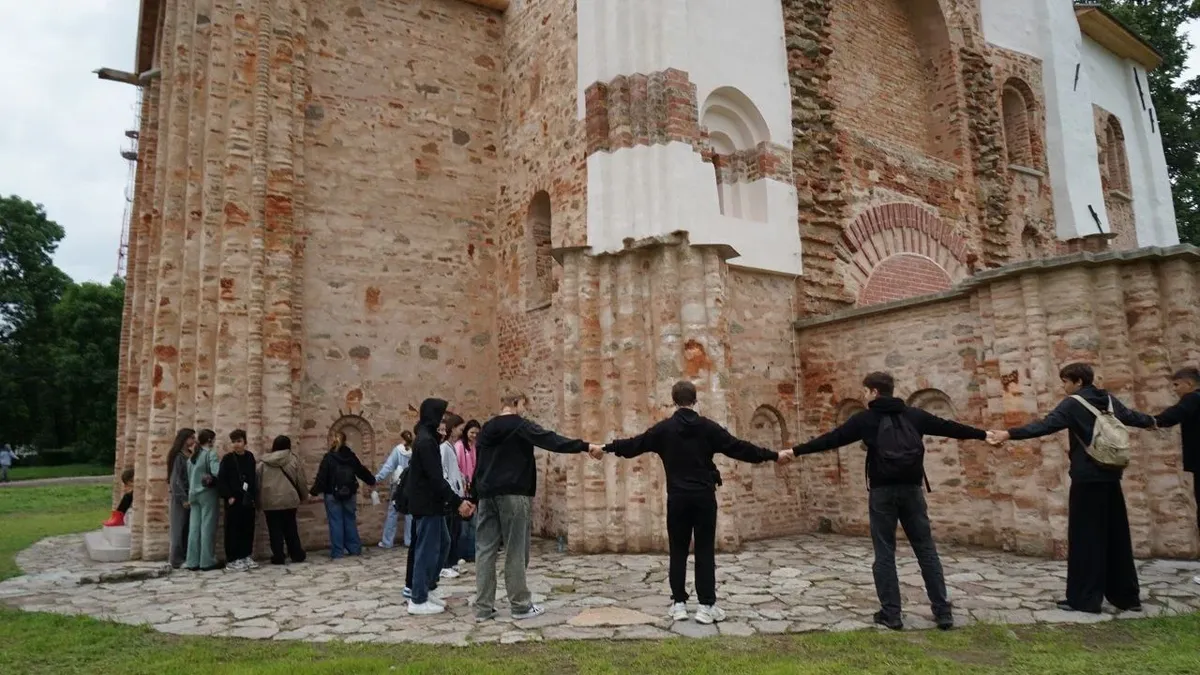
Beresty Day in Veliky Novgorod. Photo: Natalia Demina
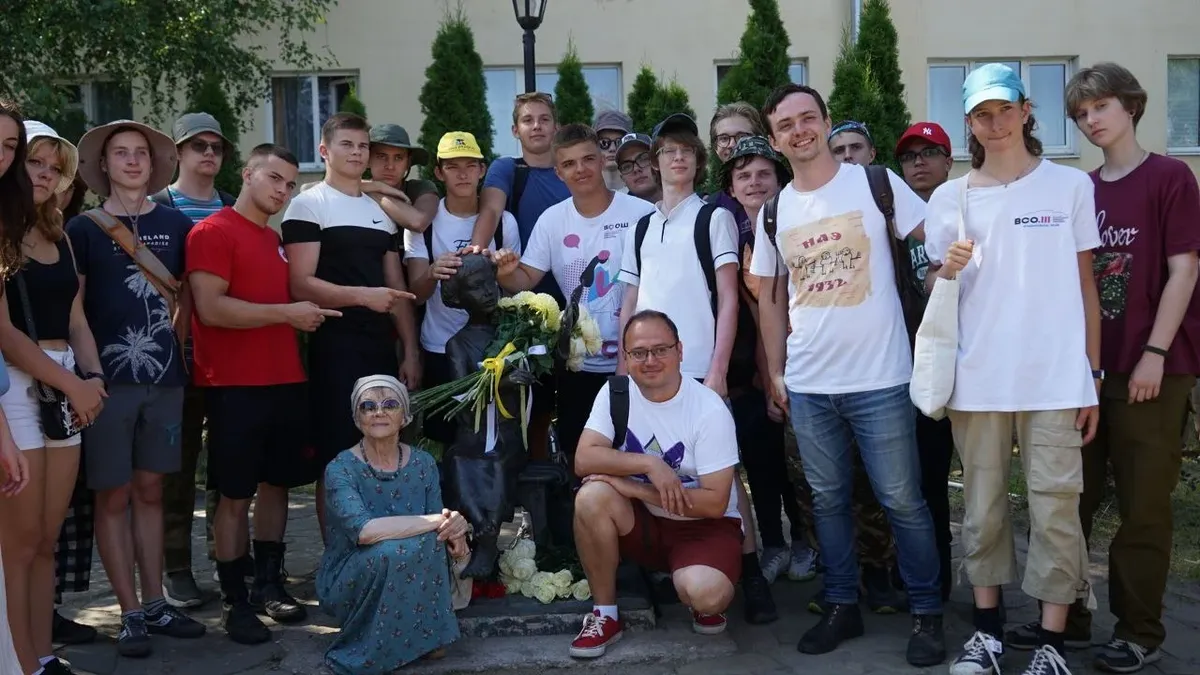
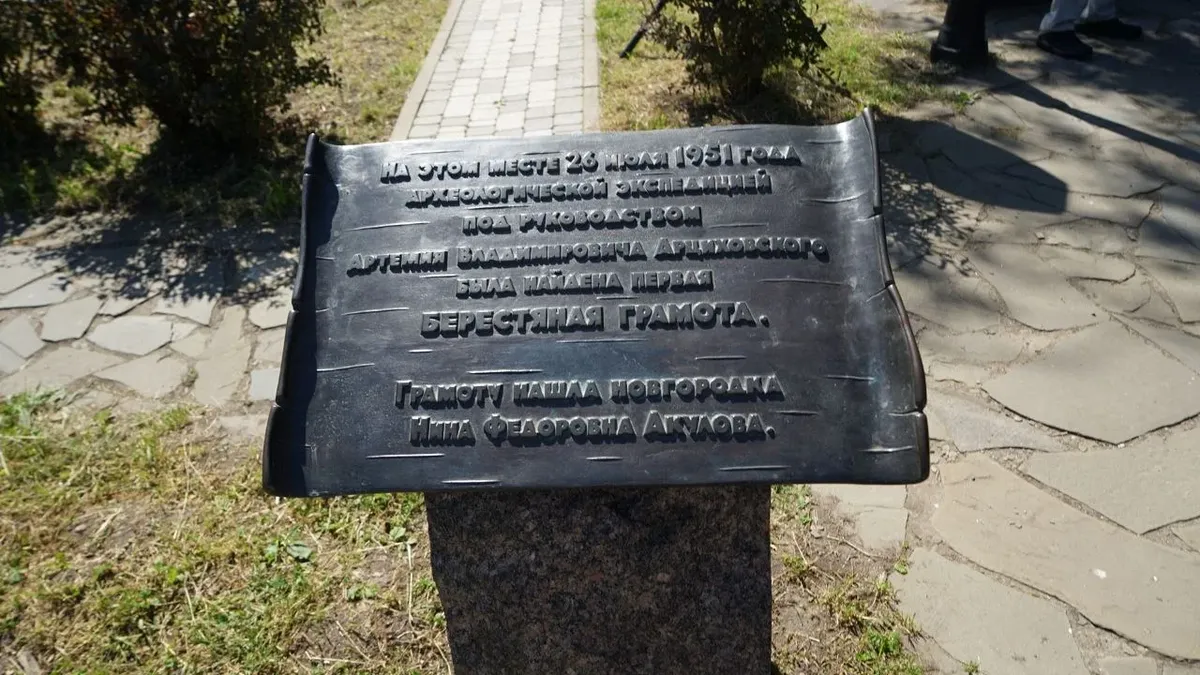
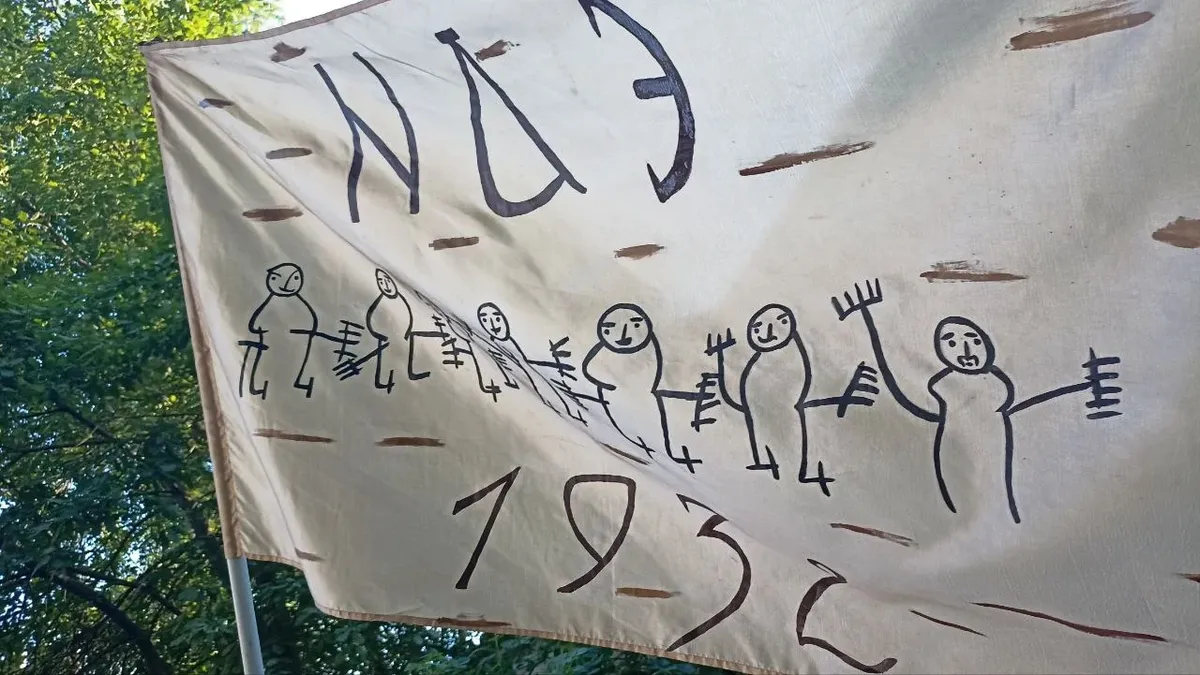
On July 26, in Veliky Novgorod, according to tradition, Beresta Day was celebrated. Despite the summer heat, archaeologists under the flag of the Novgorod archaeological expedition gathered for a rally at the house No. 3 on the Great Street near the commemorative signs of onfim and the first birch bark letter.
They are staged at the place where between the blocks of the bridge by ancient Solder Street in the summer of 1951, 30-year-old Novgorodka Nina Akulova, an employee of the furniture plant, found a letter No. 1-a painting of income from several villages in favor of a certain Thomas. Linguists believe that she was written in 1380-1400. Nina Fedorovna, along with her friends on vacation, decided to work out on the Nereevsky excavation of the utility work. And since 2006 on house 17, bldg. 1 on the Tannaya Street where it lived, a sign of her memory is installed.
Diploma No. 1232
And exactly a month ago, on June 27 and 28, in Veliky Novgorod, the first two birch bark letters of the 2025 season were found. Immediately on two excavations located on two sides of Volkhov, on the Sofia and trading sides of the city, - Trinity XVI and John. The first letter of the season-No. 1232-found Alexander Dushuk, a second-year student of the historical faculty of the Historical and Archive Institute of the Russian State University .
June of this year was rainy, and the Trinity excavation without a canopy, and the girl almost had to come to terms with the fact that her dream is not feasible, because the excavation under shed rains turned into a swamp with reeds. The day when Ilya Voronkov was found on the section of the archaeologist, Alexander called the climax of the path, noting and invaluable contributions of her classmates.
“The diploma is small, but daring,” jokes a professor at the Faculty of History of Moscow State University Elena Aleksandrovna Rybina. There are two lines on birch bark with the mention of hryvnias: “These are the payments of Volosov Pogost-88 hryvnias” There are a photo of the letter and they strictly under a copy photo ©: Novgorod Museum-Reserve ).
Diploma No. 1233
He found a second letter on the John’s excavation (on the site of the cemetery when the Church of John the Baptist existing until the 18th century) Andrei, a student of the Moscow Theological Academy, also came to Novgorod to practice. It is amazing that a letter with words about health was found among coffins and skeletons.
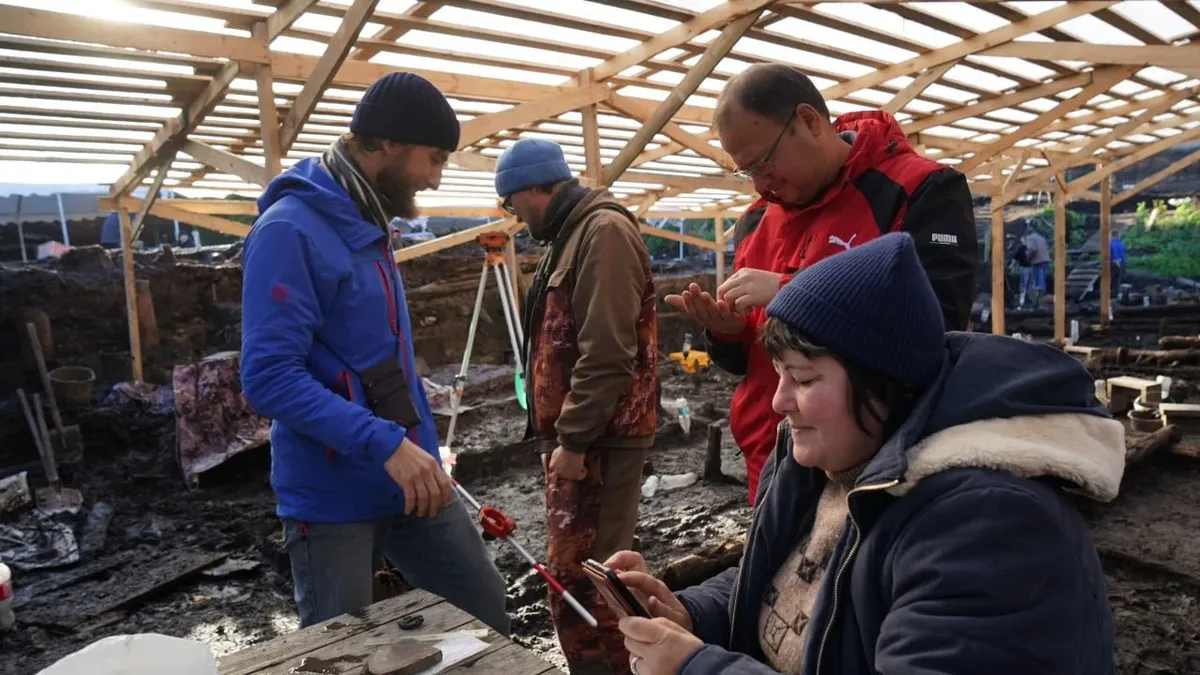
The John excavation is complicated not only for beginners, but also for experienced workers. There is an almost vertical ladder to a depth of five meters, and constant concerns about pumping groundwater. And you can’t cut a regular trench through the coffins, so water, in addition to the pump, has to be pumped out by buckets.
Each burial must first be thoroughly cleaned from the ground, using trials and even plastic knives and forks, then take photos and other measurements and only then pull the coffins out of the excavation and transfer bags with bones to the cameram. At the same time, the John’s excavation is a popular attraction, tourists bring tourists to it, volunteers from different cities of the country come here, different guests come to see.
Here is the head of the artist from the Moscow Moscow Art Theater, and you can briefly discuss with her the best student performances of the season, here is the Novgorod historian Igor Ankudinov, who recently released the new supplemented edition of the letter of the Great Novgorod and Pskov (recording of the Novgorod seminar with the presentation of this book .
At the Znamensky courtyard, in the office where academician Andrei Zaliznyak worked, his student and successor of the Academician of the Russian Academy of Sciences, Alexei Gippius, spoke about freshly released literacy from the John’s excavation-teachers and schoolchildren from St. Petersburg. (Warming of ceramics, bones and skin, the guys talked about their achievements, in particular, one girl - about the victory at the Olympiad in robotics.
“In an interesting way, the diploma received number 1233, although the last letter of last season was 1229. The fact is that last year it was no longer in Novgorod, but in the region, next to the village of Meghos of the Gratsk region, two more letters were found - 1230 and 1231.“ Black archaeologist ”, having dispersed the treasure of Novgorod coins of the late XV century, discovered fragments of birch bark - very late - The end of the 15th century. In Novgorod, birch bark letters are the latest - this is the middle of the 15th century. After that, the Novgorod moist cultural layer ends, in which organic is well preserved. Therefore, younger than the middle of the 15th century in Novgorod there is almost no letter, and in the region they found two pieces. The first is a debt document invested in a cube with Novgorod. And the other letter was written in ink that it is very rare, on it the letter “The Lord Bez with a brow,” said Alexei Gippius.
- You were present when finding a letter 1233 from your excavation? He asked the guys.
- No, unfortunately.
- It was, of course, a great surprise - to find it there. The wonderful numismatist Ivan Vladimirovich Volkov presented her drawing. Let us read it.
Schoolchildren with the help of A.A. Hippius began to disassemble the words on literacy. It was not difficult to make out the lines in the middle: “What are the ladies at ... for your health and for ...”, and then a careful study of the strokes in the upper part of the document began, and it turned out that the letters had several addresses, it was not about one lady, but about several gentlemen. “Perhaps this is a fragment of a petition, which was submitted to several addressees, including a certain lady. The author thanked the mistress and promised to pray for her health and, apparently, for the health of her children, ”suggested Alexei Alekseevich.
Trinity excavation
Now in Veliky Novgorod, dry and very hot days have been established, this year the weather does not really favor archaeologists. The pouring rains greatly interfered with work in June. And if there is a canopy over the John’s excavation that allows you to work on clearing burials and in bad weather, then it is not on Trinity, and the work in the field freezed.
Let me remind you that the history of the Trinity excavations near the Novgorod Kremlin originates since 1973, when the Trinity I excavation of the Trinity of the Trinity nearby of the Church of the Trinity was laid in the people (pottery) of the Sofia side, and each new one receives the following serial number. Among the thousands of the most beautiful discoveries and finds, one can distinguish the excavated workshop of the XII century artist Olisa Grechin (Valentin Yanin and his colleagues dedicated a whole book) and the oldest Slavic wax book - the Novgorod psalter of the early XI century.
The Trinity XVI excavation, where the work is going on today, is located a few meters from the Trinity XVII, it was the media and social networks that wrote a lot last year, and dozens of volunteers from different cities of the country rushed to save the cultural layer of which in September 2024 (there was also a new -ode burto there), and I worked out there for more than 50 days.
Despite the difficult weather conditions, by December 2024, work on the northern part of the Trinity XVII excavation successfully ended with archaeologists from the Novgorod Museum-Reserve, Moscow State University. Lomonosov, Institute of Archeology of the Russian Academy of Sciences and Novgorod University. Yaroslav the Wise, Novgorod Workers and Volunteers, and resumed in South in February (when a warm hangar was erected there) and ended in May. Thousands of valuable finds were discovered.
When the mainland-the pristine layer of clay of the middle of the 10th century-was gained, then in April 2025, even a bathing of archaeologists with champagne and the burning of unnecessary shoes and clothing took place in the mainland pits in April 2025, and now construction is boiling there-piles are already clogged under the foundation of the future five-story historical and archaeological center named after them. Academician Yanina.
In addition to the joy of well -done work, there is an occasion for grief. So, parts of volunteers and workers of Trinity XVII have not yet been paid all the money they have earned. The builders constantly promise to pay off debts, and the story “We will transfer to your card next Monday” lasts from December 2024. Archaeologists who gave the children tasks in the difficult conditions of November, shrug - they say, this is not ours, but builders.
Apparently, the Trinity XVI excavation is also waiting for a “rescue operation” this year - the excavation this year will need to be brought to the mainland to build an electrical substation for the center under construction, but so far the money has not been allocated for these works. Now the work is underway for the forces of a small number of professional archaeologists of Moscow State University, pectant students of various universities in Russia and rare volunteers. In August, if there is no funding, excavations can be preserved. I do not want to think that then archaeologists of Moscow State University again are waiting for a forced heroic work in late autumn and winter.
John excavation
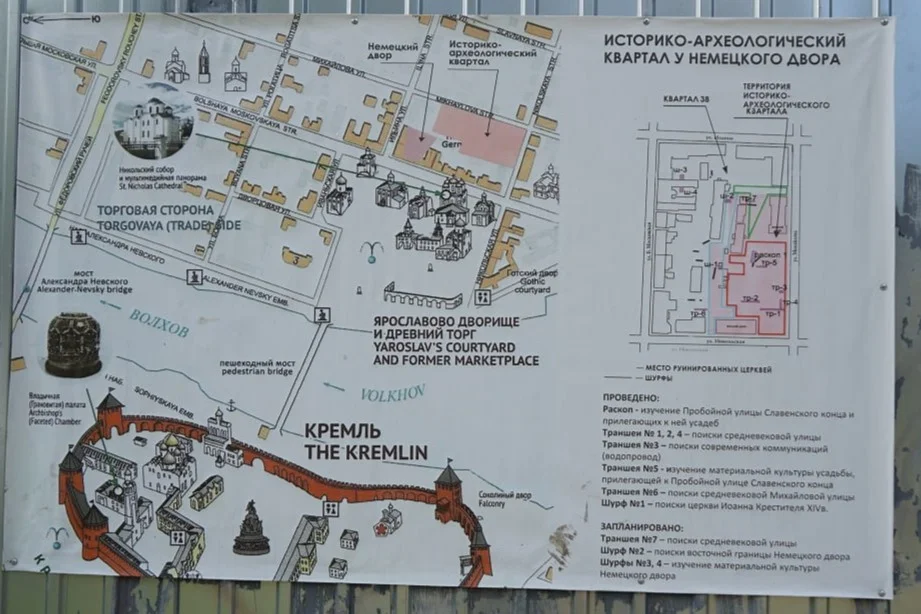
Meanwhile, on the John’s excavation located next to the German courtyer, which has not yet been studied (there are still a boiler room and other institutions), a discovery has been made, which has already given, and promises even more interesting results - a cemetery of the XIII - XVI century was found.
“I must say that a lot of medieval cemeteries in Novgorod were found and they were studied well, starting with the works of Artemia Artykhovsky at the Church of Peter and Paul in Slavna, there was a cemetery of the 16th century. ... But our object is unique, because it includes the cemetery of both the Moscow period and the layers of the XIII - XV centuries. We are now studying the burials of the Novgorodians who were born and were baptized in the church of John the Baptist. People came here with their joys and sorrows. Here people were buried. These people built Novgorod, wrote birch bark letters, they fought, they traded. These are silent people that we know very little about. And for the first time we study how they were escorted on the last journey, ”said the excavation at the traditional“ archaeological Friday ”in August 2024, archaeologist Petr Gaidukov, corresponding member of the Russian Academy of Sciences, who led the Trinity and other excavations and recently celebrated his 70th anniversary on the John of the excavation.
The Church of John the Baptist (or John the Baptist) in the area of the modern street Mikhailov and Ilyina has been mentioned more than once in the Novgorod annals. In the XII - XIII centuries, it was wooden, and in 1359 the boyar of the Lazeta placed a stone church in its place. “The building stood before the church reforms of Catherine II, when the church lost state support and was closed. Gradually, she drew, destroyed, and, apparently, by the end of the 18th century was dismantled. A new quarter was built in its place, ”the TheartNewspaper.ru reported on the portal.
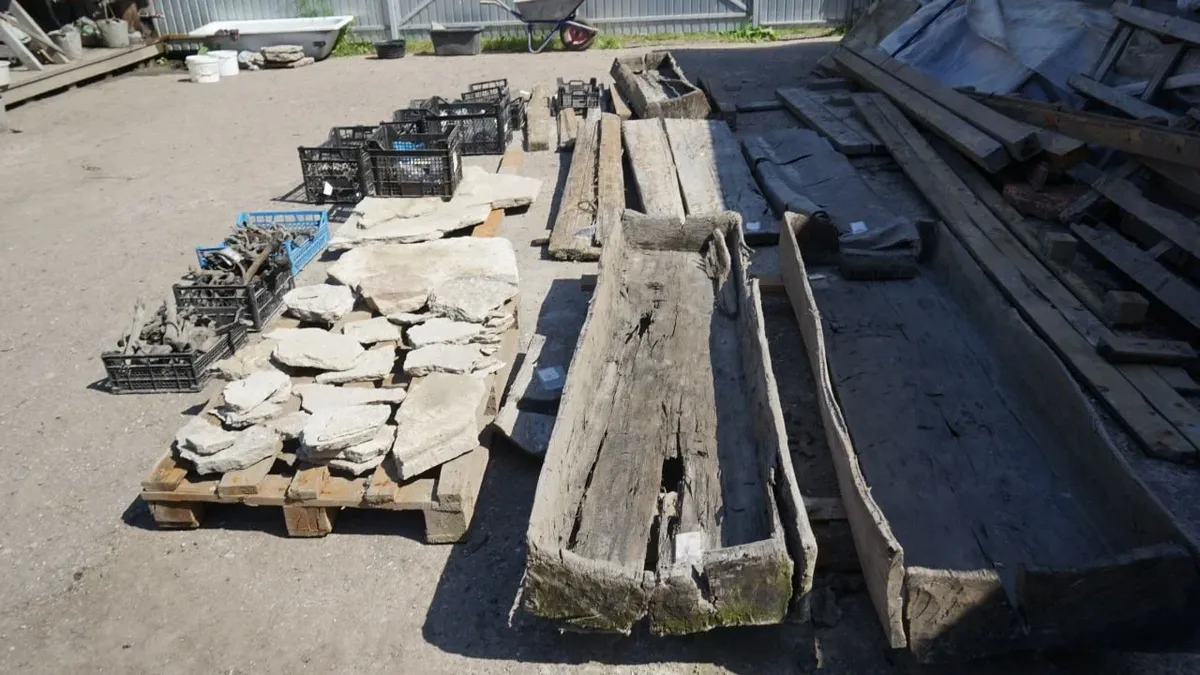
In 2023–2024, 191 burials were found and studied at the cemetery at the cemetery at the church at the church. It turned out that the ancient coffins were very narrow, people were buried in great tightness. The Novgorodians cherished literally every centimeter of the place. “Grabs 40 cm wide! Sometimes it’s hard to imagine how a dead body could be shoved into such a narrow box. ” “Another interesting feature is in details and the design of the coffins. I personally faced this for the first time. There is a bottom, there are walls (lateral, front, rear), there is a lid. But there is not a single nail! This suggests that the ceremony was specific. A small burial hole was dug up in the cemetery, the boards of the coffin were installed there, and after that they brought a ripe body and made a funeral rite, ”said Peter Grigoryevich.
“They could not stand the coffins on their shoulders, the deceased will fall out of such a coffin. Especially if without nails, ”says the head of the John the excavation, M.N.S. Institute of History of Material Culture of the Russian Academy of Sciences Pavel Milyaev. - It is interesting that the covers did not naive to the coffin. The lid almost lay on the face of the deceased. In this case, the boards could be both with the traces of the fire and secondary use. ”
The coffin before burial was often covered with birch bark, like a cloth. Babies and young children were often buried wrapped in birch bark. There were a lot of birch bark, both inside the coffin and on top of it. In 2024, a family burial was found - five people wrapped in birch bark: three children and two adults.
An interesting feature of this cemetery was the fact that from the side of the street it was limited by huge logs. According to the figurative expression of Pavel Milyaev, "the cemetery was like a kind of bed [around the church], which was limited by logs, poured the ground, aligned and buried a new layer on this." Then the pouring procedure was repeated. The church territory was rigidly clamped between residential areas with estates, their borders did not change for centuries, the cemetery had nowhere to grow to the side, as often happens now. At the same time, the ancient Novgorodians had to be necessarily buried at the church. “You must come to the Last Judgment, and if you are not buried on the sanctified land, then you will be refused ... How was the entrance to the temple organized? It is still unclear. Apparently, there was a grave hill. Due to the close development around the cemetery, there were no options to expand to the sides, but only to grow up, ”Paul notes.
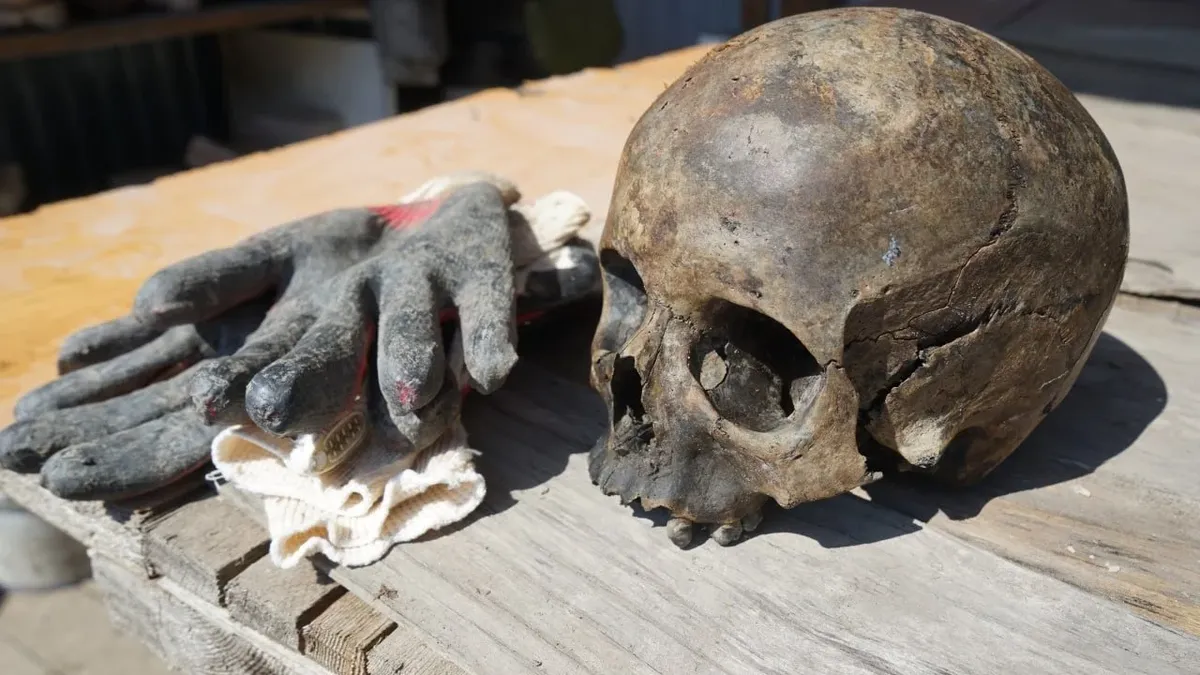
Not on any studied skeleton, and there are more than 200 of them, there have been found hijacking crosses. “This, of course, is not the greed of the Novgorodians, this is the part of the funeral rite. For excavations of mounds and later ground burials, we know the Old Russian rite, when a person accompanied a person to the last journey at least poor, but funeral equipment. In Novgorod in the XIV - XV centuries they buried without any inventory. Flax clothing. Burial shoes - slippers from a whole piece of skin, sometimes boots. Nothing more. This can be understood so that the ideology of the burial of that time was: “Nagim was born - I’m leaving nagim,” said Peter Gaidukov.
During the excavation, many samples of medieval shoes were found - for example, luxurious boots of the XIV century, which archaeologists will try to restore. This year, an amulet from a bear fang was found - pagan performances got along with Christianity.
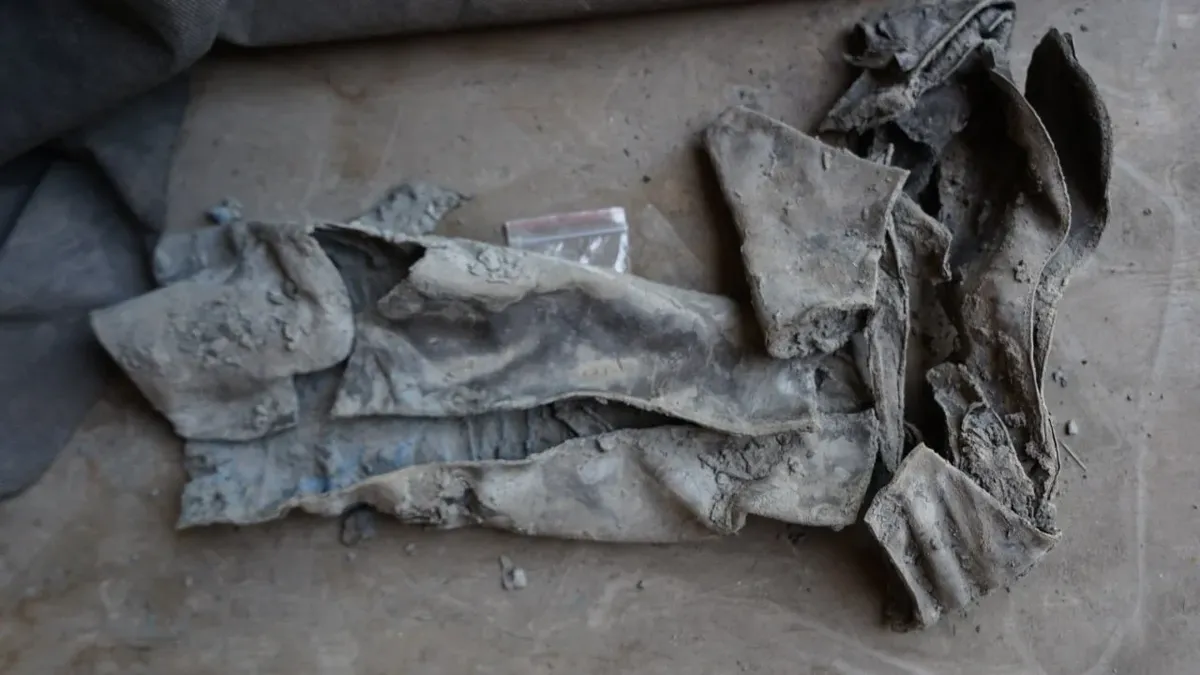
Irina Reshetova, a physical anthropologist, speaking at the Novgorod seminar (since the fall of 1979, he was held by the Department of Archeology of the Faculty of History of Moscow State University, for many years he was led by V.L. Yanin), said that for 2023–2024. More than 250 people were found on the John’s excavation. All age cohorts of the ancient Novgorodians are represented. Among them are 110 skeletons of men, 40 - women, 84 - children, while many of the children died at the age of 9 to 11 years. In children, markers of scarce conditions are recorded: vitamin failure and endocrine diseases.
“For the first time I work on such an excavation where there is everything: building, like on the Trinity Excavation, and a German court with a huge number of European material, and a pavement of the street, and then a cemetery nearby. So diverse objects! ” - noted Pavel Milyaev at the October lecture for volunteers of the Trinity excavation. According to Paul, the cemetery found shows that there were different burial rites, there was no single sample.
The boyars were buried in expensive stone sarcophages. “There was a family tomb in one sarcophagus. First, the child in leather boots, wrapped in birch bark, was buried, boyar son. And then two babies were subhored to him. The sarcophagus without the upper plate was also found, although the burial is not touched inside. The plate cost money, and, apparently, it was sold to another customer, she traveled around the cemetery. And she was put on another grave. ” Rich people with a rank a little lower - the boyars - buried in oak decks (made from half of the tree trunk) with semicircular lids. “Dubs did not spare,” and thanks to this, the drunks from the coffins found will allow you to conduct accurate dendrotics - to determine the date of the burial. The poor could finish their way in a simple pit with a board from above. This year they plan to bring this excavation to the mainland, they have already reached the construction chip of the late XIII century, the Novgorod residential layer.
Diploma No. 1234
“For the prospect of developing the archeology of Novgorod, the 38th quarter is an important place. Here is an extremely powerful cultural layer of eight meters. Thanks to the decades of the work of archaeologists in Novgorod, we know two of the three ends of Novgorod well. Nereevsky - thanks to the Nereevsky excavation, the people - thanks to the Trinity excavation. But the Slavic end, the most interesting and most important section of Novgorod, is known to us only in individual parts, pits and excavations. Therefore, the concentration of work here is important - this will allow us to look at the early medieval Novgorod similar to what we know about the Nereevsky and Sumyn ends, ”emphasizes Peter Gaidukov. His dream is to create here the historical and archaeological quarter, a living museum, so that residents of the city and tourists can come and can observe the work of scientists without interfering with them. ” Among the valuable exhibits of the future are the coffins found, and the ancient bridge, and the medieval “storm” (early 16th century), created by German and Novgorod carpenters. «Что интересно: вопрос строительства этой дренажной системы много лет обсуждался ганзейскими купцами с новгородцами, и только в 1432 году новгородцы разрешили им строить, и они построили», — отмечает Петр Григорьевич.
25 июля, как раз к Дню бересты, на Троицком XVI раскопе была найдена грамота № 1234, в ней три строки. «Ее правый край был обрезан еще в древности, поэтому надежно содержание не восстанавливается», — поясняет Е.А. Рыбина. Грамоту нашла Полина, студентка педагогического факультета НовГУ, будущий учитель истории и традиционных ценностей в системе воспитания (!). Целый месяц она и ее группа № 4731 проходила на раскопе практику — и в холод, и в жару, и в ливень. Судя по тем словам благодарности, которые студенты говорили своему участковому археологу из НовГУ Андрею Гриневу в последний день практики, 26 июля, кто-то из них уже готов к тому, чтобы связать свою жизнь с археологией.
Наталия Демина, научный журналист, волонтер Троицкого и Иоанновского раскопов