
Translated material
We sow humility to reap power: a brief story of the Brazilian Fank
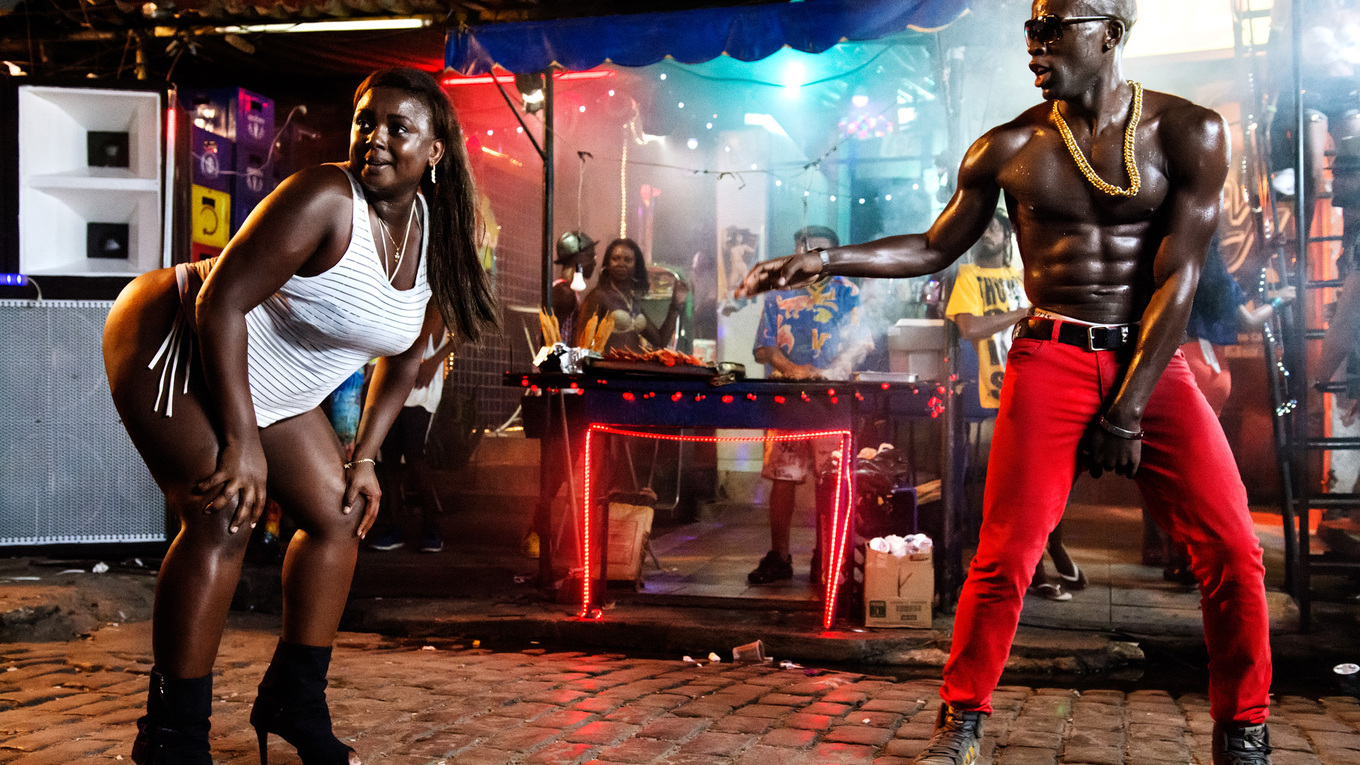
About why loud music from Tick-Tok is much more than just a noise, says a music critic Alexander Glazkov
The entire 2020s, Baile-Fank is located in the center of the global musical culture. The main star of the Anitta genre has 35 million listeners in Spotify monthly. The bass hits of the Brazilian Fonca, generated by experimental options for Fank, have become standard accompaniment of various short videos. And the recognizable shock rhythm “Boom-cha-cha-cha” sounds in Russian X and international chart hits. In dozens of Fanking microstals, which have been formed for the past 40 years in different states of Brazil, it is easy to get lost, so we decided to understand the history of this phenomenon.
Perito opens a new set to the book club “After words” - for those who want to better understand how the world we live in.
This time two programs are open at once. The first invites Nigeria, Vietnam, the USA and South Korea - through the books of Chimanda Adchi and Viet Than Nguen. The second is stories from the Karibov, from Burma, India and Japan, which we will read along with Amitav Gosh, Yuko Tsushima and the mysterious third author.
The first group starts on September 15 , the second - September 29 . The number of places is limited. Details and recording - on the site.
Why Baile, why Funk?
The expression "Baile-Fang" appeared a decade and a half earlier than the same music genre in the early 1970s. So called parties in the Favels of Rio de Janeiro, where they put fresh dance music from the United States, mainly black artists. They were James Brown , Kool & The Gang and other, less famous representatives of the American Funk. Soon, the inhabitants of Favel are accustomed to call this word everything that sounded on local parties. The word "baile" means simply "dancing"; If you translate everything together, you will get a "Funk-VEMA".
The interest of the inhabitants of Favel in “black” music did not arise from scratch. There is still a lot of systemic racism in the country. The study of 2021 showed that among the white population of Brazil, the share of the poor was 18.6%, and among black people and those born in mixed families - more than 34 and 38%, respectively. It is not surprising that in the 1970s the idea of Black Power was widespread in the country, which had noise in the USA since the mid-1960s thanks to the followers of the radical fighter for the rights of black Malcolm Iks . Together with the idea, music came from the north.
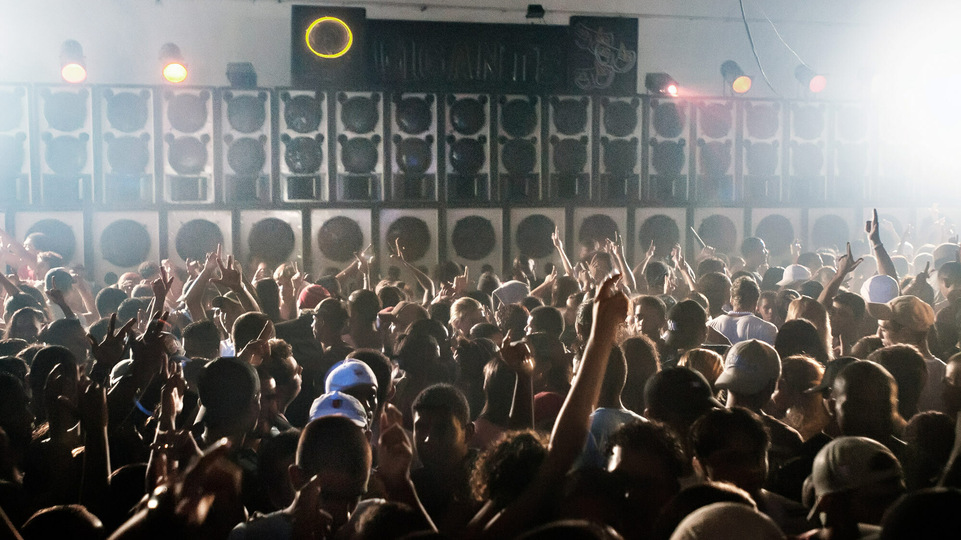
Over time, the sound of parties in Rio began to change, only his “black” origin remained unchanged. By the end of the decade, disco thundered at the dance floors with might and main, at the same time hip-hop began to penetrate the city, and by the mid-1980s of the Brazilian DJs, the new squeal from Florida-Miami-Bays massively carried away. Nimble bits of the drama machine with an imposed obsessive synthesizer melody and a cheerful attachment of rappers about the charms of female bodies are, for example, the entire discography of rap groups 2 Live Crew . It is in this music that the fink-cariok originates (the word “karioka”, local residents designate everything that concerns their native Rio de Janeiro), which the young DJ DJ Marlboro and Grandmaster Raphael began to play. A few years later, DJ Marlboro became one of the most recognizable figures in the entire history of the Brazilian Fank.
From 1986 to 1989, the tracks of the genre almost did not differ from their North American prototypes. The DJs put the instruments “cut” from the records of rappers from Miami, and the local Emsi (or Funyiro) read them similar in rhythm with the original forces in Portuguese. Only the lyrical content was distinguished: either it was an elegy about a difficult life in the Brazilian slums, or humorous sketches.
The jokes of the inhabitants of Favel may seem too cynical and harsh, but survival in such quarters requires rigidity and pressure in everything. So, the composition “ Melement Mulher Feia ” MC Abdullah , released at the first official genre collection “ Funk Brasil ” in 1989, was built on riding a “ugly girl who smells like a vulture” trying to roll up to a lyrical hero. Another example is “ Melô Do Bêbado ” MC Batata , which in the first person tells the story of an alcoholic obsessed on the cashas, whose dependence arose on the basis of children's injury.
Pops and gangs
In order to better understand the conditions in which the baile-fank had to develop, you need to figure out what relations the residents of Favel are with the state.
In the very existence of Favel, exclusively Brazilian authorities with their irresponsible housing policy are to blame. The programs for the resettlement of urban residents from self -building slums appeared in the country back in the middle of the 20th century, but they can hardly be called successful. One of the most famous Favel Rio de Janeiro, Sidade de deesh, known for the film “ The City of God ”, began with the construction of social housing in the west of the city in the mid-1960s. Work in the area quickly stopped, the infrastructure did not conduct the infrastructure, and people in new houses already lived. I had to equip life on my own without hope for the help of the state.
The Favels are economies separated from the rest of the city space, mini-city, which are governed by local forces without the participation of public services, including police.
Of course, due to the lack of state control in the Brazilian slums, banditry and drug trafficking are common. The country's authorities are trying to solve these problems, but in the process they resort to extremely cruel methods. Police special detachments regularly carry out armed assault on the Favel engaged in gang groups; In 2018, as a result of these actions, 1075 people were killed only in Rio de Janeiro. Among them are innocent teenagers and at least one young mother. The person’s accommodation in Favels is the reason for his stigmatization by the state, or even consideration as a threat, even if this person has no connection with criminal communities.
This attitude of the state to the poverty already oppressed by poverty does not have a reciprocal love. And Bayle-Fank-loud, energetic and easy to produce music-becomes not just a musical part of parties, but a political weapon that makes it possible to talk about their hard life for those who are usually deprived of a voice.
It is no wonder that the songs in this genre were hard to put on the radio in Rio de Janeiro. The reason was the formal ban on the air of obscene vocabulary, which the Fank artists did not disdain. Then DJ Marlboro decided to make a trick. In the early 1990s, he created a bed of Funka, named Funk Melodi, or melodic funk. Texts about love, sung on top of a slightly softer instrumental than in an ordinary Funka-carioca. In addition to legal releases, the people often walked “real” versions of songs, the texts of which were already shining with vulgarity. The first large stars of Funka Melodi were Mc Marcinho and Claudinho & Buchecha .
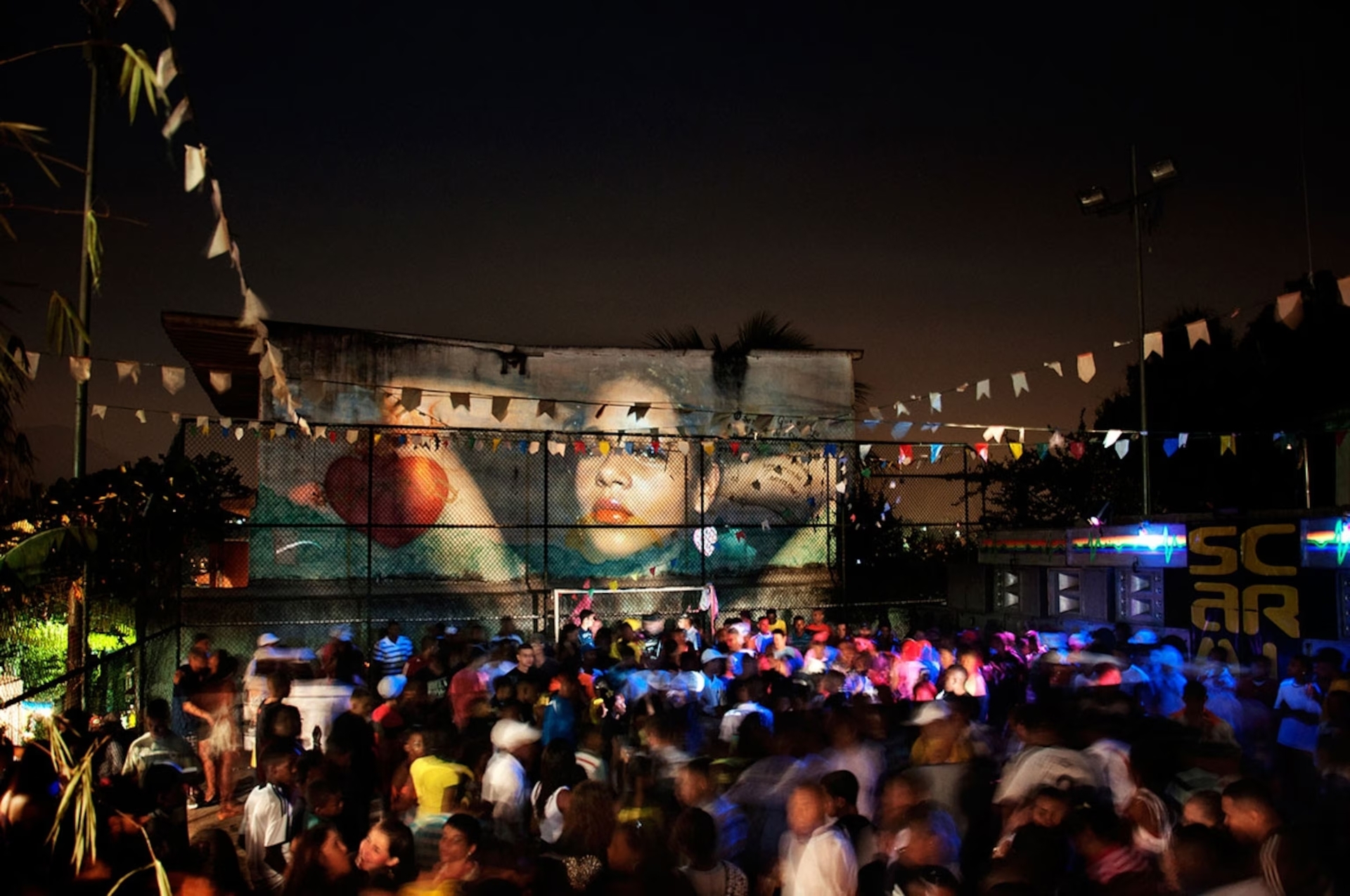
In contrast to the new commercial style in the mid-1990s, the Funk Proibidlad style, or the prohibited funk, began to form. It is called so largely because the authors performing it practically did not release their songs officially. Police could pursue the artists even for the version of the track, devoid of dangerous words. In the original, the songs were made by order of gangs with a request to praise their members and activities; As a rule, in addition to the primitive drama lupus and the sounds of the firearm, nothing interfered with the voice of Emsy in them. Especially in the Fank Propaganda case, the famous Comando Vermelho (Red Team) group succeeded, the compositions of which are continued to gain millions of listening even in the era of YouTube.
“There are only suicide bombers in the gas sector, everything is or nothing in the war.
Several titanium stores, body armor -
We go to the track to make a robbery.
On me is Rolex, 600 rings, imported spirits, a pistol in a holster.
Woman, gold and power - we win in battle.
We do not need a loan, we pay in cash for everything.
These are Ecko, Lacoste, Oakley, several teams of teams.
Those who are outside even think that it is easy to earn a living with crime.
We sow humility to reap power, the reward arrives soon.
We are not criminals, because we are creating a law.
We are right for the sake of law, we are not accepting cowardice.
Not everyone can come and find a moral buzz "
Faixa de Gasa Familia DV Aliados Do Comando Vermelho
Even children and adolescents were attracted to the recording of tracks dedicated to the romanticization of murders and robberies. So, in 2013, a collection of tracks of the sixteen -year -old MC Vitinho fell into the network, the first of which he recorded back in thirteen.
The background originates, as it is believed, from the track of the CIDINHA E DOCA “ Rap Das Armas ” of 1995, in which the authors sing about the impregnability for the Fael police on the Morra-Du-Dodes hill. It is somewhat ironic that the group is no less known thanks to its composition “ Rap Da Felicidade ”, in which the hero dreams of a happy and calm life in favelas, spared from violence. This story shows the artist’s current position in Baile-Fank. He is not that a free creator, but works as a craftsman: he writes on topics that will respond in society or be paid directly.
“That the favels are dangerous, that living there is not good.
Their society as a whole is harshly criticizing.
But violence reigns in every corner of the city
Due to the lack of education and information.
People buy weapons and ammunition,
But get involved in any fight or trouble,
Feeling protected with weapons in their hands "
Rap Das Armas, Junior E Leonardo, DJ Marlboro
Access to the world and the Internet revolution
The world public learned about the baile-fank and, in particular, about Funka-probideu (the yield of genre compilation on the Sublime Frequencies label located in Seattle) along with the spread of the Internet in the beginning of the mid-2000s is indicative. On the dance floors of European clubs, one could often hear the track of the Bonde Do Tigr ... Tchu Tchuca Brazilian Fank group (today, on the wake of interest in the genre, the motive of this song is often rethought ), and one of the first successful attempts to adapt the style of the Booky Done Gun , the authorship of the British-Tamil Contractors MIA and American producer Diplo.
A few years before international success, one sound change occurred in Baile-Fank, thanks to which the genre completely broke away from the stigma of the local variation of Miami Bace and acquired a modern look. Tired of the mechanical rhythm of the drama machine, which the Fank-producers borrowed from the record “ 8 Volt Mix ” (Volt Mix), along with the DJs from Miami, the young enthusiasts DJ Luciano and DJ Cabide in the late 1990s decided to ascertain with the seed of the Brazilian music of the attack of the attack of the Atabaca. The result was a lively bit, according to which it is now customary to recognize the Brazilian genre around the world: boom-cha boom-cha. In the early 2000s, he quickly won a place in the hearts of listeners and authors of Funk, first in the form of a combination with the rhythm of Volt Mix, and then absolutely autonomously. It is quite difficult to find a pure volt-mix in a baile-fank, and in the association with Tamborzao (“drum blows”) this dram-lupus is used only as a stylization to the old sound.
In parallel, the introduction of Tamborzeo replaced the soft romantic texts in Funk Melodi provocatively sexualized lyrics. In Brazil, this direction is called Fank-Potteria ("slutty funk") and it continues to gain popularity. Men and women are equally singing about sex in this genre. This can be a way of emancipation: speaking of their own attractiveness, women regain speech and agency in a world where men perceive them only as sexual objects or housewives. The classic example is the track “ Orgia ” of Funyers (Baile-Fank woman in Baile) Tati Quebra-Barraco and the Bonde Do Tigrire group. According to the uncomplicated plot, the guys from the group call Tati for group sex, and Funyira coquettishly and somewhat proudly declares that she must first be able to seduce. Leandrino Moraes, participant Bonde Do Tigr, is trying to do this in the second half of the song. “If I break into your shack (Barraco), you will love my pranks // And then tell friends that with [Bonde Do] Tigrander to sleep - delight.”

Together with the growth of the popularity of Baile-Fank, in the 2000s, control over the fink-wards from the state also intensified. For the musical scene in Rio de Janeiro, which remained the center of Funk music, it was a terrible blow, because it was at parties that the funkyera performed the obscene versions of their hits, almost inaccessible on the media. “Fink lives under dictatorship,” complained Carlos Plukobini , professor of music science of the Federal University of Minas-Gerace . The occupation and cleansing of the many Favel Rio de Janeiro on the eve of the 2014 World Cup also slowed the development of musical culture in the state.
In the same period, the Bayle-Fanka geographical center began to move to San Paulo, whose population is about two and a half times more than the population of Rio de Janeiro. While the funeral carioks, which was tied to offline in the matters of the Fank-Carioca, faded away under the oppression of the state, representatives of Funka-Paulists (Funka from San Paulo) flew up on YouTube. In the early 2010s, it was enough just to lay out your tracks with a simple visualizer on the platform to get good monetization-the video hosting was not yet full of content. However, the best advertisement for music on YouTube is clips that, if they were, are completely artisanal in Baile-fank. For example, the Kondzilla project began to correct this situation, on the channel of which professional video postings to many Fank Khits of the 2010s were published.
The musical and lyrical content of the early Fan-Paulists, known as Funk-Ostennsa (“Shinge Fink”), finds an interesting border between tradition and the revolution. On the one hand, a fundamentally new conversation about all kinds of luxury appears in the genre, which no one could have thought about in Favels before. On the other hand, the geography of inspiration remains unchanged: the roots of Fanca-Ostennsaus go back to the North American pop-rapper and electric chief of the late 2000s as exactly as much as the roots of the Brazilian fan date to Miami Bace. A particularly striking example of stylization in the genre is the hit of MC Rodolfinho “ novinha ”, which, when listening, is easy to consider for some kind of forgotten Bi-Side from the old Pitbull rapper album.
Of course, calling a Fank-Ostenansa full tracing paper from the US music would be unfair. So, the most famous sample of the genre, “ Plaque de 100 ” MC Guimê , is very interesting from the point of view of the bit. In 2012, a Powlist Fanca was still important with an emphasis on recitative, but by the end of the decade, constant mutations in musical production will lead to an inversion of Bit/Funyiro relations. It will become more important not what the song is sung about, but how the song sounds.
The direct rhythm of Fanca Automotive (“Automatic Fink”), which breaks the walls of the bit aggressive (“aggressive bit”), complicated percussion of the rhythm , the terrible atmosphere of Bita Brusharia (Beat Bruxaria, “Witch Bit”)-such characteristics that sounded in the expanses of Favel San Paulo since the late 2010s.