
Translated material
“Putinism is worse than Stalinism? Well, well! " Dmitry Bykov* talked with the author of the book about dissidents Benjamin Nathan about the past and future of Russia
The book of Professor Pennsylvania University Benjamin Nathans “For the success of our hopeless business” in 2025 received the Pulitzer Prize, as well as many professional awards around the world. This 800-page intellectual bestseller talks about the history of the dissident movement in the USSR. Especially for Republic, our permanent author, writer Dmitry Bykov talked with Benjamin Natanes about who became dissidents, why they did not go into politics after the collapse of the USSR and how hopeless the work of the current anti -war emigrants.
The book of Benjamin Nathans “For the success of our hopeless work” refutes the myth of Russian propaganda on the abolition and ban in the West of all Russian and Soviet. It is now actively involved in the program of many seminars on the study of Soviet history. By the way, students are enrolled in these courses with special enthusiasm: everyone is interested in how the centuries -old empire drives itself into a bloody dead end out of the blue, without any coercion from others. Very few understand to what extent this is logical. I think that Nathans is one of these few.
Benjamin Nathanx was born in 1962 in the family of the Nobel laureate in physiology and medicine Daniel Nathanas, who opened a restriction. He studied for six months on exchange at the University of Leningrad. The first book "Behind the line. Jews meet with late-imperial Russia ”was published in 2002 (Russian edition-Rosspen, 2007). Now Natanes is teaching Russian, Soviet and Eastern European history at the University of Pennsylvania.
- How would you describe the paths that brought Soviet people to the dissident movement? I myself saw in this social group there are more orthodox communists or just loyalists than the oscillating intelligentsia. When a person believes in something, it is somehow more natural for him to start resistance. The Soviet elite - say, Sakharov - had preferred opportunities, and abilities, for organizing protest. There were also hundreds of those who had the experience of repressions, hard labor and links (like Yakir or Ikrams). What special qualities forced Soviet people to become less Soviet?
- In general, it is rather Soviet - or emigrant - the point of view that the dissidents were a mirror reflection of the so -called orthodox communist activists, zealous supporters of the party and socialism. This is still inaccurately (and is there any attempt to belittle them a little?).
Of course, Soviet dissidents were the products of the Soviet system - born in it, educated and socialized by it, working in it - like all citizens of the USSR. In a sense, they were moved by highly morality-in advance, speaking, fundamentalness-which this system just sought to cultivate. If something was Soviet in them, it is an “active life position”, which was imposed as Soviet virtue. But what really interests me is the ability of Soviet orthodoxy, like all orthodoxy, to generate its own specific heresy - the heresy of publicity and strict observance of Soviet laws. Remember: "Follow your own constitution!" This was not ordinary parody or rebellion against Soviet law; Rather, it was a form of its creative rethinking. The versions of this specifically Soviet heresy existed in almost every Soviet -type system (Poland, Czechoslovakia, China, and so on).
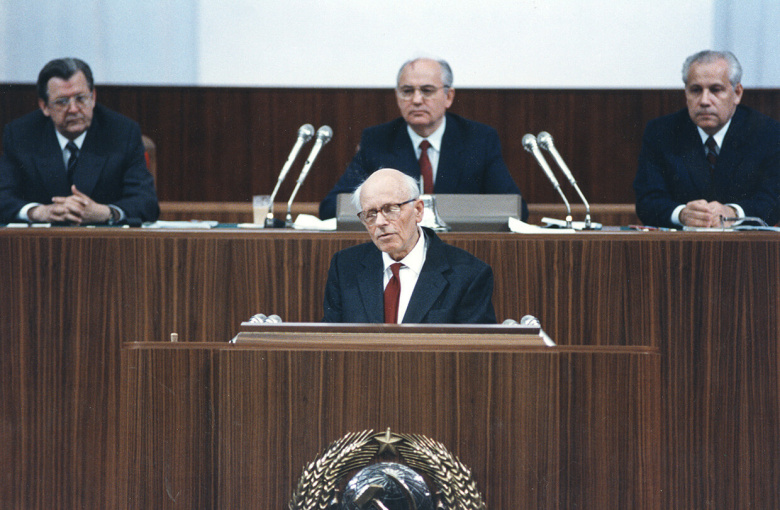
Andrey Sakharov on the rostrum of the 1st Congress of People's Deputies of the USSR, May 25, 1989
Photo: Sakharov Archive / Yu. Lizunov
As for the experience of repression, people with this experience are inside the Soviet dissident movement, and so quantitatively few, there were simply units. True, people are very significant: Peter Yakir, Viktor Krasin, Lev Kopelev and Alexander Solzhenitsyn. Typically, the sequence was reverse: first dissident activities (as a rule, strictly within the framework of Soviet legislation), then repression. The experience of Soviet hard labor could rather push away from participating in politics - intimidate for life. Some old camps just warned the young people against participating in politics - "You do not understand what you are going to."
- Since the beginning of the tenths, I have repeatedly repeated that Putinism is worse than the so -called stagnation and even Stalinism, because the Soviet project was based on the ideas and practices of the Enlightenment and was inspired by the slogans of progress. The seventies seemed the best time of the Soviet Empire (or just the smartest time). What can you say about Putinism and its prospects? Can you predict something like a thaw-either a slow decline, or a sudden explosion, as in 1917?
- Putinism is worse than Stalinism? Well, well! Putin did not send 18 million Russians to the camps, did not kill several million through hunger and mass reprisals, and did not deport entire peoples to Siberia. But I understand your point of view: Stalinism appealed to the universal ideals of the Enlightenment, which attract many today, while the Putin government rejects universalism as such and takes the forms of cynicism, which were suppressed in the Soviet era. Or, at least, displaced into the subconscious. Many Russians agree with you that they see the 1970s-retrospectively-as a golden era, which Yuri Slovkin called the "historical respite." However, for many today's citizens, this is just nostalgia for youth.
As for the future Putin system: I am not sure of my ability to predict what will happen next year, not to mention the next decade. Much depends on how the war against Ukraine goes and how the Russian economy will cope with the load of this war and very harsh economic sanctions introduced by the West.
Putin concentrated enormous power in his hands, but did not become immortal.
The history of Russia shows that the transit of the authorities does not pass smoothly. No matter how incredibly this may sound, in Russia there are still no rules, nor norms, nor guiding principles for this procedure. We saw how easily Putin costs constitutional restrictions on the term of his stay in his position, but this is exactly until he is in power. I have a premonition that a very small number of people - and not the fact that Putin personally will determine the next ruler of Russia. I also have a foreboding that most Russians will not resist this process-they will accept it, someone with a slight grunt, someone with satisfaction.
But two factors can potentially violate the relative stability of the current system: a significant deterioration in the martial law of Russia in Ukraine or a significant decline in the Russian economy. This is evidenced by historical experience, and not only Russian. I think that Putin, who turns to history more often and more intensively than most world leaders, is well aware of these lessons. I feel that the Russian state does everything possible to prevent military defeat or economic recession. All other tasks for the authorities are third -stage.
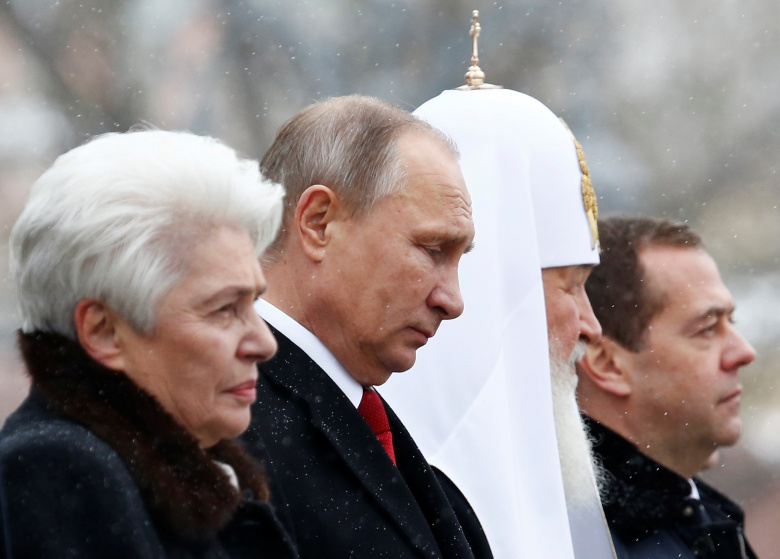
Natalya Solzhenitsyna, Vladimir Putin, Patriarch Kirill and Dmitry Medvedev at the opening ceremony of the monument to Vladimir I, November 4, 2016
Reuters / Sergei Karpukhin / Scanpix
But success is not guaranteed. Putin used preparations for the war for the systematic dismantling of independent institutions in Russia; He used the war itself to strengthen his control and made Russia much more authoritarian than it was until 2014 or 2022. All authoritarian systems have one innate problem: they do not tolerate dissent and disagreement. The discussion of the main challenges is excluded. Only those who do not argue with the leader are in key positions. In the long run, this blocks the adoption of good decisions.
- That is, the number of autoimmune problems ...
- It will increase annually.
Subscribe to read the whole
Make a subscription Redefine.media to read Republic
Subscribe [you can pay for a Russian or foreign card. The subscription is extended automatically. You can unsubscribe at any time.]
Where are the money subscribers going