
Translated material
Moscow lifted the moratorium on INF deployment
The Foreign Ministry accused the West of developing missile potentials in countries neighboring Russia
The Russian Foreign Ministry officially announced the lifting of the unilateral moratorium on the deployment of intermediate-range and shorter-range missiles (INF). In a statement, the department said that the conditions for maintaining previously existing restrictions have disappeared.
Moscow claims that the actions of Western countries are leading to the formation of “destabilizing missile potentials” in the regions adjacent to Russia, which creates a direct threat to national security.
The Foreign Ministry emphasized that such a development could lead to tension between nuclear powers and have a detrimental effect on global stability.
Russia also said it would take “compensatory military-technical measures” that would help maintain a strategic balance. Decisions on the specific parameters of these measures will be made by the country's leadership after analyzing the scale of deployment of American and other Western missiles, as well as assessing the general situation in the field of international security.
In order not to miss new texts from “Layout”, subscribe to our telegram channel
Russia previously announced its abandonment of the moratorium
Previously, the Russian authorities have repeatedly stated that they are ready to abandon the moratorium on the deployment of intermediate-range missiles if the United States and its allies continue to deploy weapons previously prohibited by the Intermediate-Range Nuclear Forces Treaty of the “perestroika” era.
The reason for the final decision, according to Moscow, was Washington’s announcement of plans to deploy long-range weapons in Germany by 2026.
In Berlin, this decision was explained by the need to contain Russia against the backdrop of the ongoing conflict in Ukraine.
The Kremlin recalled that Russia is already developing new missiles that were not previously produced due to the restrictions of the INF Treaty. In particular, on June 24, 2025, Vladimir Putin announced the start of mass production of the Oreshnik complex , which Russia used to attack the Dnepropetrovsk Yuzhmash in November last year.
In addition, Moscow allows for the possibility of deploying RMSD not only in Europe, but also in the Asia-Pacific region, if the situation requires it.
From treaty to new arms race
The Intermediate-Range Nuclear Forces Treaty was signed by the USSR and the USA on December 8, 1987 and entered into force on June 1, 1988. Since 2014, Moscow and Washington have repeatedly accused each other of violating its provisions. As part of the Treaty, the USSR and the USA pledged to abandon the production and testing of ground-based ballistic and cruise missiles with a range of 500 to 5,500 kilometers. Between 1988 and 1991, the parties destroyed a total of 2,692 missiles, of which 1,846 were destroyed by the USSR and 846 by the United States.
In 2018, the United States accused Russia of violating the treaty, saying that the 9M729 missile of the Iskander complex exceeded the permitted range.
In 2019, Washington officially withdrew from the agreement, and Russia suspended it. Moscow also laid claims to American Mk-41 launchers located in Romania, which, according to Russian authorities, could be used to launch banned missiles.
However, after withdrawing from the treaty, Russia stated that it would still not deploy intermediate- and shorter-range missiles as long as the American side refrained from doing so.
What are intermediate and shorter range missiles?
The INF Treaty includes ground-launched ballistic and cruise missiles capable of covering distances from 500 to 5,500 kilometers. Most of them can be equipped with nuclear warheads. The main danger of these weapons lies in their proximity to targets and short flight time. The attacked side may not have time to retaliate. This increases the risk of nuclear conflict.
Earlier, “Verstka” reported that Western countries, against the backdrop of the ongoing war in Ukraine, lifted restrictions on the range of weapons supplied to Ukraine. According to German Chancellor Friedrich Merz, this decision was made by all of Kyiv’s allies. Presidential press secretary Dmitry Peskov called this decision a serious escalation. In addition, we wrote about hypersonic weapons that Russia has. For the first time, Russian President Vladimir Putin spoke about its presence in an address to the Federal Assembly in 2018.
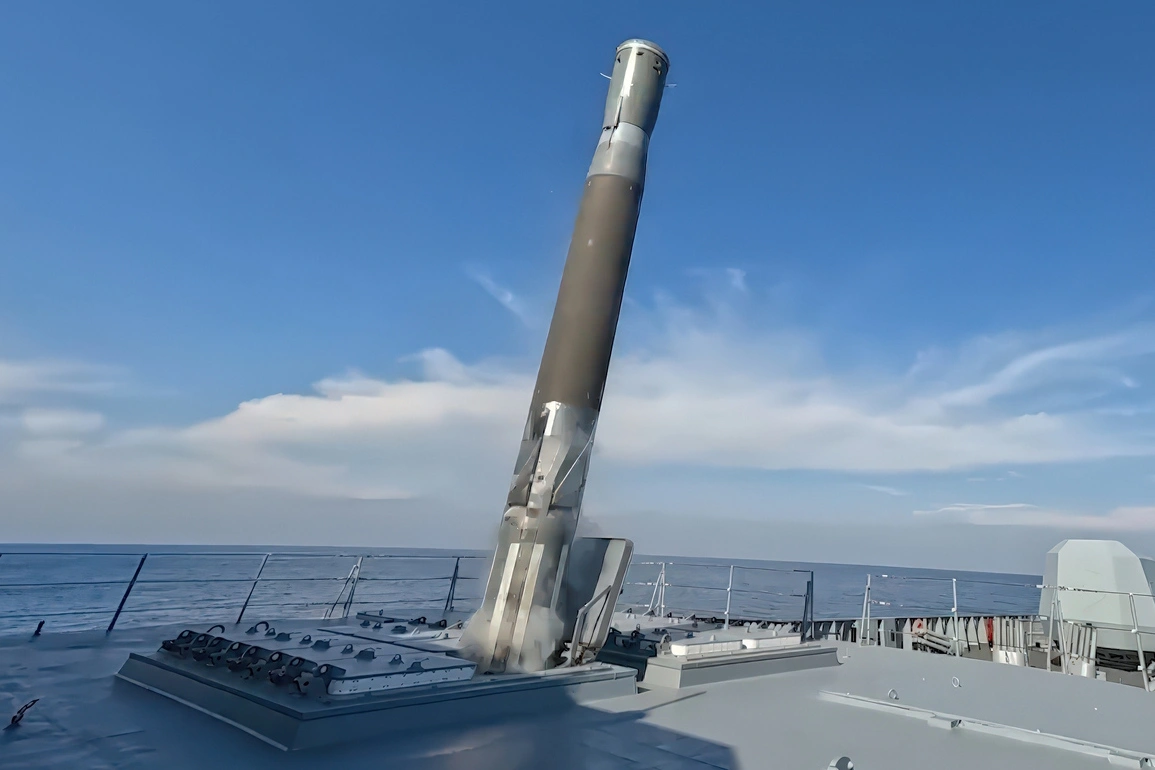
Photo: Zircon missile launch in the Mediterranean Sea. Ministry of Defense of the Russian Federation
Support “Vestka” - it’s important and safe →