Translated material
“When you already know the right and guilty and you play for which side, you inevitably impoverish your work”
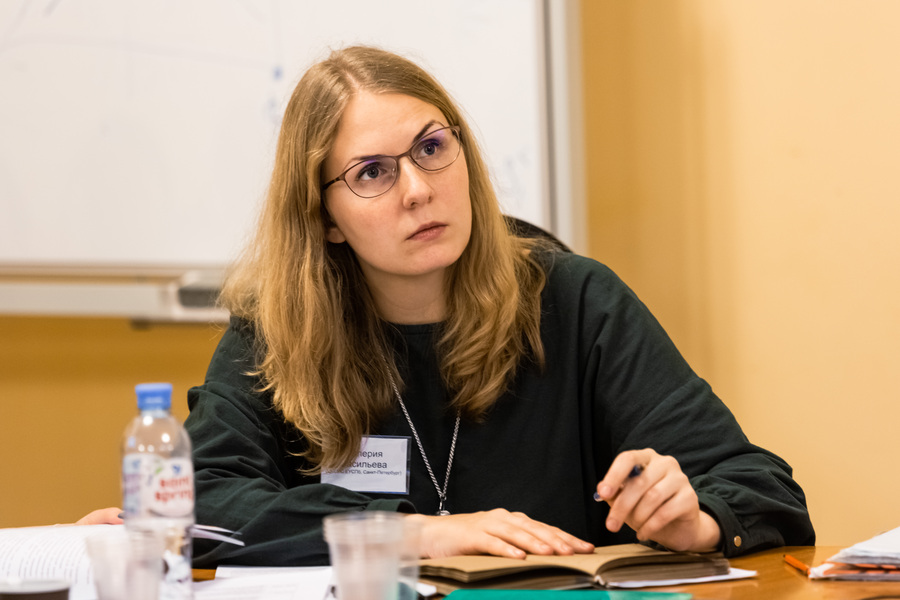
Interview with Anthropologist Valeria Vasilyeva from the Center for Social Research of the North
The issue of mastering the Russian Arctic and the Northern Sea Route is increasingly raising, which, in the context of a global climate change, can become a new transport artery from the Atlantic Ocean to the Pacific. But what is the northern villages and ports in fact? And how does the life of indigenous nomads develop in these places? We talked about logistics in the snow desert, deficiency of goods, the difficulties of producing deer and the features of anthropological work in the north with Valeria Vasilyeva, a senior researcher at the Center for Social Research of the North of the European University in St. Petersburg.
Perito opens a new set to the book club “After words” - for those who want to better understand how the world we live in.
This time two programs are open at once. The first invites Nigeria, Vietnam, the USA and South Korea - through the books of Chimanda Adchi and Viet Than Nguen. The second is stories from the Karibov, from Burma, India and Japan, which we will read along with Amitav Gosh, Yuko Tsushima and the mysterious third author.
The first group starts on September 15 , the second - September 29 . The number of places is limited. Details and recording - on the site.
Dolgans and Sovietization of the North
You mainly work in the field with debts. How would you describe them?
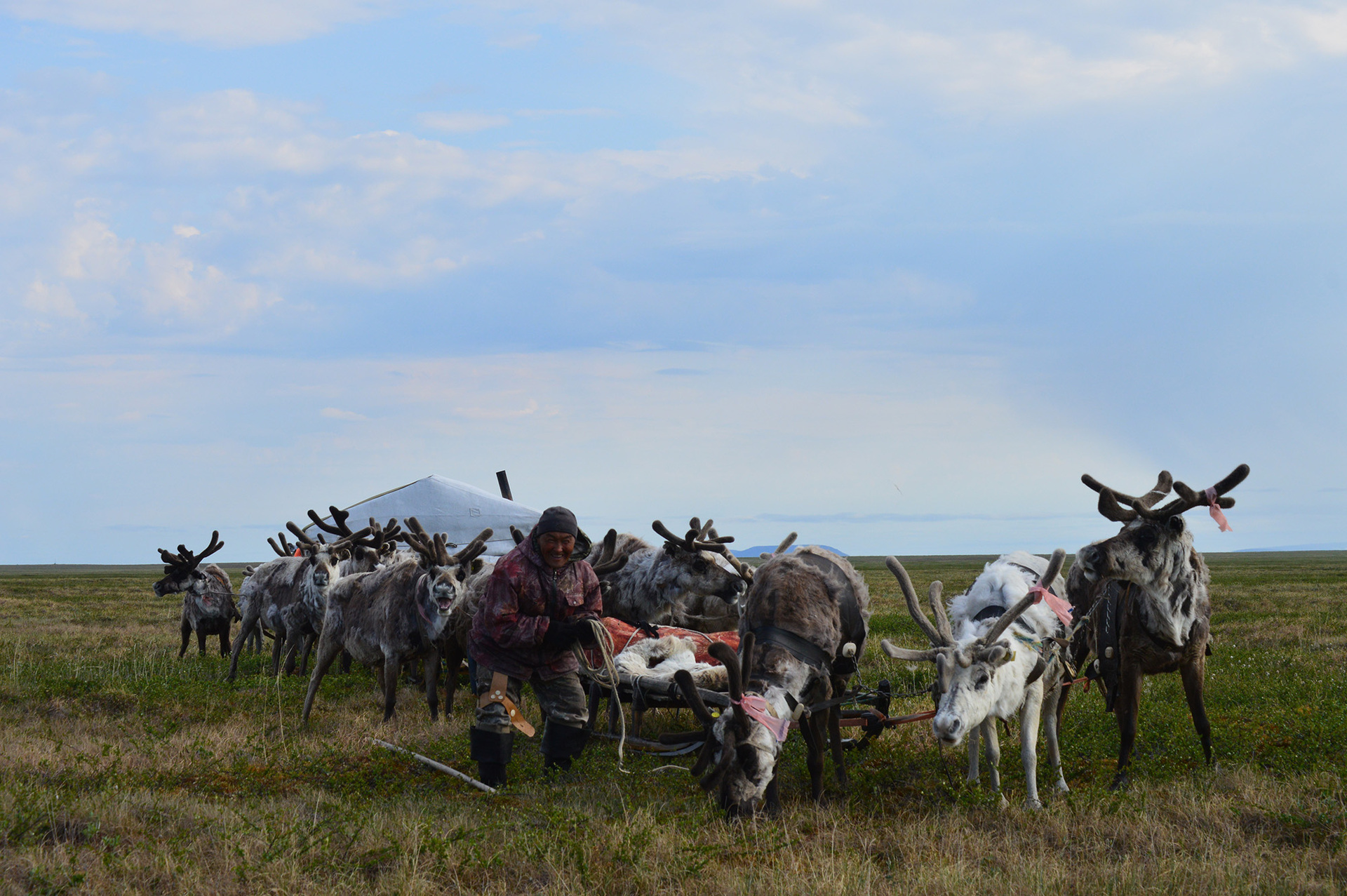
Dolgans are an interesting group. Classical ethnography loves to describe them as a result of the merger of Evenks, Yakuts and Russians, which occurred around the infrastructure. In Taimyr, by the 19th century, the Hutangsky tract, similar to the postal Yamsky tracts in the European part of Russia, was formed, only a deer was used instead of horses. The allocation of Dolgan as a separate ethnic group is associated with the work of local residents for its maintenance and numerous mixed marriages.
The word "dollar" appears approximately in the middle of the 19th century, and often they are called the youngest ethnic group of Russia. The language is close to the Yakutsk, Turkic group, with a share of Evenki vocabulary. In the culture, the long -like culture, rather, are similar to the Evenks, but in Yakutia there is a scientific tradition that reckts them to the northern Yakuts. This is a rather typical story - the way we call this or that group is more connected with politics, and not with science.
How did Dolgan develop relations with the Soviet Union, what happened to them in Soviet times?
About the same as with others: in the 1920-1930s, farms were collected, dispossessed. Shamans, as religious figures, also fell under repression. Dolgans were a nomadic group, and, like other nomads, they tried to “ground” them-so the villages appeared in the 1930s.
In the villages that arose around the cultural base, Sovietization developed: they conducted educational programs in hygiene, taught literacy in schools, modernized in accordance with the new state standards. And the second wave of translation into settling is the 1960s, the formation of state farms. They tried to replace household wandering production, when men, like a watch, go to the tundra, rewall their deer and return to the village.
Of course, this did not always work in practice. For example, people received apartments in the village and continued to wander.
And what did hunters do in such conditions?
Hunters and reindeer herders in pre -revolutionary times are the same people. In Soviet times, these industries were divided. The state farms in Taimyr were usually mixed-reindeer herring, fishermen, hunting-but the brigades specialized in one thing. Certain points were assigned to the hunters at which they were obliged to hunt and around which hunting trails, pussies were laid.
For example, in Soviet times, a fox was actively mined with the help of mouths - traps that went around with a certain frequency. Another example of the hunting farm is a state industry in the Central Taimyr, which was organized in the 1970s for shooting a wild deer. Hunting points stood on the banks of the river in a row, at the crossing of the deer they shot, counted and exported.
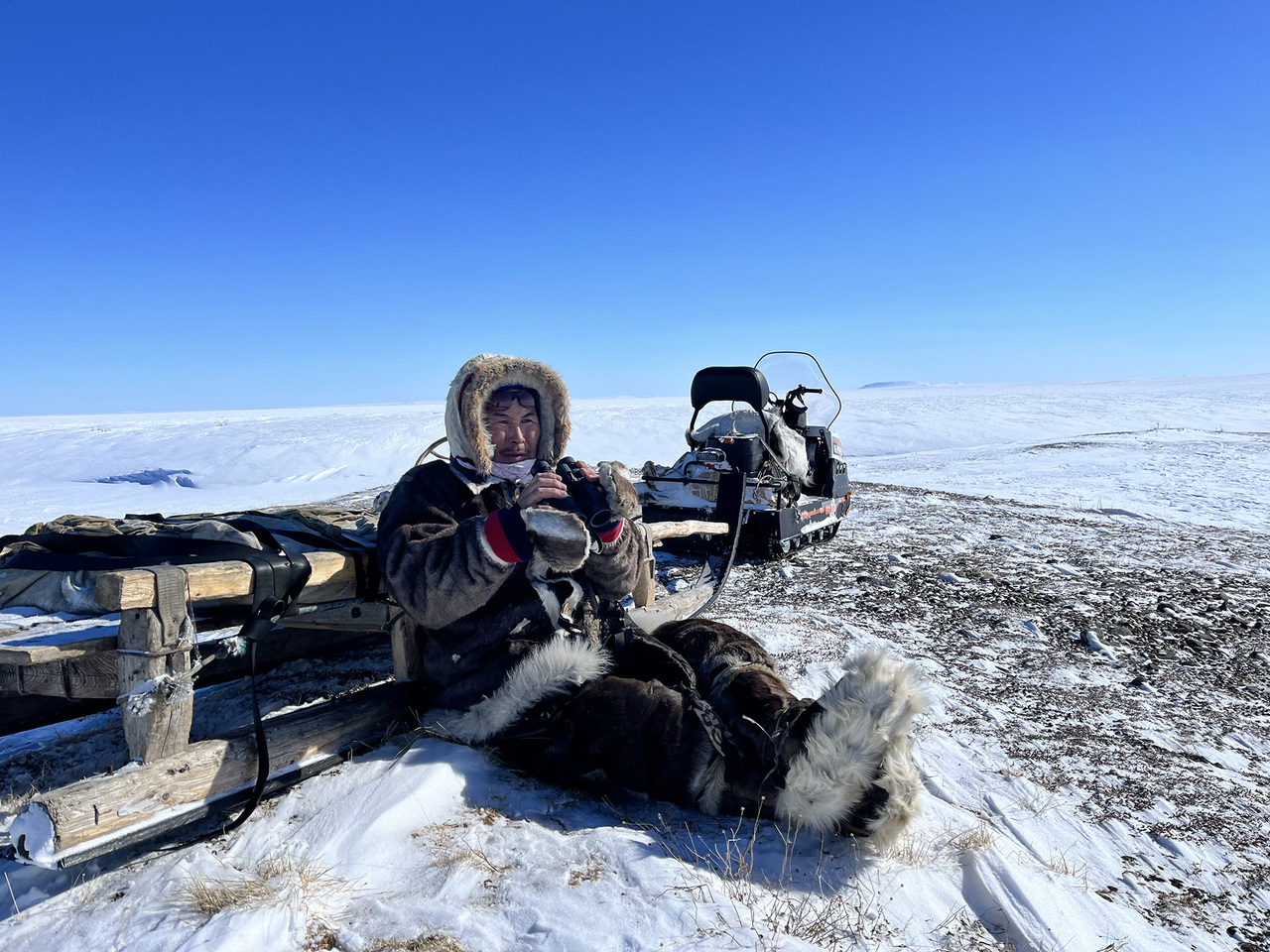
Hunting methods have changed greatly under the influence of the Soviet Union and technology: weapons and transport were very modified. Previously, you stood with a tamed deer-man, and he drove wild deer. For hours you could wait. And now these are imported high -speed snowmobiles, on which you go at the speed of a deer and shoot it right on the go. In the spirit of Westerns.
And then what happens to the number of these animals?
Now they say that the livestock is reduced. But in fact, we do not know, we have no data. From the Soviet era, deer were not considered for a very long time. It is also about changing the ways of migration under the influence of hunting, because deer are also not fools, try to avoid hunting places. Plus climatic changes, due to which deer shift further to the north. Therefore, it has become more difficult to hunt: you have to go further.
In Soviet times, there was a reverse problem: there were so many wild deer that they led home. The home deer saw the running herds of wild and decided: I’d better go with dudes. Actually, to solve this problem, they organized a state industry. But in the Central Taimyr, reindeer husbandry in Soviet times still did not save. But the Nenets reindeer husbandry on the left bank of the Yenisei feels well, and until recently, Dolgan reindeer husbandry in the Eastern Taimyr was still glowing. The first time I was there in 2015, and the total number of number was about 10 thousand. And now it is about 500 goals for the entire area, and for tundra reindeer herbus, these are insignificant numbers.
Such a drop in numbers is due to the fact that support from the region was not enough, and it is impossible to put this on commercial rails with existing logistics. People who have wandered all their lives do this on the remnants of enthusiasm. But they are rapidly aging, and for young people it is much more reasonable to go to shoot a wild deer: this brings money to the family. In addition, Yakutia is very close, where there is a deer enterprise - the successor of the state farm and working conditions are much more profitable.
"You suffer because you are very interesting"
Tell me a little about yourself. How did you engage in anthropology and why?
I am a rare case of a very early career guidance. There is such anchikov Palace in St. Petersburg, working for children. And there was a circle in sociology, where a girlfriend called me. The teacher quickly understood everything about me and advised me to take a closer look at anthropology. And I really realized that I was there, because all my life I was drawn to some distant wanderings.
True, in childhood, I could not really travel: I did not go anywhere from a rather poor family and until graduation. Then, at the age of 17, I just took it and went to be a hitchhiking, and now the first five years of my education is a hitchhiking. I did not really like it at the social faculty, so I decided to do practical anthropology. The last six months of writing a diploma I spent, sitting in Thailand and selling excursions to Russian tourists. It would be possible to stay there forever, but I realized that I still wanted to act in the framework of science.
How did you get into the research of the North?
I can’t say that I have dreamed of engaging in the north all my life, but it happened, and I am madly happy. I was always interested in the movement, everything related to mobility, movement. And at some point I found out that there are winter workers in Russia. This is not roads and not off -road, but traveling paths that exist for several months a year. Three months a year of the city and villages are interconnected on the ground, but the rest of the time is not. I was fascinated by this flickering infrastructure, characteristic of the north.
All the Russian realities that we know and love are in the north. But this is a slightly parallel reality. On the one hand, the same payments of some unemployment benefits or for children, and on the other hand, these laws here are refracted in a completely different way. And you seem to be in the same country, but with great amendments.
I now thought that this spellbound is one of the main internal engines for anthropologists.
Anthropology is generally for a specific warehouse of people who like to suffer endlessly. You suffer from the field physically, you suffer from the field morally. But all this is compensated by the fact that you are insanely interesting and I want to figure out everything. True, a normal person as a whole cannot explain what. We don’t even have a great humanitarian mission: you don’t save anyone, you most often do not come up with any programs. Fundamental science has no applied goal. Therefore, you don’t know to explain that you do not know because you save life, you cannot. You suffer because you, actually, are very interesting to you.
Some students at the faculty from the very beginning choose a topic from which they are stirring up, but they think that this will help them for removal. And it seems to me that it works in one percent of cases. When you hate your topic by the end of the study, this is absolutely normal. But when at the very beginning you come to what you are going to do for so many years, with disgust, hostility and, in general, some negative emotions, there is very little chance that you will end.
Anthropology is some kind of way where there is no money, there is no stability, no publicity, fame. That is, you can get it all, but the very path will not give you such results, you must make some efforts.
Yes. And you will not be quite a science, you will be engaged in the popularization of science or scientific management. I graduated from the magistracy eleven years ago, I have been in this business for eleven years. Until now, my salary is constantly jumping, because it always consists of several grants, some basic bet, part-time jobs here and here. And at the same time, I understand well that I was still lucky: I am employed in a scientific center at a constant position, and not in the program lasting one or two years, like postdles in Europe or the USA. So yes, this is really about love.
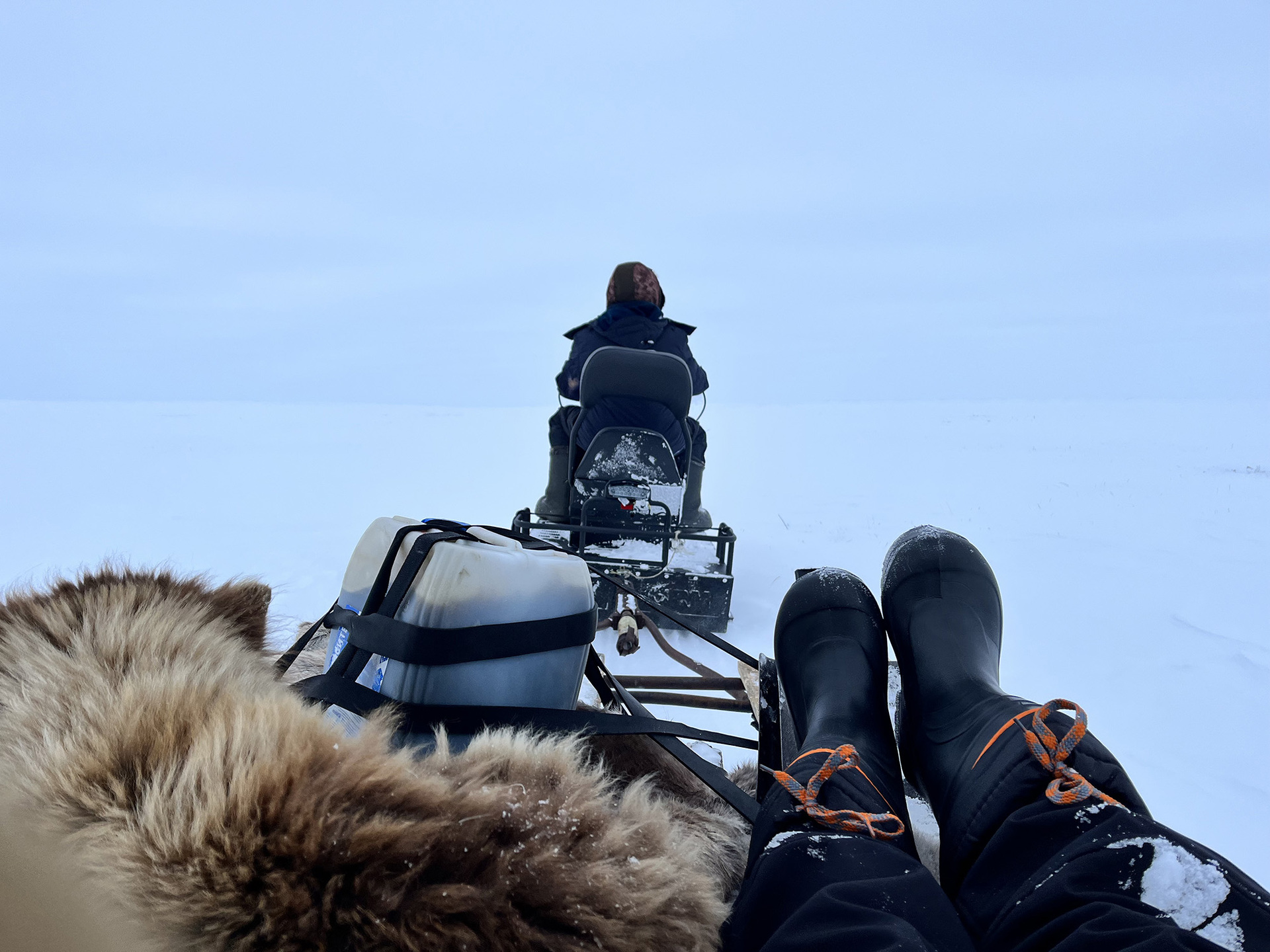
Field
What is a field and why is it an anthropologist?
Now the field can be at home. But if we start with classical anthropology, it has always been some distant countries. Anthropology is a colonial science, and it began precisely with colonial countries and anthropologists who came to these colonial countries to study the local population.
The main method of anthropology is long -term accommodation with people, on observation. Until now, in many places there has remained a classic approach of thirteen months of field work: to live with people a annual cycle plus a month in reserve. My colleague Ksenia Gavrilova had just spent just a year on Chukotka, because she decided to make phd in Oxford, and there is a standard. Moreover, before that she had ten, or even fifteen years of shorter field work. We usually have a month or two or three with constant return. In her opinion, the difference is how long you are in the community, how your role changes, how deeply you can look.
The anthropologist in the field lives with people, observes their daily life. There are strict methods for fixing observations. You write a field diary and sometimes don’t even know why you turn on these or those points, and then it turns out that this is exactly what you need.
You and I talked about suffering. And what kind of suffering is waiting for an anthropologist in the north?
With physical suffering, everything is clear. In the north you are freezing all the time. The skin is constantly frostbite. The body is bad, unusual environment, unusual food, the stomach suffers.
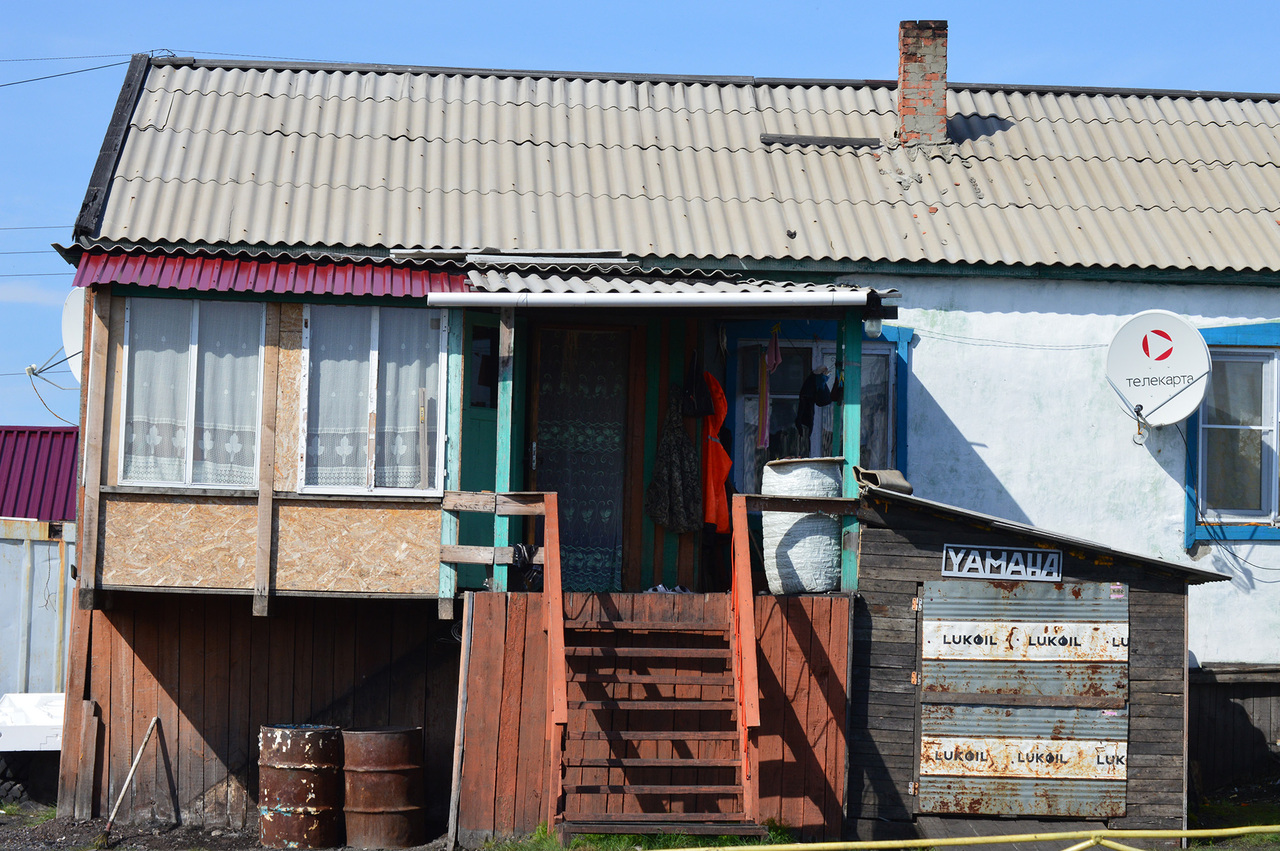
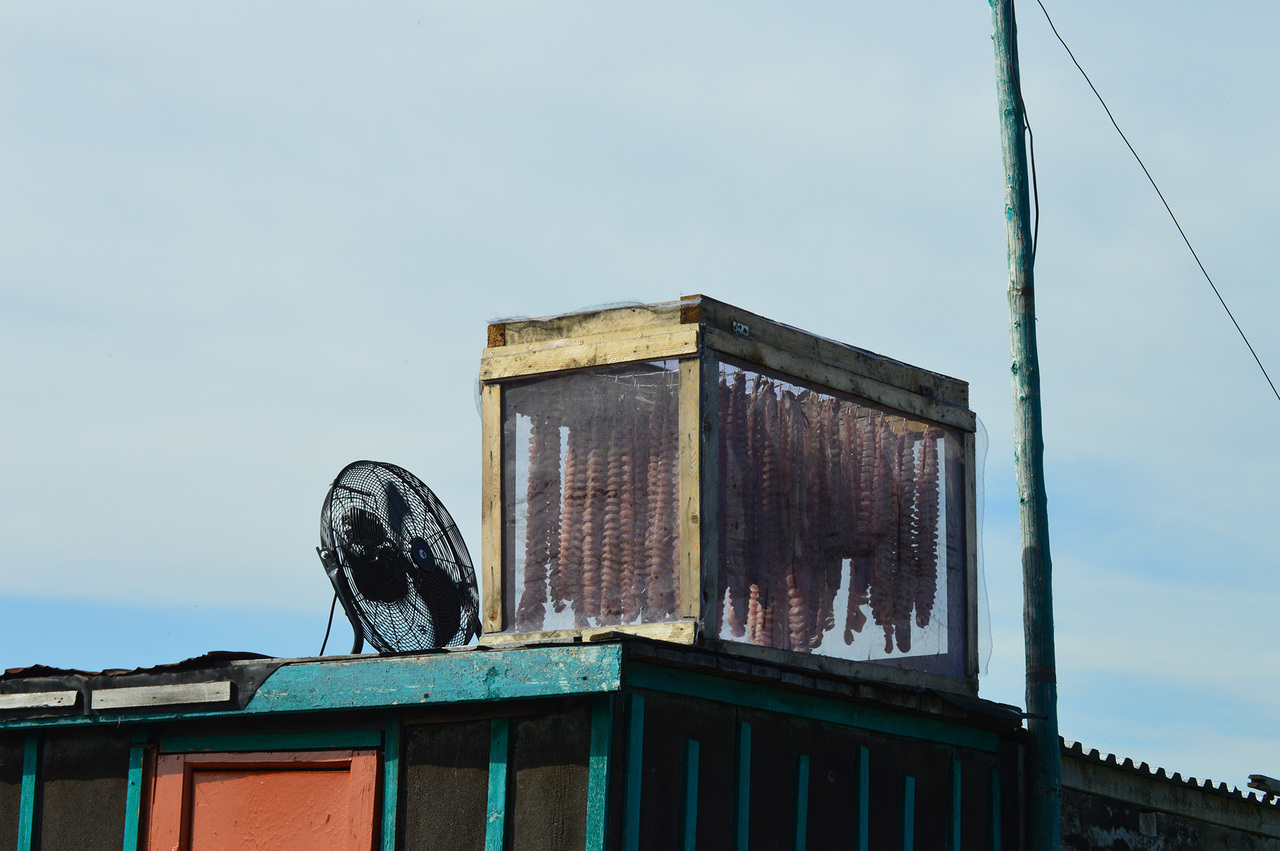
My main field is remote villages on the border of Taimyr and Yakutia, where everything is quite bad with factory, store products. There are basic products in everyday life: cereals, sugar, flour - and the rest ... very expensive import. And people are used to eating meat and fish, this is a normal diet. All these cereals only in Soviet times appeared in their diet. Therefore, if soup, then this is a piece of venison in the broth, carrot and onion. The piece is usually huge: what are you so poor that you can’t afford to put normal? The fact that I cook every week at home is just an insult for people in the north. I always try to remember this when they come to visit me, and put meat three times more.
Of course, when your diet sharply becomes a continuous protein, it becomes difficult. Well, if there is any potato, but by the spring, vegetables imported last summer begin to sprout, the potatoes already run away from the eyes somewhere in the warm edges. Onions and cabbage by the end of spring look like Auschwitz prisoners.
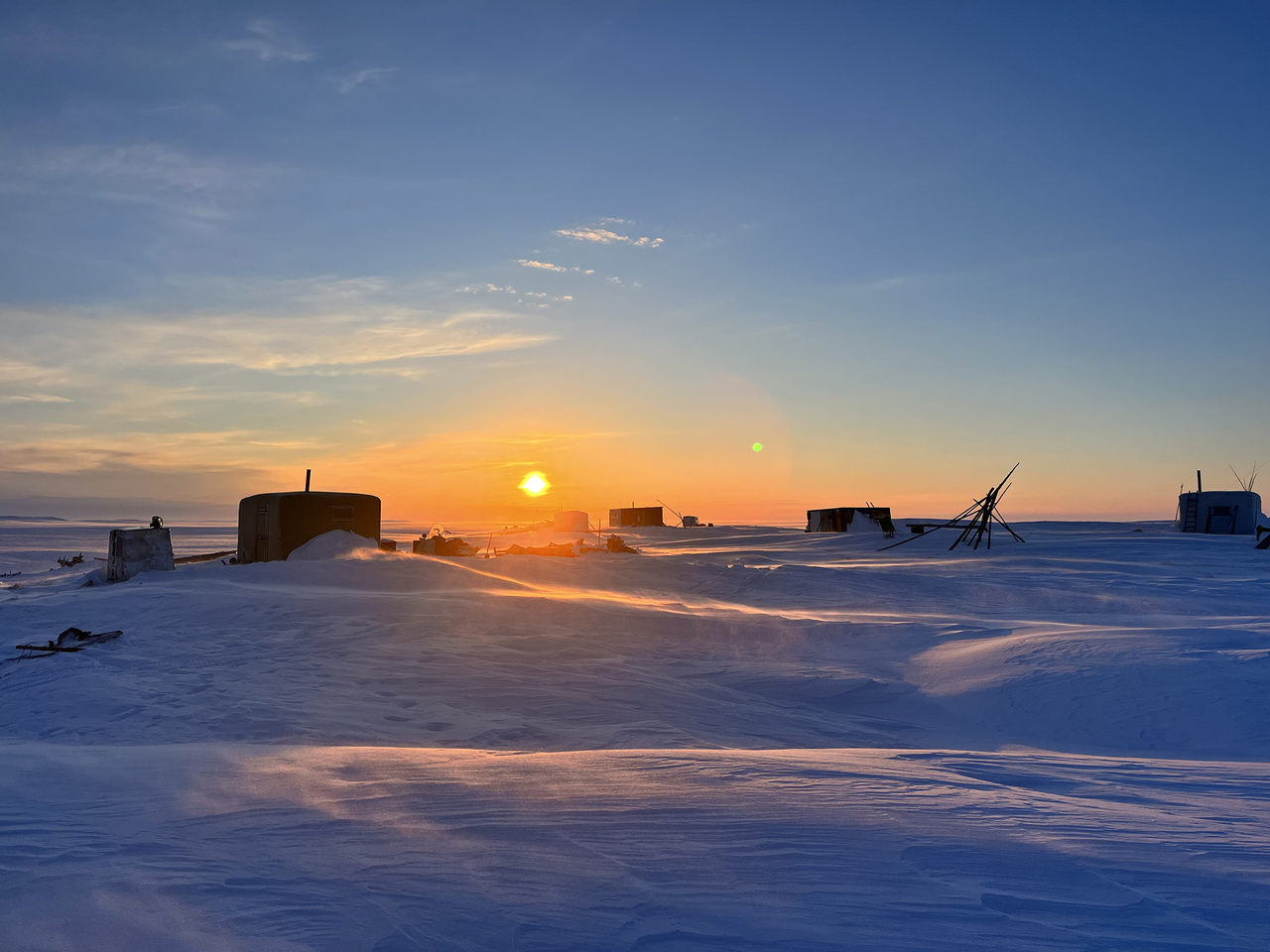
Intimacy is still suffering because you are not used to how everything works here. In my field, people have very small nomadic dwellings - beams, such houses on the runners. In the village apartments, about the same: you may have your own bed, but you are still in sight. The toilet is a bucket that is at best fenced with a curtain. And it is in the kitchen, the entrance to which is right from the street. There are surprises: you are sitting on a bucket, and guests come to you.
By the way, do guests from the field often come to you? How do you even build relationships with them?
In general, the northern population, oddly enough, is very mobile. Every vacation they travel around Russia, the northerners have benefits: paying the road in Russia once every two years. Vacation is an opportunity to get goods and services that are not at home: go to the dentist, buy something. They often go to relatives, and in St. Petersburg people have a bunch of relatives. The University of Herzen has the Institute of the Peoples of the North, where the guys from the villages study, and many after that remain in the city. And when my informants come, we always see each other, they come to visit me, we travel around the city with barbecue. And I am very glad to see them, because I do not even succeed every year in every specific place.
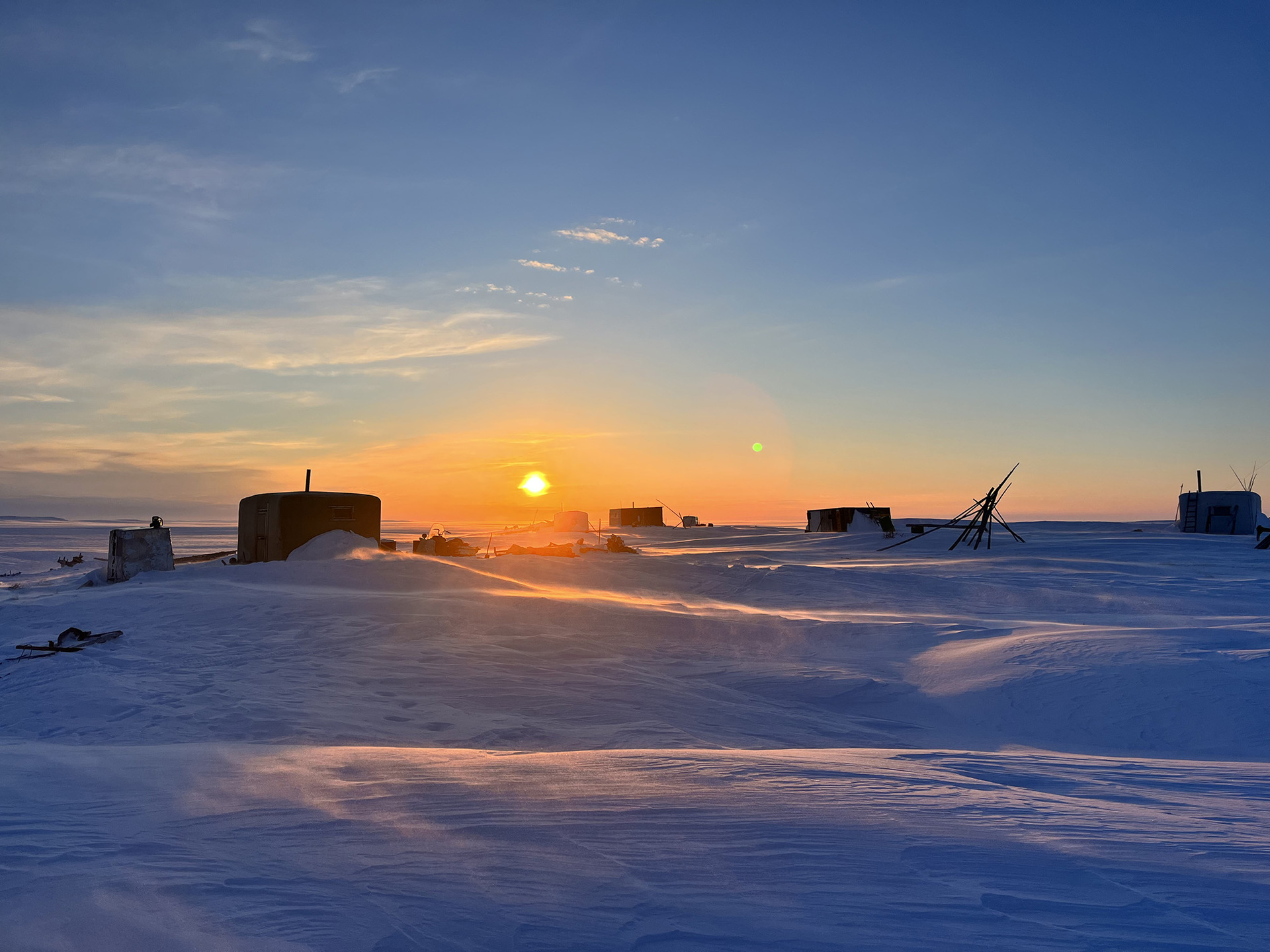
Do you think the anthropologist should have a line between friendship and such research relations with informants? How do you determine this border for yourself?
It is important that people clearly understand what you are doing. But I do not feel constrained by the obligations not to be friends with them, to keep a distance. These are close people for me.
I have a favorite family with five sisters, one cooler than the other, full matriarchy. And I began to think what to cook. And I always have something northern in the refrigerator. Found a deer language. I cooked it for a long time, and it is difficult to properly cook the tongue. Sisters come and laugh: "We will eat this language in the village 10 times!" Since then, I don’t cook tongues anymore and order sushi and pizza when Dolgan families come to me.
You come to Italy, and you borsch. You can understand!
Yes. Several times they tried to cook chicken, gray, rubber, a million times crumbling in the field - she traveled for a year and finally reached this village. It is very expensive. “After all, you probably miss your food.” But deer meat is a hundred times tastier. I adore it, and I also love all this fish.
It is clear that when the relationship is already built, it becomes much easier. You said it is important that people understand what you are doing, but people never understand this.
Yes, that is why it is so important to close as possible to this understanding, at least on the fingers. And I can’t say that it becomes easier as relations with people develop. There is always tension. Somehow a family came to me, which I know for a long time, and the nine-year-old boy asked: "And who is we at all?" An awkward pause arose. Then I was called my sister's friend. And nothing can be done with this, because I do not get into the normal classification.
There are also features of my lifestyle. When I had a long relationship, it was easier for people to attribute me to a certain understandable category. And now the older I become, the more often the question arises: why are you not married, where are your children?
Tell me how you learned to ride a snowmobile! It seems to me that in Russian society for a woman it is quite original.
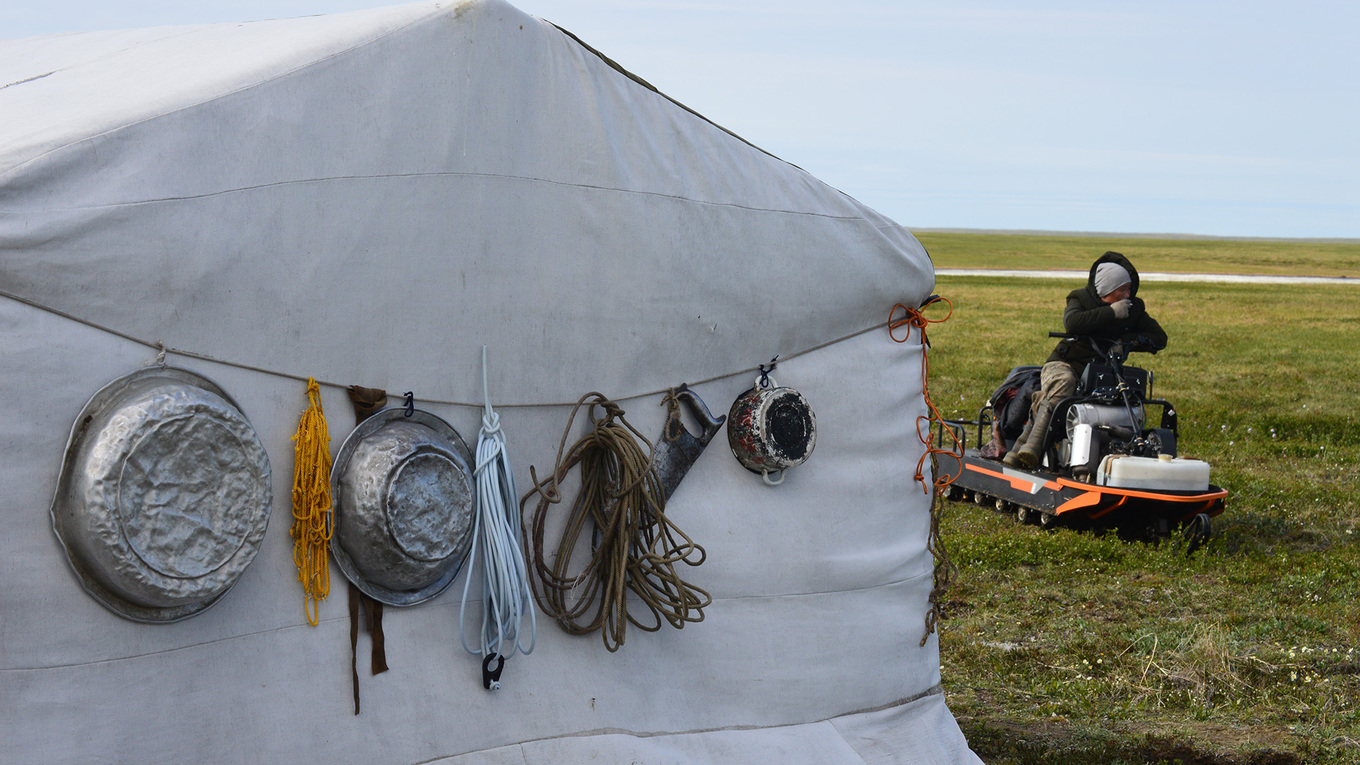
About the snowmobile I want to disappoint you: it is not very difficult. Scooter, just on the caterpillar. He has one handle for acceleration and steering wheel. In addition, I am mainly engaged in the topic of mobility, and I need to ride a lot. My dissertation was dedicated precisely to how people in the north move on snowmobiles.
The first time I was driven behind the wheel after five hours. The driver is tired and said: now you are, and I will sleep for now. I sat down and went. Women, however, are less likely to drive, but this does not mean that they do not know how. If necessary, anyone gets behind the wheel.
What do you say about gender relations in general?
There is a clear gender separation. Women in Taimyr villages work more often in budget places: in the administration, at the post office. Men are engaged in the sale of a shot deer. But this is rather complementarity than inequality. The basic cell is a family, it is difficult for one woman and one man to exist in this community. It is difficult for a woman to chop firewood, carry coal, hunting and fishing is also a male prerogative.
And making decisions?
Differently. I would like to say that women decide, and men fulfill, but this is a great simplification. It is definitely not such that the man decides everything, and the woman obeys.
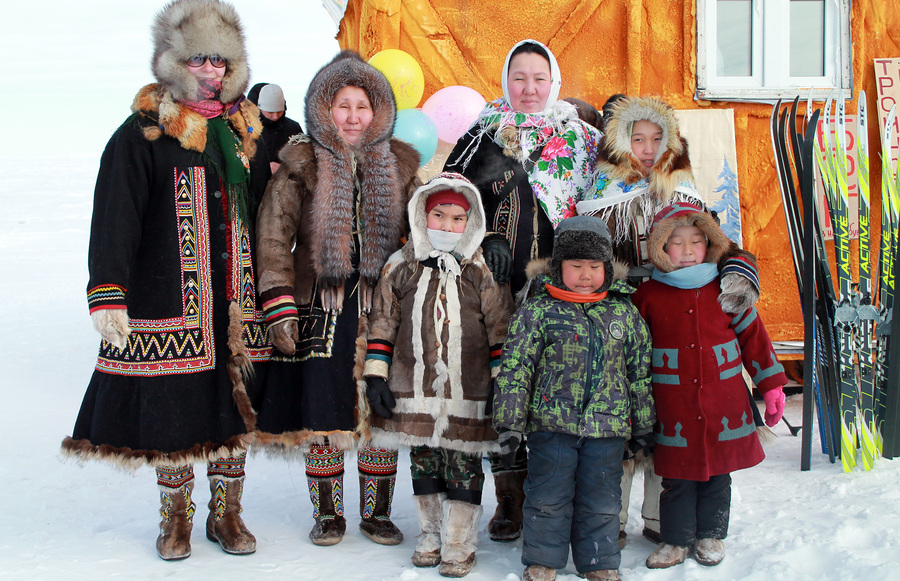
Northern villages, hunting rules and 200 kilometers to a large store
Tell me how the northern villages live.
There are quite a few small villages that live just for self -sufficiency - such a heritage of the Soviet era. There is work only in the budget sphere: school, kindergarten, administration, SDK, mail. These jobs are occupied by women, and men are occupied by fishing.
This is usually informal earnings, and I really do not like the word "poachers", because we have everything quite bad with natural law. Оно написано для всей страны, не соответствует сезонам и другим региональным особенностям. Поэтому способа легально что-то добыть иногда просто нет: олень идет в другое время. Даже просто на пропитание нужно больше, чем написано в законодательстве. Восемь разрешенных туш в год — это очень мало для большой семьи. Камчатка, где приезжают, вырезают икру и бросают рыбу, — это одна история, а в таймырском поселке просто и деньги, и еду достать больше неоткуда.
Что там, кстати, с электричеством, коммунальными услугами?
Электричество в поселке — от автономной дизельной электростанции. Топливо завозят на год, это все субсидируется. Кроме того, жилье в основном муниципальное, никто ничем не владеет. Поэтому и рыночной ценности у него никакой нет, нет в принципе купли-продажи недвижимости.
С какими социальными проблемами сталкиваются люди в поселках?
Первое, о чем всегда всем хочется поговорить, — это алкоголизм. Много стереотипов. Но проблема тут не в коренных жителях, как принято думать, а вообще в условиях жизни. В Архангельской области с преимущественно русским населением проблема алкоголизма ровно такая же. Уровень жизни местами очень низкий, и даже нет перспективы. Проблема Севера в том, что там ничего не может быть рентабельным. Даже завоз продуктов — это убыточно без субсидии. И при этом образ жизни уже изменился, кочевание не автономное, у людей сложились потребности в промышленных товарах. И мы видим, как помогает в этой ситуации человеческая инфраструктура, как социальные связи восполняют дефициты. Например, отпуска — часть такого годового цикла, когда ты едешь к родным, лечишься, закупаешь одежду и медикаменты. Так же и с завозом продуктов: ты на год вперед должен спланировать все, что тебе могут привезти.
Очень интересно складывается жизнь предпринимателей в северных поселках. Владельцы магазинов — это часть сообщества, они очень глубоко встроены в эти отношения и выполняют много социальных функций. Предприниматели работают как отдельная поселковая организация: снабжают школу шоколадками, когда нужно поздравить детей с праздниками, а закупить нет денег. Или кому-то нужно завезти диван, и предприниматель придумывает, как этот диван запихнуть в свой контейнер.
Повседневной мобильности тоже очень много. Восточный Таймыр очень близко к Якутии, где зимник идет почти до крайнего поселка. Туда дешевле завозить товары, чем на Таймыр, где есть только авиадоставка. Поэтому люди ездят туда 200 километров на снегоходе, чтобы купить продукты, запчасти. Это дорого, но более дешевых альтернатив нет.
Именно поэтому так важен отстрел дикого оленя. Его пытаются запретить, контролировать, Росгвардия прилетает в поселки. Меня это возмущает до глубины души: ребята, вы сначала придумайте альтернативу какую-то в жизни этим людям, откуда они еще могут деньги брать?
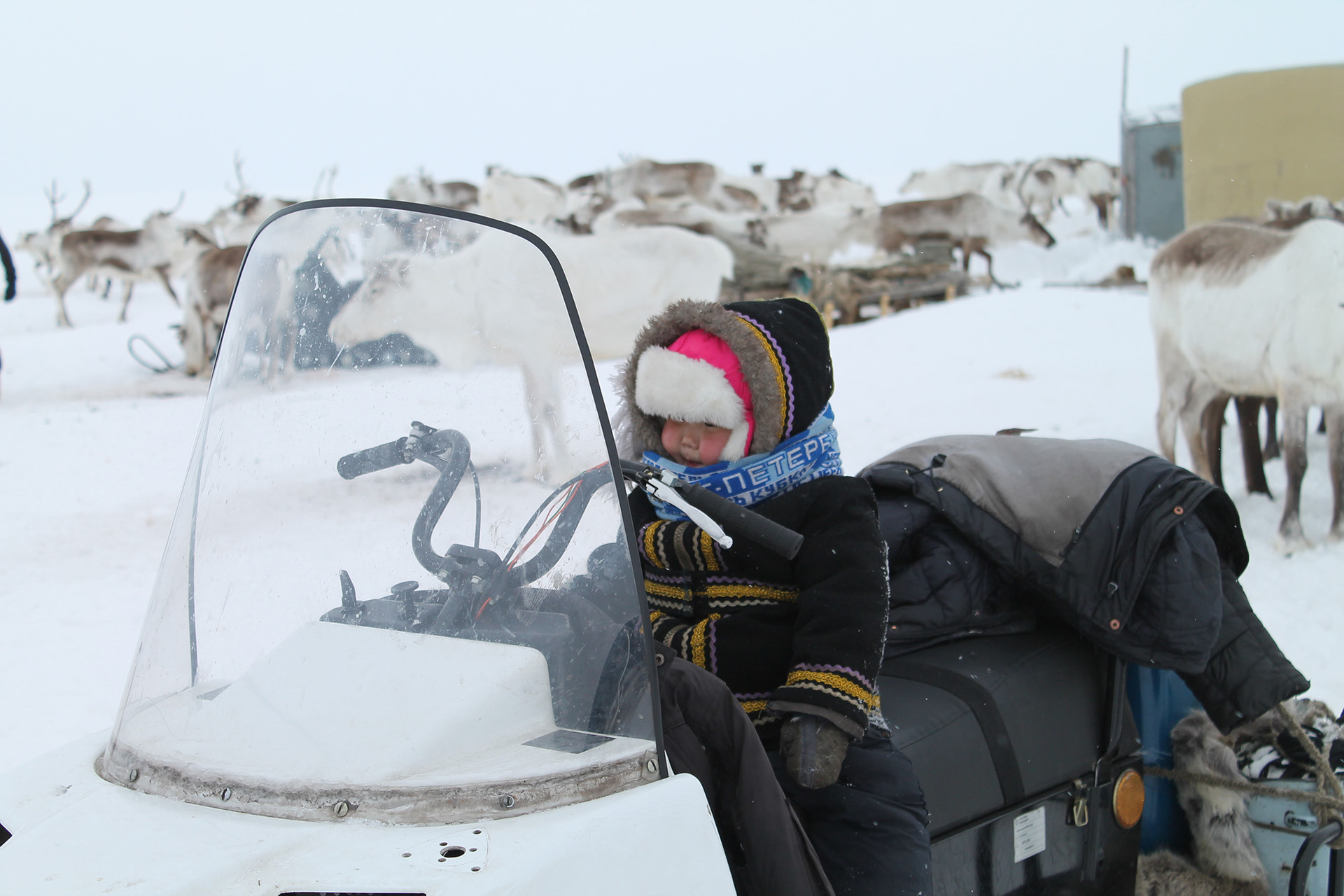
Северный морской путь
Я люблю рассматривать спутниковые снимки, и я много рассматривала дельту Лены — когда-то хотела организовать туда путешествие. И там есть поселки, очень удаленные от всего. Знаешь ли ты, чем они живут?
Там Тикси и Быковский. Быковский похож на то, что я описываю. А Тикси — это другого типа поселок, это великий порт Северного морского пути советского времени, с многоэтажками, инфраструктурой городского типа и высокообразованным населением. В основном туда из столиц приезжали специалисты типа метеорологов, гидрографов и других ученых. Такой пришлый поселок, который служит великой цели развития.
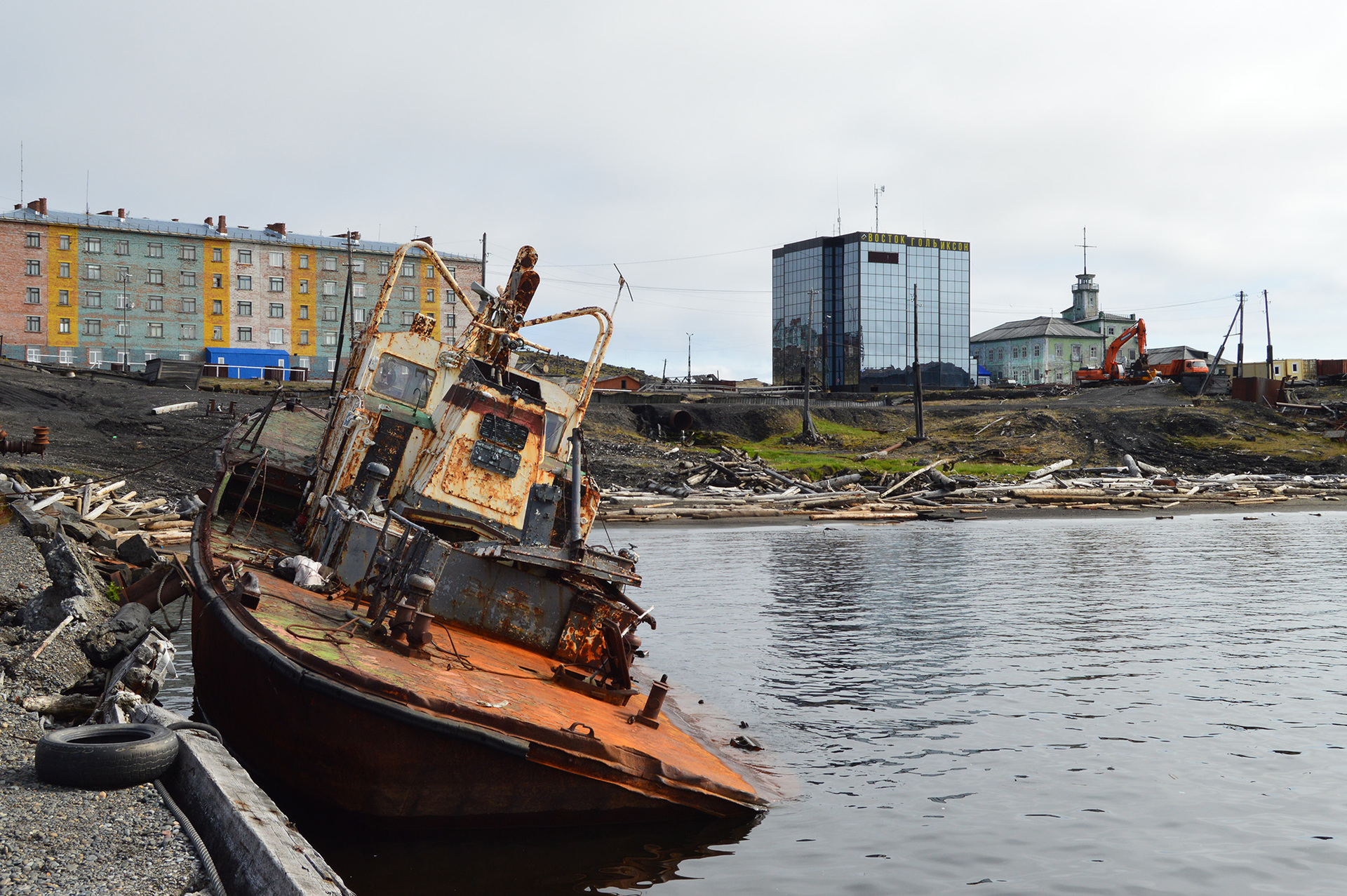
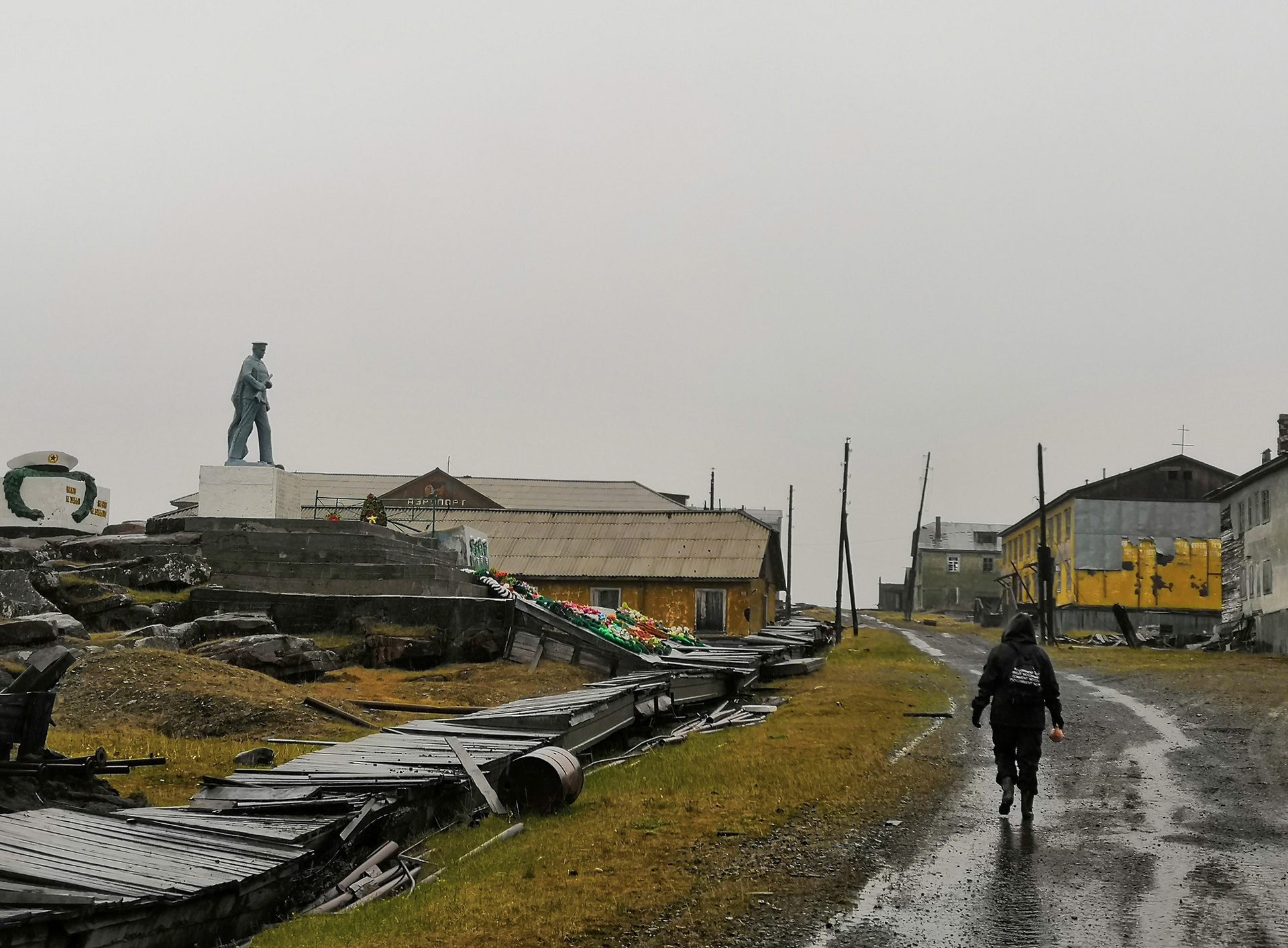
И сейчас у этих людей огромный кризис. Сначала в 1990-х упал грузопоток по Северному морскому пути. Потом грузопоток стал побольше, но полностью изменились потребности. Умения этих специалистов больше не нужны, ледовую обстановку можно увидеть со спутника, суда больше не топят углем, и они в целом стали заметно автономнее, им не нужен ни ремонт, ни обслуживание на месте. Поселки обезлюдели — Тикси, Диксон, Амдерма. В Амдерме население сократилось с 10 тысяч до 200 человек. Хотя сейчас в Арктике растет присутствие военных, поэтому жизнь в этих местах наверняка станет лучше: больше людей — больше ресурсов.
Мне всегда казалось, что Северный морской путь — значимая возможность для глобальной логистики, которая физически трудно осуществима до сих пор. What is happening there?
Мы все-таки занимаемся антропологией Северного морского пути, насколько это все осуществимо — не наша зона ответственности. Нас заинтересует, как эта инфраструктура выглядит в дискурсивном поле, в риторике.
Наш с Ксенией Гавриловой проект по Севморпути начался с того, что она, как ветеран арктических форумов, обратила внимание: поселки, которые мы хорошо знаем, риторически выглядят совершенно иначе — как будто в каждом огромный порт уже построен. Индига в Ненецком автономном округе — классический пример этого. Все, что в нем есть, — необорудованный причал в мелком устье реки и 500 жителей. А риторически в документах, публикациях и выступлениях он уже глубоководный мультимодальный порт.
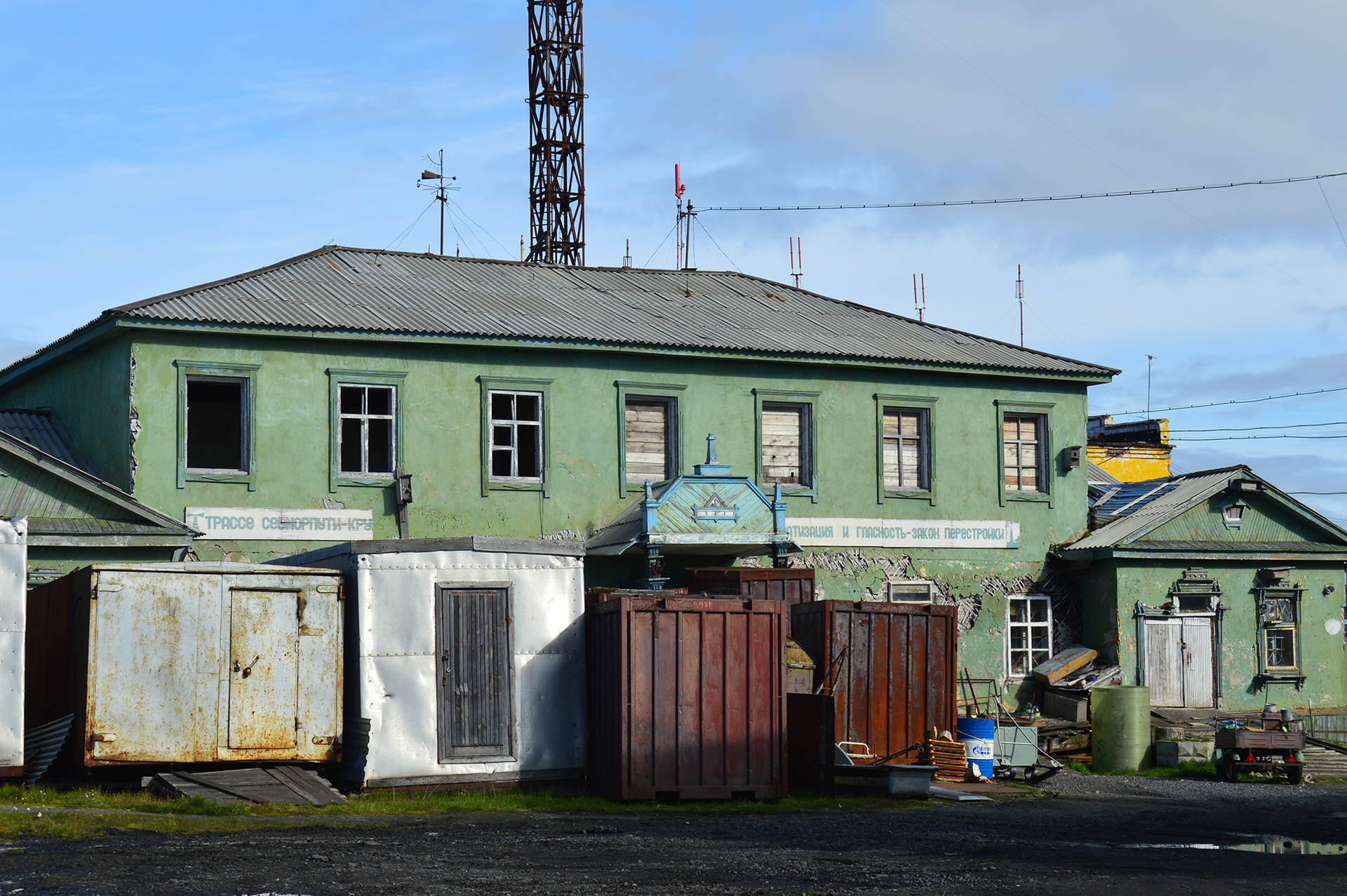
Арктические форумы — это мероприятия, где встречаются разного уровня официальные лица. И эта риторика Севморпути с годами меняется, иногда все больше расходясь с практикой. На Севморпути есть и правда восхитительные великие советские порты, очень красивые, очень крутые, только больше ненужные для работы этой инфраструктуры. Если бы туризм в Арктику не был таким дорогим, у них был бы огромный потенциал. У Диксона, например. Здание порта с колоннами, но полностью деревянное. Сохранились и лозунги: «Демократизация и гласность — закон перестройки!», «Севморпути — круглогодичную навигацию!»
В советское время Севморпуть в основном служил для завоза из центра продуктов, стройматериалов и прочего. Сейчас это вывоз углеводородов, сжиженного природного газа. И очень мало транзита. Пользоваться им можно только в летнее время и то имея определенный ледовый класс, что очень сильно удорожает проход. Нет никаких новых портов, кроме тех, что построены для вывоза ресурсов с месторождений, типа Сабетты. Ледокольный флот обновили, это правда, но он просто совсем выходил из эксплуатации.
А продвигается концепция Северного морского пути именно как транзитной артерии. Эту перспективу связывают с изменениями климата — что уже завтра-послезавтра все очистится ото льдов и станет активным проходом.
Когда мы начинали работу, в 2016–2017 годах, эти разговоры были на пике популярности. Регионы ориентировали программы развития на Севморпуть, так было проще получить финансирование. Но это не значит, что поселки Северного морского пути правда как-то будут развиваться, и уж тем более силами регионов.
Наш проект был прекрасен тем, насколько риторика и жизнь не стыковались. Тот факт, что это словосочетание возникает в официальных речах, вообще не значит, что будет про Северный, или про морской, или про путь. Это просто нужное слово, которое употребляли ритуально. Как ссылку на Ленина.
Порты Северного морского пути так системно объехали примерно только мы, и я тебе про каждый могу рассказать. Где причал выведен из эксплуатации, где вообще ничего не происходит. А в глобальной повестке это сводится к тому, что мы в полтора раза короче, чем проход Суэцкого канала.
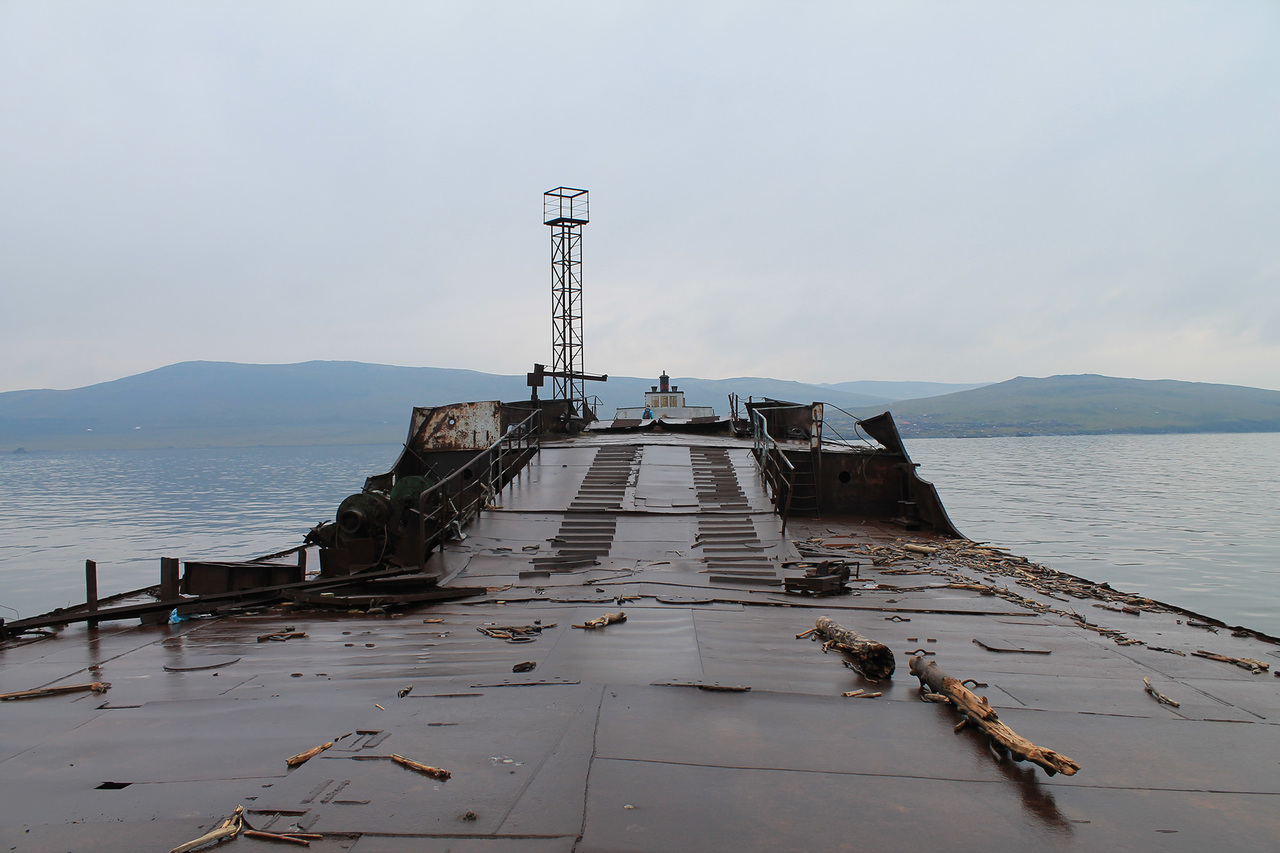
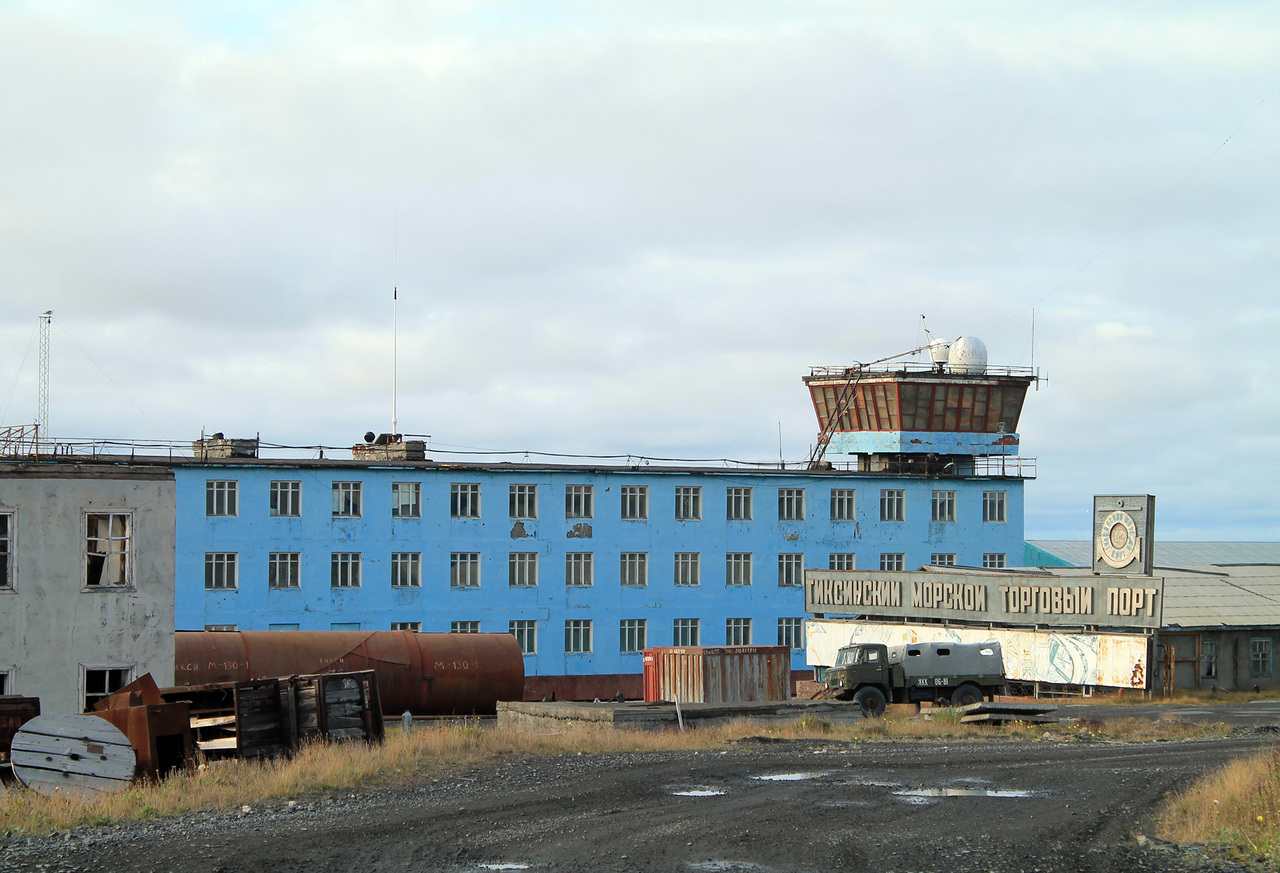 Тикси Фото: Ксения Гаврилова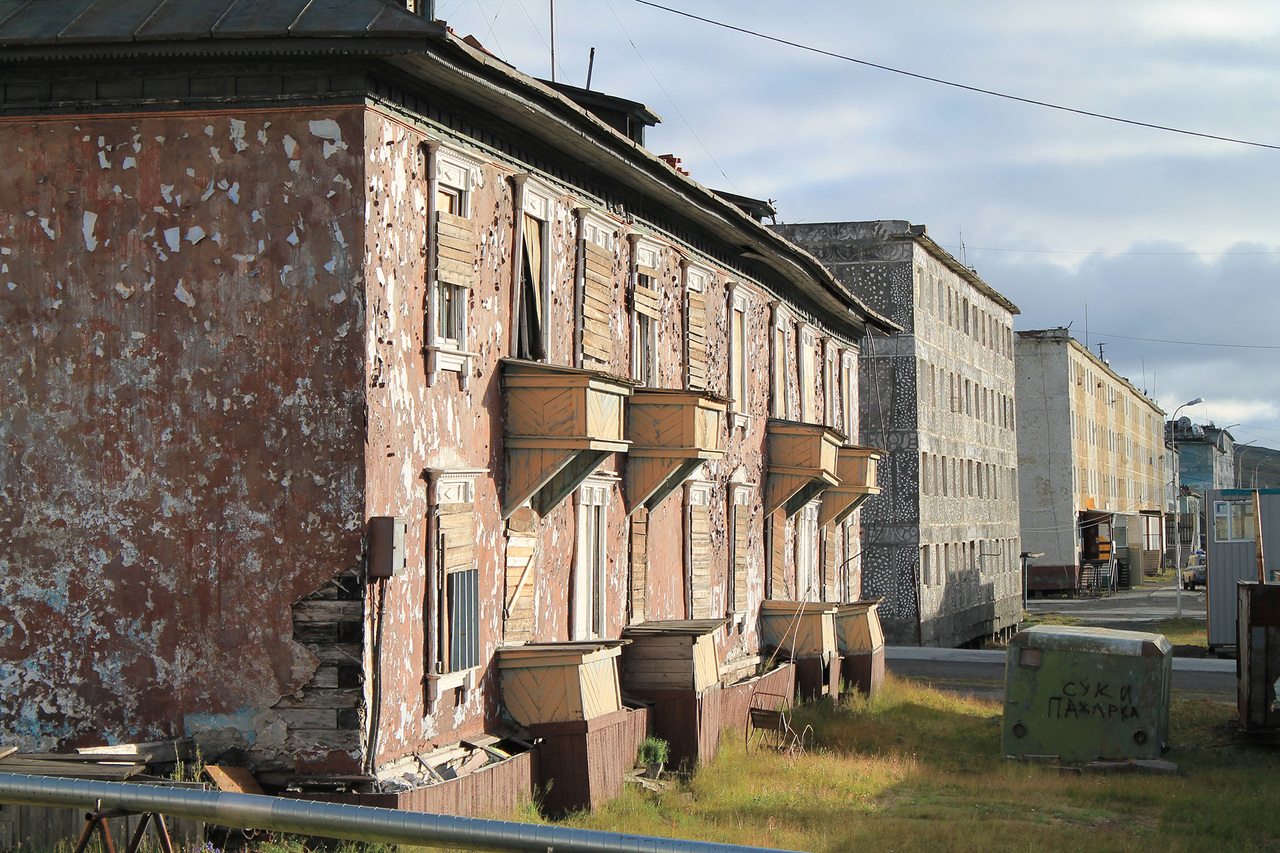
Исследования Севера, цензура и активизм в науке
Мы часто говорим с другими экспертами о том, что молодым исследователям в России тяжело, что многие перспективы теперь закрыты, что внутри страны какими-то темами стало небезопасно заниматься. Касается ли это исследований Севера?
Север — регион приграничный, и антрополог все-таки очень специфическая фигура, поэтому в поле это проблема. Ты очень заметен, и сложно объяснить компетентным органам, кто ты, так, чтобы не возникло вопросов, что это за частный университет и почему ты находишься здесь, на приграничной территории. Но в целом я бы сказала, что живу немножко в башне из слоновой кости. Не могу отвечать за всю науку, но пока у меня нет ощущения цензуры.
Не кажется ли тебе, что антропология в России вообще всегда избегала политических тем, что это даже было как-то стигматизировано?
А что такое политические темы в антропологии?
I'll try to explain. Я учусь в Аргентине, здесь очень много занимаются неравенством, последствиями диктатуры, военными. В России можно сделать намного больше таких работ, потому что тут военных… Одни ветераны Мальвинских островов, их всего 23 тысячи. Очень много работ, которые посвящены острым социальным проблемам, насилию, миграции.
То, о чем ты говоришь, — часть более широкого явления, популярного в последние 30 лет. Это идея участвующей антропологии, активистской антропологии. Потому что для core anthropology, для фундаментального исследования слово «неравенство» уже очень оценочно. Ты не можешь заниматься неравенством, потому что ты заранее определил, что оно есть. Сама постановка вопроса выдает активистский запал.
Он принят в целом.
Да, много где уже стало нормой, что антрополог — это активист. Я считаю, что это очень портит фундаментальную науку. В антропологии важно сохранять непредвзятость, такой взгляд со стороны. Вся наша наука — о том, чтобы привычное восприятие сделать менее привычным, посмотреть с разных позиций, не только с точки зрения изучаемой культуры.
А когда ты уже знаешь правых и виноватых и за чью сторону играешь, ты неизбежно обедняешь свою работу. Я не знаю, почему такие исследования менее популярны в России, но, если честно, я рада, что это так. Популярность этого тренда не дает заниматься фундаментальной наукой, потому что тебя с возмущением спрашивают, почему ты актуальными социальными вопросами не занимаешься. Почему физика или химика не спрашивают об этом? Если мы остаемся в рамках научной деятельности, то, вообще-то, у нас не должно быть прямого близкого результата. Он не обязателен и даже, скорее всего, вреден.
Если это дальше будет двигаться к партисипаторной антропологии, то фундаментальная антропология схлопнется. Потому что, работая с коренными жителями, ты должен писать, как их спасти, сохранить и вот это все. А если ты занимаешься другой темой, то с тобой что-то не то.
А если там правда есть такой конфликт?
Да, такое тоже может быть. Но твоя ли это задача — его описать и вынести на обсуждение общественности?
Why not?
Вот тут важно просто для себя решить. Нет, просто это не будет фундаментальной наукой. Конфликт можно изучать, но важно, как ты его изучаешь. Если ты пишешь, что там надо спасать людей, ты решаешь другую задачу. Деконструируя происходящее, разбирая его на части и объясняя, как все работает, можно принести больше пользы.
Вот, например, слово «неравенство», с которого мы начали, заменить гендерным разделением труда или гендерными ролями и посмотреть, как функционирует общество, через гендер.
Что происходит с финансированием антропологических исследований Севера? Изменился ли фокус за последние три года?
За последние пять — семь лет совсем схлопнулись все фонды, кроме РНФ [Российский научный фонд. - approx. Ed. ]. Есть еще «Хамовники», частный фонд, но он дает только небольшие и короткие гранты. При этом североведам намного проще, чем другим антропологам, потому что мы занимаемся Россией. И РНФ нацелен давать деньги на исследование России. Если ты занимаешься Папуа, РНФ скажет тебе: а чего ты за наши деньги хочешь в других странах исследования делать? Учитывая, что зарубежное финансирование сейчас тоже проблематично, антропологи с полем не в России оказываются в более сложном положении.
А какие темы востребованы?
Важно хорошо обосновать прикладное значение. Нужна социальная актуальность, которая, вообще-то, для фундаментальных исследований не требуется. Междисциплинарные исследования востребованы. Я выиграла грант на пересечении антропологии и геоинформатики, будем изучать космоснимки, которые позволяют посмотреть на сезонные дороги как на социальные связи.
Что происходит с международным сотрудничеством в исследованиях Севера? Раньше было много международных конференций, университетских обменов.
На низовом уровне, конечно, это сотрудничество еще осталось, персональные взаимодействия не разрушились, комьюнити сохраняется. А остальное подчиняется трендам последних трех лет: и русских приглашать на европейские ставки стали меньше, и самим русским поддерживать контакты на официальном уровне нельзя.
Да, сообщество североведов тесное, люди просто хорошо знакомы друг с другом лично. Такое сложно разрушить быстро.
Да, это как вопрос, можно ли дружить с информантами. Если вы давно уже хорошо знакомы и дружите, то политика политикой, но вы прежде всего люди, а не граждане.