
Translated material
Kursk region: a year after the invasion of the Ukrainian Armed Forces
What is happening now with internally displaced persons and those who survived the occupation of Sudzha

In August 2024, the Ukrainian army entered Russian territory and took control of hundreds of square kilometers of the Kursk region. A year later, tens of thousands of refugees from border areas live in Kursk. “Layout” tells what problems they face.
In order not to miss new texts from “Layout”, subscribe to our telegram channel
“I come to the river, there are snipers sitting under the bridge. I didn’t even realize that they were Ukrainians. I said: “Guys, can I get some water, I’m thirsty.” They nodded to me silently. I got some water, came back and said: “Oh, thank you very much.” One turns to me and answers: “No way.” I look, and they have blue bandages on their arms and legs.”
This is how the former head of the kindergarten in Sudzha, Nadezhda Tkachenko, remembers the day of the Ukrainian Armed Forces invasion. She lived under occupation for more than 7 months.
August 6, 2024 was remembered not only by tens of thousands of border residents, but also by the Russian military guarding the border.
“The panic just started there, we didn’t have any combat weapons, only the squad commander. It was fucking chaos,” this is how contract soldier Alexander spoke about the breakthrough of the Armed Forces of Ukraine in a conversation with “Vestka”.
The Ukrainian military, who broke through the Russian border, gained a foothold in the nearby Sudzhansky district and kept it under control until March 2025. About three thousand Russian citizens were unable or unwilling to evacuate. Over 130 thousand people from eight border regions left the combat zone.
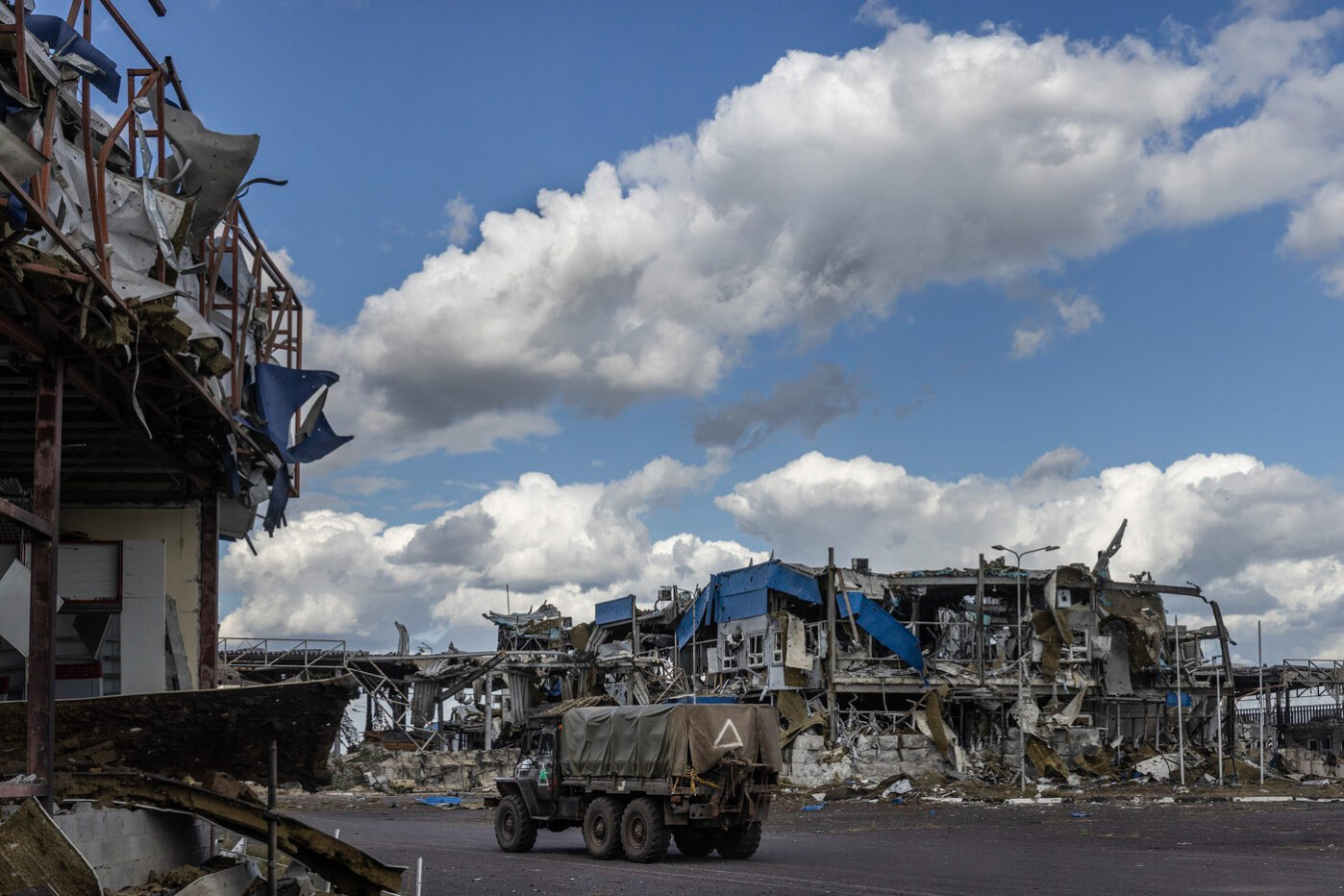
After the invasion of the Ukrainian Armed Forces, 1,762 new names appeared on the police list of missing persons. Some of them probably died.
The death of those who failed to survive the invasion is proven in court
Nadezhda Tkachenko lost her husband, with whom, according to her, she lived for 34 years, on February 18, 2025. That morning Pavel Tkachenko wanted to break dry wood for ignition. The couple lived for six months without electricity, water or gas - all communications were cut off during the offensive of the Ukrainian Armed Forces. They ate vegetables from their garden, slaughtered livestock from their farm, and cooked food on the grill in the yard. The house was heated with a stove.
On a February morning, Pavel, as usual, went to the garage to break open old fruit boxes. Nadezhda felt what happened next while she was in the house. “How it stung! - she says. “I ran out and looked, the car was standing there, but he wasn’t there.” She ran up there, and the wall fell on him. The wall is about a meter thick, it killed him immediately.”
A shell hit the garage. Whose he was is unknown. On that day, a missile threat was declared five times in the Kursk region. Two weeks earlier, an air bomb hit a Sudzhan boarding school where lonely old people lived. Ukraine and Russia blamed each other for the incident.
Nadezhda decided to bury Pavel in the yard and turned to the Ukrainian commandant’s office for help. The military looked at the corpse and, according to Nadezhda, replied that they would not be able to lift the heavy wall. “They just wrote ‘cargo 200’ on the wall,” the woman says.
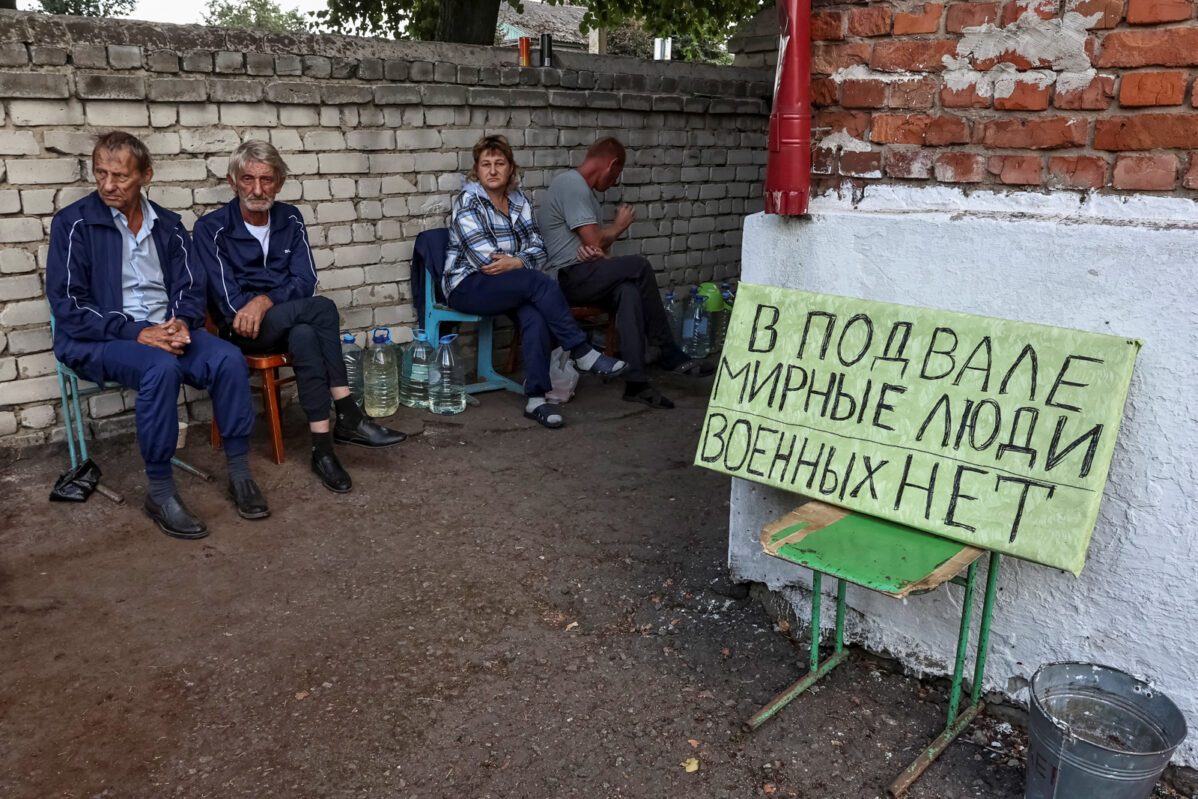
In mid-March, when Russian troops ousted the Ukrainian Armed Forces from the Sudzhansky district, Nadezhda was evacuated to Kursk. Five months later, when she realized that her husband’s remains would not be removed anytime soon, she filed a lawsuit in the Sudzhansky District Court. If the court recognizes Pavel as dead, Nadezhda and her children will be able to inherit. This will help them receive a housing certificate for their lost house in Sudzha.
Nadezhda is one of dozens of Russians who hope to prove the death of their relatives through the courts. From March to July 2025, as “Verstka” calculated, the Sudzhansky District Court received 94 claims to declare citizens dead or missing.
Most of the claims are still pending. Some were satisfied, some were terminated. Sujanka Anna Zatolokina told Vorstka that she filed a lawsuit to declare her parents dead. In April 2025, the case was dropped - Anna abandoned the claim after the bodies of her parents were found and brought by the Russian military.
But not everyone is ready to accept the death of their relatives who disappeared during the invasion, Kursk activist Vladimir Sinelnikov explains to Vorstka. “I know people who are still looking for relatives, for example, from Makhnovka, where there were Koreans,” he says. “Today there is no chance of finding someone, but they continue to hope.”
About five thousand displaced persons who fled from the invasion live in temporary temporary detention centers
Sinelnikov, a well-known activist in Kursk, often gives media comments about the life of displaced people. In July 2025, in an interview with Lenta, Sinelnikov spoke about the difficult conditions in which elderly single migrants live in one of the temporary accommodation centers (TAP).
After the article, which described how old people were denied medical care and their movements were controlled, a “grand fuss” began in the Kursk region. This is how Sinelnikov himself describes the reaction of local authorities.
Acting Governor Alexander Khinshtein personally went with the inspection.
“The displaced people as one assured that the staff is sensitive and attentive, they give out the necessary medicines, feed them well, wash them, and help with hygiene,” he wrote in his Telegram channel after a visit to the temporary detention center in Ponyry.
Sinelnikov, who was in the group of inspectors, believes that the old people were simply scared. “In our villages, people, in principle, are not known for their openness, and in the current conditions they are afraid to open their mouths again, even if they are right,” he says.
Even before Khinshtein’s visit, the Ministry of Health of the Kursk Region admitted that there was an outbreak of scabies in the temporary detention center, which Lenta and other media outlets wrote about and picked up the news. But when the governor arrived at the TAP, the staff hid the fact that there were other infectious diseases, another participant in the inspection, who asked for anonymity, told Vorstka.
“In the common room there were several patients with pneumonia and one with shingles. Khinshtein shook hands with the latter, and people immediately ran up with a sanitizer to disinfect the boss’s hand,” says the interlocutor.
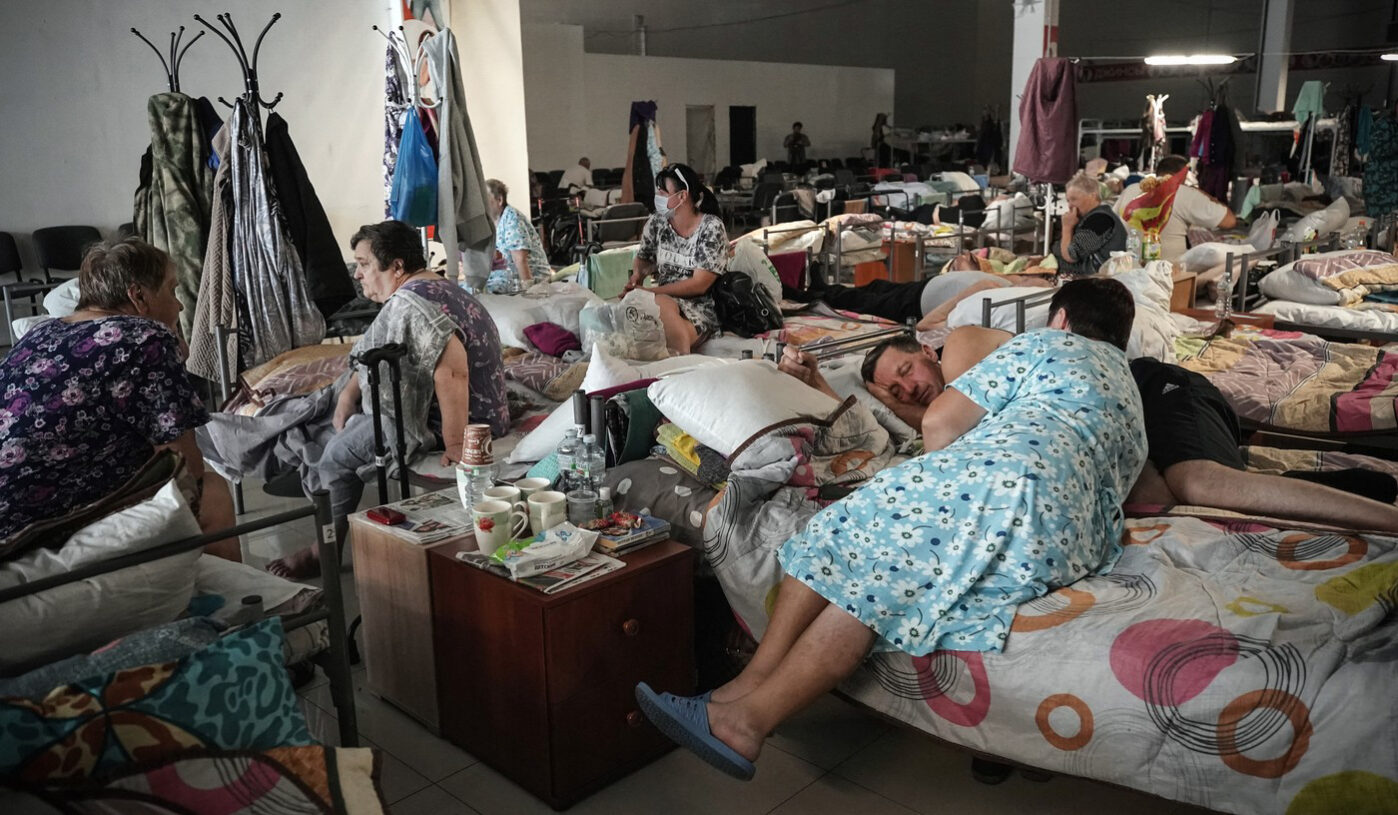
Of the approximately 130 thousand who were evacuated from the border area, five thousand, according to local authorities, are still living in temporary temporary detention centers - a year after the invasion of the Ukrainian Armed Forces. These are mostly pensioners. They were placed in student dormitories, boarding schools, recreational centers, and hotels. From time to time, local politicians come to them with gifts, and Kursk artists perform concerts in front of them. For example, in February, in one of the temporary detention centers, displaced people were shown a musical number: a singer with a guitar sang a song with the line “Are you sad, tramp? Come on, smile!”
Judging by the posts in local chats, the conditions in the TAP are mostly satisfactory for the displaced people. But they live in hope that they will soon receive housing certificates and be able to move into their own home.
Those who do not want to live in a temporary temporary accommodation facility rent apartments. Due to high demand, housing rental prices have risen by two-thirds in 2024. You can rent a two-room apartment on the outskirts of Kursk for 20 thousand rubles, closer to the center - for 25–40 thousand.
IDPs are suing officials to resolve housing issues
Sudzhanka Oksana Selitrennikova hopes that her family will be able to receive compensation for housing and move to a new house. In the meantime, she is preparing for a legal dispute with the regional Ministry of Construction. Oksana will represent the interests of her young daughter in court - her grandmother’s house in Sudzha was registered in her name. In May the house was intact. Oksana’s family does not know what condition he is in now. But according to the law, residents of Sudzha can receive compensation without a commission inspection of their housing - that is, officials will not check whether the house is destroyed or intact.
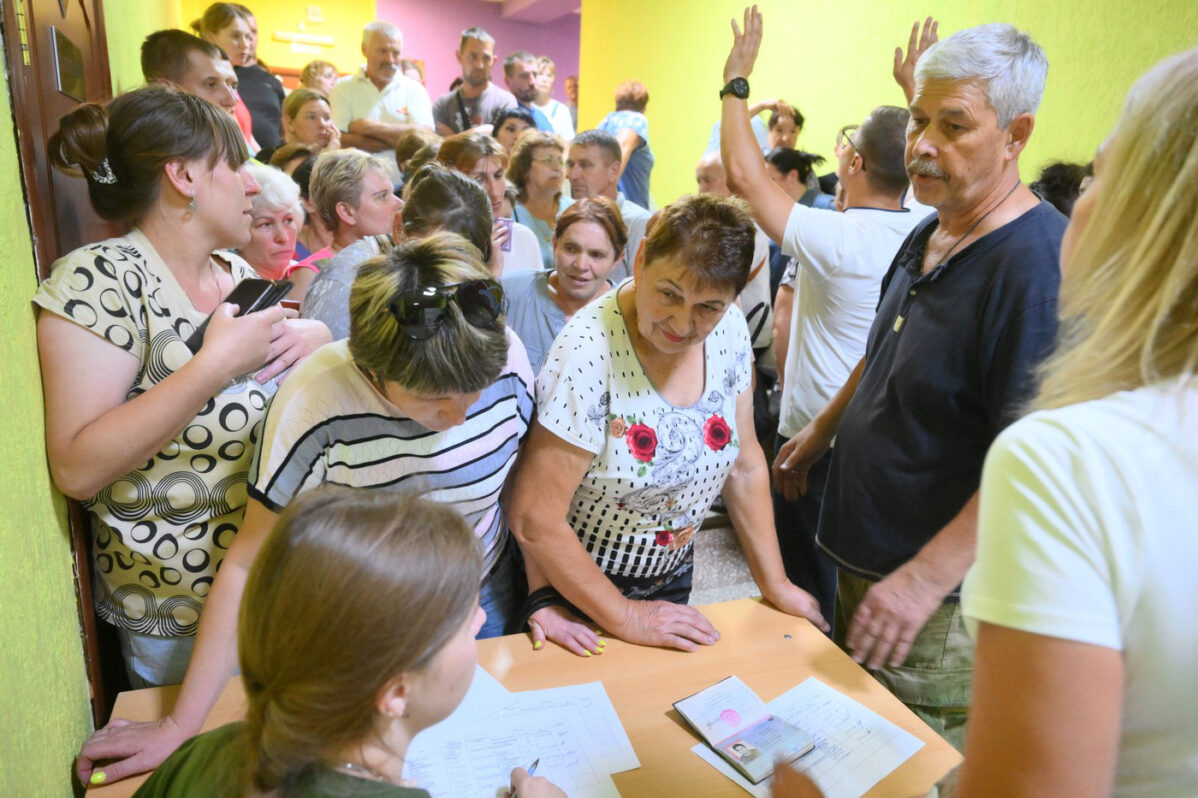
Kursk officials, according to the woman, do not want to compensate for the 73 square meters that were added to the old house in 2012. The Selitrennikovs did not have time to register the extension with Rosreestr. Oksana believes that she is unlikely to win the trial in the first instance, but she is determined. “I’ll go all the way to the Supreme Court,” she says.
“Village residents are the kind of people who are the last to formalize things legally,” says Kursk activist and realtor Lyubov Prilutskaya. “Many simply lived and were not concerned about this issue. And when the invasion happened, in connection with obtaining a certificate, we had to deal with these issues. At the same time, the legislation is structured in such a way that most often [such questions] require a cadastral engineer to go to the site, but it is impossible to go.”
Oksana is indeed far from the only resident of the border region who did not manage to resolve the issue with real estate documents in time. Since the fall of 2024, at least 400 lawsuits against the Ministry of Construction have been filed in the courts of the Kursk region, Vorstka found. Local residents are trying to register additional square meters through the court, formalize ownership, or enter into an inheritance.
Most of the claims are still pending. But from the published solutions it is clear that people manage to win. For example, in May 2025, a family from the Glushkovsky district won a lawsuit against officials from the district administration and the Kursk government.
Before the start of the war, the couple expanded the area of their home, but did not have time to formalize it. Having secured the support of the prosecutor's office, they brought to court the “certificate of inspection of the main work on the construction of an individual housing construction project,” drawn up by the local administration in 2017. Officials checked how the family spent maternity capital funds. And they recorded that the couple spent the money on expanding the area of the house by 33.9 square meters. m.
With the help of this document, the displaced people received the right to compensation not for 46.6, but for 80.5 square meters. The court upheld their claim, noting that “there is no other way to determine the actual area in connection with the aggression of the Ukrainian Armed Forces.”
You can’t go back, and the queues for compensation are long
But the right to compensation does not mean that the family will receive it in the near future. The queue for housing certificates is long.
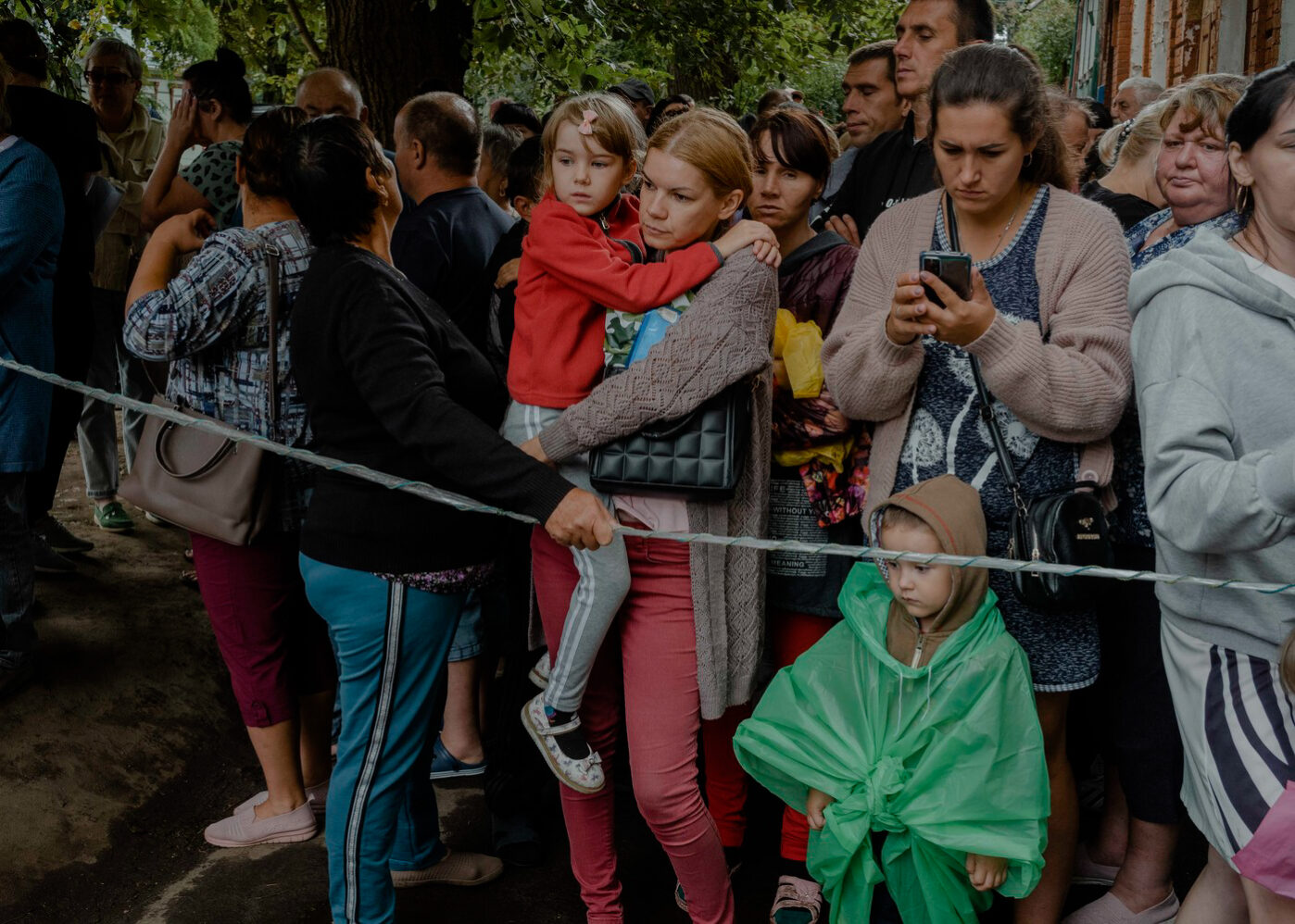
The first places in the queue are given to preferential categories - for example, people with disabilities, those who survived the occupation, SVO participants, and volunteers of the BARS detachment.
It is not known exactly how many certificates have already been issued. Recently, Kursk authorities have not given numbers. In May they reported that they had awarded 10,000 certificates. This cost the federal budget 60 billion rubles.
In local chats, immigrants who have not yet received certificates are worried because some are trying to get several certificates at once and thus delaying the queue. And those who lost several houses are worried that they will only be compensated for part of their property.
“Personally, I have a house in the purchase of which maternity capital was invested, because of this there are 4 owners in it - me, my husband and two daughters,” says displaced Oksana Selitrennikova. — My husband, by inheritance from his mother-in-law, has 1/3 in his aunt’s house, its part is 30 sq. m. And the eldest daughter has a house from her grandmother. If we receive money for our house, then my aunt and my daughter remain on the street; if my aunt receives it, then I and my whole family remain on the street.”
Many displaced people, says activist and realtor Lyubov Prilutskaya, would like to return home and restore their destroyed housing. But it will be expensive.
“It’s summer now; they’ve already spent the winter without heating. If there is a hole in the roof, then everything in the house is very difficult,” says Prilutskaya. “How much money will it cost to restore people who have lost their homes and have problems with work?”
It is unknown whether the house can be restored using a housing certificate. Prilutskaya says there are no precedents. In addition, traveling to border areas is not yet possible. They are regularly shelled, and the ground there is mined. According to the Kursk authorities, the Russian military and employees of the Ministry of Emergency Situations have already found and neutralized over 600 thousand explosive devices. But there are still mines in the fields, roads and vegetable gardens.
“We had such a beautiful green city, but now everything there is broken,” says Nadezhda Tkachenko, a survivor of the occupation of Sudzhi. “I was driving [during the evacuation] and didn’t recognize my city. I lived there since childhood. I was born there, grew up, my children were born there, but I didn’t recognize my city. It just turned into ruins, there is no city, it just doesn’t exist. I can’t imagine how they will restore it, it was erased.”
Cover: Dmitry Osinnikov
You can support “Layout” from any country in the world - it is still safe and very important. We really need your support now. How to help us →