
Translated material
New Cold War: What threatens the deployment of intermediate-range infantry fighting vehicles in Europe
The Kremlin abandoned the moratorium on the INF Treaty after US plans to deploy missiles in Germany
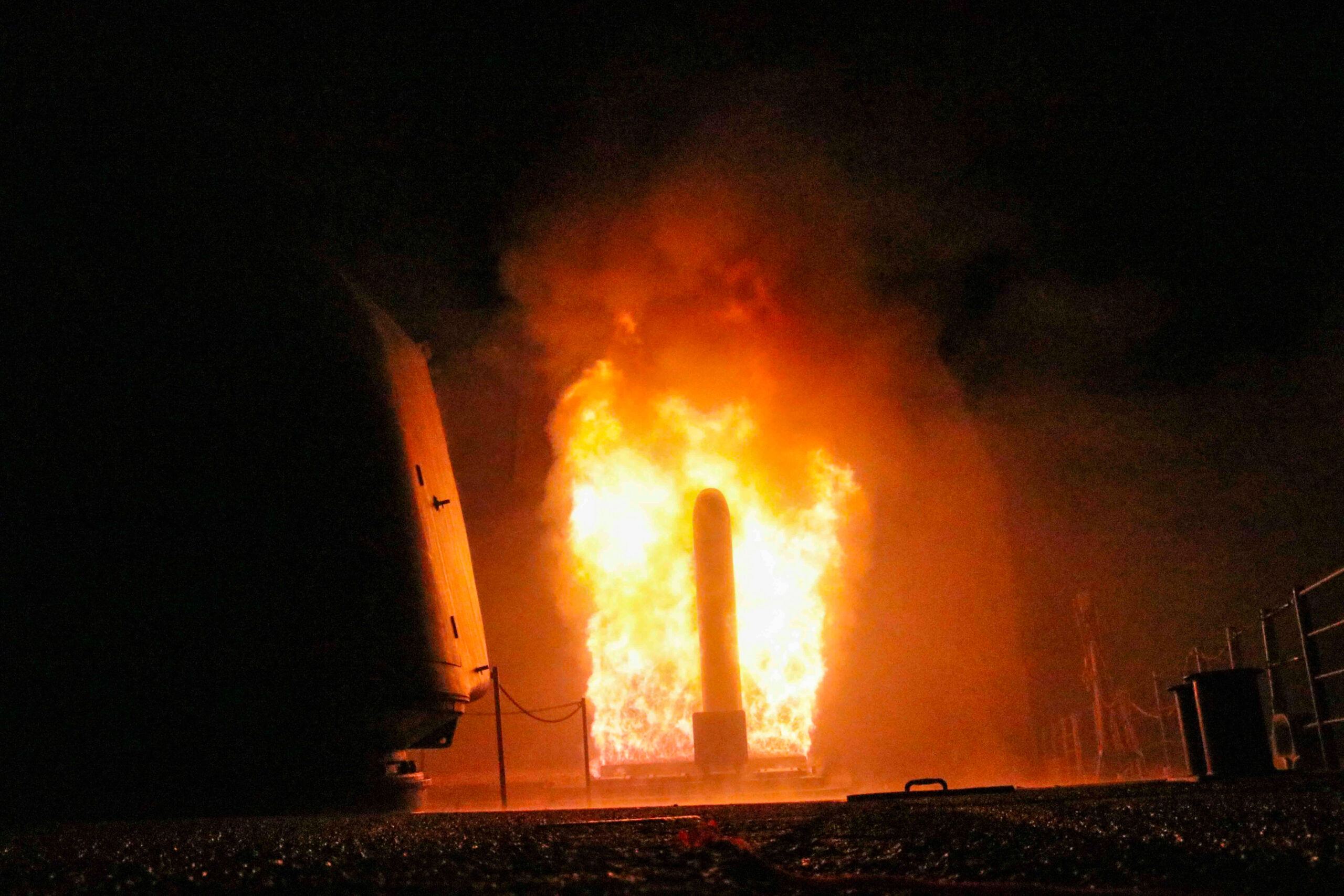
Moscow has announced its readiness to deploy intermediate- and shorter-range missiles (INF) at its western borders, and subsequently, possibly in the Pacific Ocean.
The deployment of this type of weapons until 2019 was limited by a treaty signed in 1987 between the United States and the Soviet Union. Washington later withdrew from the agreement, accusing Russia of violating it, and Russia urged Western countries not to deploy the missiles without further commitments.
In order not to miss new texts from “Layout”, subscribe to our telegram channel
“Verstka” examines why medium- and shorter-range missiles are so dangerous, which countries already possess such weapons, and whether the rejection of restrictions will lead to a new arms race.
What are intermediate- and shorter-range missiles and why are they more dangerous than intercontinental ones?
Intermediate-Range Nuclear Forces Treaty are ground-launched ballistic and cruise missiles capable of covering a distance of 500 to 5,500 kilometers. As a rule, they can carry a nuclear charge.
The main advantage of such missiles is their short flight time to the target. If intercontinental missiles take tens of minutes to deliver a warhead to enemy territory, then INF missiles must reach them in minutes. For example, the American Pershing-II, stationed in Germany in the 1980s, could theoretically reach the western regions of the USSR in 5–8 minutes (although they did not reach Moscow).
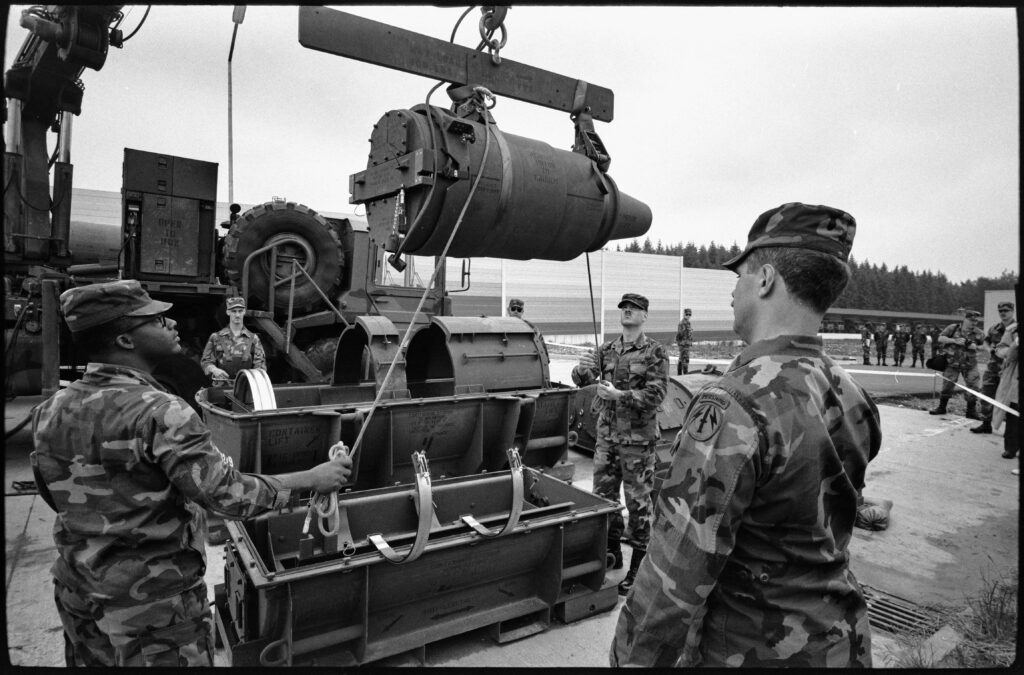
The proximity of such missiles to the targets and the short flight time create the risk that the attacked side will not have time to respond to the enemy’s nuclear strike. Cruise missiles on aircraft and ships are considered to be less dangerous due to the need to separately place their carriers on combat duty.
Why was the INF Treaty abandoned in 1987?
By the mid-1980s, the mutual deployment of Soviet Pioneers and American Pershings in Europe led to the most serious deterioration in relations between the USSR and the USA since the Cuban missile crisis. Soviet medium-range missiles deployed 1,374 nuclear warheads compared to 567 in 1975.
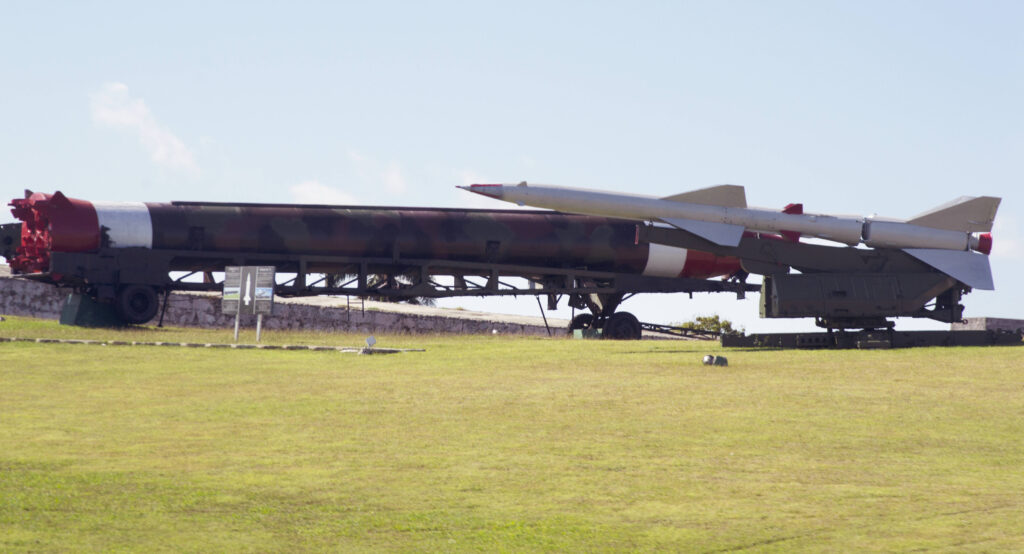
After Mikhail Gorbachev came to power, the USSR decided to soften relations with the United States. As a result of negotiations, Gorbachev and Ronald Reagan agreed to completely destroy this class of weapons. The INF Treaty was signed in 1987. The USA destroyed 846 missiles, the USSR - 1846.
Moscow believed that the treaty gave the United States an advantage: sea- and air-based missiles, of which America had much more, were not included in the ban.
Who violated the agreement and how?
The administration of US President Barack Obama accused Russia of violating the treaty due to the development and deployment of a cruise missile for the Iskander-K complex. According to American intelligence, this missile is a modification of the X-101 aircraft cruise missile with a range of up to 5 thousand kilometers, or a ground-based version of the Caliber naval complex missile.
Russia claims that Iskander-K missiles cannot fly further than 500 kilometers, although the Ministry of Defense TV channel Zvezda reported that raising the range is “quite possible” even to thousands of kilometers.
Moscow, in turn, accused the United States of violations due to the deployment in Romania of a missile defense system with Mark-41 installations, which can launch not only interceptor missiles, but also Tomahawk cruise missiles.
Which countries have intermediate- and shorter-range missiles now?
After the US and Russia withdrew from the treaty in 2019, both countries were able to freely develop and deploy the INF Treaty. But they are not the only ones who have such missiles.
- China has more than a thousand medium-range missiles - they form the backbone of China's nuclear forces. President Donald Trump cited the presence of such missiles in China as one of the reasons for the US withdrawal from the treaty.
- India and Pakistan also have medium-range missiles. Pakistani "Shaheen-3" are capable of reaching Moscow. Indian Agni-3 can cover targets almost anywhere in Russia. However, the sides' missiles are probably aimed at each other.
- North Korea has developed missiles with a range of about 5,000 kilometers.
- Israel also has intermediate-range missiles, as does its regional rival Iran , although these countries do not possess nuclear warheads (at least not officially).
What will change after the restrictions are lifted?
Vladimir Putin signed a law suspending the Intermediate-Range Nuclear Forces Treaty back in 2019. However, even after withdrawing from the treaty, Russia stated that it would still not deploy intermediate- and shorter-range missiles as long as the American side refrained from doing so.
In 2024, Putin demanded that the production of intermediate-range and shorter-range missiles (INF) be resumed and deployed “to ensure security,” and on August 5, 2025, the Russian Foreign Ministry officially announced the lifting of the unilateral moratorium. In a statement, the department said that the conditions for maintaining previously existing restrictions have disappeared. Moscow claims that the actions of Western countries are leading to the formation of “destabilizing missile potentials” in the regions adjacent to Russia, which creates a direct threat to national security.
In order not to miss new texts from “Layout”, subscribe to our telegram channel
Russia has already announced the development of new missiles prohibited by the treaty. Moscow says that this is their reaction to the upcoming deployment of American missiles in Germany. The United States plans to deploy PrSM (range up to 700 km), Typhon (up to 1,500 km) and hypersonic Dark Eagle systems there by 2026.
According to experts, Russia can “legalize” existing systems, with the help of which it previously violated the treaty, and begin their active deployment. In particular, Vladimir Putin said that the new Oreshnik complex has already been put into mass production.
Judging by the statements of Putin and Lukashenko, the Oreshnik complexes are planned to be deployed in Belarus - in close proximity to the NATO borders. There has not yet been any official information about plans to roll out Oreshnik in other countries. Pro-government experts have already proposed deploying “weapons like Oreshnik” in Venezuela or Cuba “as a serious tool for projecting Russia’s military presence in a global format.” (It was the Soviet attempt in the 1960s to place nuclear weapons in Cuba that triggered the Cuban Missile Crisis, which brought the world to the brink of nuclear war.)
However, even the deployment of the INF Treaty on the territory of the Russian Federation and Belarus creates risks for Russia itself: American missiles could appear not only in Germany, but also in Poland, the Baltic countries, Finland, and after the war in Ukraine.
As military analyst Mikhail Kofman noted , “Moscow all the time provoked America to withdraw from the treaty, taking on a very big risk.” After NATO expansion, the United States has little obstacles to stationing missiles near Russian borders, which would create serious strategic problems for Russia.
At the same time, experts warn that the world could return to the situation of the late 1980s, when Europe was saturated with medium-range missiles capable of reaching targets in a matter of minutes. This will further strengthen mutual suspicions of preparations for a new war and lower the threshold for the use of nuclear weapons.
Photo: Launch of the American Tomahawk medium-range missile, 2018. IMAGO/piemags via Reuters Connect
Support “Vestka” - it’s important and safe →