
Translated material
The lord of the norms
The writer Vladimir Sorokin is 70 years old. Our author from Kyiv wrote a personal text about what it was like to read it in Ukraine-from the 1990s to the present day
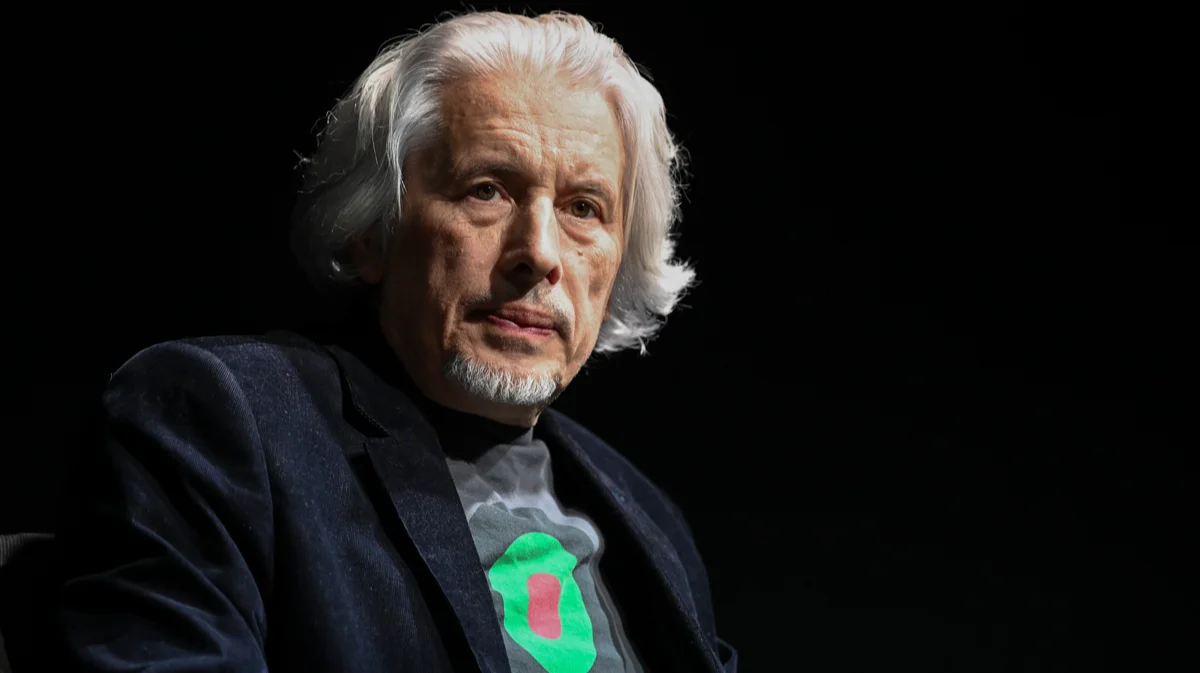
Vladimir Sorokin at the presentation of his book “Nastya” at the Berliner Ensemble Theater, Berlin, Germany, November 17, 2022. Photo: Jens Kalaene / DPA / Scanpix / Leta
Usually Sorokin starts with normal. With imitation of the conventional style, correct and verified to the degree of strangulation. And then, gradually, this norm destroys - through verbal games, through the growing crazy speech.
But, in fact, the “norm” of reality, especially in Russia and in some adjacent (and not only) states, is now very similar to its typical text. The heads of states and high -ranking politicians at the official level carry pure delirium, the masses are weird, do not forget to teach their neighbors how to live properly, however, the adjective “alternative” clings to the facts.
Against this background, the text about the descriptor of this permissible reality can be quite normative, even lyrical and subjective. In the end, all the founding the Soviet Union is in some way the characters of Sorokin, and I am no exception.
I'll start with myself.
I learned about Sorokin, then the young Kiev Pankushka, in 1992 from a couple of friends-hippies, who were read out even on a nudist beach in Crimea. I also bought this book for myself, at that time the first legally published in the territory of the former USSR (all the works previously went in there- or samizdat)- a thin, with a strange pattern of the author on a soft cover: a naked woman in a profile, as if a piece of wood, as part of a certain perverted annual ring. Just in case, I began with the afterword of Dmitry Prigov, from today's point of view, quite a pathetic and, of course, who clarified little. Returned to the first page, began to read the story "Monument" ...
Everything, to the last letter, seemed shocking new.
The lightness with which Sorokin played with styles shocked. No, well, what is it: to start the typical gangster novel, with torture, hairdryers and obscenities, then smoothly taxi to emphasized literary beautifulness such as “vulgarisms and obscene abuse have gained strange lethargy”,
Then jumping to empty moralization such as “oath -crushed carelessness”, after which it smoothly spilled with somewhat -stringent thoughts about how to name the monument in the form of a huge naked man producing a gase, all these long -live Comrade Zimmerman, compressed inheritance, checkered madness and step to breathe toad, Volodya!
And all the other texts - one to one: the competition of workers on the subbotnik, who will faster; Two kissing Komsomol members, one of whom gives another a severed male face; high school student, secretly eating feces of his teacher; lumberjack, for no reason, drinking the head of another lumberjack; An excited young man demonstrating a member at the funeral of a respected comrade; And, of course, the famous monologue “went to Bobruisk? Did you go to Bobruisk? "
I repeat, I have never read this in Russian. And at the same time, every speech turn, all these uncontrolled jumps of nonsense seemed incredibly, terrifying, to nausea familiar. Even with the same “monument” - in fact, the author simply conceptually launched a Soviet teenage joke when it was proposed to imagine a photograph of homosexual intercourse in the middle of the Sahara, and then choose the name for it: take any official newspaper and read any heading. Homeric laughter was guaranteed.
Not only that: I will take the courage to claim that we said like Sorokin's prose. It was called "gonet." In fact, this is a speech genre, aimed at confusing, puzzling, confusing the listener. Just in the late 1980s and early 1990s, all subcultures and informals were entertained to one degree or another. The eloquent flooded fable was valued in smoked kitchens. The rut was inherent in linguistic games, quotation, insane heroes, erosion of the concepts of high and low, comic conspiracyology - all the same than Sorokin sat down his texts.
It was not only entertainment, but also a symptom. The totalitarian order was poured, the empire broke up - and together with the empire, its tongue broke up, and this breakdown Sorokin reflected the literature, and anarchist youth at the level of the joke.
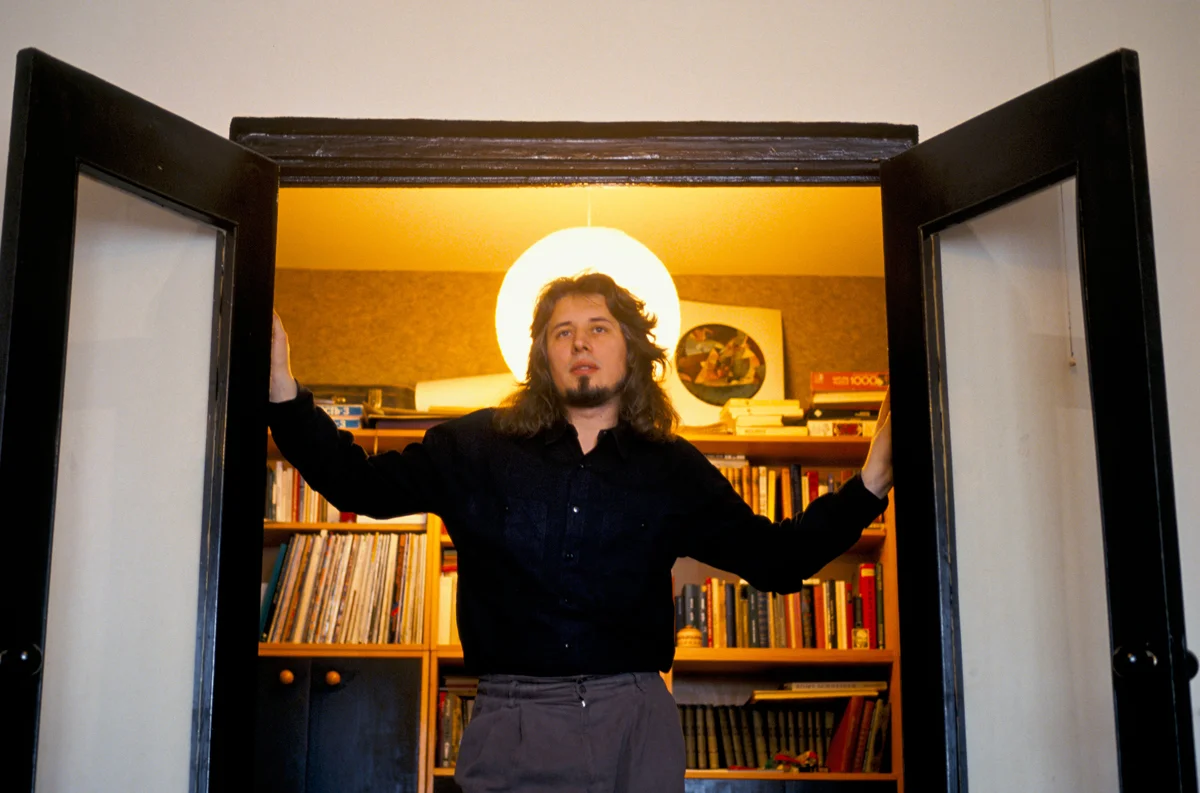
Of course, his biography is largely typical of a late Soviet author. Born in a professor’s family, studied as an engineer - a typical path for many humanities of the then humanities, whose path to “cultural” universities was closed for various reasons; Growing up in the 1970s-cynical time of late stagnation. He worked in the journal "Change", was fired for refusing to join the Komsomol, but did not adjoin the dissident movement. He was engaged in book graphics, painting, conceptual art. The first official Soviet publication - in 1989 in the Riga magazine "Rodnik". Further, the career was going on increasing: circulations, translations into other languages, theatrical productions, scandals, adaptations. He was not mistaken with the choice of parties in public life, since 2022 he did not return to Russia.
In fact, Sorokin is a master of one reception and a developer of two topics, or, more advanced, the tormentor of the two objects: tyranny and Russian literature.
With the reception, everything is very clear: the Sorokinsky work begins completely realistic, with a leisurely exposure, prescribing characters, deploying their situations - and then go crazy or language, or characters. The lack of your own style becomes the author’s style. Sorokin is able to simulate any narrative manner born over the past 150 years. But - and here we move on to the misadventures of his characters - the situation that arise in the process of this language game, emphasized the simulated canon. All the fluids that the human body, the most perverted types of sex, the most unbridled violence, the most disgusting gluttony, coprophagia, cannibalism, etc. can be used.
A good example is the story “Nastya” from the collection “Feast” (2001): in a Chekhov detailed and lace description of one day in the landowner estate of the early twentieth century, where the family is preparing for dinner, only the 16-year-old daughter of the host of the estate becomes the main dish. The novel “Roman” (1989) is even more indicative - a pretty chief hero, of course, by the name of Roman (Sorokin Mastak in terms of recursion), comes to the village to relatives, marries, and on a wedding night begins to kill everyone with an ax, then he dies. In the first part of the novel, “Norm” (1983), one after another everyday situations of the faded life of the late USSR are unfolding one after another, with one exception: a hero or heroine must (must) eat a portion of human shit.
And here we move on to thematic preferences.
The early Sorokin is unsurpassed over the Soviet ideology. In the mentioned collection of 1992, every second story is a strict absurdization of the “scoop”.
In the “norm”, in addition to the life of patient copophages, there is also a cycle of psychedelic sketches based on pathos Soviet songs with omnipotent executioners Smersh in the main roles, a diary in letters of the builder who is gradually crazy, repairs someone’s cottage, a glider in the editorial office of a journal, where everyone speaks on a bird Zaumi.
But if the social artist itself ceased with the collapse of the USSR, then the literature seems to remain for Sorokin an inexhaustible ridicule reservoir. In this sense, the novel “Blue Salo” (1999) is very characteristic.
The action takes place at the end of the 21st century. After world nuclear cataclysms, the Chinese dominate on the planet. Everyone bursts on unimaginable jargon: “Rips Lavay Nimada”, “On the White Yeheron plus type-type-to trace”, “Soplevun”.
The science of the future is genetic engineering. In strictly classified laboratories, writers are cloning. New Nabokovs, Akhmatovs, Pasternaks write completely crazy, but familiar to these authors in the style of the work. The goal is not at all the revival of the great Russian literature. The fact is that each clone writer puts the mysterious blue fat in his fabrics along the way. This is a completely fantastic product in its properties. Its entropy is zero, simply put - blue fat forever. And hardly you begin to get into the taste of this neon anti -utopia, as Sorokin in the usual way for him lures the action and rushes into the pool of a completely different reality. Where Count Khrushchev is the lover of Stalin, the Bolshoi Theater Hall is placed in a sewer manifold, spectators are sitting in diving costumes. Monsters and dictators, love of hetero- and homosexual, influx of strange rituals, colors, feasts, world cataclysms, chic interiors. At the same time, the “blue fat” is filled with defiantly carnal love of life - pleasure was erected into the basic principle. There are almost no familiar feces, but a lot of food. “Blue lard”-truly, romance-romance. In addition, for the wilds created on the pages of the Blue fat, there are justifications, which was categorically not before.
But the main recipe for the cocktail in Sorokinsky remains pus, The old truth is visible behind all the improvements: Sorokina is still sick of the myth of great Russian literature. No wonder all its main idols are directly or indirectly bred in the course of action - in very unattractive views.
Mockingly designating artistic immortality as a “blue lard”, turning the school reader into a stenchouse tootiary, Sorokin has once again established a distance between themselves and such an unloved moralizing literature.
Therefore, attempts to enter it in this petrified and decrepit microcosm look funny.
And if you return to our relations with him (and speaking “ours”, I mean reading the Ukrainian public), then the more the paths of Russia and Ukraine diverged, the less relevant he became southwest of the Mikhailovsky farm (the border point of the Moscow-Kiev.- Ed. Ed. ) . Perhaps the last outbreak of interest was on the “Oprichnik Day” (2006) - where Sorokin found ways to deconstruct the Putin's autocracy already. In Russia, the future, stuffed with high technologies, with the full consent of the people establishes the real Middle Ages - with the king, oprichnina, boyars, executions, and even a wall around the entire perimeter of the border. And the main character - the oprichnik, who does what is supposed to the guide - tortures, raping, killing. And he feels himself quite a master of life.
Paradoxically: the more rapidly Russia plunges into the authoritarian past, erecting monuments to Stalin and reveling in the slogan “We can repeat”, the more closely Sorokin turns his eyes to the future. The trilogy about Dr. Garin, starting with the gloomy fairy tale “Flood” (2010), goes to the future in the novels “Dr. Garin” (2021) and “Heritage” (2023), where there is a place of nuclear war, various kinds of mutants and genetically modified monsters, all with the prose of Solzhenitsyn’s prose, Shalamov, Pasternak.
The world of “telluria” (2013) and “Manaraga” (2017) looks more successful: Russia has broken up into many independent states, in one of them the Altai Republic of Tutluria - magical nails make a powerful narcotic effect when clogging the consumer to the head of the consumer. In the Managara, Sorokin, albeit with noticeable irony, sublimates one of the greatest neurosis inherent in all writers, regardless of the place of residence: the fear of extinction of the paper book. In the era, which came after the new Middle Ages and the second Muslim revolution, printed books ceased to publish. Now specially trained chefs have learned to prepare dishes on fire from copies preserved in museums so that the atmosphere and the content of the corresponding text go to the eater. In the fresh story “Fairy Tale”, the hero again, as in “Garin”, starts on the road and again jumps from one style to another. Sorokin 2010-2020s-lord of the Melancholic Park of Literary attractions.
But it is valuable, in my opinion, to others. Vladimir Sorokin is primarily a satirist, a merciless critic of Russian despotism and ossified Russian traditions. And the worst thing is that it is in that capacity that it is still relevant.