
Translated material
He reported the whole truth
The main measurer of public moods - the general director of Vtziom Fedorov - showed a number with soap bubbles
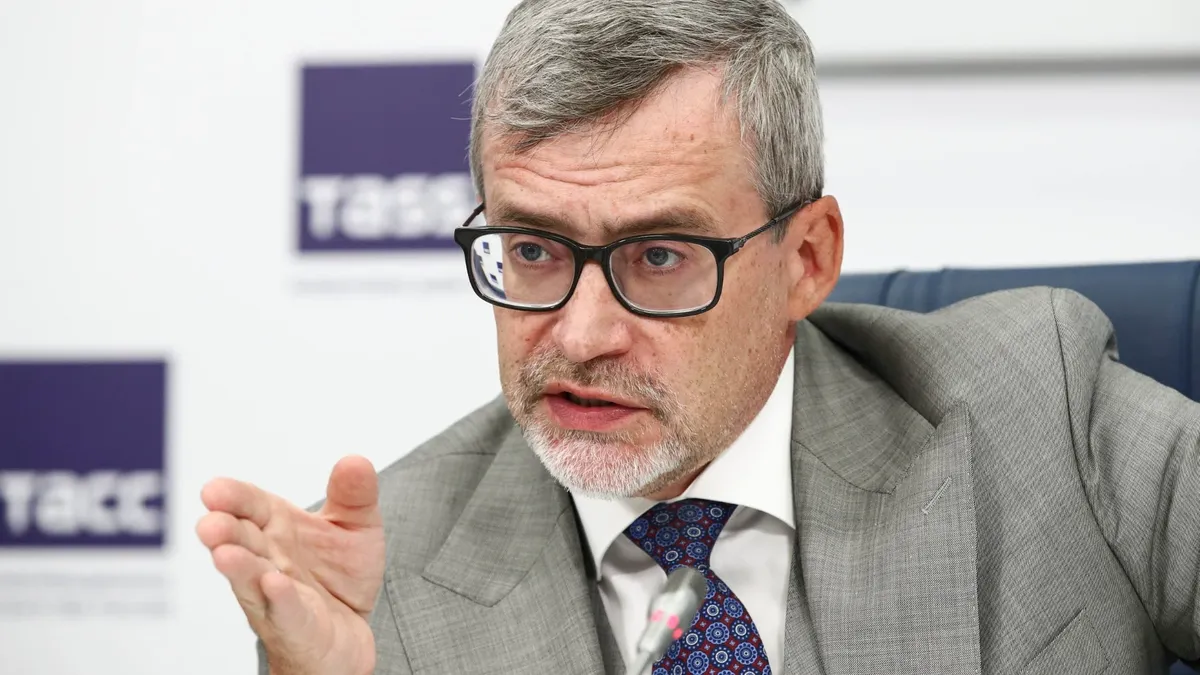
Valery Fedorov. Photo: Alena Bzhakhova / TASS
18+. This material (information) was produced, distributed and (or) sent by foreign agent Vishnevsky Boris Lazarevich or concerns the activities of the foreign agent Vishnevsky Boris Lazarevich.
VTsIOM General Director and Dean of the Faculty of Social Sciences and Mass Communications of the Financial University under the Government of the Russian Federation Valery Fedorov, in a large interview with the pro -government publication, drew an extremely pleasant picture of public opinion for the authorities.
The people, according to him, in the vast majority shares their goals.
In support of the Kremlin course, society is more than ever.
The younger generation gives more value to patriotism and is different (badly) to the West.
There is no fall in the living standards, for the most part they feel no worse, but better than three years ago, “cheerfully” and “collected”.
The “anti -migrant” initiatives come from the “network communities” and “counter -elites”, which is trying to earn political capital.
Such, according to Fedorov, is the “pulse of public opinion”, the authorities of which “people of science” as working in the All -Russian Central Executive Committee help to hold a hand on which and in close contact with the people.
The picture drawn by VTsIOM (with the mouth of Mr. Fedorov) is the picture.
There are no fatigue from people - there is “fatigue from news”, but “slowly but correctly we go ahead”. People "understand: we are all now in the same boat, and our right business is right." And “they know exactly what Russia is fighting for”: according to VTsIOM polls, “all four goals that Putin has proclaimed are divided.” Therefore, "the Kremlin’s refusal of the immediate ceasefire without recognizing our fundamental requirements is supported widely." For, as Fedorov assures, “why do we need“ Minsk-3 ”if Ukraine“ will remain a dagger at the heart of Russia? Why do we need a provocateur country at the side instead of a good neighbor and brother in blood and religion? ”
Regarding the ceasefire, Fedorov is adamant: “We need not a“ cardboard ”truce, but a real, long -term, honest world”, “Until we achieve this, we do not want to add weapons”, and this is the “position of the absolute majority of our people”, which does not need to be convinced that “the world is better than war, we know it very well”, but “the desires of a strong world do not see the enemy, they just want breaks, so that they want to be reverse. Then, again, attacked us, ”which means“ we must squeeze them now so that they don’t get old ”, and“ this is the opinion of most of our citizens. ”
Young people, according to Fedorov, are also changing: those who enter adulthood in his era differ from those who lived during open borders and universal cosmopolitanism. They have different values. The new generation gives more value to patriotism, refers to the West in a different way.
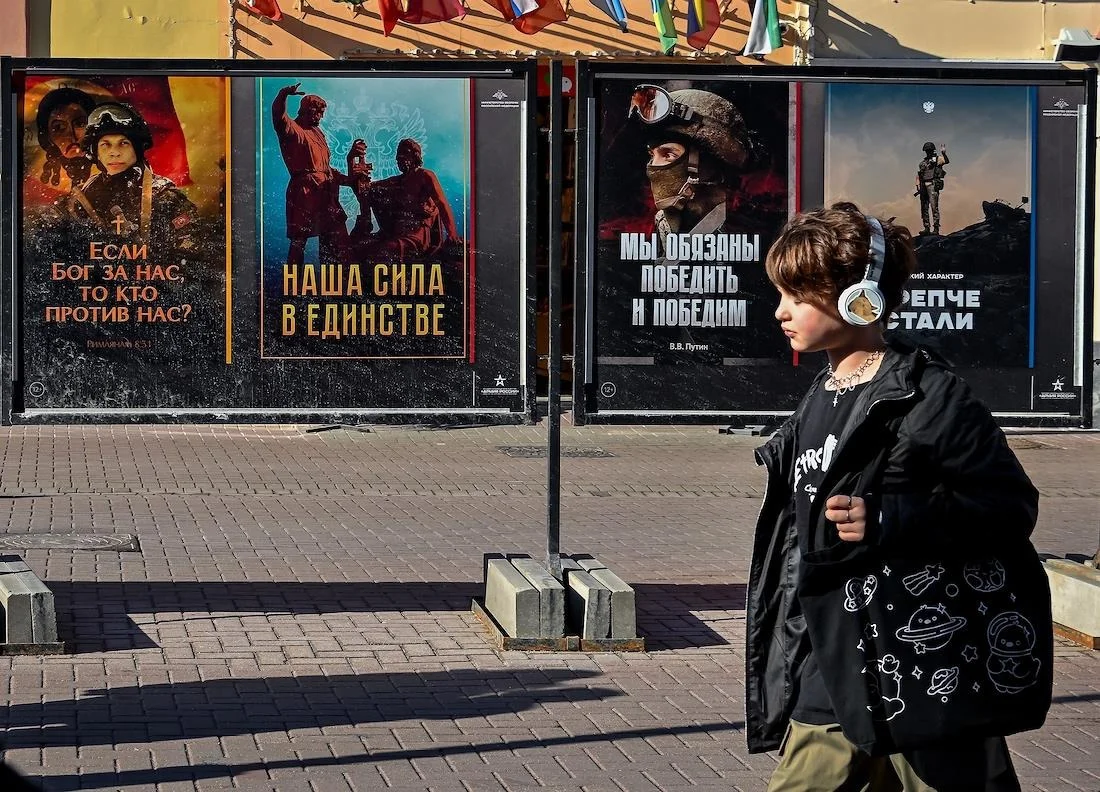
Speaking about the bred prohibitions and fines for “visiting forbidden sites with prohibited music”, Fedorov is sure that it is bad. Like, “McDonald's departure” and the slowdown of Utuub, we will survive other misfortunes. ” And in general, in this type of sport as “adaptability, adaptability, high survival” Russians, in his opinion, “world champions”.
Fedorov does not see any fall of life standards: according to him, “the TV has lost even the refrigerator, but the Internet, and the refrigerator feels great,” because “it has been reduced significantly in the last three years in Russia, the share of those who are not enough for food, this shows the statistics, and our survey data.” Moreover: “against the background, a significant part of the Russians began to live better,” although “those who ended up in the frontline zone began to live worse.”
“Some deteriorations felt everything, rose apartments and cars, medicines, services. But salaries have grown, and unemployment has disappeared, ”says Fedorov. On the contrary, "it became very bad only to those who decided to scour the Tbilisi garbage dumps and the Baltic slums," instead of "living in a country fighting with neighbors."
In our country, he says, “social elevators earned faster, more prestigious and profitable professions and jobs appeared,” and “who does not see it is a blind man or a roar.” And there is no crisis: “The economy has grown by more than 4%last year”, “The most part feels no worse, but better than three years ago,” and although “there are problems with the purchase of housing and cars, with a high -quality rest - the prices for them have grown great, salaries do not ripen, and“ the majority has confidence that it will be better than today ”.
“Migrantfobia”, which has grown sharply, as he believes, disperses “anti -migrant network communities, which on this topic began to earn political capital.”
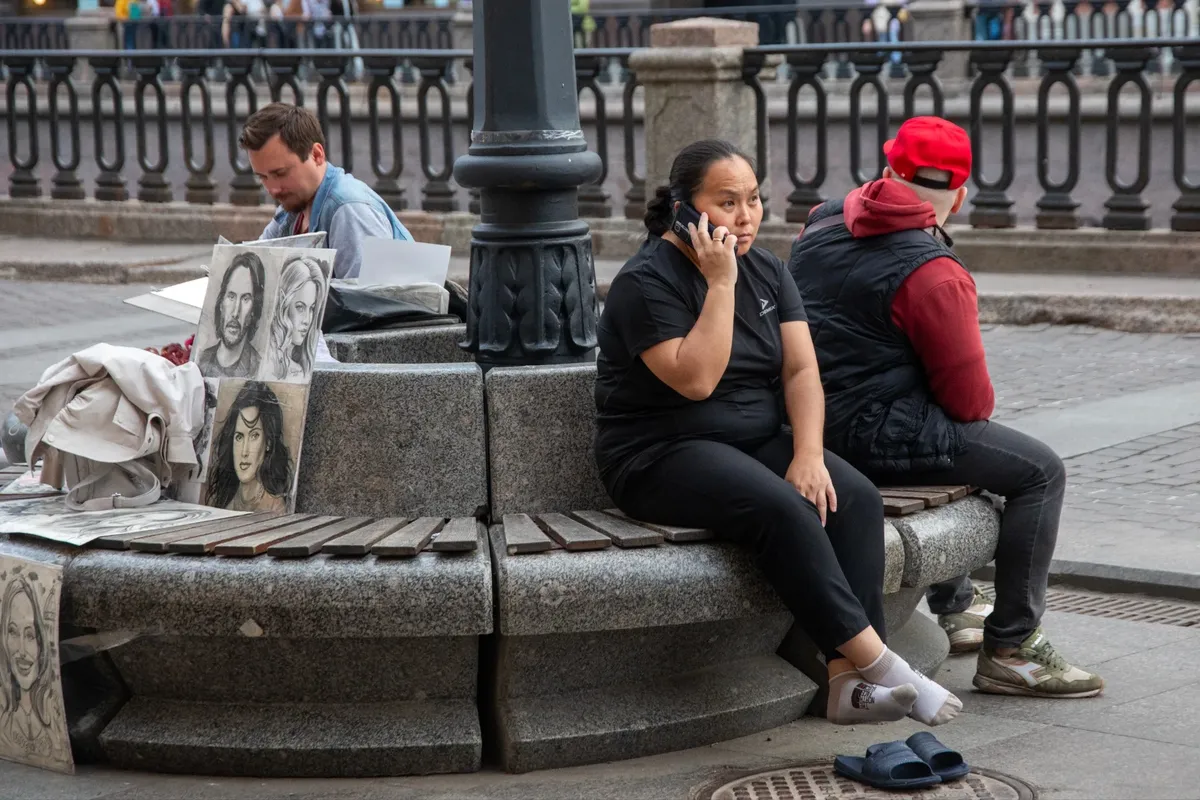
All this, in his opinion, is “an attempt to part of our counter -elite to get the support of the population and thanks to it to go to big politics” on the “anti -migrant” topic ...
... There was such a Soviet film - “Kuban Cossacks”, showing the unprecedented post -war prosperity of the collective farm peasantry. And they say, the local old woman asked the film crew: which country is this film shooting about?
It would be appropriate to ask Valery Fedorov the same question, because almost everything that is broadcast to him, or is a retelling of propaganda ideologies, or contradicts both the data of other surveys and reality, including economic ones.
To the question that, according to his assurances, most citizens demands to “squeeze”: the July survey Russian Field shows that 60% of respondents advocate the transition to peaceful negotiations and only 39% - for continuing hostilities. At the same time, 58% would support the ceasefire without preliminary conditions, and only a third of the respondents will not support such a scenario.
About the same estimates are given by surveys of other sociologists independent of the Russian authorities (and this is, with all the conventionality of sociology during hostilities and repressive laws, when the “displacement” of answers, if there is, is certainly not towards the ceasefire).
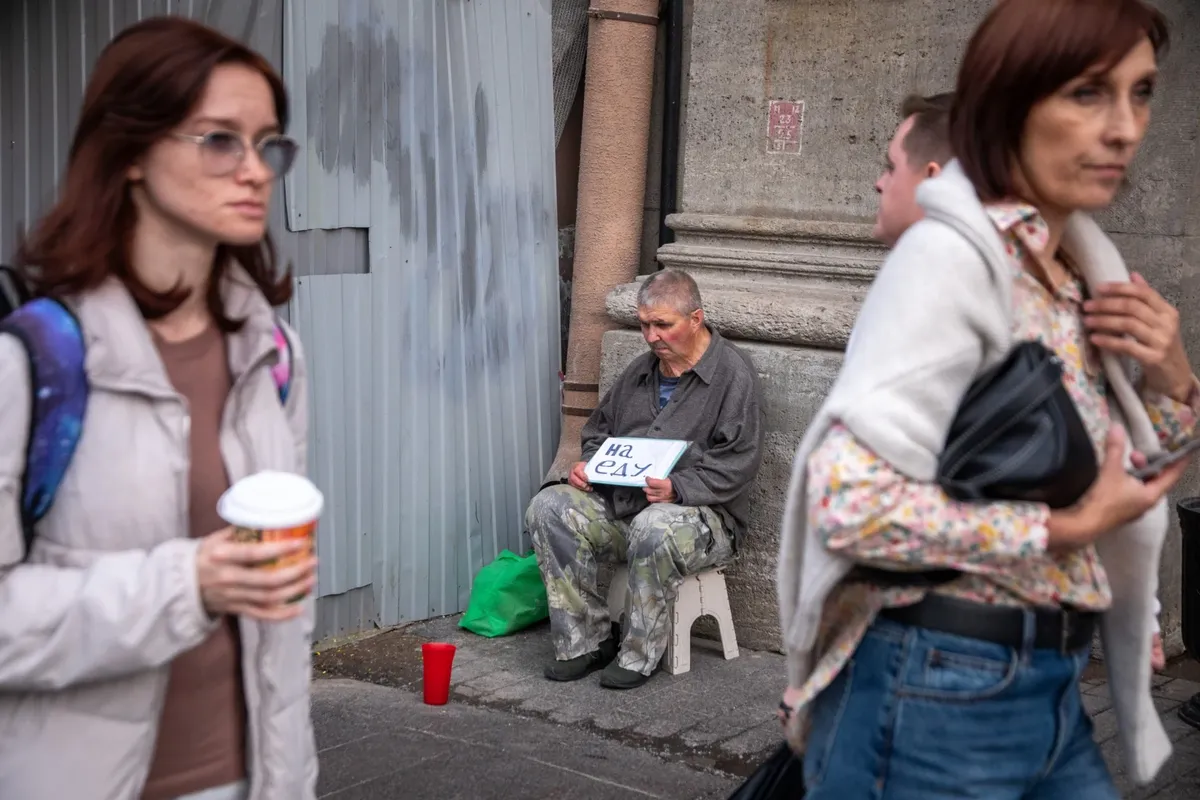
As for the fall in the standard of living of most citizens, it is fixed by a variety of structures.
This is stated in the report of the Center for Macroeconomic Analysis and Short -term forecasting, other economists are also evidenced.
That the products officially went up by 12%, and really - by 30%.
That the Russians are waiting for anomalous price increase, saving on food and switched to fixed prices against the background of a sharp rise in price of products and essential goods, as well as a record increase in housing and communal services tariffs.
That very many buy only goods with discounts or for shares and put down large purchases.
That indexing to state employees and pensioners do not have time to grow prices ...
Actually, you can verify all this without addressing reports and expert opinions: just go to the store and compare today's and yesterday's prices. So
Not only those who "ended up in the frontline zone" began to live worse.
Of course, there is a part of the population in which real incomes have grown, and we know it: contractors of the Ministry of Defense, defense industry workers and security officials, as well as those who are somehow connected with the defense-power spheres and relevant state orders. But this is definitely not the majority of the people, although it is here that the “social elevators” and “prestigious and profitable professions”, albeit specific, are concentrated now by Fedorov.
In addition, the problem is (and VTsiom carefully does not notice this) that this part of the economy generates demand, but not a proposal in the consumer market. And in a situation where more than 30% of the budget is spent on these purposes, you should not be surprised at the excess of demand over the proposal - and therefore inflation - and a fall in the standard of living: it does not happen otherwise.
If we talk about “anti -migrant” impulses, then Valery Fedorov misses the main thing: these moods are not at all anonymous “network communities” and, moreover, not mysterious “counter -elites”, striving for “big politics”: this is a well -known part of the existing “big policy”, and significant.
More than once and not two “new newspapers” (including the author), they talked about almost continuously generated - either in the Investigative Committee, then in the State Duma (where the Socialist -Revolutionaries and “Novumyuda” are especially distinguished in this direction), “anti -migrant” initiatives. About more and more grounds for depriving migrants of acquired citizenship, about sending migrants from the country of families, whose children do not go to school, on announcing an aggravating circumstance of the commission of a crime by a foreign citizen, about expulsion in the case of deportation with the migrant also members of his family, etc. etc.
Finally, about the mood of the youth, which is inclined towards the state and changes their attitude to the West: it is unclear where such an idea is taken from - the latest surveys on this subject are dated to 2023, but they do not show such a trend.
How many youth - and an active and educated - left the country in the last three years, is known, and this is a very sad circumstance from the point of view of its future.
And these people, like other ones who left, contrary to the statements of the former Kerch Komsomol Fedorov, do not at all rummage through the “Tbilisi garbage dumps” and “Baltic slums” (interesting, by the way, where in the Baltic countries he saw “slums”?).
The remaining youth is not afraid of fines for visiting "sites with forbidden music." She fears (and quite reasonably, because she observes numerous examples) of arrests and prison deadlines for recordings or comments on the Internet or for statements differing from the opinions of state bodies. And he fears future fines for finding content, which the state has declared extremist and the full list of which no one is able to learn, which allows you to attract almost anyone whom the organs will want ...
If this is precisely such a “call sociology” - in response to a well -known request from the Pushkin’s fairy tale “My Light, Mirror, tell me, but report the whole truth” - represent the Kremlin as a “pulse of public opinion”, one does not have to be surprised at the decisions made there.
What is the name of the service, which in this way is provided by the Kremlin “people of science”, is well known from the Lafontaine fable, shifted by grandfather Krylov.