
Translated material
"Russian missiles can be nuclear, but in Europe they have not yet felt this"
Why did Russia again talk about small and medium -range missiles and to whom it threatens this time? Expert expert Pavel a feat
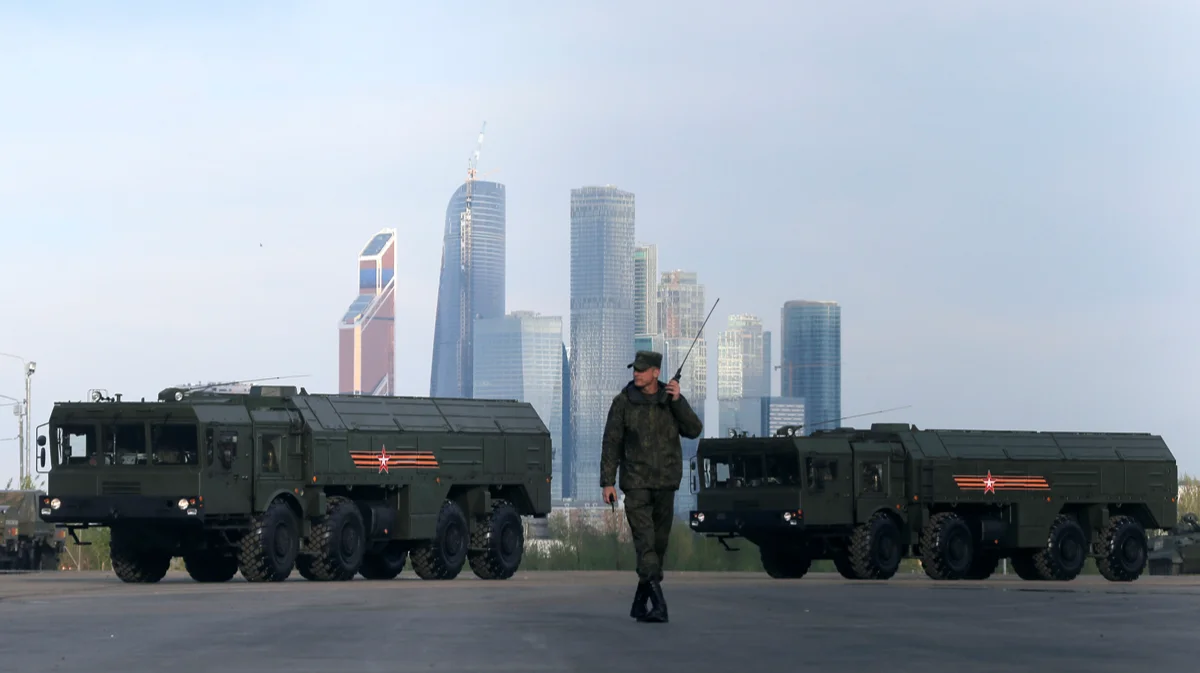
Iskander-M missile installations before rehearsing the parade in honor of Victory Day, Moscow, May 5, 2016. Photo: Maxim Shemetov / Reuters / Scanpix / Leta
In early August, the Russian Foreign Ministry made a statement “on the issue of a moratorium on the deployment of medium and lower -range missiles”. Its meaning is this: we offered the United States different peaceful initiatives to “maintain restraint in this area”, we generally have such a peaceful country - the flies did not offend, but “we have to state that Russian initiatives did not meet reciprocity”. In 2019, the United States has left the contract for a completely incomprehensible reason, and since 2023 (when Russia has been especially peaceful for a year), the Russian Foreign Ministry “records precedents for the transfer of American systems capable of the ground launch of the RSMD to European NATO countries for“ running -in ”. Next is a long list of unfriendly steps of the “collective West” addressed to Russia. Therefore, now the Russian Foreign Ministry “states the disappearance of the conditions for maintaining a unilateral moratorium on the deployment of similar weapons and is authorized to say that the Russian Federation no longer considers itself connected by the previously adopted self -restraints.”
Translated, this may mean that Russian missiles that can overcome distances from 500 to 5500 kilometers will now be aimed at European countries. It would be better at the same time in the USA, but they won’t get there. How the situation has changed since 2019, when the 45th US President Donald Trump announced the withdrawal from the RSMD agreement, why he did this with Russia and what this led to, ”explains the independent analyst, head of the Russian Nuclear Power Project Pavel.
Pavel a feat
Independent analyst, head of the Russian Nuclear Forces project
- Russia announced that an agreement on medium and short -range missiles (RSMD) does not bind it anymore, it will place missiles where she wants. And what, in fact, is the new one if the United States has left the contract in 2019? And to whom is the threat addressed?
- The United States really left the contract in 2019. And Russia formally also left the contract almost immediately. That is, the agreement ceased to exist, neither the United States nor the Russia remained obligations. Formally, even then, everyone was free to do whatever they wanted.
Further, Russia made the idea of the moratorium on the deployment of systems provided for by this agreement, namely, a range of 500 to 5500 kilometers. On this occasion, Russia made two statements: one - immediately in 2019, the other, supplemented - in October 2020. In the second, Vladimir Putin said that Russia is ready not to deploy such systems. Here you need to take a step back and remember why the United States has left the contract.
- One of the explanations was that Russia has long violated it, and it concerned the Iskander missiles of a new type.
- Yes, the United States accused Russia of violating the provisions of the contract by creating and testing winged missiles. But the system that was discussed has an indirect attitude to the Iskander, it is better not to call it that. Formally, it is called 9M729.
-Probably, they are still “relatives”, because “Iskander” call 9M728 missiles?
- Yes, but it is not necessary to call this system “Iskander”. According to the United States, a 9M729 ground -based cruise missile is located on mobile launchers, really similar to the Iskander installation, and has a range of about 2500 kilometers, that is, it violates the provisions of the contract. Russia, in turn, denied the violation. As a result, she nevertheless admitted that the 9M729 missile really exists, but assured that the range does not exceed five hundred kilometers-respectively, there is no violation.
- But in fact, the range exceeded 500 kilometers?
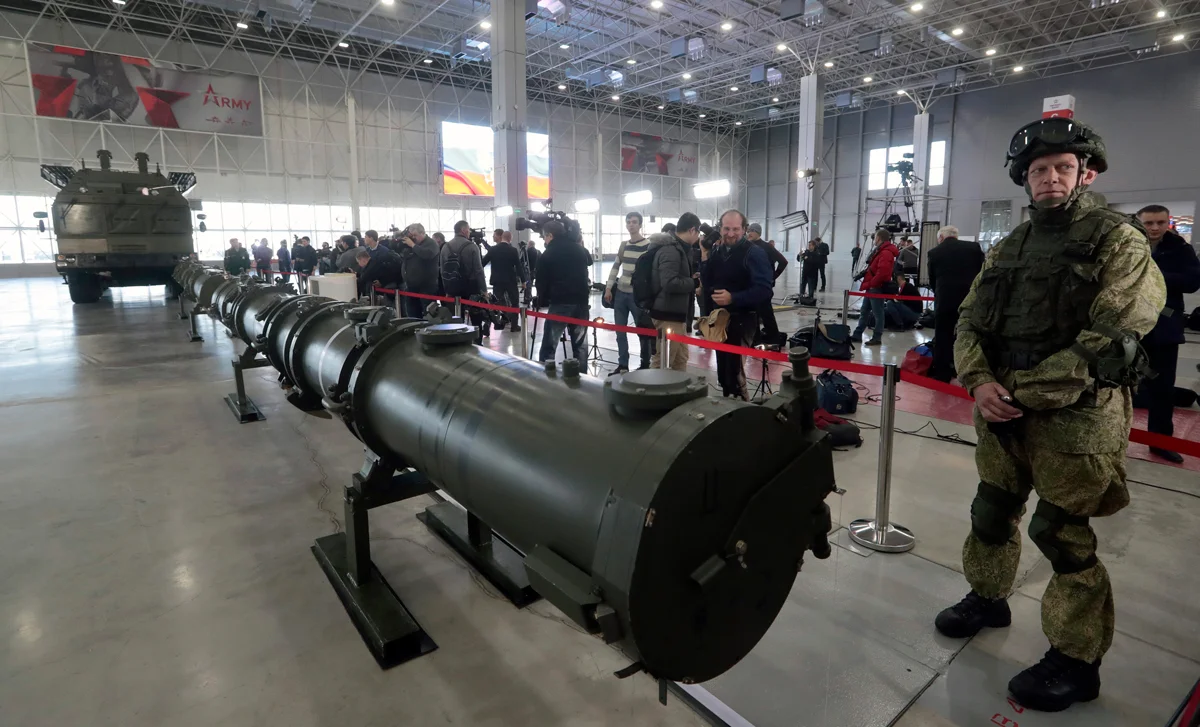
- Strictly speaking, we do not know this. In an attempt to prove that there were no violations, Russia showed a container at the exhibition, in which the 9M729 missile was located.
- So, how did they prove the range in the container?
- One of the problems is that the RSMD agreement does not describe the procedure for determining the range of the rocket. There is the very definition of a range, but very general. Therefore, from the very beginning it was not entirely clear how to prove that a particular rocket could fly 500 kilometers, but no further.
- What then did the Americans caught Russia? Why did they decide that the rocket could fly further than 500 kilometers?
- When the contract was concluded, in 1987, the goal was to destroy the missiles of small and medium -range existing at that time. It was exclusively about ground -based missiles, and they were destroyed by a large number. This agreement did not affect the sea base and air base missiles. You can discuss why, but at that moment it was required to conclude an agreement, it also had a symbolic meaning as a significant step in disarmament and normalization of relations.
Since the contract did not affect the missiles of marine and air base, he did not limit their development. If the missiles are developed, they must be tested. And the contract, in principle, allowed testing of marine base missiles at the relevant landfills. The condition was only in the fact that the tests should occur from a special stand where the launchers will not be mobile, it will be recorded. The United States did not have such new developments, but in Russia, as it was known, marine -based missiles were developed.
“Did they experience them at the Kapustin Yar training ground?”
- Yes, there was an appropriate stand, there, in particular, the caliber missiles were tested there. The idea, I repeat in the fact that the tests should have been carried out from a fixed installation. The United States claimed that Russia experienced the 9M729 missile first from a fixed stand for a range exceeding 500 kilometers, and then from a mobile launchers at a range of less than 500 kilometers.
- The rocket is the same?
- In any case, the United States claimed that these were missiles of the same type, and judging by how persistently they talked about it, they had quite significant reasons. On my conversations with American colleagues, I know that they had access to all information. On this basis, they accused Russia of violating the contract, this was in 2014, President Barack Obama sent the corresponding letter to Putin
- Putin replied that “we are not there,” we don’t know any missiles?
- Russia, of course, denied everything. The situation was difficult. As I understand it, in Russia we were counting on manipulation: we will test the missiles at greater range from a fixed stand, and from a mobile - only to the permitted one. Apparently, it was believed that they were formally different missiles, so they would not violate the letter of the contract. Or maybe the missiles were really different: one, for example, was painted red. But, I repeat, the United States, apparently, had quite significant evidence that the rocket is the same.
In such a situation, all this remained for several years. In 2017, the United States said that Russia began to deploy these 9M729 missiles in four regions. Formally, the US position came down to the fact that Russia should return to compliance with the contract, that is, to recognize violations and destroy these missiles under the supervision of inspectors, as prescribed in the contract.
Russia did not agree to the conditions of the United States. There was a danger: if Russia admits that the 9M729 missile violates the contract, then the chain will be launched by which all Iskander missiles should be destroyed. Apparently, 9M729 was tested from the Iskander launcher.
Russia not only did not agree, but was not at all ready to recognize the problem. In January 2019, Russia showed 9M729, but the Americans said that they were shown the wrong missile at all.
In 2019, it was already clear that the option in which Russia destroys all these missiles is unreal, Russia would not go to such a step. Against this background, the United States has announced that Russia, violating the contract, receives a one -sided advantage, and we, they say, are only looking at this in the USA.
- And we are sitting, like fools, without rockets?
- Absolutely.
- But then, in 2019, the United States had such a motive: China now has such missiles, let him join the contract too, otherwise it makes no sense.
-Everything was somewhat more complicated, but really in the USA a serious movement began then that you need to look at China, which is not connected by any contracts, it has a lot of these missiles, some kind of even in nuclear equipment. And a very powerful group of support in the United States insisted that America needed such missiles to deploy them in the Asia-Pacific region to contrast something in China. In addition in 2019, John Bolton was an adviser to National Security, and he is known for a skeptical attitude to any kind of agreements that limit the United States in something. The combination of all these factors led to the fact that the United States has left the contract.
Russia answered mirror. At the same time, she came up with the initiative in the order of a gesture of goodwill not to deploy low and medium -range missiles until America begins to deploy them. The United States said: of course, you have already deployed these missiles of 9M729, so all your moratoriums are not serious, you say, you only want to consolidate your advantage with this moratorium.
In October 2020, Russia came up with the new initiative of the moratorium. Well, they said, we will not deploy missiles with a range of more than 500 kilometers. And these 9M729: although we do not admit that their range is more than 500 kilometers, but since you don’t like them like that, we will not deploy either. Exclusively, they emphasized in Russia, in a gesture of goodwill. More precisely, they promised not to deploy missiles in the European part of Russia until their United States systems deploy their systems in Europe. And they even proposed similar conditions for the Asia-Pacific region.
Then, in October 2020, Russia proposed to start a dialogue about measures of control over such missiles. They offered to start with Kaliningrad and with American missile defense systems, and then - in principle, control of non -abundance of such missiles first in the European part, and then in Asian. In the United States, this was almost immediately rejected.
- Why? The Russian proposal sounds, in my opinion, very noble and peacefully. Did Russia not believe in Russia by that time?
- Here you are just right in this. They did not believe. More precisely, there were two main points. The first - no one, apparently, really read Russian offers. No one gave himself the difficulty of understanding them. I know only one person in the United States, who understood this, this is a person with experience in the government, and he says that in principle there was something to work there. But the second and main point is that mood has already prevailed in America: Russia cannot be believed, it has already deceived us. And really the level of trust was almost at zero.
- It would be strange differently in 2020: there was already Crimea, there was a Malaysian Boeing, for six years it was “we haven’t been there” in Ukraine and so on. By this time, Russia was completely losed, including about missiles.
- That's right. And it was no longer possible to imagine that someone in the United States would undertake to believe and work with Russia's proposal. Such ideas in the United States would demand gigantic political capital, which no one had. It was impossible to go against such a stream of mistrust.
Well, another circumstance was really a Chinese factor. The idea that such systems are useful to the United States against China was quite strong. One of my American colleagues described the moods that were then: let them at least drown in these missiles, the main thing is that the United States will have the opportunity to deploy them against China.
-But after all, Russian medium-range missiles should really excite Europe, will reach her, and not to the USA?
-Europe tried to express cautious skepticism about Donald Trump's policy regarding this agreement, even called for finding some kind of solution. But the Americans showed them their intelligence. And this once again suggests that the evidence was quite significant, because at the first stages the Europeans expressed a misunderstanding of what it was so excited in the United States. Then, apparently, the Americans showed the allies to the larger amount of data, and they agreed.
- I will return to my first question: what, in fact, has happened now now? The contract does not actually exist since 2019, Russia has no obligations. The reason is that now they said about this open text?
- In 2020, no one grabbed the Russian initiative, no one wanted to contact this. And then the process of erosion of the very idea continued to establish some kind of use of such missiles. The United States experienced their system, which violated the provisions of an actually non -current agreement. They began the development of systems with a larger range, began to create structures in Europe. In Germany in 2021, they created an organizational structure for the further deployment of missiles. In 2024, a joint statement of the United States and Germany was published that in 2026 they deployed a “multidimensional operational group” in Germany. The United States brought Typhon systems to the Philippines, although only for exercises. In general, all this is described in the statement of the Russian Foreign Ministry. The US rate was made that while Russia unfolds its systems somewhere, they will take care of their own and eventually achieve a stronger position.
The Russian side also took steps away from the idea of disarmament. At the next Security Council, Putin said that Russia will be forced to respond, create a ground version of the Caliber systems, and in general industry was given the task of preparing for the production of such missiles. A significant point is the launch of the “hazel” in November of the year before last.

- The one who flew to Ukraine?
-Yes, yes, to Ukraine. This system already directly violates the RSMD agreement. More precisely, this is a system that would be prohibited by the contract if it were still relevant. But from the point of view of the moratorium, Russia even then left a window, a loophole. The moratorium concerned not to expand.
- Can you run the other country?
- If you carefully look, then it was called the trials, and this is a significant moment.
- So why was it called the test of “hazel”?
- Certainly. Formally, the rocket was tested, but it was not deployed. At that stage, it was already clear that all this is purely theoretically. Although the moratorium still assumed that even if these missiles would be tested, they will not unfold in Europe. They will lie somewhere in warehouses. Theoretically, such an opportunity was still preserved.
- And the statement of the Ministry of Foreign Affairs - they have already moved to the new stage: no moratorium, will we expand and target Europe?
- When Vladimir Putin and Alexander Lukashenko met, they said that now they will produce “hazel” already in series.
- It seems Putin promised to expand him in Belarus?
- As I understand it, this Lukashenko promised that he would be deployed from him. I'm not sure that Russia promised this Lukashenko. Basically, all these statements go back to Lukashenko.
I think that if we are already talking about serial production, then we can talk about deployment. And since we are talking about deployment, then we must refuse the moratorium.
Thus, a combination of factors has developed: the absence from the USA and NATO interest in the idea of the moratorium, the US movement towards the deployment of such systems, although they are still far from the real deployment that could somehow change the situation.
- The United States for a long time diligently complied with the terms of the contract, and Russia slowly riveted rockets. It turns out that now, for deployment, Russia should have significantly more such missiles than the United States?
- There is such a consideration that Russia really has more these missiles than the United States and Europeans. If we talk about rockets 9M729, it is believed that there are several divisions, that is, about a hundred missiles. If these are missiles of conventional equipment, not nuclear, then see how much Russia launches around Ukraine, and you will appreciate whether it is a lot or a little. A hundred missiles do not solve anything.
- It seems that Russia hinted that warheads can be nuclear.
- And if these are missiles in nuclear equipment, then, by and large, it is not so important as many as there are one hundred or ten.
When in Europe they decided how to respond to Russian proposals, including the idea of a moratorium, someone said: they say, now we will show Russia why they agreed to this contract back in 1987. The idea is that American missiles in Europe have a flying time, they will strike at Russia faster. И действительно, в 1980-е годы так и рассуждали: американские ракеты такой дальности, развернутые в Европе, способны очень быстро долететь до Советского Союза и нанести большой ущерб. С одной стороны, в 1980-е годы СССР с помощью таких ракет держал под прицелом всю Европу. С другой стороны, американские ракеты держали под прицелом условно Москву. Много было разных соображений на этот счет, но понятно, что советскому руководству это не нравилось.
Проблема в том, что в 1980-е годы все эти ракеты были в ядерном оснащении. А в нынешней ситуации сложно представить, что США смогут развернуть в Европе именно ядерные ракеты. Есть много причин, по которым это очень сложно сделать, в частности, даже боезарядов для них нет. И сама идея о том, что в Европе снова появятся ядерные ракеты, вряд ли понравится европейцам. В общем, это исключительно сложно было бы сделать, и американские ракеты, которые могут появиться в Европе, почти наверняка будут неядерными.
С российской стороны таких ограничений нет. И те же 9М729 могут быть в ядерном оснащении, и «Орешник», асимметрия здесь очевидна. Когда это прочувствуют в Европе, то, я думаю, будут не очень рады. Есть идея о том, что чем больше ракет Запад нацелит на Россию, тем сильнее будет ее сдерживать. Но той мысли, что с российской стороны ракеты могут быть в ядерном оснащении, в Европе пока, мне кажется, не прочувствовали.
— Я помню, что примерно с конца нулевых годов в России шел разговор о том, что РСМД — не договор и был, не очень-то нам он и нужен. Но в 2019-м, когда США объявили о выходе из него, те же люди стали кричать, как это они посмели разрушить такой хороший договор. А что эти ограничения означали бы для России в ее нынешнем агрессивном состоянии? Нужен ли России такой договор, если ракетами малой и средней дальности до Америки всё равно не достать?
— В свое время, в 2007, если не ошибаюсь, году Россия поднимала вопрос о том, что надо бы отказаться от договора РСМД. Тогда США ответили, что лучше бы сохранить. Насколько я понимаю, России был важен не столько сам договор, сколько возможность диалога. Никакой особой стратегии по созданию такого рода систем, я думаю, нет. Хотя, конечно, сама возможность держать фактически всю Европу под прицелом ядерных вооружений нравится России. И к этому, как я понимаю, всё идет. Даже если системы будут развернуты в каком-то ограниченном количестве, они дадут России такую возможность. Американцы, конечно, переживают по этому поводу, но считают, как показали мои разговоры с ними, что сумеют победить Россию с помощью своих систем.
— Бедная Европа…
— Европа здесь, конечно, оказывается в очень незавидной ситуации. Россия от такой возможности явно не будет отказываться: дескать, раз вы не хотите договариваться, мы будем делать и такие ракеты, и другие, и третьи, «Орешник» и прочее, всё это будет развиваться.
Но более важно для России было бы всё-таки иметь возможность диалога, в котором признавались бы ее, России, интересы. И само предложение моратория было сделано для того, чтобы ввязаться, как говорится, в разговор. Ну а дальше можно было бы заговорить о том, что мы не хотим, чтобы ракеты были развернуты там-то и там-то. Я убежден, что сам факт диалога представлял для России заметную ценность. Как вы сами вспомнили, к концу 2010-х годов к России накопилось много претензий, и если бы тогда США пошли на диалог, в России восприняли бы это как вклад в признание легитимности ее действий.
— А теперь стало окончательно ясно, что никакого диалога всё равно не будет, поэтому можно закинуть чепчик за мельницу и делать что захочется?
— В том числе и так. Но, скорее, к этому заявлению об отказе от моратория привело сочетание факторов: во-первых, стало понятно, что никто не собирается с Россией это всерьез обсуждать, во-вторых, пошли какие-то движения с «Орешником». Возможно, он действительно уже готов.
— Одновременно с заявлением МИД об отказе от моратория появлялась новость, что закрыто небо над полигоном Капустин Яр. Может ли это означать, что как раз готовый «Орешник» там и испытывают?
— Может быть и так. Небо действительно закрывают во время испытаний, но там много чего испытывают. Хотя мне кажется странным, что это заявление МИД сделал именно сейчас. Администрация Трампа еще четко не обозначила свои позиции в этом вопросе, и в принципе какое-то пространство для диалога могло оставаться. Теперь понятно, что предметного разговора не получается.