
Translated material
Sanctions impasse
Why India will continue to purchase Russian oil
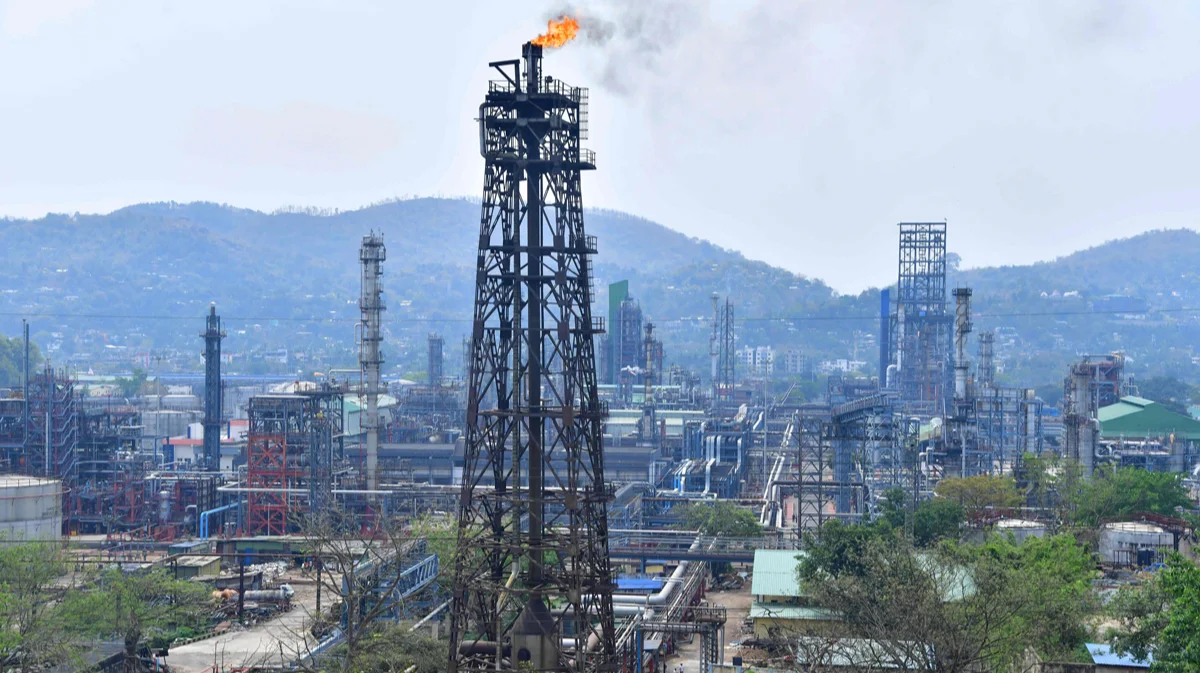
View of the oil refinery in Guvahati, India, March 30, 2023. Photo: Biju Boro / AFP / Scanpix / Leta
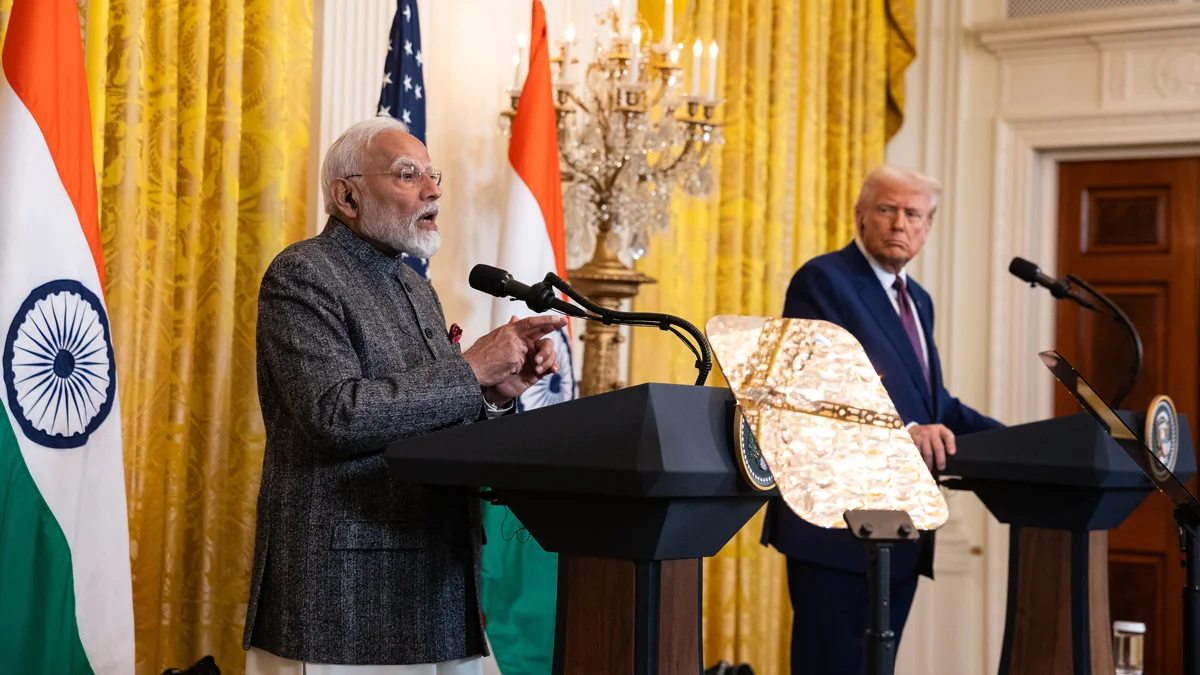
On August 6, Donald Trump signed a decree on the introduction of trade restrictions on India due to purchases of Russian oil. We are talking about an additional duty of 25% for the full range of Indian imports in the United States, with the exception of some positions like humanitarian goods. The tariff comes into force on August 27. With the continuation of the purchases of Russian oil, the tariff can grow to 50%. In addition, from August 7, tariffs of 10–25%entered into force, which are in no way connected with Russia and were introduced as part of the general campaign of Trump to increase customs tariffs for all countries. Thus, until the end of August, the final duty against most Indian goods can reach 50%, and at the end of September - 75%.
For the first time, the United States imposes sanctions against a formally neutral country not for its domestic policy, but for foreign economic relations with the third state. The decree is formulated in such a way that India becomes the first, but potentially not the last link in the new logic of sanctions pressure: not only against those who violate the rules, but also against those who refuse to apply them. What consequences can these actions lead to the Trump administration? Especially for Novaya Gazeta, Europe is explained by the economist and director of the European Center for Analysis and CASE Strategies Dmitry Nekrasov.
To begin with, several facts about the economy of India, which are important for understanding the context of what is happening.
India is a country with a large negative subject of foreign trade, occupying 3-4th place in the world in this indicator. The foreign trade deficit ranges around $ 100 billion and is firmly related to oil prices. India is the second oil importer in the world after China, the country imports about 85% of its consumption. During periods of high oil prices, the deficiency of foreign trade in India increases significantly. The import of oil in value terms ranges between 110 and 180 billion dollars, i.e., exceeds the size of foreign trade deficit and is its main factor. The negative foreign trade balance and its dependence on energy carriers have been discussed for many years as the most important economic problems of India. According to various sources, from 20% to 40% of Indian oil imports today falls on Russia.
Paradoxically, at the same time, India is the largest exporter of oil products. The country has an excess of oil refining capacities. Part of the imported oil is processed and exported.
This export increased significantly in 2023, because Russia exported more oil products and less raw oil, and due to the ban on the EU for the import of Russian oil products and the low profitability of their supply to other markets in the structure of Russian export, the share of crude oil increased and the share of oil products decreased. Part of Russian oil today is processed in India and floats back to the EU in the form of diesel and gasoline.
The United States is the largest foreign trade partner of India, they account for 16–18% of Indian exports worth more than 100 billion in the year 8-10% of Indian imports. Until 2025, the average rate of Indian tariffs for American goods was 13-15%, while the average effective rate of the American tariff for India according to various estimates was 2–3.5%. Until July 2025, negotiations were going on an increase in American tariffs in the range between 10% and 25%. And if the numbers from this range were in principle compatible with the preservation of the noticeable part of the Indian exports in the United States, then the total rate of 50%, not to mention 75%, is essentially prohibitive and can really cost India export to tens of billions of dollars.
It is difficult to accurately evaluate the benefits of India’s economy from Russian oil purchases. In any case, we are talking about billions of dollars a year, but it is hardly more than 10 billion. Regardless of the methodology for calculating the benefits of the Indian economy from trade with Russia, in any case, they are significantly less than potential losses from American sanctions. However, there are benefits from purchases of Russian oil today, and they are highly concentrated in a group of Indian officials and oil workers, while real losses from American sanctions will most likely be significantly less potential and will be spread out of a wide range of economic entities. Therefore, it is not obvious which of the possible solutions enjoys greater lobbying support in the country.
Can India stop the import of Russian oil?
Now it is logical to discuss three issues. The first sounds like this: is the Indian government capable of with all its desire to stop the import of Russian oil, and the American one can take 75% of the duty from imports from India?
Today we can see a lot of results of sanctions and tariff policy. Despite all the sanctions, anything from the EU to Russia is massively imported, including dual -use goods. Russian oil shimmers into the sea and is imported into the EU under the guise of oil from the Persian Gulf. Part of Chinese exports to the United States went through Belarusian squids and is massively imported under the guise of goods from Vietnam or Indonesia. And these are examples of rich countries, with low corruption, developed institutions, a sincere desire of the government to ensure the implementation of sanctions and supporting the pursuing policy by a majority of the population.
Given all the foregoing, it is doubtful that the Indian government is able to easily stop the import of Russian oil, which brings it to the beneficiaries of several billion dollars a year, even if it really wants to. But neither the government nor society want this decision, and sabotage at all levels is inevitable. To prohibit oil imports from a particular country, it is not enough to simply sign the corresponding order. It is necessary to create an apparatus capable of monitoring the origin of the cargo, tracking chains of intermediaries, identifying court flags, insurance, transit routes and financial schemes.
Already today, most of Russian oil reaches India in chains that do not formally look Russian. Often these are mixtures that have passed the transshipment through the UAE or Singapore, drawn up on behalf of companies with registration in third countries.
In fact, this is Russian oil, but legally - no. In order to track such supplies, you need to have a developed and motivated bureaucracy, transparent procedures, hard control.
In Indian conditions, it is much easier to imagine that Russian oil passed through the chain of intermediaries will continue to be imported, for example, under the guise of oil from Iraq, which has a similar chemical composition. The papers will be in order, and the official who conducts the audit will not have enough competencies and motivation. This official is opposed by highly professional personnel who seek to earn their personal millions. As a result, even if India formally announces the ban on the procurement of Russian oil and sign the relevant regulations, this is unlikely to stop real deliveries.
It can be argued that at one time India was able to abandon the import of oil from Iran, which is argued by numbers about the drop in oil production in Iran in the appropriate period. However, there is another point of view according to which imports from Iran decreased, but did not stop. Her supporters believe that oil production in Iran could not in reality fall as much as it is commonly believed. I do not presume to judge who is right, however, the very fact of the discrepancy between estimates of hundreds of thousands of barrels per day illustrates that even specialists are difficult to understand the scale and direction of real commodity flows.
Note that before Trump was introduced by the tariff in question, it seemed very likely that India would allow Trump to save his face and declare the termination of Russian oil procurement, after which an endless game in “You continue to buy” - “No, this is not us, here are the papers”. However, events went according to another scenario.
The situation is not simpler with the collection of tariffs from Indian exports in the United States. Up to a third of this export falls on various services from IT to call centers. Services for Trump’s tariffs have not yet been subject, but if they fall, then there is nothing easier than changing the country of origin through the laying company in a third country. The next most important article of export is jewelry. Compared to most other product groups regarding jewelry, it is easily easier to implement any gray solutions from smuggling to a formal change in the country of the manufacturer. Gray schemes are already used in this industry of India more often than in others. In addition, India exports various goods in the United States, which, de facto, are on the global market of communicating vessels and, with minimal discounts, can be redirected to other countries, at that moment as other exporters of such products will occupy an Indian place on the American market.
There are only three significant articles of Indian exports that will really suffer from Trump's tariffs. These are pharmaceuticals, mechanical engineering and electrical products.
But they, in combination, make up less than 20% of Indian exports in the United States, and even in these industries, some of the goods can still go through Belarusian squids.
Thus, if you look at the situation in the details, then Trump requires from the government of India what it may, in principle, is not able to do, threatening a significantly lower amount of loss than it seems at first glance.
The end of the neutrality of the global south
The second question that is worth discussing is the possible political consequences of Trump's actions
Trump set New Delhi before the choice, from which the Indian government deliberately left over the past three years, during which it did not comply with anti-Russian sanctions, but did not speak in support of the Russian position in the Ukrainian crisis.
If it had been culuaro to obtain from the Indian government of some decision or simply a declarative statement regarding Russian oil, Trump could put it up with his diplomatic victory, and Modi Prime Minister to keep his face, because he had never promised to behave in another way and did not maintain aggression. The situation will look completely different if Modi does the same actions under the direct public pressure of the United States in the style of the myth of colonial dictatorship. And this is against the background of the nationalist image of Modi and the domestic political discussion about the role of India in the world and its strategic independence.
The very fact of the introduction of tariffs in such a stylistics radically reduced the likelihood of even symbolic concessions from India. And although the first persons of the Indian government have not yet been refusing to submit to Trump's requirements in such a radical and unambiguous manner, as China's leadership did, public statements by Indian politicians and officials of the second echelon were quite hazel -free. And the telephone conversation with Putin about the strategic partnership, held by Modi the day after the tariff entry, was an obvious political demonstration.
The rumors circulating against this background about the suspension of the purchases of Russian oil by Indian refinery are either an informational noise or a belated attempt by Indians to make a demonstrative gesture in favor of Trump.
Firstly, Indian refinery formally and so did not purchase Russian oil. It was supplied there through intermediaries mainly under the guise of oil from third countries. Secondly, it is difficult for me to imagine how the United States is able to control what oil in reality a particular Indian refinery buys. At the level of operational information of the CIA - maybe. At the level of evidence recognized by the courts and diplomats, it is unlikely. Therefore, the plant can declare anything and even demonstrate the appropriate papers. And whether such a statement will affect real processes is a big question.
I come to the conclusion that India has already refused to fulfill American requirements, although it cannot be ruled out that in the future some compromises and softening of the positions of the parties are possible. A similar situation in theory can even improve the conditions for the sale of Russian oil to India. Previously, Indian buyers of Russian oil considered their risks based on the uncertainty of the position of their own government. Now the Indian government has indicated its position regarding the observance of sanctions. This means that the risks of interaction with Russian counterparties for Indian businessmen have decreased, and discounts should also decrease with them over time. However, we may not know about other components of the situations and agreements between Russian and Indian oil workers.
A more important consequence of Trump’s actions was the transition of the question of sanctions against Russia from a situation in which sanctions are the Western matter, and developing countries retain neutrality in a situation where the sanctions policy of the West becomes the subject of confrontation between the West and a group of large developing countries. Trump forced China to express his position on this issue in India, and this position is not so easy to withdraw. This will have long -playing consequences for other similar situations and countries like Brazil. At the same time, Trump contributes to a greater consolidation of the position of India with the position of China and Russia.
Is the game of candles worth?
The last question that is worth discussing in this regard: for what Trump is generally trying to put pressure on India?
Suppose I am wrong, and the Indian government will not only agree to stop the import of Russian oil, but will also be able to do this. What are the possible consequences of such a decision? With the maximum probability, the only similar consequence will be the reorientation of the Indian part of the Russian oil exports to China.
Russia exports 7 million barrels per day, China imports 12.5 million barrels. Thus, he is able to buy Russian oil almost twice. China is already buying 50% of Russian exports, and it is not so difficult to go to buy 80% of Russian oil. Some part of Russian supplies to India can be reoriented to the countries of Africa and South Asia. But this is not necessary, one China is enough.
This will cost Russian oilmen additional losses in logistics, measured by 2-3 dollars from a barrel, and some simultaneous losses associated with the restructuring of logistics. According to the most maximum estimates, additional losses of the Russian oil industry will reach $ 1.5–2 billion a year. It does not look like a serious blow to Putin and certainly does not stand the destruction of relations with such a giant as India.