
Translated material
Alasconomics
Why sold Alaska. And most importantly - how profitable

Photo: Alexis Mette / Unsplash
"Accepted for patronage"
Alaska was opened for the Old World in 1732 by a Russian expedition led by Mikhail Gvozdev and Ivan Fedorov. The beginning of the development of the rich furs of the Aleutian islands and the northwestern coast of America was laid by the expedition of Vitus Bering and Alexei Chirikov in 1741.
In general, from 1743 to 1800, more than 100 private commercial expeditions visited this area, and their total income from the providence amounted to about 8 million rubles. The first reliably known settlement was founded by the Russians on the island of Unalashka allegedly between 1772 and 1775, and the first Russian settlement was the harbor of three saints on the island of Kadiak, founded by Grigory Shelikhov in 1784.
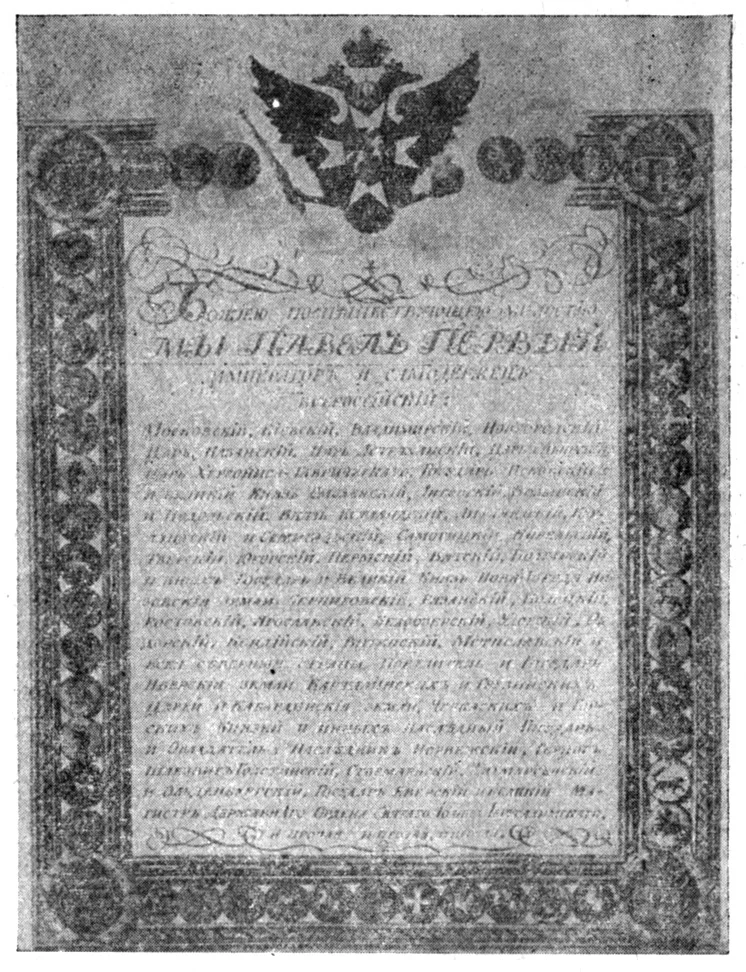
Since 1799, a specially established monopoly, a hybrid of a commercial enterprise and a state body, the Russian-American company (cancer), founded by Grigory Shelikhov and Nikolai Rezanov and “adopted under the protection” by Emperor Paul on July 8, 1799, was engaged in the operation of Alaska.
According to the imperial decree, the company received:
a monopoly on the crafts of 55 ° northern latitude to the Bering Strait (it was assumed that the basis of the crafts would be the production of the sea beast - so, the skin of Kalan (sea otord) could be sold in China for 300 rubles, which was the annual salary of the sea officer);
the right to base fortresses and settlements;
The ability to conduct an independent foreign policy.
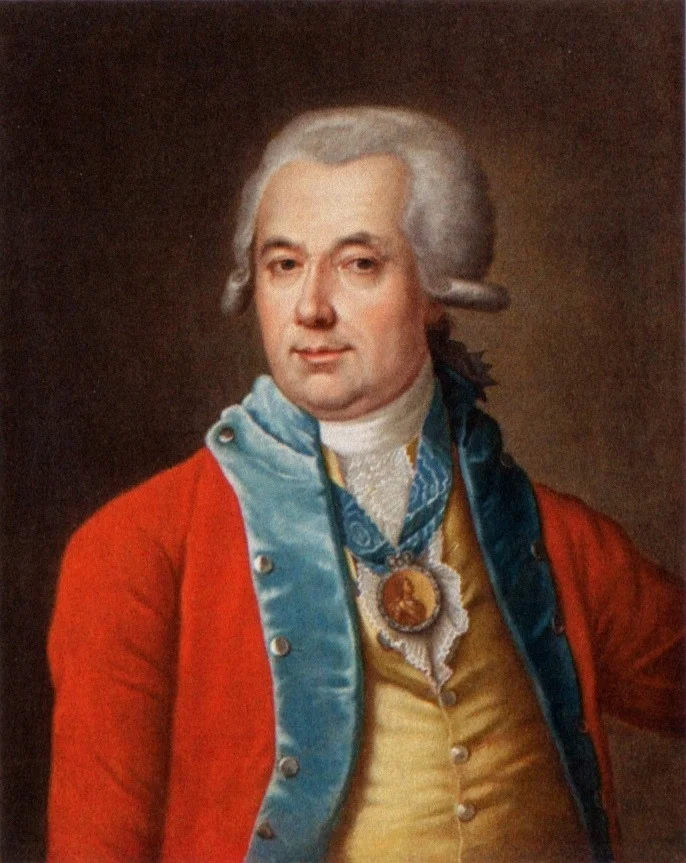
In September 1821, Emperor Alexander I signed a decree announcing Alaska and adjacent territories the exceptional zone of Russian interests. From the Bering Strait to the 51st parallel of whale fishing, fishing, trade were now resolved only by subjects of the Russian Empire. The status of Alaska secured the Convention with Britain (1824) and the USA (1825). To the east of Alaska, Canadian possessions of the British Empire (formally belonging to the Gudzon Gulf company) extended.
For 100 years (70s of the XVIII century-1867), about 60 settlements were created by Russian colonialists of Alaska. Nevertheless, the number of settlers themselves did not exceed a maximum of 500-800 people, of which 90% lived in Novo-Arkhangelsk (capital) and on the Kadyak (one of the Aleutian Islands). The reason was stretched relations with the Indians, and the Russians preferred to stay away from warlike local residents. The attacks of the Indians on Russian settlements were common.
“... Subenkov returned to the Mikhailovsky Redut. During the year, he achieved to organize an expedition up the Kuikpak. Then Malakhov stood out, half Russian, who headed the detachment of the most desperate and cruel adventurers who have ever been crossed here from Kamchatka. Subenkov became his assistant ... The construction of the fort began. They forced local residents to work. The walls of the crama logs grew under the accompaniment of sighs and groans of Nulat Indians. A scourge was walking along their backs, and the iron hand of marine robbers held this scourge. Some of the Indians ran away, but when they were caught, they returned back and laid out in front of the fort, and then they, together with the fellow tribesmen, recognized the power of the whip in their skin. Two Indians died under a whip, others remained cripples for life. And the rest learned this lesson and no longer tried to escape. The snow fell even before the fort was completed, and the time has come for the extraction of fur. A heavy tribute was imposed on the tribe. The Indians continued to beat and flog with whips, and in order for the tribute to come, they took women and children as hostages and treated them with the cruelty that only furs hunters are capable of ...
... Well, there was a bloody sowing, and now the time has come. Fort was bedroom. In the ominous light of the fire, half of the party was interrupted. The rest were tortured. "
Jack London. "Lost face"
"Ensolent impoverishment in the highest objects"
At first, the enterprise seemed profitable, moreover, the Russian-American company created an impressive infrastructure, having built 32 enterprises (among which there were forges, shipyards, brick factories), lowering 13 vessels (including even four steamers) and even giving their own money-leather brands with the seal of cancer. True, the company desperately lacked people - no one wanted to move to Alaska.
The attempt made by Grigory Shelikhov to introduce agriculture and the forces of the peasants who were sent to Siberia (11 families of 29 people) and artisans (16 families containing 22 people) suffered a fiasco - to grow bread at 60 ° C.S. It turned out to be impossible at that time.
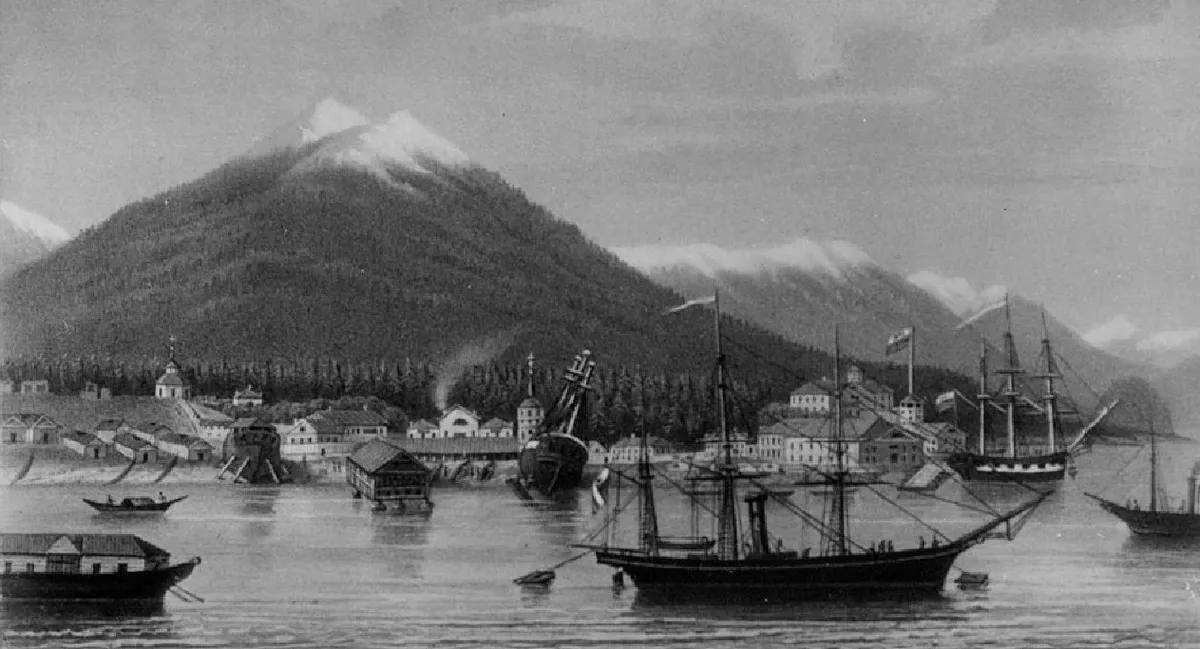
The percentage of the peasant population, capable of engaging in agricultural work, was so small among the colonists that by 1855 it turned out to be no one to conduct experiments on growing oats, barley and wheat in the agricultural settlement of Ninilchik in the Cook Gulf. “If the settlers of Ninilchik were from the peasants of our bakery provinces,” wrote the employee of the Russian-American company Murgin, “then the experiments of crops could be more correct .... Then the company should only write out the necessary tools for stiffeners and seeds. But what can a citizen do, who left his homeland about 30 years ago or so and hardly saw the tutricity, or even more than the local Creole, who has never seen either the work itself or the tools used with it. ”
Meanwhile, the predatory extermination of the “sea beast” led to a sharp drop in its number, and it seemed less profitable to chase Kalans and seals in the Ocean than to carry Chinese tea in Russian Okhotsk on ships of cancer and buy furs from the Indians. By the middle of the XIX century, tea began to give almost 50% of cancer revenue. For 1850-1859, revenue amounted to 8.53 million rubles, including from tea - 4.1 million, from furry crafts - only 1.71 million. The costs during this time amounted to the same 8.53 million rubles, including Dividends - 1.35 million, duties for tea - 1.76 million, “for the transport and upbringing of teas” - 0.59 million, “in capital” - 0.13 million ...
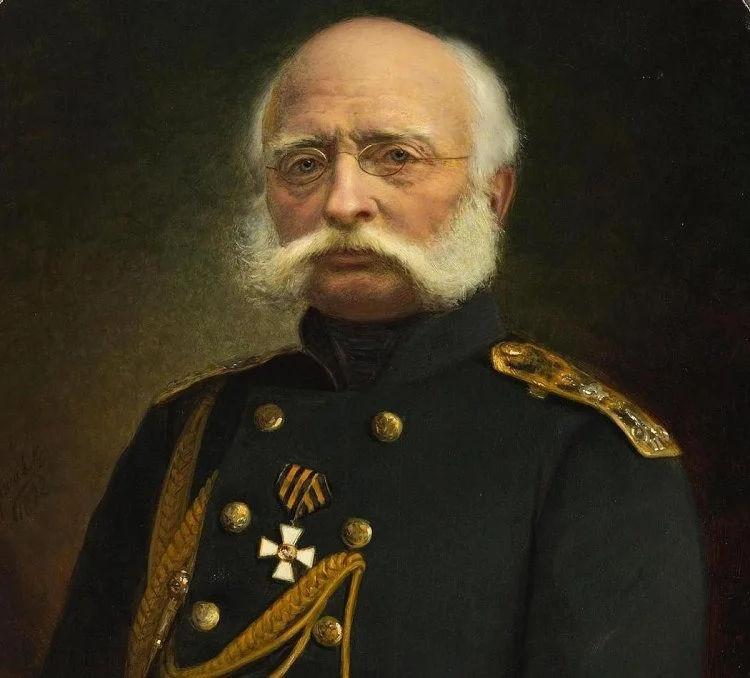
But why was Alaska needed to trade Chinese tea? Moreover, as Baron Ferdinand Wrangel wrote, the “main ruler” of Russian America (in 1829–1835), in the colony there was a “virtue of impoverishment in the most important objects”. An experienced sailor Wrangel knew what he was talking about: the first Russian round -the -world trip of Kruzenshtern and Lisyansky (1803–1806) was organized precisely for the supply of cancer. In 1803–1868, more than 50 voyages from the Gulf to Alaska, part of the world, followed him.
So by the middle of the 19th century, the Russian side had the opinion that further expenses for the maintenance and protection of remote and vulnerable Alaska will outweigh potential profit ...
"This sale would be very timely"
The first question about the sale of Alaska to the US government was raised by Governor-General of Eastern Siberia Count Nikolai Muravyov-Amursky in 1853. According to the dignitary, such a deal was inevitable. The governor saw the technological advantage of the United States: the reason for the potential loss of the region:
“... with the invention and development of railways more than before, should be convinced of the thought that the North American states will inevitably spread throughout North America, and we can not have in mind that sooner or later they will have to give in to our North American possessions.”
But at the same time, the sale of Alaska, according to Muravyov, would allow us to strengthen Russia's position on the Asian coast of the Pacific Ocean in the face of British expansion: “... very naturally Russia, if you do not own all of East Asia, then dominate the entire Asian coastal of the Eastern Ocean. ... We allowed us to invade this part of Asia to the British ... But the matter may still get better with our close connection with the North American States. ”
Formally, the proposal about the sale came from the Russian envoy in Washington Eduard Glass. But the actual initiator of the transaction was Grand Duke Konstantin Nikolaevich. For the first time, he voiced this proposal in the spring of 1857 in a special letter to the Minister of Foreign Affairs Alexander Gorchakov: “This sale would be very timely, because you should not deceive itself and must be foreseen that the United States, striving for the rounding of their possessions and wanting to dominate the remote colonies in North America, and we will not be able to turn them up. Meanwhile, these colonies bring us very little benefit, and their loss would not be too sensitive and demanded only the reward of our Russian-American company. ”
Gorchakov supported the idea, however, it was decided to postpone the implementation of the transaction before the expiration of the privileges of cancer in 1862.
At the same time, the government demanded a report on the activities of the Russian colonies in America, the achieved colonization results and its prospects. The result of the work of the auditors was the “Report of the Committee on the Organization of Russian American Colonies” published in St. Petersburg in 1863:
“... The only fishing that ... can still be engaged ... there is trading of fur goods. All other enterprises, such as the study and processing of different ores ... cannot bring benefits, because the delivery of all the necessary materials ... and the workers themselves will cost huge costs and find many insurmountable obstacles, especially the export of ore ... There is no hope that such enterprises could ever bring the slightest benefit ... unless in these places the presence of rich golden placers was open, ”said the presence report.
In general, the report reflected not only the objective picture of what was happening in Alaska, but also the opinion of the government. There were, however, other opinions based on “geopolitics”. So, the Ministry of Foreign Affairs of Baron Fedor Osten-Saken submitted a note to the highest name, which said: “... As for the positive benefits, then ... they belong only to the future, but ... The current generation has a holy duty to maintain every piece of land lying on the shore of the ocean, which has worldwide significance.”
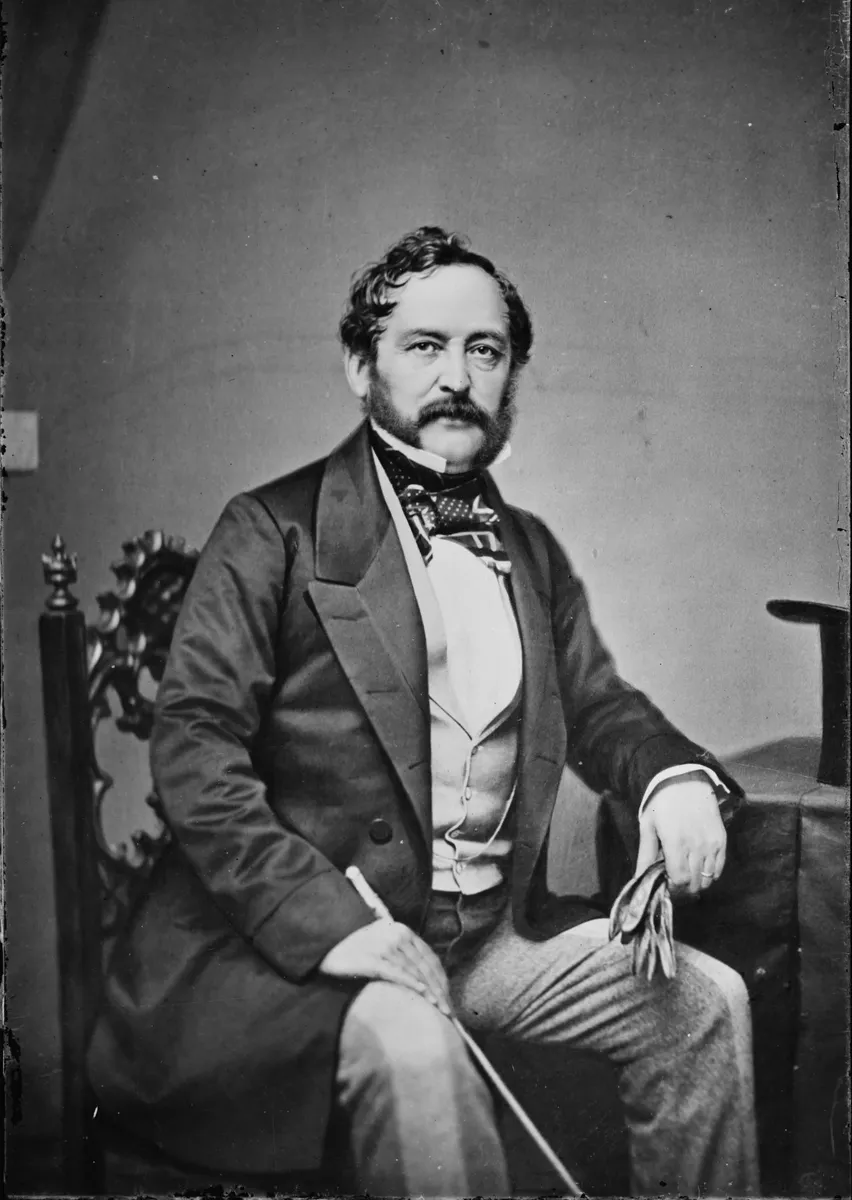
But the final decision on the sale of Alaska was made on December 16, 1866 at a special meeting, which was attended by sovereign Alexander II, Grand Duke Konstantin Nikolaevich, Ministers of Finance and the Marine Ministry and the Russian envoy in Washington. All participants approved the idea of selling Alaska.
At the proposal of the Ministry of Finance, the threshold of the amount was determined - at least five million dollars in gold. December 22, 1866, Alexander II approved that "... the western border of the inferior territories passes through a point in the Bering Strait of 65 ° 30 ′ north latitude at its intersection with a meridian separating at an equal distance of the island of Kruzenshtern, or Ignaluk, from the island of Ratmanov, or Nunar-Buk, and is sent in a straight line to north, it is completely dead. Not lost in the Arctic Ocean ... "
Seven million dollars for a few wooden houses
In March 1867, the Russian messenger Eduard Stew arrived in Washington and reminded the State Secretary to William Seward "On the proposals that were made in the past to sell our colonies", adding that "the imperial government is located in negotiations."
During these negotiations, a draft agreement on the purchase of Russian possessions in America for $ 7.2 million was agreed. The total amount of the sold territory sold amounted to about 1,519,000 km². Therefore, $ 4.73 (1.9 cents per acre) were paid per square kilometer.
The US Senate expressed doubts about the advisability of such an acquisition. But the deal was supported by 37 votes with two votes against. In June 1867 in Washington, ratification letters were exchangeed. The contract was included in the Assembly of the Laws of the Russian Empire (No. 44518).
From the point of view of Russia, the deal was a classic example of the exchange of “resources on technology”, characteristic of a local rental economy.
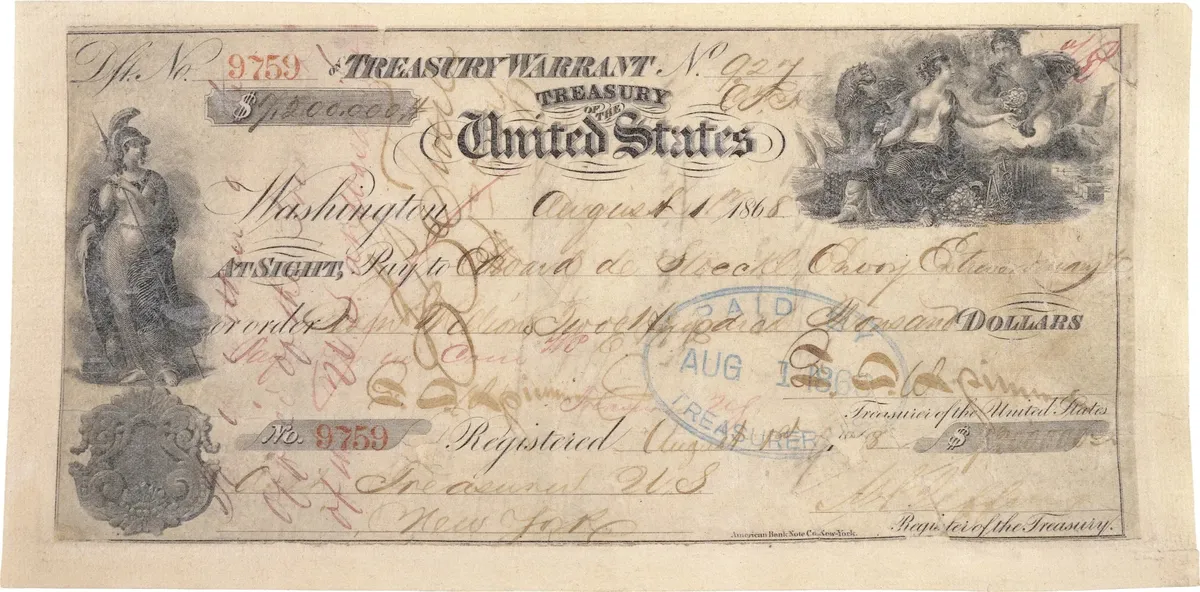
The State Historical Archive of the Russian Federation contains a document written by an unknown employee of the Ministry of Finance in the second half of 1868. He says that “for the Russian possessions ceded by the North American states in North America, 11,362,481 rubles came from the indicated states. 94 [Cop.]. Of the number 11,362,481 rubles. 94 kopecks. It was spent abroad for the purchase of accessories for railways: Kursk-Kyiv, Ryazan-Kozlovskaya, Moscow-Ryazanskaya, etc. 10 972 238 p. 4 K. The rest are 390 243 rubles. 90 K. arrived in cash. ”
The agreement turned out to be completely unexpected for the public of Russia and the USA, and many newspapers in both countries criticized it. In the book of Academician Nikolai Bolkhovitinov “Russian-American relations and the sale of Alaska. 1834–1867 ”provides extensive quotes from the press of both countries. “... Journalists competed in wit:“ Seward's Folly ”,“ Johnson's Polar Bear Garden ”zoo: Morgerasia (Walrssia” (Walrssia), Seward Sundam with Ice.
- The Republican New York Tribune performed especially sharply: “There is no place for Russian America on paper. The climate is magnificent and quite warm in winter; Ice fields are inexhaustible, and the Eskimos are looking for protection from the scorching heat of the Arctic summer ... wheat, seals, barley, white bears, seals, icebergs, whales and gold veins - all up to 60 ° northern breadth ... "
For the Russian public, the news of the deal was an even more surprise. The telegraph message from New York on the sale of Russian America was so puzzled by the capital's officialdom that they published it only a few days later, and even then many refused to believe the news.
The newspaper "People's Voice" wrote: "Will practical Americans pay seven million dollars for several wooden houses in Sith?"
Most commentators believed that the amount of the transaction is completely disproportionate to the real value of Russian America. As the “Exchange Vedomosti” wrote: “True, Russia does not have much benefits from its American possessions, and for political considerations it does not have much need to retain these possessions, but, in any case, it is unlikely that anyone would decide to offer our government for Russian America such an insignificant price ...”
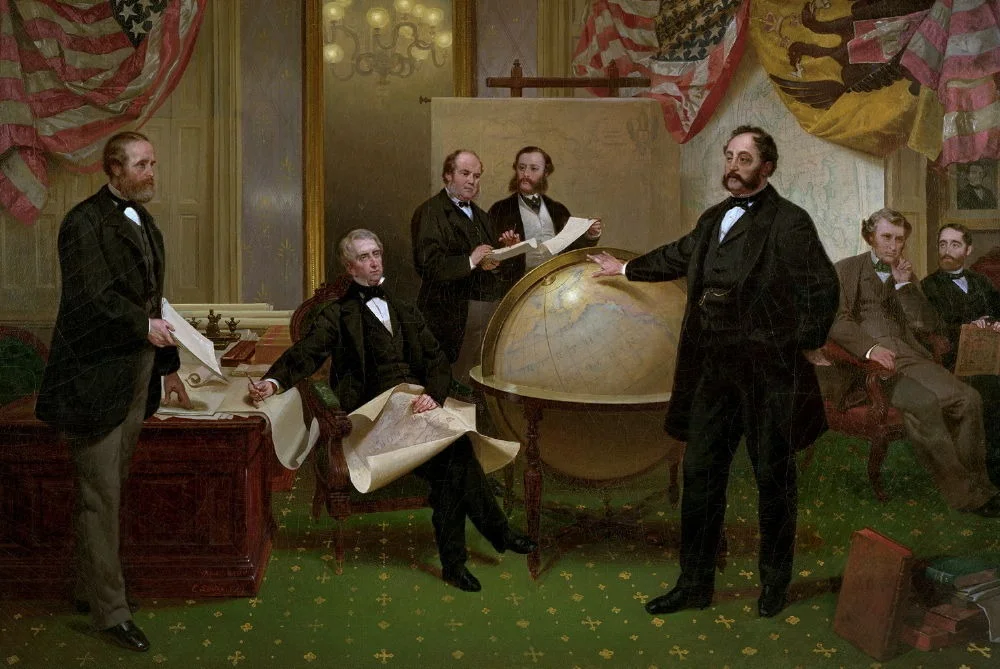
The version of the “haste” of the Alaska sale transaction is widespread in popular literature in the USSR. However, Nikolai Bolokhvitinov wrote that “there are many tens and hundreds of a wide variety of documents, including numerous preliminary discussions of this issue in the highest government spheres in the St. Petersburg and Washington since the 50s of the XIX century. And about the course of negotiations themselves ... "
A public discussion, which has unfolded around the sale of Alaska and partly not lost its relevance for one and a half centuries, proves how primitive are and remain mass ideas about the Arctic potential and what difficult educational work is required for the leaders of public opinion, arguing about the Arctic, rely on facts, and not on prejuded opinions.
Did the purchase of Alaska pay off?
Was the purchase of Alaska really so beneficial to the United States? Yes, Alaska cost the Americans almost half the cheaper than the French Louisiana, bought from Napoleon in 1803. Louisiana cost the United States about $ 7 per square kilometer (the dollar of 1803 cost about the same as the dollar of 1867). It can be considered differently. $ 1 in 1867, taking into account inflation, is about $ 22 in 2025. 7.2 is multiplied by 22, there will be $ 158 million. The amount paid for Alaska was compared with the US economy. It turned out that this is about one thousandth of the then GDP. Now this share would amount to about $ 30 billion.
But it cannot be said that the money for Alaska was some extreme amount for the budget of the Russian Empire: in 1867, his income amounted to 444 million rubles; 11 million proceeds from the sale are a little more than 2% of this amount.
Formally $ 7.2 million paid by the United States for Alaska in 1867, paid off in the first 25 years. Only from the extraction of seal skins on the islands of Poilov for the period from 1870 to 1890 the US budget received - due to licenses and fees - about $ 10 million.
At the end of the 19th century, Alaska became the world's largest producer of salmon, in 1896 they found gold there, later - oil and gas.
From 1868 to 1958, the extraction of resources in Alaska (then it was mainly fish and gold) brought more than $ 50 billion in terms of today from 1959 to 2002 - another $ 450 billion (mainly due to oil and gas). In Alaska, more than 17 billion barrels of oil were obtained in all this time. The remaining proven reserves are 3 billion barrels of oil and 209 billion cubic meters of gas, forecast reserves - 16 billion and 3.5 trillion, respectively.
Part of the revenue from oil production in Alaska enters the state of state sovereign. Its amount is comparable to the size of the annual HPP Alaska. From the fund, local residents are paid "oil rent" - at $ 1-2 thousand a year.
С середины XX века экономика Аляски выросла в десятки раз. В начале 1960-х годов, когда Аляска официально стала штатом (до этого она имела статус «территории»), ее годовой ВРП составлял около $1 млрд. К 2024 году он вырос до $55 млрд.
Окупилась ли покупка Аляски? Этот вопрос остается спорным. США получили обширную территорию с большими запасами ресурсов. Но, как доказывал экономист Дэвид Баркер из Университета Айовы, в целом для правительства США сделка оказалась затратной, поскольку уплаченная за Русскую Америку цена выше чистой приведенной стоимости (NPV) доходов американского бюджета, полученных от Аляски за 1867–2007 годы.
NPV доходов, которые должны быть получены в весьма отдаленном будущем, в принципе очень мал. Нефтедоллары, которые могут быть извлечены из недр Аляски в XXI веке, нужно сильно дисконтировать, чтобы определить их ценность в 1867 году. К тому же, пишет Баркер, покупка Аляски была рискованной инвестицией: перспективы ее экономики в то время были весьма непонятны.
Главный аргумент Баркера —
богатства Аляски очевидны, но выгоду они приносят прежде всего самому штату. Федеральному бюджету достается лишь меньшая часть.
Один из примеров — бюджетные доходы от продажи нефти (платежи за лицензии и налоги). Когда Аляска стала штатом, ей позволили оставлять у себя 90% таких доходов. Например, в 1982 году — в период нефтяного бума — Аляска получила $1,3 млрд (около $3,2 млрд нынешних) нефтегазовых доходов. Правительству США досталось всего $24 млн.
Федеральный бюджет США при этом потратил миллиарды на строительство дорог, выплаты коренным жителям за использование земель (в 1971 году на это выделили около $1 млрд — почти 6 млрд нынешних долларов) и так далее. Баркер утверждал, что к середине 2000-х годов США, учитывая доходы и расходы на Аляску, оказались в убытке.
Выводы могут быть иными при другой методике расчетов. Тем не менее Аляска сегодня — богатый, но дотационный регион. Уровень государственного финансирования на душу населения Аляски — один из самых высоких в США. Частично это вызвано объективными причинами (географией, климатом). Но также и запросами местных властей, привыкших к значительным выплатам из федерального бюджета. Пример Аляски демонстрирует возможность разных, иногда диаметрально противоположных подходов к оценке экономической эффективности освоения арктических территорий. Эту особенность хозяйствования необходимо учитывать при построении моделей освоения арктических ресурсов.
«Дэвид Расмунсен отличался предприимчивостью и как многие, даже менее заурядные люди был одержим одной идеей. Вот почему, когда трубный глас Севера коснулся его ушей, он решил спекулировать яйцами и все свои силы посвятил этому предприятию. Он произвел краткий и точный подсчет, и будущее заискрилось и засверкало перед ним всеми цветами радуги. В качестве рабочей гипотезы можно было допустить, что яйца в Доусоне будут стоить не дешевле пяти долларов за дюжину. Отсюда следовало, что на одной тысяче дюжин в Столице Золота можно будет заработать пять тысяч долларов. … А если предположить — только предположить — такую баснословную дороговизну, что на дорогу и провоз яиц уйдет восемьсот пятьдесят долларов, все же, после того как он продаст последнее яйцо и ссыплет в мешок последнюю щепотку золотого песка, на руках у него останется чистых четыре тысячи.
[...]
…Он боролся с людьми, которые хотели бросить его, боролся с собаками, отгонял их от яиц, боролся со льдом, с холодом, с болью в ноге, которая все не заживала. …И все же этот человек, бывший счетовод, полжизни просидевший за конторкой, работал так, что индейцы не могли угнаться за ним; даже собаки и те выдыхались раньше…
[...]
С сильно бьющимся сердцем Расмунсен подходил к крутому берегу, где стояло здание доусонских Казарм; колени у него подгибались. …Мимо проходил какой-то человек очень внушительной наружности, в толстой медвежьей шубе. Он с любопытством взглянул на Расмунсена, остановился и оценивающим взглядом окинул собак и связанные постромками нарты.
— Что у вас? He asked.
— Яйца, — с трудом выговорил Расмунсен хриплым голосом, чуть громче шепота.
- Eggs! Сколько же вы за них хотите? — осторожно спросил человек.
Расмунсен осмелел.
— Полтора доллара, — сказал он.
— Заметано! — поспешно ответил человек. — Давайте мне дюжину!
— Я… я хочу сказать, полтора доллара за штуку, — нерешительно объяснил Расмунсен.
- Well, yes. Давайте две дюжины. Вот золото.
Человек вытащил объемистый мешочек с золотом, толстый, как колбаса, и небрежно постучал им о шест. Расмунсен ощутил странную дрожь под ложечкой, щекотание в ноздрях и почти непобедимое желание сесть и расплакаться. Но вокруг уже начинала собираться толпа любопытных, и покупатели один за другим требовали яиц. Весов у Расмунсена не было, но человек в медвежьей шубе принес весы и услужливо отвешивал песок, пока Расмунсен отпускал товар. Скоро началась толкотня и давка, поднялся шум. Каждый хотел купить и каждый требовал, чтобы ему отпустили первому…
[...]
По дороге Расмунсен зашел в лавку Компании запастись кое-какой провизией, а потом в мясную — купить бифштекс и вяленой рыбы для собак. Он сразу нашел хижину и, не распрягая собак, развел огонь и поставил кипятить кофе.
— Полтора доллара за штуку… Тысячу дюжин… Восемнадцать тысяч долларов! — твердил он вполголоса, хлопоча возле печки.
Когда он бросил бифштекс на сковородку, дверь скрипнула. Расмунсен обернулся. Это был человек в медвежьей шубе. Он вошел очень решительно, видимо с какой-то определенной целью, но, взглянув на Расмунсена, словно растерялся, и лицо его выразило смущение.
— Вот что, послушайте… — начал он и замялся. —А ведь яйца-то, знаете ли, тухлые!
— Понимаю, — с трудом выговорил Расмунсен, роясь в кармане. — Вы хотите получить деньги обратно?
— Не в деньгах дело, — ответил человек в медвежьей шубе, — а нет ли у вас других яиц, посвежее?
Расмунсен покачал головой.
— Возьмите деньги обратно.
Но тот отказывался, пятясь к дверям.
— Я лучше приду потом, когда вы разберете товар, и обменяю на другие.
Расмунсен вкатил в дом колоду и внес ящики с яйцами. Он принялся за дело очень спокойно. Взял топорик и стал рубить яйца пополам, одно за другим. Половинки он внимательно разглядывал и бросал на пол. Сначала он брал яйца на выбор из разных ящиков, потом стал рубить подряд. Куча на полу все росла. Кофе перекипел и убежал, бифштекс подгорел, и комната наполнилась чадом. Он рубил без отдыха, не разгибая спины, пока не опустел последний ящик.
Джек Лондон. «Тысяча дюжин»