
Translated material
Balkans are built in blocks
Kosovo, Albania and Croatia are united in the purchase of weapons from the United States, fearing the hybrid threats of Moscow, Belgrade and Budapest

Photo: AP / TASS
An announcement of the joint purchase of weapons of Kosovo, Albania and Croatia could remain within the section of economic news - if not for the regional context. It converges the fear of repetitions in the Balkans of the Ukrainian script, the desire to close the “intermediary corridor” imposed by Serbia and the rate on the USA as a guarantor of security, and not just a partner on paper.
The first move is without fanfare
In March of this year, three countries signed a declaration of cooperation in the defense sector in a tyrant. The formulations then looked quite routinely: “procurement coordination”, “exchange of experience”, “joint exercises”. But, as it turns out, behind these dry words was a readiness for a new format - a joint purchase of weapons from the United States.
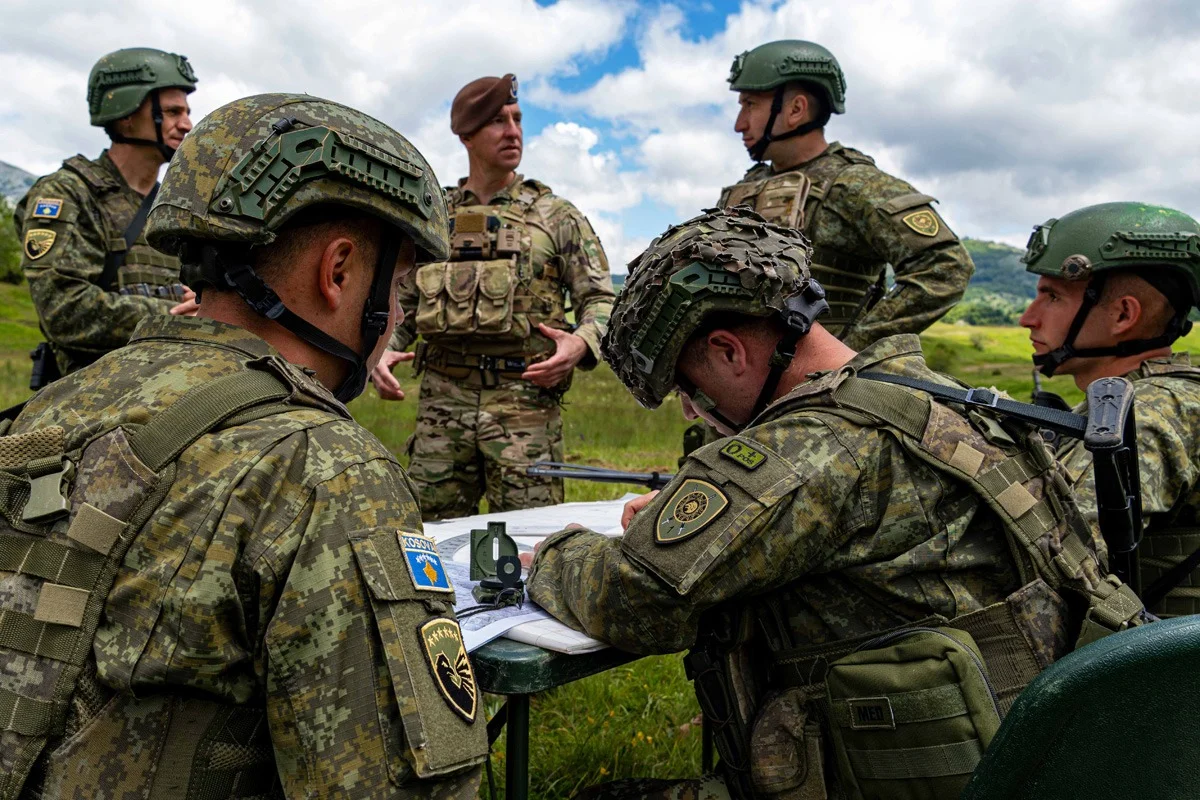
On August 11, the Albanian Radio Free Europe Service confirmed: expert groups are already preparing an “operational implementation plan” of this project. The Minister of Defense of Kosovo Eyup Medongsi expressed a common opinion: "When you buy large batches from the United States, the price is lower, and delivery is faster." The Ministry of Defense of Albania reported that in September the corresponding document would be completely ready. The order is supposed to be paid from national budgets.
The four main areas of cooperation of the three countries were originally determined as follows:
promotion of defense capabilities and cooperation in military industry;
increasing the compatibility of army standards through education, training and military exercises;
response to hybrid threats;
Complete support for Euro -Atlantic integration.
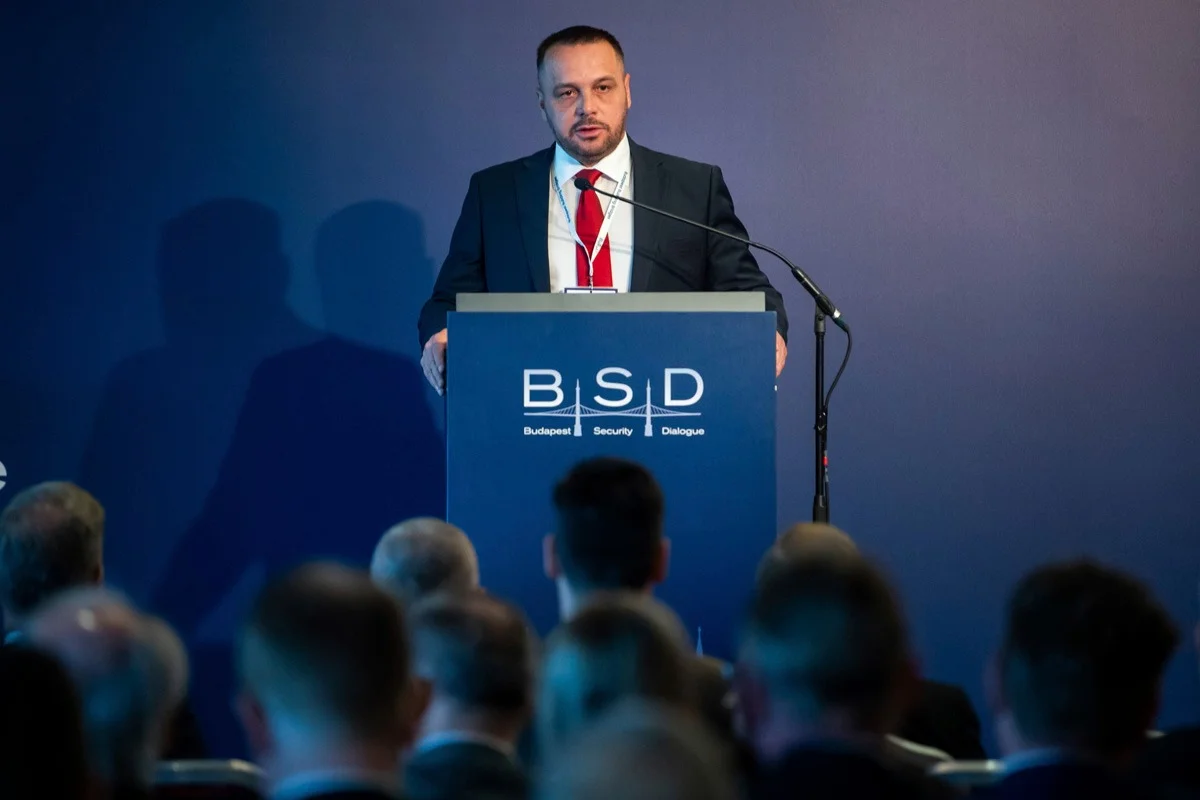
Machedonzi notes that this agreement was welcomed to the Pentagon during his visit to the United States in June of this year. According to him, he is going to take advantage of the next meeting in the framework of the US-Adriatic Charter, which is expected in October this year to invite regional partners to join the initiative.
Members of the US-Adriatic Charter founded in 2003, the purpose of which is to strengthen cooperation and security between the countries of the Adriatic region and the USA, are Albania, Croatia, Northern Macedonia, Montenegro and Bosnia and Herzegovin, while Kosovo has the status of an observer.
Fears that do not hide
Formally, the project of joint purchase of weapons is moving as “savings” and “rationalization”. But in private conversations, the military and diplomats call the main reason: the fear of repeating the Ukrainian script on the peninsula. In the Balkans, this would not necessarily mean full -scale combat operations - here a fairly frightening hybrid combination of cyber attacks, subversive operations, media stuffing and erosion of the political stability of states is quite frightening.
The fears of Balkan partners are greeted by sympathy in the West. According to the analysts of the German edition of European Security & Defense, “the design of the joint defense structure of Albania, Croatia and Kosovo actually announces the birth of a new“ Adriatic Bloc ”, which is consistent with the strategic concept of NATO.
This initiative demonstrates evolution from symbolic coordination to a specific regional structure capable of responding to hybrid threats and confirming the Euro -Atlantic commitment of the signatories.
The presence in the new association of Kosovo shows how alliances form regional identity. If earlier the question was like this: “Should Kosovo be part of the future security of the Balkans?”, Now it sounds different: “Who will help to form this future and on whose conditions?”.
How a hybrid threat works
Media campaigns - Serboy speaking television channels and sites broadcast the Kremlin line, discrediting NATO and the EU.
Kiberataki - the government portals of Kosovo and Albania were attacked, which special services associate with groups that have a “Russian trace”.
Political stuffing is a repetition of staged protests and similar “initiatives” in the border areas.
Balkan reinsurance
Buying weapons from the United States with three countries in coordination means the rejection of the Serbian “intermediary” - the role of Belgrade as a “bridge” between the West and Russia. Formally, Serbia goes towards the EU, but retains strong ties with Moscow, which for Kosovo, Albania and Croatia means an open door for Russian influence.
Trilateral coordination in itself does not guarantee a calm future. For Serbia, this, most likely, will become an occasion to strengthen the rhetoric about Kosovo's militarization and activate contacts with Moscow and Beijing. But this is also a signal that the military balance in the region is not shifted in its favor.
That is why, in response to the Tiranian declaration, Belgrade signed an agreement on defense cooperation with Hungary, which was rather a surprise. This document includes the provisions on the conduct of joint military exercises and the exchange of intelligence, the support of the domestic defense industry in both countries, and long -term cooperation in the field of critical infrastructure and border security.
This union is noted by observers, becomes even more interesting in connection with the possible connection of another single-minded neighbor-Slovakia to him. It is known that the Prime Minister of Slovakia Robert Fitzo, who shares the pro-Russian sentiments of Vucich and Orban, began to share his concern about the alleged marginalization of the votes of Central Europe within the framework of the wider defense structure of the EU.
Who and with what goes to the military union
Kosovo
Military budget (2024): 140 million euros.
Personnel: 5000 (Kosovo security forces, including reserve).
The main threat: tension in the north with the Serbian population, cyber attacks, a possible blockade from Serbia.
It plans to increase the budget to 1 billion euros in the next four years.
Albania
Military budget (2024): 456 million euros.
Personnel: 8500.
Feature: a member of NATO since 2009, has been actively involved in the missions of the alliance in Latvia, Iraq and Kosovo.
Croatia
Military budget (2024): 1.4 billion euros.
Personnel: 20,000.
Feature: one of the most equipped armies in the Balkans, focused on NATO standards and close interaction with the United States.