
Translated material
Putin in Alaska was presented with an icon, and Putin in response presented “something more important” (the same icon!)
How did the Orthodox Church integrate in an summit in Anchorida?
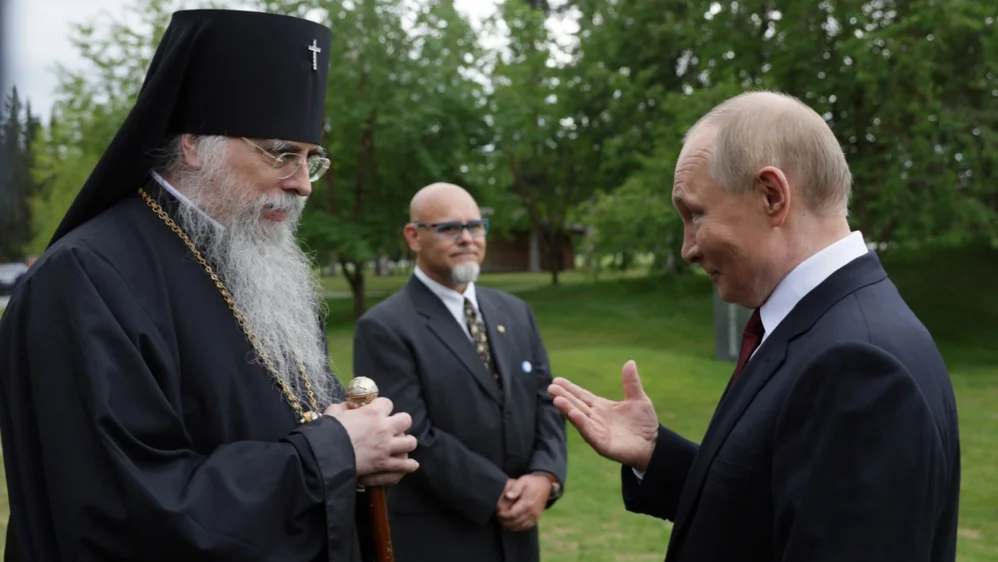
Vladimir Putin is talking with the Archbishop of the Sitkin and Alaskan Alexei. Photo: Gabriel Grigorov / EPA / Sputnik / Kremlin Pool
The whole Orthodox world followed the negotiations. Patriarch Cyril even took a ris from the peacekeeper from the chest. Potentially, the “church factor” is able to significantly affect the course of negotiations. And, most likely, not in favor of Ukraine.
A rather strange exchange of gifts, clearly not finalized by the service of the protocol, took place on August 15 (early in the morning of the 16th Moscow time) between Vladimir Putin and the Orthodox archbishop of Sitkin and Alaskinsky (trader).
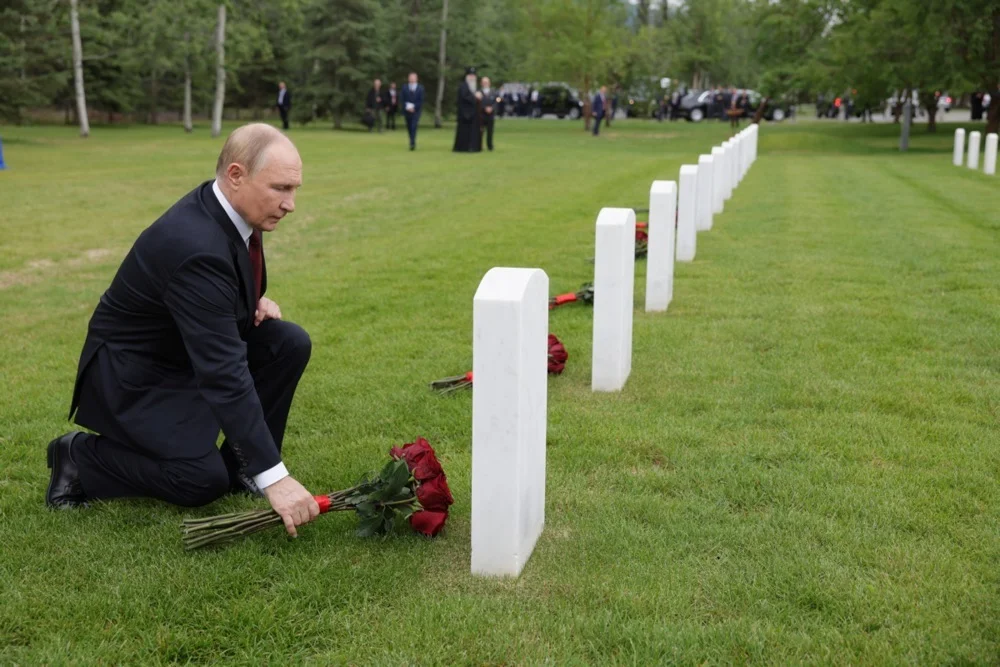
They met the memorial cemetery near Anchorij, where Putin went after negotiations with Donald Trump, instead of a planned joint dinner (that lunch did not take place, experts were interpreted as a bad sign). Several Red Army soldiers who died in the Alaskan region were buried in this cemetery during the aircraft provided by the USSR of the USSR during the Second World War.
The graves do not have any religious attributes-there is no Orthodox cross or icon in the cemetery. And the strangeness of the exchange of gifts is that at first Archbishop Alexy presented Putin to Putin the icon Herman Alaskinsky - the Russian Valaam monk, who came by order of the St. Petersburg Synod in 1793 to preach Orthodoxy to local Aborigines on the Aleutian island of Kadiak. And then Putin presented Archbishop Alexy Icon ... Rev. Herman Alaskinsky.
True, the leader of the Russian Federation also added the icon of the Assumption of the Mother of God, believing that the entire Orthodox Church in America (PCA), whose jurisdiction includes the Alaskan diocese, notes the Assumption Feast according to the new style on August 15. However, here the overlay occurred. It is the Alaskan diocese, being the most conservative in the PCA and storing loyalty to old Russian traditions, that adheres to the old calendar style, like the Russian Orthodox Church, and will celebrate the Assumption only on August 28.
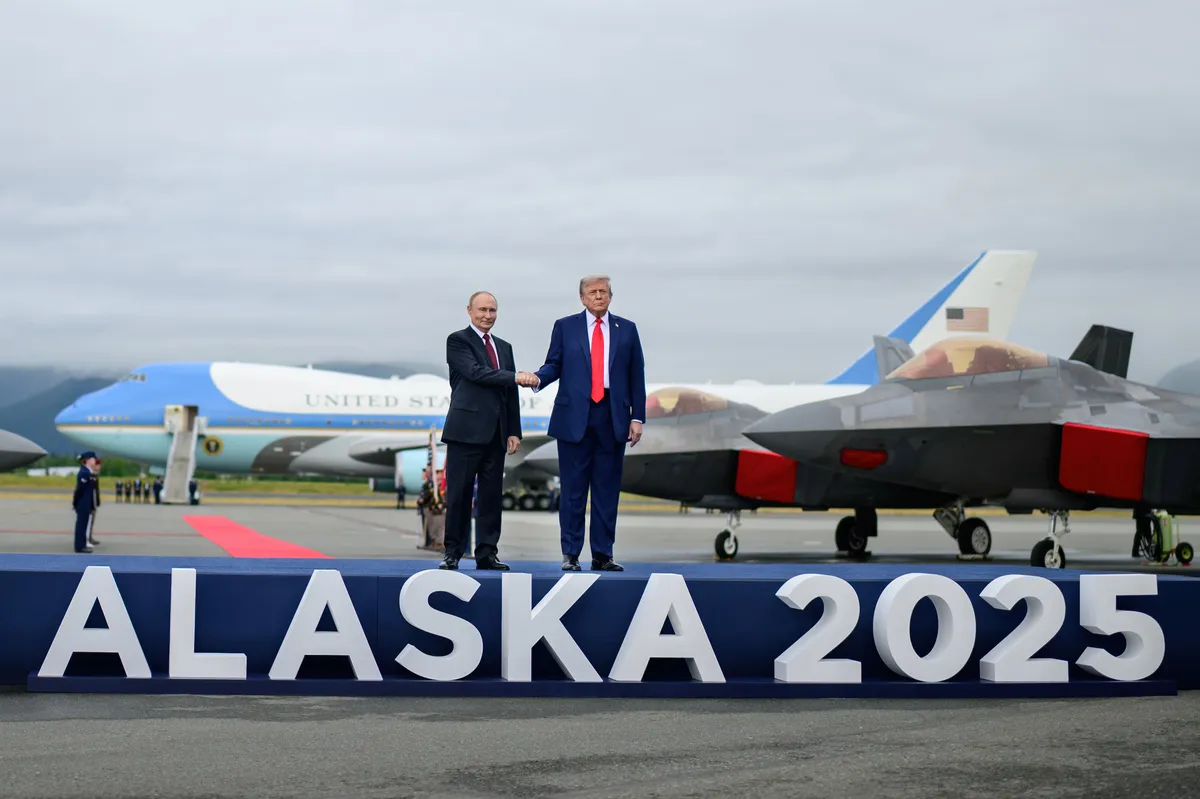
Russia gave Alaska the "most valuable"
Archbishop Alexy (Trader) is a native American from Delaware, he is 64 years old. Being the son of a methodologist pastor, in his youth he moved to Orthodoxy and almost immediately became a monk of the Holy Tikhonovsky Monastery in Pennsylvania. Neofitic jealousy pushed him to even greater feats, and at the age of 30 the future archbishop went to the Holy Mount Athos-to the Monastic Republic in the north of Greece. There, in the monastery of Karakall, he accepted the great schema and was ordained into the holy dignity. Returning to America, according to the prescription of doctors, in 2020 in Washington was ordained in the bishop of PC, and two years later he was appointed manager of the Alaskan diocese, which unites almost 90 parishes and missions, carefully storing the “Russian spiritual heritage” in Alaska. Archbishop Alexy often emphasizes his love for Russia in sermons and interviews. Personally, to Putin in the cemetery, he conveyed “the appreciation of the indigenous population of Alaska to the leader of the country that once sent missionaries here. Because Russia gave us what we are most grateful, something most valuable. ” Obviously, the hierarch had in mind Orthodoxy.
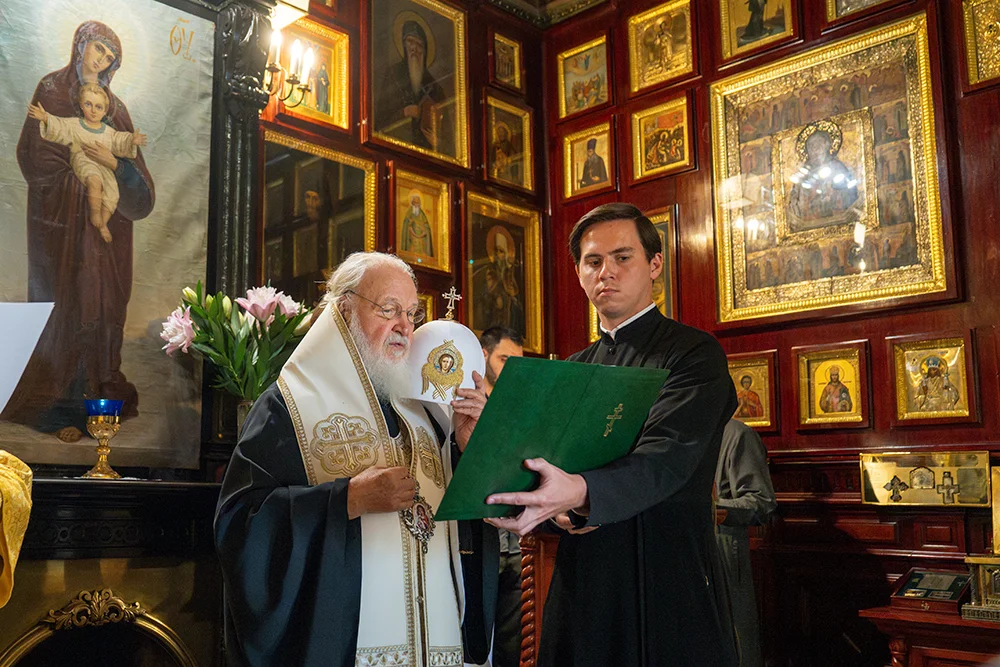
When a week ago it became known about the meeting of the presidents of the United States and the Russian Federation in Alaska, Archbishop Alexy announced in his diocese “Week of Prayers for Peace”, and in the last three days before the summit - also a pure post for his success. Practice, extremely rare in the modern Orthodox tradition. Earlier, PCA, which is strongly dependent on the Russian Orthodox Church, evaded the direct religious and moral assessment of Russia's actions in Ukraine and, in particular, ignored the appeals of their own clergy and laity to the priesthood with requests to include a prayer for the people of Ukraine suffering from aggression. So the initiative of the great friend of the Russian people of the archbishop Alexy touched only his diocese, without affecting the PCs as a whole. Most recently, in May, Archbishop Alexy visited Moscow and served Patriarch Kirill (Gundyaev) on his name day in the Cathedral of Christ the Savior. In this solemn service, Patriarch Kirill loudly read that very prayer for the victory of the Russian Federation over Ukraine, for the replacement of only one word in which the whole galaxy of conscientious Russian priests was “deprived of the dignity” . Three months have not yet passed, and the same hierarch who prayed for its victory in the “Main Temple of Russia”, now he prays nothing in his diocese for a world that is possible in the current military-political conditions only through the rejection of the very victory.
"Svo" of the XVIII century
Archbishop Alexy claims that Russia gave Alaska “something of the most valuable”, the evidence of which is the icon of local holy Russian origin. However, historical science, to put it mildly, does not so clearly interpret the coming of Russia to the lands of Alaska in the 18th century.
Referring to archival documents and scientific monographs, the disgraced deacon Andrei Kuraev, forced to leave Russia, in his new, already emigrant, the book “Mythology of the Russian Wars” describes the “exploits” of Russian colonialists on one of the Aleutian islands in 1745: “Having settled for wintering on the island of National The Aleutian village, including women, who, Zakolov, were thrown off the cliff into the sea. Industrialists were justified by the fact that the islanders should have died from hunger, since all their food was taken away by Russians ... The statistics of the Russian-American company testified to the constant drop in the number of natives ... The number of Aleuts from the beginning of contacts with the Russians and until the 1820s decreased, according to the calculations of different authors, by 4–8 times ... according to the old-man-Aleuts, industrialists, industrialists, industrialists. Many natives were shot just for the sake of fun. ”
“Russia in the XVIII century,” Kuraev concludes, ““ growing ”in the Far East and the Pacific“ exploits ”of the“ exploits ”of all sorts of cuts. Their inhuman abominations indicate the quality of the Christianization of the main population of the Russian Empire. ”
The Moscow Innocent, a canonized by the Russian Orthodox Church, recognized Moscow in the middle of the 19th century that the missionary activity of his church in the remote territories of the North was caused not by the “jealousy of the preaching of the gospel”, but the passion for “acquisition of expensive furs”: “other priests are not ashamed of the same for the same for the same,“ “their temptation” and “seductive life” impede the appeal to Christ. It is clear that the actions of the colonialists periodically caused opposition in the form of uprisings, the victims of which were also Russian. However, the forces were obviously unequal.
It is symbolic that the first bishop, appointed by the St. Petersburg Synod to the Aleutian Islands and Alaska, Joasaf (Bolotov) died in the Sea of Okhotsk in 1799 at the age of 37 during a shipwreck, and not sailing to his department. Only in 1840 was a diocese with a center in Novoarkhangelsk (current Sitka), which also covered Kamchatka and Kurillees, was restored. After the sale of Alaska, in 1869, the Synod established a separate diocese only for the United States, which became a canonical basis for the current PC. The center of the diocese gradually drifted east: first in San Francisco, and then in New York. Only as a result of the fall of the Russian Empire, Orthodoxy in America was transformed into a motley conglomerate of various church jurisdictions, the exact number of which today no one takes on. The leading position among them was gradually occupied by the American archbishopia of the Patriarchate of Constantinople, based on a powerful Greek lobby in the United States. The Moscow Patriarchate directly controls approximately 50 “Patriarchal Parties” in the United States, and since 2007, part of the Russian foreign church with a center in New York also submits to it. To a certain extent, pro -Russian can be considered PCA, the autocephaly of which only recognizes the Russian Orthodox Church. Until 2022, PCA received tangible financial support from Russia, and in Moscow, in Ordynka, the official courtyard of this church under Patriarch of Moscow is still operating.
Not only in the national memory of the indigenous peoples of Alaska, resentment of Russian colonialists has been preserved. The territorial disputes of the state of Alaska and the Russian Federation continued until the beginning of the Putin rule. In particular, the state parliament indicated in 1999 the illegality of the marine border, which deprives Alaska of millions of tons of sea biological resources annually. From the point of view of the state, the Commander Island and some islands of the Chukchi Sea, transferred to the Russian jurisdiction, remain controversial under Russian jurisdiction.
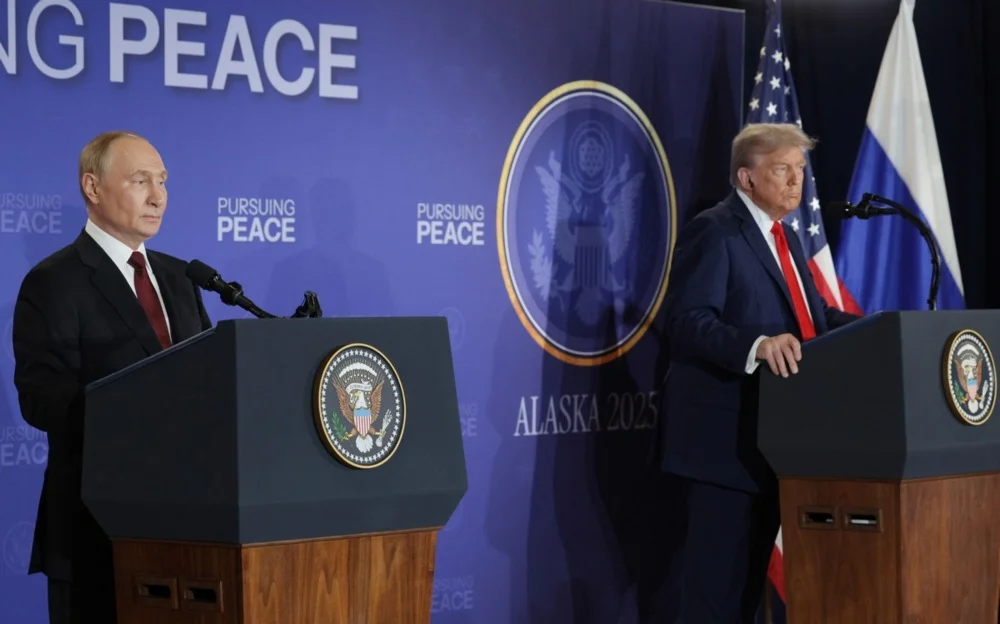
Again, “Blessed are peacekeepers”?
Vladimir Putin consistently uses the “church factor” in his contacts with Trump, realizing the specific sensitivity of the American leader to his mission “Defender of traditional Christianity”. As the New Evrope noted , right on the day of the inauguration of Trump, January 20, his fanatical follower, the leader of the youth wing of the US Republican Party Katherine Whiteford, from the square in front of the White House, threatened the leadership of Ukraine with “heavenly punisha” and criminal punishment for the oppression of the holy and righteous Ukrainian Orthodox Church (UOC), which even three and a half years later after the beginning of the beginning “Svo” cannot break its canonical ties with the Moscow Patriarchate. Of course, Moscow to the maximum disperses the theme of “persecution of canonical Orthodoxy” in Ukraine, although Patriarch Kirill periodically makes it clear that the UOC has ceased to be “canonical” for him, as it was harshly condemned the invasion and stopped remembering his holy name. On the feelings of conservative Christian trampists masterfully plays the international lawyer of the UOC Robert Amsterdam, who represents his clients with the only conservative Christians in Ukraine. It is no coincidence that Putin’s words at the “press conference” in Anchoridge about the Russian heritage, represented mainly by Orthodox temples, were heard in this context.
Obviously, the topic of “persecution” for this legacy will pedal in the Russian-Ukrainian negotiations, if they ever begin, and it is extremely important for Moscow to maintain the UOC in an suspended position, since the normalization of its relations with the Ukrainian state, the return to the legal field will deprive the Russian side of the trump card that is so sensitive to Trump.
Another side of the church investigation of a meeting in Alaska is the removal of a taboo (possibly single) to prayers for peace in Ukraine. If more recently, such prayers were practically equated with “discrediting the RF Armed Forces” and, at least, led to the imprisonment of the clergy, now, now, on August 15, Patriarch Kirill in his Moscow residence directly under the cell prayed that “prosperity and peace on our planet are ensured.” Commenting on this event, the adviser to the Patriarch on international issues Archpriest Nikolai Balashov, as it were, announced the change in the Vector of the Russian Orthodox Church: "God ... gives peace to our peoples."
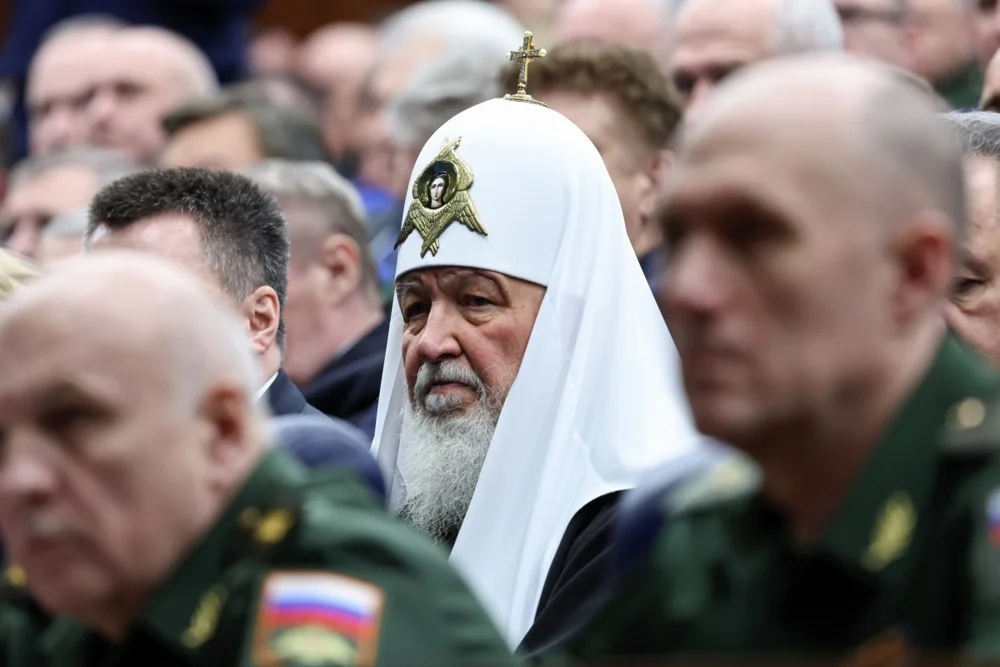
In order to change clothes from Sakkos ( tunics, the vestments of the bishop - approx. Ed. ) Khaki color in white ries of peacekeepers, the leadership of the Russian Orthodox Church is enough for a few seconds. There would be “Highest will” - not religious, of course, but political.
However, nothing still speaks of the stability of this trend. Firstly, from the historical memory of mankind, all this nightmarish “theology of its own”, incited by the Moscow Patriarchate since February 2022, and preceding him the chauvinistic “theology of the Russian world”, will never be erased. Secondly, so far there is too little reason for the hope that Trump is able to turn the course of Russian foreign policy. And the Russian Orthodox Church, who refused the efforts of Patriarch Kirill from his moral and political subjectivity, is nothing more than auxiliary instrument of this bloody policy.