
Translated material
"Dusty storms stand with a wall"
The Astrakhan region brings sand-due to changes in the climate and indifference of the authorities. Report from the region that absorbs the desert
Very soon, the Astrakhan region from the region of watermelons and melons famous throughout the country can turn into a lifeless desert. And this is not an exaggeration from alarmed scientists: it is enough to go to the once blooming region and see how the sands are literally absorbed. The journalists of the independent publication about the environment of Kedr went to the Astrakhan villages, especially suffering from desertification, talked with local residents about survival in such conditions, and also learned from environmentalists, which, in addition to climatic changes, exacerbates the situation in the south of Russia-and are there any ways to somehow influence what is happening. "Medusa" publishes this report entirely.
A dense gray-brown dust column is stretched by the front of several hundred meters. The “cloud” with a five -story building, moving a squally wind, covers houses and roads, scratches in the windows. Behind him and inside him is not visible. It can "go" without slowing down, several hours. And having calmed down, he will leave the layers of sand after.
This is a dusty storm. These are happening here every year.
The Astrakhan region is usually associated with abundance: watermelons, melons and incredible fish catch. Few people know that all this is on the verge of non -being. The region eats the desert.
The desertification goes on a quarter of the Astrakhan lands - 1.3 million hectares. Another 2 million hectares are at risk. People throw gardens, because there is nothing to grow in the hot sand. And they stop fishing - because the ponds dry out.
The Kedra correspondent went to the region that was borne by the sand to tell why this disaster occurs and how the locals get used to living inside it.
Not only the Astrakhan region faces problems
The problem of desertification fully or partially affects 28 regions of Russia. This process is especially intense in the Astrakhan and Volgograd regions, the Stavropol Territory, Kalmykia, Dagestan and Chechnya. In Kalmykia, due to the plowing of lands and piercing livestock in the second half of the twentieth century, the only anthropogenic desert in Europe was formed-the Black Earth. It already occupies 47.3% of the territory of the republic. Climatologists predict “total desertification” in the Volgograd region, where 80% of the land has already degraded. In Dagestan, 150 thousand hectares turned into open sands.
From the UN point of view, desertification belongs to one of the most serious environmental problems of the planet. According to the organization, 2 billion people around the world live in arid regions, while the speed of land degradation today is 30–35 times higher than in previous centuries.
"Only rain helps us"
Having traveled from Astrakhan to the west a little more than 100 kilometers, we turn off the track from the highway to the steppe - two ruts sold with wheels stretch to the horizon. Temperature under 40 ℃.
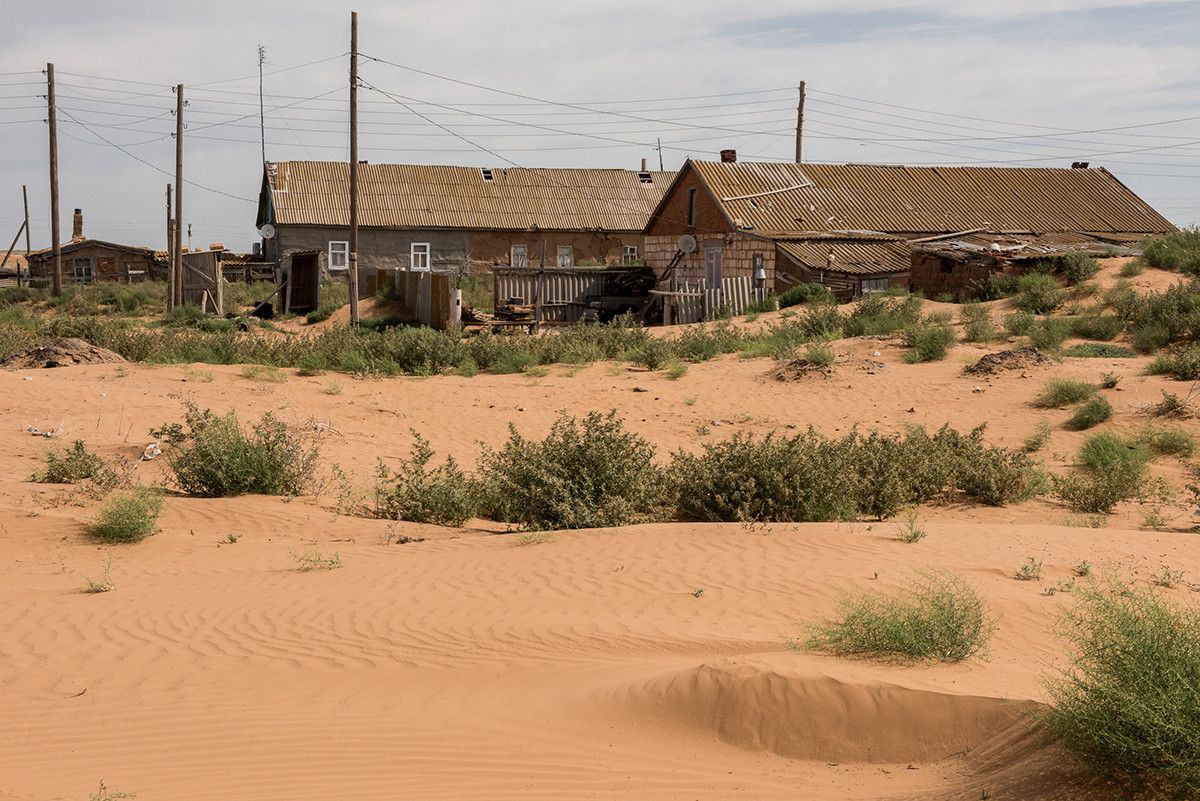
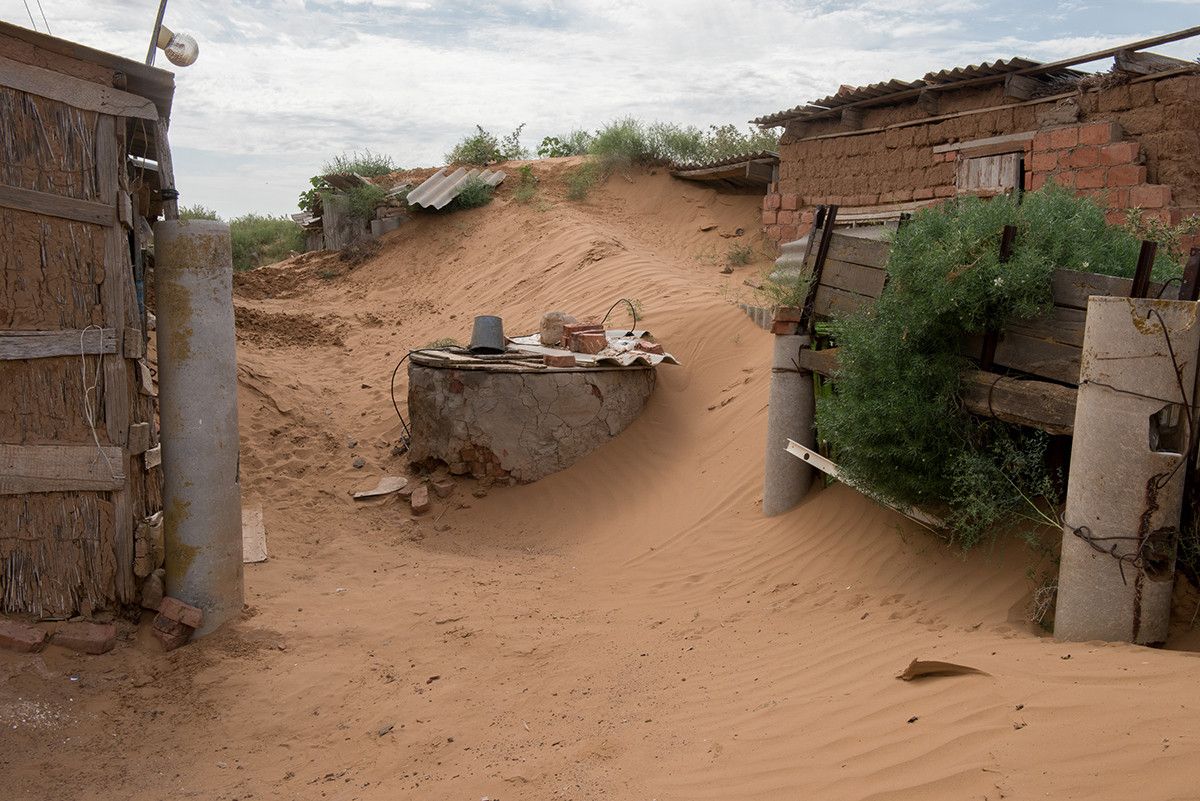
After a couple of kilometers, the steppe retains, gradually replacing the sand. Instead of a featherweight, flowers and heels from under the ground, only rare shreds of a camel spine break through. Soon, behind the full growth of sand dunes, power power lines and a dozen houses become visible. This is the village of Barkhana - only one street, almost all the buildings are abandoned on it.
The sand is transplanted through the fences, crawls to the roofs. A yellow lizard runs along the road.
Noticing the car, a woman in a blue dressing gown and a white scarf peeps out from behind a wooden gate. Albina is not local: she comes to the marks to visit her mother -in -law and bring her products. She herself and her husband and children live 40 kilometers from here, in the village of Caspian.
- Even municipal water stopped bringing municipal water. They say that they cannot drive through the sands, ”she complains. - Yes, and where we are: there are four houses left here. Everyone parted. We now take off again and hire a private trader. A ton of water is a thousand rubles.
Once there was a store, a medical center and a club in the march. In Soviet times, livestock was bred here, melted crops were grown, and water was supplied from the Volga through the artificial canal for irrigation.
“It was good here,” Albina watches my gaze, sliding along the destroyed walls and sold roofs of houses. - After the collapse of the union of the state farm, there were no, and the sands came. The desertification has begun. Dusty storms rose, it was not visible. People were digging up, but the wind brought sand again. Many are tired.
The woman seems to be shy. He says that her mother -in -law was still lucky: the house is on the leeward side of the village, where less sand brings. And hurries to say goodbye.
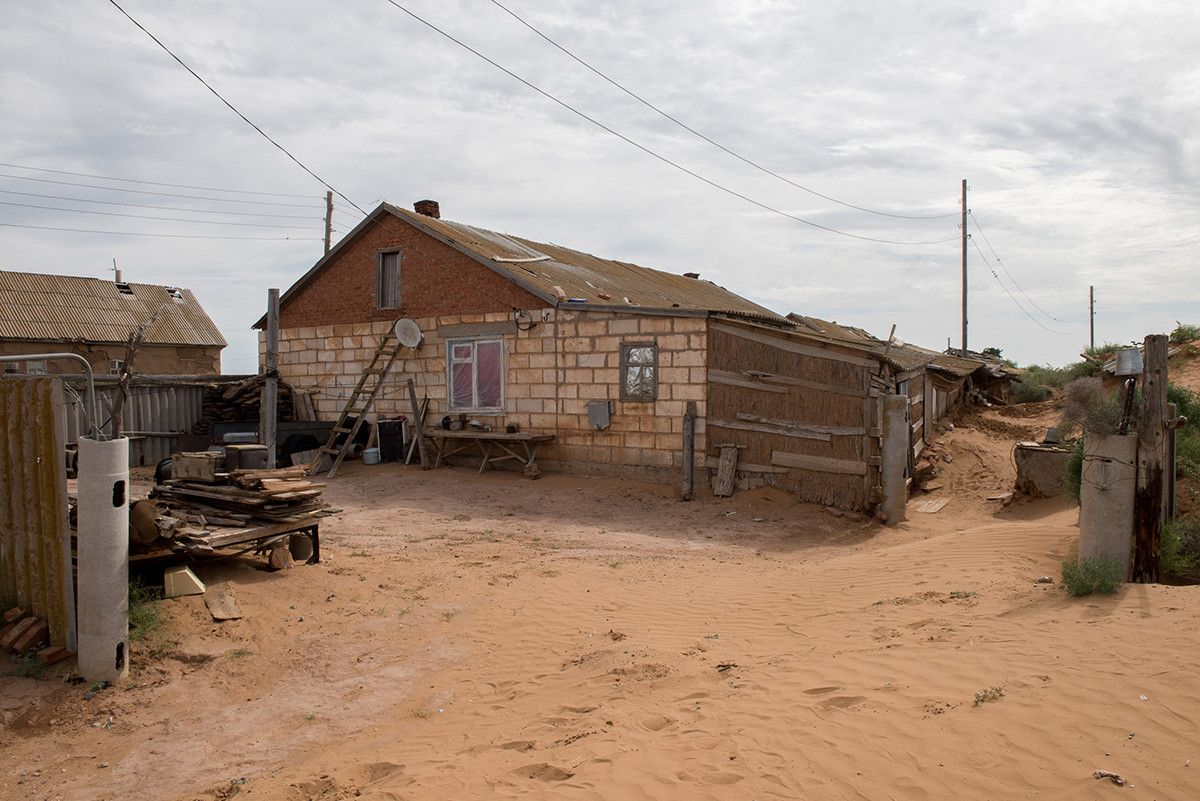
Passing further along the street, we notice stones packed on the roofs of sheds and the boards propagating fences - all this is done so that the dilapidated buildings do not demolish the wind. Most doors are pounded. One of the courtyards is littered with a dangling - dried manure, which is used here as fuel for furnaces. In the troughs are salt lizunis - an additive to livestock feed.
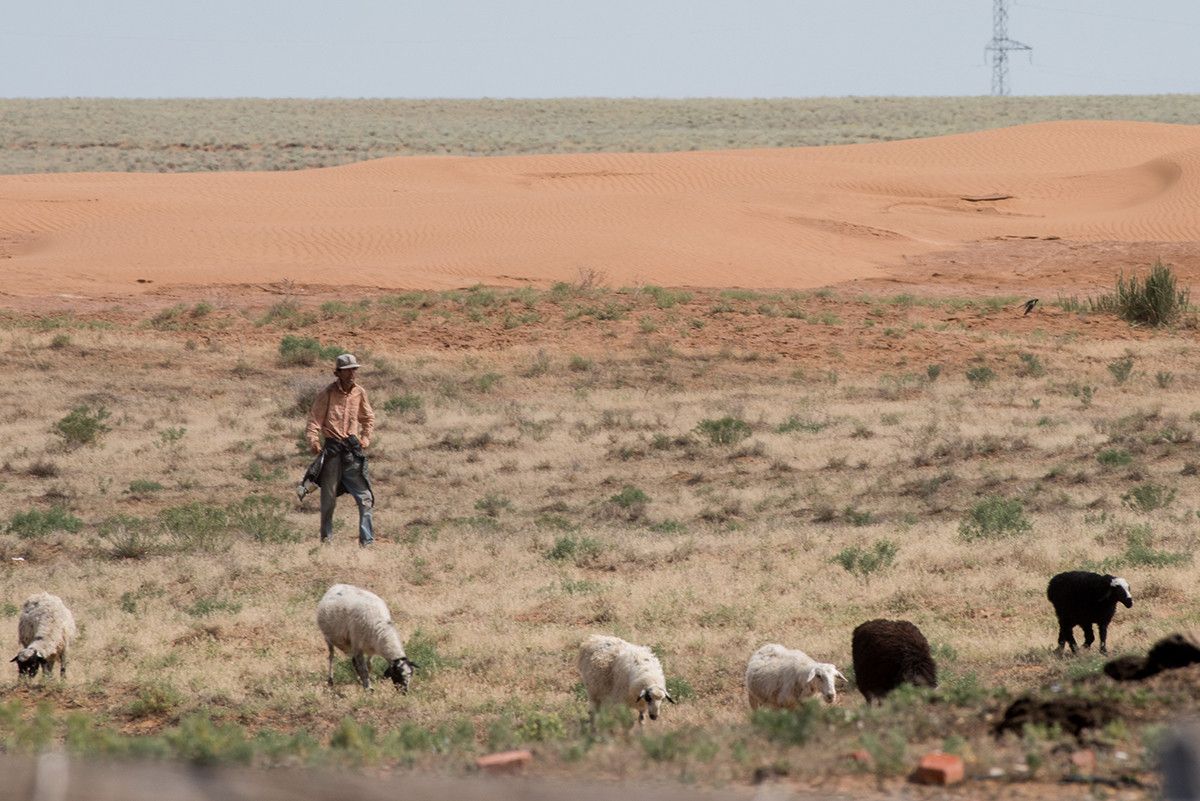
- Ayda! - A woman with a man descend from the hill. Ringing with tins in their hands, they drive a herd of rams into the courtyard.
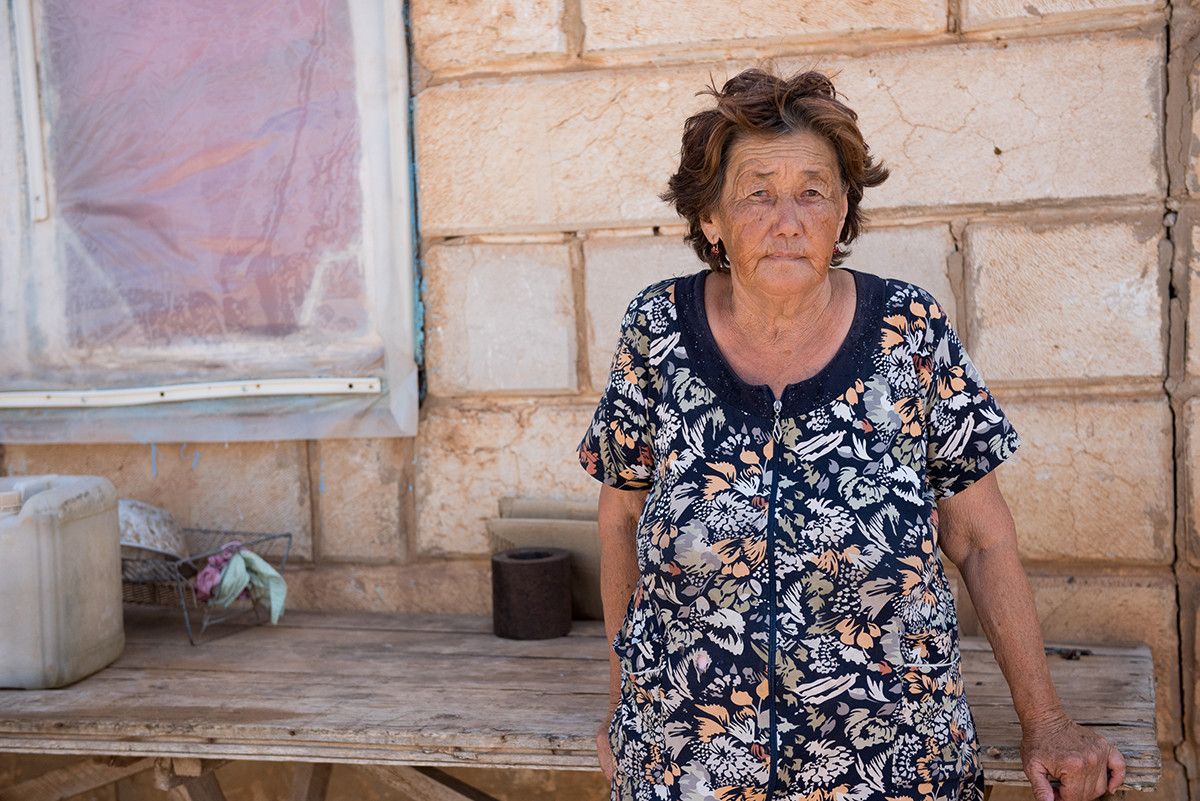
Shulpan lived in marching 60 years and used to work in a local store. Half of her house is already covered with sand, the living part of it separates the wall of the boards. She recalls the past with a stink, and speaks of the present with reluctance. The essence of her reasoning is this: "We do not hope for anything else."
Once they arrived [officials] before the elections, promised to clear the sand technology. Then they said: no, the technique is useless here. And they did nothing. I have not seen the head of the district for so long that I don’t know what his name is. And now we are not needed by anyone, the country is not up to us. Yesterday there was such a dusty storm, barely leaving the house. Only rain helps us really.
According to the authorities, the fate of the village predetermined the closure of the state farm. Then, along the artificial channel, which led into the dunes, they stopped supplying water from the Volga. Why such a decision was made, no one can say over the past years. Be that as it may, people and terrain were left without a source of water.
The continuing grazing of cattle that trampled plants that restrained the spread of sand also contributed to the desertification. In 2018, the district administration organized a juzgun landing in the march - a long -term shrub, which is used to combat deserting. Juzgong restrains the movement of sands well, strengthens the soil, holds snow and rain moisture. Next to it you can plant trees and herbs, gradually restore the steppe ecosystem.
However, the plants planted near the dunes soon died of what officials accused the locals who allegedly joined their cattle. “The second time we will not allocate money for brushing,” Governor Alexander Zhilkin said then. Locals do not agree with the authorities and do not see their guilt.
“I have only 60 rams and 20 goats, this is not enough, there were more in the state farm,” Shulpan approaches a wooden table and looks like sandstone. Above the table is a window glued with a transparent oilcloth. - We drive cattle far away to the grass, but we buy hay, although it is expensive. We go to the water to the well, and it is far away, the water there is only for cattle. We are saved by the farm as we can.
With the state farm from deserting, the margin was saved by the supply of Volga water throughout the channel and the land reclamation system - albeit artificially, but the surroundings were encouraged by moisture. And there were more rains-now the amount of precipitation is reduced due to climate change. In 2018, in the spring and in the first half of summer, not a single rain occurred in the most part of the Astrakhan region.
Today, from the benefits of civilization, only electricity remains in the march. The administration of the Narimanovsky district stated that they wanted to move the locals to the rooms of the former orphanage of the village of Caspian, but people refused. When I ask about this, Shulpan is noticeably reviving.
“They didn’t even do that after the war , they came up with it either,” she is indignant. -I worked all my life, made something, do I leave everything? And there we would have been huddled in the closets. In line, they would have stood in order to cook food in the same kitchen. Yes, and their water is rotten. We have even cleaner, albeit a donkey.
A man passes by and throws: “Another useless interview. No one will help us. ” Shulpan nods in agreement:
Now they will not help. We stay because of the farm to have support for children. Yes, and there is no money, nowhere to move. My son and grandson rent an apartment. What is it? We used to get married, and immediately gave apartments. And now, in order to get an apartment, we must go to war, earn 5 million. That's all. We overcome sand.
Shulpan leaves. From a neighboring house a woman appears in a scarf, dark glasses and a camouflage suit - in such clothes she is completely protected from the scorching sun. Goes to its herd of sheep and goats in 100 heads. Speaks to speak.
Filmed and spoke already. People still laugh at us. Here we have a child with cerebral palsy with his mother lived, we only because of him, not because of ours, told everyone on camera how we live here. For the state to notice. But no one helped. Only a volunteer from Moscow then bought housing to this family.
In each of her words, resentment is felt. The shooting that the woman remembered was held in 2015 for the Astrakhan 24 television channel.
- Then my friends called me and said: you were there, or something, cried? - recalls an elderly man in a cap that came out of the same house. - To no avail. We even have cattle, but who doesn’t have this, they go to their own : they buy a house, a car and live normally. But I am an old man, I can’t run, but I have to move there so that it is not ...
“ Tokhta ,” a woman pulls him into a Kazakh camouflage.
"Dusty storms stand with a wall"
Deserts for the Astrakhan region - the landscape is quite natural. They were here, as in neighboring Kazakhstan, thousands of years ago. The problem for people is not their presence, but their growth and displacement of the steppes.
The Astrakhan Ecologist Stanislav Shinkarenko indicates that there are two main causes of desertification in the region: climatic changes and human activities.
The amount of precipitation decreases, and evaporation [due to warming] is growing. Uncontrolled grazing, in turn, leads to the degradation of pastures to such an extent that they completely lose their vegetation cover, after which arrays of movable sands are formed.
The desertification process went here before. The first attempts to stop the sands were made in the 19th century. For this, drought -resistant plants were planted : juzgun, pine trees and sagsaul luxury. Under the USSR, a program was launched, which provided for the creation of forest belts to combat drought and the onset of sands.
- The plan was aimed at counteracting soil degradation by creating flight -protecting forest strips and hydraulic structures, as well as the introduction of soil -protective crop rotation . Due to its implementation, the number of dust storms on arable land has been significantly reduced, ”says Stanislav Shinkarenko.
However, by the 1990s, when agriculture began to decline, work to expand and modernize irrigation systems and forest plantations, for the most part, were rolled up, as well as deserting projects.
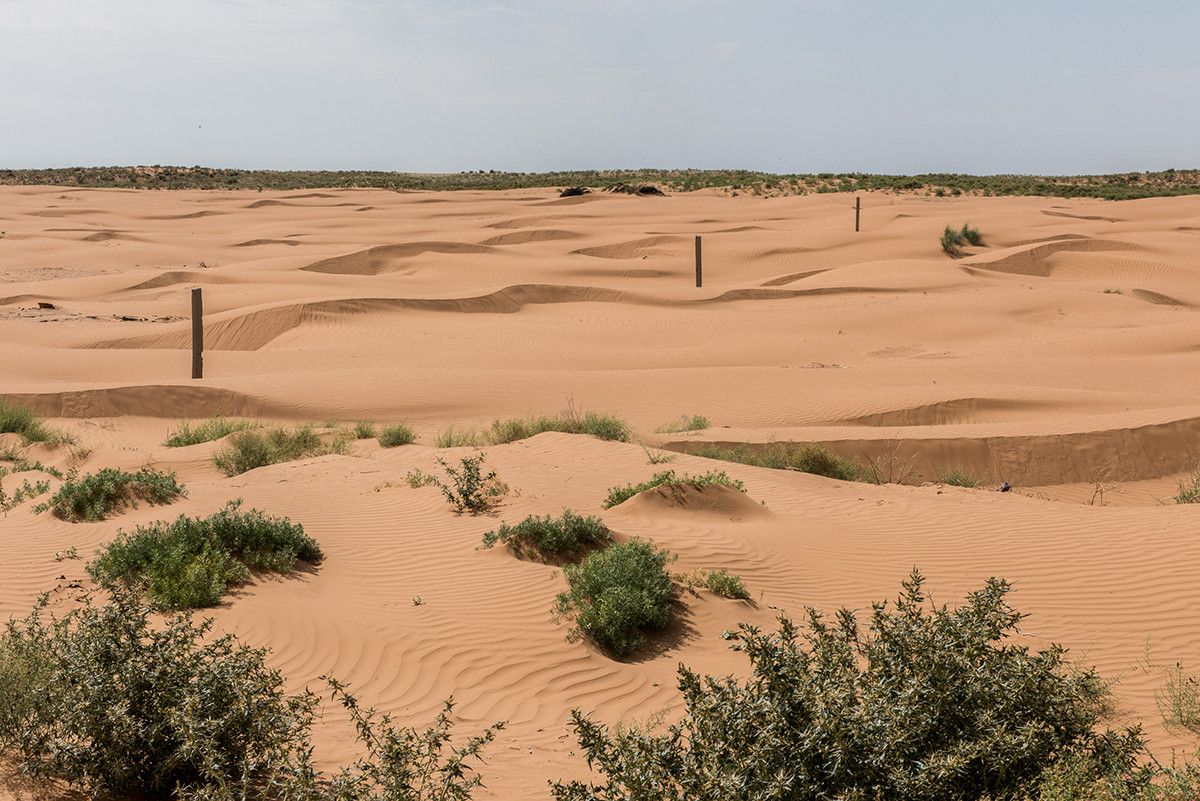
In 2022, Governor Igor Babushkin said that 80% of pastures were exhausted in the Astrakhan region. This is partly due to the very method of grazing livestock.
“Historically, nomadic peoples lived here, who moved their cattle from place to place,” says the Astrakhan ecologist, who asked for anonymity. - With nomadic grazing, the load on the pastures was distributed evenly.
However, under the USSR, the lifestyle of cattle breeders became more settled - this was facilitated by the creation of collective farms and, in general, a more stringent state control of citizens. Over time, cattle breeding in the Astrakhan region has become indigenous - animals stopped driving long distances.
“Now all the lands are divided into Chaban points, into which cattle comes every evening, trampling the same paths,” the ecologist says. - The vegetation does not have time to recover.
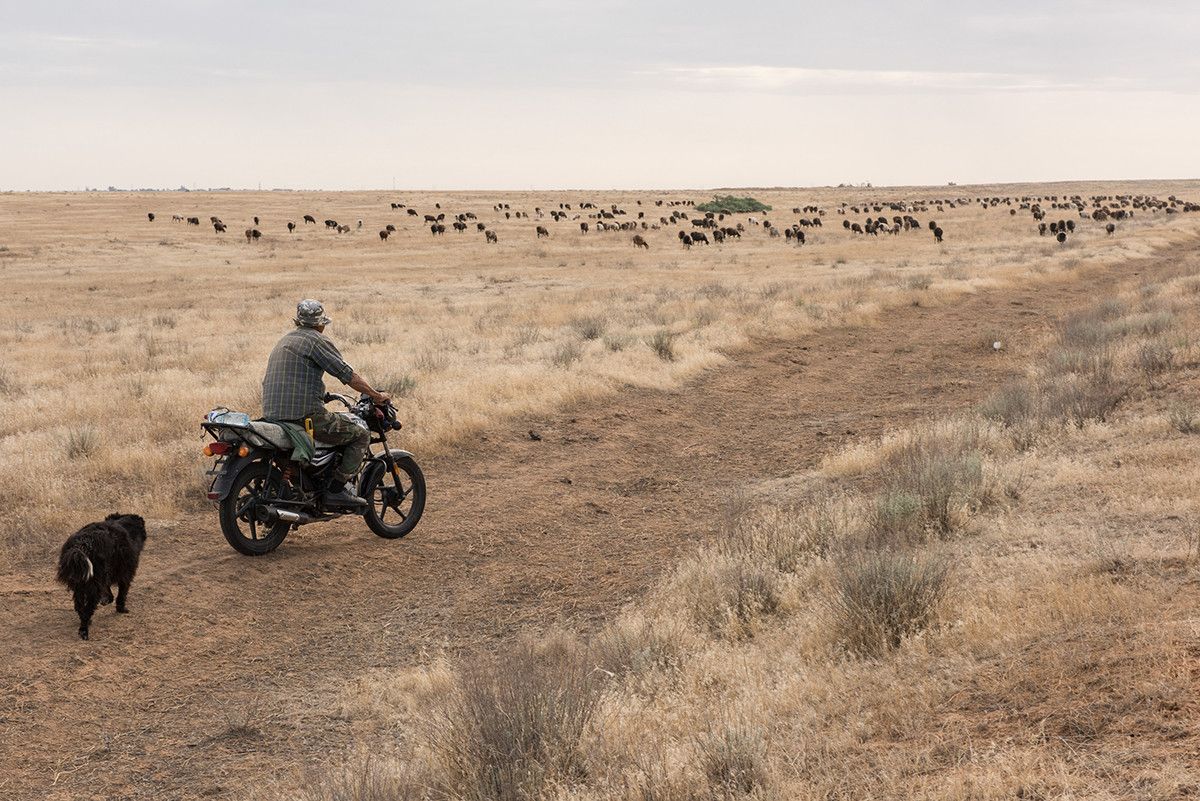
In the Narimanovsky district, lonely houses in the middle of the steppe are often found - small rooms for cattle and rest of the shepherd, called cats or shepherd points. When turning from the highway to the villages, you can notice herds of animals wandering in search of rare grass. We stop at one of them. Nearby is heard the roar of the motor and barking of the dog. The shepherd in green Panama is jamming his motorcycle, continuing to follow the rams. He has been exporting cattle for this point for four years.
“The grass is not enough, it’s getting worse and worse,” he says reluctantly. - Previously, the fields were planted with tomatoes, watermelons, which was not there. And now what is water, that the grass is not enough. The latter falls asleep with sand. Winds are often brought.
After the clarifying question, he agrees:
- Yes, cattle also trampling the grass - and what should we do? It is necessary to live somehow.
According to the biologist Lyudmila Yakovleva, who studies the problems of desertification, only 3% of the Astrakhan livestock breeders are systematically engaged in land reclamation: sow them after grazing, fertilized, manure or covered with plant residues for enrichment of organic matter.
“Against the backdrop of drought, re -signs leads to catastrophic consequences,” says Stanislav Shinkarenko. - Including large -scale dusty storms, which repeatedly increase the area of open sands and other areas without vegetation.
Linear is one of the largest villages of the Narimanovsky district, where almost 900 people live . In the center is a wooden house of a village council, there is a kindergarten and a school where children from neighboring villages come. In 1959, at the opening of the Moscow VDNH, the watermelon from the linear took the highest award for their size and taste. Now the village is also giving a position to the sand. In 2023 alone, the experts of the Rosselkhoznadzor identified 90 hectares into the linear.
At the bend from the highway to the village in the shade of the shops, local residents put their goods: boxes with watermelons, tomatoes, apricots.
“Previously, the collective farm was a millionaire , they called the watermelon, now everything fell apart,” says the native of the village of Maryam and, pointing to the boxes with fruits, explains: “Here, only the rain helped me grow it in the spring.” We always kept cows and rams, now we do not hold anyone. Everything dries, there is nothing to water.
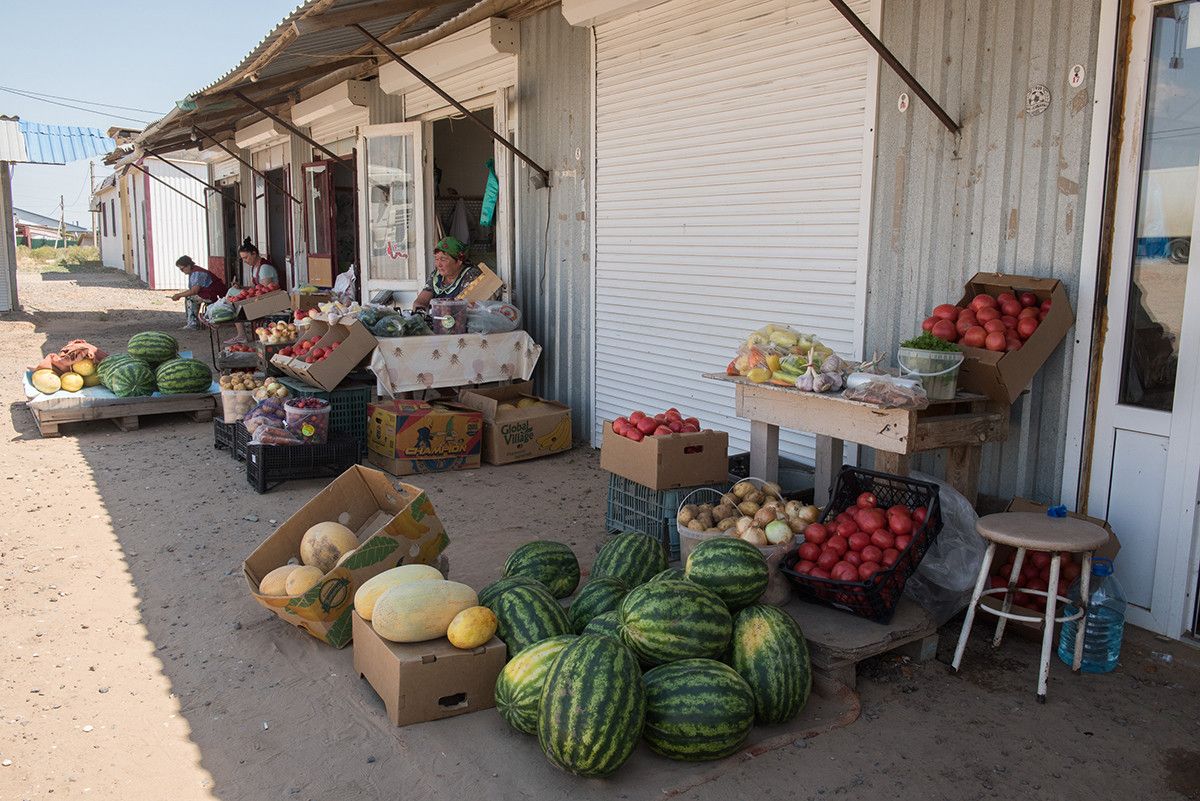
Regina, a dark -haired woman in a red apron, also lives in a linear all her life. Her mother and grandmother were born here. The woman sells fish and tells how the farm has changed in the village.
Ours always held cattle, took land, tried to grow and sell something, there was no other work. And now it’s impossible: there is no greens, there is nothing to feed cows, there is little water and hay. It happens that we are falling asleep with sand, the wind rises, and flies to us. It is unbearable that it is going on with Astrakhan. There is nothing in the city, but in our countryside, dusty storms are standing with a wall. Everything turns into the desert.
Remained only on the map
The blue color is scattered on the map of the Narimanovsky district drops, as if after the rain. These are Western sub -steppe ilmen (ZPI) - a system of fresh and salty lakes in the western part of the Volga delta. They are located in Narimanovsky, Ikryaninsky and Limansky districts, where they live in a total of 120 thousand people. Ilmen is filled only in flood, being the main source of water for the local population.
Mirror blue, reflecting the sky of lakes with furry greens around alternate with white spots scattered in the middle of the grass, which can be taken from a distance for the snow. These are salt marshes-salted remains of lakes disappearing due to low water.
“If the plots are not flooded regularly due to the small regime of flooding, the elaboration and degradation of soil begins,” says the Astrakhan ecologist, who asked for anonymity.
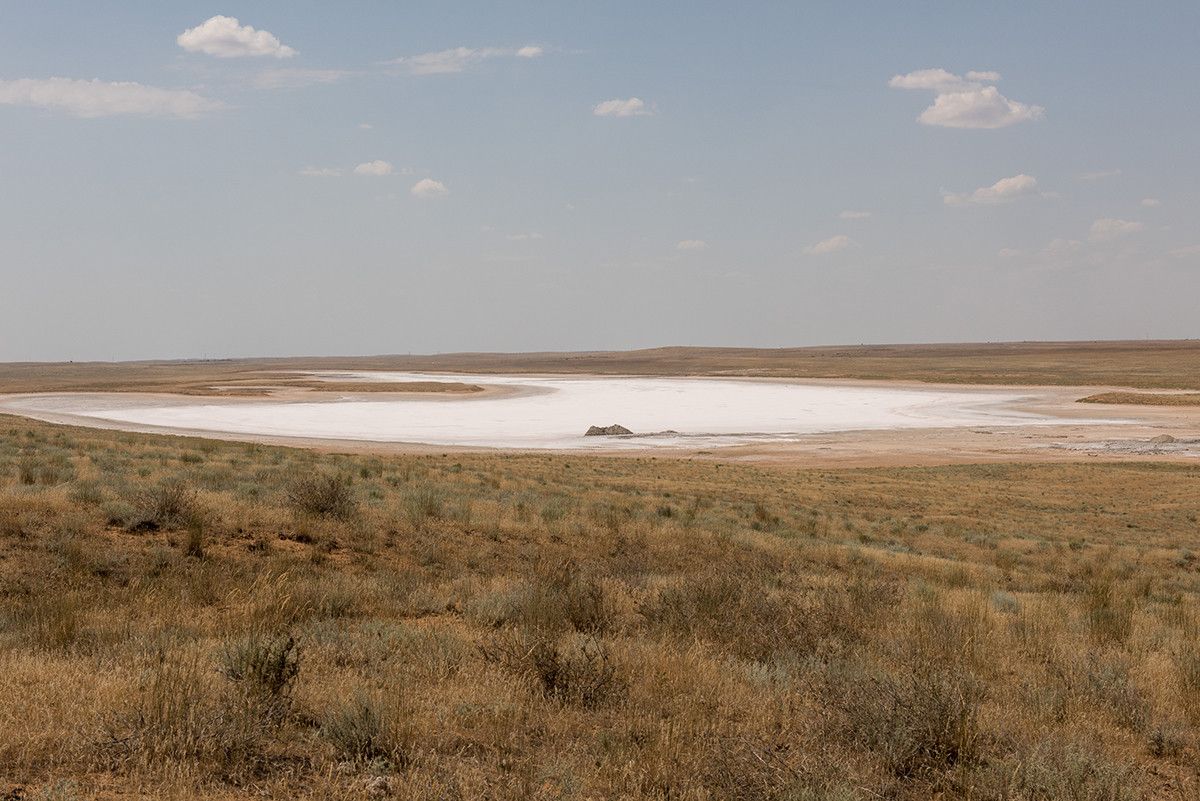
Near the village of Kurchenko, the Narimanovsky district, the pungent smell of wormwood hit the nose. In white letters on a blue plate, Ilmen Cribus is displayed. There is no water in Ilmen - only dusty grass. In some stores of the district, blue barrels with cranes have already appeared - water for a roser. Somewhere next to the price of 6 rubles per liter, it is attributed: "The novelty in Astrakhan."
“If you look on the map, our village is around the village,” says Adele, a resident of the village of Kurchenko. - But you yourself saw: everything was dry there, and on the other side of tina and reeds, it has become overgrown. After heating, the rotten smell rises from it. Everything that was planted this year has dried up. Many are smart and the gardens are no longer planted.
In 2021, the Russian Ministry of Emergencies drew attention to the problem of lack of water. Representatives of the Ministry stated that due to the shallowing of the Volga Delta, 10 thousand inhabitants of three regions of the Astrakhan region were not enough. The villagers of the Narimanovsky district even turned to the head of Tatarstan Rustam Minnikhanov in the hope of drawing attention to the problem. They still write complaints, but the situation is not better.
At the entrance to the village of Nikolaevka of the Narimanovsky district - an installation painted in the colors of the state flag with the name of the settlement and the year of foundation - 1850. In addition to the kindergarten and the school, there is a poultry farm and the temple of Nikolai the Wonderworker. At the end of the village there is a cemetery - there Russian tricolors flush over fresh graves in the wind. On three streets of the village, there is more greenery than in other villages, but the local problems are the same.
“We will soon dry out here,” the woman sitting on a bench near a blue log house says. She seems to be Raisa. - Drinking water is brought to us twice in stores: on Tuesdays and Saturdays. And the technical ... I will show.
Raisa gets up and leads me to the thickets of reeds. There, among Tina and duckweed, in the marsh muti, indeed, water gleams. A rotten smell comes from her.
- He [reservoir] is usually filled in spring, when water comes from the Volga. But the discharges recently are very small, and by the summer everything dries. And also, they say, the climate is changing. The water evaporates, rises and overgrows Tina, - Raisa unanimously waves his hand.
This pond overgrown with reeds is part of Ilmen, which stretches along the village. In the central part, it looks better, there is more open water. Nearby on the playground children with empty five -liters in their hands run. On the contrary, near the store "at LII", adults crowd. Hearing a question about water, they begin to speak vying.
“Neither brushing your teeth, nor go to the bathhouse,” a woman named Tatyana complains. - We swim in green water. It happens that we wash clothes, and carries a rotten with a rotten. In what century do we live? Grandmothers with two cans go to the store, I am insulting to look at it to tears. After the operation, I myself am hard to wear water.
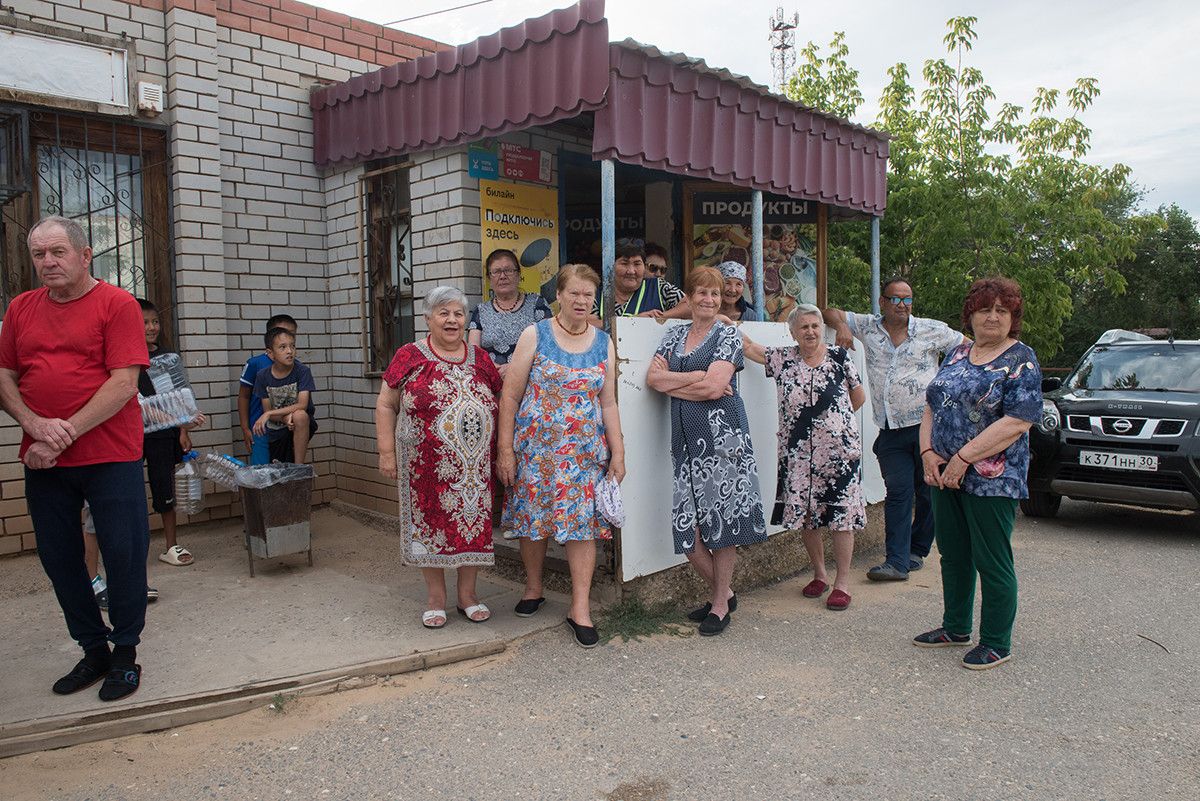
- In my youth there was so much water - they did not buy fish. Someone comes from fishing, knocking on the window and says: you have fish. Now, when fish is brought to the store, they immediately write in a neighboring chat. This is a holiday for us, ”Zemfira confirms, a woman in a red dress with beads.
The water in Ilmena is muddy and warm. Locals assure that Ilmen can now be crossed on foot - you will not drown. The guy in a blue T -shirt is called to do this, enters the reservoir, slowly wanders about twenty meters - the water barely reaches his knees.
Residents of Nikolaevka begin to list the settlements where their acquaintances suffer from water lack of water: peaceful, old-Kucherghanovka, Yango-Asker, Caspian, Buruns, linear. Do not mention everyone. The reservoirs dry out in the Kharabalinsky district, residents of Akhtubinsky report a critical lack of water.
“We turned to the governor, recently one of ours went to Moscow, to the president’s reception,” says the blonde in dark glasses. - Everyone knows about the problem with water. But nothing changes. As if specially our villages want to ruin. Yes, the Volga is coming. But there is gas and oil in Astrakhan, can the question be solved with water?
Energy against everyone
The Volga really shakes . The ecosystem of its deltas is affected by global warming and the flow of water from the upper reaches, which completely depends on the operation of hydroelectric power plants - there are eight on the river.
According to the ecologist Yevgeny Simonov, the limited discharge of water is insufficient to fill the floodplain lakes, which is why drying and allying ilmen.
Due to the construction of the Cascade of the hydroelectric power station, the natural hydrological regime of the river was radically changed. Instead of a powerful spring flood, we received a special assignment , the volume of which is many times less. This water is catastrophically lacking to reach the peripheral sections of the delta, especially to the western subfractal ilmen.
As a result, many of the Ilmena were completely dry, while others turned into salty swamps due to the lack of flushing and accumulation of salts. In the remaining reservoirs, the water stagnates, blooms, which leads to free fish and loss of valuable spawning grounds. More than 20% of the floodplain was subjected to direct desertification.
Oceanologist Vladimir Androsov has been studying Astrakhan Ilmen for more than 20 years. He became interested in their disappearance when he planned to organize a fish farm and suddenly ran into problems.
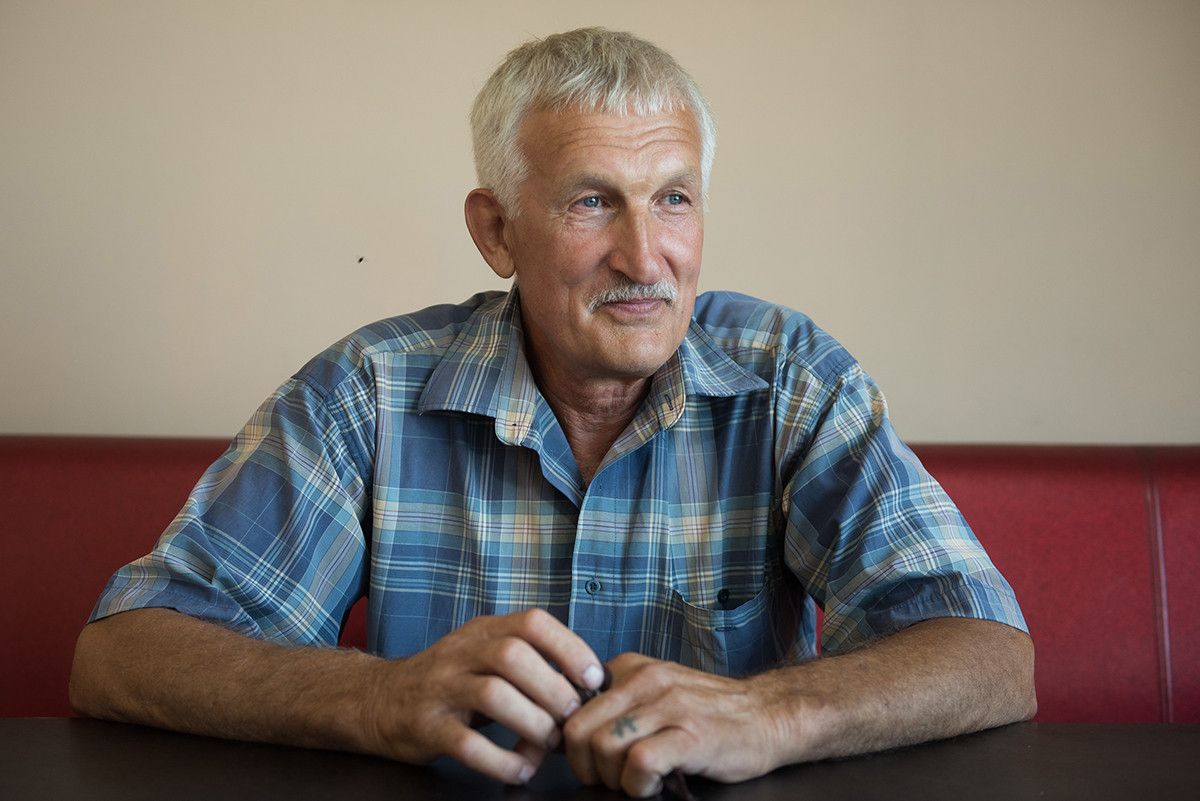
When he issued all the documents, he came to receive a quota at the Fisheries Agency of the Astrakhan region. I was given a quota for 24 tons, which was funny. I knew that our region until 1991 mined 300 thousand tons of fish. He began to figure out why there were no fish. The reason in one thing - Ilmen depends only on the flow of water, which comes at the time of the flood. Now water and fish simply cannot freely go into them.
At the same time, Ilmen also act as a reserve natural container, which supports the water level in the western part of the Volga delta. Together with the flood, the groundwater horizons are filled, which cool the Ilmen, prevent the growth of algae, reeds and free fish, spawning in these reservoirs.
And so it turns out: the weakening Volga cannot nourish Ilmen, and they cannot support her level. The area of Ilmena has already declined by 40% of the one that was before the construction of the Cascade of the hydroelectric power station. The prospects of the remaining 60%, taking into account the continuing shallowing of the Volga, look foggy.
“It is possible only to fight deserting by the method of restoring the natural water ducts,” Andros insists. - We need one thing: to launch full water, which is now restrained by hydraulic structures.
Evgeny Simonov emphasizes that from the point of view of power engineers, a full discharge of flood water is a direct loss of profit: to generate electricity, it is necessary to maintain the level of reservoirs. At the same time, he notes that today the Volga hydroelectric power stations play a relatively small role in the country's single energy system, and there would be a will, the loss of their capacities can be compensated.
The former head of the Ministry of Ecology, the supervisor of the Institute of Water Problems of the Russian Academy of Sciences Viktor Danilov-Danilian, also agree with such an assessment. In his opinion , if you reduce the intensity of the work of hydroelectric power stations in environmental interests, about 3-4 gigavatts of power will have to be compensated. “This is one good gas power plant. We have nowhere to put gas now, ”says the scientist.
“The damage from the loss of fish reserves, the degradation of pastures and problems with water supply many times exceeds the benefits of energy,” emphasizes Evgeny Simonov. - At the state level, it is necessary to recognize the priority of environmental populations over the commercial interests of individual industries, because this is a matter of strategic security. It is possible to technically increase the reset.
"The situation can become irreversible"
Every year, on the second Sunday of July, Astrakhan celebrates the Day of the Fisherman. People are pulling away to the Petrovskaya embankment of the Volga. They are photographed near installations with boats and networks. Each district of the Astrakhan region sets its own stand, where local performers act in national costumes and stand in line - people disassemble a free ear. The heat is exhausting, the soup is hot, but it does not stop anyone.
In 2023, the regional authorities said that they plan to extend the national program to combat desertification to the Astrakhan region, which provides for measures for the reclamation and watering of the zone of Western subfractal ilmen. It was developed by the employees of the Center for Combating deserting , and the implementation should begin in 2025. But so far there is no information about this.
“For real changes, system work and serious investments are needed,” says one of the Astrakhan ecologists. - The big problem is that all of us people love to consume and do not want to refuse anything.
At the bottom of the fisherman, the Enotaevsky district, in addition to the ear, gives out watermelons. Here are counters with products for sale. Among them are magnets with watermelons, fish and the letter Z. A concert is held at the Petrovsky fountain. People plunge their legs into warm water and suddenly lift the cameras of phones. The Governor of the Astrakhan Region Igor Babushkin, surrounded by security guards and journalists. On that day, he will say that the region of the region does everything possible to preserve the region’s fish wealth.
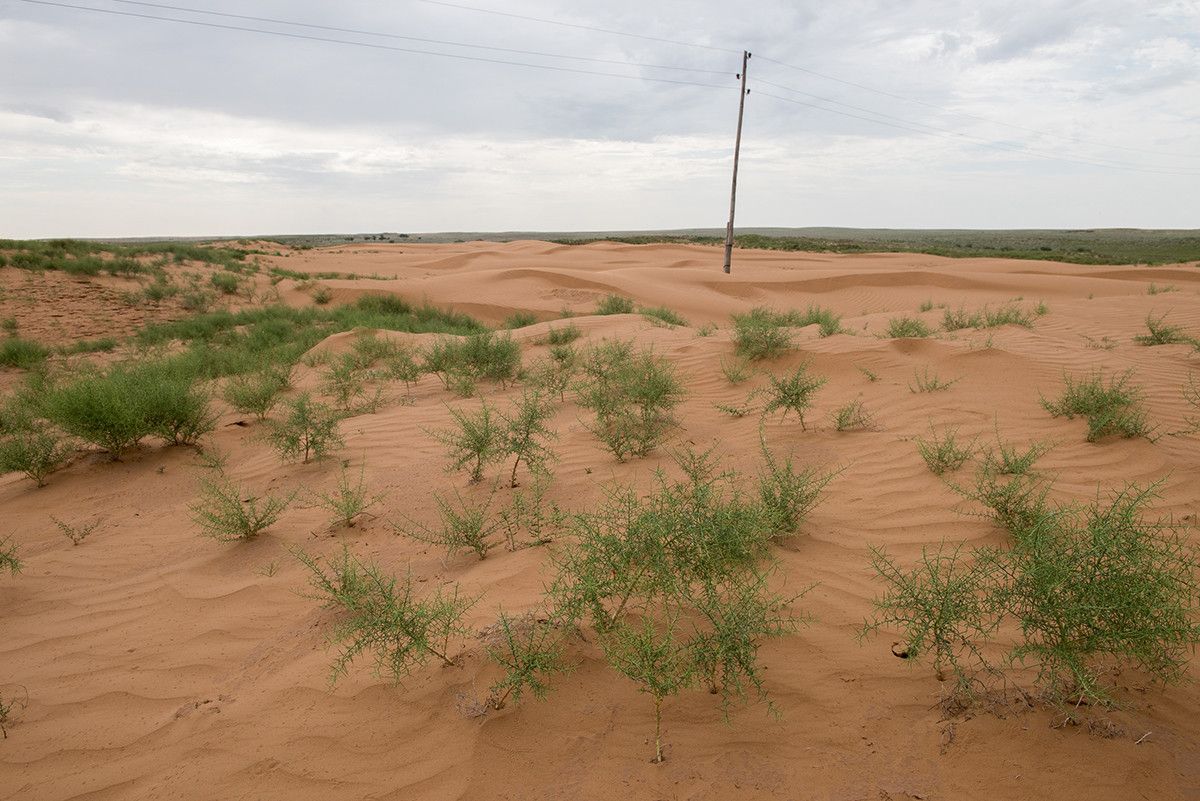
- Climate changes are such that the conditions of moisture will become worse. It is worth waiting for further degradation of the Volga floodplain and delta, ”says ecologist Stanislav Shinkarenko. - At the same time, the number of days with large wind speeds is growing significantly, so the situation can soon become irreversible. It is necessary to at least introduce the regulation of the number of livestock in accordance with the capacity of pastures and begin to carry out phytomeliorative measures.
At the very end of the exhibition row there is a tent of a mobile set of set of volunteers into the army. The words of the song are reported with the scene established for the holiday: “We will be alive, we will not die, we will overcome everything. Eh, parted wider, mother Russia. They say that men will be translated. But this enemies will definitely not wait for this. ”
"Cedar"