
Translated material
“Sex came to us, they will teach us”: how in Russia the 90s they talked about sex, and then shut up
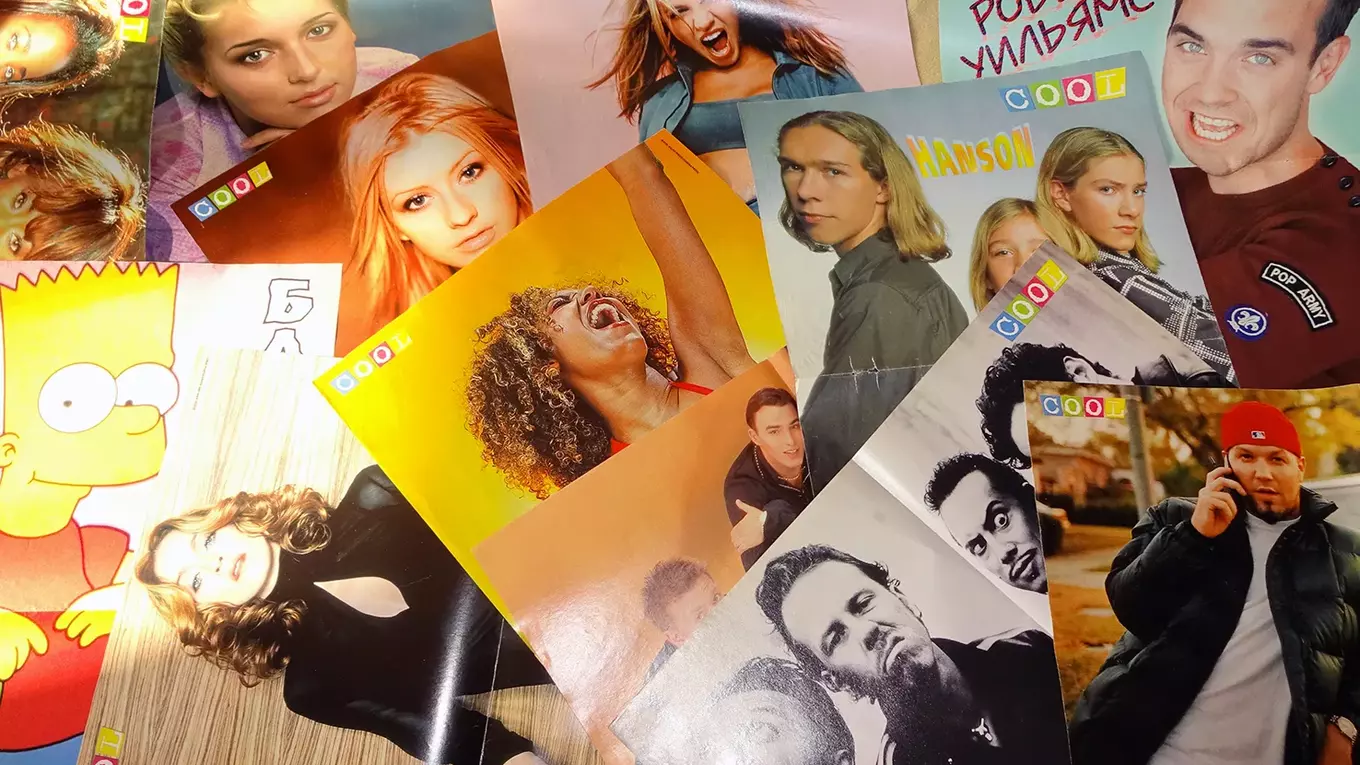
We discuss Cool magazines, AIDS-info and about it.
In the early 1990s, Russia spoke loudly about sex, it turned into a symbol of freedom and emancipation. Television, newspapers and magazines took up sexual enlightenment and explained to adolescents and adults what was silent about in Soviet times. Journalist Lola Romanova tells how the Russian media of the 1990s began a conversation about sex and sexuality and how it ended.
Perito opens a new set to the book club “After words” - for those who want to better understand how the world we live in.
This time two programs are open at once. The first invites Nigeria, Vietnam, the USA and South Korea - through the books of Chimanda Adchi and Viet Than Nguen. The second is stories from the Karibov, from Burma, India and Japan, which we will read along with Amitav Gosh, Yuko Tsushima and the mysterious third author.
The first group starts on September 15 , the second - September 29 . The number of places is limited. Details and recording - on the site.
Sex, politics and "AIDS-info"
“Here is the first Russian magazine for men. It is necessary today, because it is men who most of all need exemption from stressful aggressiveness and dissatisfaction. Their psychological freedom is the guarantee of the liberation of society from the dominant complexes of a distorted era, ” said Andrei, published in 1991 in the first issue of the magazine.
After perestroika, the Russian public space was rapidly changing: the Soviet narrative “Sex was not” was replaced by open conversations about erotica and sexual identity. The topic of sex has become not only a symbol of political emancipation, but also part of the wider processes of democratization of the country.
Sexual revolutions, as a rule, become the result of political and social upheavals. In the West, in the late 1960s, they took place against the backdrop of massive student protests. It was a time when the previous prohibitions were called into question: on premarital relations, the use of contraception, homosexuality and an open expression of female sexuality. In Russia, the politicization of sexuality did not occur . On the contrary, politics itself was sexualized.
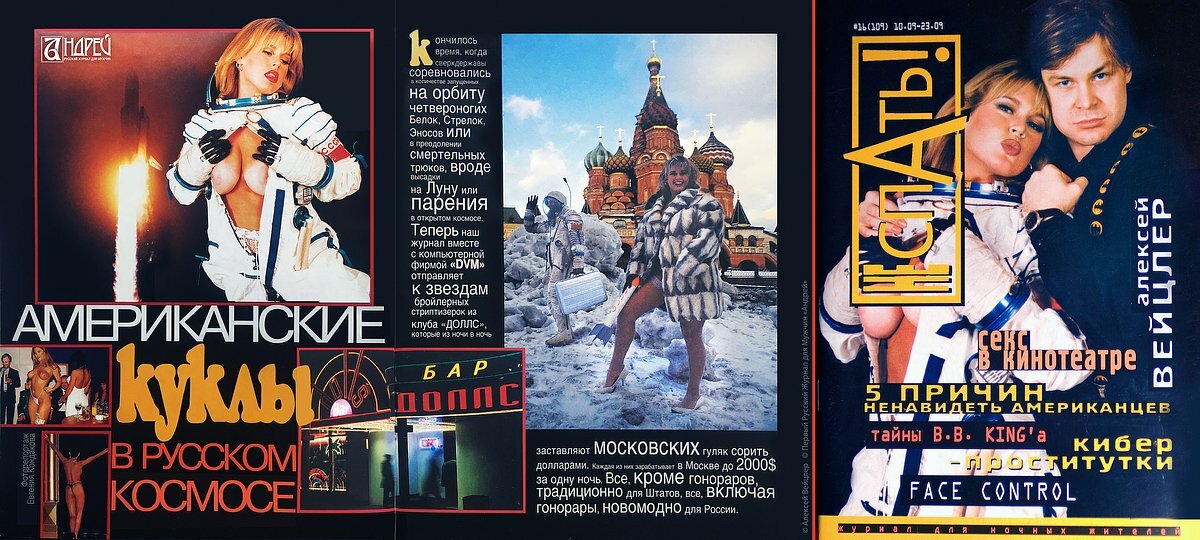
 Magazine "Andrey" Ed_glezin / Livejournal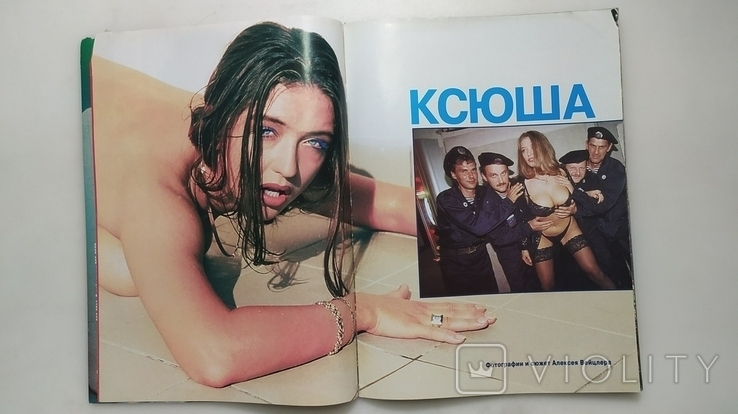
Masturbation has become a political metaphor, the prelude-a parody of socio-political life. In one of the issues of the magazine "Mahaon" you can find a color caricature in which the politician Anatoly Chubais whips a whip blonde with a two -headed eagle tattoo and a ribbon with a Russian tricolor. Having gritted her teeth, she turns her back to the viewer, and hundred -dollar bills pour from her vagina with the inscription Xerox.
Television did not lag behind the printed publications. Sergei Moskvin, the creator of the Show Naked Pravda, said that he wanted to show a light parody of current Russian events. According to his plan, the frames of a undressing woman who talks about serious news should have caused the effect of absurdity.
Through the prism of sex, not only politics was considered, but also the whole public life. So it was represented by the most popular erotic newspaper in the country of AIDS-Info, which was originally conceived as a popular medical manual for the prevention of sexually transmitted diseases. But after the collapse of the USSR, according to the professor of Russianism and the Slavicism of New York University, Eliot Borenstein , the newspaper turned into a monthly advertisement for sex as life. Photos of naked bodies were combined in it with an endless stream of articles about sex and beauty, sex and work, sex and humor, sex and money, sex and crimes. The brightest headlines of the publication playfully make it clear that life can only be determined through sex. For a long time in the newspaper there was a coito ergo sum section - "I go, therefore, exist."
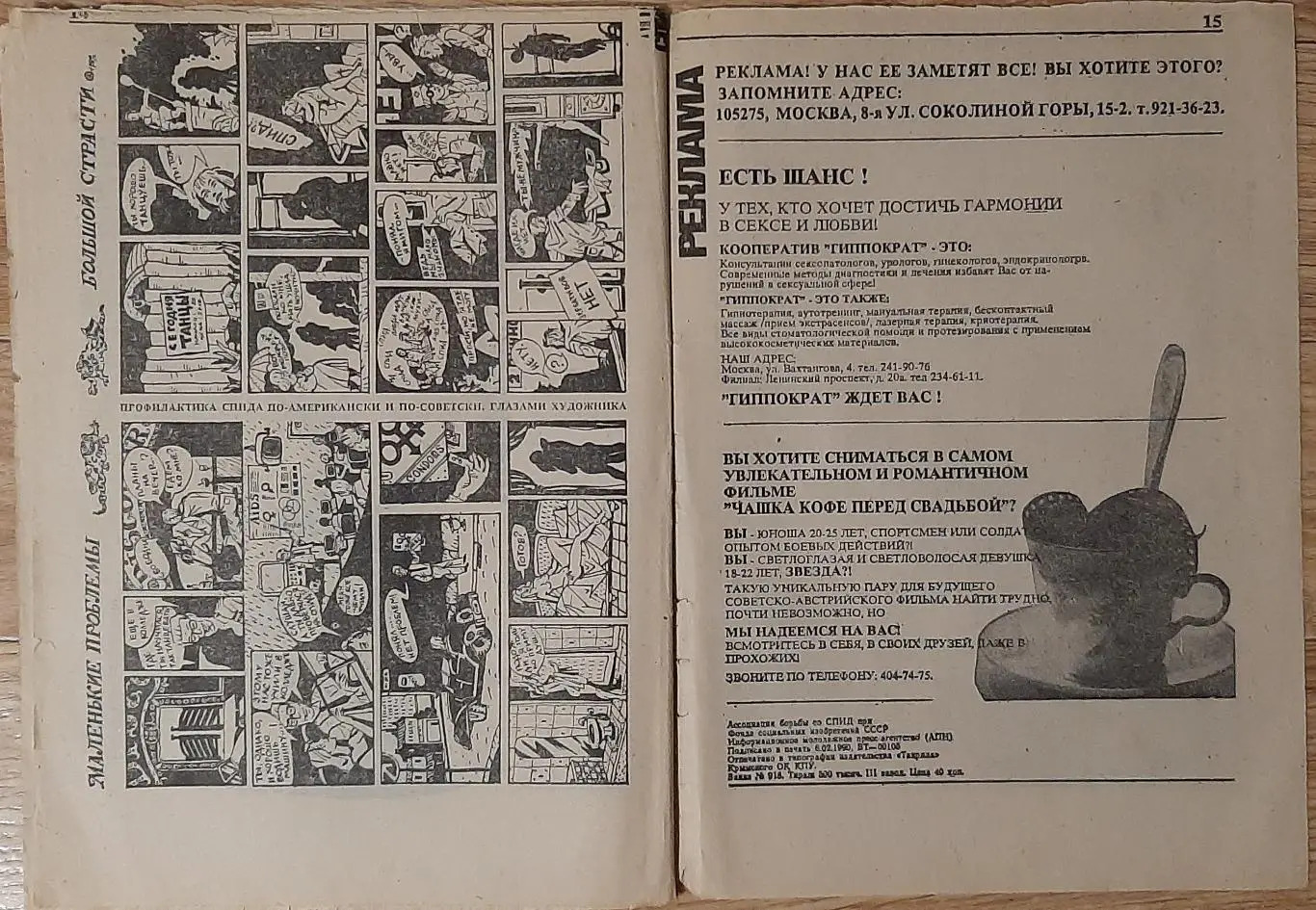
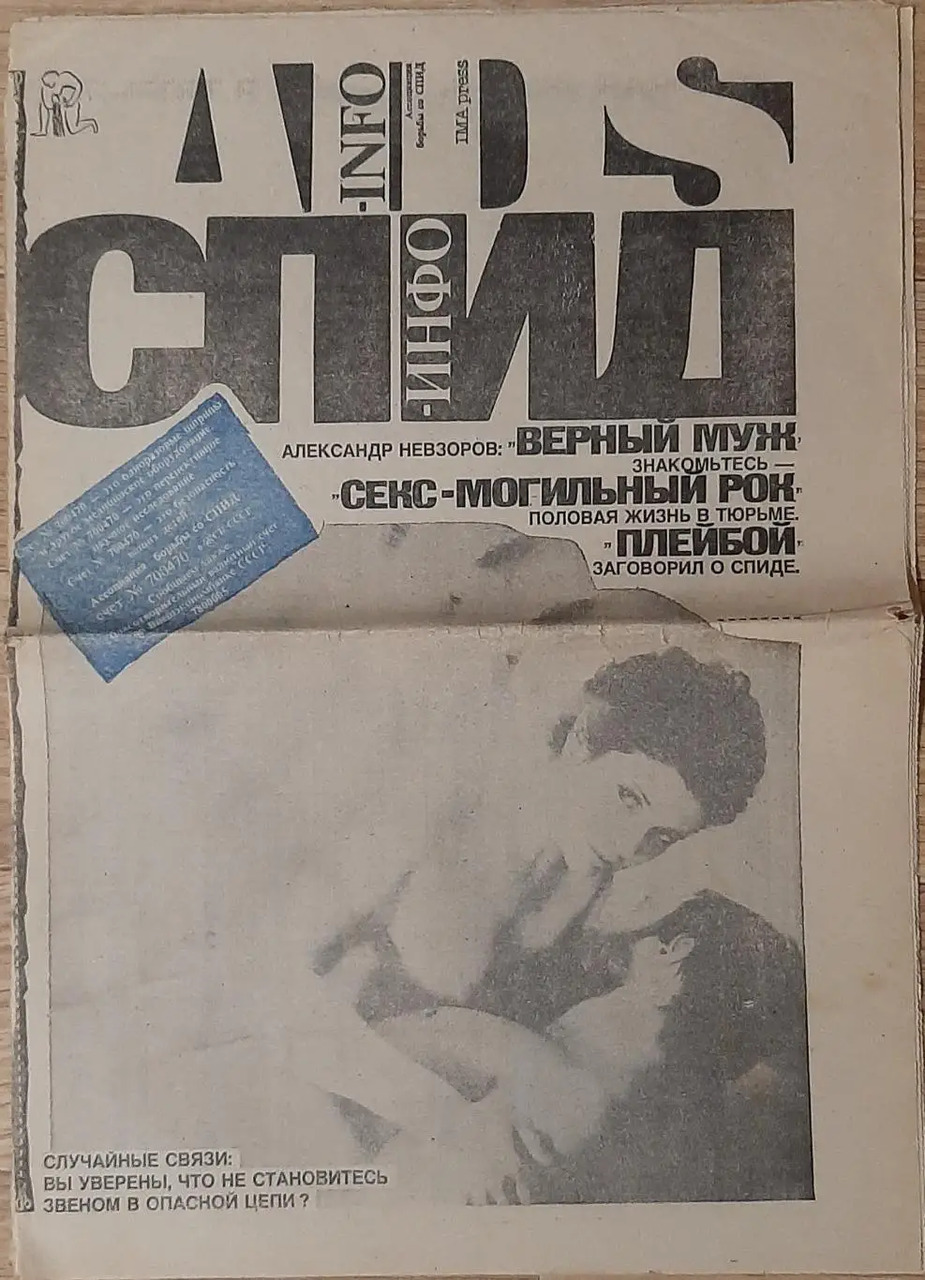
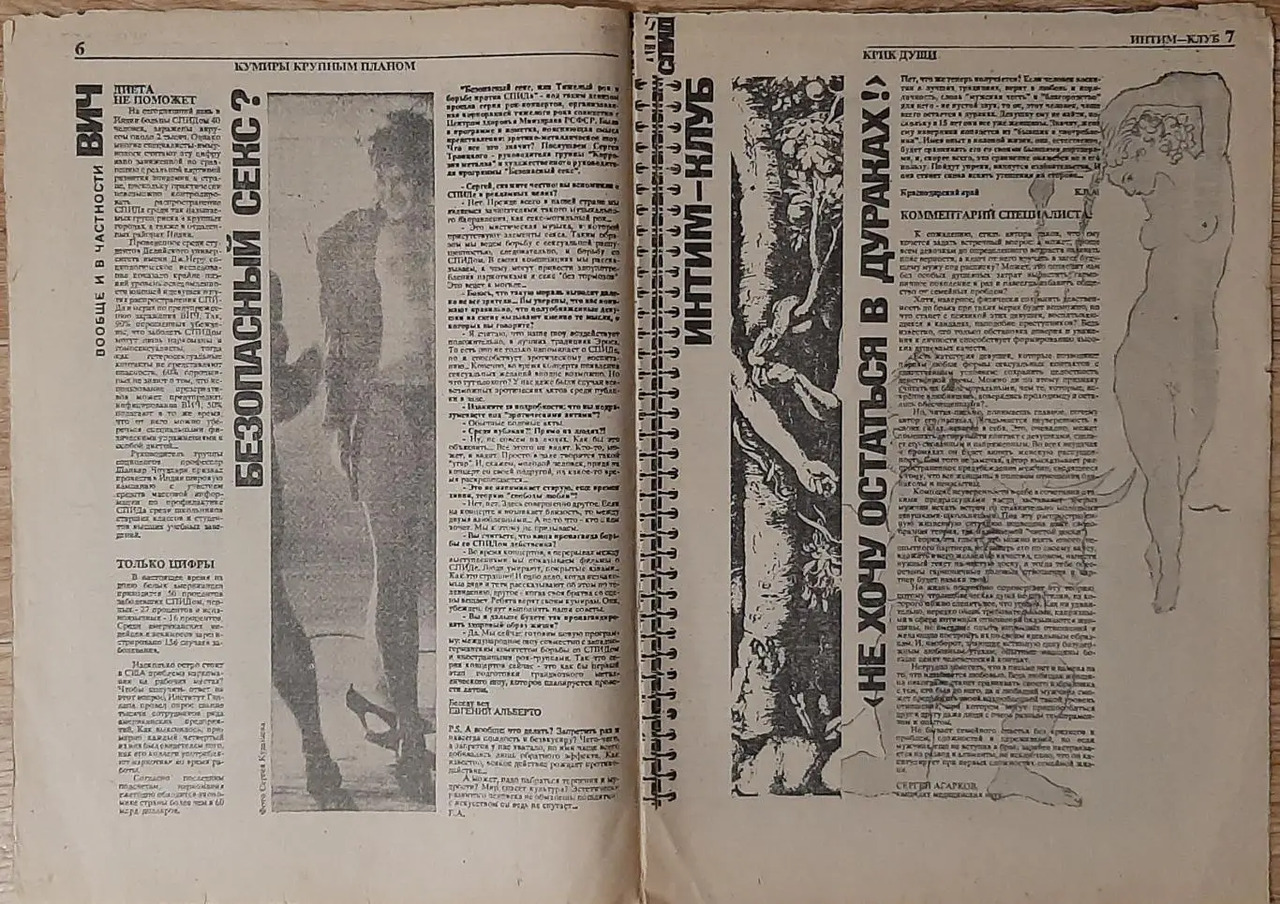
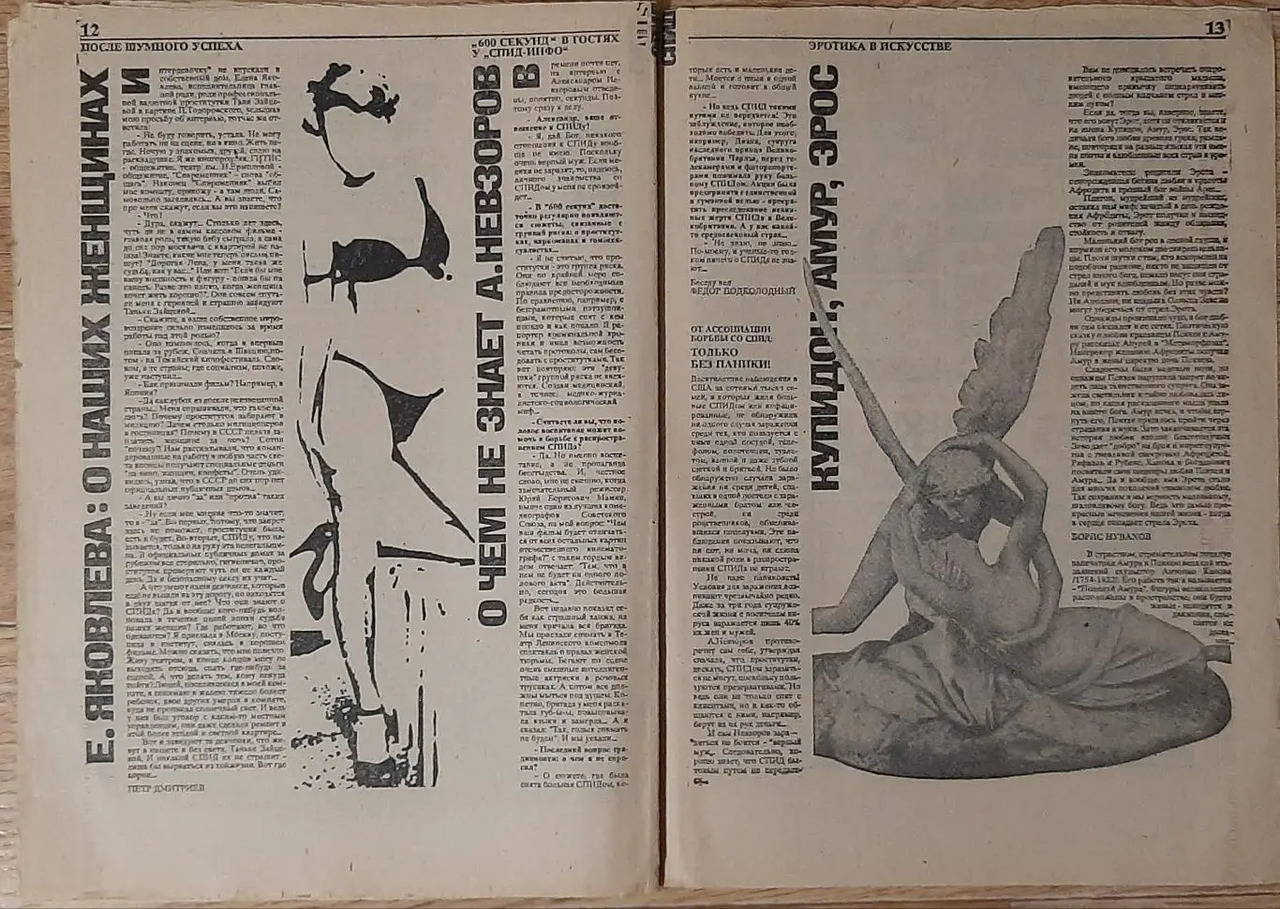
Hedonistic talk about sex, as the sociologist Anna Temkin calls it, filled the life of yesterday’s Soviet citizen, erotic newspapers were sold in underground crossings, metro, in squares, in sleeping areas. Most often they broadcast and supported discriminatory phenomena. The female body in them was objectified and sexualized, there were practically no male naked models in magazines. Against this background, there were not enough thoughtful conversations about sex, aimed not at excitement, but at education. The Russians were still embarrassed to talk about him.
Sex and personal choice
Discomfort when discussing sex was especially acute in the letters of parents in the editorial office of teenage magazines. “Two mothers write to you who have two twelve girls grow. <...> Of course, we are not against the magazine as a whole, therefore, when buying your daughters your magazine, we try to overlook the “School of Love”, and if it goes beyond the scope of decency, we tear these pages. Moreover, sometimes we see that we ourselves do not know what you are writing about: petting, dildo and so on. Therefore, we believe that our daughters do not need it. <...> In our culture, it is not customary to talk about sexual relations as you do ” - wrote to the editorial office of Cool magazine after almost 20 drawings with different postures for sex were published in it.
Cool, despite sometimes frank photos and controversial topics of materials, really tried to develop sex culture. Along with posters and articles about celebrities in the magazine, there were several headings on sex at once. One of them is the heading “School of Love” mentioned in a dissatisfied parental letter, in which the editors tried to explain to adolescents what sex, acceptance of themselves and planning sexual contacts. There was also the “Intimate conversation” section, in which adolescents asked for advice in relations or asked the editorial office questions about reproductive health. According to a 1995 survey , 70% of 16-19-year-old Russians drew information about sex from newspapers and magazines.
For cognitive articles about sex, the magazine regularly thanked the magazine; The letters of adolescents, as well as the critical response of parents, were published from the release to the issue at the School of Love. “Before I began to read your magazine, my attitude to sex was very frivolous. I didn’t even think that it was necessary to protect myself and generally take care of it. I was quite satisfied if my boyfriend said that he had time to pull out, ” said 17-year-old Irina from Moscow.
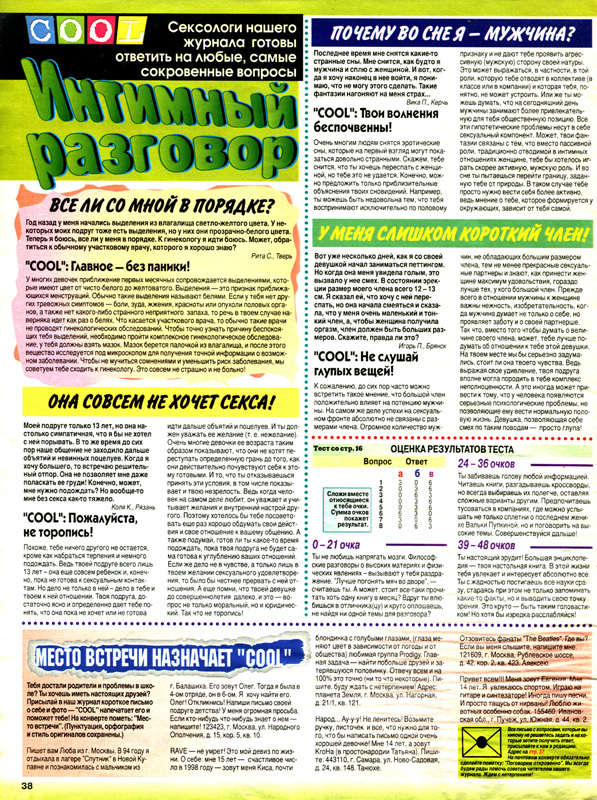
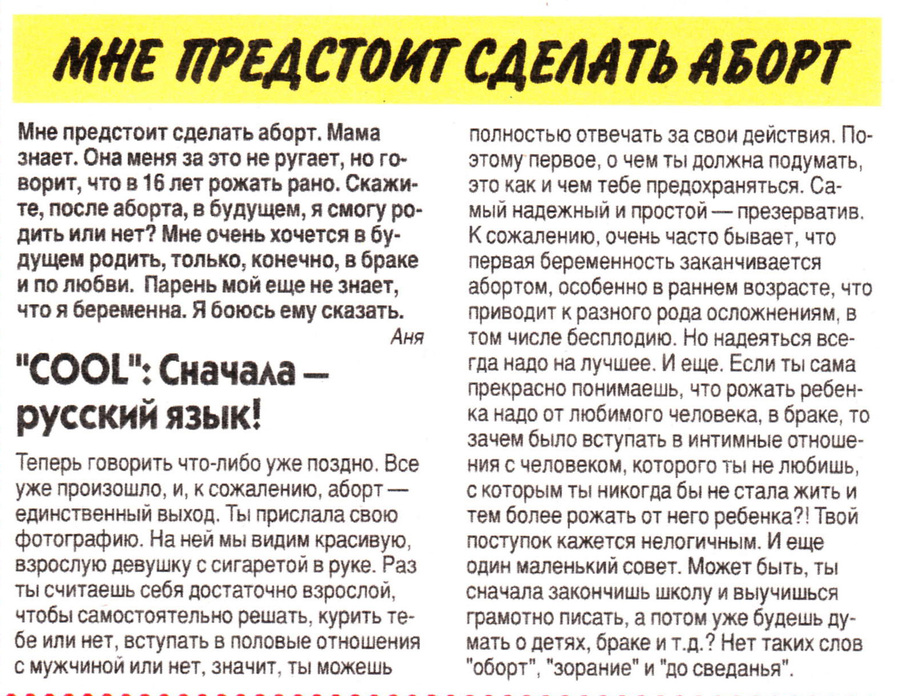
Youth magazines not only talked about sex as a phenomenon, but also tried to influence the formation of the sexual identity of young readers. Doctor of Sociological Sciences Elena Omelchenko describes how magazines occupied their positions in the cultural field: from “family sex”, setting themselves the goal of the birth of children, to “partnership”, from “traditional” to “shocking”. Teenage media offered different views on sex and promoted the idea that sexuality is a personal choice and space for self -expression and self -determination.
The ideas about the sexual “normality” began to eradicate with respect to the older generation, the historian Julia Gradskova notes . The senior generation was told about sex in the cognitive way in the program with the euphemical title “About this”. Its participants discussed male prostitution, sex people with disabilities, frigidity. The sexologist commented on each topic.
Liberalization of private and intimate life
In the late 1990s, the debate of supporters and opponents of sexual education erupted in Russian newspapers. The reason for them was financial assistance received by the Ministry of Education in 1996 from the UN population. The money was allocated to the pilot program of sex education courses for students of the seventh - ninth grades. Problems immediately began with her: the project was entrusted to specialists without experience working with schoolchildren, and the program did not take into account the age differences in adolescents.
The press diverged in the views on sexual education. In some editions, for example, “Moscow Komsomolets”, “Izvestia” and “Kommersant”, those who believed that a “civilized” society could not do without sex interference performed. In the Rossiyskaya Gazeta, on the contrary, sexual education contradicts the “Orthodox culture”. The Russian Orthodox Church joined the criticism of the program on the pages of newspapers.
One way or another, there were children children. Some were sure that adolescents are already having sex and appropriate education would reduce the risks of unwanted pregnancy and sexually transmitted diseases. Opponents of the project claimed that the conversation about sex only spoils the children. The headlines of articles hinted at the absurdity of the project: “Things in the school schedule”, “Dolls or condom?”, “Sex came to us, they will teach us.”
Sexologist Igor Kon notes that the criticism of the project in the media initiated anti -wanderings: the Sexual Education program was accepted for the UNESCO project, which will necessarily spread throughout the country.
Youth magazines changed their policy and began to write about sex more restrained. The “School of Love” was removed from Cool, and instead of it, editors began to write about platonic relations. The topic of sex in the heading of questions-answers shared a place with the problems of friendship and relations with parents. A similar story happened with Cool Girl magazine, which already wrote about sex in a more accurate format than Cool.
Frank erotic adult magazines continued to exit in the 2000s. In St. Petersburg, for example, the magazine “Real Wives of our readers” was published with obscene photos and clickbeat in the first lane “Check if your wife is there”. On television, the program “Sex with Anfisa Chekhova” appeared, in which with humor and euphemisms they talked about sex and unusual sexual practices. In the spirit of the decade, the program was rather glamorous than cognitive.
The historian Rustam Alexander writes that the period from the 1990s to the 2010s can be considered an era of liberalization of private and intimate life.
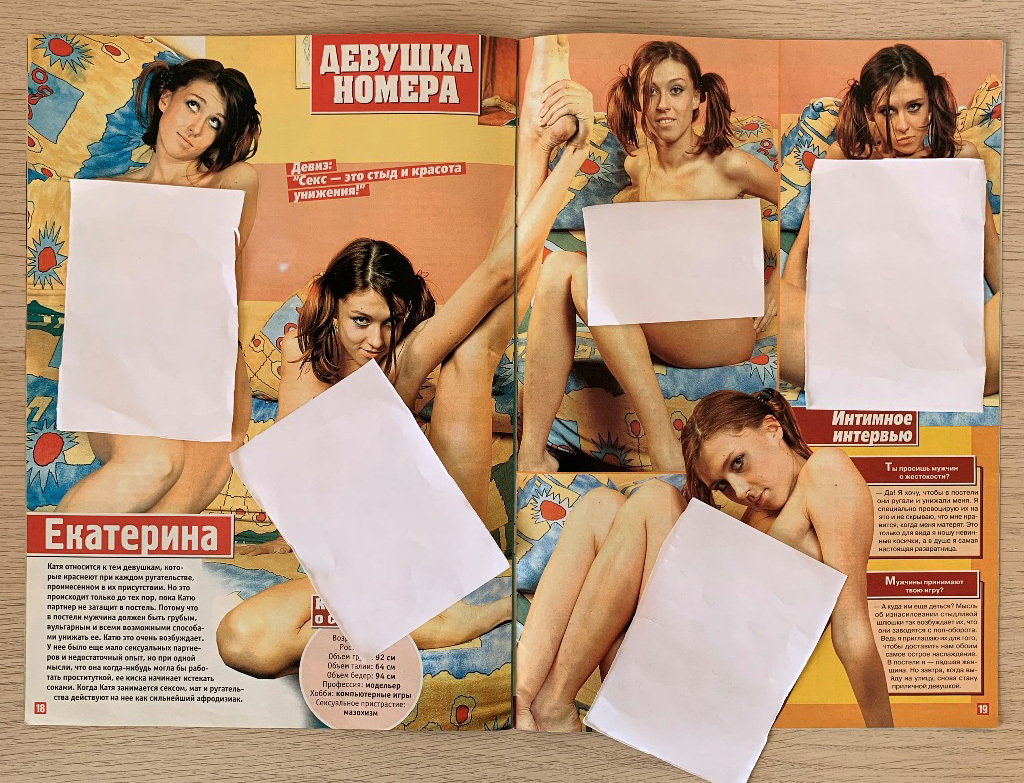
One way or another, all the 1990s and 2000s, the Russian government did not show much interest in the control of the sexual life of Russians, this twentieth anniversary can be considered an era of liberalization of private and intimate life. Yes, there were discussions, and sometimes sharp. Conservative spectators periodically demanded to close this or that too frank program and were indignant that they show a lot of debauchery on TV. But all this remained at the level of conversations, and the answer to the claims came down to the simple thesis "do not like - do not look."
Rustam Alexander. “Sex was. Intimate life of the Soviet Union "
Conservative mobilization
The situation began to change in the 2010s, when Russian politicians actively started talking about "family values". Researchers call this time conservative mobilization. In 2012, an age -related classification of information products was introduced . In 2013, the “Concept of Family Policy until 2025” was adopted , aimed at developing “traditional family values for Russia”. In the same year, a law appeared on the prohibition of "propaganda of non -traditional sexual relations."
The dispute that began in the 1990s about the need for sexual education in the media continued, but began to gain a strong state, national frame-sociologist Julia Kuzmina draws attention. Medical discourse, previously focused on health issues, gradually fused with the pronalist interests of the state. Political and church institutions began to fight for power over adolescence sexuality.
The results of the Kuzmina study are confirmed by other scientists. The study of the sociologists of NARTOVA NARTOVA and Frances Stella shows that since the early 2000s in Russia, sexuality and reproductive rights have been politicized more and more in the nationalist agenda. Discourses about national interests, identity and patriotism promote sexual conservatism.
The reaction to conservative mobilization in Russia was the emergence of a new tone in the 2010s in a conversation about sex, more open, with an emphasis on equality and respect for different experience. This approach was practiced by metropolitan online media like "Poster" and Wonderzine. Gradually, the theme of sexword went into social networks, and the blogger Tatyana Nikonova, Maria Chesnokova and Sasha Kazantseva became driving forces. Although most noticeable sex blogs are women, there are men's channels, the authors of which write about sex from a male perspective.
The discourse of sex did not disappear from the traditional media sex, but was very transformed. On TV, he is mentioned allegorically, often in conversations about the family, for example, in the program “Male and Female”, or in conversations about health in the program “Live great!” The conversation about sexuality is framed by morality and morality. In a similar way, it is customary to talk about the abstract “rotting West”, where sexual “perversions” and rejection of traditional gender roles serve as symptoms of cultural and moral degradation.
The Russian authorities finally managed to grow morality and sexuality in 2023 after the "naked party" of the blogger and actress Anastasia Ivleeva. The media, politicians and various public figures accused its participants of immorality. To someone, to atone for the “public”, it was enough to apologize in the telegram channel, for someone, for example, Philip Kirkorov, had to go with a concert to the front, and the young rapper Vacio emigrated under the threat of a criminal case. Other practices that did not fit into the “moral and ethical norms” were also hit: sex and BDSM-slats, swinger-paths, erotic acquaintances, as well as all LGBT+matters, including DREG shows. Increasingly, security forces and right groupsare held in nightclubs raids in search of “perverts” and LGBT+-Person.
In the media, they now carefully write about heterosexual contacts, not forgetting to add that premarital sex can destroy families and that women in Russia were punished for it, and sex loser among minors was outlawed - both in education and in the media. In schools, adolescents are now talking about the dangers of condoms.