
Translated material
"This article is devoted to the principles of simplified text communication." Do not understand what it is about? This is OK! It is also difficult for many to understand laws and instructions
We tell you why a simple language is needed - and how it is developed in Russia
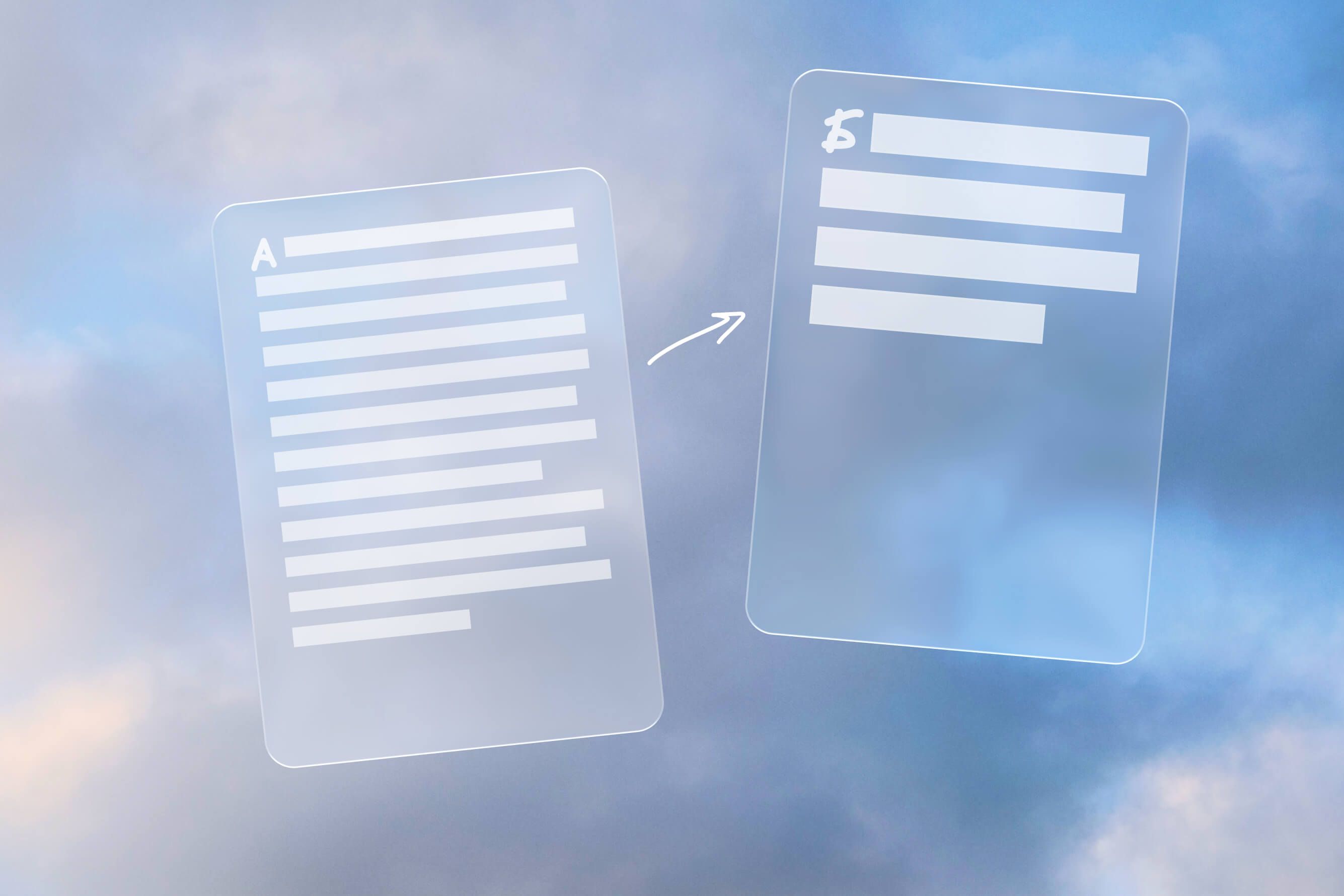
News, laws, instructions, recipes, contracts - texts surround us everywhere. Unfortunately, it can be difficult to understand. This applies to everyone: a tired teacher, newly made parents after a sleepless night, older people, foreigners, people with intellectual disorders. Many people come to terms with this or ask Chatgpt to explain the written language written (in the hope that AI will do this correctly). But in Russia and the world there is already a “simple language” - an adapted version of the standard language. In the United States, he is completely mandatory when writing laws. Journalists of the “coast” talked with people who develop a simple language in Russia, and discussed with them the problems that they face. "Medusa" publishes this text completely.
In order for the text in the "dental" language that you can translate it into a simple language or - to clear
More than 10 years ago in the wagons of the Moscow metro one could see a sticker with the following inscription:
Attention! With an intermittent indication of the red signal above the doorway, the landing in the car is finished.
Imagine that you read this inscription after a hard day, three glasses of wine or a sleepless night. Or imagine that it is read by a person with intellectual disorders or a first-class student who lives in Russia for only six months and managed to learn not so many words.
Fortunately, over time, this inscription turned into “Red flashes - landing is prohibited. A blinking signal means that the door is about to close. Wait for the next train: it will come in a couple of minutes. ” So much more understandable, and so it could be done from the very beginning if the creators of the inscription knew about the existence of a simple language.
A simple language (Plain Language) is a term . It means that the information is presented in such a way that it becomes accessible to people who are difficult to understand the standard text. The reason for misunderstanding can be anything: from intellectual disorders to fatigue. The Chairman of the Board of the Association of Translation Teachers Emma Kairov explains to the “shore”: the audience of a simple language is absolutely everything, “after all, no one can be an expert in absolutely any field.” For example, if you come to the doctor and he begins to pour terms, then the explanation in a simple language would be very useful - even if you have three higher formations and two dissertations behind your shoulders (but just in physics, not medicine).
A simple language has many other advantages. “The modern pace of life and the amount of information that we encounter every day often do not allow us to read the big text quite thoughtfully, analyze it, draw conclusions,” says Lada Talyzina, founder of the Bureau of H “Bureau, ” a specialist in working with mental characteristics. - For this reason, now each of us, in fact, is the target audience of a simple language. Without focused attention at some points of instructions, ads, without clear and concise formulations that a simple language requires, it is difficult to imagine how we would continue to consume different necessary content in the same amount. ”
There is another independent term- “clear language” , or Easy-to-rele. This is also an adapted version of the standard language, but it is needed by those who are especially difficult to read and understand what has been written. A clear language is developed for people with intellectual disorders, people with dementia, deaf , foreigners who do not fully speak the country's language.
An example of a translation
The Foundation "Syndrome of Love" has such an example of translation into a clear language.
Standard language
Book exchange (bookcrow shelf) is a place covered with bad weather, where you can bring read books and/or pick up the book lying there.
Clear language
What is bookcrossing?
Bookcrossing is a book exchange. Bookcrossing shelf is a shelf for book exchange.
Books on the shelf are free. This means that you do not need to pay for these books.
Books on the shelf have already read other people. Take a book that you liked from the shelf. Or put your book on the shelf, which you have already read.
In Russia, according to Lada Talyzina, there is a mixture of these two terms, simple and clear languages. But it is easy to remember: a simple language is something between clear and standard languages.
A clear language is directly related to the issue of survival and quality of life, notes Emma Kairov. People for whom he is intended, even by making efforts, will not be able to understand the doctor’s appointments, the terms of the contract or the instructions issued at work. “There is too much information around us that it is important to know in order to feel safe and manage your life,” says Lada Talyzina. - And if a person does not have access to her: he can read it, but it will not be clear to him, then he has much less this independence. It is important that he himself receives information from first-hand, he could understand her, and not someone else handed it to him and made a decision for him. Therefore, first of all, a clear language allows a person to be more independent and make conscious decisions. ”
Against this background, a simple language may not seem so important and necessary, although this is not at all like that: “If a person finds some terrible diagnosis, he will somehow figure it out [with a doctor’s prescription], because his life depends on it,” Emma Kairov notes. - But when it comes to an agreement that needs to be signed to receive a loan, people do not try to read, but automatically sign. People are used to the fact that they are not clear to them all their lives. A simple language is needed for the state, business and other organizations to communicate with people so that everyone understands everything. ”
Why laws and other important documents are written in such a complex language
To know
Experts have many versions why this is happening.
Emma Kairova believes that in Russia the text is perceived as serious if it is written in a complex language, and legal documents are written by lawyers for lawyers: “At the same time, no one cares that there is some other person in this story.”
The fact that no one cares about the understandability of the text is also noted by researchers who aimed at the complexity of legal texts .
One of these works says that the complexity of the text can indirectly indicate the motives of the author. For example:
- desire to show your authority
- Creation of double meanings
- an attempt to hide the true intentions
Maria Bolshakova, chairman of the Communications, Information Policy and Openness of the Public Chamber of the Moscow Region, believes that an attempt to relieve themselves of responsibility is worth a suffering collection in official documents.
Philologist, editor of the Gramota.ru portal Andrei Gorshkov also believes that the chancellery-bureaucratic style of speech is an effective technique of manipulation:
With it, you can make the meaning of the statement less clear, distract the attention of the addressee from the essence. For example, instead of a simple and understandable solution, to reduce employees, you can report the implementation of measures to optimize personnel potential , call the texts in price as a price adjustment , and a decrease in salary - revising the remuneration system .
Natalya Oganova calls two reasons for the Associate Professor of the Department of Legal Regulation of the Economic Activities of the Financial University under the government.
- Officials, accepting confusing legal acts, lobby for the interests of certain groups.
- The level of specialists who write legal acts are low: "Often this is entrusted to yesterday's graduates without experience in the legal sphere."
According to Emma Kairova, such the complexity of documents is due to the fact that no one in adulthood is trained to write on professional topics. Although experts in almost all areas generate some texts. There are exceptions: for example, the Accounts Chamber published a training course for officials about how to write in an understandable language.
Translator into simple and clear languages is a separate profession
In order to write in a simple or clear language at once or translate texts on them, you need to have a certain type of thinking and skills. The easiest way to learn this is people who are already working as translators.
What is complicated?
To understand this, you can look at two examples from a scientific article . The authors took excerpts in a clear language from the site "The purpose of sustainable development in Belarus":
Example No. 1
Research is the study of the properties of nature, which are then used in production and in agriculture. For example, scientists study the property of a plant or animal behavior. Scientists come up with how to add this property to the mechanism or to the machine.
Example No. 2
Crises are wars, natural disasters, economic shocks. During economic shocks, the release of goods decreases, firms are closed, unemployment is growing and the standard of living of the population is reduced.
“Examples No. 1 and 2 reflect an attempt to translate the text to Yai [a clear language] based on a set of rules,” the authors of the article write. - Formally, all the norms are observed: the sentences are relatively short, simple, unambiguous words, but not to everyone who reads these texts, it is clear what the phrase “scientists add the property of nature to the mechanism or machine”, what is “economic shocks” or “standard of living”, which is reduced. Therefore, apparently, such an explanation and “adaptation” are hardly clear to the target audience of the site version on Yay - people with cognitive disorders. ”
The most difficult thing is to translate into a clear tongue. The fact is that a simple language has a wide audience: the text in a simple language will be clear and pleasant to read as a person who has hardly graduated from nine classes and a professor. The clear language has a heterogeneous audience: people with different intellectual disorders, foreigners who own Russian poorly - for each of them translated texts will differ. That is, it is almost impossible to create a text in a clear language that will be suitable for absolutely everyone, because each of the categories has different needs.
Translations into a clear language are engaged in professional translators - among them, in particular, the Association of Translation Teachers. So are the employees of non -profit organizations (NPOs) who work with those for whom they translate the text. In Russia, these are mainly NGOs that help people with intellectual disorders: “Best Friends” , “Our Sunny World” , “Love Syndrome” .
After the text is translated, it is shown to a group of appraisers - the target audience. Then the text is corresponded taking into account their wishes. According to Lada Talyzina, any person who has undergone a certain training and briefing to understand what he is doing can become an appraiser. The appraiser works in tandem with someone who created the text - together they are looking for options for how to make the text more understandable. Typically, two or three people are required to evaluate the text.
Representatives of the Association of Translation Teachers do not always turn to appraisers for help. As the President of the Association Natalya Nechaeva explained to the “shore”, there are texts that are addressed to an unpredictable and widest set of target groups.
The verification of such texts using appraisers is more like a fraud of evaluation results than a real evaluation of accessibility - other tools and approaches are needed here. Even inside one target group, different people will be differently immersed in the topic and understand it differently. And if the appraiser gives a similar type of instruction, he will study with each new reading and will cease to be a “clean recipient”, which will not be familiar with such a communicative situation. Therefore, we insist that the assessment is an important stage, but it must be approached wisely.
How to translate
This is what helps to make the text simple :
- common words (no terms and jargon)
- There is no passive collateral
- There are no strung cases
- There is no double denial
- Minimum abbreviations
- All words make sense and you cannot do without them
- Lists instead of long offers
- Short sentences
- subject, predicate and addition are nearby
- Important information is at the beginning of the paragraph
- One paragraph is dedicated to one topic
- The paragraphs are short (from three to eight sentences, no more than 250 words)
- For difficult cases, there are examples
There are several services that allow you to check how simple the text (but you should not fully rely on this assessment). Among them: “Glavred β” , “Text.ru” , “simple language” - they show whether there are chancellery, stamps, “water”.
Features of a clear language are spelled out in the leadership from InClow Europe. In particular, in such a text there should be short and simple words. And it cannot be in it:
- introductory words
- Metaphor
- long words
- abbreviations
- special vocabulary
- terms
- borrowings
- words in figurative meaning
Not only formulations help to make written text more accessible, but also the appearance :
- Simple font with cuttings (for example, Times New Roman)
- For headlines-a font without cuttings, but in one text there should be no more than two or three fonts
- Important words and individual sentences are highlighted in italics or bold font (underlining or capital letters for this will not work)
- The text is aligned on the left edge
- Large distance between the lines
- Clear illustrations, suitable for meaning, icons
Laws and official documents can be translated into a clear or simple language. In some countries, this is necessarily
In certain states, clear and simple languages are introduced at the legislative level. And somewhere these are rather public initiatives.
Since 2010, in the United States, federal authorities are required to draw up documents in a simple language. “The government created by the people and for the people should be understood by the people,” the site says that illuminates the work of state authorities.
Since 2022, a similar law has been operating in Norway. In New Zealand -since 2023. There are other countries that in this way have changed their approach to creating laws and texts on state sites.
A clear tongue also becomes part of the usual communication. So, in 2010, Inclusion Europe created a standard of texts in a clear language. Since then, it has been translated into many European languages.
There are still specialized media with materials in a clear language - for example:
- Easy News publication in the UK
- European magazine Europe for us
- KLARTEXT radio in Sweden
- LL-Bladet publication in Finland
In Germany, according to the law , the sites of state bodies must be translated into a clear language.
Compared to other post -Soviet countries in Belarus, things are best with a clear language. The Law “On the Rights of Disabled and Social Integration” contains the concept of “clear language” and its explanation. And the plans for its development are included in the official action plan. Now in Belarus, laws, banking and legal documents, as well as instructions are translated into a clear language.
In Russia, clear and simple languages can be found in unexpected places: for example, at the "State Services" and in the Tretyakov Gallery
In 1767, Catherine II issued a decree in which the following stated: "The laws should be written in simple language." Now this rule, as you can see, is not observed. But in 2012, Russia ratified the UN Convention on the rights of disabled people , that is, he pledged to follow it. In particular, the Convention states that people with disabilities should have access to information. But there are still no systemic changes-there are only attempts by individual authorities to improve the situation.
- The Ministry of Education recommended that the employees of the guardianship and trusteeship bodies use the rules of a simple language in communicating with people who have intellectual violations. It is interesting that specific recommendations are taken from the publication of Belarusian authors.
- In 2023, the Minister of Defense ordered the employees of his department to comply with certain rules when they draw up official documents: the language should be clear and simple, phrases - brief and easily perceived. It is better to avoid complex sentences, as well as a large number of involved and participles. “The wording used in the draft legal act should not allow various interpretations.”
In fact, a simple language is mentioned in the Russian GOST (although it is not called directly there). This document says that if the information is not available for understanding, you need to provide its adapted version or auxiliary materials. Only now the instructions, how exactly this needs to be done, no.
The Chairman of the Board of the Association of Translation Teachers, Emma Kairov, believes that in Russia a simple language is developed by Maxim Ilyakhov, author of the book “Write, Reduce”. Although he does not call it “simple language”, what he does, according to Kairova, is suitable for this definition. For example, the editorial policy of the "State Services" is based on the principles that Ilyakhov adheres to. Now the service - along with the sites of “Russian Post”, “Your Control”, “Culture.rf” - is among the most convenient for understanding.
As for the clear language, it is simply mentioned in one of the GOSTs. Its development in Russia is mainly engaged in the lower initiatives - non -profit organizations (NPOs), who work with people with intellectual disorders. Так, например, появился сайт для людей с синдромом Дауна: частично это социальная сеть, но там есть и полезные статьи на бытовые темы. А некоммерческая организация «Простые вещи» готовит к выпуску «Простую книгу с простыми рецептами» .
Сегодня информацию на ясном языке можно встретить и в некоторых музеях, а также на сайтах банков и мобильных операторов.
«Когда все музеи обязали стать доступными, чтобы любой человек мог прийти туда и чувствовать себя в своей тарелке, многие взяли путь на инклюзивность, — вспоминает специалист по работе с людьми с ментальными особенностями, основательница проекта „Бюро Ч“ Лада Талызина. — Каждый выбирал для себя аудитории, с которыми им было легче работать: адаптировали пандусы, привлекали переводчиков на русский жестовый язык. Сейчас многие музеи уже сделали все возможное, что хотели попробовать, и добрались до ясного языка».
Так, в Доме культуры «ГЭС-2» рядом с кураторским текстом отдельно размещают информацию на ясном языке — ее вычитывают два тестировщика от фонда «Лучшие друзья», которые получают за это деньги. Эти же материалы доступны на сайте «ГЭС-2». А еще в 2024 году музей проводил двухмесячную лабораторию для тех, кто хотел научиться писать на ясном языке.
В Третьяковской галерее сделали две выставки на ясном языке: «Борис Кустодиев» и «Передвижники» (уже завершена). А самарский филиал галереи вместе с фондом «Антон тут рядом» выпустил книгу «Азбука конструктивизма на ясном языке», посвященную авангардному направлению в искусстве 1910–1930-х годов. Еще там можно сходить на экскурсии на ясном языке.
Такие экскурсии есть и в музеях Санкт-Петербурга: в Росфото, Русском музее, Музее железных дорог России и арт-центре «Пушкинская-10».
Крупные компании вроде «Сбера» и «Билайна» тоже внедряют ясный язык в свою работу. «Сбер» сделал руководство для организаций по простому и ясному языкам и опубликовал у себя на сайте инструкции для разных ситуаций на ясном языке (например, как открыть вклад). «Билайн» перевел на ясный язык основные договоры и информацию о том, как получить услуги компании.
В 2023 году Международная организация стандартизации опубликовала стандарт по простому языку. Его используют во многих странах мира, но на русском его пока нет: Ассоциация преподавателей перевода только готовит такую версию. Параллельно она работает над двумя ГОСТами — по ясному и простому языкам.
«Наша цель — сделать так, чтобы, когда появилась методичка, она не превратилась в те самые пандусы в стену, — объясняет „Берегу“ президент ассоциации Наталья Нечаева. — Когда к нам обращаются за переводами, мы часто просим организации идти выше и менять структуру, чтобы это действительно работало. Важно не чтобы у организации появился глоссарий, от этого доступности не прибавится. Это будет пандус, который будет стоять в шкафу». И именно для того, чтобы более масштабные изменения стали возможны, Ассоциация преподавателей перевода проводит курсы по доступной коммуникации для организаций (один такой начнется уже 29 сентября 2025 года).
Эксперты, с которыми поговорил «Берег», уверены: у ясного и простого языков есть будущее в России. Менеджер проектов фонда «Лучшие друзья» Анна Куликова тоже сравнивает их с пандусами: «Когда-то в России не были популярны пандусы, а сейчас это как почистить зубы. Было бы здорово, если бы ясный язык был популяризирован на государственном уровне. И это поможет не только нашей целевой аудитории — людям с ментальными особенностями, — а как и любая другая технология, связанная с универсальным дизайном, она поможет всем».
"Shore"