
Translated material
"There is little patriotism and national identity"
The first victim of the spiritual and moral culture of Russia will be foreign languages in schools
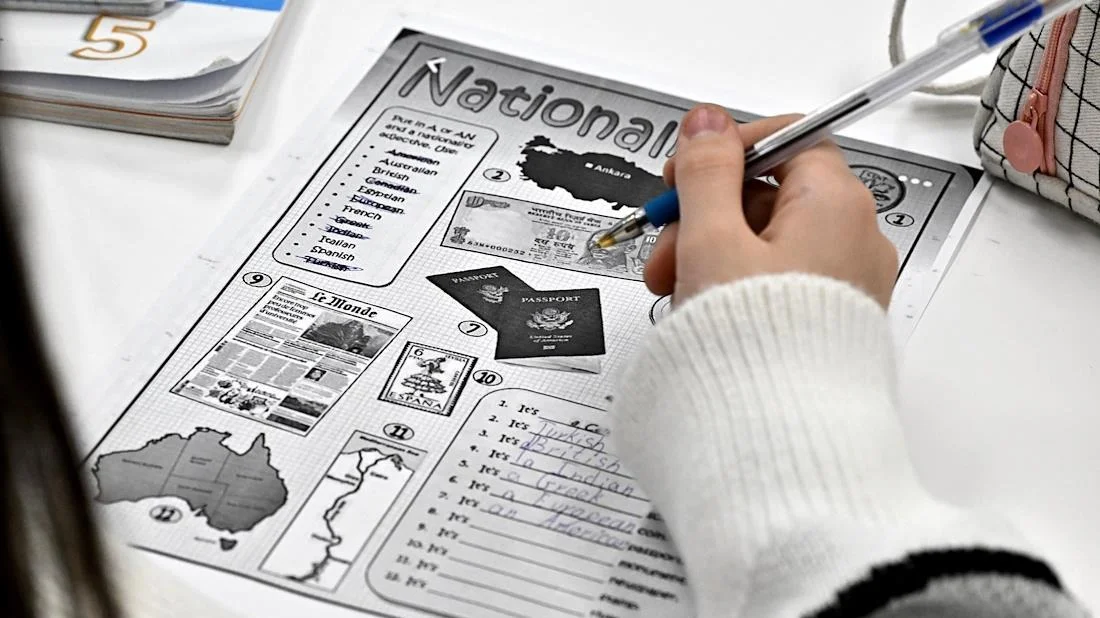
Photo: Alexander Miridonov / Kommersant
18+. This material (information) was produced, distributed and (or) sent by foreign agent Vishnevsky Boris Lazarevich or concerns the activities of the foreign agent Vishnevsky Boris Lazarevich.
The draft order of the Ministry of Education of Russia, published on the portal of legal acts, provides for the reduction from September 1, 2025 of the study of foreign languages (English, Spanish, Chinese, German and French) in grades 5–7 up to two hours a week. A similar reduction for the German language will begin to operate in 2026.
At the same time, in the same 5–7th grades, from September 1, 2026, a new subject is introduced-“The Spiritual and Moral Culture of Russia”, dedicated to “the study of the life of outstanding domestic figures, including Svo Heroes”.
These measures, in the opinion of the department, are aimed at "reducing the educational load and strengthening of patriotic education."
The Ministry of Education reports that the draft order "In order to optimize the load and rational redistribution of the educational time, the volume of study of foreign languages is adjusted."
Earlier, to study foreign languages in schools, 102 hours were allocated annually (3 hours a week) from 5th to 9th grades. If the project becomes an order, then from the 5–7th grades to study foreign languages will be allocated only 68 hours (2 hours a week), and in grades 8–9, everything will remain still.
At the same time, the ministry assures that “the study of foreign languages remains a mandatory component of the school program”, that “the reduction of the clock does not cancel the subject, but is aimed at finding the optimal balance in the curriculum”, and that “the basic level of ownership of a foreign language will be provided within the established volume of hours”.
The same draft order provides for the study of the subject “The Spiritual and Moral Culture of Russia” (DNKR) in grades 5–7: in the 5th grade-17 hours; In the 6th and 7th grades-34 hours each.
To begin with, we’ll sit down and calculate: in grades 5–7, the load due to foreign languages is reduced by 34 hours. Consequently, with the introduction of the DNKR, the overall load will be reduced only in fifth graders-by 17 hours (one hour every two weeks), and in the 6–7th grades it will remain the same.
In other words, the load is almost not reduced, but only “rationally redistributed”, as the Ministry of Traffic admits.
And redistributed by reducing the volume of studying foreign languages in favor of "spiritual and moral values."
The purpose of the study of which, as stated in the draft order, is “the formation of the founders of the spiritual and moral values of Russian society by studying the life path of domestic state and public figures, outstanding representatives of our culture, scientists, military, including heroes of special military operations”. For "understanding their example will contribute to the self -knowledge of students and the conscious definition of their value guidelines by comparing their own moral position with the ideals and historical examples of service to the Fatherland."
However, about the DNKR - a little lower, first about the study of foreign languages, due to which they want to strengthen patriotic education.
As English was taught in a Soviet school, I well remember: after that I managed to read simple texts with sin in half, but it is almost impossible to talk (except for the simplest communication). Parents who wanted the children to know English (then he was the main foreign language), either to give them to English schools, or tried to teach additionally. And all this happened in the absence of the opportunity to go abroad (and even more so to work there) for the vast majority of citizens, so the “demand” for knowledge of languages was small.
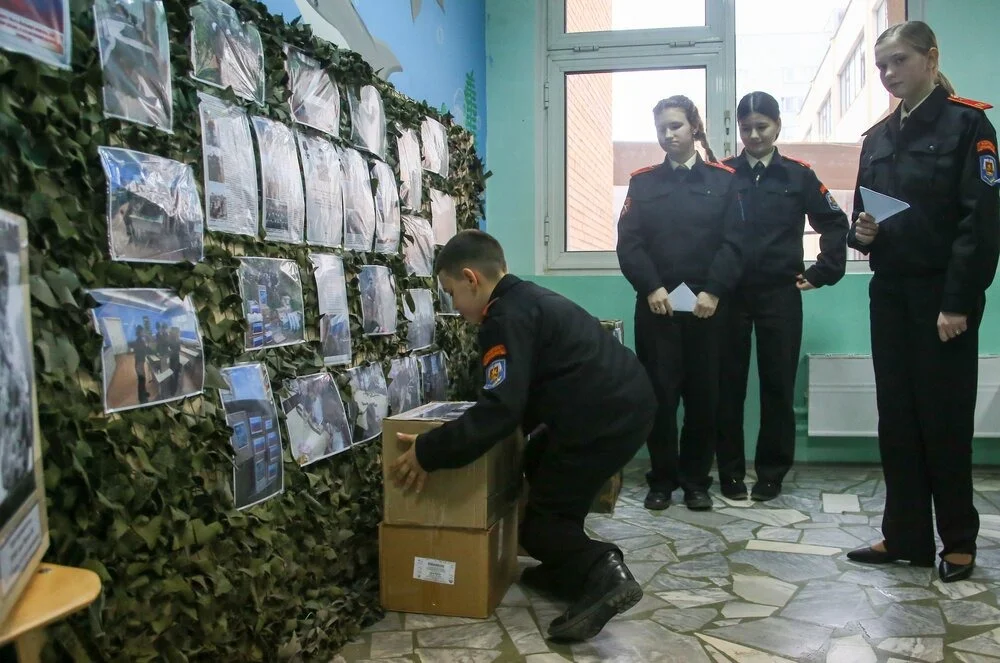
In “Russian” times, when the boundaries opened, the “demand” increased significantly, the “watches” added to foreign languages. Of course, this did not give a full knowledge of languages if you studied at a regular school, but still the volume of teaching grew one and a half times (in the USSR there were two lessons per week).
In addition, new options for additional study, including language camps, including abroad, have become available (unlike Soviet times). Those who wanted (and could afford it) went in this way, realizing that knowledge of languages seriously expands opportunities in the modern global world.
At the same time
The development of economic and cultural relations with the world has led to the fact that knowing languages (especially English, as the language of international communication) has become not only prestigious, but also necessary, including for politicians, officials and businessmen.
Everything has changed in the last decade-and due to the fact that English has become the language of the “unfriendly country”, and in connection with the break in many international ties (it is not without reason that there is a sad joke: “If you are sad due to the lack of prospects, think that at that time someone is studying at the faculty of international relations”).
And if the proposal of the former deputy minister of culture, and now a member of the Public Chamber of Pavel Pavel Zvelilo, generally prohibit English or the proposal of the Duma deputy Sultan Khamzaev to cancel the mandatory study of the English language nevertheless perceived as exotic, then the draft order of the Ministry of Education is no longer exotic, but reality. In which way, reducing the number of “clocks” will allow (as the Ministry of Council assures) to ensure the “basic level of ownership” - it is not clear that this level is supposed to be very low. But most experts agree that the reduction of the “clock” will inevitably affect the quality of study and lead to an increase in extracurricular activities.
Yes, those who aim to teach children foreign languages can - so far (the word “so far” is significant here) is to do this using additional training. Although it has become more difficult with him, including because the possibilities for the “included study” of languages abroad were reduced (due to visa restrictions).
And otherwise, quotes from the “naked king” Evgeny Schwartz began to be perceived: “All the others are not good, and we are well done”, “Since His Majesty announced that our nation is the highest in the world, we are ordered to completely forget foreign languages.” Schwartz, of course, ninety years ago wrote this about a completely different country, not thinking that the power of his talent would overcome time ...
As for the “spiritual and moral culture”, the draft ministerial order shows that children will not be so much to teach as to engage in ideological education-in accordance with the current political line.
The “semantic rod” of the DNANK content, as stated in the project, is “traditional Russian spiritual and moral values (Decree of the President of the Russian Federation of November 9, 2022 No. 809), supplemented by the content of moral standards of the traditional religions of Russia, secular ethics, philosophical teachings”.
Already here questions begin: what kind of moral norms and philosophical teachings will be used for “additions”? Considering that when teaching it is prescribed to teach the “special role of Orthodoxy in the formation and strengthening of spiritual and moral values”-what is called, guess with three times: they will teach the obedience of any power that “from God”, or the commandments “do not kill”, “do not steal” and “do not make yourself an idol?”. And what philosophical teachings will be used - Erich Fromm and Albert Schweitzer or Ivan Ilyin and Alexander Dugin (loved by the current authorities), - there is no need to ask even to ask ...
The draft order states that “the key content of the DNKR consists in acquaintance of schoolchildren with life, activity, actions, personal qualities of outstanding state and public figures of Russian history, who played a significant role in the development of the country and proved their life the importance of choosing the values of our society as the meanings of the life of an individual person”.
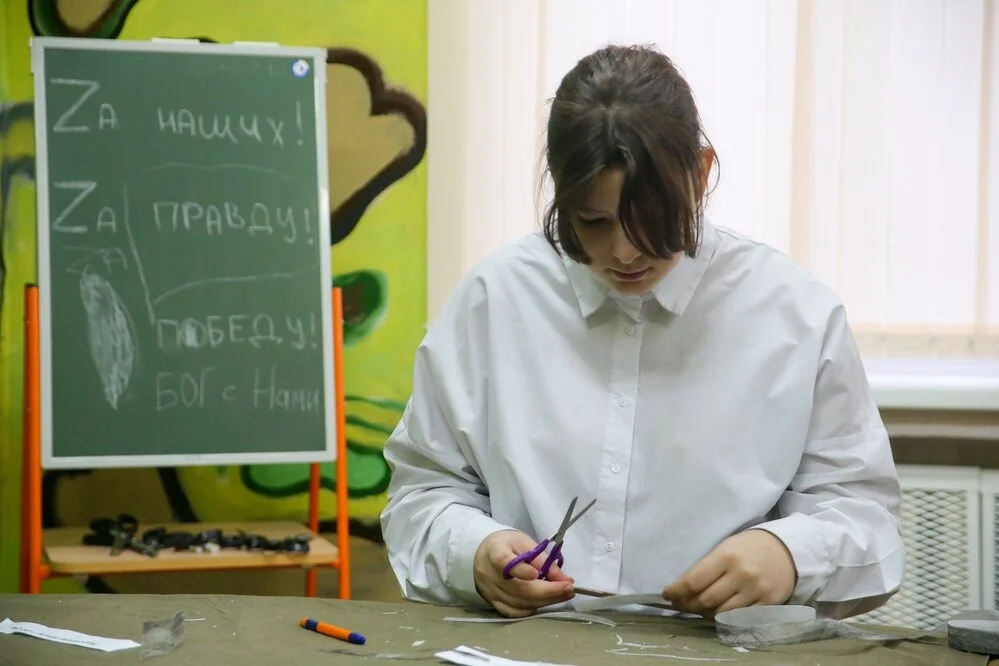
What state and public figures are we talking about?
In the fifth grade on the topic “Russia, the homeland, the unity of the peoples of Russia, the Russian language, devotion to the Motherland” children will be given such examples of historical and modern characters: Ilya Muromets, E.P. Khabarov, M.V. Lomonosov, D.S. Kalmykov. True, during the time of Ilya Muromets, no Russia existed and he served the Kyiv Prince Vladimir. And Erofei Khabarov, when conquering Primorye, was distinguished (traditional, however, for those times around the world) cruelty to the indigenous population, but it is unlikely that children will be told about this.
The theme of patriotism, service to the Fatherland, fidelity, duty, honor, courage and courage will be disclosed with the examples of Prince Alexander Nevsky, Prince D.M. Pozharsky and K.M. Minina. Apparently, without telling the children that historians adhere to different views on the activities of Alexander Nevsky and meet (for example, academician Valentin Yanin), the very critical assessments of his union with the Horde to maintain power and the rigid struggle with his own brother Andrei.
The topic of creative labor, hard work, responsibility, initiative, determination and perseverance of fifth graders will illustrate the example of Musa Jalil. Despite the fact that the Hero of the Soviet Union and the poet Musa Jalil is known in history not by his hard work or perseverance, but by the heroic organization of the communist underground and death in the Nazi dungeons.
The topic of knowledge, teachings, self -development and intellectuality will demonstrate to schoolchildren on the example of P.M. Tretyakova, known again, not so much with his craving for knowledge or intellect, but by the fact that he was an outstanding philanthropist, who left us the Tretyakov Gallery.
Finally, the theme of morality and morality, goodness and justice, generosity and conscience will illustrate the examples of Admiral Fedor Ushakov and Prince Dmitry Donskoy. Also, for the most part, known in completely different areas ...
If we talk about the 6–7th grades, then the topic of human rights and freedoms, life and dignity will be disclosed with the examples of St. Luke of Voino-Yasenetsky and Richard Sorge.
The first is an outstanding scientist and religious figure, the second is the famous intelligence officer of the time of the Great Patriotic War, their merits are undeniable, but other people would have approached much more to illustrate this topic. For example, academician Andrei Sakharov or human rights activist Sergey Kovalev. Or General Matvey Shaposhnikov, who refused to shoot at the protesting workers of Novocherkassk. Or dissidents Vladimir Bukovsky and Anatoly Marchenko. But the current government is clearly not in honor ...
The topic of high moral ideals, moral choice and nobility will be demonstrated by examples of St. Julian of Lazarevskaya, Mikhail Sholokhov, Nikolai Putilov, Yuri Gagarin and Nila Filatova.
Whether they will tell the children how Sholokhov stigered Andrei Sinyavsky and Julia Daniel and convicted Andrei Sakharov and Alexander Solzhenitsyn - the question, apparently, rhetorical.
The theme of a positive attitude to life, vitality and active life position will be revealed to schoolchildren on the example of Grigory Potemkin. In vitality, Potemkin, really, will not refuse, but will they tell the children about the "Potemkin villages"?
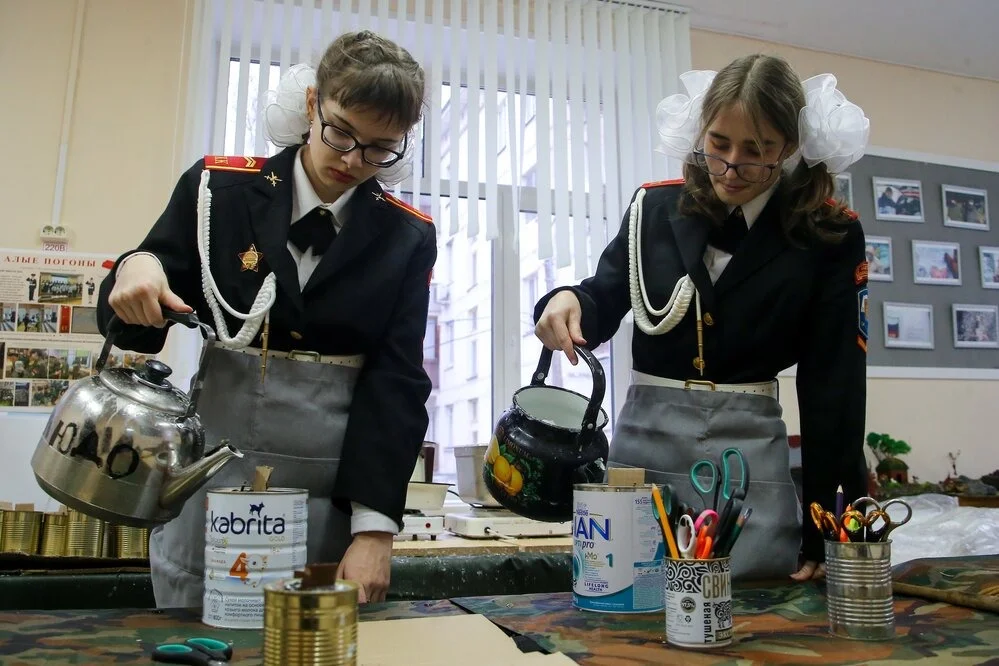
Of course, we are talking about teaching students of current ideology.
In the Soviet school, she, of course, was also: schoolchildren were supposed to teach in the spirit of fidelity of the party and the government, to instill in them the ideals of communism, to explain that the public is higher than personal and so on and so on.
But ideology was not the main thing: the main task of the school was still to give knowledge. And that former school tried to give them.
Now - despite the fact that, according to the Constitution, parents are obliged to engage in raising children - these functions are more and more tried to transfer to the education system. Starting with “conversations about the important” (which are already being introduced from the kindergarten) and ending with the change of history textbooks to those in which the peaceful Russia, which the surrounding enemies tends to weaken and harm it, moves from one victory to another.
The continuation of this line is “spiritual and moral values” instead of foreign languages. To grow a generation, ready to submit to the authorities, to confuse the Fatherland with the authorities, to treat the foreign as obviously hostile and to believe that everyone offends us and we all owe us, it is precisely such trends that are required. With stories about Russia-“Civilization State”, which goes in a special way and living in the mode of permanently besieged fortress ...
What else will be reduced to expand “patriotic education” - mathematics with physics and other accurate sciences that raise the ability to doubt, check and reflect, and not believe and approve?
How can you not recall the “ugly swans” of the Strugatsky brothers, the dialogue of the writer Viktor Banev and his girlfriend Diana:
“ - Let me read.
“Only for men,” Victor said. “Besides, I threw them away, didn’t I tell you?” And in general, there was so little patriotism and national identity that no one could show anyone anyway.
- Tell me, how do you write first, and then you insert a national identity?
“No,” said Victor. - At first I am imbued with national self -awareness to the core: I read the speeches of Mr. President, I gather by heart the heroic sagas, visit patriotic meetings ... "
Last. What has been introduced in recent years as patriotic education, not patriotism, but loyalty and humility.
In order to confuse their homeland and the state, the fatherland and authorities, they did not think to protest and be indignant and did not dare to discuss the Bar orders.