
Translated material
Informal formalist. Dmitry Bykov* about what we love the films of Peter Todorovsky
Today, Peter Efimovich Todorovsky would have turned 100 years old. Most of all, the audience knows and love him for the late paintings-the “Military Field Roman”, which was nominated for Oscar, and “Interded”, which became a symbol of perestroika cinema. Dmitry Bykov in the anniversary text pays attention primarily to the early films of Todorovsky - from the debut “Never” to the “City Romance”, telling about the man and director, who never pretended and always remained himself.
He did not live up to a centuries -old anniversary of only 12 years - and it seemed that nothing threatens him: he was so, having finally finding himself and engaged in directing at 35, and remained forever forty -year -old, invulnerable, inexhaustible.
In the film, Valery of Todorovsky “Shtilyaga”, which, for my taste, is spoiled by a compromise ending, there is an important topic: the main dudes, the most stubborn and uncompromisingly, was eventually a former Komsomol activist, a fighter with style and parasitism Mels. Anton Shagin played this role, and this gives the hope that his zet-transition is not final: such people do not bend, but break, and only this fracture allows them to achieve their human maximum. (In the finale, as he was written by Korotkov, Mels played on faithful Sax for Shtilyag, but no one danced: his music was not dance.)
And now I think that this line is in the film - and partly in all the work of Valery Todorovsky - it is inspired by thoughts about the father.
After all, Pyotr Efimovich shot all his life about neophyte, breaking through the class above.
And most often this is a tragedy: a situation when a talent is falling on an ordinary person, not well -deserved, as always happens, and even interfering (“magician”). When genuine love falls on an ordinary tired woman - and love for such a person who will break her all everyday life (“Beloved woman of the mechanic Gavrilova”). When a true passion goes to a character born for a quiet comfort with an ugly, but good companion (Military Field Roman). When kinematographers flirting into the front (“What a wonderful game”).
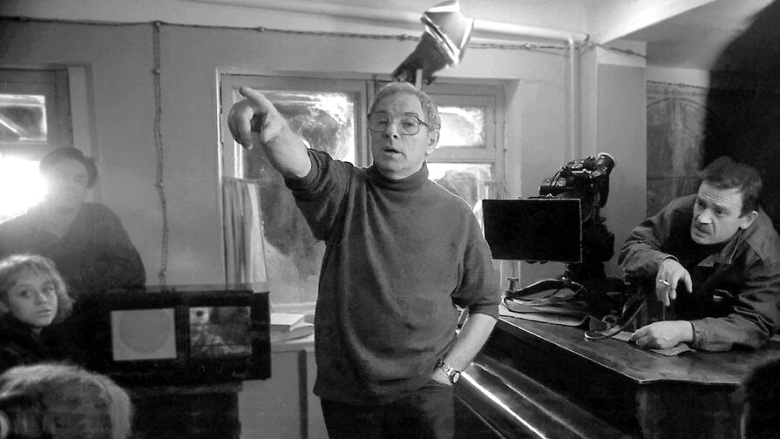
Peter Todorovsky
One of the main plot lines of Soviet cinema was this sudden leap in the next class, a quantum transition or as you want - when a person of small merits and virtues suddenly feels the burden of talent or debt, and then you can’t get him from the Cross Way. Modern Russia often offers a completely different option-a play for a decrease, sharp degradation, and most witnesses are looking at each other: always, always in it was something that hints at this option. On the contrary, the sudden excess of forces and capabilities is rarely perceived with joy: the majority awaits when the hero, forced to jump above his head, will break the neck. Such a jump happened, for example, with Okudzhava, when a sixty-fifty poet was suddenly a genius, the creator of the new genre, and it was not for nothing that they were friends with Todorovsky, made the picture “Fidelity” together. In the USSR, with all its abominations, there were more incentives for growth, and not to fall. Not anyone told me, but Alla Pugacheva, with whom the same transformation from the pop singer happened into a symbol of the popular soul.
(And she will not return to you anywhere, creatures, do not even think.)
Subscribe to read the whole
Make a subscription Redefine.media to read Republic
Subscribe [you can pay for a Russian or foreign card. The subscription is extended automatically. You can unsubscribe at any time.]
Where are the money subscribers going