
Translated material
War
A thousand two hundred eighty -first days. Strengthening attacks on energy facilities: the Russian military fired at the infrastructure immediately in six regions of Ukraine
Medusa from February 24, 2022 lives on the Russian-Ukrainian war on the air. In our daily materials, we publish your letters because we are sure: we must continue to talk about the war. What feelings do you experience because of the ongoing war? How does it affect you personally right now? How has your attitude to what is happening, towards Russia, Ukraine, to the world changed over these three years of the war? Look for a feedback form at the end of this article. A review of the previous day can be read here .
Ukraine
The troops of the Russian Federation fired at energy facilities in six regions
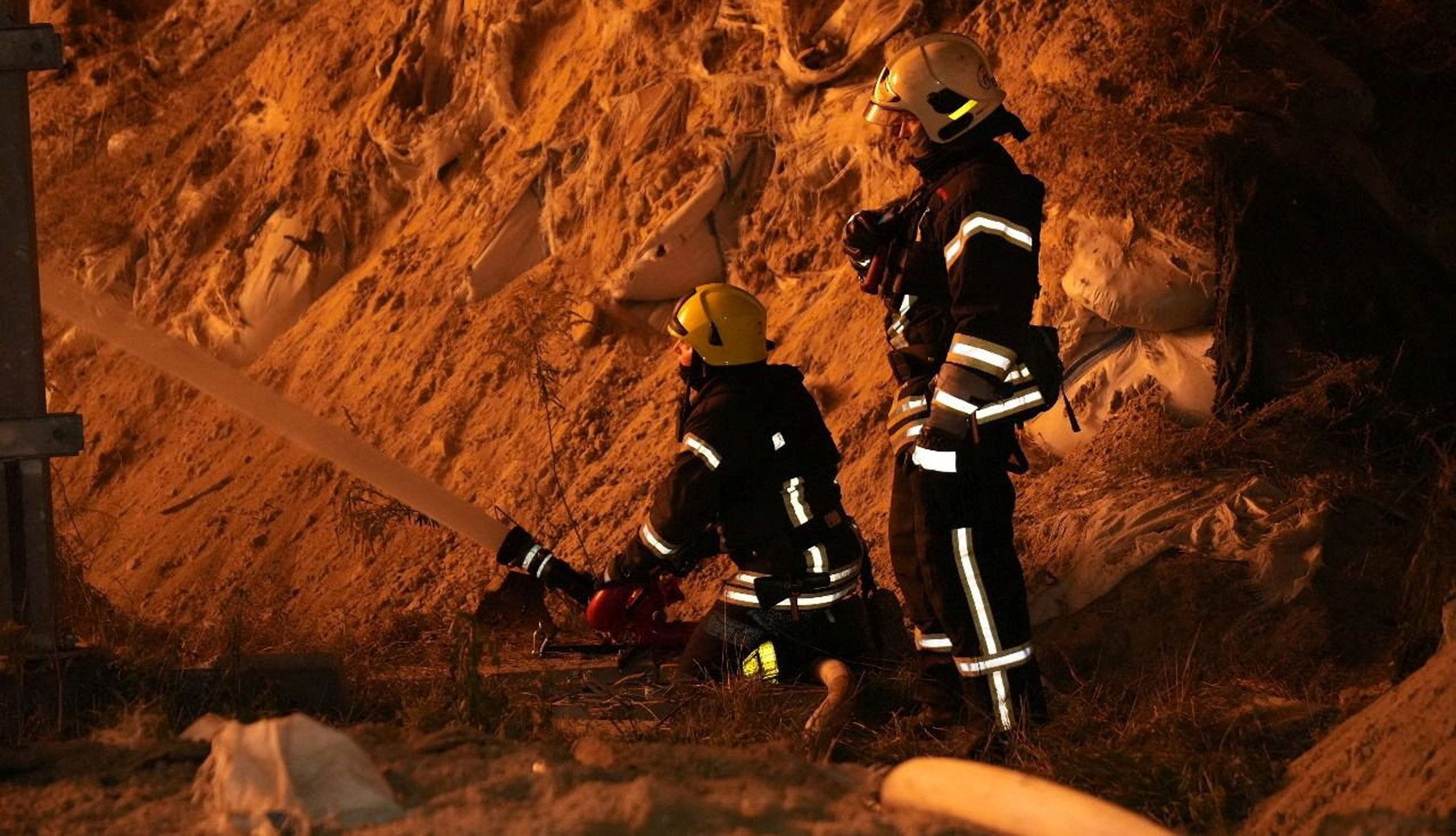
On the night of August 27, the Russian military held a massive attack by shock drones on the energy objects of Ukraine, the Ministry of Energy reported .
According to the agency, energy facilities in six regions fell under the blow - in the Sumy, Poltava, Donetsk, Chernihiv, Kharkov, Zaporizhzhya. According to the Armed Forces of Ukraine, in total, 95 drones participated in the attack, of which 21 achieved goals.
In particular, one of the main substations was damaged in Sumy, which is why a significant part of the city residents and industrial enterprises were left without light. This led to interruptions with the supply of water and stopping the work of urban transport.
The Ministry of Energy called the Russian attack "the continuation of the conscious policy to destroy the infrastructure on the eve of the heating season."
In recent weeks, both warring parties strengthened the blows on each other's energy objects. The analysts of The New York Times note that in this way Russia and Ukraine are trying to weaken the enemy’s positions against the background of renewed negotiations - each side is trying to give the White House a signal about its advantage and willingness to continue the struggle.
Since the beginning of August, the Armed Forces of Ukraine have reported at least a dozen attacks on Russian oil facilities. With the help of farm drones, the actions were attacked in the south and in the central part of Russia - the largest of them became the LUKOIL plant in Volgograd and the Rosneft enterprise in Ryazan. Reuters reported that these blows violated 17% of the oil refining capacities of the Russian Federation.
Against this background, the Russian government banned gasoline export, officially the reason for this decision was called high demand: the end of summer was the most active phase of agricultural work.
Russia, in turn, also intensified attacks on Ukrainian energy facilities: the head of the Ministry of Internal Affairs of Ukraine on August 25 stated that in the previous 10 days 20 energy facilities were damaged, including electrical substations, TPPs and oil refineries.
Gas stations now fall under the blows of the army of the Russian Federation - in the first three years of the war, Russia did not strike at such purposes, since by the end of 2024, Russian gas continued to be transported through Ukraine to Europe.
In recent days, the Armed Forces of Ukraine also inflicted several blows to the infrastructure of the Druzhba oil pipeline, according to which Russian oil is still pumped into Slovakia and Hungary. This led to an aggravation of relations between Kiev and Budapest: Viktor Orban Prime Minister Viktor Orban wrote a letter to Donald Trump, in which he complained about a “unfriendly step. Trump replied that he was “very outraged” by attacks, but they continued.
War through the eyes of readers "Medusa"
How do we choose letters
Readers "Medusa" live in different countries and treat war differently. We publish your letters to see this event with your eyes. Our editors try to present all points of view, even if they do not coincide with the position of the editorial office. However, in accordance with the Medusa Code, we do not publish messages that contain the “language of hatred”, the murder of civilians is justified, and direct support for an aggressive war is expressed.
Anna . I live in Moscow, and the war is not heard here: festivals are held, fairs and restaurants work. For Moscow, the whole war remains only in news reports. And even that, depending on what news to read.
For three and a half years, I could not get used to the fact that people are killing people on my behalf. This feeling of rage, fear, hopelessness, helplessness and grief only managed to push a little slightly to the side. But it returns to me every time I plan tomorrow, when I think what to cook for dinner and think about "where you see yourself in five years."
I do not see myself anywhere, I do not see any future in the world for which the destroyed cities are a bargaining coin, and the lives of people are numbers that should not even be entered into statistics.
A lot of conversations are about who on whose side. Whose is the enemy and who whose friend. Everyone is chosen by the parties to politicians, opposition, political directions or countries. They are trying to figure out the chess party, which is played not for us, but by us.
There is no war in Moscow, but it is heard in the region, in the kitchen of my mother, when her face strains, she listens to the sounds outside for a long time, and then exhales in relief: “This is just a truck.” Or "it's just a salute." For all this time, I realized on whose side I am. I am on the side of a little man, his little life, little dreams, big losses and endless loneliness. Because it seems that there is no one on the side of these little people.
Share your thoughts about the war
"Jellyfish"