
Translated material
And again they released steam
They wanted to reduce the number of communal services, and reduced the costs of the purchase of children's books
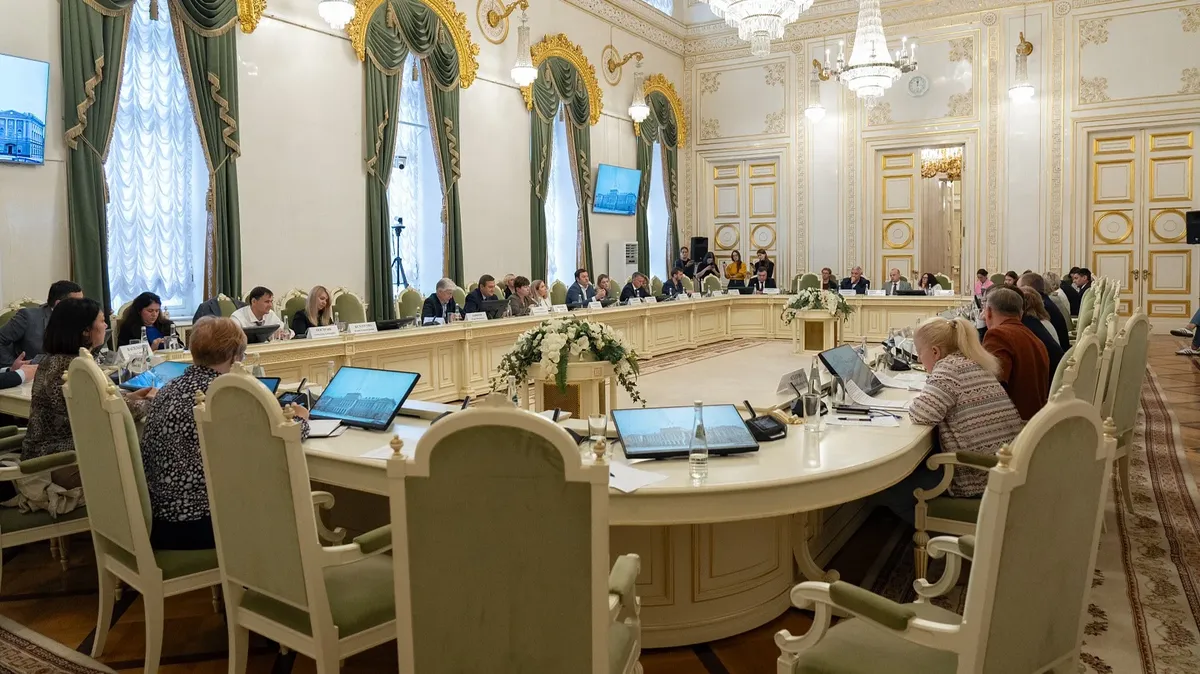
Photo: Assembly.spb.ru
18+. This material (information) was produced, distributed and (or) sent by foreign agent Vishnevsky Boris Lazarevich or concerns the activities of the foreign agent Vishnevsky Boris Lazarevich.
The project of the St. Petersburg budget for 2026 will be submitted for consideration by the city parliament in mid -October, they will be accepted in November.
Questions - and serious ones - are already now, when the general contours of the city "Vedomosti of income and expenses" are indicated.
But few deputies set them. And they do not always get answers.
Meanwhile, this is not about the money of officials - we are talking about the money of citizens.
As Margaret Thatcher said, "there are no state money - there is only taxpayers' money."
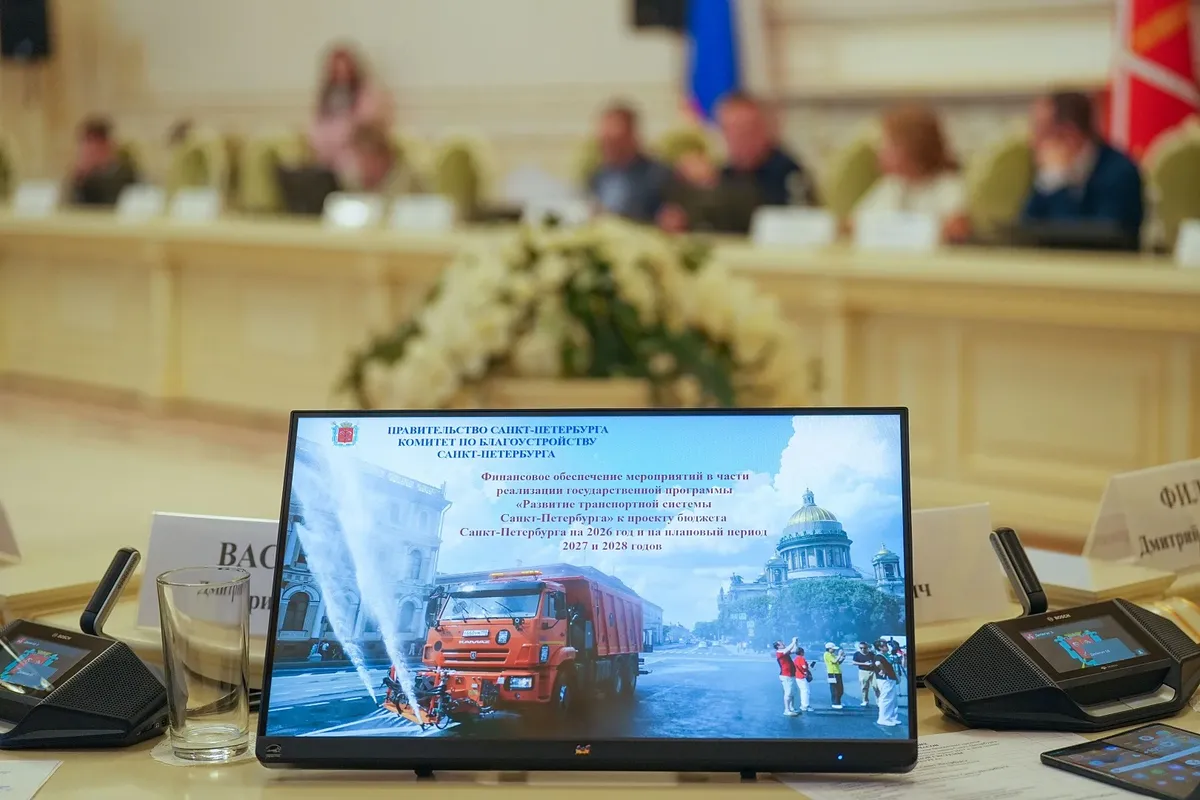
In recent years, in August, the so -called “zero readings” of the budget have been traditionally held in the St. Petersburg Legislative Assembly. They are carried out with reports of the relevant residents of Smolny, by the presentation of the “basic volumes of budget allocations” (the amount of expenses that are originally planned for different areas for the next year), the requests of the committees on “additional needs” to these “basic volumes” and issues of the deputies of the Zachs to officials.
Theoretically, according to the results of these “zero readings”, the draft budget law that the city government will finish will be finally formed and will submit to the SCS.
Almost - as the experience of recent years shows - these discussions are more likely to “release steam”, and the draft budget is changing little. And most unpleasant questions officials answer extremely evasively.
Despite the fact that few set them-for the most part “apple”, sometimes someone else of the deputies, but rarely.
If the city parliament had a different composition - everything would be completely different ... However, more on that below.
Two “blocs” of the budget, which relate to the most acute urban issues, are included in state programs “Providing affordable housing and housing and communal services” and “Development of the transport system”.
Because, on the one hand, St. Petersburg remains the “capital” of Russian communal apartments and cities of “waiting list”, waiting for the forced housing for the fifth decade, and on the other, a city with chronically insufficient development of the subway and continuously growing tariffs for travel in public transport.
The number of communal services in St. Petersburg is more than 60 thousand. Their residents are entitled to receive payment from the budget to solve their housing problems. However, only 1,100 apartments were resettled last year - it is easy to calculate that at such a pace the process will go another sixty years. It would seem that it is necessary to significantly increase the budget expenditures on these payments? Whatever it is: in the budget of 2025, the volume of a budget subsidy for these purposes ... was halved by half. From 3.9 to 1.9 billion rubles. And while in the “basic volumes” for 2026, which are presented on “zero readings”, the same amount is 1.9 billion rubles.
Why was the volumes reduced? Officials give an amazing answer to the question that I asked the last year (this is my colleagues from the Yabloko faction): there is supposedly “no demand” to receive these payments. Few people who want to get them.
Since it is extremely rare to meet those who live in constrained conditions and refuse money, we began to understand. And the casket opened simply: on these payments - an average of 2.4 million rubles. For a family - in St. Petersburg you can’t even buy a studio. In addition, these payments can be obtained only if all the residents of the apartment agree to resettlement, which is far from always possible.
A way out of the situation suggests itself: to increase payments - at least twice - and withdraw barriers to receive them (so that some residents of communal services are not hostages of others who do not want to resettle). But these proposals (the Yabloko faction has been acting with them for the last years), they are on the resistance of Smolny and are deviated by the parliamentary majority of Zaks, which, as a rule, does not recalble in anything. At “zero readings”, however, officials announced the need for some “additional need” in the housing sector, but not the fact that it will be included in the draft budget. And not the fact that the problem of communal apartments will affect.
Another problem that has a long -term nature is the “waiting list” (those who are in line for improving housing conditions, due to the constraint of living) who have no benefits. Not disabled, not large families, not orphans, not families with children with disabilities.
Previously, 3 billion rubles for the indicated goals were forced to the budget of 2026. At the average cost of a two -room apartment in the city, about 12 million rubles, this will be enough for 250 families. And there are about 70 thousand such families in St. Petersburg. How many years at such a pace they still have to wait for housing, it is easy to calculate: people do not live so much. And another figure that Yabloko has been talking about all in recent years: “waiting list” without benefits have been waiting for housing for more than 40 years. Now, as reported on “zero readings”, it is received by those who stood in line in ... 1982. Even during the life of Brezhnev. In the early 90s, when voters were addressed to me, the deputy of the Moscow District Council, they reported that housing was given to those who got to the “line” until 1979. For thirty years, the “line” has advanced for three years.
The third “housing” theme is subsidies to solve housing problems for families with three or more minor children, and families with children with disabilities.
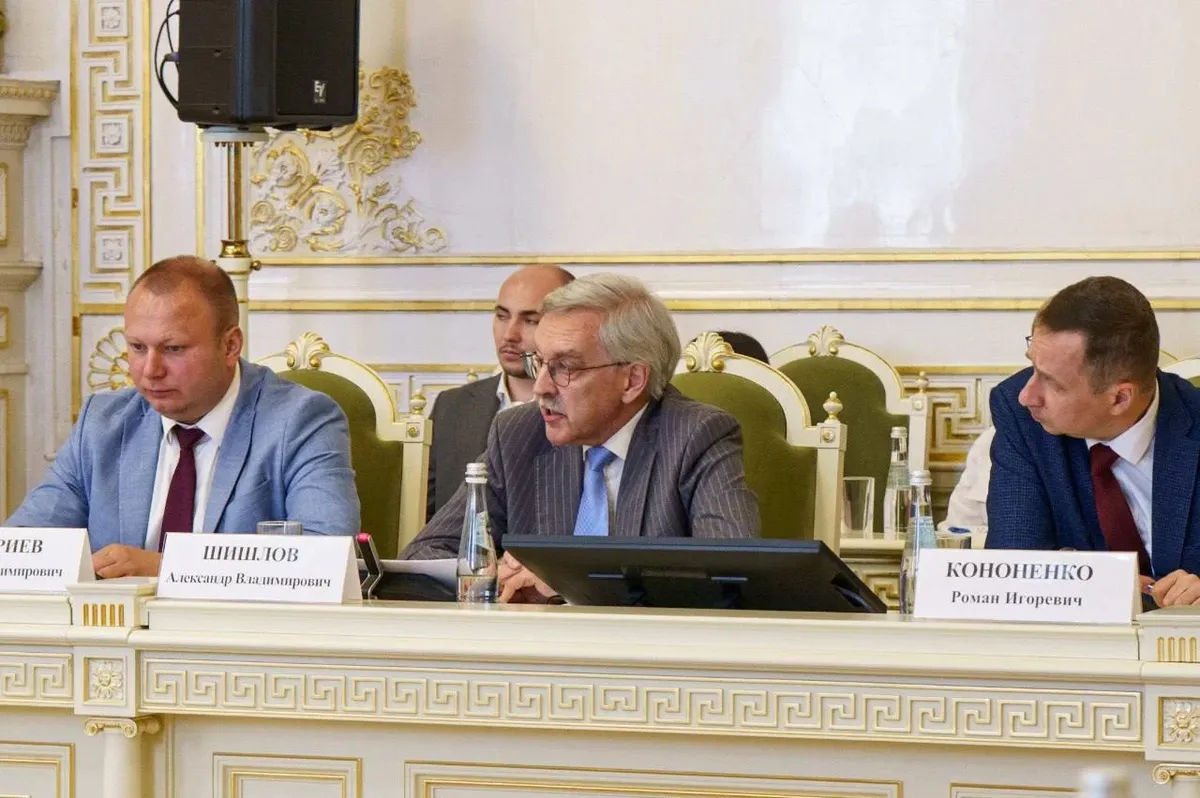
The head of the Yabloko faction, Alexander Shishlov, asked at “zero readings”: why in 2026 these expenses, compared with 2025, want to significantly reduce? The answer of the officials was the same: supposedly "there is no need." What is called, it is hard to believe.
Now - about the transport sector.
The main problem in it for many years has remained insufficient development of the subway. Over the past five years, one new metro station was commissioned (39 in Moscow during the same time), despite the fact that they promised to introduce ten. Now over the next five years - until 2030 - again promise ten new stations, and until 2035 - 35.
It is bad: for these purposes, according to Smolny calculations, 1.1 trillion rubles are needed, while about 35 billion was allocated in 2025, 55 billion is planned in 2026, in 2027 - 80. A total of 170 billion rubles. Where will another 940 billion rubles come from in 2028–30?
“Yabloko” asked this question, including the governor, and received the answer: “We will ask for federal co -financing.” But it is not the fact that they will give him, and even more so in such volumes.
Note: from the costs of the construction of the Kalinin-Krasnoselskaya metro line-the most long-awaited in the city-in 2025 the budget provides for 2.25 billion rubles, but on August 1, 2025, nothing was fulfilled at all.
And also about the subway: despite the fact that the fare for the last eight months has been growing twice, officials are asking for another 38 billion rubles of subsidies for the next year. Why? There are no reasonable explanations. But in the budget for 2026, the costs of acquiring a “rolling stock” are not preliminary at all. Simply put - wagons, and not only the metro. True, at “zero readings”, officials asked for 17 billion rubles for these purposes, but mostly for trams. And they asked to increase the costs of concluding contracts with bus, trolleybus and tram carriers. Recall that even here the fare was twice increased this year.
Another “transport” topic is intercepting parking. Which they promise to us not the first year, so that citizens left their cars on them (at the outskirts of the metro) and then went by public transport without loading the center. So, in 2026, compared with 2025, almost ten times (126 million rubles instead of 1.1 billion rubles), expenses for these purposes are reduced.
And there are rumors that intercepting parking lots want to make paid. And (these are no longer rumors, but Smolny’s plans) since October they introduce “differentiated tariffs” (raising them in a number of places several times) for paid parking.
To the questions of the deputies, for what this is being done and why exactly such tariffs want to introduce, officials practically do not answer: they say, we have the right and do ...
In other areas of budget expenditures, many questions also arise (deputies from Yabloko asked them on “zero readings”).
So, Alexander Shishlov asked why in 2026 they were going to reduce the funds for the purchase of books for school libraries, distance education of children with disabilities, the overhaul of buildings where educational institutions are located, and for the purchase of equipment and inventory for schools and kindergartens introduced after overhaul? Are school libraries staffed, the buildings of educational institutions are repaired, schools and kindergartens will not need equipment, and children with disabilities will need less in distance learning? He did not receive answers on the merits from officials.
It is clear that if you increase funding in important areas, money needs money. But it is known where they can be taken from: the simplest option is the “reserve fund” of the city government, where in 2026 they plan to lay 40 billion rubles. At the same time, the real expenses of this fund are much less than what is laid in the city budget. So, in 2024, out of 44.6 billion rubles, which were laid, only 13.5 billion spent.
You can also save on expenses for the design of the city for the holidays, on the creation of "gardens-transformers", for the maintenance of structures related to paid parking-the city center of parking lot management and the "Unified parking space" project (now more than 50% of the collected parking fee goes to the maintenance of this center and this project) ...
And one more important budget topic: while it continues, the city budget finances part of the expenses associated with it (including payments to contractors and expenses for work in Mariupol).
Alexander Shishlov, speaking at the opening of “zero readings”, recalled that the “Yabloko” from the very beginning advocated the ceasefire, the cessation of the death of people and negotiations, and now this position is divided by most voters. And that St. Petersburg voters, whose taxes (in this case, are income tax) form more than 40% of the city budget, must have complete information about these expenses, about the price that the city community pays for this.
Meanwhile, part of these expenses, carried out through the reserve fund of the government, is “opaque” and, in violation of the budget code, is hidden from the townspeople.
And it is necessary that all these expenses are open - and are not carried out through the reserve fund, but indicated in the document called the “departmental structure of budget expenditures”, so that it is clear what the money is spent specifically for.
All of the above is proposed, voiced, questions are asked to officials - and then the time the voting for the budget comes ... and five parliamentary fractions from six (except for the “apple” opposing such budgets) vote regularly for it, rejecting any amendments against which the Smolny opens.
If Zaks had a different composition where the parliamentary majority would critically evaluate the administration’s proposals (not only by budget) and would not consider itself a “one team” with the governor - the city would have another budget and many acute problems would be better solved.
Sometimes, however, even those deputies who regularly vote as Smolny should be, complain (in private conversations) on budget deficiencies, at rudeness of officials, that they are not considered to be with them and “wipe their legs” about them.
“So you yourself taught Smolny that you will vote even for a clean sheet instead of the budget, if they bring it,” I said a year ago to one of these complainants. - That the draft budget is sent not to read, but in order to support. Once vote against a poorly compiled budget - they will immediately begin to be considered. In the meantime, you behave like rags - do not complain that they wipe your legs. ”