
Translated material
Abanamat
Why do we love Dovlatov?

Sergey Dovlatov. Photo: mcelroy / getty images
Probably because he does not even try to teach us anything. He is simply sad, but with humor tells us about our life. Let his heroes live in another country and at another time, but times are always the same, and people are also not particularly changing.
Why do we love Dovlatov? No one will explain Brodsky better.
“It’s easy to read it. He, as it were, does not require attention, does not insist on his conclusions or observations over human nature, and does not impose himself for the reader. I swallowed his books on average in three to four hours of continuous reading: because it was from this unobtrusiveness of his tone that it was difficult to tear himself away. ”
Joseph Brodsky. About Seryozha Dovlatov
Brodsky wrote an essay about Dovlatov a year after his death. The Nobel laureate in literature rarely wrote an essay about other writers, but Seryozha, as he always called Dovlatov and with whom from his youth was always on “you”, although he knew him from Leningrad youth, Brodsky loved.
Abanamat at all times
“ - Abanamat! - exclaimed grandfather.
And in the house there was complete silence.
The mother did not understand the meanings of this word. I also did not understand for a long time what this word means. And when he entered the university, he suddenly guessed. He did not explain his mother. For what?.."
The Dovlatovsky Abanamat very accurately characterizes our paste time, to which Sergey Donatovich did not live to go from us in 1990. I just want to write cynically: fortunately, I did not live. The writer with an impeccable sense of style would come up with how to describe our absurd time.
Abanamat - from the collection "ours". From there, another of his well -known quote: “I will not change linoleum. I changed my mind, for the world is doomed. ” The Dovlatov Soviet world was doomed, our modern one - so unbearable that we do not know whether it is doomed or not. But Dovlatov, I am sure, would have found tragic-fit in our reality. I would have changed his famous phrase and grinned abnormally.
He left early. Alexander Genis* said that when Dovlatov was buried, the August New York sky opened the flood. As if the heavens were angry with the fate that took him so early.
Today, decades after death and the collapse of the country, about which he wrote so tragically and funny, Dovlatov remains one of the most read Russian -speaking authors.
New York
The writer was only 49 years old. Almost immediately after his death in Russia, a deafening posthumous glory came to him. However, in the last years of the life of Dovlatov, the success that Vonnegut himself envied.
Sergei Dovlatov left the USSR in September 1978 after many years of prohibitions on publication and pressure from the authorities. The writer spent the first six months after the departure in Vienna, where he himself wrote in one of Lyudmila Stern’s letters, “there were not even drinking companions.” In February 1979, Dovlatov reunited with his family in New York.
“I think that New York is my last, decisive, final city. From here you can only run to the moon ... ” - he will write in" Craft ".
In the "final" city, he founded the newspaper "New American" with his friends and began working for Radio Liberty **. According to his columns in the New American, we know Dovlatov not only as a talented narrator, but also of a smart publicist.
“We are full, dressed, healthy. We are almost as elegant as our cars. Almost as substantial as our refrigerators. ” No. 19, June 17, 1980.
When in the early 1980s Sergey Dovlatov was first published in The New Yorker, this became an event not only for him, but also for all Russian emigrant literature. It was a success for the Soviet writer in exile. One of the first to respond to Kurt Vonnegut - the classic of American prose, whose words became a sign of real recognition for Dovlatov. Vonnegut wrote him a telegram:
“Dear Sergey Dovlatov! I love you too, but you broke my heart. I was born in this country and without fear served her during the war, but so far I have not been able to sell a single story in The New Yorker. But you arrived - and bam! - Your story was printed immediately ... I expect a lot from you and your books. You have a talent that you are ready to give this crazy country. We are happy that you are here. ”
This message was simultaneously ironic and deeply touching. Vonnegut admitted that he himself could not break into The New Yorker, but was happy about the success of the Russian emigrant. For Dovlatov, who often felt a stranger in America, such words mean much more than a fee. But, of course, he dreamed of glory in his homeland - in Russia, where his readers were.
Did Dovlatov love New York?
Love. How can a Soviet person not love New York? However, the love of the city, from which "nowhere to emigrate" did not cancel the longing for Leningrad.
Leningrad underground
There was a Soviet Leningrad, Rubinstein Street and a communal apartment before Vonnegut and New York ...
In the Leningrad undergrand of the 60-70s, unrecognized writers ("parasites", as the Soviet government christened them), often searched, in vain, in vain, their place in the Soviet literary world. But not only. In this absurd Soviet world, in the most beautiful Soviet city, Brodsky, Dovlatov, Aryev, Naiman, Rhine, Losev, Ufland and other talented authors created their underground world. They read their poems and stories to each other. There was no one else: they were not printed ... they drank, loved, jealous, argued ... such a life parallel to Soviet reality. In one space, in different dimensions.
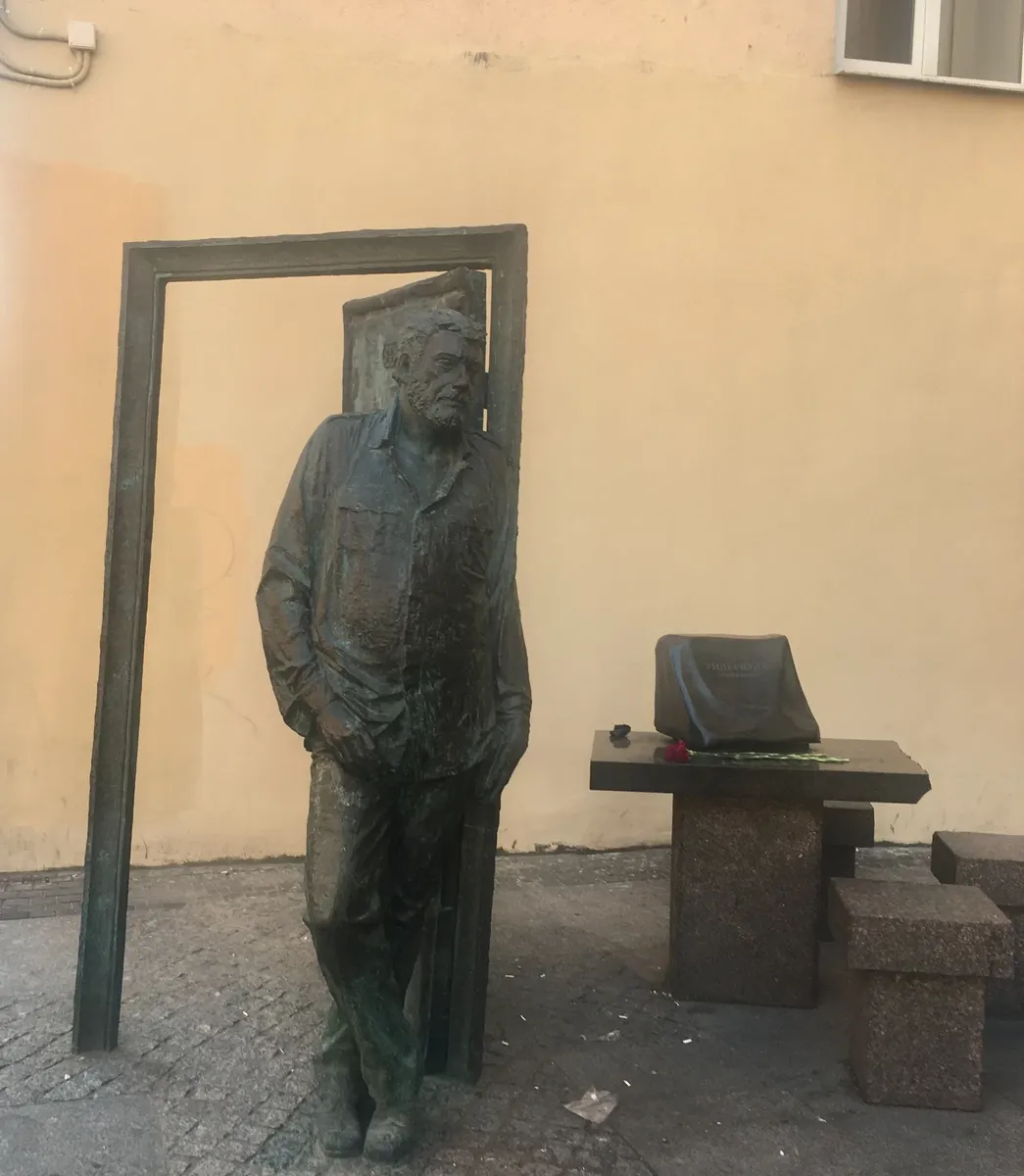
This quote from Dovlatov about Brodsky - about them about everyone: “Brodsky created an unheard of behavior. He lived not in the proletarian state, but in the monastery of his own spirit. He did not fight the regime. He did not notice him ... "
What were the underground Leningrad geniuses talked about and arguing? About the same thing that all geniuses argue about at all times. For example, what is more important: justice or mercy? Dovlatov, who, according to his friends, could easily injure the interlocutor in a conversation, decided for himself that mercy is higher.
“There is something higher than justice! - Wow! - said Zaretsky. - This is interesting! Speak, I will listen to you with pleasure. Attention, gentlemen! So what is above justice? “Anything,” I answer. - Well, if more specifically? - If more specifically - mercy ... " (" Foreigner ")
To make this quote mandatory for any article or Facebook post about our terrible reality!
Decent people and Chekhov
Like any smart person, Dovlatov knew about himself, and almost everything about people in general. Both at himself and at others looked a little from the side and without illusions. What is only one phrase of it:
"A decent person is one who makes nasty things without pleasure." ("Compromise")
And how we like her, this phrase is! How often we pronounce it to ourselves, as if we are justified. Dovlatov is about us all. A little evil, but with humor and doomed love. We think so about ourselves when we are sure that one and no one hears our thoughts. We, the generation of conformists, are pleased to love the Soviet writer, who is ridiculously writes about things important for any time: mercy, meanness, conformism.
“Well, I will eat two thousand cutlets in my life. I will worry about twenty-five dark gray costumes. I will turn the seven hundred numbers of the magazine "Spark". And all? And I will die without scratching the earth's crust? .. ” ( “ Suitcase ” )
Sergei Donatovich was scratched with the earth's crust. Yes, as it scratched. Only he did not find out about it. I did not find out that I became as famous as Chekhov. No less famous than the one he wanted to resemble. And he, like Chekhov, did not have time to write his big novel. We can only imagine how the famous Dovlatov fifty -year -old returns to free Russia (there was such a time in Russia) and writes Roman. But…
Dovlatov and Brodsky
*“I do not want to choose a country or a graveyard.
I will come to Vasilyevsky Island. "*
I. Brodsky.
I did not come. Brodsky never returned to Russia. And Dovlatov did not return to his Petersburg/Leningrad. I did not have time.
In his essay about Seryozha Dovlatov, Brodsky wrote: “I do not think that Serezhina could have been living differently; I only think that its end could be different, less terrible. Such a nightmare end - on a suffocating summer day in an ambulance in Brooklyn, with a blood that pushed with his throat and two puertoral morons as orderlies - he himself would never have written: not because he did not foresee it, but because he had dislikes to a slightly strong effect. "
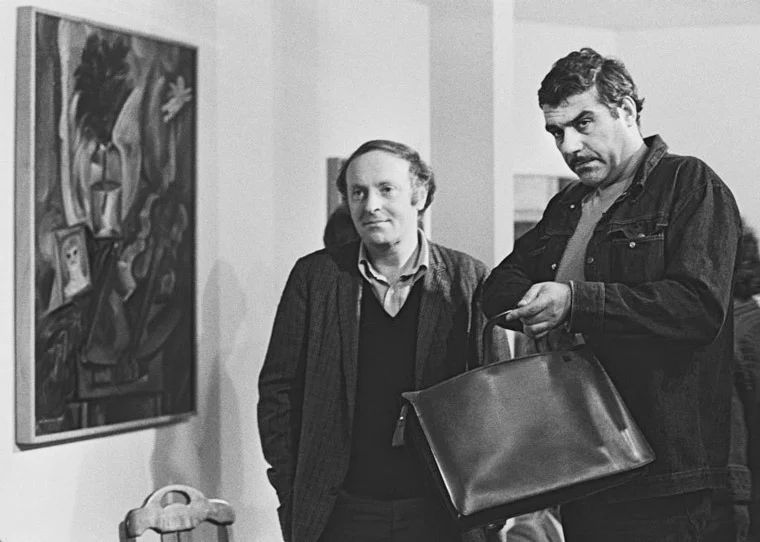
Not a lot of time will pass, the cult of Brodsky and Dovlatov will begin in the post -Soviet St. Petersburg. I really wanted to understand one, the other - constantly re -read. Two such different geniuses of a gray beautiful city.
National question
And it all began with the Armenian community of Tbilisi, where the mother of Dovlatova Nora Sergeevna was born. However, Dovlatov himself was not very interested in his Jewish or Armenian roots. But he caught some essence of the national question for sure: “Many Armenians (especially the Georgian Armenians) do not like Jews. Although it would be much more logical for them to dislike Russians, Georgians or Turks. Jews also do not have special feelings for the Armenians. Apparently, outcasts are not inclined to love other outcasts. They like to love the owners more. Or at worst - yourself ... " (" ours ")
It was as if I had nailed us with this quote to the crying wall or the Tsitermanakaberd memorial. Father, Donat Isaakovich Mechik, is a Jew, a theater director who left his family when Little Seryozha was only three years old, but did not lose his connection with his son.
*“Father was a supplier of puns and jokes. Mother had a sense of humor. (Distance - as between a bakery and starving.) Such different people cannot coexist, it is clear. ” *Sergey Dovlatov. "Our"
Mom - Armenian, actress, then corrector. As Dovlatov wrote in “ours”, Nora Sergeevna judged people by their mistakes in Russian: “You know, he is one of those who write“ in general ”through a hyphen ... which meant the extreme measure of moral fall.”
What was more in it: Jewish or Armenian? Armenians love Dovlatov very much and are constantly looking for Armenian in it. Jews, more spoiled by talented writers of Jewish origin, shrug.
More precisely, the Estonian said about the nationality of Dovlatov, the owner of the bookstore in the documentary “Five Corners of Dovlatov”: “He was a good Russians.”
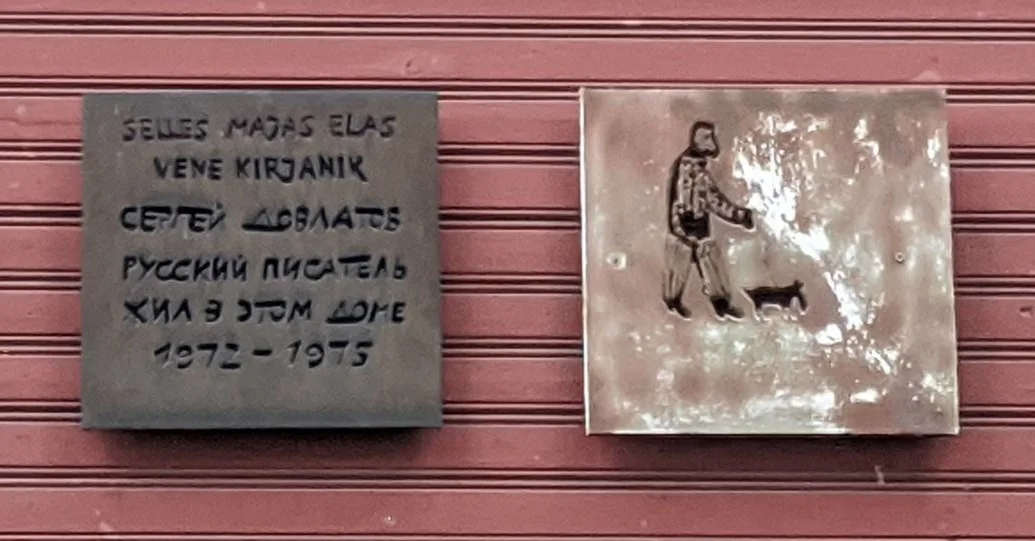
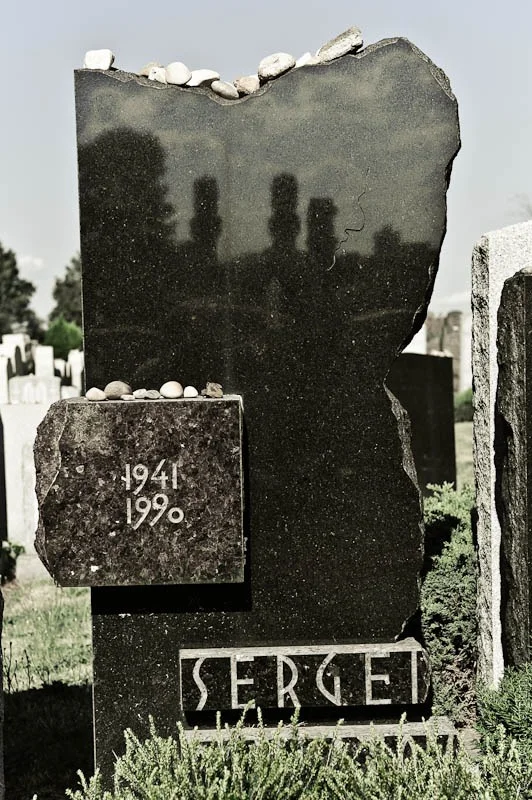
Dovlatov, by the way, was buried in a Jewish cemetery in New York. And it so happened that across the road from the Jewish grave of Dovlatov - the Armenian cemetery. And this is probably not only symbolic, but also right.
Why do we love Dovlatov? Probably, for the fact that it was so simple and talented about us, people lost in time and space, no one wrote. And he wrote that he left us a little love - our love for us, so imperfect, funny, sometimes decent, when we make "meanness without pleasure."
On September 3, Sergey Donatovich Dovlatov would have turned 84 years old.
Aza Babayan