
Translated material
Archeology and garbage theory: who studies waste and what garbage talks about our society
Garbology, protests, scavengers and new theories
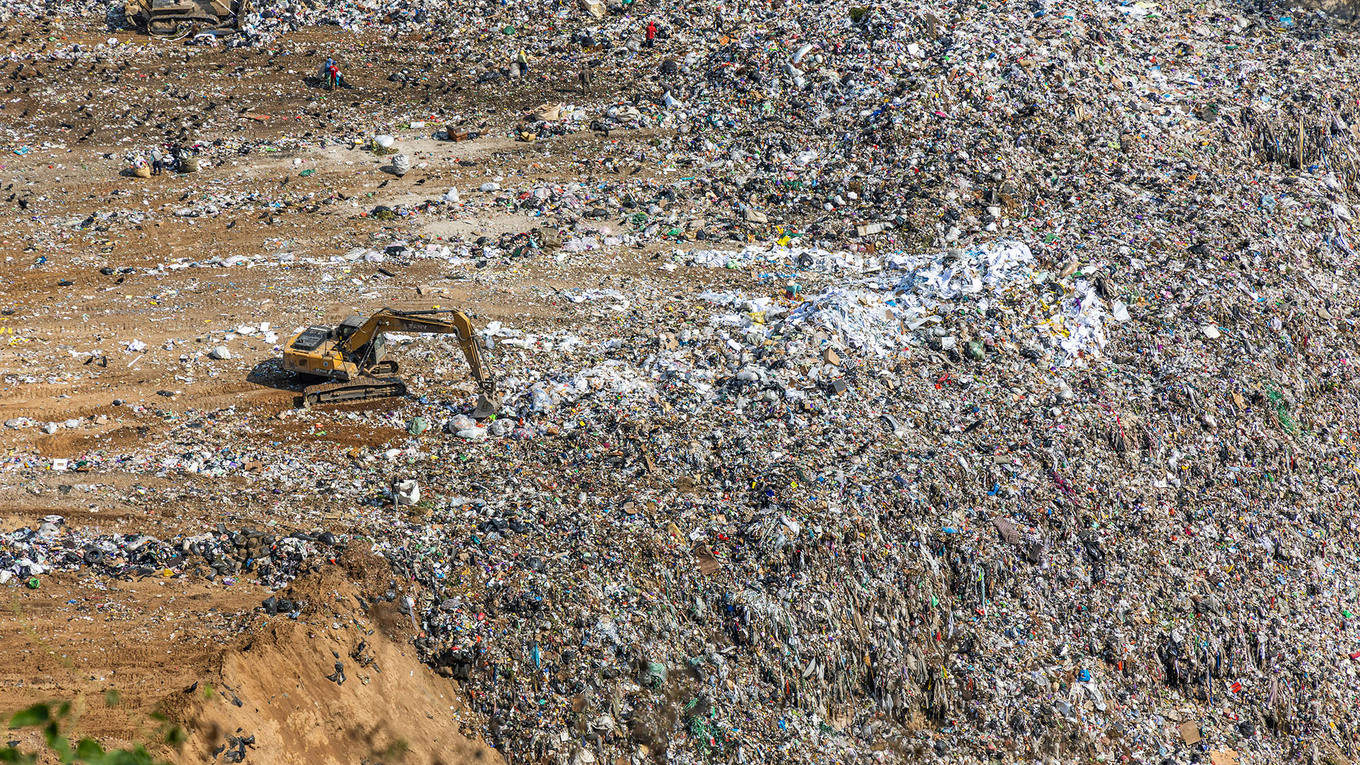
We see the garbage everywhere: it accumulates in a bucket under our sink and containers in the yards, gathers on landfills, travels along the rivers and goes into new islands on the surface of the oceans. No matter how hard they are trying to hide it, he again and again arises in sight - on the streets, in media, artwork - and, as the latest studies of microplasty show , has already settled in the human body. Ecologists, engineers and officials try to subordinate it, but the decision of the global garbage crisis is not approaching, but it seems more and more impossible. Independent researcher Ulya Makhanova offers to get acquainted with garbage and his political life is better.
Perito opens a new set to the book club “After words” - for those who want to better understand how the world we live in.
This time two programs are open at once. The first invites Nigeria, Vietnam, the USA and South Korea - through the books of Chimanda Adchi and Viet Than Nguen. The second is stories from the Karibov, from Burma, India and Japan, which we will read along with Amitav Gosh, Yuko Tsushima and the mysterious third author.
The first group starts on September 15 , the second - September 29 . The number of places is limited. Details and recording - on the site.
Archeology of the landfill
A middle -aged man in a white robe and dirty jeans stands at the top of the landfill, raising his right hand with a gesture V. Behind him, reflecting the pose, the statue of freedom rises. This is the most famous photograph of the American archaeologist and anthropologist William Razier at the Fresh Kills trash in New York. Ratier is the world's first professional garbologist (from the word Garbage - “garbage”), or archaeologist of garbage.
The idea to study garbage as an artifact actually came not even to Radier himself, but to his students . When the professor was instructed for the first time in his life to read an introductory course in archeology at the University of Arizona, he invited the audience to go to the field himself and investigate the relationship of human behavior and material culture. Two of his students independently conducted a comparative analysis of garbage in urban areas with different income levels. This prompted Ratier to start his own garbage project, uniting anthropology with archeology.
In 1973, the Tuscon Garbage Project launched a Ratier along with a group of colleagues at the university, the world's first study of human life waste described and classified according to the methodology of archaeological research. Garbologists garbage is a set of evidence of human life, much more frank than any text and oral confessions of people. Radier himself called the Garbology "archeology of the present", arguing that ordinary archaeologists are to some extent engage in waste research:
“Ninety -nine percent of everything that archaeologists dig, document and analyze in the smallest details, is that the people of the past were thrown out of unnecessary: broken ceramics, broken or wiped tools made of stone and consumables remaining during their production; Food waste, broken glass, rusty metal and so on. <...> But ask archaeologists what their science is studying, and they will say: “past”, “artifacts”, “behavior”, “relations and beliefs”-it is unlikely that anyone will mention garbage, waste or discharge at all. ”
Colleagues of the Radier at the Academy were still perplexed: people with a doctoral degree and respectable students are going through car tires and used diapers on a landfill. But the garblons managed to introduce their subject in the field of serious scientific research. And while interdisciplinary garbage studies (Waste Studies) were gaining momentum, more and more events unfolded around the waste and places of their accumulation.
Sades
A man is suitable for the garbage tank on the main tourist street of Amsterdam, holding a large plastic bag. It does not have an identification vest of the communal service, but it is as dexterous as professional cleaners, it opens the tank, pulls out the package and begins to methodically examine its contents. After a few seconds, the man finds what he was looking for: a can of beer. The man checks the marking, throws the bank in his bag and moves to the next tank.
The Netherlands are one of the few countries where you can get little money for the delivery of plastic and glass containers, from 10 to 20 euro centers (about 10–20 rubles). Gathering is very popular in large Dutch cities. During the holidays and street festivities, you can earn 50–80 euros.
According to GAIA eco -organization, before the pandemia in the sector of informal garbage processors, there were from 12.6 to 56 million people. But in many countries, their work is not paid, not regulated or criminalized - and this work falls on the shoulders of those who cannot find employment in other sectors.
For example, in Albania, the collection of garbage is mainly engaged in Roma and Egyptians, the most stigmatized groups of the population, whose representatives are difficult to find other earnings due to labor discrimination. In 2011, when the government secured the right to own garbage for municipalities, even this work was outlawed. In the Albanian capital of Tiran, collectors work in remote areas of the city during hours when the streets are the smallest of people and the probability of being in the field of police below. In Albania, only 18% of waste is processed, and most of them are just for informal gathering.
In many regions, the work of informal scorchers does not have a centralized alternative at all. This primarily concerns the states of the Global South: India, Pakistan, countries of the Caribbean region. Where the processing systems are better arranged, people can experiment with collecting practices and even conduct blogs about their finds: banks and bottles , bins and various artifacts from postage stamps to firearms . William Razier could call modern scaders a harbogogs involuntarily or - in case of recent examples - by vocation.
Purity and dirt, safety and danger
Today, Waste Studies unite philosophers, engineers, geographers, environmentalists, anthropologists, sociologists, historians and other interdisciplinary specialists. Unlike garbologists, researchers in this field are not so much interested in garbage as a material object, but its mobile boundaries, communities associated with it, situations and conditions for its appearance in the field of view of people or disappearance from it.
In modern Waste Studies, several dozen directions can be distinguished, among which there are the following:
- a study of consumer waste in which garbage is a common denominator of production and consumption;
- critical studies of garbage colonialism - pollution of the global south, distribution of production and their waste and the role of garbage in the reproduction of colonial relations;
- geography of “garbage lands” and other unproductive spaces - groomed, uncultivated territories, primarily in urbanized areas;
- The history of garbage and sanitation, especially in connection with biofilating and the use of sanitation as a tool for control;
- The study of "Padalism" - an informal collection of garbage, friganism and other practices of collecting.
It is precisely because of such interdisciplinary diversity that garbage research does not have its own canon, and it is unlikely that it will ever be formed and fixed. The case is complicated by the mobile nature of garbage as a phenomenon - its definition is always due to the context, point of view and the interest of the observer. But you can distinguish several works that have formed the theoretical frame of Waste Studies.
The book of Anthropologists Mary Douglas “Cleanliness and danger published in 1968: an analysis of ideas about desecration and taboos” caused the attention of garbage researchers to the dichotomy of the pure and dirty and contextual conditioning of these concepts. Douglas shows: in any culture, dirty is considered to be that which was not in its place or completely deprived of a place. The opposition of dirty and pure, chaos and order lies at the heart of any hierarchy. Douglas also indicates the mechanisms of power that set the boundaries of purity and order and fix their inextricable connection.
Garbage, by definition, is on the dirty side, but, like any material artifact, can move between purity and danger. So, products and finished food instantly pass into the status of dirty, as soon as they cross (albeit a conditional) border from a window or from a refrigerator - to a garbage bucket or just to the ground. Perhaps the most indicative example of this transition is the well -known rule of five seconds .
In the work “ The theory of garbage: creation and destruction of value ” social researcher Michael Thompson develops the thought of Douglas, claiming that waste is the opposite of value. Any object of material culture has a life cycle determined by functionality. It is possible to extend the life of an object or start it again only when changing the context. From this point of view, it is interesting to observe the lower, unregulated exchange practices in large cities, where the rejected objects periodically accumulate on the streets open to new capabilities of use. Processing of garbage is not only destruction and further rehashowing in the form of new objects with the same function (for example, factory processing of plastic). The sociologist Kenneth Gurlya in the work “ The World of Garbage: Dilems of Industrial Development ” formulates this: garbage is the materials that have not lost their utility, but the materials that we ourselves could not use.
Garbage
Ecostorik Marco Armirus proposes to consider the modern milestone of the history of the planet (at least from the beginning of the new time) by the garbage era, or the garbage (English Wastocene). Musorotzor, he writes in the same essay, is a regime in which vulnerability is sewn into human and inhuman bodies. Garbage for Armirus is not just an abstract set of material waste, but a system in which living creatures and their habitats become waste or consumables.
This is how the historian formulates the three rules of the garbage center:
- Rule 1. Never leave the part of the world to which you belong.
- Rule 2. Do not be interested in where the undesirable waste of your well -being fall.
- Rule 3. In the case of a collision with the reality of the garbage center, just run away from it and do not try to change it.
For researchers, this concept offers a new way of interpreting processes outside of capitalism, including it, but not reducing the strict dichotomy of production and consumption. For Armiro, the reflection on waste is the starting point of the creation of a global liberation project, one that is not built on oppression, alienation and work. To defeat the garbage, you need to fight not with it (and not with the destructive consequences of its presence), but with the social and economic premises of the trash era. Therefore, the army focuses not on advanced processing technologies, but in the practices of community and solidarity, which can save not only ecology, but also human relations.
To illustrate his theory, Armirus takes events and phenomena from different eras and points of the planet. He writes about toxic waste, floods, the Neapolitan garbage crisis , the world's largest electronics dump in Gan, but first of all, about human relations that became direct causes or catastrophes catalysts. Armiro considers one of these disasters to the pandemia Covid-19. This, in his opinion, was not just a crisis of healthcare systems - it was the most striking example of a social gap that showed how the value of life and health in various social classes is changing.
Some of them, in the logic of garbage, were valuable and worthy of salvation for social and financial structures, or, more precisely, resources had their maintenance and salvation. The researcher, who has been in the suburbs of Stockholm, is attributed to this group during the disease. He, an employee of a prestigious university, was provided with the services of doctors and paid leave.
Other groups, less profitable economically, were much less fortunate. On the example of Italy, Armirus talks about the inaccessibility of the poorest segments of the population of expensive drugs, medical services and household assistance. At the same time, the researcher emphasizes that the pandemic, like any crisis, demonstrates not only the injustice of centralized state systems, but also the force of grassroots self -organization.
Another example, which is given by the army, is the Mediterranean Sea, "a conceptual and material border that separates those who have value, and those who are considered consumable." The Mediterranean Sea is the main marine path of refugees to Europe and the rigidly patrolled external border of the EU. According to the UN, since the beginning of the year, more than 1,200 people have died or disappeared while trying to cross this line of the “civilized” world. Armirus claims that it is in such places that the imperfections of the system, usually hidden from the eyes of those who were lucky to be on a “valuable” side, shine through.
The appearance on the horizon of a boat with refugees violates all three rules of garbage. People left their birth countries, the place that they "belong." Their visibility makes the rest think about what cost is ensured by well -being on the European “island of security”, and about who pays this price. The presence of refugees signals: somewhere in the world there is misfortune, unsafe, war, disaster. Faced face to face with the reality of the garbage system, people seek to escape from it or expel those who embodied it.
There are always a lot of statistics in the argument about garbage: how many tons of waste are individual people, households, businesses, countries, how much garbage is bought and sold on the world market, how many CO2 emissions are in the air, what is the area of the Pacific waste -spot. Data is depersonalized, but indicative. They demonstrate again and again that the garbage cannot be thrown away, it can only be moved to another place. The same prove the stories of people and territories in the garbage era: the system is not able to discard the costs of its work. And, perhaps, Marco Armirus was right when he called the processing of garbage secondary regarding solidarity.