
Translated material
"Do not increase the rank, brother is a priest"
35 years ago, Father Alexander Men was brutally killed. His brother shared with the "new" unique memories
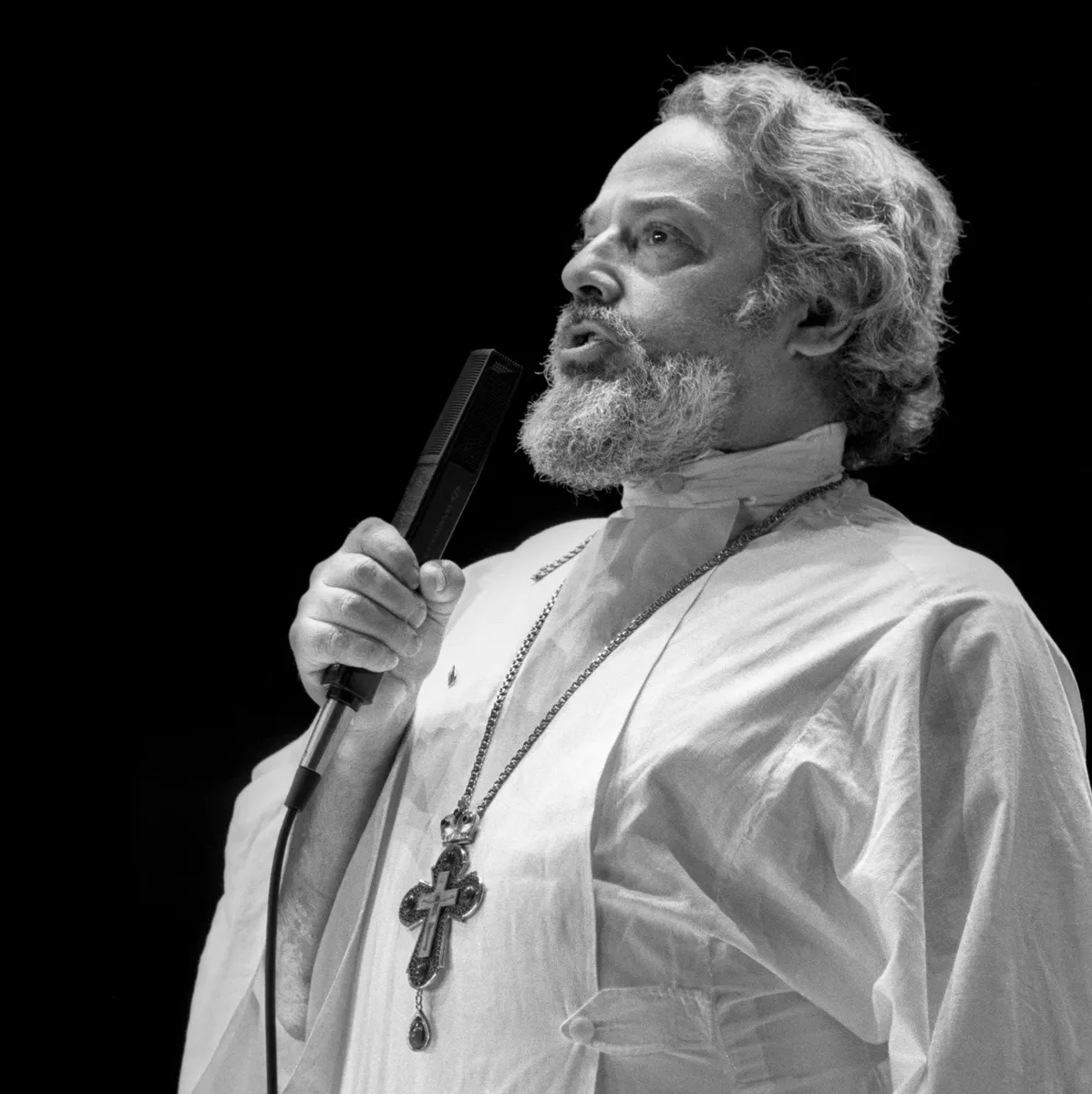
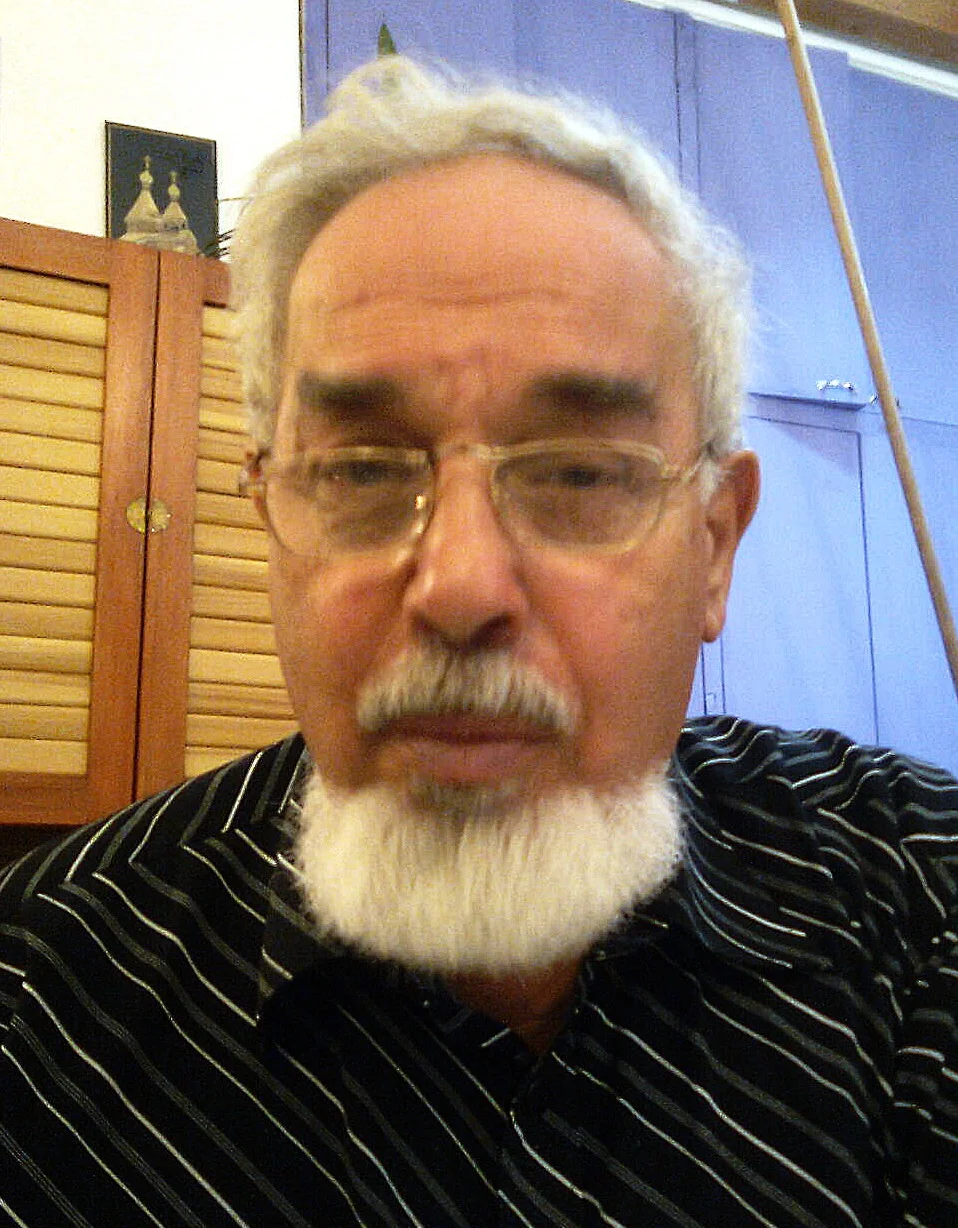
The younger brother about. Alexandra, Pavel Volfovich, shared with the “new” unique memories of the history of his family, the moments of childhood and youth, dear to the heart, and very little - about the activities of the Foundation Fr. Alexandra. The outstanding priest and scientist was chopped with an ax at the Semkhoz station near Moscow exactly 35 years ago ... The motives of the crime are still not disclosed.
The anniversary of the symbolic event of the latest Russian church history - the murder of Fr. Alexandra me - falls on September 9th. The question of the publication of his huge creative heritage remains relevant so far - after all, during his lifetime, the smaller has not been published in his homeland. Passes, lectures, conversations, interviews, “bibliological dictionary”, “son of human”, individual articles, correspondence - all this had to be collected and prepared for the publication. The forces that interrupted the earthly life of the priest did not doze off, and there was the risk of the loss of many materials.
Brother Fr. Alexander Pavel Men, at that time, a senior researcher and a programmer, was called upon to work in a new field. He headed the Alexander Foundation - a cultural and publishing center. Pavel Volfovich was a witness and understood in the first stages of the so -called investigation in the case of Fr. Alexandra, saw him with an ostentatious and cynical move. Investigators willingly announced the “Jewish version”: supposedly less lured the Jews into Christianity, thereby weakening the repatriation to Israel. For which he paid from the Jews themselves. The brother soberly argued the absurdity of this version. His testimonies in many ways prevented the “disclosure of the murder” according to the planned scenario, and the matter has been pushed to this day - unsolved.
The fund did a grandiose work. A six -volume story of religions “in search of the path, truth and life”, which was published abroad during his lifetime, but without the participation of the author, it was necessary to edit for domestic publications again. Multi -volume "Bibliological Dictionary" (1790 articles), which about. On the recommendation of Metropolitan Juvenal, Alexander submitted to the Moscow Theological Academy as a master's thesis, he was rejected there, because the academy simply did not believe that one person could carry out this work. The dictionary came out in three volumes in 2002.
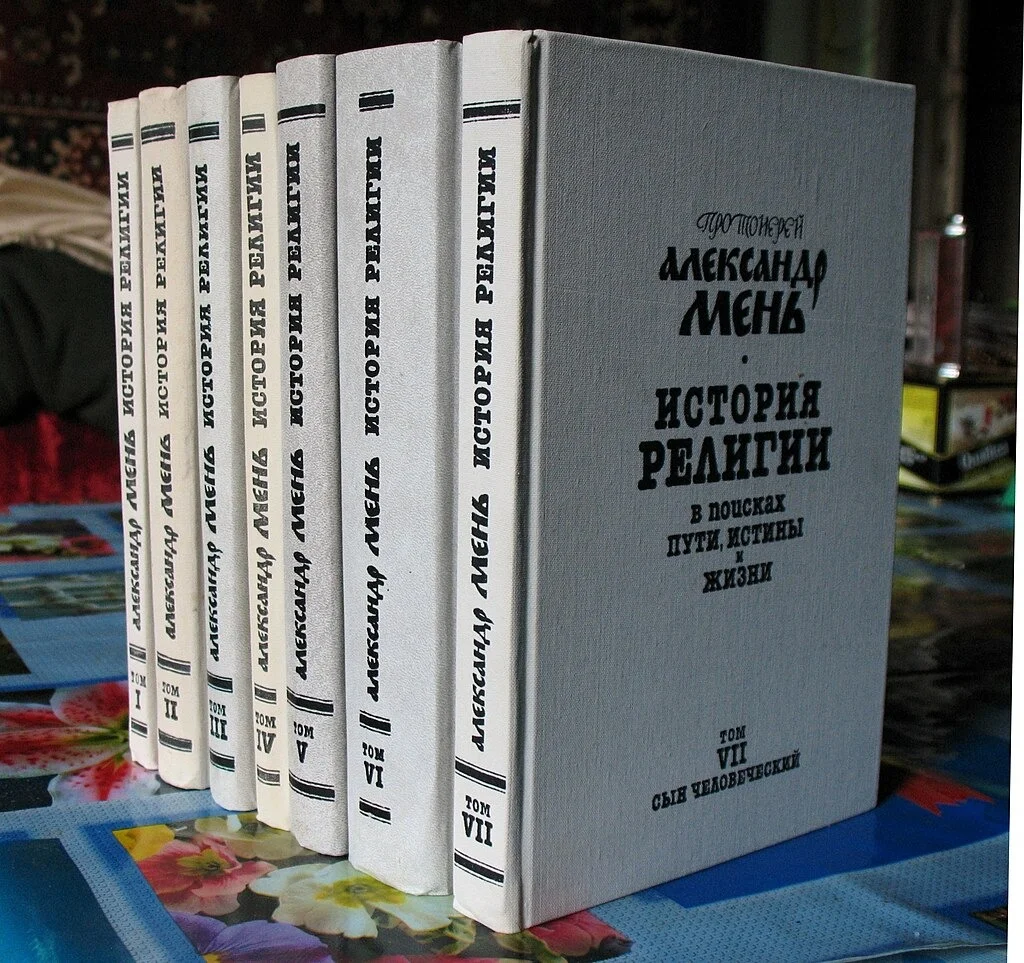
The number of books issued by a fund based on manuscripts and articles Fr. Alexandra, approaches 40. And the general circulation of books about. Alexandra has already reached me in different languages already 10 million copies. All books by Alexander, correspondence and memories of him are posted on the website Alexandermen.ru. Thank God, now they can use them freely.
With his memories of his brother, about the general childhood, about the church and the time in which the personality and fate of Alexander me developed, his brother, Pavel Volfovich Men shared with the “new”.
-Your early childhood passed in the village of Glinkovo near Zagorsky (Sergiev Posad), where in the fall of 1941 your family moved from Moscow. The catacomb archimandrite Serafim (Batyukov), whose spiritually your family was fed, said that "the German would not enter Zagorsk, the Monk Sergius would not allow." And however, the Germans did not reach about 20 km to Zagorsk ...
- It is there that my first bright children's memories: the village, the evening, the frozen snow -capped lake, it seems huge to me, Alik and I ( the future about. Alexander. - A. S. ) Follow the air battle: against the backdrop of a flaming sunset, it is clear how two small aircraft are shot. Probably not so high, because it is visible on one of them, on the wings, red stars, on the other - black swastikas. Suddenly, the tail of German smoked, and he begins to fall with a stake. We, happy, run to tell mom that ours won.
My mother and I did not sit down at the table without prayer. Prayer before meals and thanks - after. If, with guests, "external", then it is necessarily to yourself. The depth of her mother’s faith was amazing - calm, without any exaltation. The fact that she trusted the confessor and remained near Moscow, under the nasal of the Germans, says a lot. The Germans did not complain Jews ...
In general, I was born only thanks to my mother's faith. After all, doctors recommended her termination of pregnancy. She had a complication after the flu: an infiltrative tuberculous process in the right lung. Simply put, caverns formed. But the mother of the doctors did not obey. The fruit, growing up, was running out of the lungs and the caverns were abused. The enhanced nutrition that her sister Vera tried to provide her mother also helped. And I was born healthy. Moreover, I received protection in the blood. I found out about this when I began to donate blood for the fuss: they called me from the blood transfusion station and said that I had an isoimmune blood that could cure babies from hepatitis, and asked to urgently take 400 g for a dying baby. There were many such requests, they called mothers and begged to save the child. And I donated blood up to 40 years.
- What did you live in the war years in Glinkov, did your mother not work?
- There really was no work in the village, and if you do not work, then the grocery cards were scanty. In fact, relatives saved us: mother’s cousin, Vera Yakovlevna, her brother Veniamin and their father, Uncle Yasha. They stayed in Moscow, received their rations on the cards and, probably, gave us most. Uncle Benjamin worked on the labor front, Uncle Yasha was already an elderly person. They died, as it later turned out, from dystrophy, in fact from hunger. Only Aunt Vera, overwhelmed, survived.
I remember a knock on our window early in the morning. Military ... Mom shuddered. She belongs to the catacomb church ...
But mother’s brother Leo entered the officer overcoat - with a backpack of products: white bread, canned food. At the front, life was more satisfying than in the rear. The Americans, allies, in addition to the equipment, supplied Russian products, meat conservals.
And Uncle Leo saved, brought something to us. He was a senior lieutenant, participated in the Finnish campaign. Leo-Jorge was a younger brother of his mother, born in Paris.
- When did you return to Moscow, where did you live?
- In 1943. But they were not allowed into Moscow without a call. Mom went to work with a laboratory assistant at the Moscow Pedagogical Institute, then, for registration, she entered the philological department, and only then, as a student, was able to get a call, and with him - and cards for products.
We lived in a three -story pre -revolutionary house in Serpukhovka, 38. The house was from red brick, we occupied a room of 20 square meters. Dad seemed to be proud that we had such a large room. Three more families lived in the apartment, or rather a husband and wife and three children, a husband and wife and a lone elderly man.
Mom graduated from the Institute with honors. But she did not have to teach literature at school - she fell down with heart defect. Once we managed to bring home a private doctor - Professor Egorov. Egorov himself! By that time, the dad was raised in office. He became the chief engineer of the textile factory and received a decent salary at that time. He was generally a valuable employee, made rationalization proposals, wrote brochures about the technique of leather -saving, dermatin. The administration took risks, appointing a non -partisan Jew as a chief engineer.
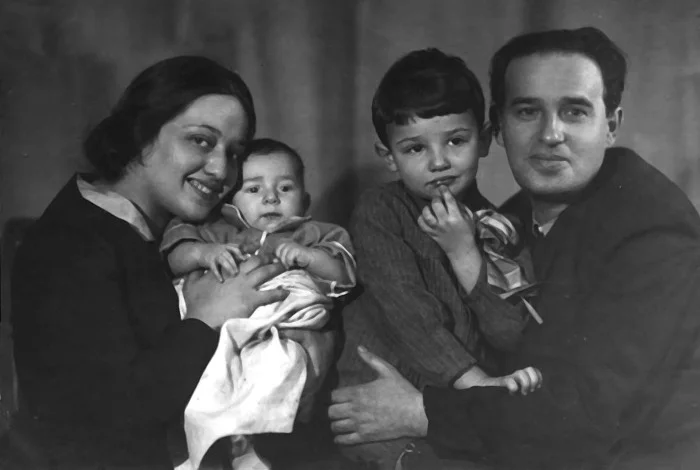
Parents lived among themselves in the soul, although dad did not share our Christian beliefs. We did not impose them on him. He was a theater, followed the theater post. He appreciated the game of outstanding artists, with his mother always discussed the performance that was visited. And have always been together. Dad is simple, but elegantly dressed, on mom's evening burgundy dress. She was an interesting woman, dad knew how to notice it. With all this, dad tried to observe Jewish traditions. Mom said: when Alik was born, on the eighth day, it was supposed to conclude a covenant with God through circumcision. On this occasion, the father of dad came from Kyiv, our grandfather Gersh-Libe. And once dad complained to him: "You know, Lena is fond of Christianity." “Christianity? - the pious Jew was surprised. - We should read the gospel. I have never read. " Father gave him to read. After reading, the grandfather literally said the following: “Do not worry, son. Jesus was a real Jew. ” The grandfather's family survived the war because she left for Sverdlovsk. And the remaining cousin in Kyiv with his family was swallowed by Babi Yar.
- But even after such authoritative assurances, the father did not change his views?
- He did not change, but they did not conflict with ours. I repeat, he was not a faithful Jew, but on holidays he went to the synagogue. Father considered himself a genuine Jew, but without a nationalist aplomb. And their children too. And when Alik was 12 years old, the age of the majority, dad decided to speak openly with him:
“You know, Christianity and all that is connected with it is not ours.” To which a well -read teenager objected softly: "And I will prove that ours."
In these years, we were already churching, at 9 years I went to Zagorsk on my own. We went to Moscow temples. Friends from the Mecheums gathered in the house in the house ( the community of the catacomb church, mainly intelligent. - A. S. ), and Alik and other children and I went home to Boris Vasiliev (he was a secret priest), and his wife Tatyana Ivanovna remarkably conducted us classes in liturgy. Her lessons for us were a real Sunday school.
With the blessing of the science of Maria ( the abbess of the underground monastic community in Zagorsk in the 1920-50s- A. S. ) Alik began to serve in the altar of the temple on Presnya-in honor of the birth of John the Baptist.
- Three families lived in the apartment except yours. Got along with the neighbors?
- Glated. By the way, we had a refrigerator, stood in the kitchen. The chief engineer could afford such a luxury. Sometimes a product disappeared from the refrigerator. And, of course, did not return. Mom never found out loud, did not hint the neighbors. The scandals behind the walls of the neighbors happened, of varying degrees of intensity, but did not splash out.
A lonely elderly man from the merchant class - Ivan Ivanovich Kudin lived behind the wall on the right. Before the revolution, there was a well -known manufactory of Kudinsky scarves. Once, I was still small, he boasted: I was born on December 1, on the day of Kirov’s death, and my brother was born on January 22, the day after the death of Lenin, as if he was replaced ... an old man, in a wolf, leaning on “o”, answered me: “There is enough of one.” The second family is a husband, wife and three children. The husband knocked hard. Dicked out before our eyes. And the children also began to drink. And there was a couple: Agafya Ivanovna and Vasily Ivanovich. Lovely people. Agafya Ivanovna - a believer, Orthodox, went to church. And now, once meeting with dad in the kitchen, she confidentially and joyfully informed: “Vladimir Grigoryevich, but I did not know that your Alik served as a priest in Alabin. People say a good priest. ” Dad was taken aback, because we did not devote him to his Christian life. He was afraid for his mother and for our fate: how do we believers be able to adapt in the modern world? The Khrushchev’s persecution has already begun ... We did not say that Alik was returning from Irkutsk ( Alexander Men studied at the Pure-Movish Institute, transferred from Balashikha, Moscow Region. - A. S. ) without a diploma. After the ordination, he lived at the church, and the pope told that he works as a biologist and rents housing outside the city. Alik already had a daughter, and suddenly such a revelation from Agafya Ivanovna! It was probably a blow. But dad suffered him because we had a strong family. Loving, hardworking, sociable. The views, unacceptable for him, did not destroy love.
- What memories do you have from the Soviet school? Then it was believed that it was the school that forms the personality ...
- I had a difficult relationship with the school. Probably transmitted from the brother. We did not like school. Neither Pioneer nor Komsomol entered. My brother was not even an October, but I, in infancy, were honored to be.
When I was determined in kindergarten, I received my first and only party affiliation - I was accepted in October, clinging the badge on my chest: Little Lenin with a curly head. I proudly announced at home about dedication in October. Mom stroked my head, affectionately dispensed the badge icon and ... threw it into the garbage bucket. “We don’t need it,” she said, “and don’t tell anyone about the garbage bucket.” I trusted my mother in everything, felt something very important in her words, and the badge did not regret at all. By the way, there were no more party supplies in my life - neither pioneer nor Komsomol.
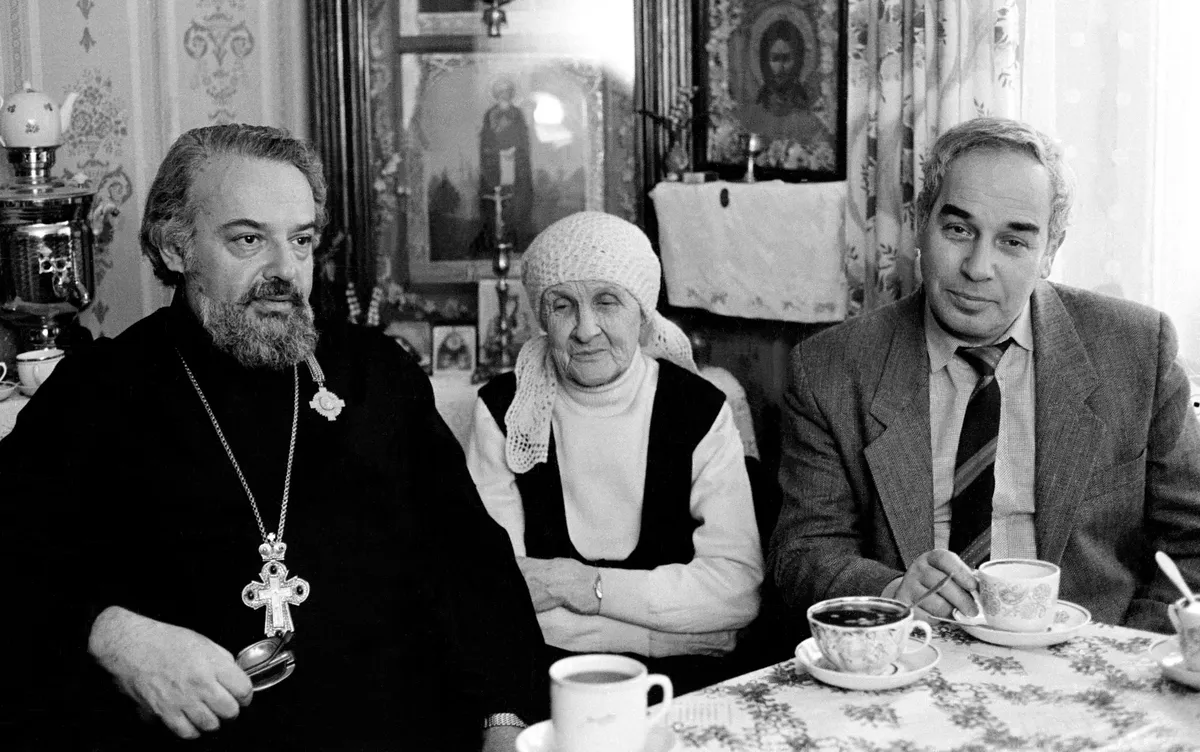
The dad was called to school, it was already the 7th grade: "Why is the son not entering the Komsomol?" Dad justified himself: “I bought him a charter ...” The class teacher Faina Isravna was at a loss, she came home to persuade us. But then Stalin had already thrown out the hooves, Beria was shot, at the leadership of the country, and, accordingly, the school, was probably a meshum state. In general, it carried.
Until the ninth grade, I did not read books, there was enough that my brother retelling, in detail and exciting. And in the ninth reading was captured, mostly classics. In the square, opposite the “drummer”, on the bench, a lot was read. But classical literature did not turn me away from fashion influences. I was a uniform style, narrowed my trousers, grew my hair. I did not miss a single film. Mom was called to school for pedagogical councils - she returned in tears.
But I had good friends, not hooligans, among them - the future priest Alexander Borisov. We were also occupied by religious problems, in the temple of John the Baptist on Presnya, I sometimes served in the altar. On Sundays with mom and aunt, we visited the liturgy, communed once a month, to Mother Mary ( the Khigumen of the Catacomb Church, the spiritual mentor of Alexander me in his youth. - Ed. ) We went to Zagorsk regularly. We also traveled to holy places. The nuns in the Glinsky desert puzzled me.
In the cinema, they were exhorted, you can’t walk, there the devil is growing in the dark, the spectators stick out of the horn ... And the elder who professed me before the communion, confidentially asked: “He didn’t kill anyone? .. Well, go with God.”
In the Church of John the Warrior, on Yakimanka, a wonderful priest - father Vasily Serebryakov served. He did not ask a lot of questions in confession. "Are you reading the gospel?" - asked me, teenager. And this was limited. Indeed, if a person reads the Gospel, Christ participates in His life. In a patient, struck by atheism, he relied only on the Gospel.
- And what were you fond of in the adolescence, who you dreamed of becoming?
- I was fond of astronomy. Secretly from his parents entered preparatory courses in Miigaik. And upon admission, he submitted documents to the faculty of astronomy. The physicist failed me in a bad one. This institute was in a classroom, with the fifth point there were special precautions. But I somehow did not take this circumstance. And after the end of the chemical college, he went to take exams to the fishing institute. And he was also in a special position: foreign tuning, shipbuilding. And here is the fifth point, and besides, not a Komsomol member. A secretly pronounced potential spy.
This secret expressiveness of mine was quite discovered in the army. I served in Cuba. I drove a car with a senior sergeant, bought food. We had a guy who had a well -known weakness to corrupt. Once, in my absence, he climbed into my bag. And instead of money, he pulled out the gospel and a pectoral cross. The thief turned out to be a vigilant patriot, so to speak - socially close, and attributed material evidence to a special department.
My gospel was published in France, and the cross is unusual - the archangel Michael against the backdrop of the cross. They invited a specialist specialist from Havana. “Why do you have a Catholic cross and the Gospel is not Orthodox? Are you a Catholic?! " But the specialtyist turned out to be competent and understood, interrogating me that I was not a Catholic, not an American spy, but the most Orthodox sergeant. In any case, I would not have done a military career, even if I wanted to. In my case, which I learned about later, it was written: "Do not increase in the rank, brother is a priest."
After the army, I graduated from Mendeleevsky Institute. He worked at the Institute of Nitrogen Industry with a senior researcher, and when perestroika struck, he organized a company to design automated programs. I was awarded the title of veteran of labor and excellent student of the five -year plan. Veteran merits are taken into account today: you pay a little less for the apartment ...
-For some time you lived in the country-at the station rest along the Kazan road ...
- Yes, dad got the site in 1938. We bought a log house, and a long -building began with a break for war. Moving to the country every year was a whole epic - friends, relatives participated, many of whom later stayed. In the winter, the house remained absolutely empty. Even electrical bulbs were unscrewed. Uninvited guests (and such visited every winter) swept everything to a needle.
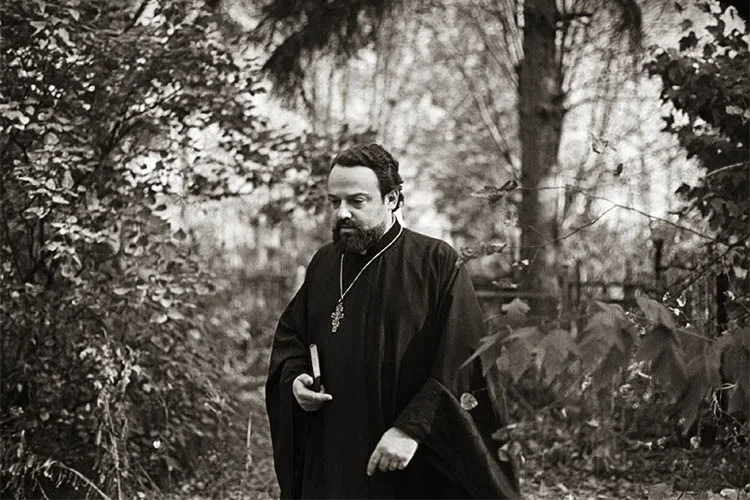
In the country, Alik and I had a separate room. He read a lot, and I played croquet and drove a bicycle. I really wanted to teach his brother, but he was immersed in other worries. They did not live without guests. Sometimes up to 20 people ran in: school comrades, uncles and aunts with children from Kharkov, Sverdlovsk, Karaganda and Novosibirsk.
На участке построили еще маленький домик, который за символическую плату сдавали папиному знакомому Якову Андреевичу Абрамову. Человек он был веселый, общительный, из старообрядческой семьи, что сказывалось в языке, но никак не в поведении. С ним случилась беда. Он страдал воспалением тройничного нерва, и ему была сделана операция с трепанацией черепа. Он умер на операционном столе, но врачи электрическим током сердце заставили биться. Клиническая смерть длилась семь минут. Потом Яков Андреевич рассказывал нам, как вышел из своего тела, как проник сквозь закрытую дверь на балкон, увидел необычное небо и сияющее золотыми лучами солнце. А день тогда был пасмурный. О том, что пережил необычайную легкость, тишину в сердце, покой и радость. Его рассказ слышала вся наша семья, а потом мой брат полностью поместил его в книге «Истоки религии», в разделе «Парапсихология и неразрушимость духа». Яков Андреевич пришел из больницы совершенно другим человеком.
После смерти папы в 1969 году и перевода о. Александра в Новую Деревню в 1970-м мама решила продать дачу и купить что-нибудь по Ярославской дороге, но в конечном итоге, продав дачу, часть денег дала мне на квартиру, много просто раздала нуждающимся, а сама стала снимать летом комнатку в Новой Деревне, рядом с храмом. Это дало возможность чаще бывать на службах, видеться с о. Александром. Последние три года мама тяжело болела, и частое общение с братом и его прихожанами помогло ей перенести самый трудный период своей жизни.
— Когда вы оставили, так сказать, светскую работу и полностью посвятили себя наследию о. Alexandra?
— До 2000 года я совмещал фондовские дела с работой по профессии. А когда совмещать уже стало невозможно, из фирмы ушел. Нужно было отследить все издания отца Александра, вышедшие за границей: много опечаток, неточностей, пропусков в тексте, которые брат в свое время не имел возможности поправить. Двусторонней связи не было, автор в публикации своих книг практически не участвовал. Ну вот мы, наконец, закончили издавать все, что было написано о. Александром. И сейчас трудимся над тем, что было им наговорено — в лекциях, в проповедях, в домашних беседах.
Беседовал Александр Зорин, подготовил к публикации Александр Солдатов